





17th Century Oak Buffet
A 17th century oak buffet brings heavy architectural timber and regional carving into a room, offering historic storage.
17th Century Oak Buffet
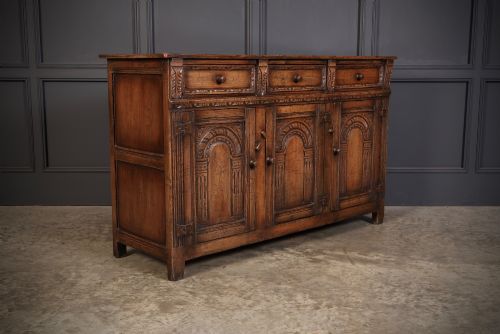
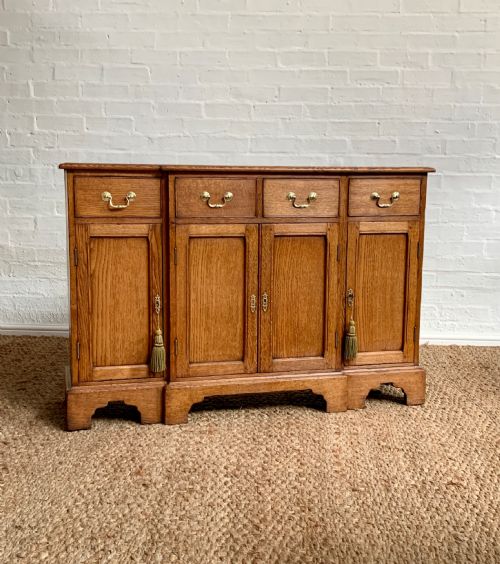
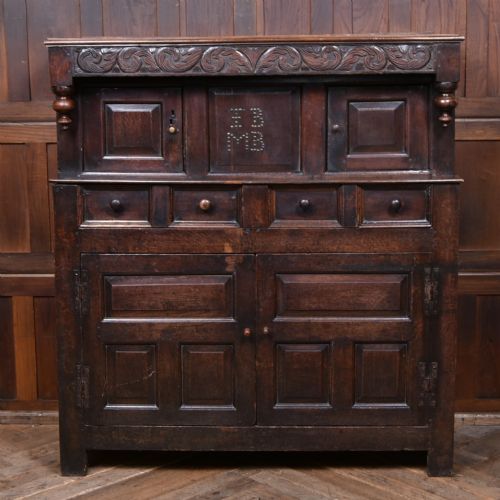
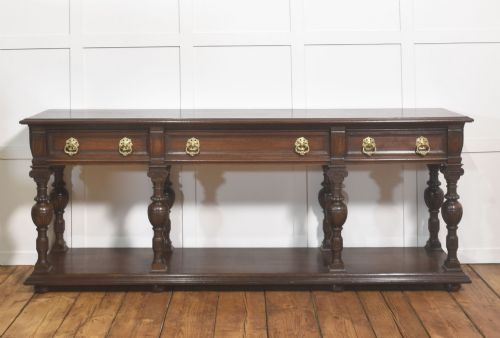
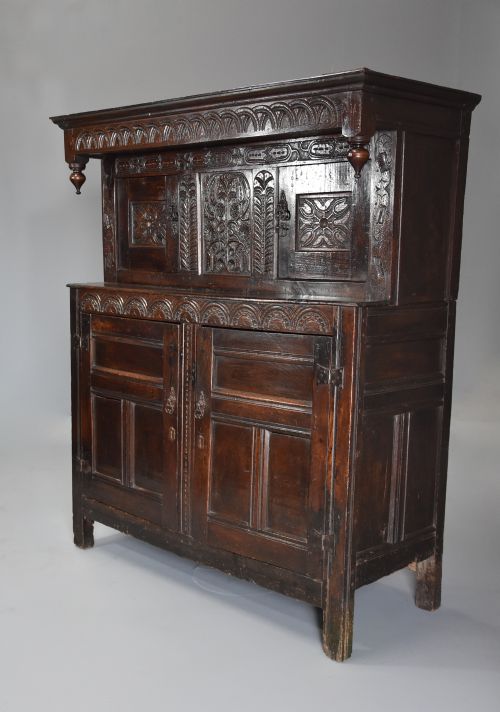
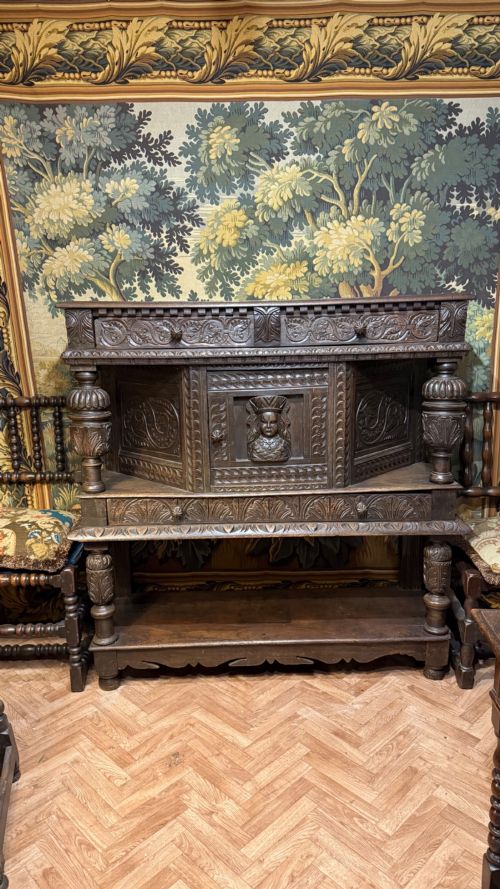
Buyers seeking a 17th century oak buffet encounter heavy timber storage forms spanning court cupboards, press cupboards, livery cupboards, and dresser bases. The selection contains genuine period examples from the seventeenth century alongside revival interpretations made in the nineteenth and twentieth centuries.
Origin points range from English regions such as Lancashire and the West Country to continental workshops, manifesting in styles described as Jacobean, Baroque, and Renaissance. Surviving pieces alternate between tall tiered court cupboards and lower sideboard formats suited to modern domestic placement.
Materials and construction methods
Makers utilised solid oak as the primary structural timber, frequently augmented by fruitwood inlay, walnut, and wrought iron hinges or brass hardware. Construction relied on joined framing techniques rather than modern mechanical fasteners, creating rigid carcasses capable of supporting heavy upper tiers.
Surfaces received hand carving, panel moulding, and occasional mother-of-pearl or contrasting wood inlay. Finish quality depends upon the survival of original patination across the timber grain through centuries of polish and handling.
Recorded forms range from tall court cupboards and press cupboards down to compact sideboard formats and Welsh dresser bases.
Evaluating construction and survival
Quality separates pieces retaining their original joined framework and untouched surface patination from those altered by extensive timber replacement or aggressive later stripping. The depth and crispness of hand-carved panels distinguish superior regional workshops from plainer provincial outputs.
Proportion and scale dictate desirability, particularly in lower dresser bases and shorter cupboards designed for domestic utility. The integration of period hardware, such as wrought iron hinges and brass pulls, preserves the integrity of the piece.
The 17th Century Oak Buffet Glossary
- Court cupboard
- A tiered storage piece consisting of an upper enclosed cabinet supported by columns above a lower recess or cupboard. These functional items dominated seventeenth-century dining halls.
- Press cupboard
- A heavy timber storage cabinet featuring double doors enclosing interior shelving or hanging space. They were utilised for linens and household provisions.
- Livery cupboard
- A small ventilated cabinet designed for storing rations of food and drink before evening curfew. The term derives from the French word for delivery.
- Jacobean style
- The decorative manner spanning the reign of James I, characterised by heavy proportions, strapwork carving, and geometric mouldings. Revival versions appeared centuries later.
- Joined cupboard
- Furniture constructed using mortise and tenon joints secured with wooden pegs rather than nails. This method defined sturdy seventeenth-century cabinet making.
17th Century Oak Buffet: Frequently Asked Questions
What is a court cupboard?
A court cupboard is a tiered wooden storage piece with an upper cabinet supported by columns above a lower section. They served as prominent display and storage items in early domestic interiors.
Over time their function shifted from displaying plate to general storage. Surviving examples demonstrate regional carving styles from English and continental workshops.
How do I date an oak cupboard?
Dating relies on examining construction methods, timber species, and decorative motifs such as strapwork or punchwork. Seventeenth-century examples utilise joined frame construction with pegged mortise and tenon joints.
Revival pieces from the Victorian and later periods often display machine-cut timber marks or standardised hardware. Comparing panel styles against known period pieces clarifies the age.
Where were these cupboards made?
Workshop origins include English counties such as Lancashire and the West Country, alongside French and Flemish centres. Regional cabinet makers utilised locally available oak and distinct carving patterns.
Stylistic markers like linenfold panels or geometric mouldings often point to specific geographic traditions. Continental pieces frequently incorporate Baroque or Renaissance decorative elements.
How do I maintain oak furniture?
Maintenance involves placing timber away from direct heat sources and sudden humidity changes to prevent splitting. Natural beeswax applied sparingly preserves the surface without building up sticky residue.
Dusting with a soft dry cloth maintains the historic patination developed over centuries. Avoid commercial liquid polishes containing silicones that alter the wood finish.