





17th Century Flatware
These pieces of 17th century flatware are early silver spoons spanning the reigns of James I, Charles I, Charles II, William and Mary, and William III.
17th Century Flatware
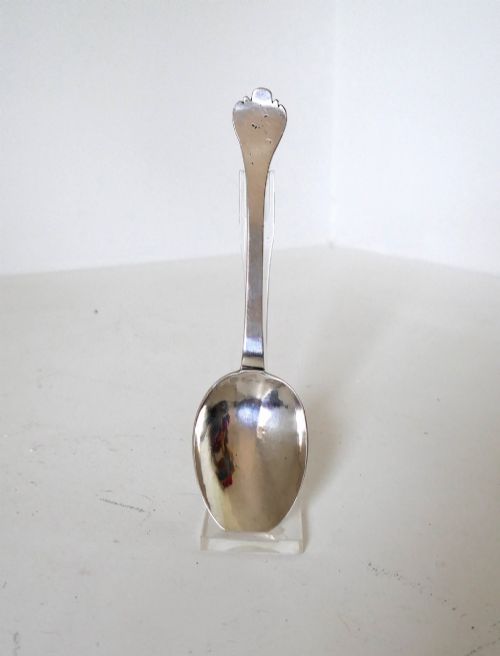
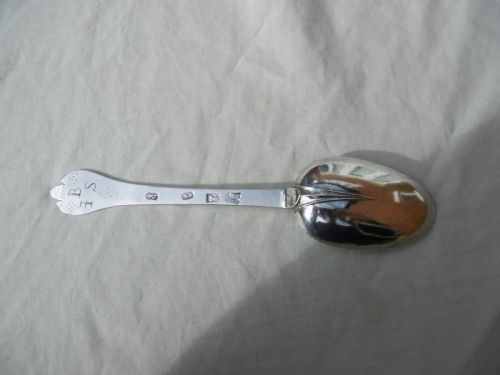
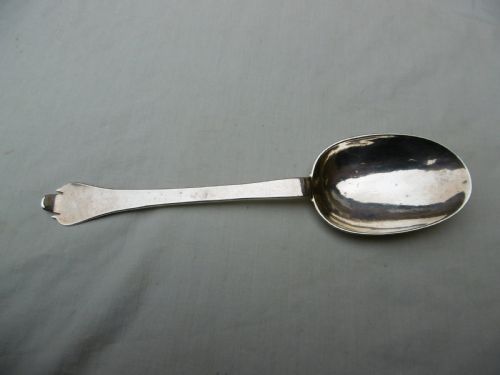
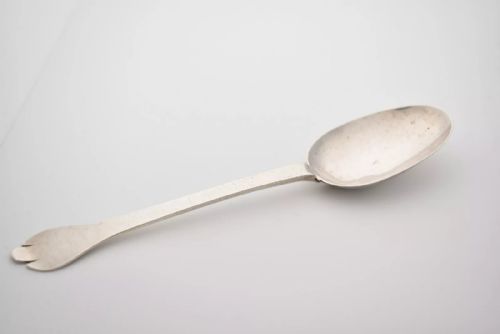
Most pieces on this page originate from the English seventeenth century, bearing hallmarks from London and provincial makers such as Southampton. The forms evolve from the simple early slip top and seal top shapes into the broad, flat stem of the trefid and the later dognose.
Assessing quality in early spoons
Quality rests upon the clarity of the hallmarks and the preservation of the original bowl shape against centuries of wear. Crisp punch marks from makers like William Penstone or Isaac Davenport distinguish superior survivals.
The weight of the silver, the integrity of the terminal figure on seal tops, and the sharpness of the lace pattern engraving determine how well an individual spoon retains its historical character.
One early nineteenth-century craftsman clearly admired seventeenth-century fashion enough to replicate a heavy seal top spoon down to the last hallmark.
William Penstone·Isaac Davenport·Benjamin Prosser·Thomas Issoa·Stephen Coleman·Daniel Cary·John King·Peter Webb
The 17th Century Flatware Glossary
- Trefid
- A spoon with a broad, flat stem notched into three lobes at the terminal. This style emerged during the reign of Charles II.
- Seal top
- A spoon featuring a small cast seal or figural finial at the end of the handle. They are characteristic of the Tudor and early Stuart periods.
- Slip top
- A spoon with a plain, diagonal cut handle stem lacking any distinct finial. This minimalist form dates back to the early sixteen-hundreds.
- Dognose
- An evolution of the trefid spoon with a rounded terminal profile resembling a dog's nose. This pattern appears around the late seventeenth century.
- Hallmark
- An official stamp applied to silver to guarantee purity and origin. These marks identify the maker, town, and year of manufacture.
- Rattail
- A tapering spine of metal extending down the back of the spoon bowl. It reinforces the joint between the bowl and the handle stem.
17th Century Flatware: Frequently Asked Questions
How do I identify a seventeenth century spoon?
Look for specific handle styles such as the seal top, slip top, or trefid, which correspond to the sixteen-hundreds. Contemporary hallmarks and maker's marks stamped on the stem provide the most reliable dating evidence.
Compare the bowl shape and stem thickness to known examples from reigns like Charles II or William and Mary to confirm the period.
What is a trefid spoon?
A trefid spoon is an eating utensil featuring a wide, flat stem that splits into three lobes at the top. This design gained popularity during the late seventeenth century.
The shape evolved from earlier slip top and solid forms, introducing a more modern silhouette that preceded the dognose spoon.
Why do some spoons have rattails?
The rattail is a narrow tongue of silver extending from the handle down the reverse of the bowl. Makers added this feature to strengthen the connection between the bowl and the stem.
This structural addition is common on late seventeenth-century spoons such as the trefid and dognose types.
What are seal top spoons?
Seal top spoons feature a cast, flat-topped terminal that resembles a signet seal. They were often given as christening gifts or produced in sets during the early part of the century.
The flat top sometimes bears initials or a crest engraved by the original owner after purchase.