

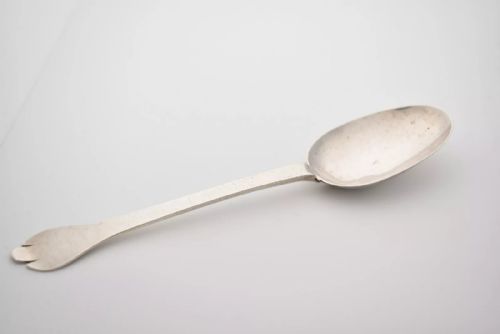


Antique Trefid Spoon
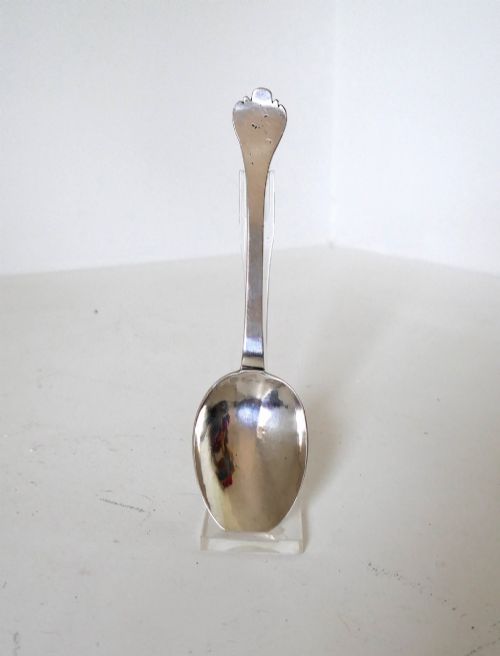
These antique trefid spoon examples are early silver and metalware dining pieces defined by their flat, notched terminals, offering collectors tangible links to late seventeenth-century domestic life.
Antique Trefid Spoon
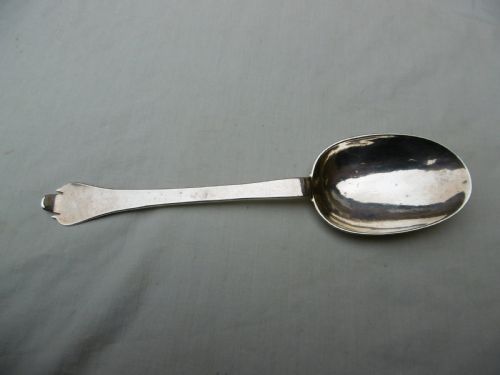
When you search for an antique trefid spoon, you are looking at domestic eating implements dating predominantly from the seventeenth and eighteenth centuries, originating from English makers and provincial towns alike. These items characteristically display a broad, flat stem with a triple-lobed terminal and a rat tail spine running down the reverse of the bowl for structural reinforcement.
Collectors also occasionally find later nineteenth-century revival serving pieces or single latten metalware items carrying historic maker marks. The fundamental form remained remarkably consistent during its primary era of production, serving as the standard dining utensil for prosperous households before the evolution of the modern rounded spoon terminal.
How they were made
Silversmiths and metalworkers shaped these objects by hammering ingots into flat sheets before cutting the profile of the spoon and raising the bowl by hand. The distinctive rat tail reinforcement was soldered or forged directly onto the junction of the stem and the bowl to strengthen the joint against the downward pressure of eating.
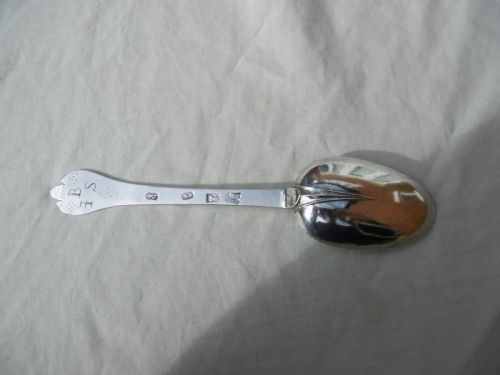
Makers applied punches to stamp their personal marks, town marks, and date letters directly into the metal surface, creating the legible hallmarks essential for modern identification. Pewter and latten versions were cast in moulds and subsequently finished by hand-smoothing and polishing the rough metal edges.
Early dining required your own cutlery, meaning seventeenth-century guests carried these notched spoons in pocket cases to dinner parties.
What varies in quality
The distinction between ordinary and exceptional examples rests upon the crispness of the hallmarks, the preservation of the original bowl shape against centuries of wear, and the legibility of any engraved decoration on the terminal. Pieces retaining their full gauge of metal without thinning at the edges command greater regard from experienced collectors.
William Penstone·Benjamin Prosser·John Pike·Thomas Issoa·Stephen Coleman·John King·Peter Webb
The Antique Trefid Spoon Glossary
- Trefid
- A spoon style featuring a flat, three-lobed terminal that emerged in the mid-seventeenth century. The shape anticipates the evolution of formal flatware handles.
- Rat tail
- A tapering spine running down the back of the spoon bowl. This feature provides structural reinforcement where the handle meets the bowl.
- Britannia standard
- A higher purity of silver utilised in England from 1697 to 1720 to deter the melting of coinage. It contains ninety-five point eight percent pure silver.
- Latten
- A durable yellow metal alloy similar to brass, historically used for affordable domestic spoons and metalware before the widespread adoption of silver.
- Lace-back
- A decorative engraved pattern featuring scrollwork or floral motifs on the reverse of the bowl. This ornamentation is characteristic of late seventeenth-century production.
Antique Trefid Spoon: Frequently Asked Questions
What is an antique trefid spoon?
An antique trefid spoon is an early eating utensil featuring a broad, flat stem with a notched, three-lobed top and a rat-tail spine on the reverse of the bowl.
Most surviving examples date from the late seventeenth century through the early eighteenth century, reflecting the dominant dining styles of the Stuart and early Georgian periods.
How do I identify the date?
You identify the date by examining the stamped hallmarks and maker marks punched directly into the silver surface during production.
Official assay office marks, leopard heads, and annual date letters provide precise chronological markers for English pieces made in London and provincial centres.
What materials were used?
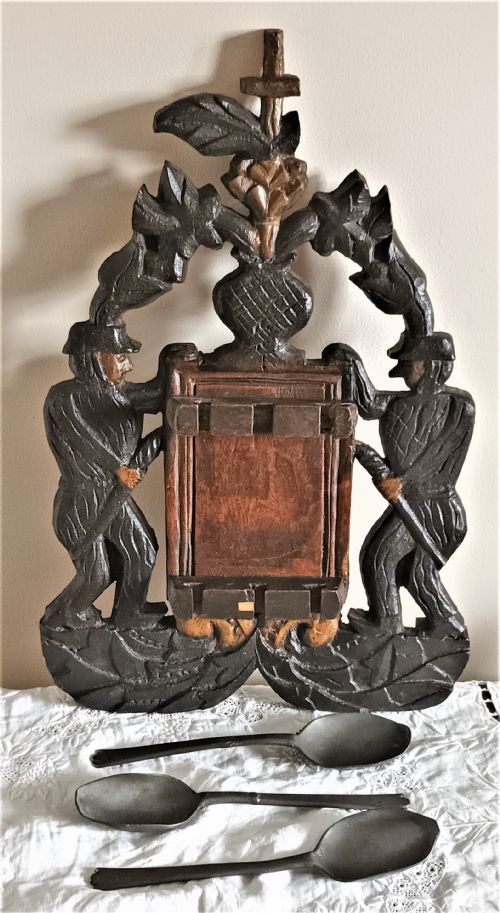
The pieces were fashioned primarily from sterling silver or Britannia standard silver, alongside more utilitarian examples made from pewter, oak, and latten metal.
Silver items typically display maker stamps, whereas base metal items often rely on surviving regional forms and historical context for attribution.
How were they used historically?
These spoons served as personal dining implements for wealthy households during an era when guests frequently carried their own cutlery to meals.
The flat, wide handle allowed the utensil to rest stably on the table, while the reinforced bowl handled daily dining before the introduction of modern place settings.