


17th Century Carved Box
A 17th century carved box is a sturdy receptacle shaped by early woodworking traditions, offering both practical storage and historic character.
17th Century Carved Box
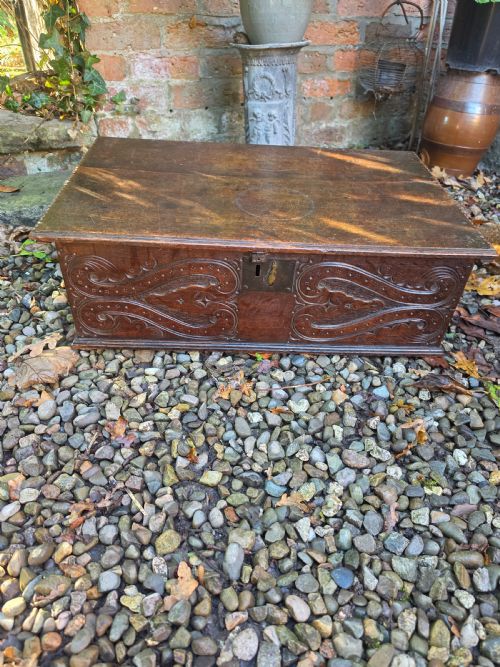
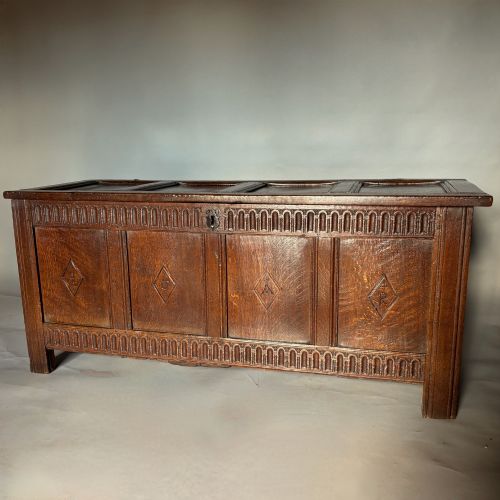
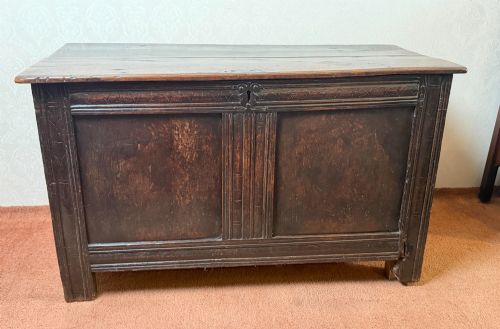
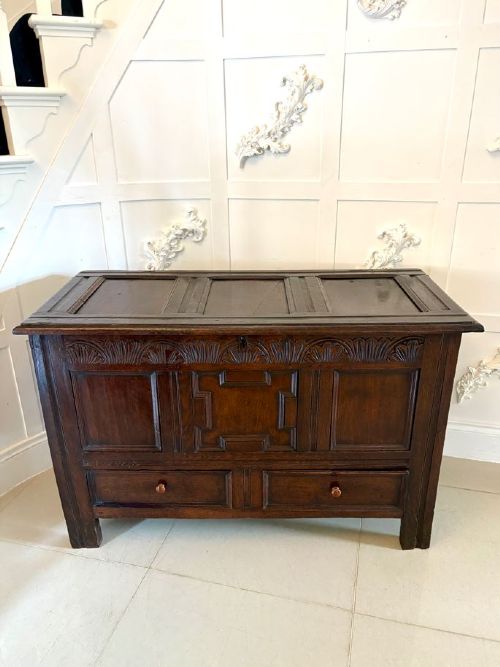
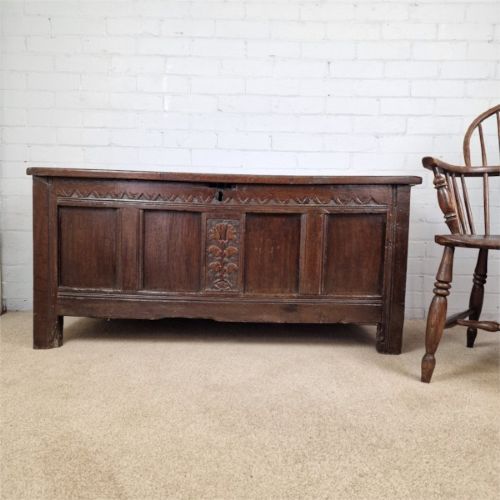
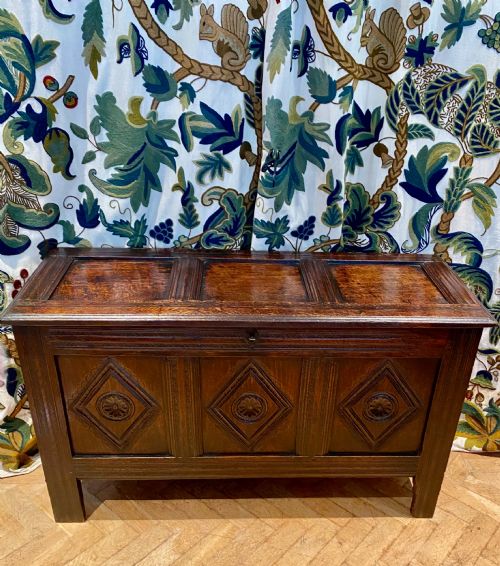
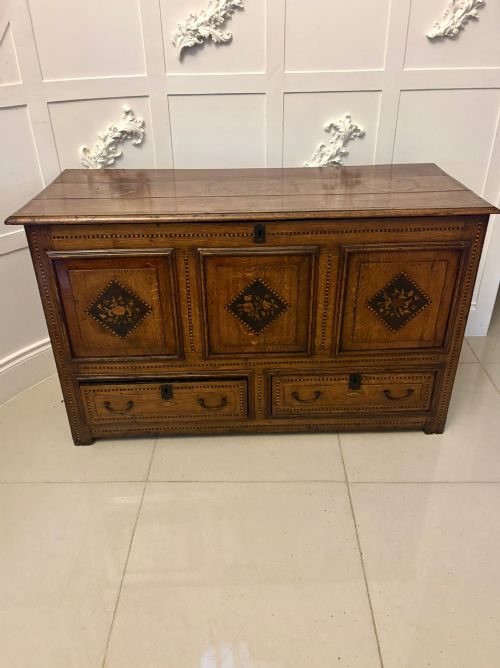
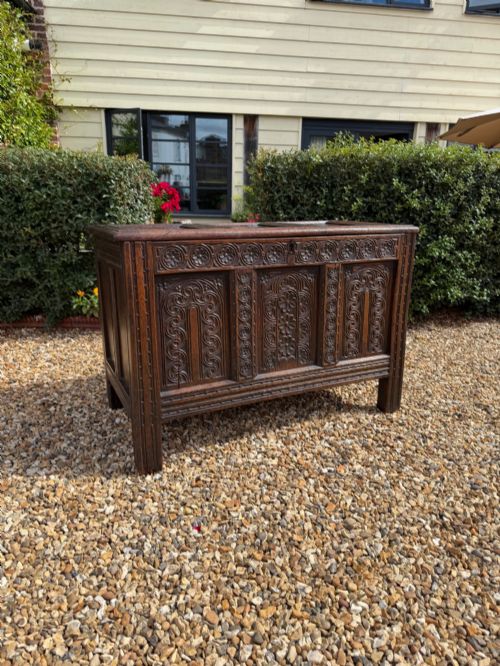
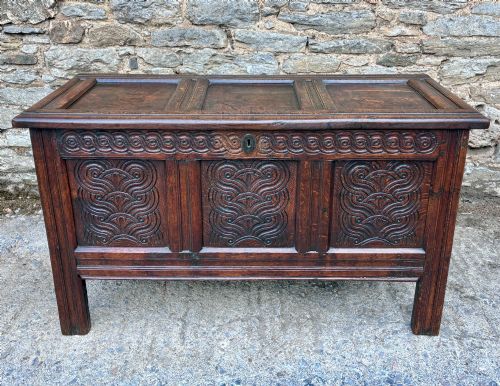
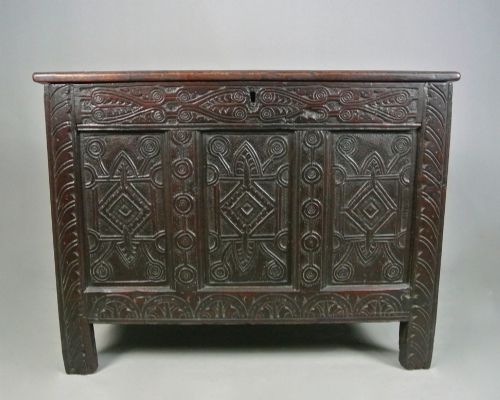
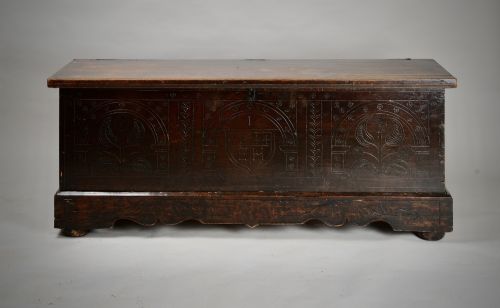
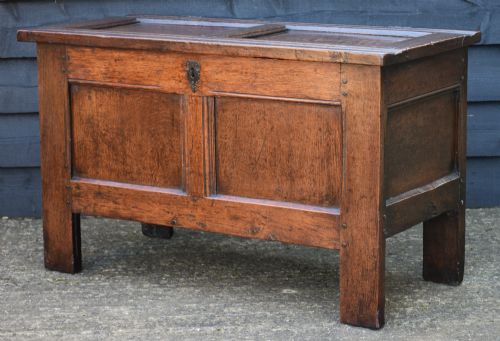
A 17th century carved box encompasses various forms designed for storage and daily utility, dominated by oak coffers, bible boxes, and mule chests. Buyers seeking this category encounter sturdy vessels shaped by centuries of use, originating from English counties as well as wider European workshops.
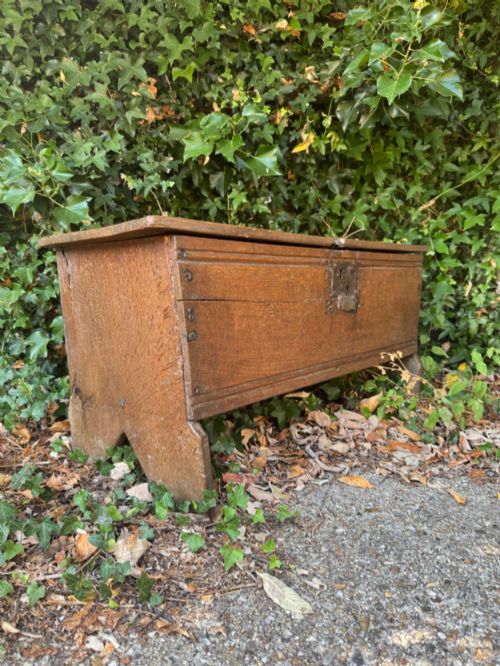
The selection ranges from plank constructions and joined oak examples to specialised forms such as slant front bible boxes and box stools. Pieces span authentic seventeenth century items alongside later revival periods, offering distinct proportions and regional characteristics.
How they were made
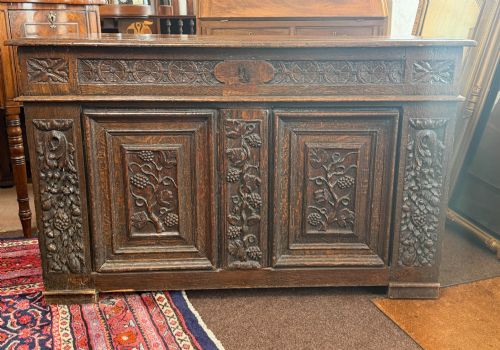
Makers built these pieces primarily using English oak, shaped through joined framing and panel construction, often supplemented by plank methods in simpler formats. Surfaces frequently display linear or geometric carved decoration executed with gouges and chisels.
Hardware played an essential structural and decorative role, incorporating wrought iron hinges, latches, and brass details. Selected examples also integrate marquetry inlay or mixed inlay woods to enhance the visual depth of the panels.
Listings feature diverse materials including English oak, cypress, elm, iron, and marquetry inlay across various regional chests and boxes.
What varies in quality
Quality rests in the crispness of the original carving and the integrity of the timber frame, distinguishing master cabinet work from utilitarian carpentry. Superior proportions and surviving early hardware elevate certain examples above standard storage boxes.
The presence of untouched original surfaces, authentic patination, and documented regional origins provide further distinction across the available range.
The 17th Century Carved Box Glossary
- Coffer
- A large wooden chest used traditionally for storing valuables, linens, or documents. These sturdy receptacles often feature panelled construction and hinged lids.
- Bible Box
- A small tabletop or desk box historically utilised to store family scriptures and writing materials. Many feature sloping lids adapted for reading or writing.
- Joined Oak
- A method of furniture construction relying on mortise and tenon joints secured with wooden pegs. This technique provides durable framing without requiring modern fasteners.
- Marquetry Inlay
- The art of applying decorative veneer pieces onto a solid wood base to create pictorial or geometric patterns. Makers utilised various contrasting woods to achieve this effect.
- Mule Chest
- A storage chest featuring one or more drawers built into the base beneath the main compartment. This form bridges the evolution between simple coffers and modern drawer chests.
17th Century Carved Box: Frequently Asked Questions
What is a 17th century carved box used for?
These boxes served primarily to secure domestic valuables, household linens, and important documents away from damp floors and pests. Smaller formats like bible boxes kept sacred texts and writing implements protected and portable.
Today, they function as decorative storage furniture in living spaces, holding blankets, media items, or everyday clutter while adding historic presence to a room.
How do you identify a genuine 17th century box?
Identification relies on examining the construction methods, tool marks, and timber shrinkage patterns visible across the panels and interior surfaces. Authentic examples utilise traditional jointing techniques secured with wooden pegs rather than machine-made fasteners.
Hardware such as iron strap hinges and latches should align with period blacksmithing styles. Regional traits and wood patination also help confirm the era of origin.
How should I care for an antique oak box?
Maintain the wood by keeping the box away from direct heat sources, strong sunlight, and rapid humidity changes that can cause timber to split. Occasional application of traditional beeswax helps nourish the surface and preserve the historic patina.
Avoid modern silicon polishes or harsh cleaning agents, as these can strip the aged finish. Gentle dusting with a dry cloth is sufficient for routine maintenance.
Where were these wooden boxes made?
Production occurred across various English regions, with distinct local styles emerging from areas such as Dorset, Cornwall, and the Welsh Gower peninsula. Continental European workshops also produced comparable chests in woods like cypress and mahogany.
Local timber availability and regional cabinet-making traditions heavily influenced the design, carving motifs, and structural form of each piece.