



16th Century Religious Statues
These 16th century religious statues bring devotional presence into a room through centuries of hand-carved grain and worn pigment.
16th Century Religious Statues
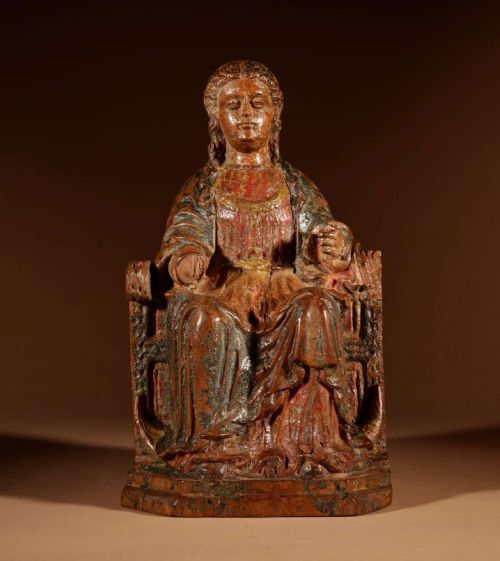
When you search for 16th century religious statues, you encounter devotional carvings shaped during the Renaissance and Gothic transitions across Europe and Asia. These figures depict saints, Madonnas, and divine personages intended for private contemplation or church settings.
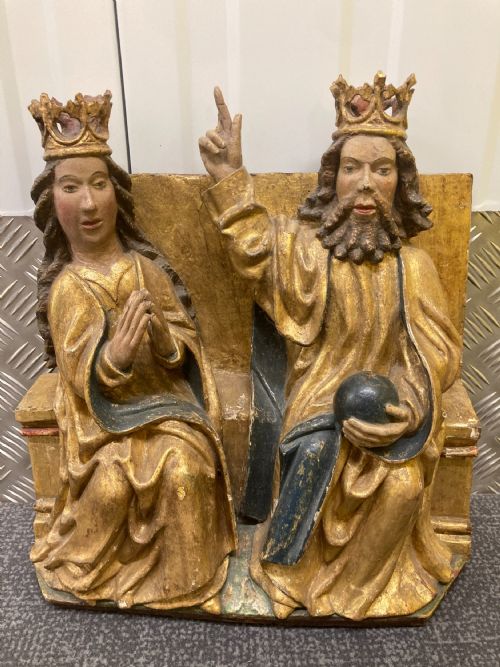
The pieces on this page appear as solitary carved saints, paired figures, and small portrait busts in wood and metal. Most specimens originate from continental workshops, displaying the regional styles of the period.
Makers shaped these subjects to serve spiritual functions, rendering drapery and expression with solemnity. They survive today as tangible fragments of period piety and master carver output.
How they were made
Carvers shaped these works primarily from dense timbers like oak, walnut, and limewood using chisels and gouges. Artisans then applied gesso grounds to receive polychrome paint and gold leaf, adding surface radiance to the carved forms.
Metal figures emerged through casting processes in bronze or silver and copper alloys, capturing intricate detail in the alloy. Workshops combined these materials to convey the sacred status of the subjects.
The listings span two centuries, incorporating both the 16th Century and the 17th Century across various origins.
What varies in quality
Depth of carving and anatomical proportion separate standard workshop output from exceptional sculpture. Superior hands handle facial expression and fabric folds with convincing weight and natural movement.
The survival of original surface treatments determines the visual integrity of a piece. Traces of ancient polychrome paint and gilding hold greater historical weight than modern interventions.
The 16th Century Religious Statues Glossary
- Polychrome paint
- Pigments applied to sculpture to render lifelike flesh, hair, and vestments. This surface decoration often survives only in fragments today.
- Giltwood
- Timber coated with a thin layer of gold leaf over a prepared base. It catches ambient light to elevate the status of the sacred figure.
- Gothic
- A medieval art style characterised by vertical emphasis and linear drapery. Figures from this tradition display solemn, elongated proportions.
- Renaissance
- A cultural movement introducing classical humanism and naturalism to sculpture. Carvers utilised these principles to give figures psychological depth.
- Relief
- A sculptural technique where figures project from a flat background panel. These carvings often decorated church altarpieces and architectural elements.
16th Century Religious Statues: Frequently Asked Questions
How do I care for wooden statues?
Keep wooden carvings away from direct heat sources and sudden humidity shifts to prevent timber splitting. Dust gently with a dry, soft brush rather than using liquid polishes.
Allow the natural patina to remain undisturbed by harsh cleaning methods. Stable indoor environments preserve both the wood and any surviving pigment.
How can I tell the period?
Examine the tool marks, timber choice, and stylistic conventions visible on the carving. Late Gothic and Renaissance works show distinct approaches to drapery and facial modelling.
Compare the regional characteristics, such as northern European oak usage or specific regional carving habits. Material wear and oxidation patterns also indicate age.
Where were these figures displayed?
Original locations included domestic household shrines, private chapels, and larger church altars. Figures were positioned to aid personal prayer and contemplation.
Portable sculptures allowed individuals to carry devotion during travel or place items within intimate interior spaces. Their scale suited personal interaction rather than monumental architectural display.
What does a fragment indicate?
A fragment represents a surviving portion of a larger altarpiece, group carving, or architectural ensemble. Breakage often occurred during periods of religious upheaval or structural dispersal.
These pieces remain valuable for studying individual carver technique and material construction. They offer accessible entry points into early sculptural traditions.