49,524  PAGES BROWSED TODAY PAGES TODAY • 188 ANTIQUES UPLOADED TODAYNEW ARRIVALS
GIFTS
188 ITEMS ADDED TODAY
Sort Order
Items Per Page
Browse Categories
Sort order
Relevant Links
Items per page
ID #SA1156134
SOLD
Email Phone
Save
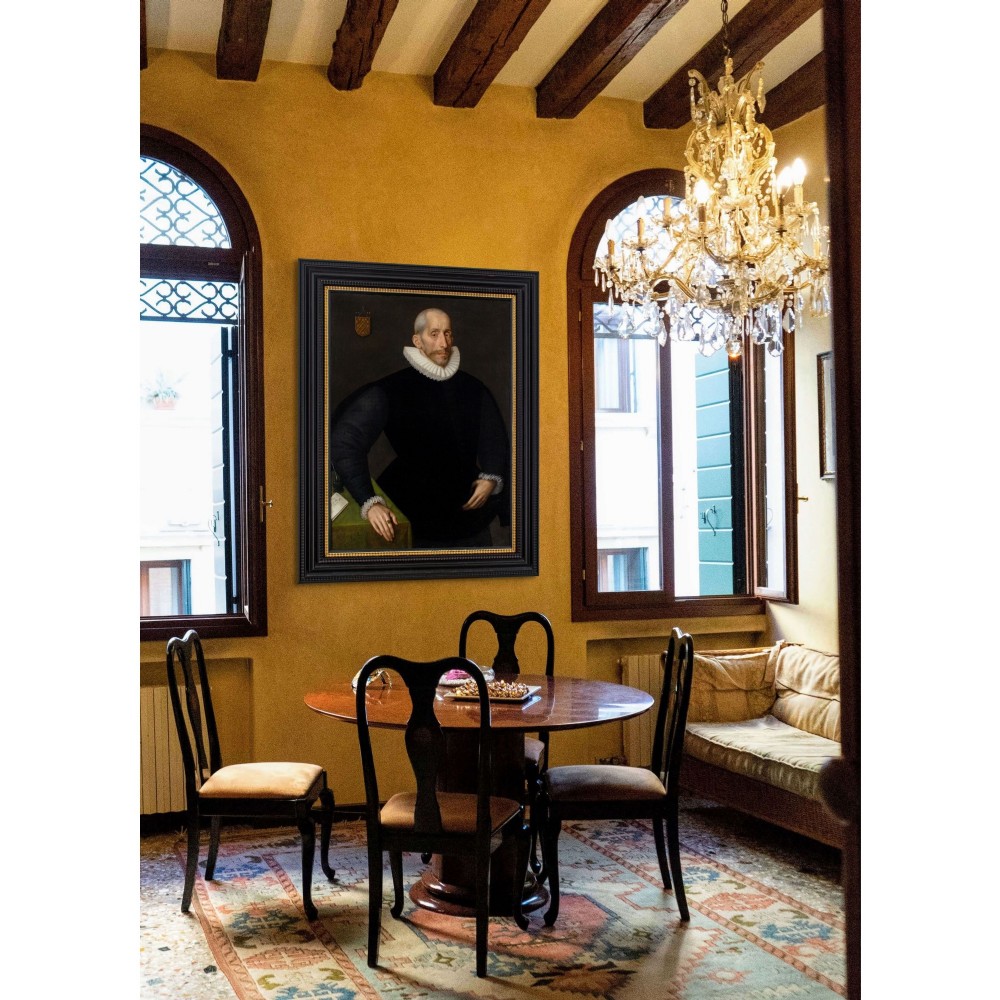
Gortzius Geldorp, Portrait of a Member of the Sani Family, 16th Century Oil Painting
Sold by Brave Fine Art
sold SA1156134
Sorry, but this item has been sold.
Brave Fine Art

Brave Fine Art

Sellingantiques Verified Since Nov 2018
Browse dealers 76 items
  • About Us
    Exquisite antique paintings that capture the imagination.
Id #SA1156134
PDF SHARE
SAVE

Gortzius Geldorp, Portrait of a Member of the Sani Family, 16th Century Oil Painting

16th century
Sold 29 August 2025 · Brave Fine Art
This “Gortzius Geldorp, Portrait of a Member of the Sani Family, 16th Century Oil Painting” found a buyer.

It was listed by Brave Fine Art. Sold pieces stay on Sellingantiques as a record of what has passed through, and the next one is rarely far away.

Description

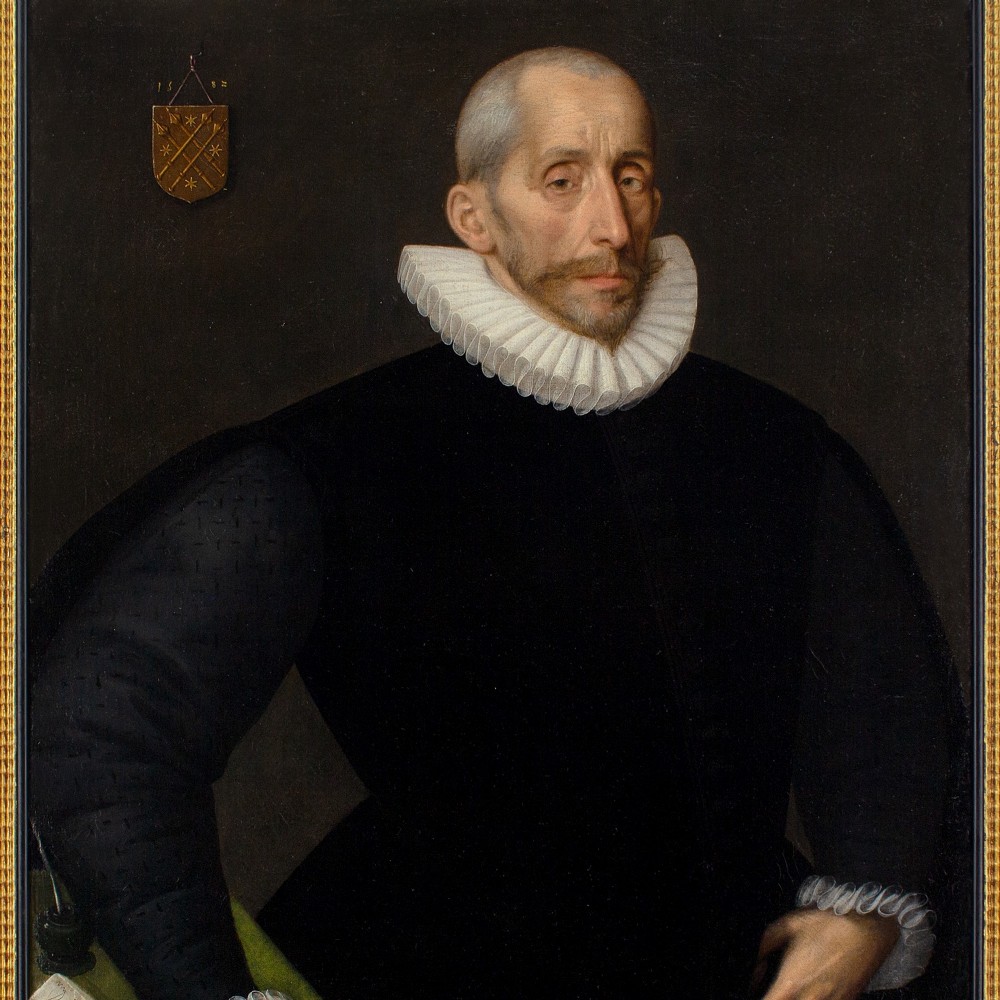
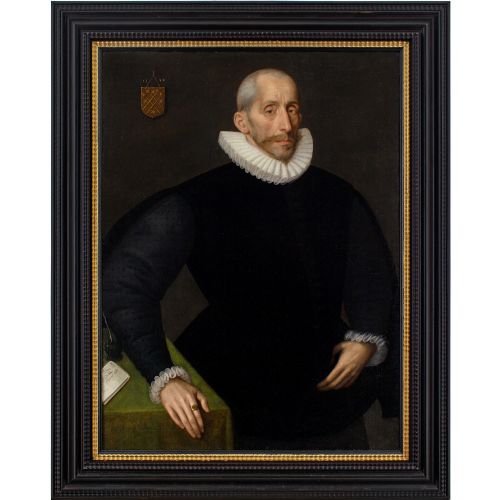
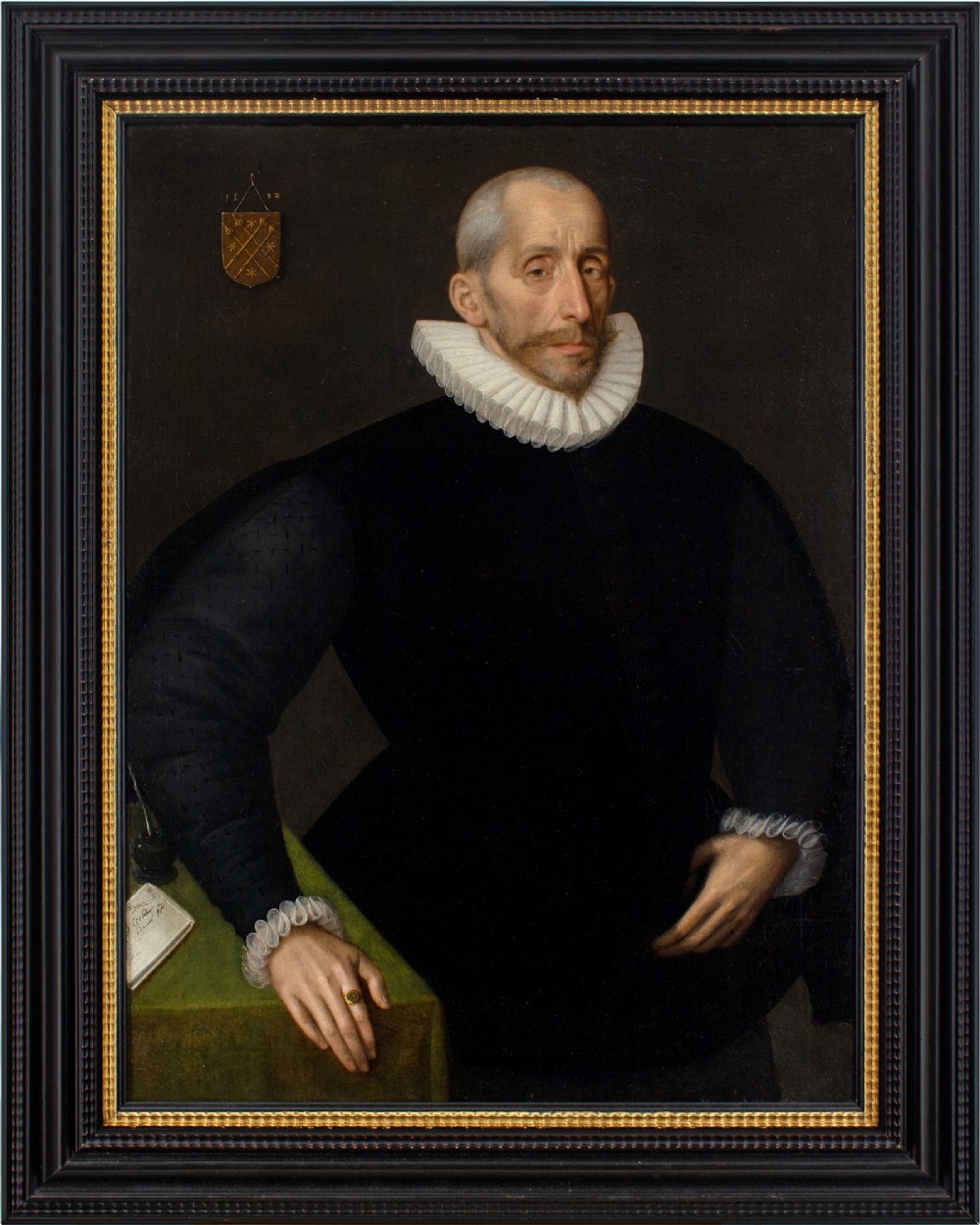
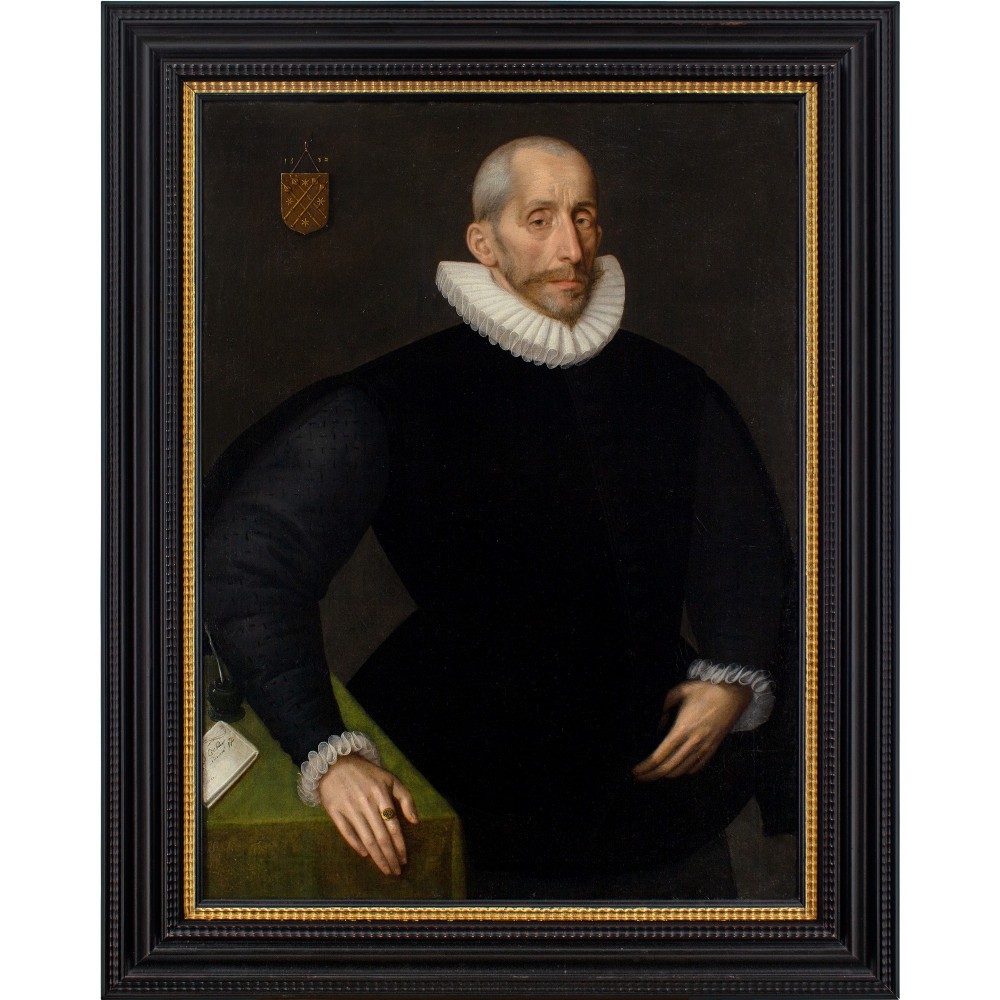
This late 16th-century portrait attributed to Flemish artist Gortzius Geldorp (1553-1618) depicts an older member of the Sani family. Produced in 1582 and fully signed, it represents the earliest known Geldorp portrait we’re aware of.

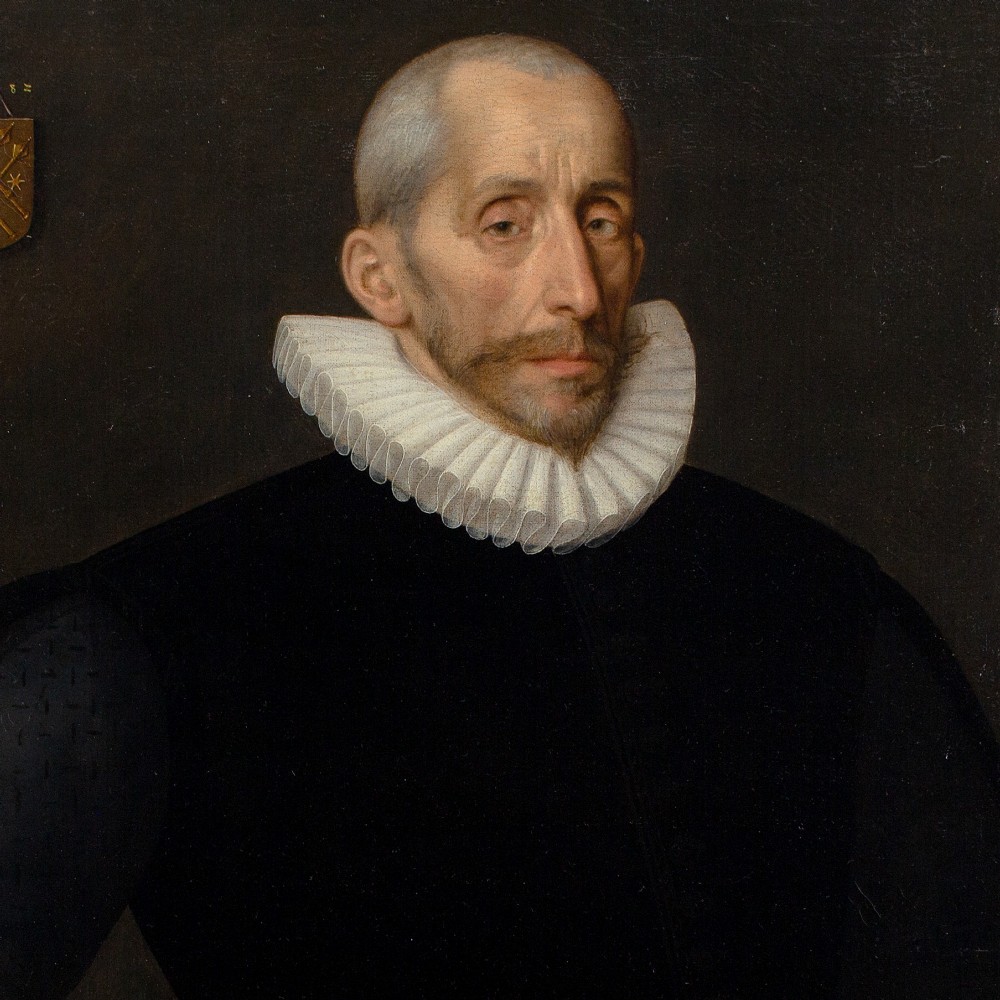
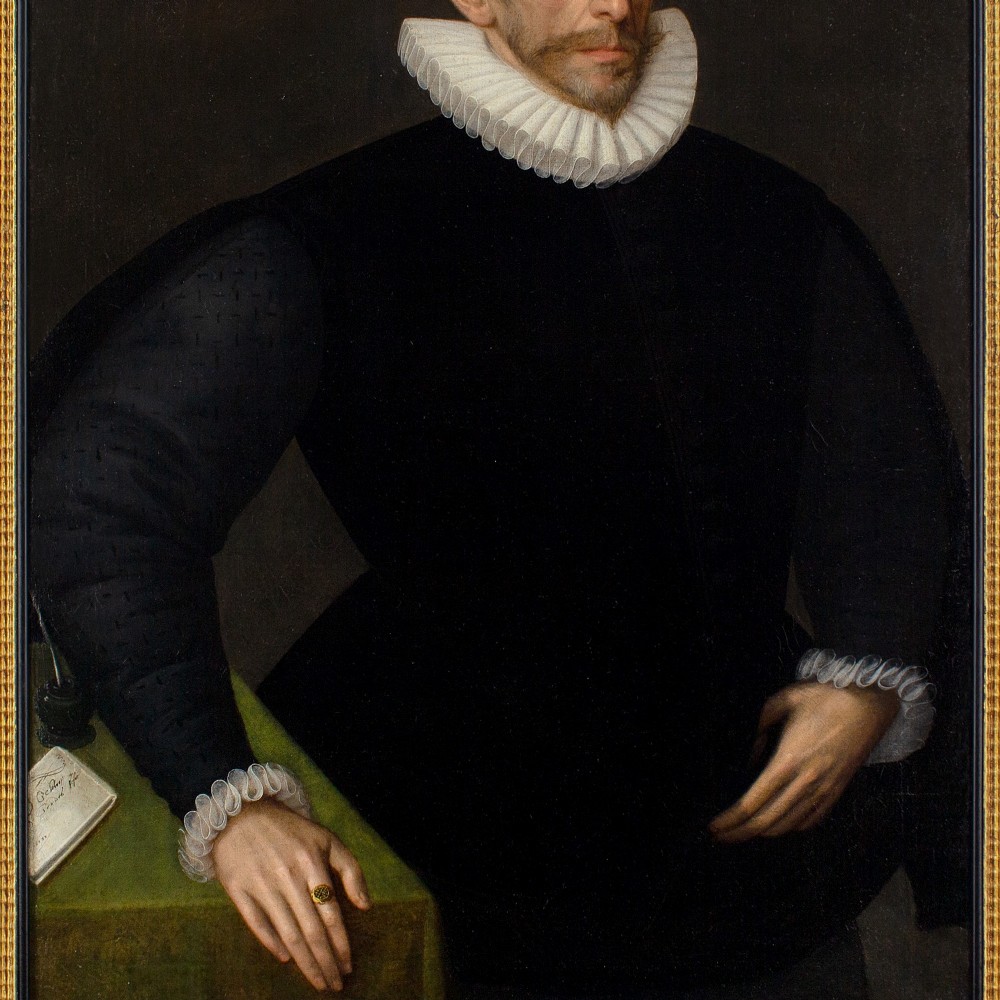
Dressed in a rather austere monochromatic ensemble, consisting of a black jerkin, doublet and breeches, he conveys experience, astuteness and wisdom. In the top left, a coat of arms represents the Sani family, who were predominantly associated with Tuscany, central Italy. ‘Blazon: azure with four maces of arms passed in a double St. Andrew’s cross, set aside by four stars, all in gold.’
The precise identity of the sitter is unknown, but it’s a surname with links to local government and art patronage, particularly in Siena. For instance, during the late 15th century, Andrea Sani held the role of Chief Magistrate, the highest office in city governance. And in 1550, the Sani family commissioned Italian mannerist painter, Domenico di Pace Beccafumi (1486-1551) to produce an altarpiece of Saint Michael Defeating the Rebel Angels for San Niccolò al Carmine church. 18th-century examples of the coat of arms can still be seen in Siena today.
Given the portrait’s date of 1582, another potential candidate is Michele Angiolo Sani, the Chancellor and Notary of Volterra, in the Tuscan mountains. Luigi Biadi’s ‘Storia della citta di Colle in Val d'Elsa’ (1859), refers to him performing civil duties in 1586. Or alternatively, it could relate to the Sanis of Crasciana in Bagni di Lucca, Tuscany, and specifically Salvestro Sani (b.1510).
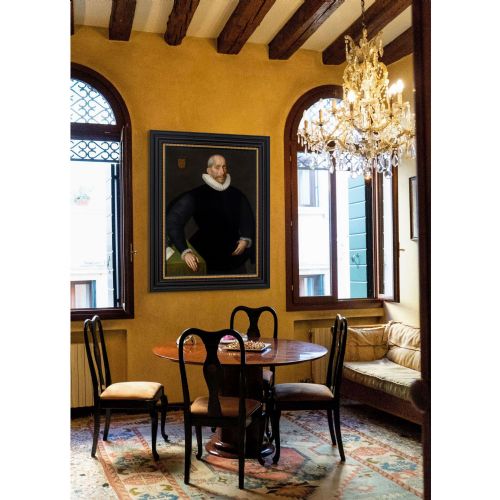
Gortzius Geldorp was born in Leuven, Flemish Brabant, and information relating to the early part of his career is particularly scant. The art historian, Karel van Mander (1548-1606), was the first to allude to him, referring to him as ‘Gualdrop Gortzius gheseyt Geldrop’ (Gualdrop Gortzius called Geldrop), which suggests that his family hailed from Geldrop in North Brabant, The Netherlands. This remains uncertain however, as nothing is known of his forebears.
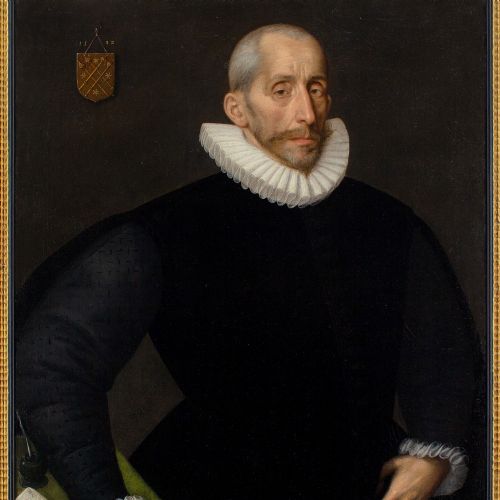
It’s generally accepted that he travelled to Antwerp in 1569 and trained under two of its principal painters, Frans Francken I (1542-1616) and Frans Pourbus the Elder (1545-1581). Pourbus was a master of highly individualised portrayals with details rendered with precision.
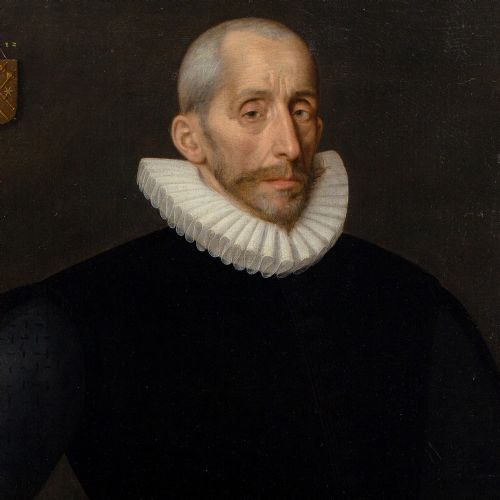
In 1576, Geldorp was appointed as court painter to the Duke of Terra Nova, Carlo d'Aragona Tagliavia, and accompanied him on numerous European sojourns. In 1579, the pair travelled to Cologne as the Duke was serving as Philip II’s ambassador in peace negotiations with the Dutch. Here, it’s suggested that Geldorp remained and undertook numerous works depicting biblical subjects, such as ‘Esther and Ahasuerus’, yet very little documentation survives. It’s not until 1609 that his presence in Cologne can be verified, when Dutch writer Matthias Quad (1557-1613) records ‘Geldorp, currently living in Cologne, is favoured above all others for likenesses from life’. The same year, he was elected as a representative of the Cologne Painters' Guild.
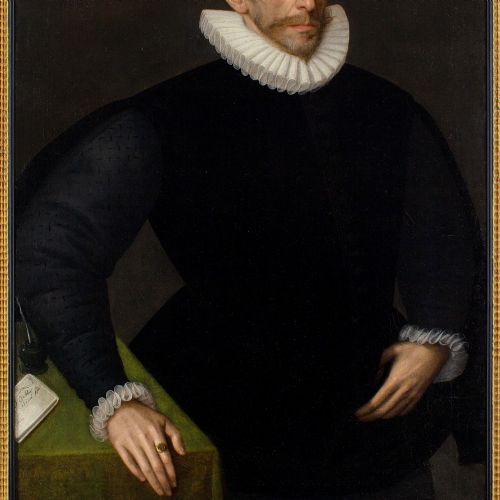
His location and indeed his activity between 1579 and 1609 is a topic of debate and one explored by Thomas Fusenig and Regina Urbanek in their paper ‘One hundred years of Pseudo-Hans von Aachen: On Cologne portrait painting around 1600’. Also by Horst Vey in ‘Von Geldorp Gortzius in Budapest’. Our portrait appears to shed light on this ‘lost’ period as it suggests that, in 1582, he was working in Italy. This is conceivable when one considers that the Duke of Terra Nova, Carlo d'Aragona Tagliavia, his primary patron, was Italian (b. Castelvetrano, Sicily) and on 18 October 1582, he was appointed Governor of Milan, a post he held until 1592. 1582 also witnessed the marriage of the Duke’s daughter, Giulia Tagliavia d'Aragona, to Fabrizio Carafa, Prince of Roccella.

Furthermore, it’s also plausible th

Date of Manufacture

Brave Fine Art has dated this 16th Century Oil Painting to the 16th Century.

Physical Dimensions
Height
117cm (46.06")
Width
94cm (37.01")
Depth
4cm (1.57")
Reference Numbers
Sellingantiques Reference
SA1156134
Description
This late 16th-century portrait attributed to Flemish artist Gortzius Geldorp (1553-1618) depicts an older member of the Sani family. Produced in 1582 and fully signed, it represents the earliest known Geldorp portrait we’re aware of.
“
Dressed in a rather austere monochromatic ensemble, consisting of a black jerkin, doublet and breeches, he conveys experience, astuteness and wisdom.
Brave Fine Art

In the top left, a coat of arms represents the Sani family, who were predominantly associated with Tuscany, central Italy. ‘Blazon: azure with four maces of arms passed in a double St. Andrew’s cross, set aside by four stars, all in gold.’

fig 1. An oil painting depicting a 16th-century male subject with a ruff collar against a dark background, enclosed in a black and gold frame.
fig 1. Gortzius Geldorp, Portrait of a Member of the Sani Family, 16th Century Oil Painting

The precise identity of the sitter is unknown, but it’s a surname with links to local government and art patronage, particularly in Siena. For instance, during the late 15th century, Andrea Sani held the role of Chief Magistrate, the highest office in city governance. And in 1550, the Sani family commissioned Italian mannerist painter, Domenico di Pace Beccafumi (1486-1551) to produce an altarpiece of Saint Michael Defeating the Rebel Angels for San Niccolò al Carmine church. 18th-century examples of the coat of arms can still be seen in Siena today.

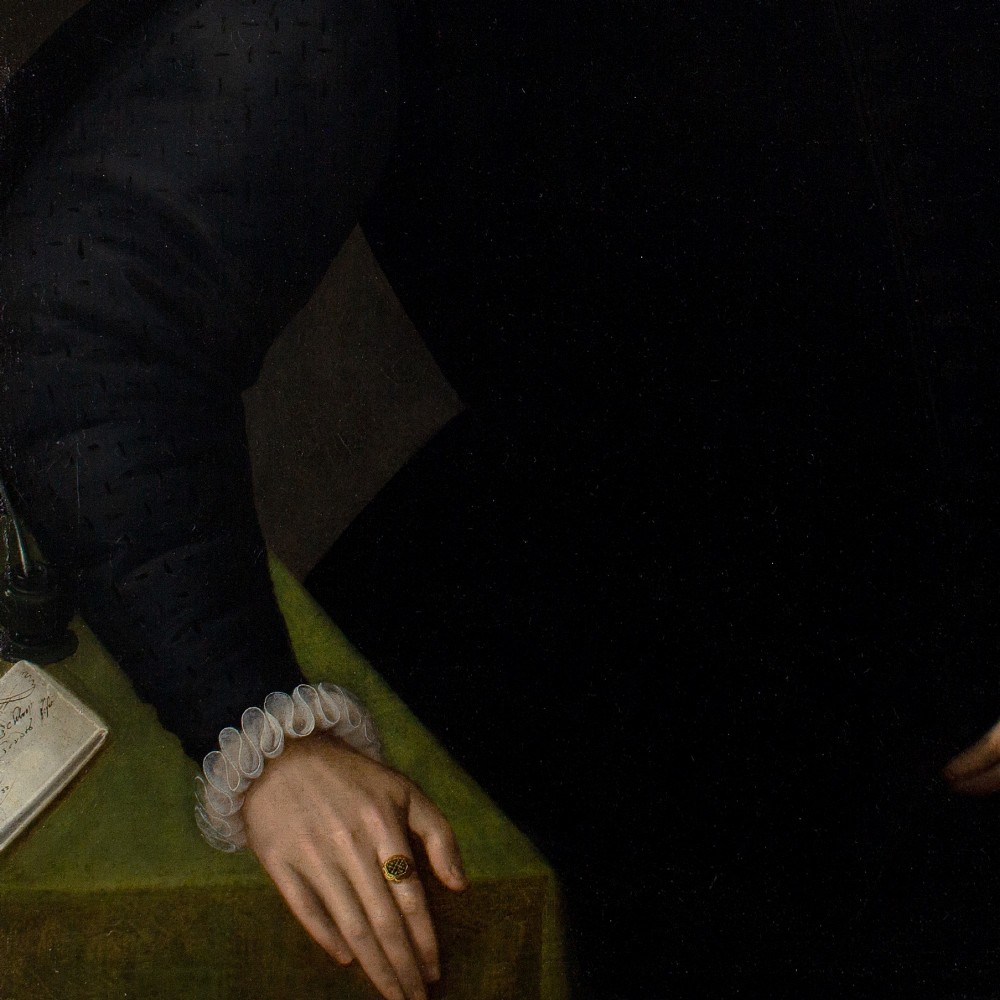
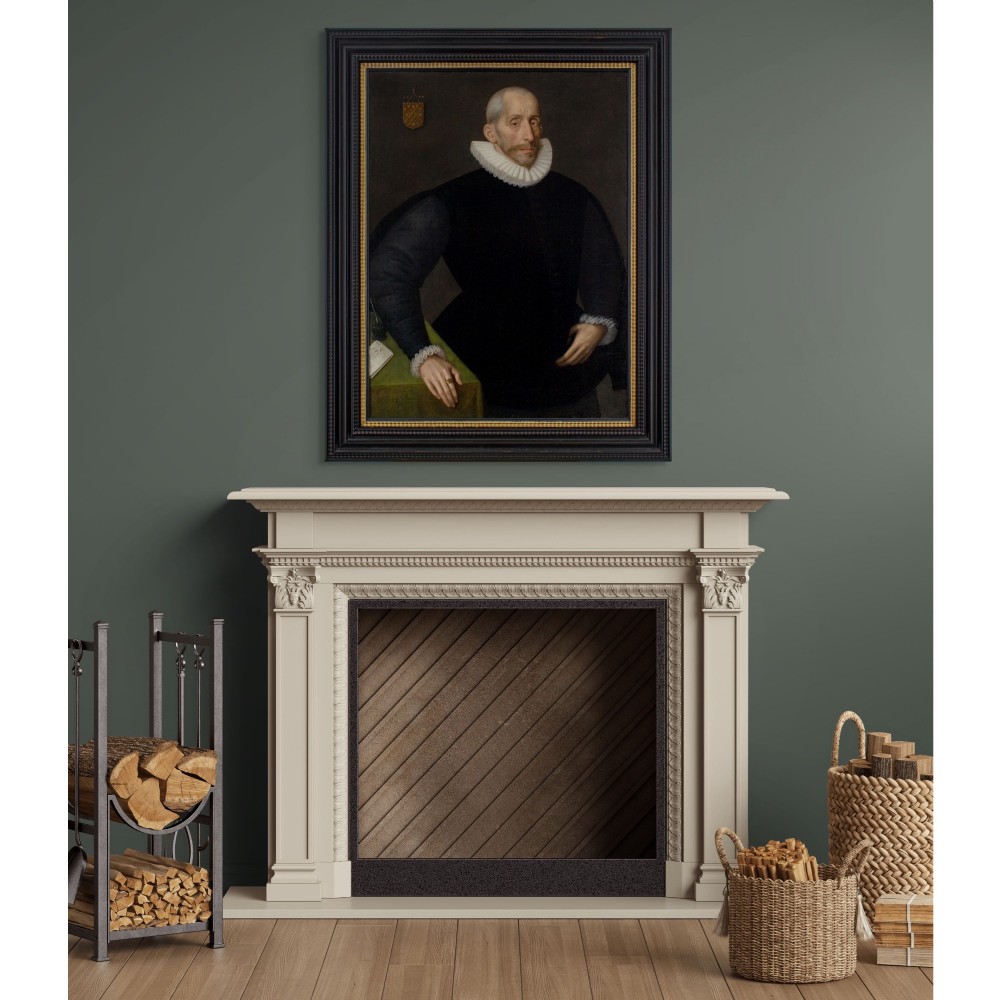
fig 2. An oil painting depicting a 16th-century male subject with a ruff collar against a dark background, enclosed in a black and gold frame.
fig 2. Gortzius Geldorp, Portrait of a Member of the Sani Family, 16th Century Oil Painting

Given the portrait’s date of 1582, another potential candidate is Michele Angiolo Sani, the Chancellor and Notary of Volterra, in the Tuscan mountains. Luigi Biadi’s ‘Storia della citta di Colle in Val d'Elsa’ (1859), refers to him performing civil duties in 1586. Or alternatively, it could relate to the Sanis of Crasciana in Bagni di Lucca, Tuscany, and specifically Salvestro Sani (b.1510).

fig 3. An oil painting depicting a 16th-century male subject with a ruff collar against a dark background, enclosed in a black and gold frame.
fig 3. Gortzius Geldorp, Portrait of a Member of the Sani Family, 16th Century Oil Painting

Gortzius Geldorp was born in Leuven, Flemish Brabant, and information relating to the early part of his career is particularly scant. The art historian, Karel van Mander (1548-1606), was the first to allude to him, referring to him as ‘Gualdrop Gortzius gheseyt Geldrop’ (Gualdrop Gortzius called Geldrop), which suggests that his family hailed from Geldrop in North Brabant, The Netherlands. This remains uncertain however, as nothing is known of his forebears.

fig 4. An oil painting depicting a 16th-century male subject with a ruff collar against a dark background, enclosed in a black and gold frame.
fig 4. Gortzius Geldorp, Portrait of a Member of the Sani Family, 16th Century Oil Painting

It’s generally accepted that he travelled to Antwerp in 1569 and trained under two of its principal painters, Frans Francken I (1542-1616) and Frans Pourbus the Elder (1545-1581). Pourbus was a master of highly individualised portrayals with details rendered with precision.

fig 5. An oil painting depicting a 16th-century male subject with a ruff collar against a dark background, enclosed in a black and gold frame.
fig 5. Gortzius Geldorp, Portrait of a Member of the Sani Family, 16th Century Oil Painting

In 1576, Geldorp was appointed as court painter to the Duke of Terra Nova, Carlo d'Aragona Tagliavia, and accompanied him on numerous European sojourns. In 1579, the pair travelled to Cologne as the Duke was serving as Philip II’s ambassador in peace negotiations with the Dutch. Here, it’s suggested that Geldorp remained and undertook numerous works depicting biblical subjects, such as ‘Esther and Ahasuerus’, yet very little documentation survives. It’s not until 1609 that his presence in Cologne can be verified, when Dutch writer Matthias Quad (1557-1613) records ‘Geldorp, currently living in Cologne, is favoured above all others for likenesses from life’. The same year, he was elected as a representative of the Cologne Painters' Guild.

fig 6. An oil painting depicting a 16th-century male subject with a ruff collar against a dark background, enclosed in a black and gold frame.
fig 6. Gortzius Geldorp, Portrait of a Member of the Sani Family, 16th Century Oil Painting

His location and indeed his activity between 1579 and 1609 is a topic of debate and one explored by Thomas Fusenig and Regina Urbanek in their paper ‘One hundred years of Pseudo-Hans von Aachen: On Cologne portrait painting around 1600’. Also by Horst Vey in ‘Von Geldorp Gortzius in Budapest’. Our portrait appears to shed light on this ‘lost’ period as it suggests that, in 1582, he was working in Italy. This is conceivable when one considers that the Duke of Terra Nova, Carlo d'Aragona Tagliavia, his primary patron, was Italian (b. Castelvetrano, Sicily) and on 18 October 1582, he was appointed Governor of Milan, a post he held until 1592. 1582 also witnessed the marriage of the Duke’s daughter, Giulia Tagliavia d'Aragona, to Fabrizio Carafa, Prince of Roccella.

Furthermore, it’s also plausible th

Date of Manufacture

Brave Fine Art has dated this 16th Century Oil Painting to the 16th Century.

Height
117cm (46.06")
Width
94cm (37.01")
Depth
4cm (1.57")
Reference Numbers
Sellingantiques Ref
SA1156134
Brave Fine Art
Brave Fine Art
Sellingantiques verified Since Nov 2018

Exquisite antique paintings that capture the imagination.

Dealer Profile

You can view the stock and full dealer information on the Brave Fine Art Profile Page
PDF SHARE
SAVE
An oil painting depicting a 16th-century male subject with a ruff collar against a dark background, enclosed in a black and gold frame. SOLD6+ MONTHS AGO
1 / 9
Archive I An oil painting depicting a 16th-century male subject with a ruff collar against a dark background, enclosed in a black and gold frame. SOLD6+ MONTHS AGO

Gortzius Geldorp, Portrait of a Member of the Sani Family, 16th Century Oil Painting
Archive II An oil painting depicting a 16th-century male subject with a ruff collar against a dark background, enclosed in a black and gold frame. View II
Archive III An oil painting depicting a 16th-century male subject with a ruff collar against a dark background, enclosed in a black and gold frame. View III
Archive IV An oil painting depicting a 16th-century male subject with a ruff collar against a dark background, enclosed in a black and gold frame. View IV
Archive V An oil painting depicting a 16th-century male subject with a ruff collar against a dark background, enclosed in a black and gold frame. View V
Archive VI An oil painting depicting a 16th-century male subject with a ruff collar against a dark background, enclosed in a black and gold frame. View VI
Archive VII An oil painting depicting a 16th-century male subject with a ruff collar against a dark background, enclosed in a black and gold frame. View VII
Archive VIII An oil painting depicting a 16th-century male subject with a ruff collar against a dark background, enclosed in a black and gold frame. View VIII
Archive IX An oil painting depicting a 16th-century male subject with a ruff collar against a dark background, enclosed in a black and gold frame. View IX
Enlarged Archival View
Telephone 01684 215986
Location
21 Enterprise Way
Arle Road
Cheltenham
Cotswolds
GL51 8LZ
United Kingdom

Under appointment only.
Verified Since Nov 2018
Items For Sale 76
Items Sold 1,853
Brave Fine Art
Brave Fine Art
Verified Since Nov 2018
View Dealer Info
Location: 21 Enterprise Way, Arle Road, Cheltenham, Cotswolds, GL51 8LZ, United Kingdom, , Under appointment only.
Verified
Nov 2018
For Sale
76
Sold
1,853
An oil painting depicting a 16th-century male subject with a ruff collar against a dark background, enclosed in a black and gold frame.
Gortzius Geldorp, Portrait Of A Member Of The Sani Family, 16th Century Oil Painting
Ref: SA1156134
An oil painting depicting a 16th-century male subject with a ruff collar against a dark background, enclosed in a black and gold frame.
Detail View 1
Detail View 2
Detail View 3
Detail View 4
Detail View 5
Detail View 6
Detail View 7
Detail View 8
Archival Detail
Every single antique dealer on our platform is individually approved by our internal team. We verify their professional trade history, ethical standards, and photographic quality to ensure a secure, high-standard buying environment. Upon joining, every dealer agrees to a strict 9-point code of conduct. While issues can occasionally arise, our dealers typically resolve them swiftly and directly with the buyer. In fact, since our founding in 2002, Sellingantiques has only had to step in to help resolve an issue on roughly five occasions—a true testament to the quality of our dealers and their dedication to your happiness.
Our dealers are highly experienced in packing and shipping fragile, high-value antiques. Because you are in direct contact with the dealer, you will be able to easily go through all available shipping and insurance options together to ensure your item arrives safely.
Antiques are the ultimate green purchase. By choosing historical pieces over newly manufactured goods, you completely eliminate the carbon footprint of modern mass production while preserving exceptional, timeless craftsmanship.
Written by Sellingantiques from the dealer’s photographs and listing
  • ObjectPaintings
  • Period16th century
  • StyleRenaissance
  • MaterialOil paint, canvas, wood
  • ColourDark Brown
  • MotifsRuff collar, Coat of arms, Hand with signet ring, Table with letter
  • SizeH 117 cm (46 in) x W 94 cm (37 in) x D 4 cm (2 in)

Sixteenth-century portraits are characterised by precise realism, dark backgrounds, and often depict subjects of high social standing with symbolic items denoting status.

These works typically utilise oil paint applied in thin, translucent layers (glazes) over a gesso-primed canvas or wooden panel, housed in period-appropriate wooden frames.

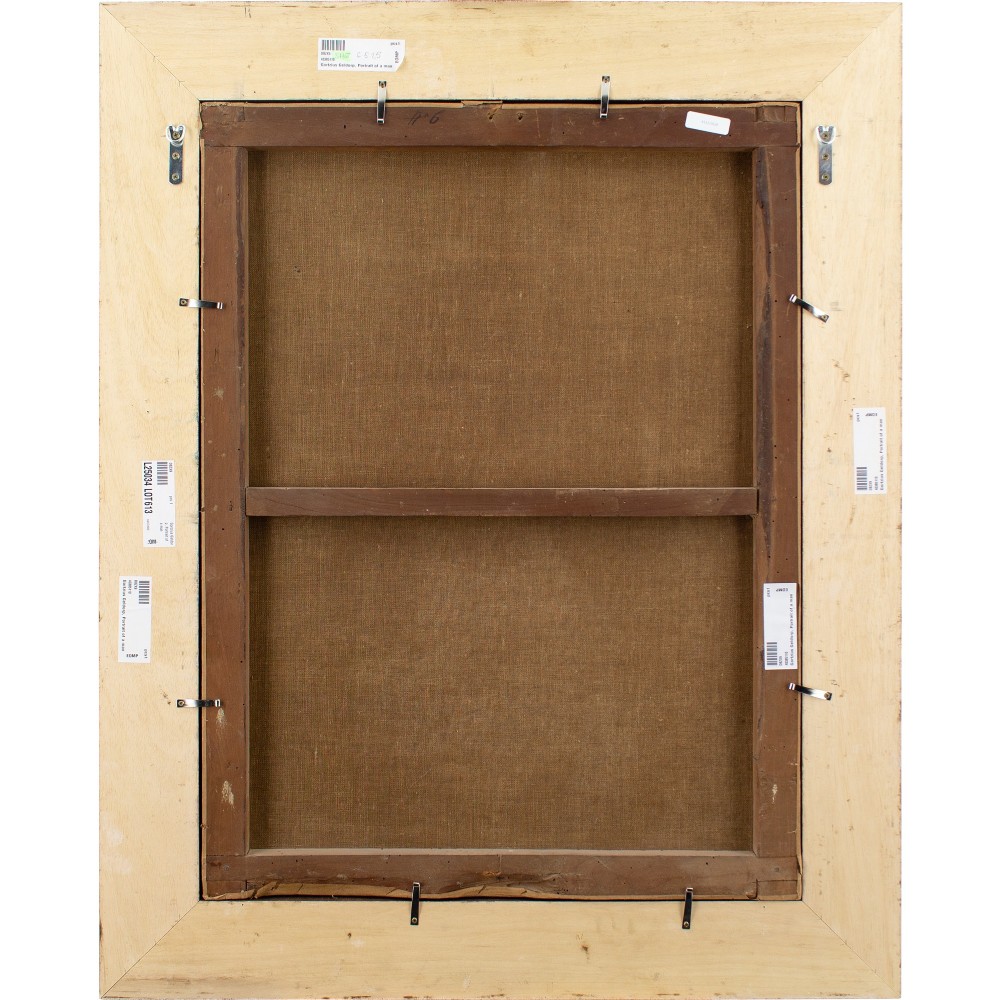
Authentication involves examining craquelure, canvas or panel age, pigment composition via scientific testing, provenance documentation, and stretcher frame construction.

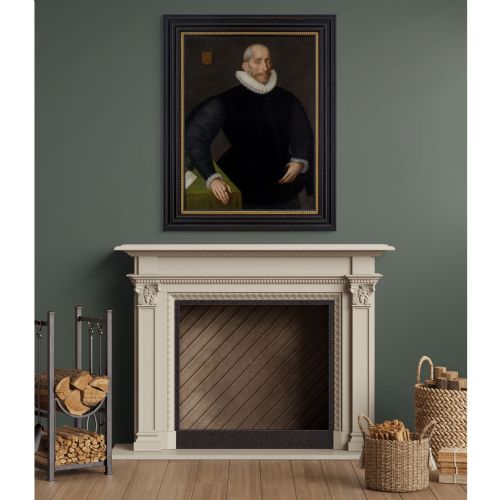
Pairing historical portraiture with minimalist or contemporary furnishings creates a striking visual contrast that highlights the artwork as a focal point.

Maintain stable relative humidity between 45-55 percent and a consistent temperature, keep away from direct sunlight, and avoid touching the paint surface.
items
Add keywords to the filter
Price
£100
£250000
Era
Period
Style
Material
Origin
Stock Location
Recently Added
Online Payments
Categories