


A 2026 Guide by Sellingantiques
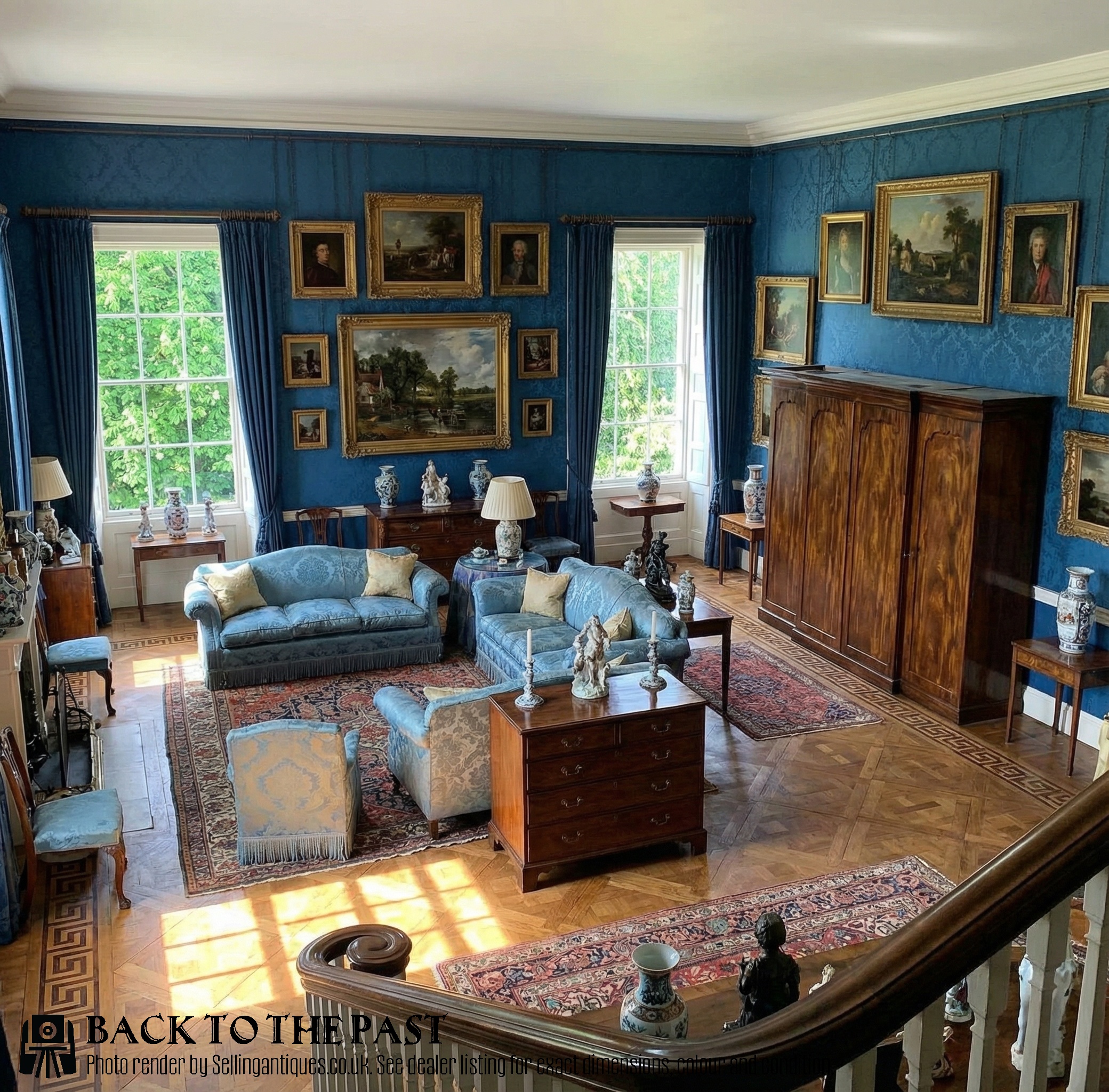
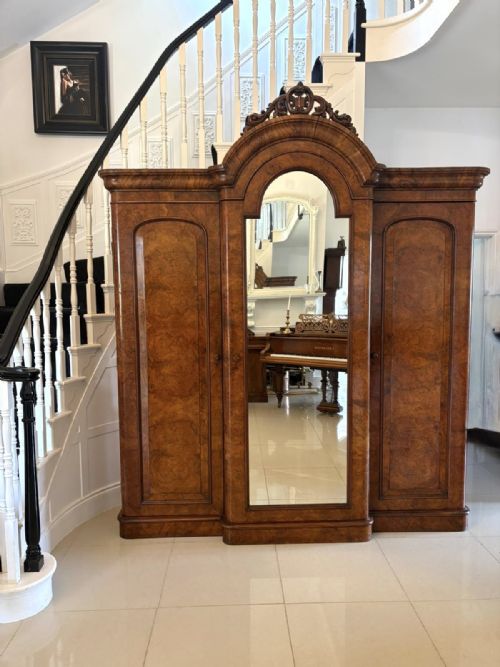
Victorian Four Door Breakfront Figured Mahogany Wardrobe., 1850
Priced at £1,100 from Country Homes Antiques Stirling
Antique breakfront wardrobes evolved from earlier clothes presses when households needed more room for hanging garments.
The projecting middle section mimics classical architecture. Georgian cabinetmakers adapted this shape from grand library bookcases to suit bedroom furniture.
Look at the scale of late Victorian examples. They grew massive to hold crinolines and heavily structured dresses.
Edwardian versions tend to be lighter. You don't often see them with the massive proportions of the earlier Victorian pieces.
Gillows of Lancaster produced good examples. Their antique breakfront wardrobes often feature stamped drawer edges and crisp mahogany drawer linings.
Holland & Sons supplied heavy, architectural pieces to wealthy clients. You will find their name stamped on the top edges of the lower drawer fronts.
Regional firms built the vast majority. A lack of maker's marks is normal for this category of bedroom furniture.
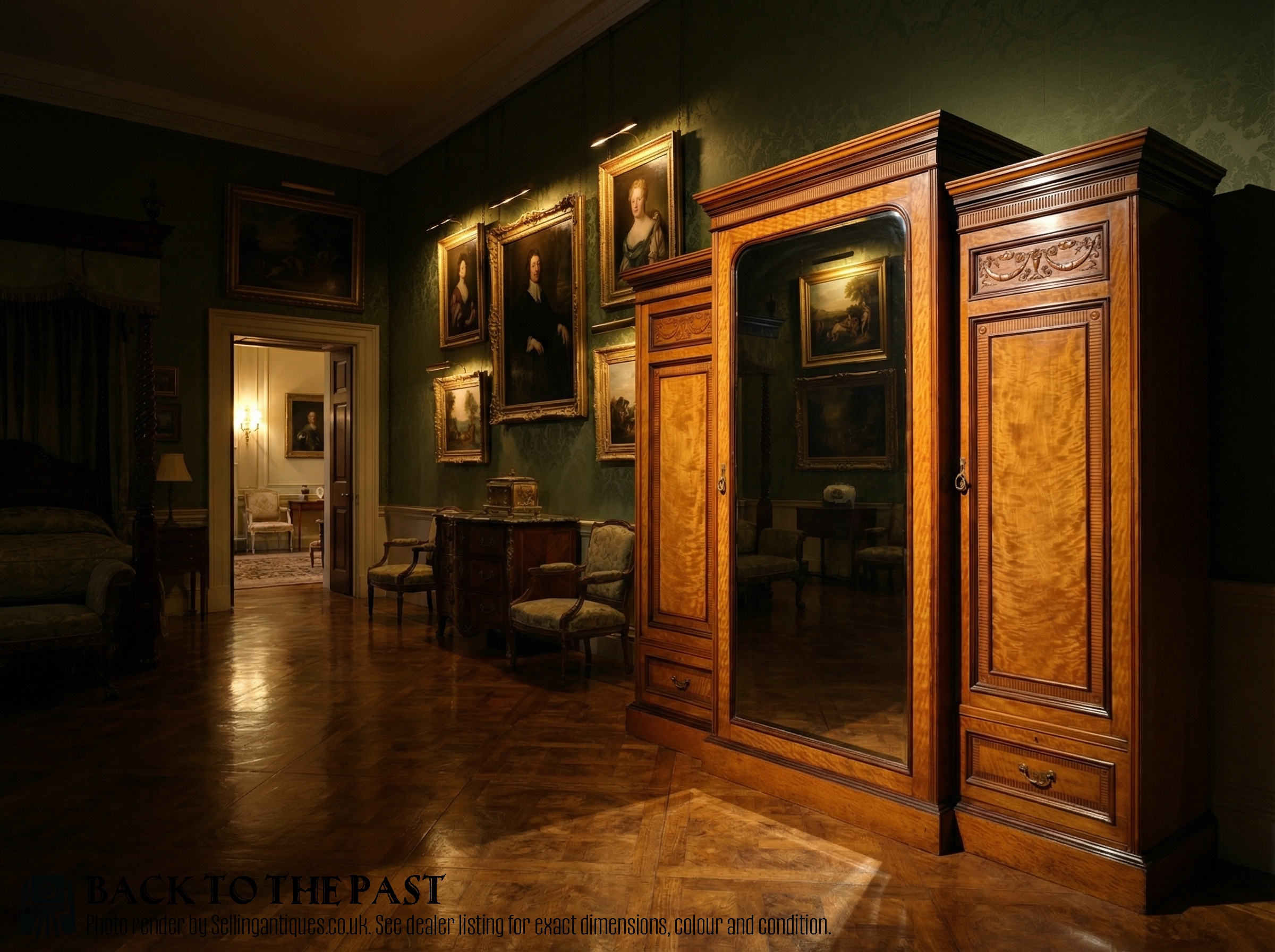
Victorian Satinwood & Rosewood Breakfront Fitted Wardrobe, Victorian
Priced at £3,700 from The Antique Furniture Company
The 2026 retail price guide for Antique Breakfront Wardrobes is drawn from a proprietary archive of over 1.1 million retail prices indexed by Sellingantiques since 2003. This guide relies exclusively on their own internal data; no external sources or auction records are used.
Analysing nearly 25 years of UK antique market history alongside current retail values, the data indicates that typical UK retail prices for Antique Breakfront Wardrobes range between £1,200 and £4,800. Entry-level prices generally fall under £1,200 and premium examples upwards of £4,800.
A protruding central bay defines the form. This middle section usually houses sliding linen trays over a bank of deep drawers.
Hanging space sits in the recessed wings. Sometimes these side compartments have brass rails, while earlier versions retain simple wooden pegs.
Full-length mirrored doors often appear on the centre section. Bevelled glass was a popular addition during the late nineteenth century.
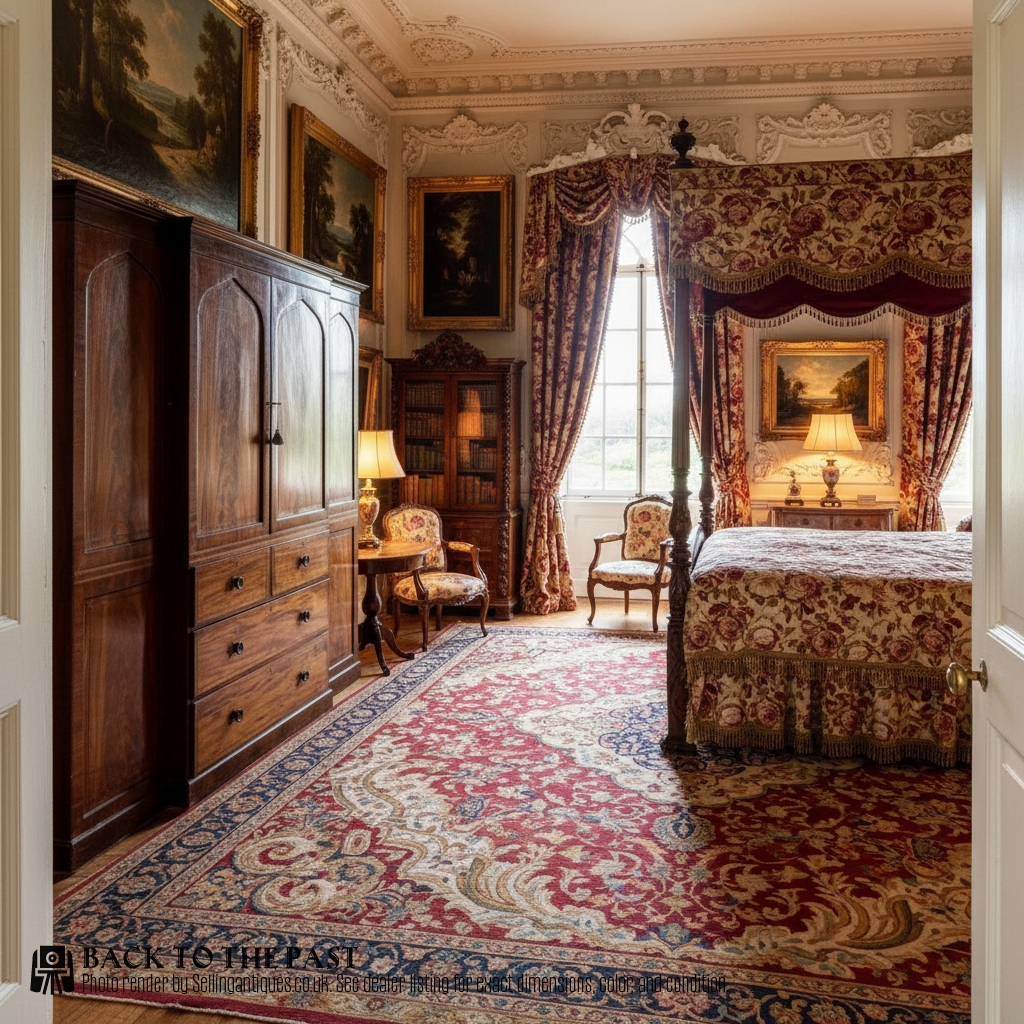
Georgian Mahogany Breakfront Wardrobe, Georgian
Priced at £1,350 from F E Anderson Antiques
Frame and panel construction keeps these huge flat surfaces from warping. Cabinetmakers floated solid timber panels loosely inside grooved frames.
Hand-cut dovetails secure the drawer corners. Look at the pins on early examples, which are noticeably finer than later machine-cut joints.
Sections bolt together for transport. The heavy base and cornice detach to let porters move the piece up narrow stairs.
"The projecting centre originally had a specific function. It gave the drawers enough depth to store men's folded shirts flat."
"Secret compartments occasionally hide in the cornice. Some regional makers built shallow hidden boxes behind the upper moulding."
"These massive units break down into parts. What looks like a monolithic ton of timber dismantles into five or six manageable pieces in minutes."
Based on almost 25 years of Sellingantiques UK antique market data, Antique Breakfront Wardrobes appeared 622 times (out of 1,100,000 antiques) which gives it a rarity score of 88/100.
This score measures scarcity within the Sellingantiques archive only and is not a survey of the entire antiques market, so these statistics may not be indicative of the general availability of Antique Breakfront Wardrobes elsewhere.
Almost all antique breakfront wardrobes dismantle. They were built for grand houses with awkward stairs, so makers designed them to break down.
You lift off the top cornice first. The three vertical sections then unbolt from each other, leaving the flat plinth base behind.
Large antique pieces rarely sit flush on old floors. The base will follow the dip of your boards, which causes the heavy doors to swing open or bind against their frames.
You pack the base to fix this. Small wedges slipped under the plinth will level the structure, taking the stress off the hinges so they don't break.
Often not. The side wings on early pieces are usually too shallow for wide modern hangers to sit straight.
You can mount a small rail front-to-back instead. This solves the depth issue and they won't catch on the doors.
The backboards should be plain, solid timber. Cabinetmakers used cheap secondary woods like pine or deal, leaving them unpolished on the side facing the wall.
Fabric or paper linings are later additions. Housekeepers sometimes pasted wallpaper over the backboards to stop dust getting in through the shrinkage gaps.
If the back looks sealed with modern plywood, someone's altered it. Regional restorers often replaced loose original boards to stiffen a wobbly carcase.
Please note: This Antique Breakfront Wardrobes guide and its associated pricing data are provided for general informational purposes only. It does not constitute formal financial, investment, or appraisal advice and should not be relied upon as the sole basis for any commercial activity, purchasing, or sales decisions. Sellingantiques.co.uk accepts no liability for any actions taken in reliance on this information. Always consult with a qualified professional or independent appraiser.
