
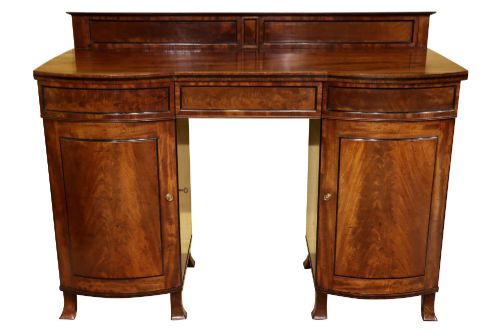


A 2026 Guide by Sellingantiques
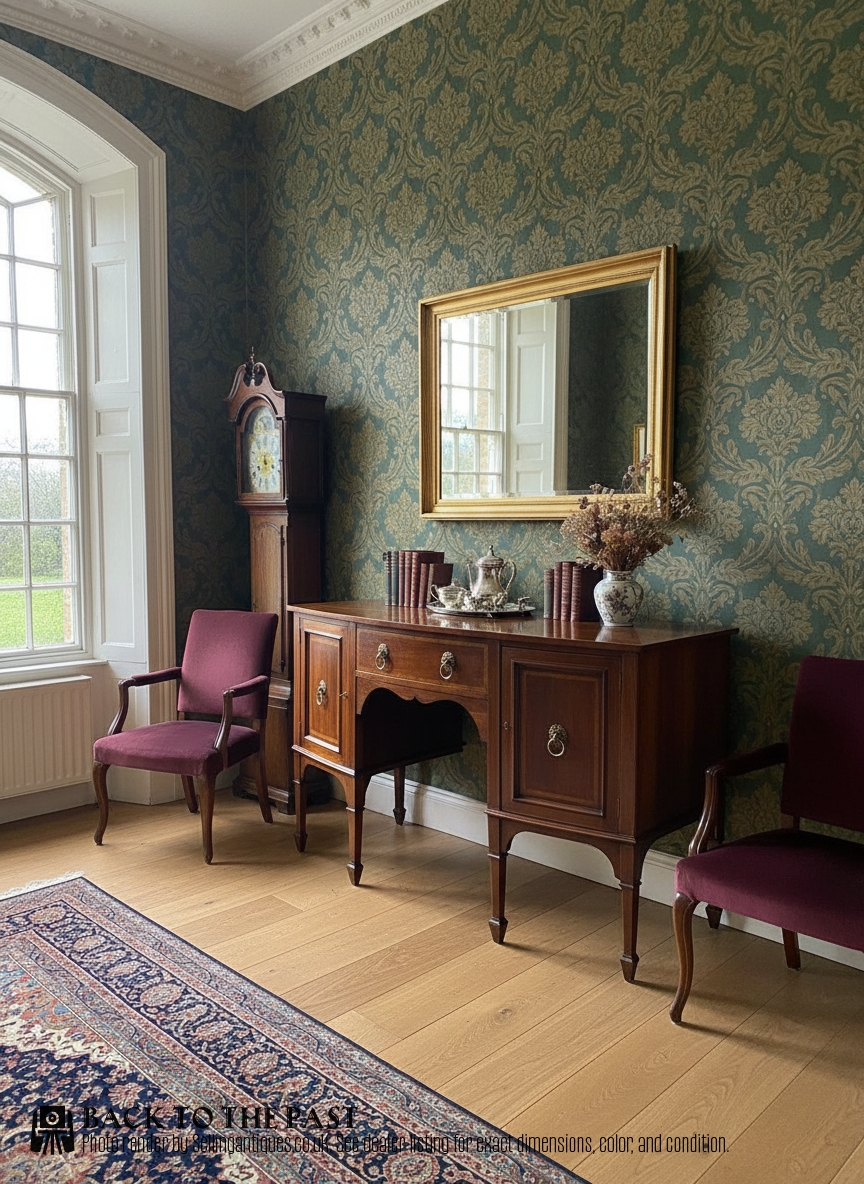
Quality Antique Edwardian Inlaid Mahogany Bow Fronted Sideboard, 1900
Priced at £1,695 from London City Antiques
Robert Adam developed the sideboard form in the 1760s by grouping a serving table with flanking pedestal cupboards.
Later makers fused those separate dining room pieces together into a single unified cabinet.
Thomas Sheraton popularised this sweeping curved shape in his late eighteenth-century design books.
Antique bow front sideboards offered a much softer silhouette, making them practical for serving food in tight domestic dining parlours without catching clothing on sharp corners.
Gillows of Lancaster and London produced many documented examples throughout the Georgian and Regency periods.
Thomas Chippendale the Younger supplied curved serving furniture to prominent aristocratic households across the country.
Countless provincial workshops turned out their own variations based on popular London pattern books, though they rarely stamped their names on the timber.
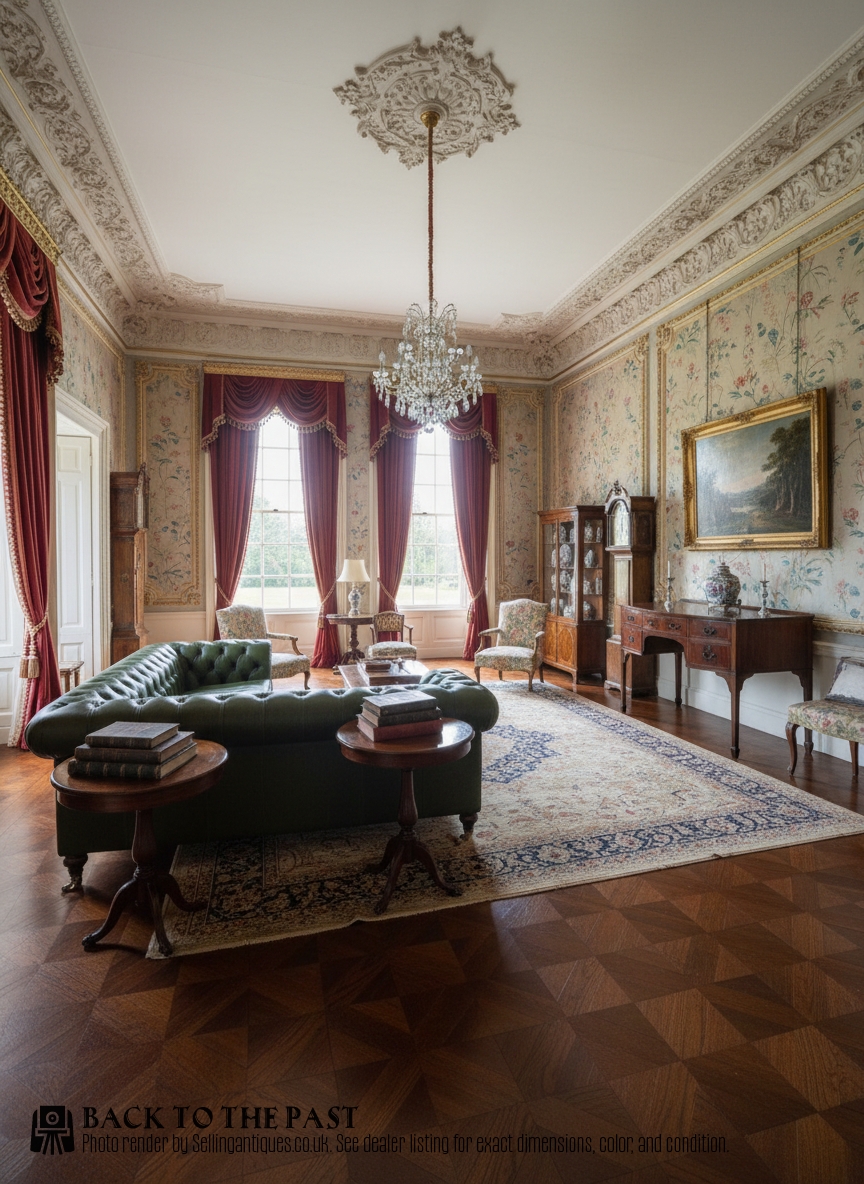
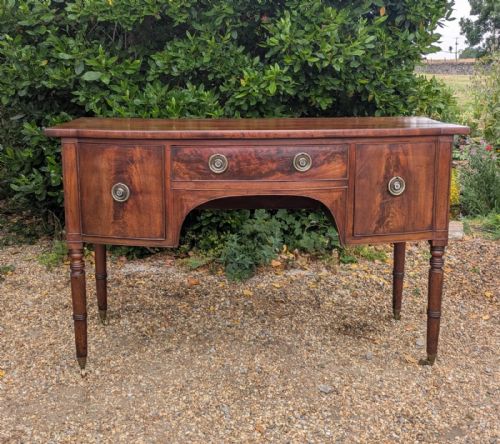
Antique Edwardian Mahogany Bow Front Inlaid Sideboard, 1900
Priced at £1,485 from London City Antiques
The 2026 retail price guide for Antique Bow Front Sideboards is drawn from a proprietary archive of over 1.1 million retail prices indexed by Sellingantiques since 2003. This guide relies exclusively on their own internal data; no external sources or auction records are used.
Analysing nearly 25 years of UK antique market history alongside current retail values, the data indicates that typical UK retail prices for Antique Bow Front Sideboards range between £500 and £2,000. Entry-level prices generally fall under £500 and premium examples upwards of £2,000.
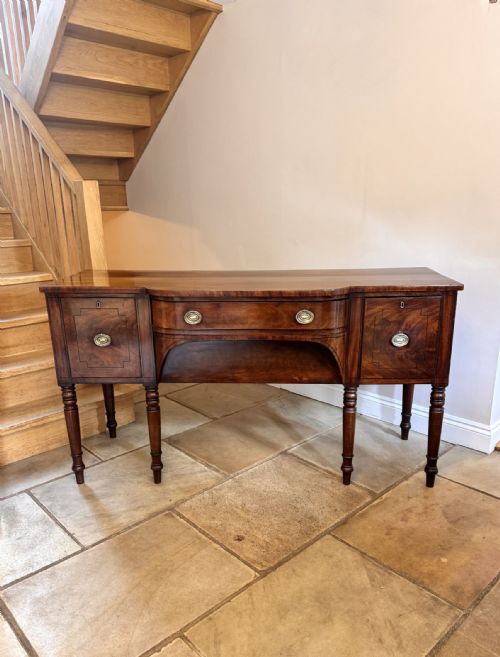
The continuous outward curve defines the entire front profile of these pieces.
Tapered legs raising the heavy carcase off the floor, ending in neat spade feet.
Cellaret drawers are deep compartments fitted with lead linings, proportioned specifically to hold tall wine bottles upright during a long meal.
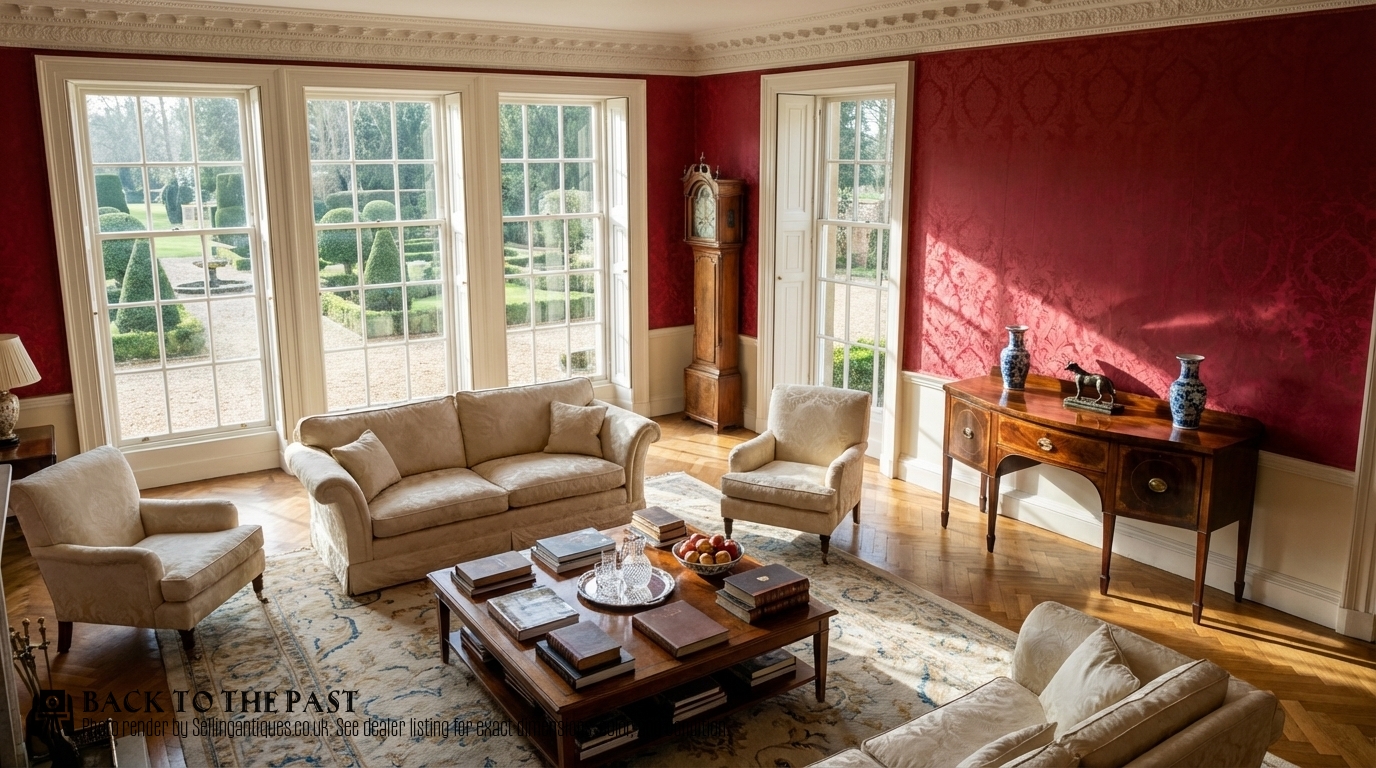
Fine Georgian Bow Sideboard, Georgian
Priced at £1,600 from Millers Antiques
Cabinetmakers formed the curved doors by laminating thin sheets of wood over a shaped caul.
Hand-cut dovetails secure the drawer frames, leaving small tool marks visible inside the joints.
Applying flat veneer to a convex surface required hot hide glue and heavy sandbags to press the timber flat while it dried.
"Many feature a shallow centre drawer specifically proportioned for storing long linen tablecloths."
"The lead-lined cellaret drawers were sometimes designed to hold crushed ice for cooling wine."
"Brass rails mounted on the back edge protected the dining room wallpaper from splashing food."
Based on almost 25 years of Sellingantiques UK antique market data, Antique Bow Front Sideboards appeared 9767 times (out of 1,100,000 antiques) which gives it a rarity score of 14/100.
This score measures scarcity within the Sellingantiques archive only and is not a survey of the entire antiques market, so these statistics may not be indicative of the general availability of Antique Bow Front Sideboards elsewhere.
Rub a candle along the bottom edges of the drawer sides. The wax acts as a dry lubricant on the wooden runners.
If that fails, the runners themselves might be heavily worn. A restorer can glue a thin strip of matching timber to build them back up to the correct height.
The curved shape actually helps in tight spaces. Because the corners sweep back towards the wall, there are no sharp edges jutting out into the room.
You gain depth in the centre where you need it for serving, while keeping the ends slim. It offers a softer profile than a standard rectangular piece.
Yes, they were built for heavy loads. The hidden carcase is usually constructed from thick solid pine or oak.
As long as the leg joints are tight and the drawer bottoms are sound, it will hold a full dinner service.
Constant moisture will cause problems for the veneers. The hide glue used in the Georgian period is water-soluble, so high humidity can lift the decorative surface away from the carcase.
Splashes from a sink will also turn traditional French polish white. You would need to strip the original finish and apply a modern waterproof varnish.
Please note: This Antique Bow Front Sideboards guide and its associated pricing data are provided for general informational purposes only. It does not constitute formal financial, investment, or appraisal advice and should not be relied upon as the sole basis for any commercial activity, purchasing, or sales decisions. Sellingantiques.co.uk accepts no liability for any actions taken in reliance on this information. Always consult with a qualified professional or independent appraiser.
