

A 2026 Guide by Sellingantiques
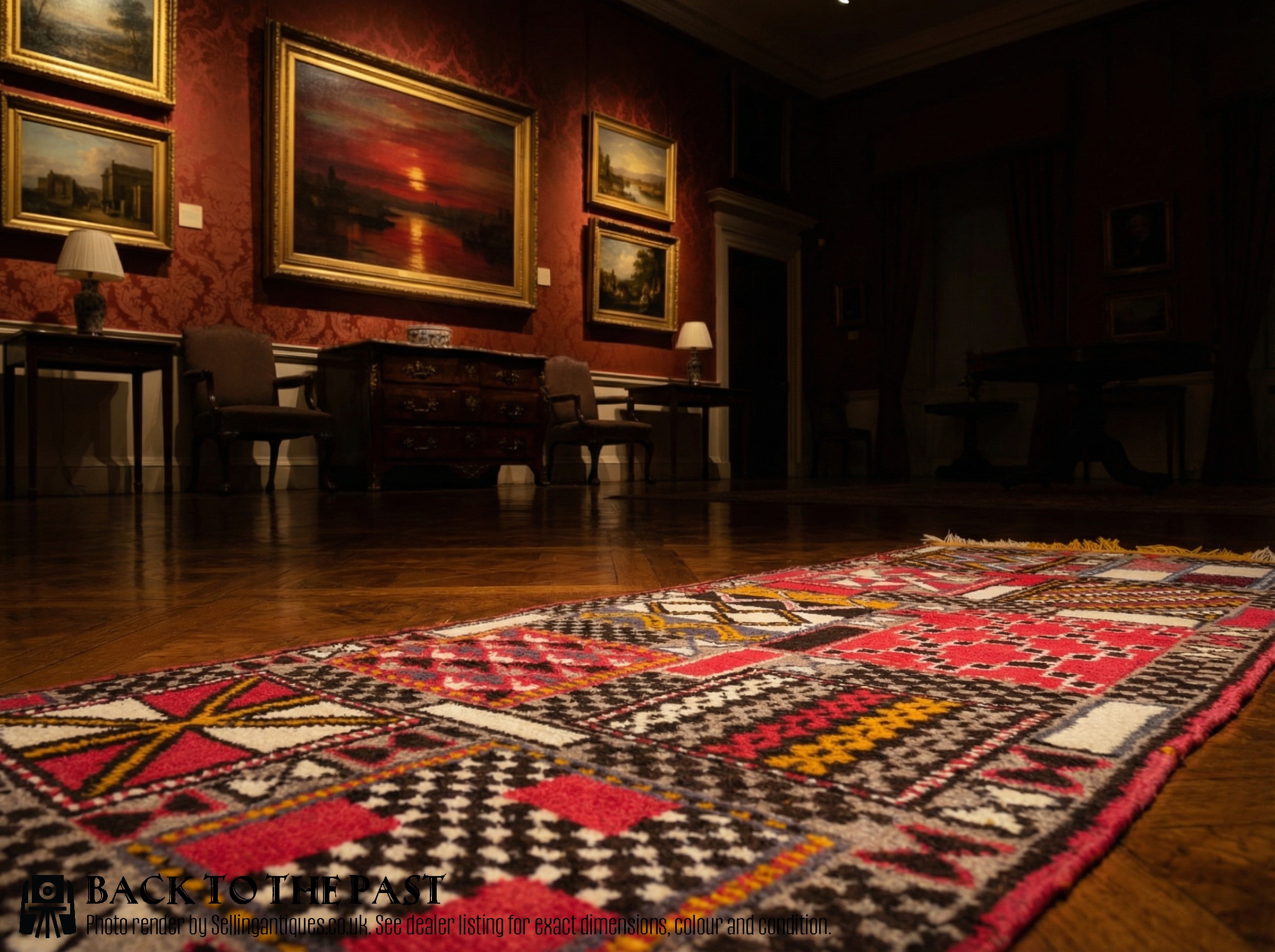
Moroccan Berber Piled Rug. 154cm X 70cm., 1930
Priced at £195 from Country House and Eastern Interiors
Western domestic architecture shifted during the eighteenth century to include long connecting hallways. These new spaces required specific narrow floor coverings to suppress noise.
Eastern weavers adapted their traditional loom widths to meet European export demands. Antique runners became a staple export from Persian and Caucasian weaving centres.
Look at the borders on early tribal pieces. Nomadic weavers often joined several smaller saddlebags or tent bands together to create the required length.
Victorian households relied on thick wool pile to insulate against floorboard draughts in unheated passageways.
Changes in hallway dimensions eventually forced a shift towards standardised commercial sizes, altering the bespoke nature of these textiles.
Individual antique runners rarely carry a specific maker's name. Production relied on community workshops or nomadic family groups rather than signed artisanal studios.
Kurdish weavers working in the Zagros Mountains produced heavy, long-piled pieces. These often feature distinctive geometric lattice patterns and saturated dye combinations.
The commercial looms of Hamadan became a major centre for runner production. Villages surrounding the city exported tightly woven single-wefted pieces to Europe.
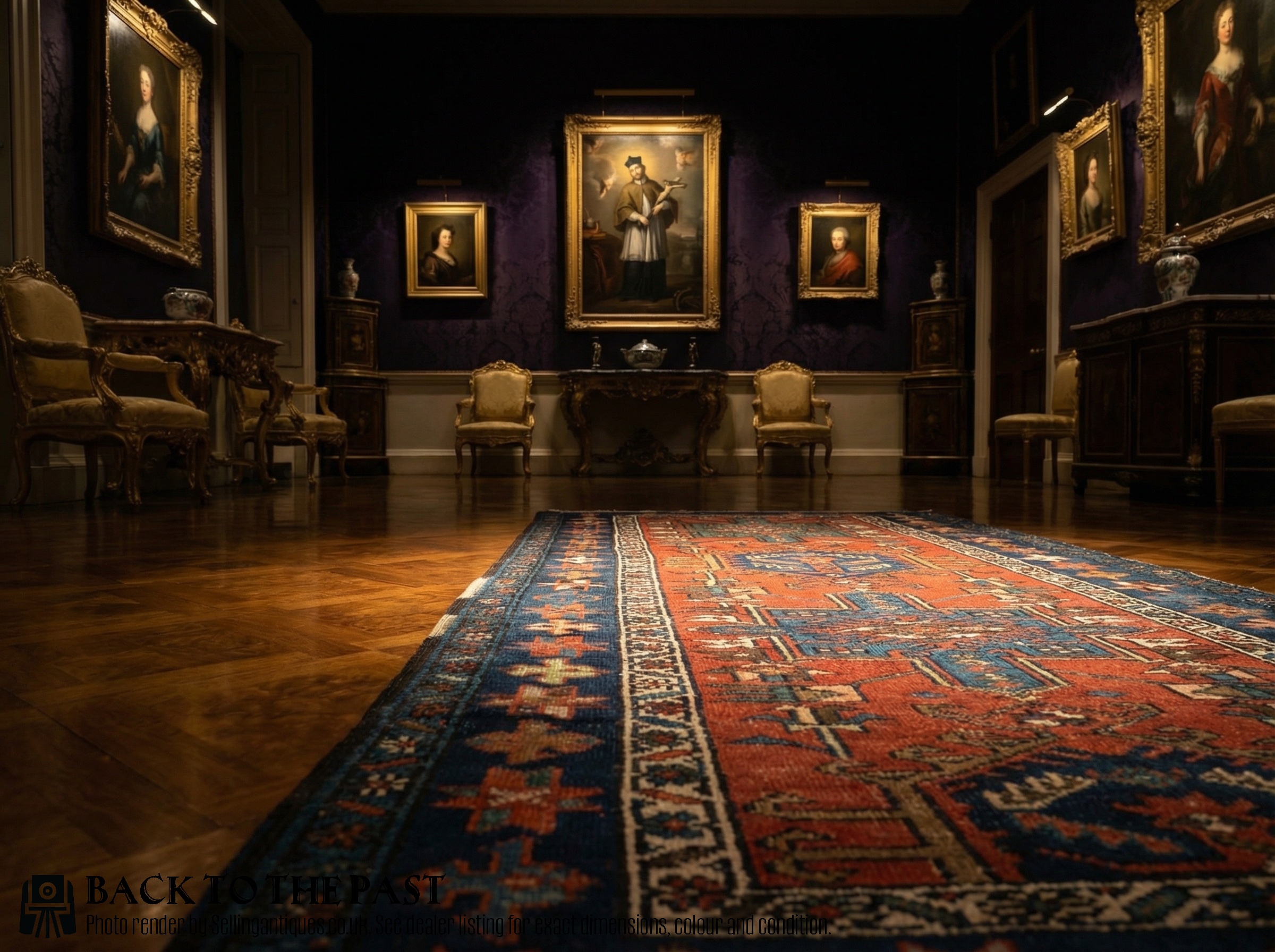
Antique Karaja Long Rug, 1900
Priced at £3,500 from Farnham Antique Carpets
The 2026 retail price guide for Antique Runners is drawn from a proprietary archive of over 1.1 million retail prices indexed by Sellingantiques since 2003. This guide relies exclusively on their own internal data; no external sources or auction records are used.
Analysing nearly 25 years of UK antique market history alongside current retail values, the data indicates that typical UK retail prices for Antique Runners range between £700 and £5,500. Entry-level prices generally fall under £700 and premium examples upwards of £5,500.
Repeated geometric or floral medallions often run the entire length of the central field. This pattern allowed weavers to extend the design indefinitely.
Guard borders frame the main field on all four sides. Multiple narrow stripes contain the central motifs and visually anchor the long format.
Selvedges bind the long edges tightly. Wool is wrapped around multiple warp threads to protect the sides from fraying under heavy foot traffic.
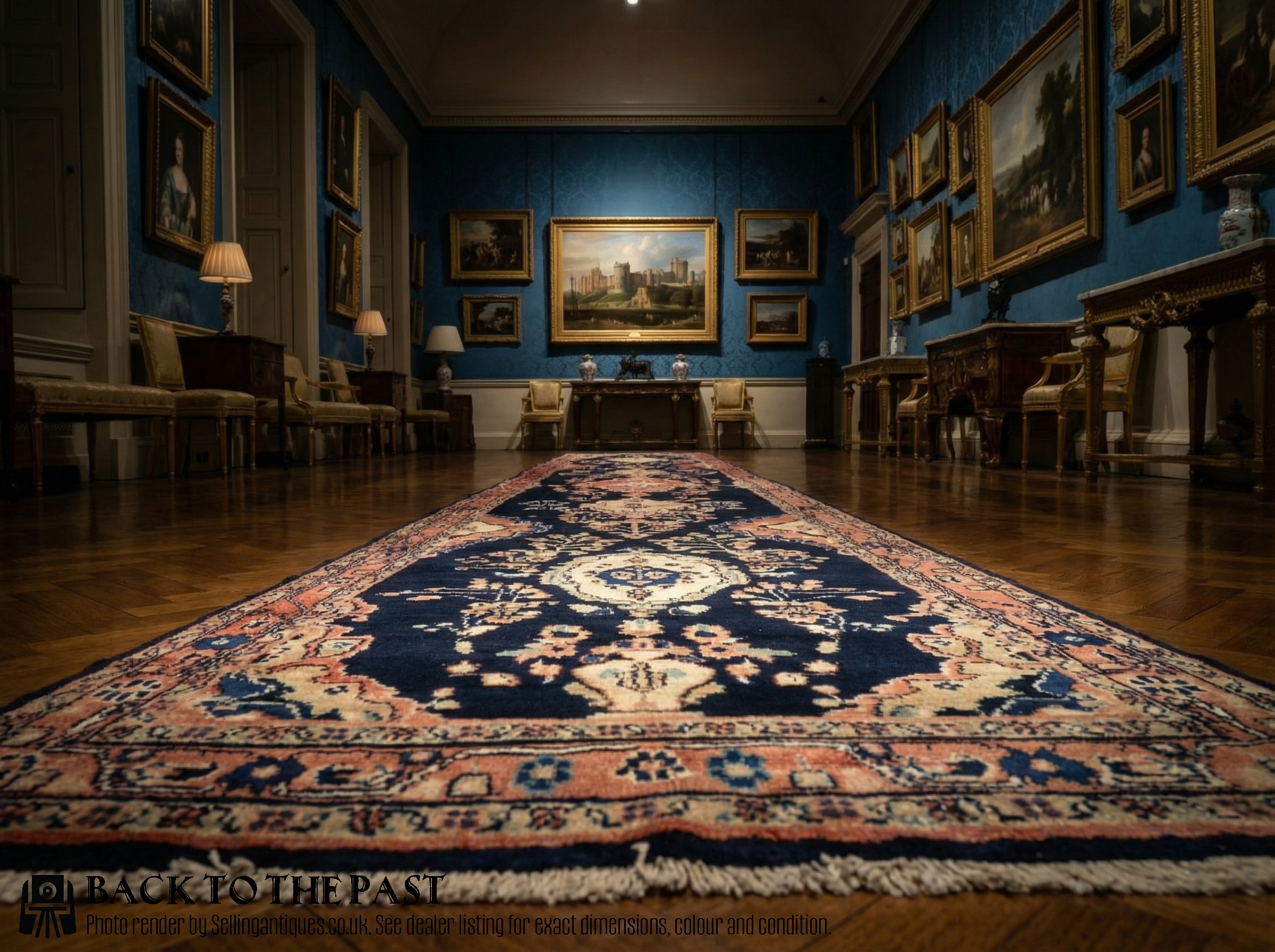
Sarouk Narrow Runner. Rug. 371cm X 90cm., 1920
Priced at £750 from Country House and Eastern Interiors
Horizontal ground looms restricted the width of tribal pieces. Nomads could easily dismantle and transport these wooden frames between seasonal grazing grounds.
City workshops employed heavy vertical roller looms. These fixed structures allowed multiple weavers to sit side-by-side and maintain consistent tension over much longer lengths.
The introduction of factory-spun cotton yarn changed foundation structures. Weavers achieved higher knot counts and crisper designs using these uniform threads.
"Many narrow tribal pieces were woven as seating covers rather than floor rugs. Guests in nomadic tents would sit on these long cushions."
"The lanolin naturally found in hand-spun sheep wool actively repels dirt. This organic oil coating helps historic textiles resist permanent staining from domestic spills."
"Certain Caucasian runner formats fit the specific dimensions of traditional Russian sleighs. Wealthy merchants commissioned these thick pieces for winter travel."
Based on almost 25 years of Sellingantiques UK antique market data, Antique Runners appeared 2007 times (out of 1,100,000 antiques) which gives it a rarity score of 67/100.
This score measures scarcity within the Sellingantiques archive only and is not a survey of the entire antiques market, so these statistics may not be indicative of the general availability of Antique Runners elsewhere.
You always need a good underlay on hard floors. It stops the textile creeping across the room and prevents slip hazards in busy hallways.
Without underlay, the grit brought in on shoes grinds between the floorboards and the rug. A proper friction pad absorbs that downward pressure and protects the foundation threads from premature wear.
Direct sunlight affects all natural dyes over time. Yellows and greens often show the most vulnerability to prolonged ultraviolet exposure, while deep indigo tends to hold its saturation longer.
Turn the rug end-for-end every few months. This balances out the light exposure and ensures any slight mellowing of the colours happens evenly across the entire surface rather than in one harsh patch.
Blot the surface with a dry white towel. Press down to absorb moisture without rubbing.
Prop the wet section up off the floor. Good air flow stops mildew.
Village weavers rarely worked from detailed paper cartoons. They carried the traditional designs in their heads, adjusting the scale and spacing of the motifs as the weaving progressed up the loom.
Tension changes also cause dimensional variations. The warp threads tighten naturally over months of work, meaning the finished end weaves slightly narrower than the starting edge.
These minor irregularities are a core part of the aesthetic. They track the human element of the construction process.
Please note: This Antique Runners guide and its associated pricing data are provided for general informational purposes only. It does not constitute formal financial, investment, or appraisal advice and should not be relied upon as the sole basis for any commercial activity, purchasing, or sales decisions. Sellingantiques.co.uk accepts no liability for any actions taken in reliance on this information. Always consult with a qualified professional or independent appraiser.
