

A 2026 Guide by Sellingantiques

2 Very Large Thomas Alderson Pewter Chargers, Georgian
Priced at £500 from Elmgarden
Monasteries and wealthy households adopted it first. Wooden trenchers gradually gave way to pewter plates across early modern Europe.
Look at seventeenth-century tavern records. Mugs and tankards formed a large part of the everyday catering trade.
Britannia metal emerged later as a cheaper, spun alternative. This pushed traditional cast antique pewter into a slow decline.
Guilds heavily regulated production. The Worshipful Company of Pewterers controlled quality and alloy standards in London for centuries.
John Townsend operated in London during the eighteenth century. His touchmark appears on high-grade export flatware and hollowware.
The Compton family dominated the nineteenth-century export trade. They produced large quantities of plates and basins for the American market.
Archibald Knox designed Tudric pewter for Liberty & Co. These later pieces feature complex Celtic motifs typical of the Art Nouveau period.
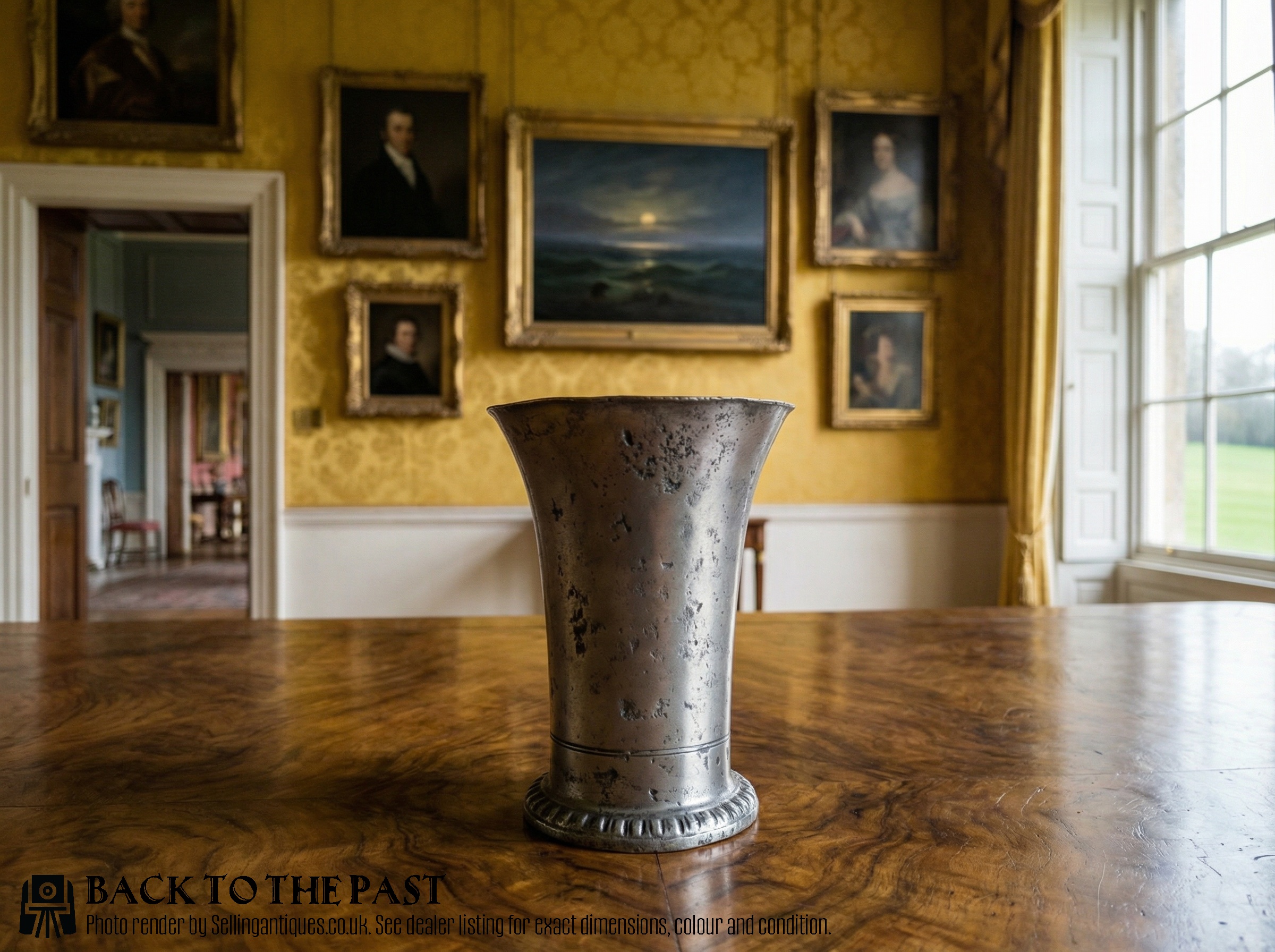
Antique Early Metalware 17thc / 18thc Continental Pewter Beaker . Dutch C1690-c1710, 17th Century
Priced at £175 from Mark Seabrook Antiques
The 2026 retail price guide for Antique Pewter is drawn from a proprietary archive of over 1.1 million retail prices indexed by Sellingantiques since 2003. This guide relies exclusively on their own internal data; no external sources or auction records are used.
Analysing nearly 25 years of UK antique market history alongside current retail values, the data indicates that typical UK retail prices for Antique Pewter range between £100 and £1,200. Entry-level prices generally fall under £100 and premium examples upwards of £1,200.
Touchmarks stamped into the base or rim indicate the maker. These struck marks act as a primary reference for identification.
Heavy cast handles. Tankards usually feature solid handles soldered securely to the main body, incorporating a thumbpiece for the lid.
Inspect the rims of plates. Broad rims signify earlier periods, while multi-reeded edges point to shifting table fashions.

Victorian Quart Measure (2 Pints ), Victorian
Priced at £130 from Frank Craig Antiques
Brass or iron moulds shaped the molten metal. Workshops reused these heavy moulds for generations to produce consistent castings.
Skimming on a lathe removed the rough casting skin. A sharp tool shaved the spinning piece until the underlying metal shone.
Solder joined the cast sections together. You can often spot a faint seam where the upper and lower halves of a jug meet.
"Old pieces were often melted down. Worn plates went straight back into the melting pot to be cast into brand new vessels."
"Makers often stamped fake hallmarks on their goods. They did this simply to make their everyday wares look like expensive silver."
"Certain alloys ring clearly when struck. Good quality tin mixtures produce a resonant sound quite different to a dull thud."
Based on almost 25 years of Sellingantiques UK antique market data, Antique Pewter appeared 1871 times (out of 1,100,000 antiques) which gives it a rarity score of 69/100.
This score measures scarcity within the Sellingantiques archive only and is not a survey of the entire antiques market, so these statistics may not be indicative of the general availability of Antique Pewter elsewhere.
Lead content varies depending on the maker and the specific alloy grade. Lower quality tavern measures often contain lead which can leach into acidic drinks like ale or cider.
Most people choose to display them rather than drink from them. If you intend to use one regularly, testing the interior for lead is a sensible precaution.
Silver dip is too harsh for tin alloys. It strips away the natural patina and leaves the surface looking unnaturally white and stark.
A gentle wash in warm soapy water removes loose dirt without damaging the metal. For stubborn grime, a soft cloth and a dedicated mild metal polish will lift the grease.
Heavy black oxide scale sits firmly on the surface. Removing it requires chemical baths or abrasive buffing.
Collectors generally prefer the dark, undisturbed surface. Stripping it back reveals pitted metal underneath.
Households bought plates individually over many decades. A family might purchase a few from one maker, and add more from another workshop years later as their needs grew or pieces were lost.
These touchmarks act as a simple maker signature. A mixed stack reflects a working household's organic accumulation rather than a single ordered set.
Please note: This Antique Pewter guide and its associated pricing data are provided for general informational purposes only. It does not constitute formal financial, investment, or appraisal advice and should not be relied upon as the sole basis for any commercial activity, purchasing, or sales decisions. Sellingantiques.co.uk accepts no liability for any actions taken in reliance on this information. Always consult with a qualified professional or independent appraiser.
