


A 2026 Guide by Sellingantiques
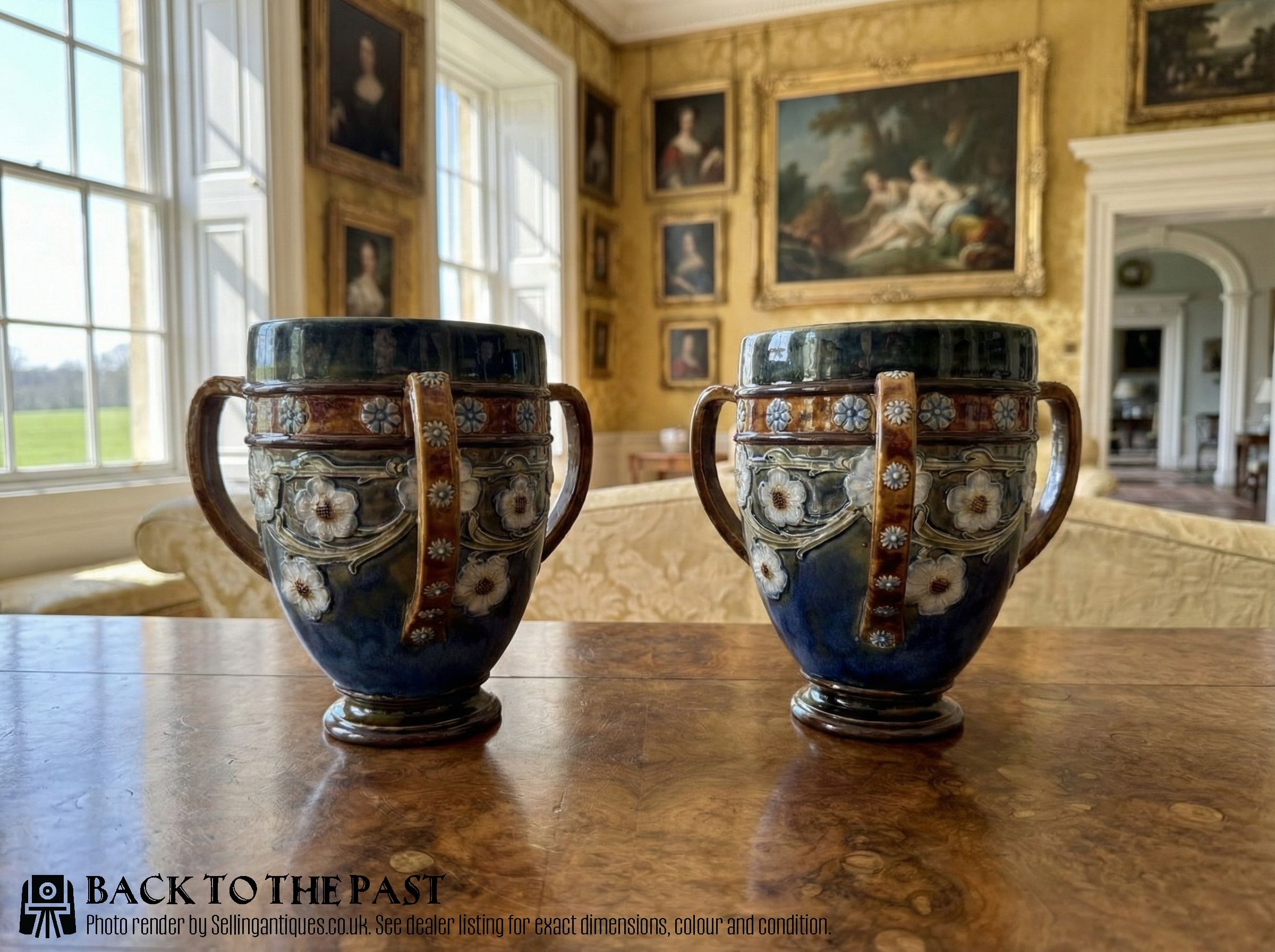
Fantastic Quality Pair of Antique Royal Doulton Loving Cups, 1900
Priced at £895 from Unique Antiques by Emma Jade
Originating from communal drinking traditions at banquets and guild meetings.
They turn up most frequently from the late seventeenth century onwards, usually in silver.
Look at the engraved inscriptions, as antique loving cups were frequently presented as sporting trophies or agricultural prizes.
Local parishes sometimes kept a large base-metal version for communal ale drinking after vestry meetings.
Paul de Lamerie produced ornate rococo silver antique loving cups during the first half of the eighteenth century.
Late eighteenth-century neoclassical silver forms frequently bear the sponsor mark of Hester Bateman.
Doulton of Lambeth supplied salt-glazed stoneware versions throughout the late nineteenth century, applying moulded sprigs to the body.

Unusual Antique Royal Worcester Loving Cup, 1910
Priced at £595 from Unique Antiques by Emma Jade
The 2026 retail price guide for Antique Loving Cups is drawn from a proprietary archive of over 1.1 million retail prices indexed by Sellingantiques since 2003. This guide relies exclusively on their own internal data; no external sources or auction records are used.
Analysing nearly 25 years of UK antique market history alongside current retail values, the data indicates that typical UK retail prices for Antique Loving Cups range between £200 and £1,100. Entry-level prices generally fall under £200 and premium examples upwards of £1,100.
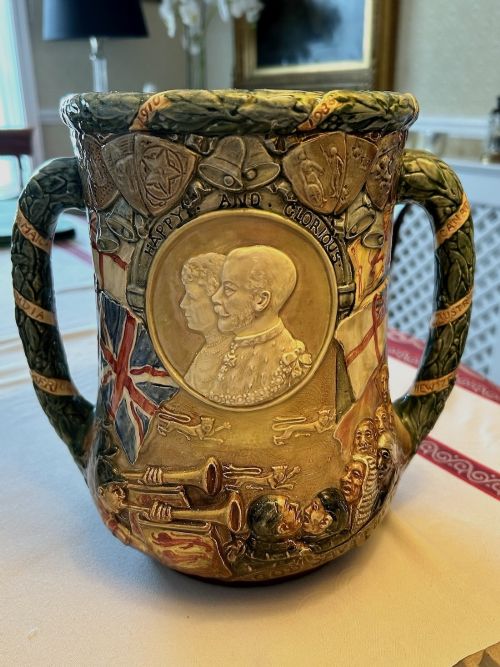
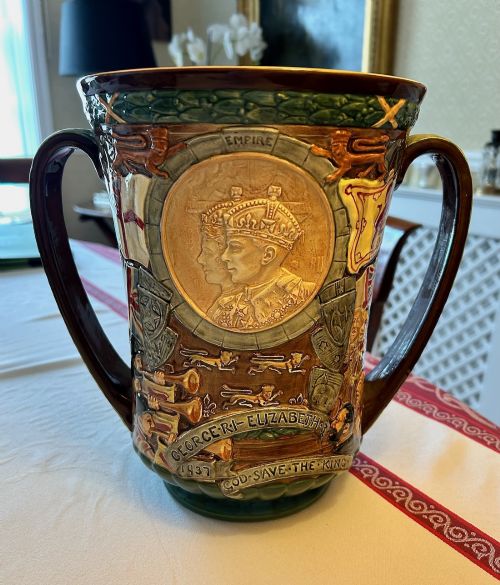
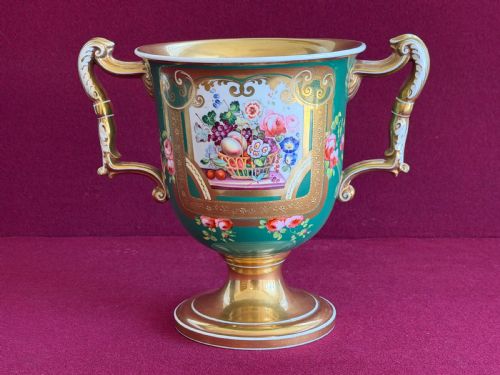
Two substantial handles sit opposite each other on the bowl.
The bodies need a wide flat base or a sturdy stepped foot to prevent the vessel from tipping over easily.
Check the rim, which is usually flared outward to help guide the liquid during a shared drink.
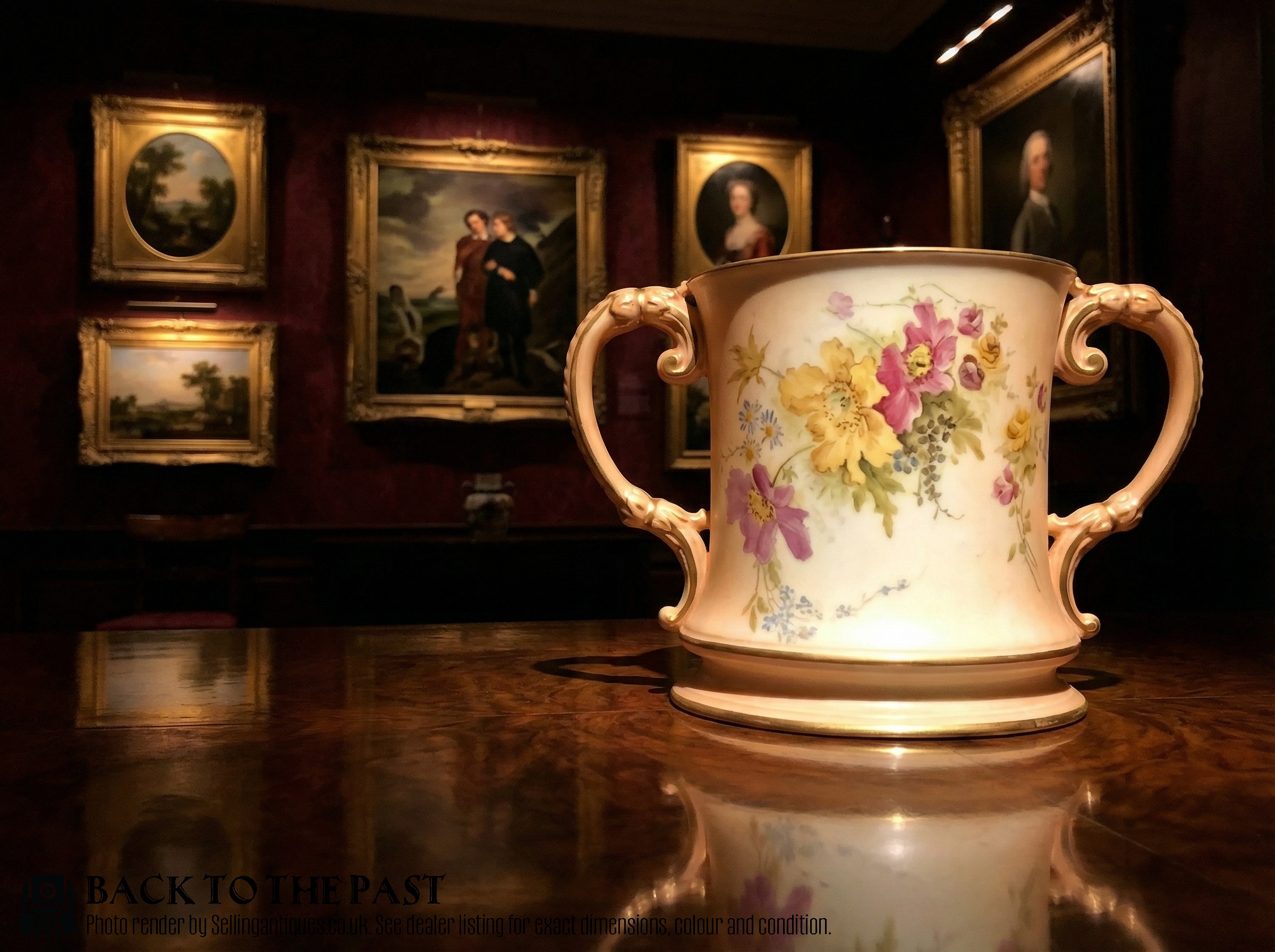
Antique Royal Worcester Blush Ivory Loving Cup, 1910
Priced at £750 from David Wolfenden Antiques
Early silver bowls were raised by hand from a single flat sheet, hammering the metal over a wooden anvil.
Ceramic bodies relied on the wheel, with handles pulled from a lump of clay and luted on before firing.
Later Victorian pieces often feature heavily embossed decoration, pressed out from the inside using a snarling iron.
"Three-handled variants exist to make passing the cup around a large circle much easier for the guests."
"Many silver versions retain their original snug-fitting domed covers to keep the spiced ale warm during winter gatherings."
"Rural potters frequently added a whistle to the rim so the drinker could signal the landlord for a refill."
Based on almost 25 years of Sellingantiques UK antique market data, Antique Loving Cups appeared 323 times (out of 1,100,000 antiques) which gives it a rarity score of 94/100.
This score measures scarcity within the Sellingantiques archive only and is not a survey of the entire antiques market, so these statistics may not be indicative of the general availability of Antique Loving Cups elsewhere.
Wash ceramic bodies in warm water with a mild detergent. Avoid scrubbing unglazed or crazed areas.
For silver cups, a soft sponge and warm soapy water works well. Dry the interior immediately to stop water spots forming on the metal.
Agricultural societies regularly ordered these cups as prizes for livestock or ploughing matches. The engraved dedication records the specific event and the winner.
Boundary changes over the centuries mean many old county names disappeared. This helps pinpoint the origin of the cup and ties it to a specific regional community.
Spiced ale or cider was the standard drink for early communal toasts. The liquid was often warmed and sweetened with sugar.
Later cups held wine or punch. The choice of drink usually dictated whether the interior needed a protective gilt lining.
Potters added these purely for amusement during tavern drinking sessions. The frogs stay hidden beneath the murky ale when the cup is full.
As the drinker drains the vessel, the amphibians suddenly appear near their face. It was a standard practical joke in nineteenth-century public houses.
They turn up most often in Staffordshire and Sunderland pottery. The surprise element worked well for a cup passed among friends.
Please note: This Antique Loving Cups guide and its associated pricing data are provided for general informational purposes only. It does not constitute formal financial, investment, or appraisal advice and should not be relied upon as the sole basis for any commercial activity, purchasing, or sales decisions. Sellingantiques.co.uk accepts no liability for any actions taken in reliance on this information. Always consult with a qualified professional or independent appraiser.
