



Antique Mahogany Barometers
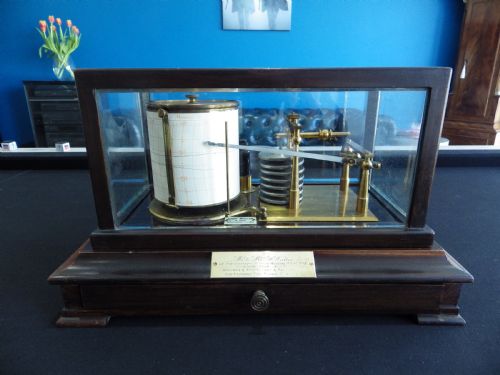
Wall-hung weather instruments in mahogany cases: upright mercury sticks, round-dialled wheel or banjo barometers, later aneroid dials, and clockwork barographs that inked the pressure onto a paper chart.
Antique Mahogany Barometers
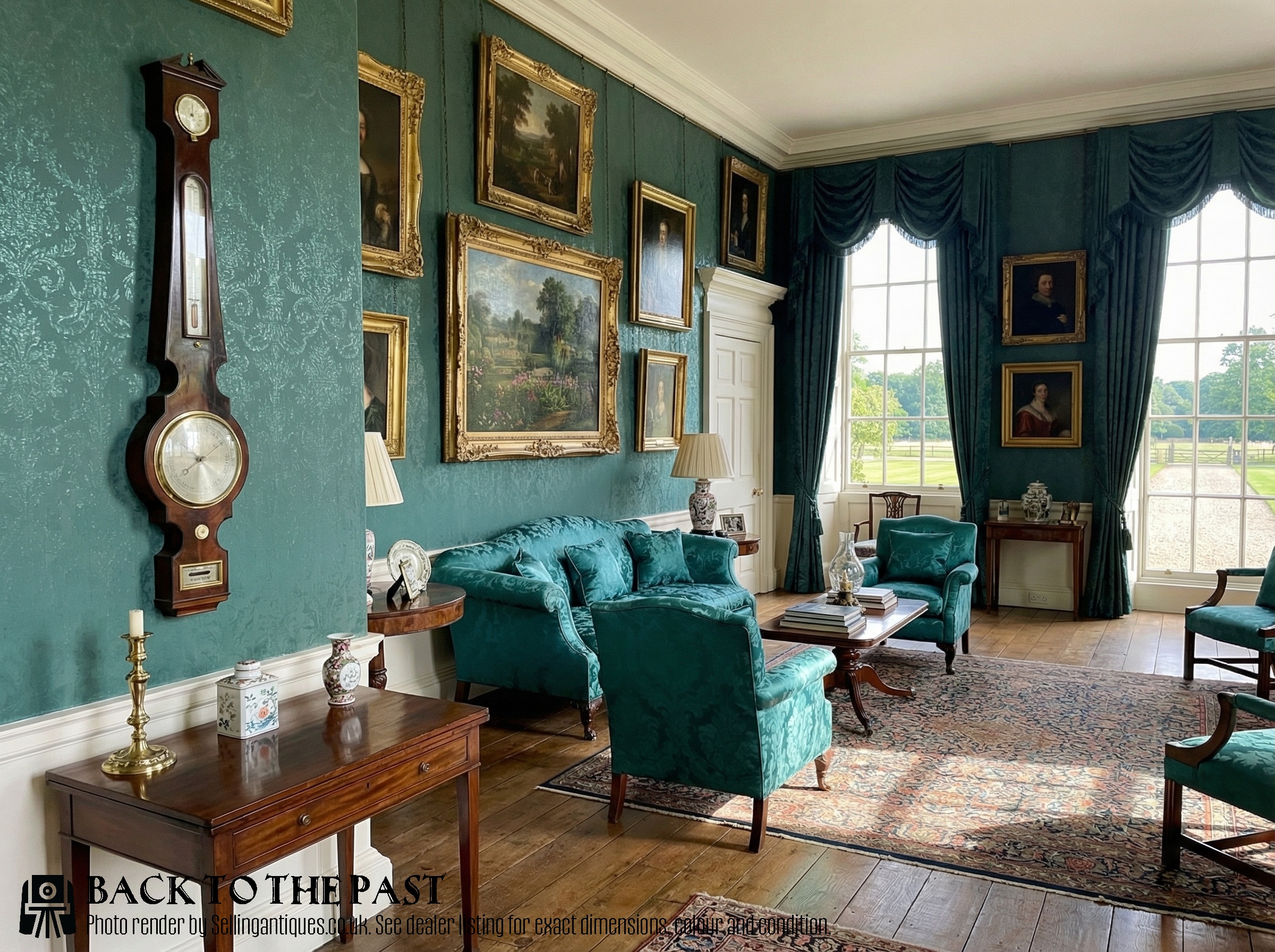
The mercury barometer began as a scientific instrument and settled into British houses during the eighteenth century, first as the upright stick and later as the round-dial wheel type. The aneroid, reading pressure from a sealed metal capsule, came in the middle of the nineteenth century, and the recording barograph later again.
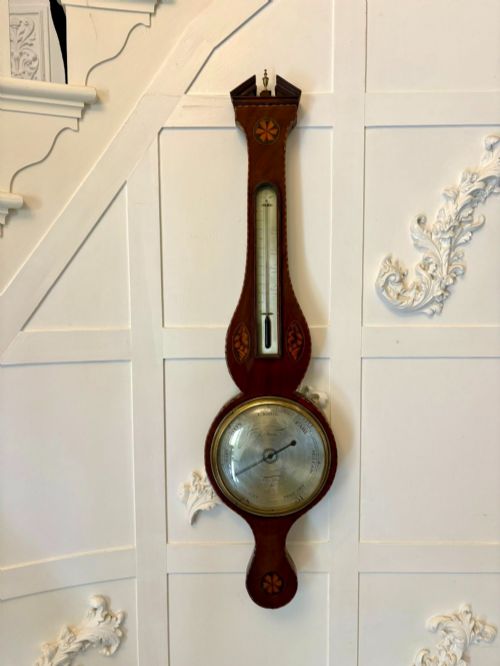
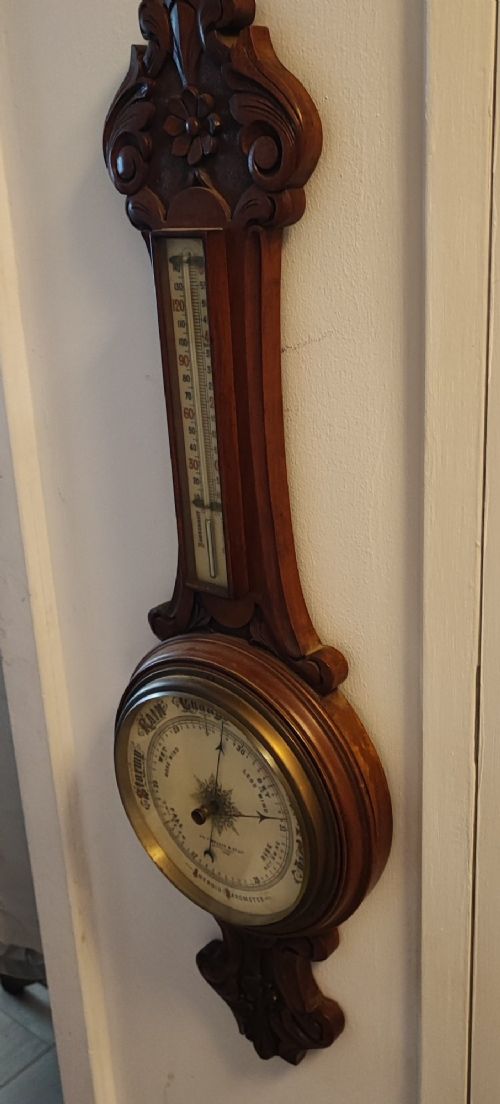
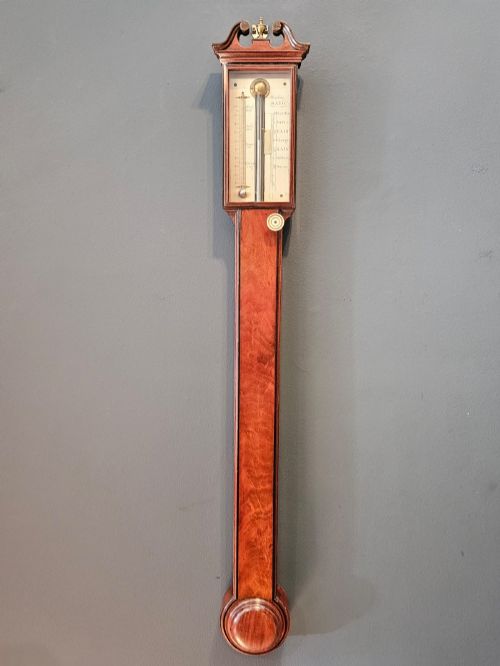
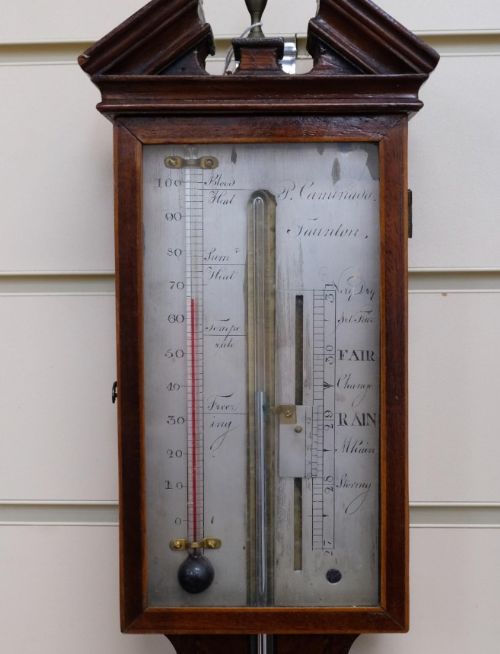
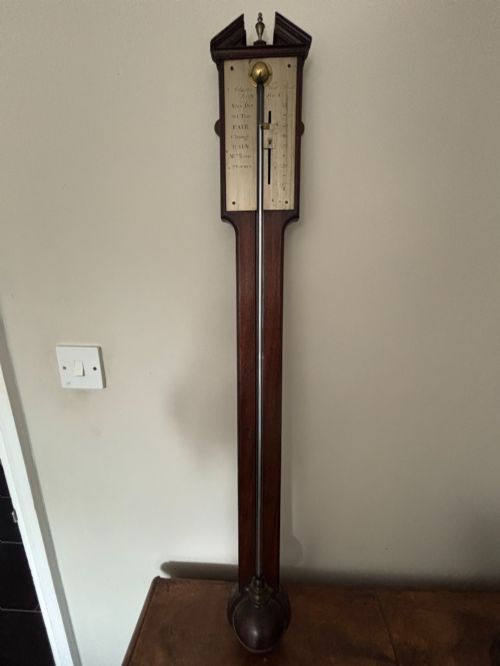
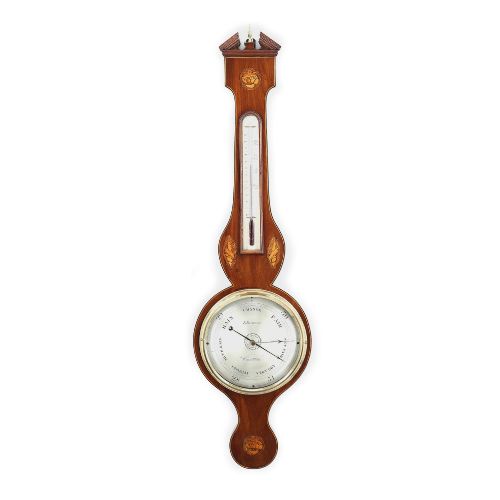
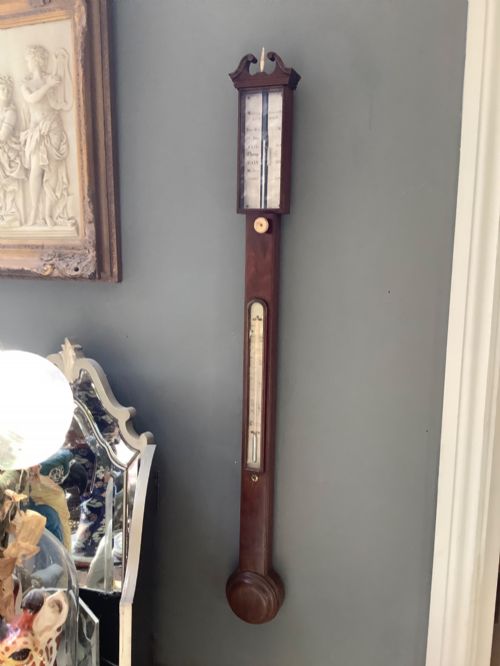
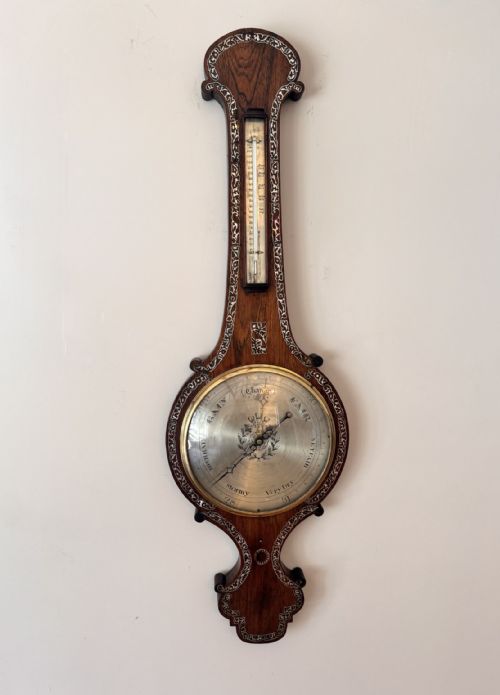
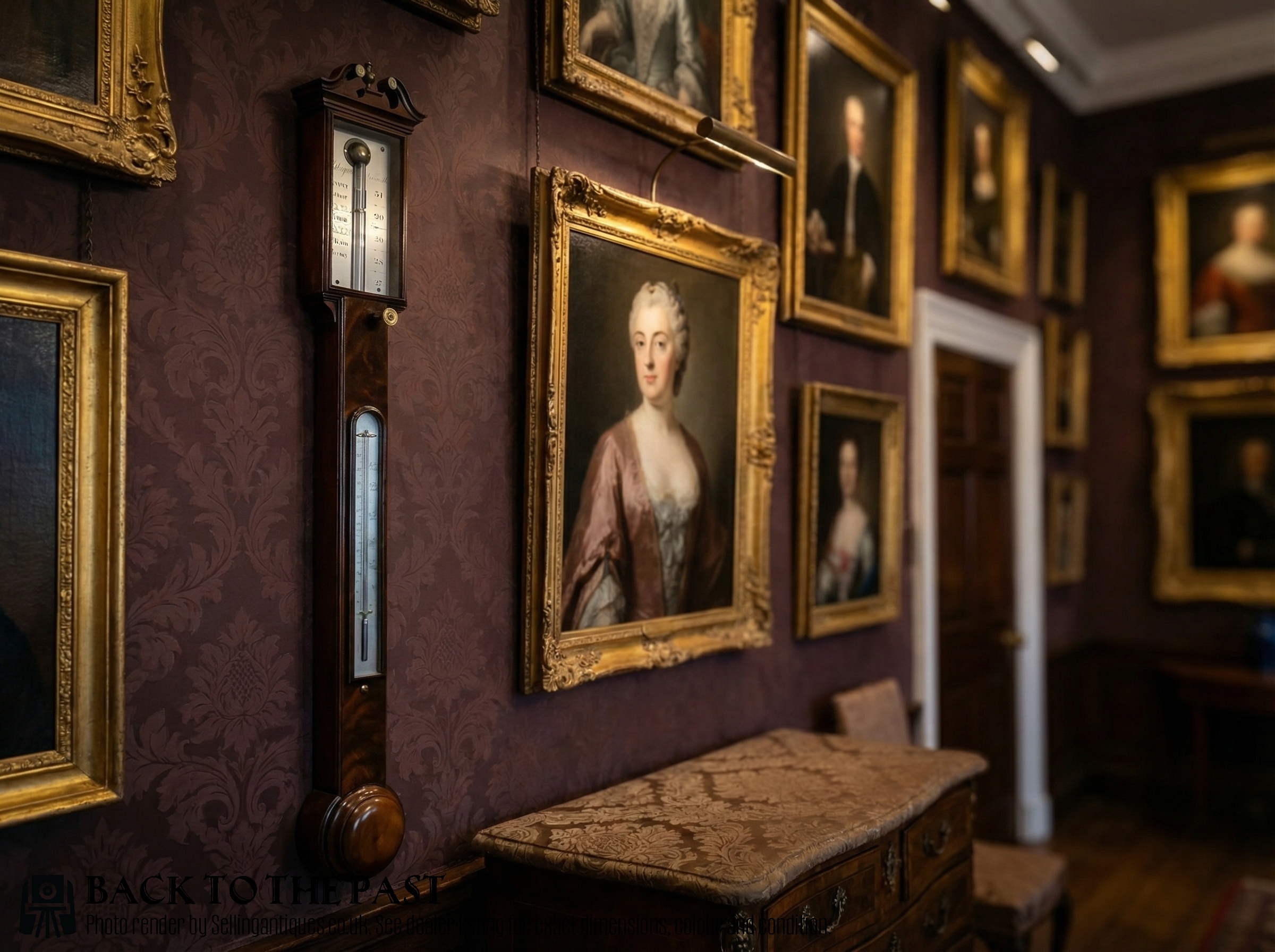
The stick is the form you'll meet most often. It appears in roughly a third of titles on Sellingantiques: a narrow board carrying the glass tube behind it, with an engraved or silvered register plate at the top, commonly titled with a maker's name and a town. Banjo and wheel are two words for much the same dial instrument seen from two angles, and between them they account for a little over a quarter.
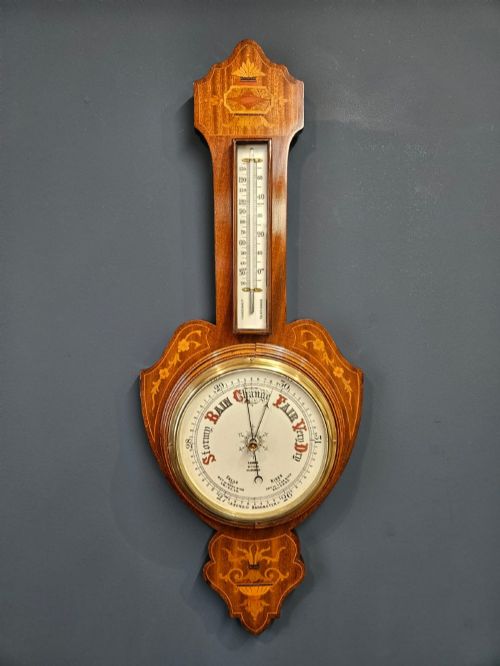
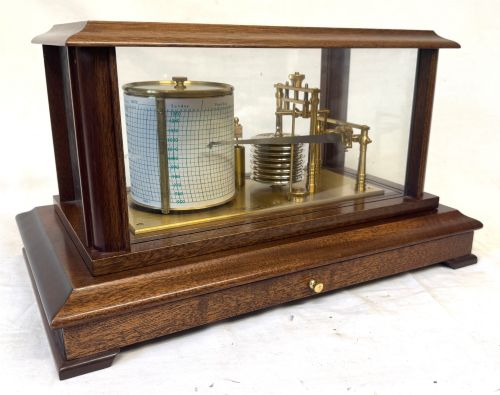
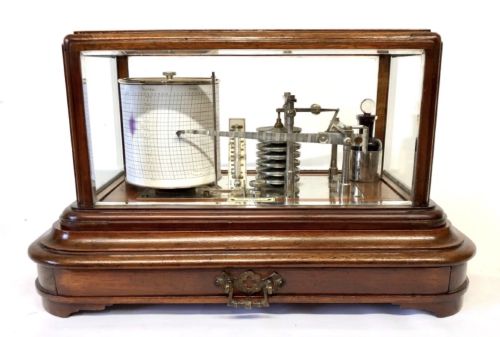
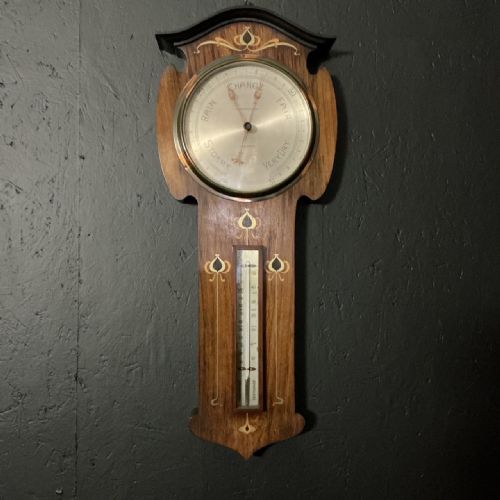
Barographs make up about one listing in nine, filed under the same heading. They sit in glazed mahogany boxes, several of them five-glass cases with a chart drawer in the plinth. Aneroids in turned or carved mahogany surrounds are fewer, clustering Victorian to Edwardian. The oddities turn up singly: an angle barometer, a sympiesometer, a barocyclonometer, a Fortin pattern, a marine bulkhead instrument on gimbals.
Dating is half years and half period words. The dealer-entered dates run 1750 to 1930, and 174 of 359 listings carry a clean year. Georgian labelling dominates the upper part of the range, with Regency, Victorian and Edwardian behind it, so read "19th Century" or "Georgian" on a listing as a bracket of decades rather than a date.
Where The Range Splits
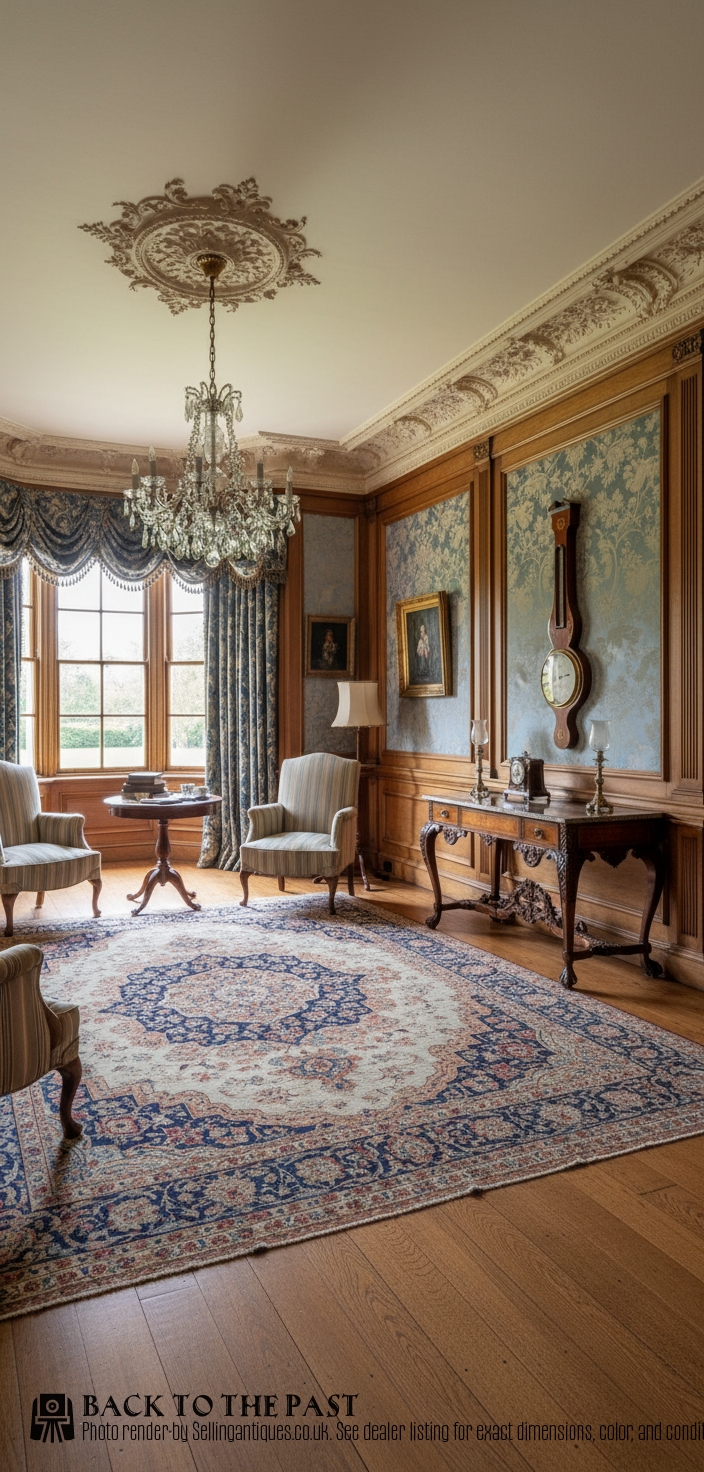
Form does most of the work. Stick and wheel mercury instruments occupy almost all of the top of the range, while aneroid dials cluster at the bottom. A signature pushes the same way: the higher listings are nearly all maker-and-place titles, and the lowest are plain unsigned descriptions of a polished mahogany barometer.
Case shape and decoration separate one Georgian stick from the next. Bow-fronted cases are scarce, ten titles in all, and every one sits in the upper part of the range. Inlay is named in 37 titles and runs through shell, boxwood, ebony, satinwood, brass, mother-of-pearl and parquetry, mostly on banjo and stick cases.
Timber figure counts too. Flame, curl, figured and bird's-eye mahogany appear only in the upper sample, against the plainer boards below. With barographs, completeness is the axis: a bare mahogany-cased movement at one end, a five-glass case with chart drawer, thermometer and aneroid chapter ring at the other.
Antique Mahogany Barometers Retail Price Guide 2026
Typical UK retail prices for mahogany barometers, calculated from the Sellingantiques database of over a million retail prices indexed since 2003. This retail price guide relies exclusively on Sellingantiques data; no external sources or auction records are used, so the figures do not describe the wider market.
London is the commonest place-name in mahogany barometer titles on Sellingantiques. Provincial towns like Llandilo, Royston and King's Lynn appear once each.
Negretti & Zambra
The Antique Mahogany Barometers Glossary
- Stick barometer
- Upright mercury barometer, the tube concealed behind a narrow case with the scale at the top. A third of titles use the word.
- Wheel barometer
- Mercury barometer read off a circular dial driven by a float and pulley. Dealers and buyers use the term interchangeably with banjo.
- Banjo
- The usual case shape for a wheel barometer, a broad round head over a tapering waist.
- Aneroid
- Reads pressure from a sealed metal capsule rather than a mercury column. Turns up in mahogany surrounds described as polished, carved, circular or skeletonised.
- Barograph
- Clockwork recording barometer that inks a trace on a paper chart, usually in a glazed case. A five-glass case is glazed on top and all four sides, and a chart drawer holds spare papers in the plinth.
- Register plate
- The engraved or silvered scale plate against which the mercury is read, set at the head of a stick barometer.
Antique Mahogany Barometers: Frequently Asked Questions
What is the difference between a stick and a banjo barometer?
A stick is an upright mercury barometer, the tube hidden behind a narrow case with the register plate at the top. A banjo carries a circular dial in a round head above a tapering waist.
Banjo and wheel describe the same dial instrument, one from the case shape and one from the mechanism. Between them they account for a little over a quarter of the mahogany barometers listed on Sellingantiques.
How old are mahogany barometers usually?
The dealer-entered dates run from 1750 to 1930. Georgian dating dominates the upper part of the range, with Regency, Victorian and Edwardian behind it, and the two ends of the span are thinly populated.
Roughly half the listings give a period word rather than a year. "19th Century" is the single largest bucket, followed by "Georgian", so both are best read as a bracket of decades.
Are barographs counted as barometers?
Yes. Dealers file them under the same heading, and they make up about one listing in nine.
A barograph is a clockwork recording barometer in a glazed mahogany box, drawing a pressure trace on a paper chart. Titles cite five-glass cases, drum movements and chart drawers set into the plinth.
Which makers' names appear on these instruments?
Signed stick barometers commonly carry a maker's name and a town on the register plate, and titles follow suit.
Only one name reaches three separate dealers on Sellingantiques, Negretti & Zambra. Everything else in the maker line is a single-dealer signature, so the names come through as individual instruments rather than as populations.
Why do so many listings say London?
London is the commonest place-name in the archive by a distance, and the great majority of these barometers are English.
Provincial towns show up in ones and twos rather than in groups: Llandilo, Royston, King's Lynn, Weymouth and Ashford each appear once. Non-British cases are the scarcest thing of all, among them a French lyre-shaped case and a French wall-mounted barograph.
What does bow-fronted mean on a stick barometer?
It describes a case with a convex swelling to the front, rather than a flat board.
Ten titles use the term. Every bow-fronted stick in the sample sits at the very top of the range.