It was listed by Titan Fine Art. Sold pieces stay on Sellingantiques as a record of what has passed through, and the next one is rarely far away.
Titan Fine Art has dated this Antique Oil Painting to the 17th Century.
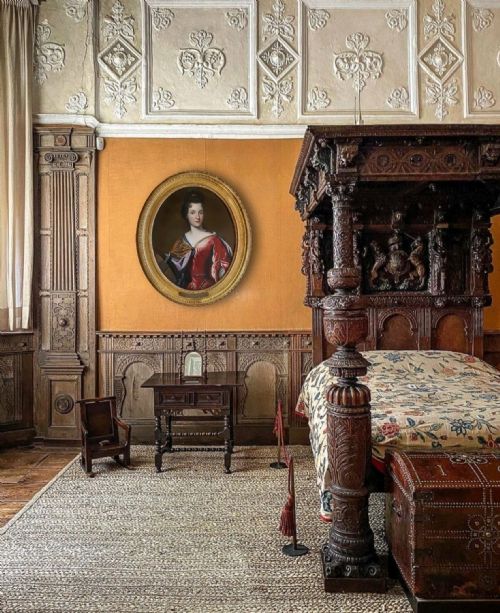
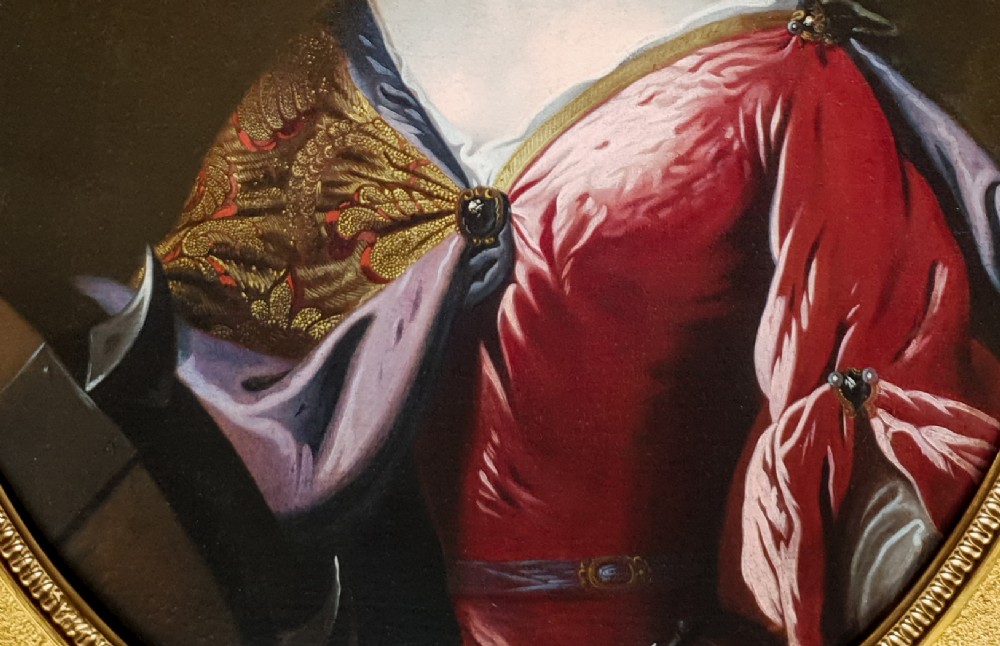
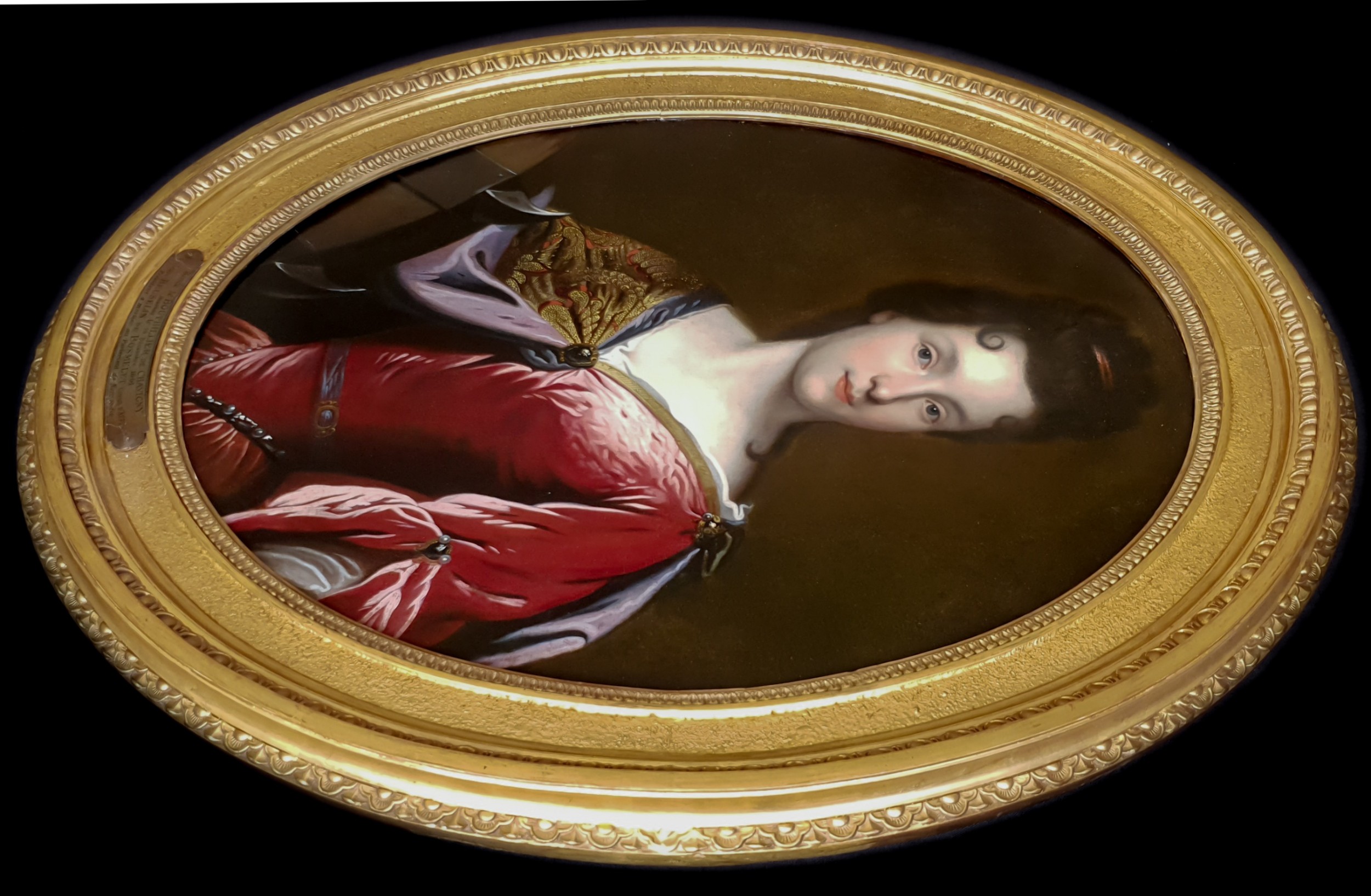
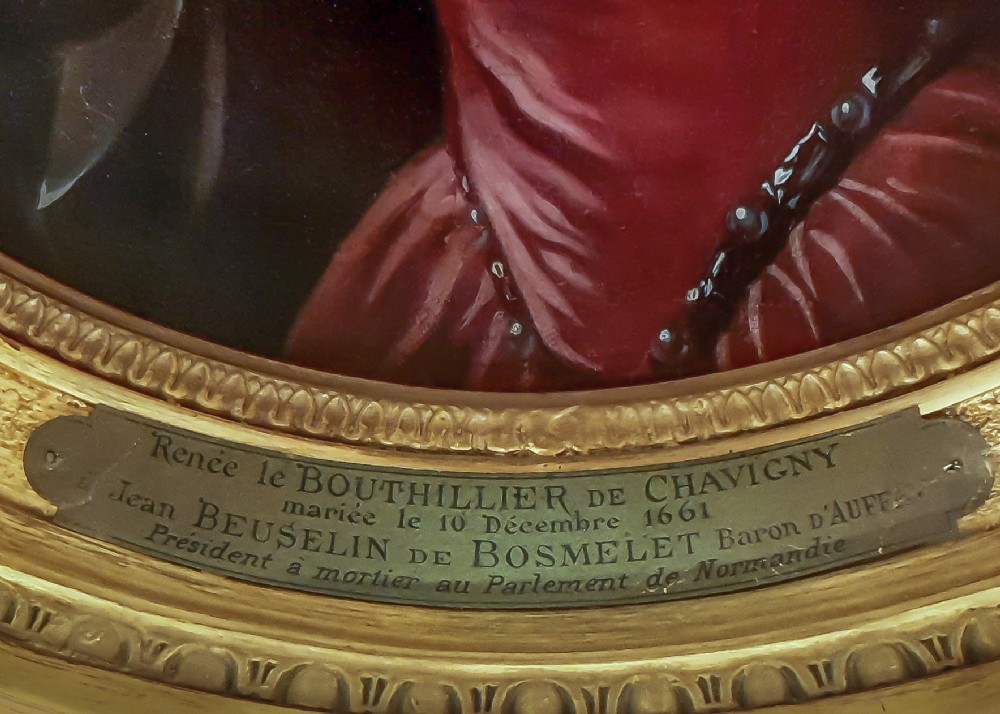
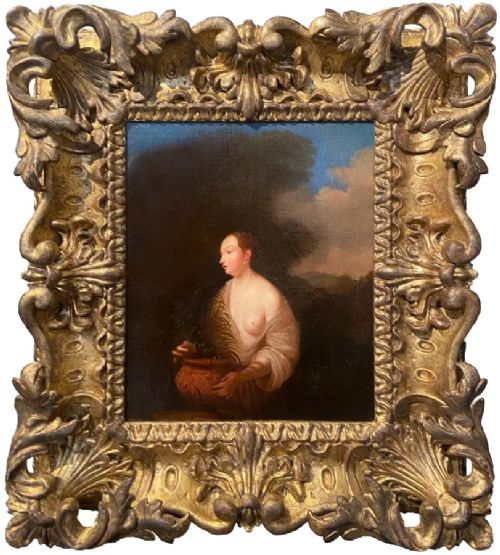
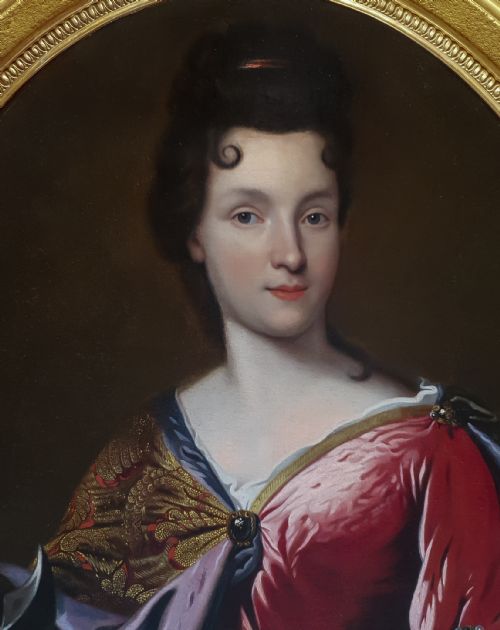
This lavish portrait painted circa 1690 depicts the French noblewoman, Renée Bouthillier de Chavigny (died 1711) luxuriously attired in the finest silks adorned with jewelery of gold, diamonds and pearls. She was a daughter of Léon Bouthillier, Count of Chavigny, Secretary and Minister of State for King Louis XIII and Anne Phélypeaux de Villesavin. At a young age Renée was sent to be raised and educated at Port-Royal. She became nobility of Rouen in France when she married Jean II Beuzelin, the son of Jean I Beuzelin, adviser to the Parliament in Normandy. The couple had only one daughter, Anne-Marie Beuzelin de Bosmelet (1668-1752). Renée Bouthillier de Chavigny died in Rouen on 19th March 1711.
Renée Bouthillier has been depicted in the guise of St Catherine, the spiked wheel being a common attribute of this saint in western art. Portraits depicting sitters as saints was common at this time. Saint Catherine was tortured on a wheel by the Emperor Maxentius for refusing to renounce her faith.
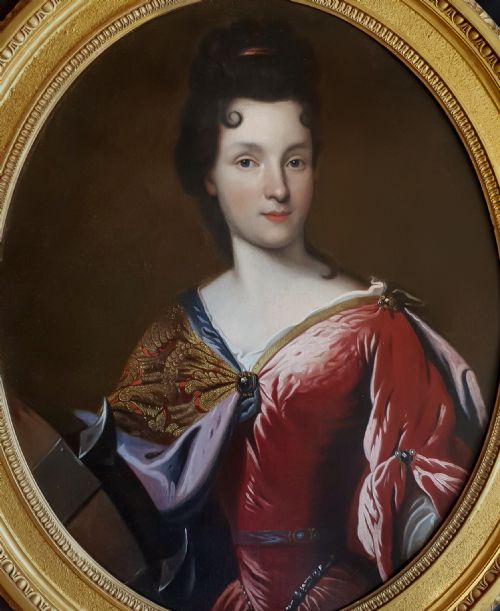
This exquisite portrait is a very fine work with a superb provenance.
Anne-Marie was styled as Duchess de la Force when married Henri-Jacques Nompar de Caumont (1675-1726), Duke de la Force on June 17, 1698. The couple gave birth to three daughters, but none survived. Anne-Marie outlived her husband but since she had no heirs upon her death in 1752 the entire Domaine de Bosmelet passed to Antoine-Augustin Thomas du Fossé, whose great uncle was Anne-Marie’s grandfather Jean I Beuzelin. From that moment the Thomas du Fossé family took the name of their main stronghold and became Thomas du Fossé de Bosmelet.
A portrait of Anne-Marie Beuzelin de Bosmelet (1668-1752) was painted in 1714 by François de Troy and is exhibited at the Museum of Fine Arts in Rouen.
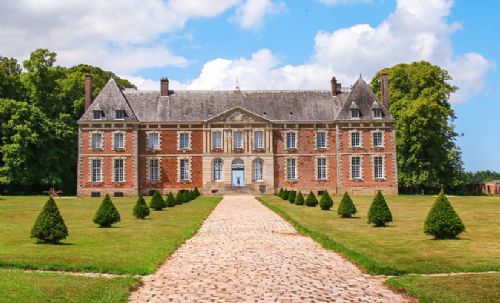
Château de Bosmelet was built in 1632 on the ruins of an earlier fortified castle by Jean I Beuzelin (born 1602) who was heir to the Bosmelet stronghold. It is a rare example of the pure Louis XIII style of architecture designed for pleasure as opposed to military defence. The size of the chateau was a signifier of his rising social status. His son, Jean II Beuzelin married the sitter in our portrait Renée Bouthillier de Chavigny. The chateau continued to descend within the family surviving the French Revolution, the 1870 war with Prussia, and both world wars, in which Baroness Diana de Bosmelet (died 1987) worked tirelessly to restore the property from bomb damage. Following the death of Robert Soyer de Bosmelet in 2012 the château was sold for the first time in its history.
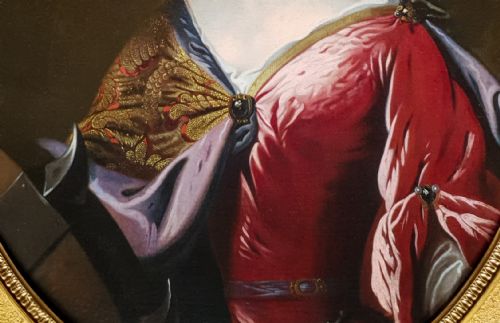
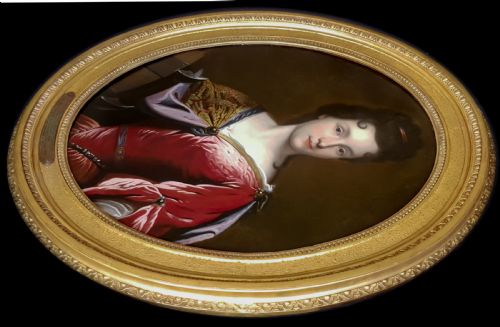
Held in a period gilded frame with presentation label.
Francois de Troy was born in Toulouse in 1645 and was taught the basic skills of painting by his father, and possibly by Antoine Durand. Around 1662 he went to Paris to study portrait painting under Claude Lefèbvre (1633–1675) and Nicolas-Pierre Loir (1624–1679 and in 1671, he was approved by the Académie Royale de peinture et de sculpture. After the death of Claude Lefebvre in 1675, Troy concentrated on portraiture aimed at commissions from Lefebvre's former clients and became very successful and fashionable.
In 1698, he was appointed a Professor of the Académie Royale, and in 1708 became its Director. He was able to work continuously in court circles for almost fifty years and was admired for his ability to capture the upper classes and their preoccupation with manners and fashion. He died in Paris.
Provenance: From the sitter at the family seat, Chateau de Bosmelat, and by descent
More info at: wwww.titanfineart.com
Titan Fine Art has dated this Antique Oil Painting to the 17th Century.
Specialist in 17th & 18thc portraits. Highly curated selection, museum-level research & pro conservation. Exceptional art, expertly vetted.
You can view the stock and full dealer information on the Titan Fine Art Profile Page

French Portrait of a Lady, as Saint Catherine C.1690; Circle of Francois De Troy (1645-1730), Oil on Canvas Painting