15,362  PAGES BROWSED TODAY PAGES TODAY • 30 ANTIQUES UPLOADED TODAYNEW ARRIVALS
GIFTS
30 ITEMS ADDED TODAY
Sort Order
Items Per Page
Browse Categories
Sort order
Relevant Links
Items per page
ID #SA879551
SOLD
Email Phone
Save
Portrait of a Young Lady 1615, by a Follower of William Larkin.
Sold by Roy Precious - Antiques & Fine Art
sold SA879551
Sorry, but this item has been sold.
Roy Precious - Antiques & Fine Art

Roy Precious - Antiques & Fine Art

Sellingantiques Verified Since Mar 2003
Browse dealers 91 items
  • About Us
    Roy and nadine precious: specialists in portraiture from the 16th to the 20th century. Established in 1972.
Id #SA879551
PDF SHARE
SAVE

Portrait of a Young Lady 1615, by a Follower of William Larkin.

17th century
Sold 5 September 2025 · Roy Precious - Antiques & Fine Art
This “Portrait of a Young Lady 1615, by a Follower of William Larkin” found a buyer.

It was listed by Roy Precious - Antiques & Fine Art. Sold pieces stay on Sellingantiques as a record of what has passed through, and the next one is rarely far away.

Description

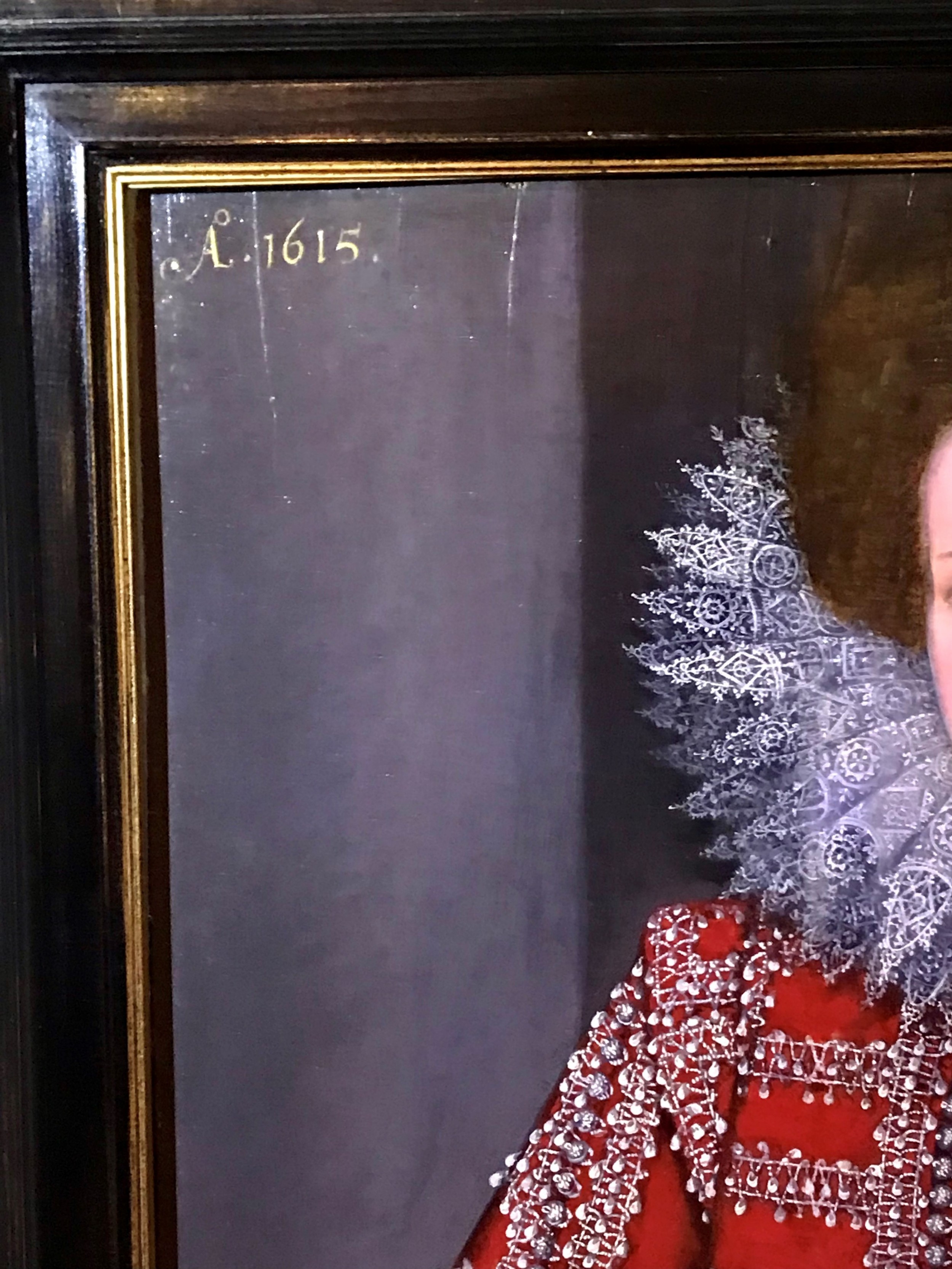
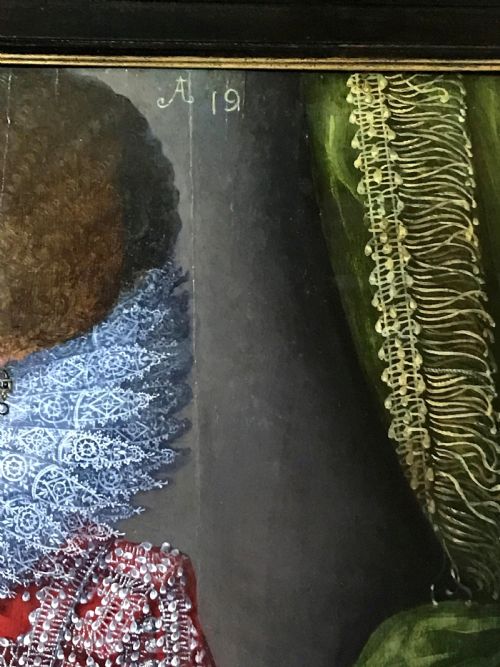
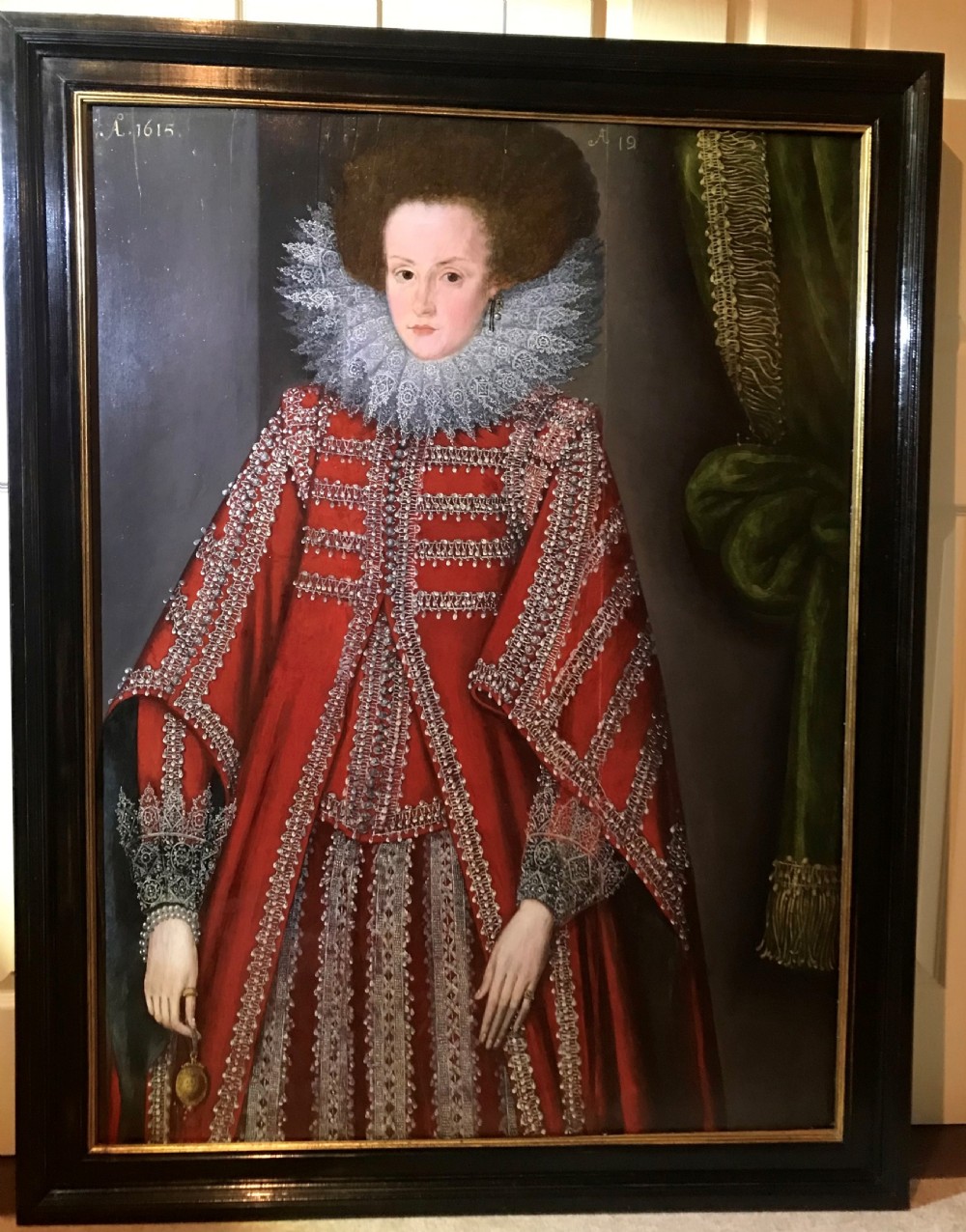
Oil on oak panel, inscribed 'Ao1615' and 'At 19'. (in the year 1615, in her 19th year).

During the reign of Elizabeth I, portraiture in England became stylised, exaggerated and iconographic, as result of the Queen's desire to control her own image. This caused a blossoming of a particularly English style that was obsessed with surface, and the display of wealth through costume. It reached a brilliant climax during the second decade of the reign of James I, with artists such as William Larkin.

This is an extremely fine painting of a young aristocrat who displays her extraordinary wealth in her clothing. At this period clothing was a vital indicator of status and it was not uncommon for the aristocracy to wear garments that cost as much as a prosperous farm was worth.
It is impossible to overstate the importance of this display of status at this time.

Portraits were seen as constructions of identity and status in society, and are impossible to contemplate without acknowledging the presence and importance of fabrics, clothes, accessories and jewellery.
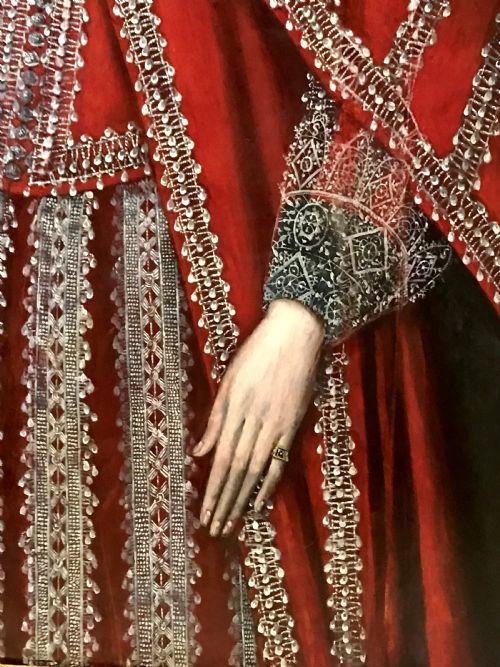
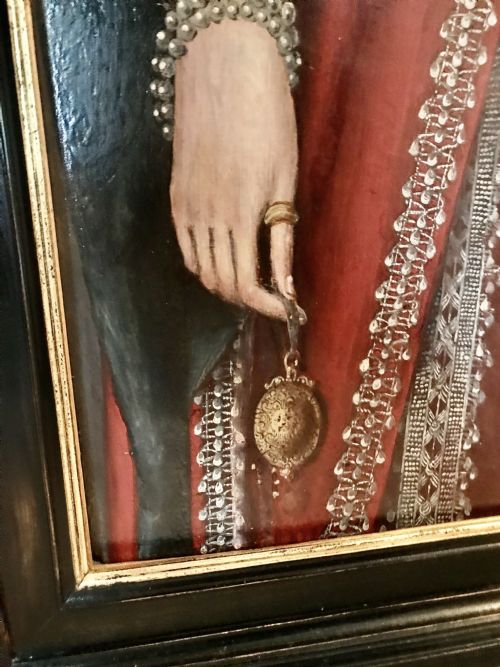
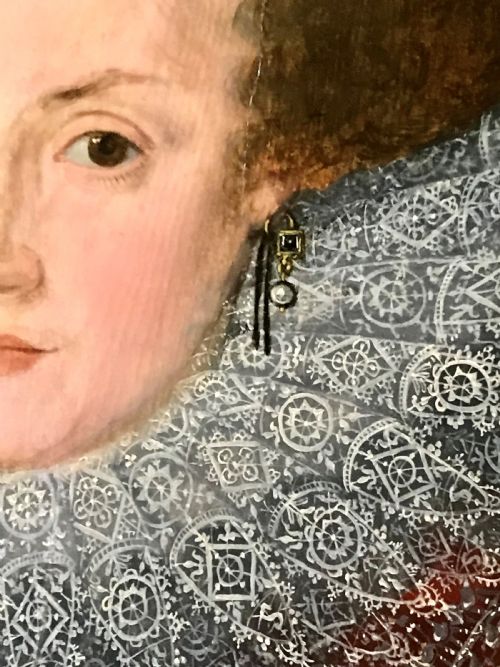
Red was a very expensive and fugitive dye and here the red dress is literally encrusted with diamonds and pearls; the reticella lace was also extremely costly. On the lady's right thumb is a heavy gold ring and she holds a gold locket decorated with a mythological face. This was probably a pomander containing sweet smelling herbs. On her left hand is a large diamond ring.
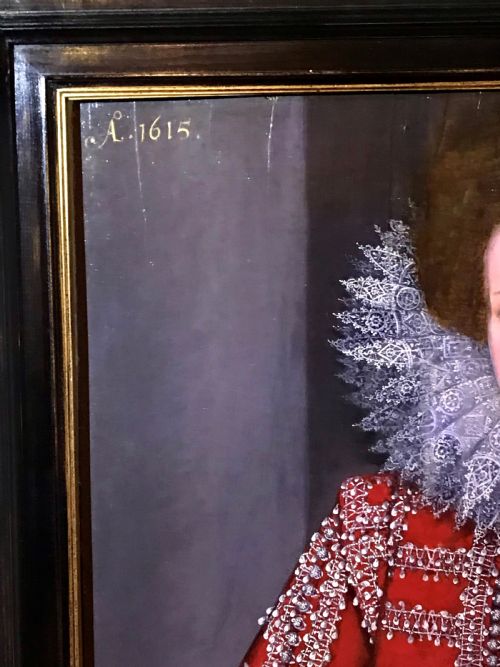
This portrait may well have been to commemorate the sitter's engagement or wedding; at this period wedding and engagement rings were worn on any finger.

The subject of Larkin's portraits stand rather stiffly and show no movement. Indeed it would be difficult for them to move in their complicated layers of finery so laboriously assembled and fastened together .. these were clothes for very grand occasions and ones in which to be immortalised in paint.
WILLIAM LARKIN (early 1580s – 1619) was an English painter active from 1609 until his death in 1619, known for his iconic portraits of members of the Court of James I of England. William Larkin was one of the most accomplished portrait painters of Jacobean England, yet little is known of him.
He was born in London in the early 1580s, and lived in the parishes of St Sepulchre-without-Newgate, Holborn, and St Anne, Blackfriars. He was a close neighbour of the eminent artist Robert Peake, portrait painter to Henry, Prince of Wales, and it well may have been Peake who introduced Larkin to painting. He became a Freeman of the Worshipful Company of Painter-Stainers on 7 July 1606 under the patronage of Lady Arbella Stuart and Edward Seymour, 1st Earl of Hertford.
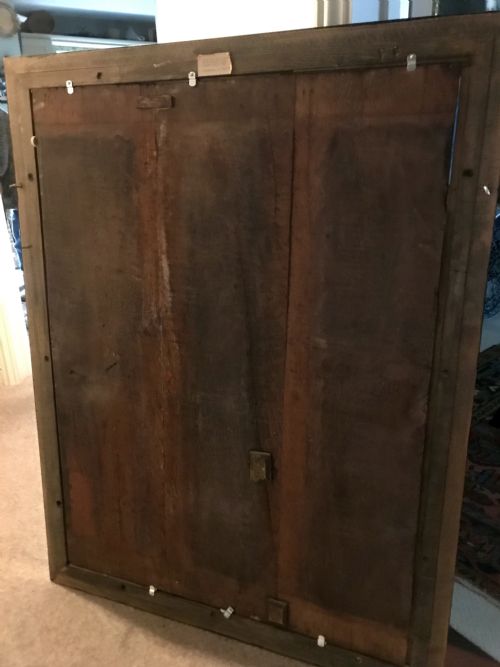
About 40 portraits by Larkin have been identified, of courtiers and gentry, but he seems never to have painted members of the royal family. Documentary evidence of Larkin's work is found in the Diary of Lady Anne Clifford, who sat for him in 1619; in the Rutland Papers for 1617 and 1619; and in a seventeenth-century inventory of paintings at Claydon House including a portrait of Frances Carr, Countess of Somerset.

Larkin's work marks the last stage in a tradition of English portraiture traceable from the later work of Hans Holbein the Younger through Nicholas Hilliard in which the sitter is painted in flat, lightly modelled fashion. The deaths of Hilliard, Larkin, and fellow-portraitist Robert Peake the Elder in 1619 mark the end of this insular tradition in British art.

SIZE: 49 x 37 inches including the frame

PROVENANCE: Sold by Lane Fine Art, Pimlico, London in 1983 for £6375 (about £17500 in modern money).

West Sussex Private Collection.

Physical Dimensions
Height
124cm (48.82")
Width
94cm (37.01")
Depth
6cm (2.36")
Declaration

Roy Precious - Antiques & Fine Art has dated this Jacobean Portrait Painting to the 17th Century.

Reference Numbers
Sellingantiques Reference
SA879551
Dealers Internal Reference
9251
Description
Oil on oak panel, inscribed 'Ao1615' and 'At 19'. (in the year 1615, in her 19th year).
“
During the reign of Elizabeth I, portraiture in England became stylised, exaggerated and iconographic, as result of the Queen's desire to control her own image.
Roy Precious - Antiques & Fine Art

This caused a blossoming of a particularly English style that was obsessed with surface, and the display of wealth through costume. It reached a brilliant climax during the second decade of the reign of James I, with artists such as William Larkin.

fig 1. An oil painting on canvas depicting a full-length portrait of a young lady in Jacobean dress within a dark wooden frame.
fig 1. Portrait of a Young Lady 1615, by a Follower of William Larkin.

This is an extremely fine painting of a young aristocrat who displays her extraordinary wealth in her clothing. At this period clothing was a vital indicator of status and it was not uncommon for the aristocracy to wear garments that cost as much as a prosperous farm was worth.

fig 2. An oil painting on canvas depicting a full-length portrait of a young lady in Jacobean dress within a dark wooden frame.
fig 2. Portrait of a Young Lady 1615, by a Follower of William Larkin.

It is impossible to overstate the importance of this display of status at this time.

Portraits were seen as constructions of identity and status in society, and are impossible to contemplate without acknowledging the presence and importance of fabrics, clothes, accessories and jewellery.

fig 3. An oil painting on canvas depicting a full-length portrait of a young lady in Jacobean dress within a dark wooden frame.
fig 3. Portrait of a Young Lady 1615, by a Follower of William Larkin.

Red was a very expensive and fugitive dye and here the red dress is literally encrusted with diamonds and pearls; the reticella lace was also extremely costly. On the lady's right thumb is a heavy gold ring and she holds a gold locket decorated with a mythological face. This was probably a pomander containing sweet smelling herbs. On her left hand is a large diamond ring.

fig 4. An oil painting on canvas depicting a full-length portrait of a young lady in Jacobean dress within a dark wooden frame.
fig 4. Portrait of a Young Lady 1615, by a Follower of William Larkin.

This portrait may well have been to commemorate the sitter's engagement or wedding; at this period wedding and engagement rings were worn on any finger.

The subject of Larkin's portraits stand rather stiffly and show no movement. Indeed it would be difficult for them to move in their complicated layers of finery so laboriously assembled and fastened together .. these were clothes for very grand occasions and ones in which to be immortalised in paint.

fig 5. An oil painting on canvas depicting a full-length portrait of a young lady in Jacobean dress within a dark wooden frame.
fig 5. Portrait of a Young Lady 1615, by a Follower of William Larkin.

WILLIAM LARKIN (early 1580s – 1619) was an English painter active from 1609 until his death in 1619, known for his iconic portraits of members of the Court of James I of England. William Larkin was one of the most accomplished portrait painters of Jacobean England, yet little is known of him.

fig 6. An oil painting on canvas depicting a full-length portrait of a young lady in Jacobean dress within a dark wooden frame.
fig 6. Portrait of a Young Lady 1615, by a Follower of William Larkin.

He was born in London in the early 1580s, and lived in the parishes of St Sepulchre-without-Newgate, Holborn, and St Anne, Blackfriars. He was a close neighbour of the eminent artist Robert Peake, portrait painter to Henry, Prince of Wales, and it well may have been Peake who introduced Larkin to painting. He became a Freeman of the Worshipful Company of Painter-Stainers on 7 July 1606 under the patronage of Lady Arbella Stuart and Edward Seymour, 1st Earl of Hertford.

fig 7. An oil painting on canvas depicting a full-length portrait of a young lady in Jacobean dress within a dark wooden frame.
fig 7. Portrait of a Young Lady 1615, by a Follower of William Larkin.

About 40 portraits by Larkin have been identified, of courtiers and gentry, but he seems never to have painted members of the royal family. Documentary evidence of Larkin's work is found in the Diary of Lady Anne Clifford, who sat for him in 1619; in the Rutland Papers for 1617 and 1619; and in a seventeenth-century inventory of paintings at Claydon House including a portrait of Frances Carr, Countess of Somerset.

Larkin's work marks the last stage in a tradition of English portraiture traceable from the later work of Hans Holbein the Younger through Nicholas Hilliard in which the sitter is painted in flat, lightly modelled fashion. The deaths of Hilliard, Larkin, and fellow-portraitist Robert Peake the Elder in 1619 mark the end of this insular tradition in British art.

SIZE: 49 x 37 inches including the frame

PROVENANCE: Sold by Lane Fine Art, Pimlico, London in 1983 for £6375 (about £17500 in modern money).

West Sussex Private Collection.

Height
124cm (48.82")
Width
94cm (37.01")
Depth
6cm (2.36")
Date of Manufacture

Roy Precious - Antiques & Fine Art has dated this Jacobean Portrait Painting to the 17th Century.

Reference Numbers
Sellingantiques Ref
SA879551
Dealers Internal Ref
9251
Roy Precious - Antiques & Fine Art
Sellingantiques verified Since Mar 2003

Roy and nadine precious: specialists in portraiture from the 16th to the 20th century. Established in 1972.

Dealer Profile

You can view the stock and full dealer information on the Roy Precious - Antiques & Fine Art Profile Page
PDF SHARE
SAVE
An oil painting on canvas depicting a full-length portrait of a young lady in Jacobean dress within a dark wooden frame. SOLD6+ MONTHS AGO
1 / 8
Archive I An oil painting on canvas depicting a full-length portrait of a young lady in Jacobean dress within a dark wooden frame. SOLD6+ MONTHS AGO

Portrait of a Young Lady 1615, by a Follower of William Larkin.
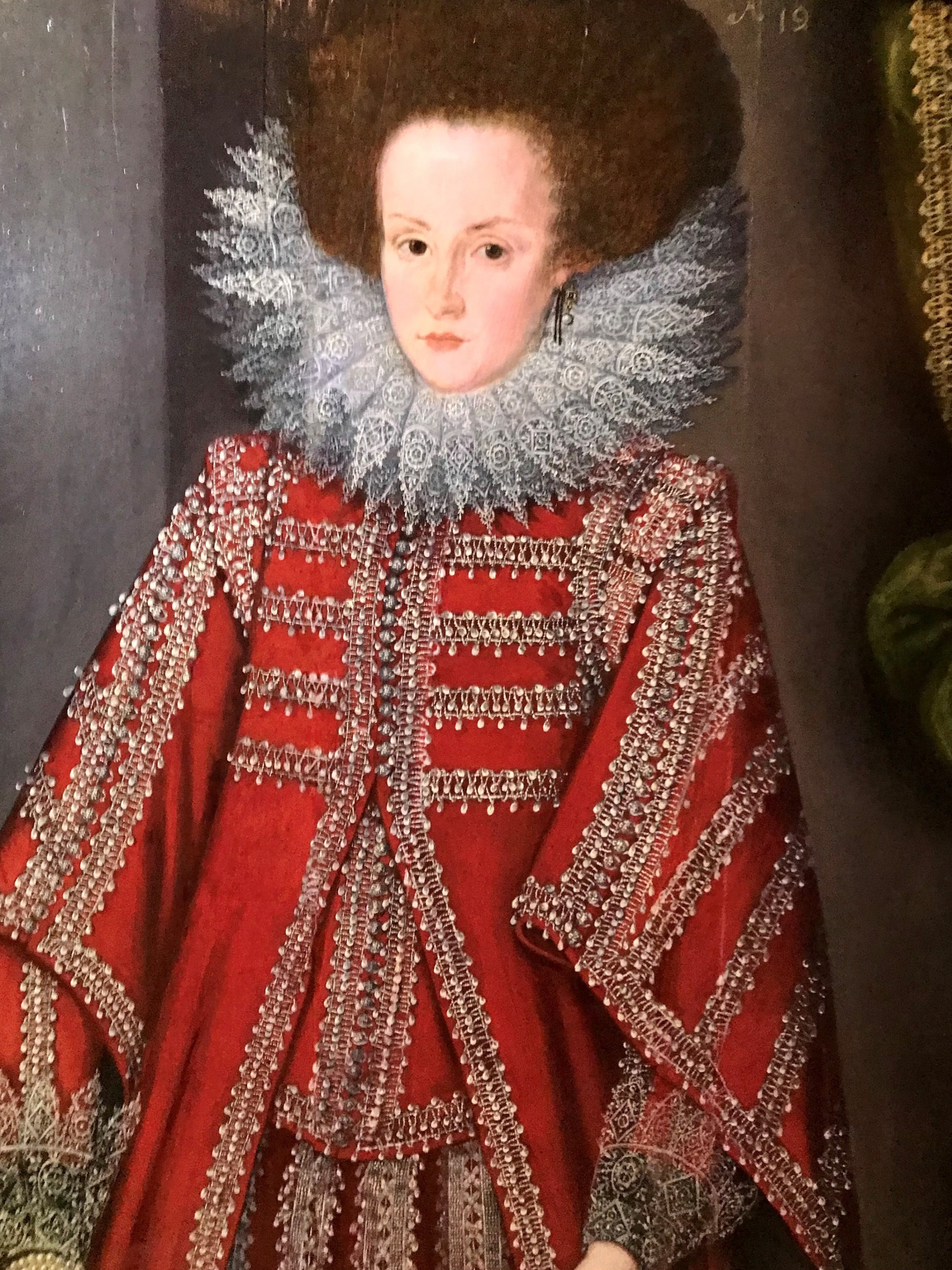
Archive II An oil painting on canvas depicting a full-length portrait of a young lady in Jacobean dress within a dark wooden frame. View II
Archive III An oil painting on canvas depicting a full-length portrait of a young lady in Jacobean dress within a dark wooden frame. View III
Archive IV An oil painting on canvas depicting a full-length portrait of a young lady in Jacobean dress within a dark wooden frame. View IV
Archive V An oil painting on canvas depicting a full-length portrait of a young lady in Jacobean dress within a dark wooden frame. View V
Archive VI An oil painting on canvas depicting a full-length portrait of a young lady in Jacobean dress within a dark wooden frame. View VI
Archive VII An oil painting on canvas depicting a full-length portrait of a young lady in Jacobean dress within a dark wooden frame. View VII
Archive VIII An oil painting on canvas depicting a full-length portrait of a young lady in Jacobean dress within a dark wooden frame. View VIII
Enlarged Archival View
Location
Wiltshire
United Kingdom
Dealer Profile Page sellingantiques.co.uk/rp
Verified Since Mar 2003
Items For Sale 91
Items Sold 684
Roy Precious - Antiques & Fine Art
Verified Since Mar 2003
View Dealer Info
Location: Wiltshire, United Kingdom
Verified
Mar 2003
For Sale
91
Sold
684
An oil painting on canvas depicting a full-length portrait of a young lady in Jacobean dress within a dark wooden frame.
Portrait of a Young Lady 1615, by a Follower of William Larkin.
Ref: SA879551
An oil painting on canvas depicting a full-length portrait of a young lady in Jacobean dress within a dark wooden frame.
Detail View 1
Detail View 2
Detail View 3
Detail View 4
Detail View 5
Detail View 6
Detail View 7
Archival Detail
Every single antique dealer on our platform is individually approved by our internal team. We verify their professional trade history, ethical standards, and photographic quality to ensure a secure, high-standard buying environment. Upon joining, every dealer agrees to a strict 9-point code of conduct. While issues can occasionally arise, our dealers typically resolve them swiftly and directly with the buyer. In fact, since our founding in 2002, Sellingantiques has only had to step in to help resolve an issue on roughly five occasions—a true testament to the quality of our dealers and their dedication to your happiness.
Our dealers are highly experienced in packing and shipping fragile, high-value antiques. Because you are in direct contact with the dealer, you will be able to easily go through all available shipping and insurance options together to ensure your item arrives safely.
Antiques are the ultimate green purchase. By choosing historical pieces over newly manufactured goods, you completely eliminate the carbon footprint of modern mass production while preserving exceptional, timeless craftsmanship.
Written by Sellingantiques from the dealer’s photographs and listing
  • ObjectPaintings
  • Period17th century
  • StyleJacobean
  • MaterialOil paint, Canvas, Wood
  • ColourMulticoloured
  • MotifsLace ruff, Elaborate embroidery, Formal pose, Draped curtain
  • SizeH 124 cm (49 in) x W 94 cm (37 in) x D 6 cm (2 in)

Jacobean portraits are characterised by flat perspectives, meticulous attention to textile patterns and lace, and formal, rigid poses typical of early 17th-century English court painting.

Traditional works from this period were typically painted in oil on stretched linen canvas or wooden panels, utilizing ground pigments mixed with linseed oil and framed in heavy dark wood.

Authentic period pieces exhibit historic craquelure, oxidisation of varnishes, hand-woven canvas structures, and pigments consistent with early modern chemical compositions under scientific analysis.

Historic portraits add gravitas and depth when contrasted against neutral modern walls, paired with minimalist frames or integrated into traditional gallery arrangements.

Preservation requires maintaining stable relative humidity between 45-55 percent, avoiding direct sunlight to prevent pigment degradation, and keeping canvases away from direct heat sources.
items
Add keywords to the filter
Price
£100
£250000
Era
Period
Style
Material
Origin
Stock Location
Recently Added
Online Payments
Categories