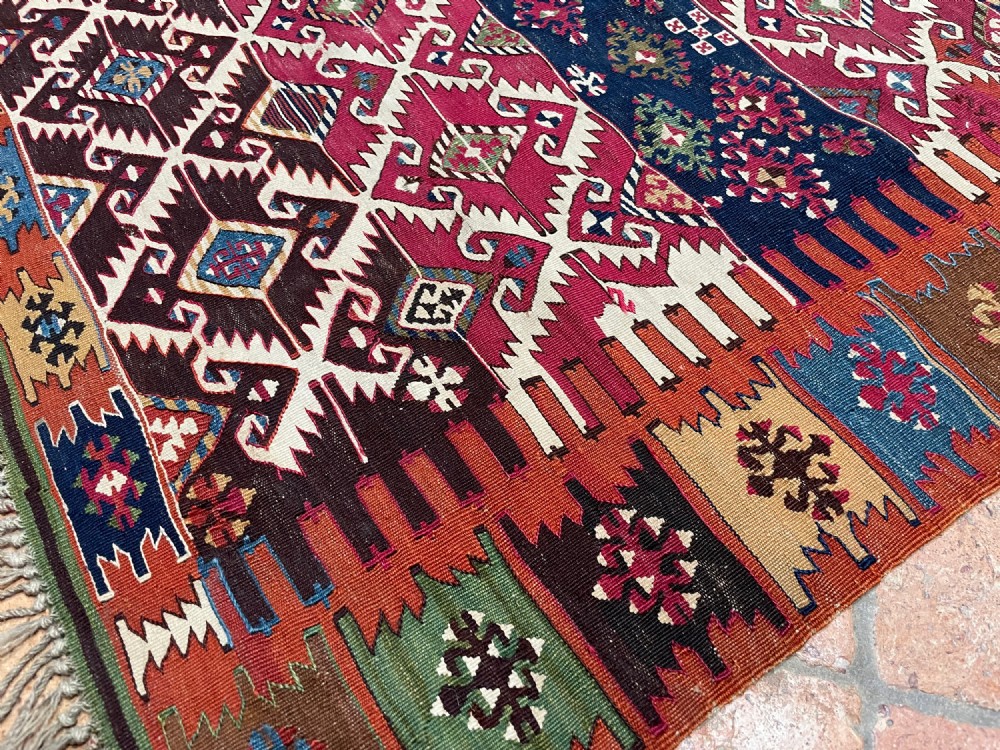
Farnham Antique Carpets has dated this piece to the 1870s.
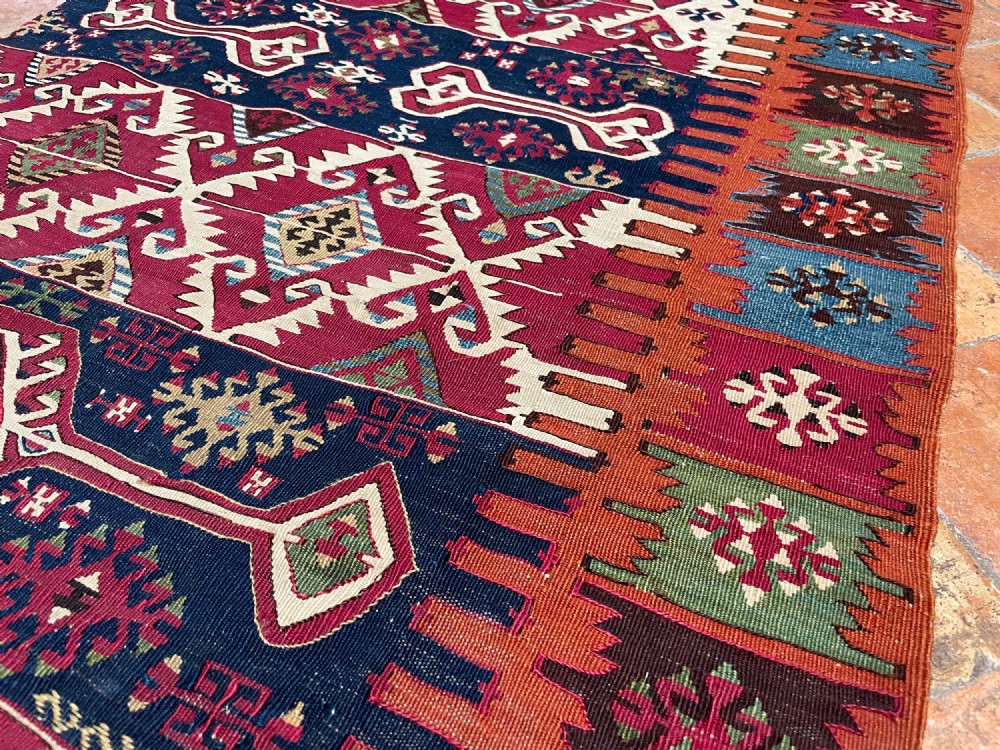
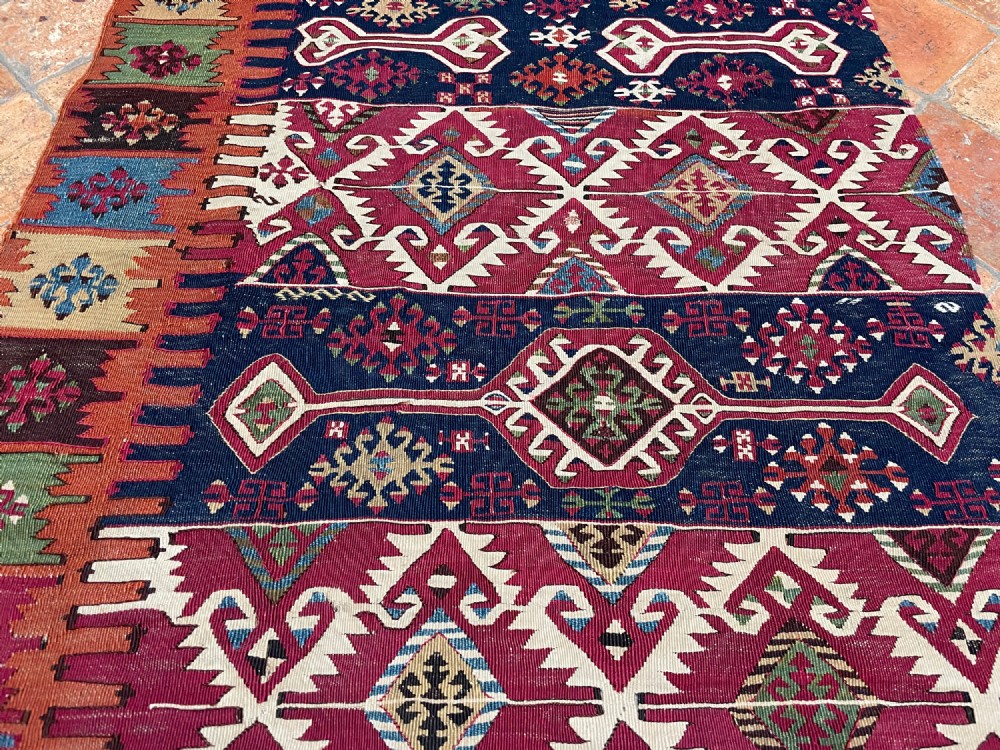
Their colours are usually darker than Konya Kilims and more colourful. Generally wide rectangular kilims, this would have been one half of a larger Kilim, as they were woven in two panels then joined together. Often separated, either due to damage or narrowed deliberately to be used as a floor runner or for decoration on the wall or draped over furniture.
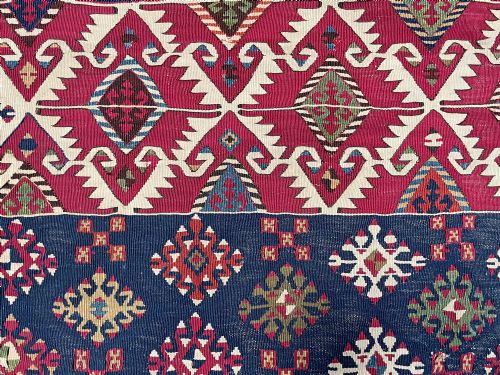
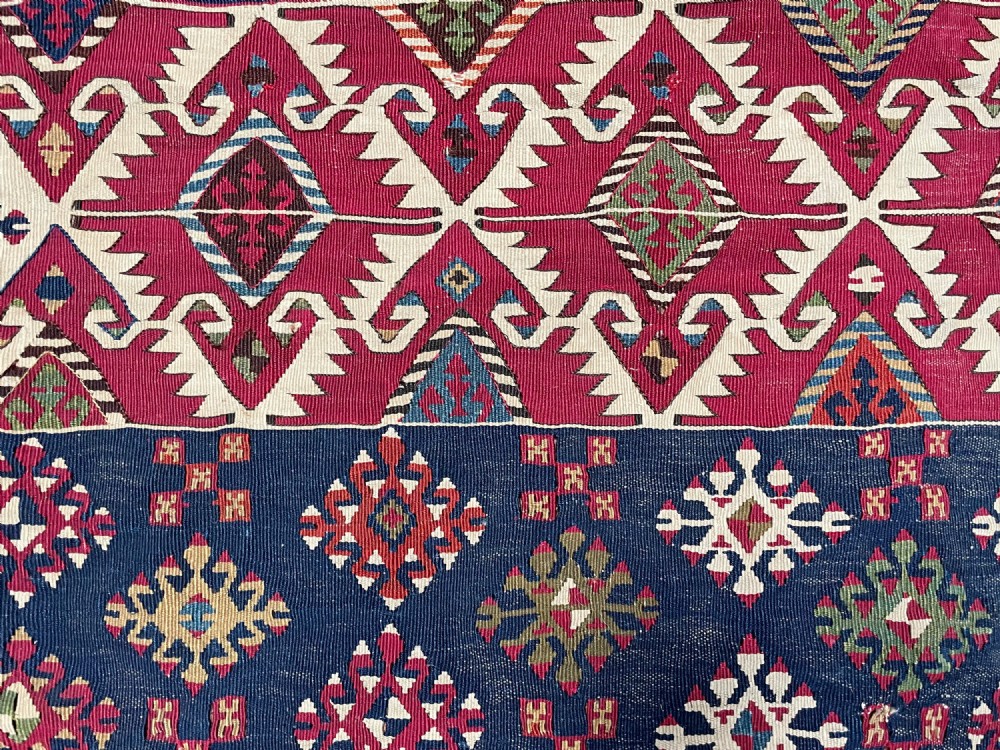
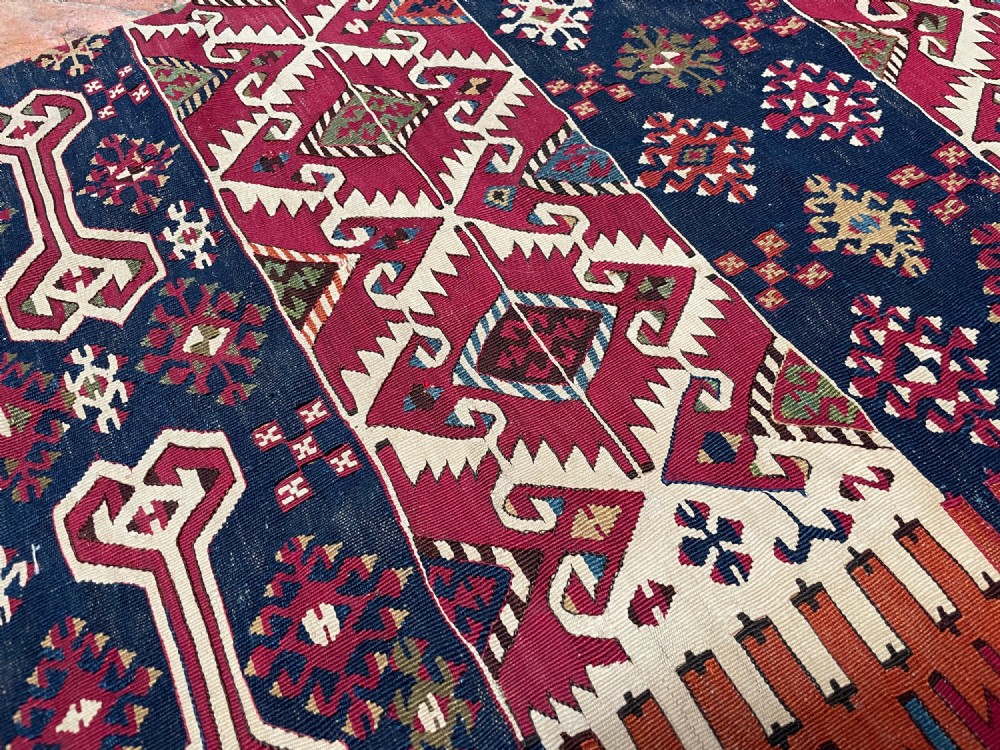
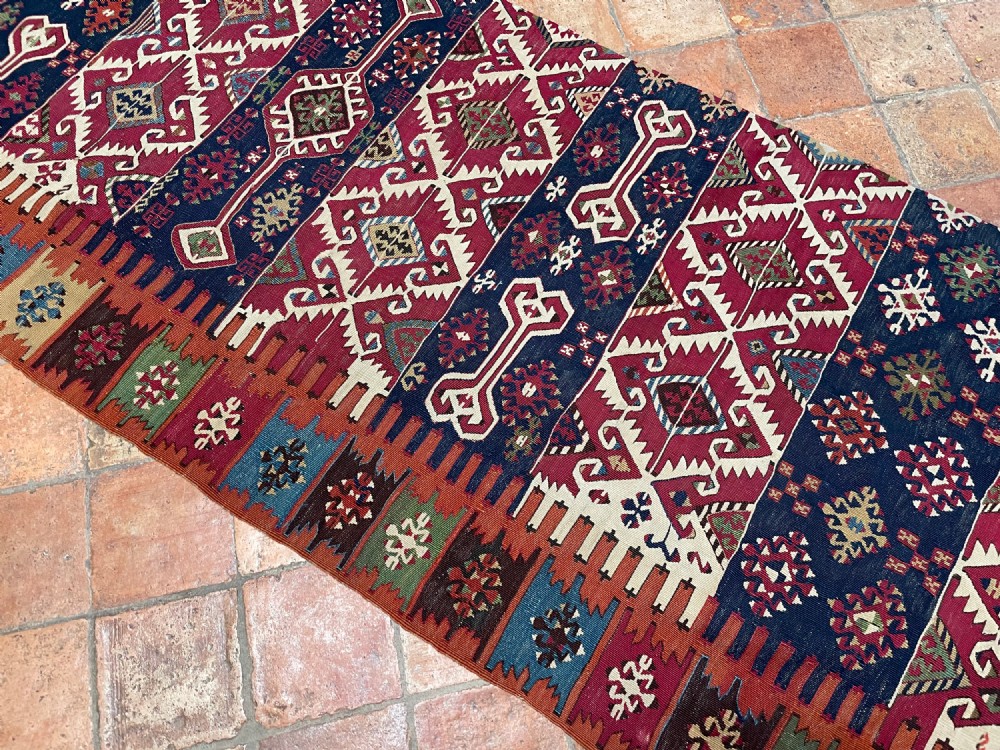
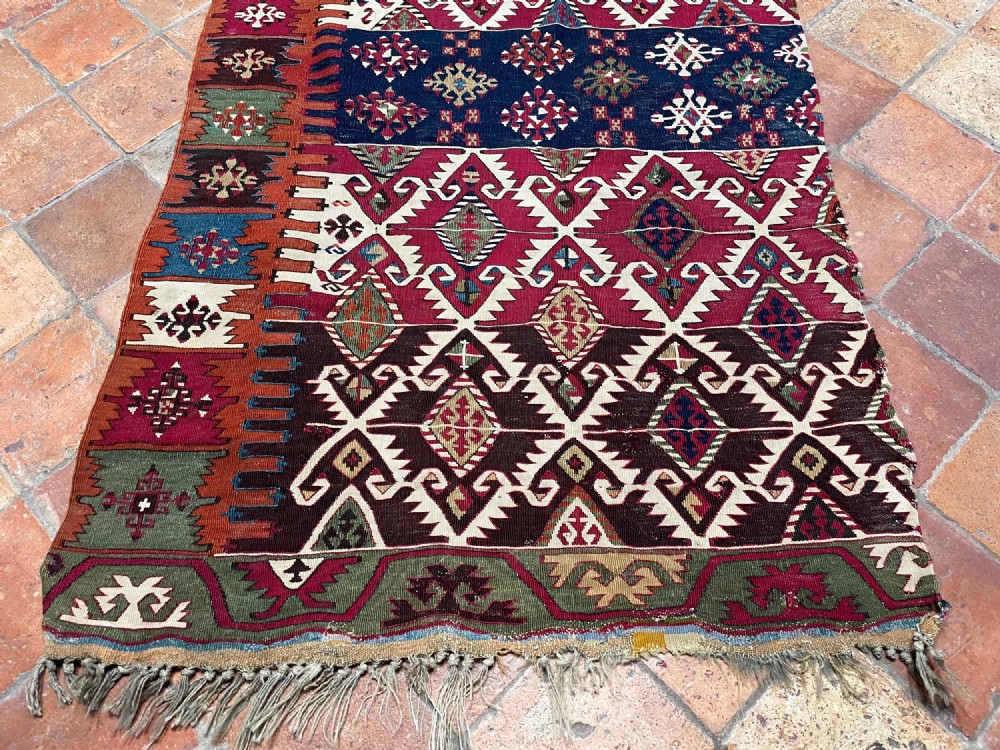
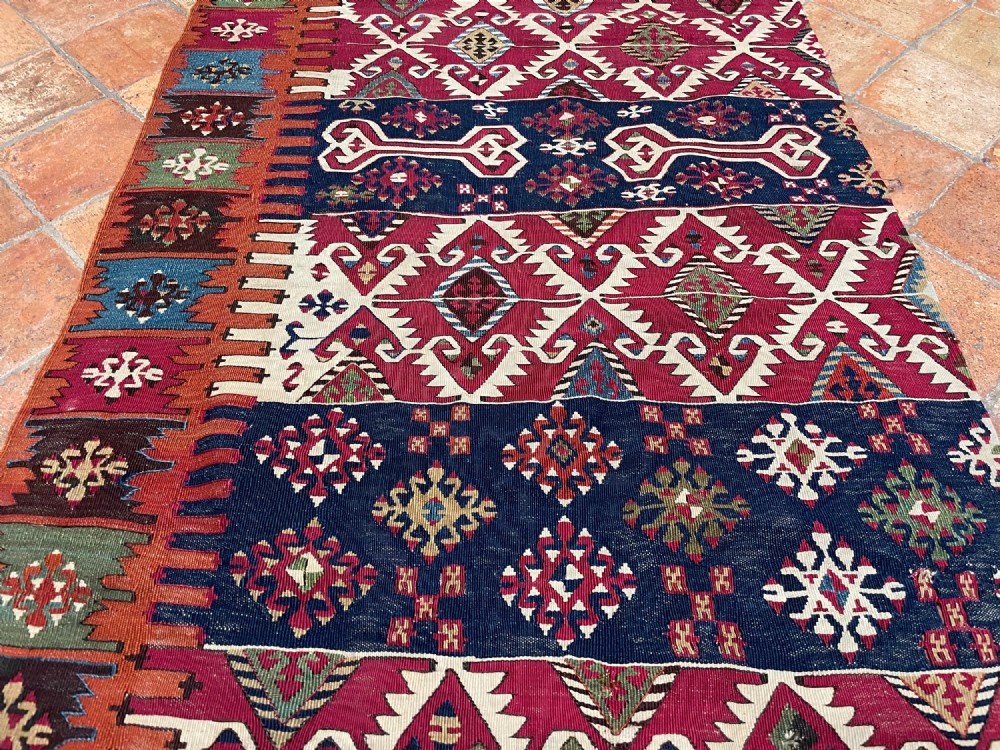
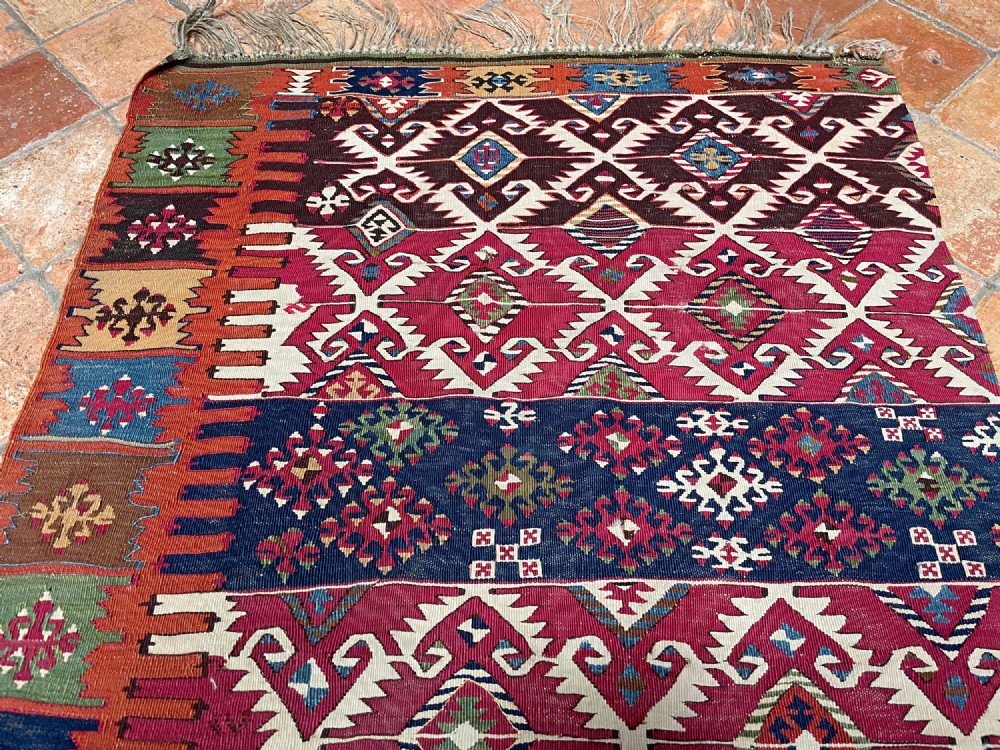
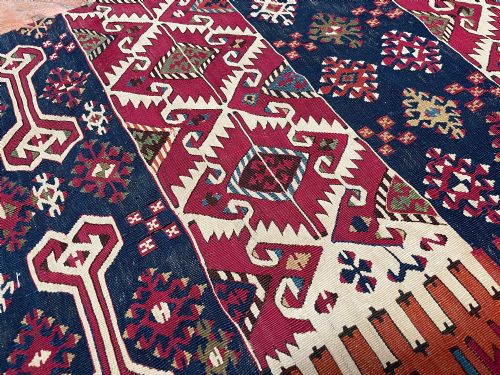
The main field design is known as the Elibelinde motif (which means Turkish for "hands on hips") this pattern is of a hands-on-hips female figure. It is widely used on Anatolian Kilims and is quite varied in design. The arms of the figure are represented by two inward-facing hooks, while the body of the woman is represented by a triangle or diamond. The head is typically represented by a diamond. The Elibelinde is a symbol of fertility and motherhood.
We can help you in the following ways, please either book in a showroom visit to see this kilim up close, request a home visit to trial this beautiful Aksaray Kilim in-situ. Or purchase it online via our secure checkout and it can be shipped worldwide.
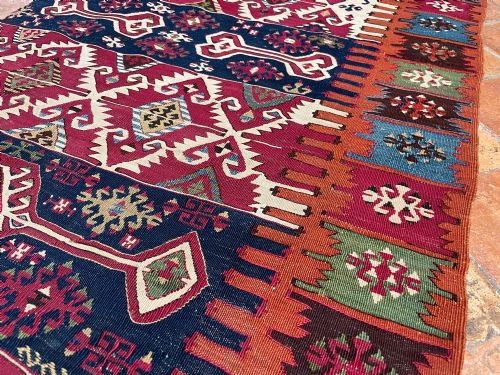
Located in an ancient region dating to the Neolithic Age (8000-5500 BC) and human settlements were excavated, Aksaray province produces kilims with very varied designs likened by some experts to those woven in close by Konya. Whilst close to Konya, it does have some bearing on the designs and colours, they do vary in their tightness of weave and richer dye palette. The town of Aksaray stands on the site of Cappadocia Garsaura, an ancient settlement which was part of the famous caravan route for travellers and buyers of antiques.
Farnham Antique Carpets has dated this piece to the 1870s.
Specialists in antique decorative carpets, rugs and runners.
You can view the stock and full dealer information on the Farnham Antique Carpets Profile Page
Farnham Antique Carpets is a registered member of LAPADA BADA
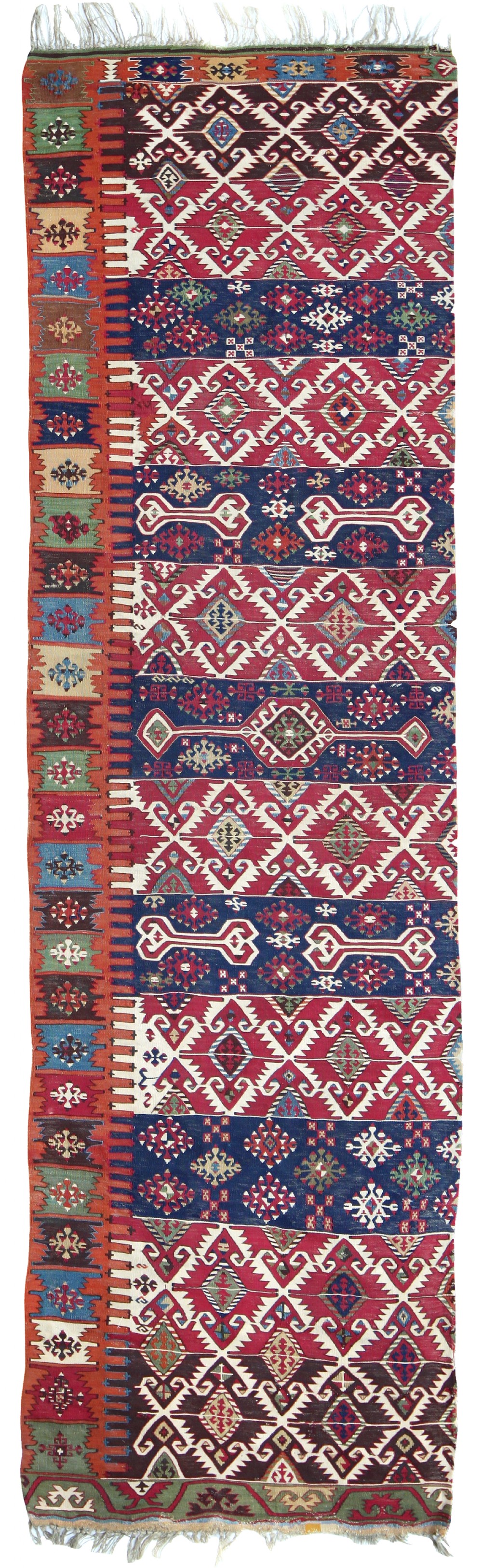
Antique Aksaray Kilim