53,432  PAGES BROWSED TODAY PAGES TODAY 103  ANTIQUES UPLOADED TODAY NEW ARRIVALS
ID #SA868402
FOR SALE
£3,500
Email
Save
Circle of Sir Peter Lely, 1618-1680 Portrait of Oliver Cromwell, Lord Protector (1599 –1658) Signed/inscribed: On the Reverse "Oliver Cromwell" oil on Copper
Artware Fineart
for sale €4,095     $4,445
£3,500

Artware Fineart

Sellingantiques Verified Since Sep 2008
View Dealers Stock Page
Id #SA868402
PDF SHARE
SAVE

Circle of Sir Peter Lely, 1618-1680 Portrait of Oliver Cromwell, Lord Protector (1599 –1658) Signed/inscribed: On the Reverse "Oliver Cromwell" oil on Copper

17th century
For Sale by Artware Fineart
Description

Circle of Sir Peter Lely, 1618-1680

Portrait of Oliver Cromwell, Lord Protector (1599 –1658)

Signed/Inscribed: on the reverse "Oliver Cromwell"

oil on copper

Oliver Cromwell 1599 – 1658 was an English general and statesman who, first as a subordinate and later as Commander-in-Chief, led armies of the Parliament of England against King Charles I during the English Civil War, subsequently ruling the British Isles as Lord Protector from 1653 until his death in 1658. He acted simultaneously as head of state and head of government of the new republican commonwealth.

Cromwell was born into the landed gentry to a family descended from the sister of Henry VIII's minister Thomas Cromwell. Little is known of the first 40 years of his life, as only four of his personal letters survive, along with a summary of a speech that he delivered in 1628. He became an Independent Puritan after undergoing a religious conversion in the 1630s, taking a generally tolerant view towards the many Protestant sects of the time; an intensely religious man, Cromwell fervently believed in God guiding him to victory. Cromwell was elected Member of Parliament for Huntingdon in 1628, and for Cambridge in the Short (1640) and Long (1640–1649) Parliaments. He entered the English Civil Wars on the side of the "Roundheads", or Parliamentarians, and gained the nickname "Old Ironsides". Cromwell demonstrated his ability as a commander and was quickly promoted from leading a single cavalry troop to being one of the principal commanders of the New Model Army, playing an important role under General Sir Thomas Fairfax in the defeat of the Royalist ("Cavalier") forces.

Cromwell was one of the signatories of Charles I's death warrant in 1649, and dominated the short-lived Commonwealth of England as a member of the Rump Parliament (1649–1653). He was selected to take command of the English campaign in Ireland in 1649–1650. Cromwell's forces defeated the Confederate and Royalist coalition in Ireland and occupied the country, bringing to an end the Irish Confederate Wars. During this period, a series of Penal Laws were passed against Roman Catholics (a significant minority in England and Scotland but the vast majority in Ireland), and a substantial amount of their land was confiscated. Cromwell also led a campaign against the Scottish army between 1650 and 1651. On 20 April 1653, Cromwell dismissed the Rump Parliament by force, setting up a short-lived nominated assembly known as Barebone's Parliament, before being invited by his fellow leaders to rule as Lord Protector of England (which included Wales at the time), Scotland, and Ireland from 16 December 1653. As a ruler, he executed an aggressive and effective foreign policy. Nevertheless, Cromwell's policy of religious toleration for Protestant denominations during the Protectorate extended only to "God's peculiar", and not to those considered by him to be heretics, such as the Quakers, Socinians, and Ranters.

Cromwell died from natural causes in 1658 and was buried in Westminster Abbey. He was succeeded by his son Richard, whose weakness led to a power vacuum. Oliver's former General George Monck then mounted a coup, causing Parliament to arrange the return to London of Prince Charles as King, Charles II, and the Royalists' return to power in 1660. Cromwell's corpse was subsequently dug up, hung in chains, and beheaded.

Cromwell is one of the most controversial figures in British and Irish history, considered a regicidal dictator by historians such as David Sharp, a military dictator by Winston Churchill,a bourgeois revolutionary by Leon Trotsky, and a hero of liberty by John Milton, Thomas Carlyle, and Samuel Rawson Gardiner. His tolerance of Protestant sects did not extend to Catholics, and the measures taken by him against Catholics, particularly in Ireland, have been characterised by some as

Physical Dimensions
Height
21cm (8.27")
Width
16.5cm (6.50")
Depth
2cm (0.79")
Declaration

Artware Fineart has dated this Oil on Copper Portrait to the 17th Century.

Reference Numbers
Sellingantiques Reference
SA868402
Dealers Internal Reference
4459
Description
Circle of Sir Peter Lely, 1618-1680

Portrait of Oliver Cromwell, Lord Protector (1599 –1658)

Signed/Inscribed: on the reverse "Oliver Cromwell"

oil on copper

Oliver Cromwell 1599 – 1658 was an English general and statesman who, first as a subordinate and later as Commander-in-Chief, led armies of the Parliament of England against King Charles I during the English Civil War, subsequently ruling the British Isles as Lord Protector from 1653 until his death in 1658. He acted simultaneously as head of state and head of government of the new republican commonwealth.

Cromwell was born into the landed gentry to a family descended from the sister of Henry VIII's minister Thomas Cromwell.
Artware Fineart

Little is known of the first 40 years of his life, as only four of his personal letters survive, along with a summary of a speech that he delivered in 1628. He became an Independent Puritan after undergoing a religious conversion in the 1630s, taking a generally tolerant view towards the many Protestant sects of the time; an intensely religious man, Cromwell fervently believed in God guiding him to victory. Cromwell was elected Member of Parliament for Huntingdon in 1628, and for Cambridge in the Short (1640) and Long (1640–1649) Parliaments. He entered the English Civil Wars on the side of the "Roundheads", or Parliamentarians, and gained the nickname "Old Ironsides". Cromwell demonstrated his ability as a commander and was quickly promoted from leading a single cavalry troop to being one of the principal commanders of the New Model Army, playing an important role under General Sir Thomas Fairfax in the defeat of the Royalist ("Cavalier") forces.

fig 1. A small 17th-century style oil portrait on copper depicting a man in armour with a white collar, set against a dark background within an oval composition.
fig 1. Circle of Sir Peter Lely, 1618-1680 Portrait of Oliver Cromwell, Lord Protector (1599 –1658) Signed/inscribed: On the Reverse "Oliver Cromwell" oil on Copper

Cromwell was one of the signatories of Charles I's death warrant in 1649, and dominated the short-lived Commonwealth of England as a member of the Rump Parliament (1649–1653). He was selected to take command of the English campaign in Ireland in 1649–1650. Cromwell's forces defeated the Confederate and Royalist coalition in Ireland and occupied the country, bringing to an end the Irish Confederate Wars. During this period, a series of Penal Laws were passed against Roman Catholics (a significant minority in England and Scotland but the vast majority in Ireland), and a substantial amount of their land was confiscated. Cromwell also led a campaign against the Scottish army between 1650 and 1651. On 20 April 1653, Cromwell dismissed the Rump Parliament by force, setting up a short-lived nominated assembly known as Barebone's Parliament, before being invited by his fellow leaders to rule as Lord Protector of England (which included Wales at the time), Scotland, and Ireland from 16 December 1653. As a ruler, he executed an aggressive and effective foreign policy. Nevertheless, Cromwell's policy of religious toleration for Protestant denominations during the Protectorate extended only to "God's peculiar", and not to those considered by him to be heretics, such as the Quakers, Socinians, and Ranters.

fig 2. A small 17th-century style oil portrait on copper depicting a man in armour with a white collar, set against a dark background within an oval composition.
fig 2. Circle of Sir Peter Lely, 1618-1680 Portrait of Oliver Cromwell, Lord Protector (1599 –1658) Signed/inscribed: On the Reverse "Oliver Cromwell" oil on Copper

Cromwell died from natural causes in 1658 and was buried in Westminster Abbey. He was succeeded by his son Richard, whose weakness led to a power vacuum. Oliver's former General George Monck then mounted a coup, causing Parliament to arrange the return to London of Prince Charles as King, Charles II, and the Royalists' return to power in 1660. Cromwell's corpse was subsequently dug up, hung in chains, and beheaded.

Cromwell is one of the most controversial figures in British and Irish history, considered a regicidal dictator by historians such as David Sharp, a military dictator by Winston Churchill,a bourgeois revolutionary by Leon Trotsky, and a hero of liberty by John Milton, Thomas Carlyle, and Samuel Rawson Gardiner. His tolerance of Protestant sects did not extend to Catholics, and the measures taken by him against Catholics, particularly in Ireland, have been characterised by some as

Height
21cm (8.27")
Width
16.5cm (6.50")
Depth
2cm (0.79")
Date of Manufacture

Artware Fineart has dated this Oil on Copper Portrait to the 17th Century.

Reference Numbers
Sellingantiques Ref
SA868402
Dealers Internal Ref
4459
Artware Fineart
Sellingantiques verified Since Sep 2008
Dealer Profile

You can view the stock and full dealer information on the Artware Fineart Profile Page

PDF SHARE
SAVE
A small 17th-century style oil portrait on copper depicting a man in armour with a white collar, set against a dark background within an oval composition.
1 / 3
Archive I A small 17th-century style oil portrait on copper depicting a man in armour with a white collar, set against a dark background within an oval composition.

Circle of Sir Peter Lely, 1618-1680 Portrait of Oliver Cromwell, Lord Protector (1599 –1658) Signed/inscribed: On the Reverse "Oliver Cromwell" oil on Copper

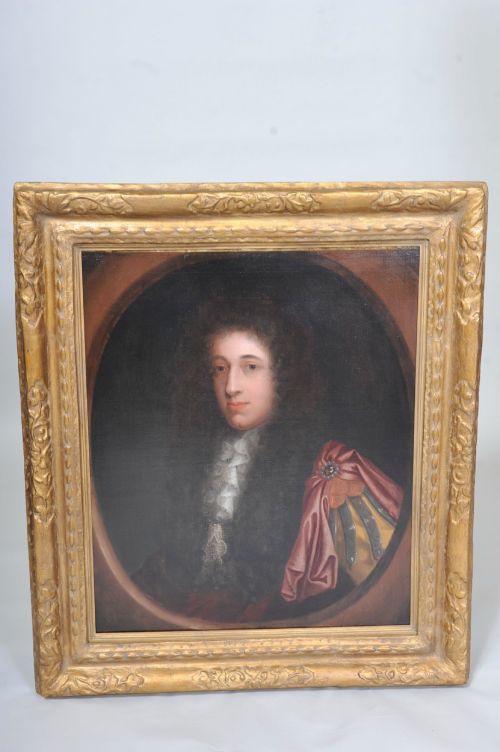
Archive II A small 17th-century style oil portrait on copper depicting a man in armour with a white collar, set against a dark background within an oval composition. View II
Archive III A small 17th-century style oil portrait on copper depicting a man in armour with a white collar, set against a dark background within an oval composition. View III
FURTHER BROWSING

Visitors also looked at these ⇣

Enlarged Archival View
Telephone 07958 699 645
Location
18 La Gare
51 Surrey Row
London
SE1 0BZ
United Kingdom
Verified Since Sep 2008
Items For Sale 243
Items Sold 223
Artware Fineart
Verified Since Sep 2008
View Dealer Info
Location: 18 La Gare , 51 Surrey Row , London , SE1 0BZ , United Kingdom
Verified
Sep 2008
For Sale
243
Sold
223
A small 17th-century style oil portrait on copper depicting a man in armour with a white collar, set against a dark background within an oval composition.
Circle of Sir Peter Lely, 1618-1680 Portrait of Oliver Cromwell, Lord Protector (1599 –1658) Signed/Inscribed: on the reverse "Oliver Cromwell" oil on copper
Ref: SA868402
A small 17th-century style oil portrait on copper depicting a man in armour with a white collar, set against a dark background within an oval composition.
Detail View 1
Detail View 2
Archival Detail
Every single antique dealer on our platform is individually approved by our internal team. We verify their professional trade history, ethical standards, and photographic quality to ensure a secure, high-standard buying environment. Upon joining, every dealer agrees to a strict 9-point code of conduct. While issues can occasionally arise, our dealers typically resolve them swiftly and directly with the buyer. In fact, since our founding in 2002, Sellingantiques has only had to step in to help resolve an issue on roughly five occasions—a true testament to the quality of our dealers and their dedication to your happiness.
Our dealers are highly experienced in packing and shipping fragile, high-value antiques. Because you are in direct contact with the dealer, you will be able to easily go through all available shipping and insurance options together to ensure your item arrives safely.
Antiques are the ultimate green purchase. By choosing historical pieces over newly manufactured goods, you completely eliminate the carbon footprint of modern mass production while preserving exceptional, timeless craftsmanship.

Oil on copper paintings became prominent during the late 16th and 17th centuries across Europe. The smooth, non-porous metal surface allowed artists to achieve precise detail and luminous glazes that preserved exceptionally well compared to flexible canvas supports.

Artists prepared thin copper plates by roughening the surface slightly for paint adhesion, often applying a ground layer before painting. Fine oil pigments were then applied using small brushes, creating precise lines and deep tonal tones suited for small-scale portraiture.

Authentic works from this era typically feature period-appropriate pigments, natural surface craquelure, and evidence of oxidisation on the metal or wooden support. Examination of paint layering, brushwork style, and contemporary inscriptions further assists identification.

Small historical portraits can be mounted within a gallery wall arrangement, displayed on a tabletop easel, or placed inside a bookshelf nook to introduce visual depth and historic context to modern decorative schemes.

Maintain the artwork in a stable environment with consistent humidity and temperature to reduce stress between the metal plate and paint layer. Avoid direct sunlight and solvents, removing surface dust using a dry, soft-bristled brush.
items
Add keywords to the filter
Price
£100
£250000
Era
Movements
Material
Origin
Stock Location
Freshness
Online Payments
Categories