Aaron Nejad Carpets and Rugs has dated this piece to the 1880s.
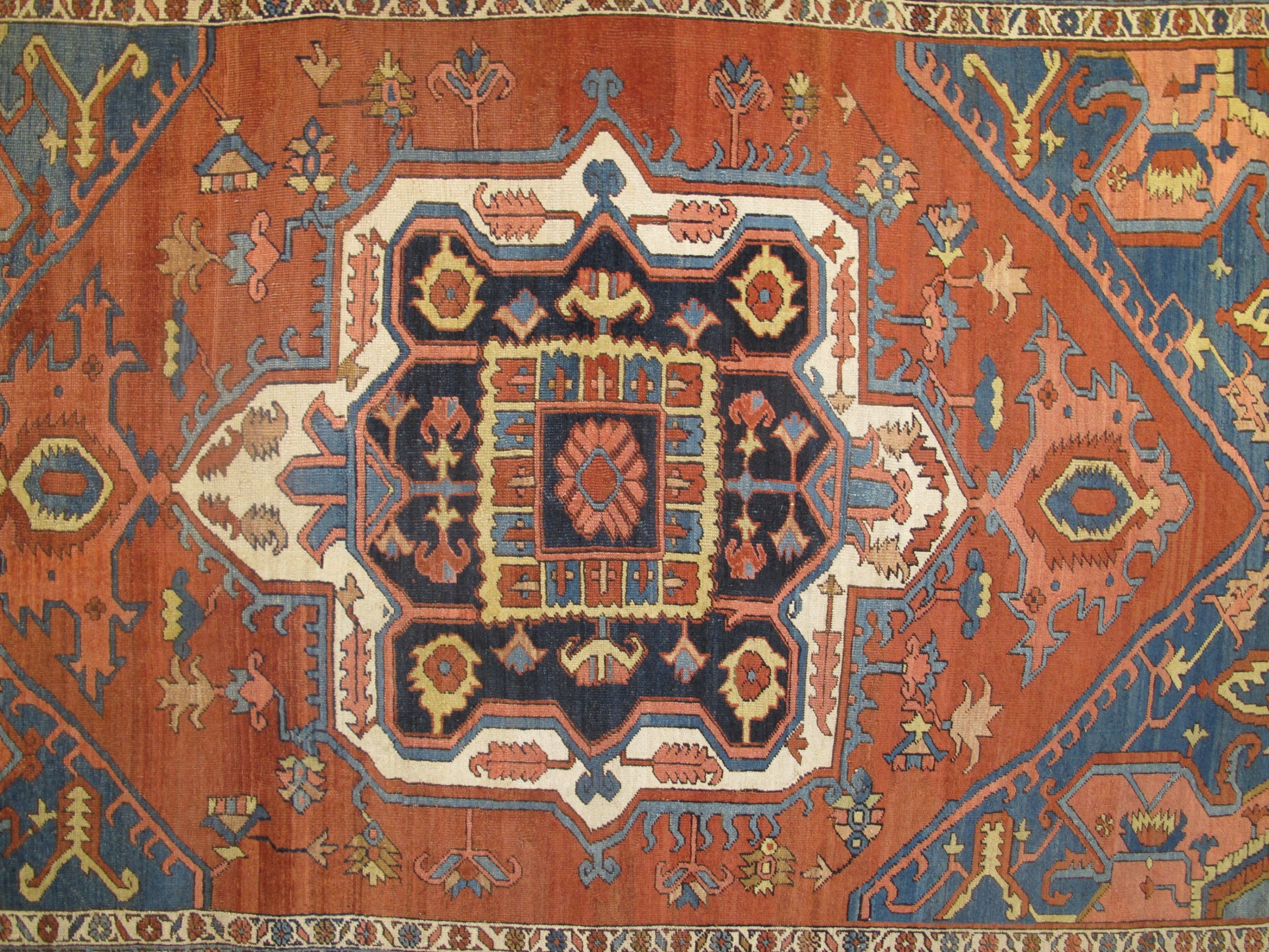
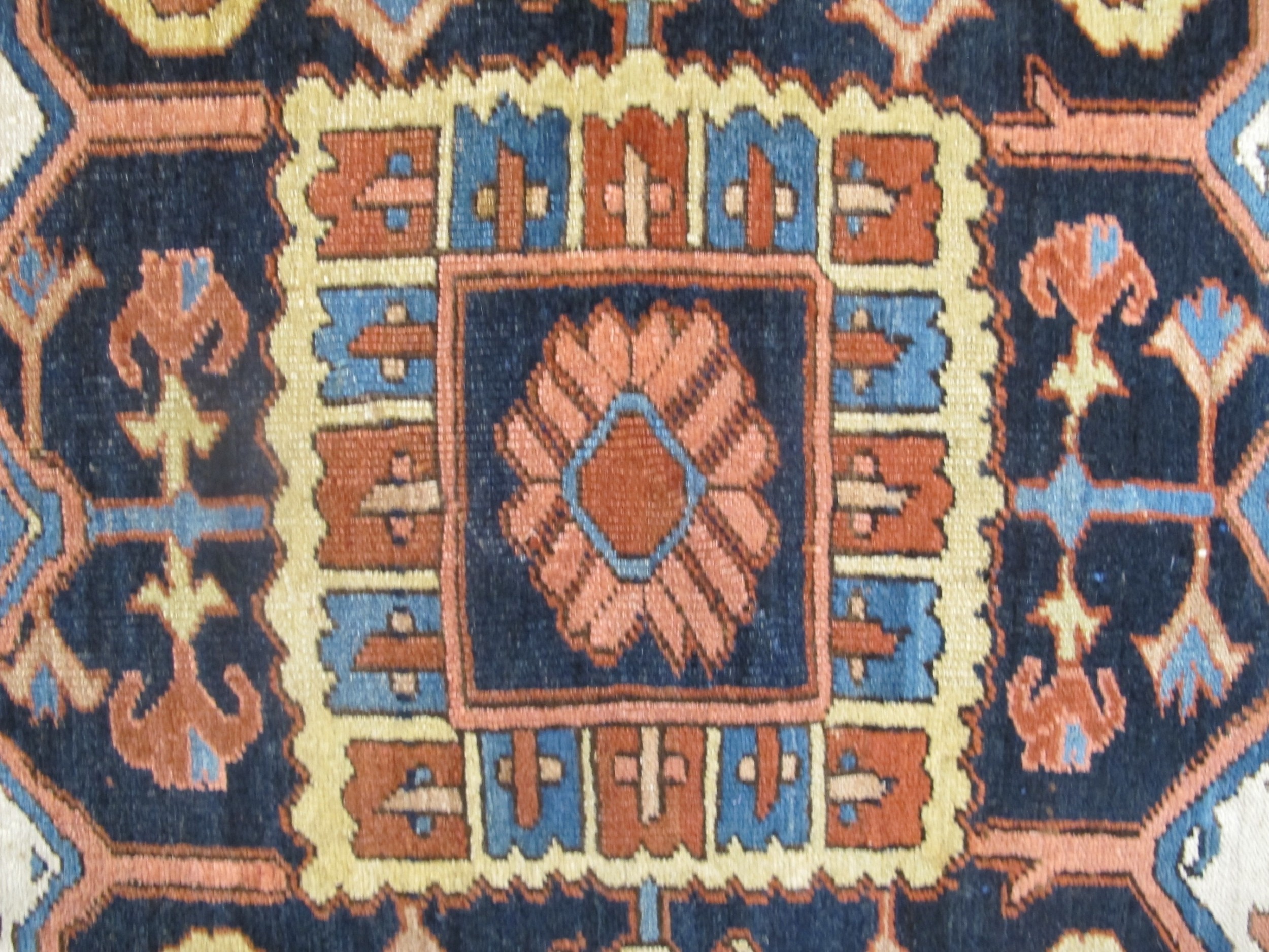
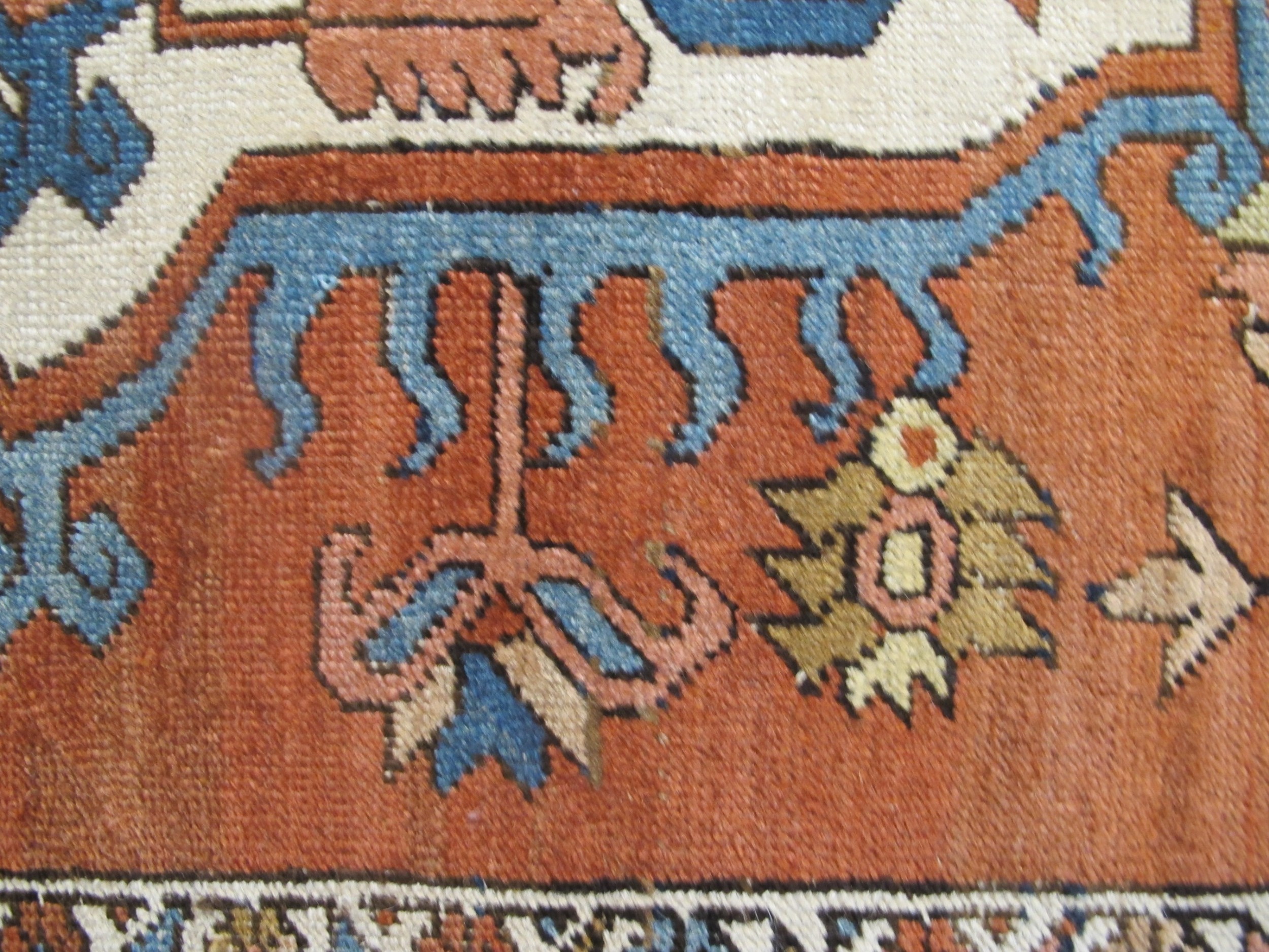
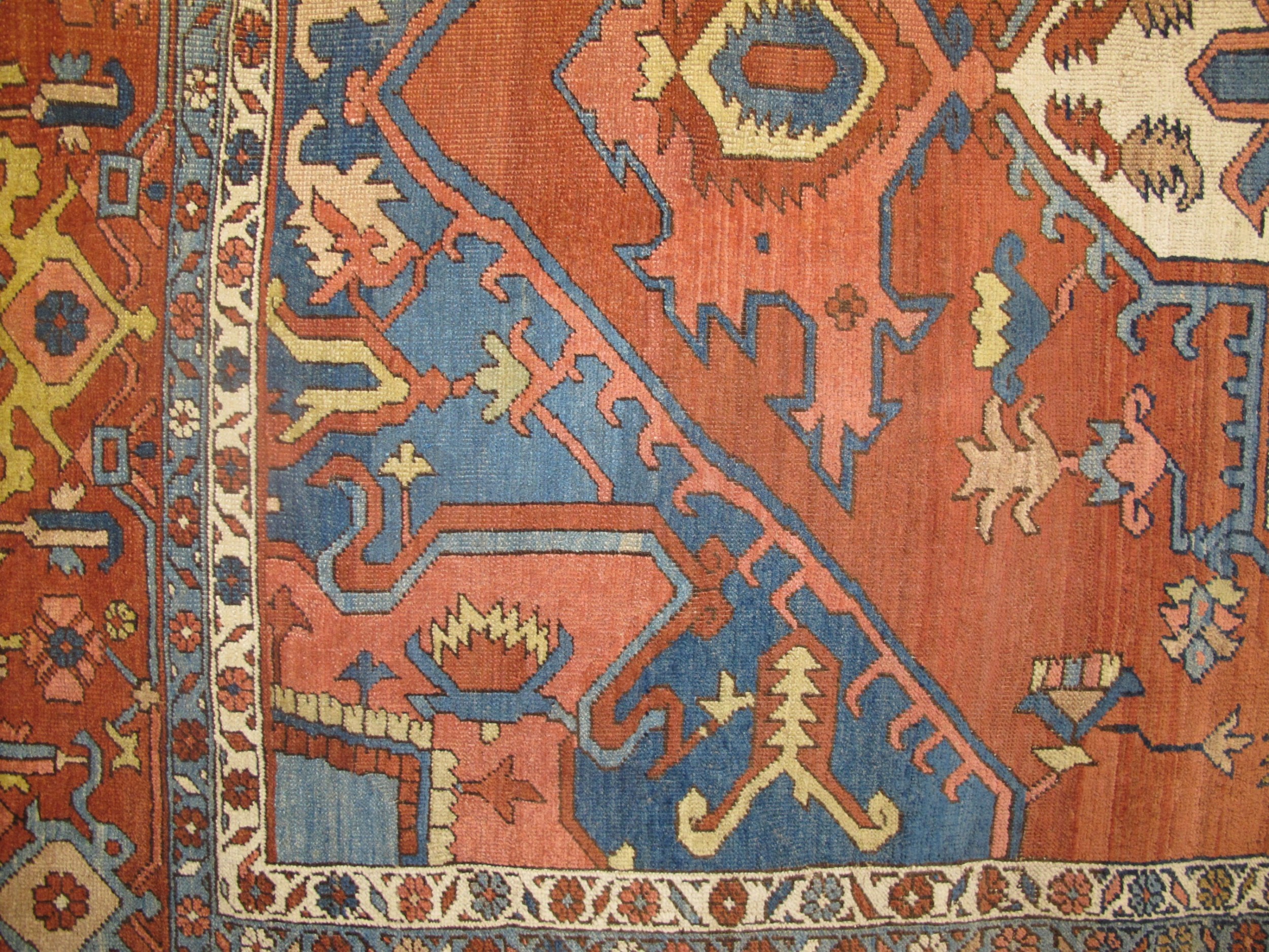
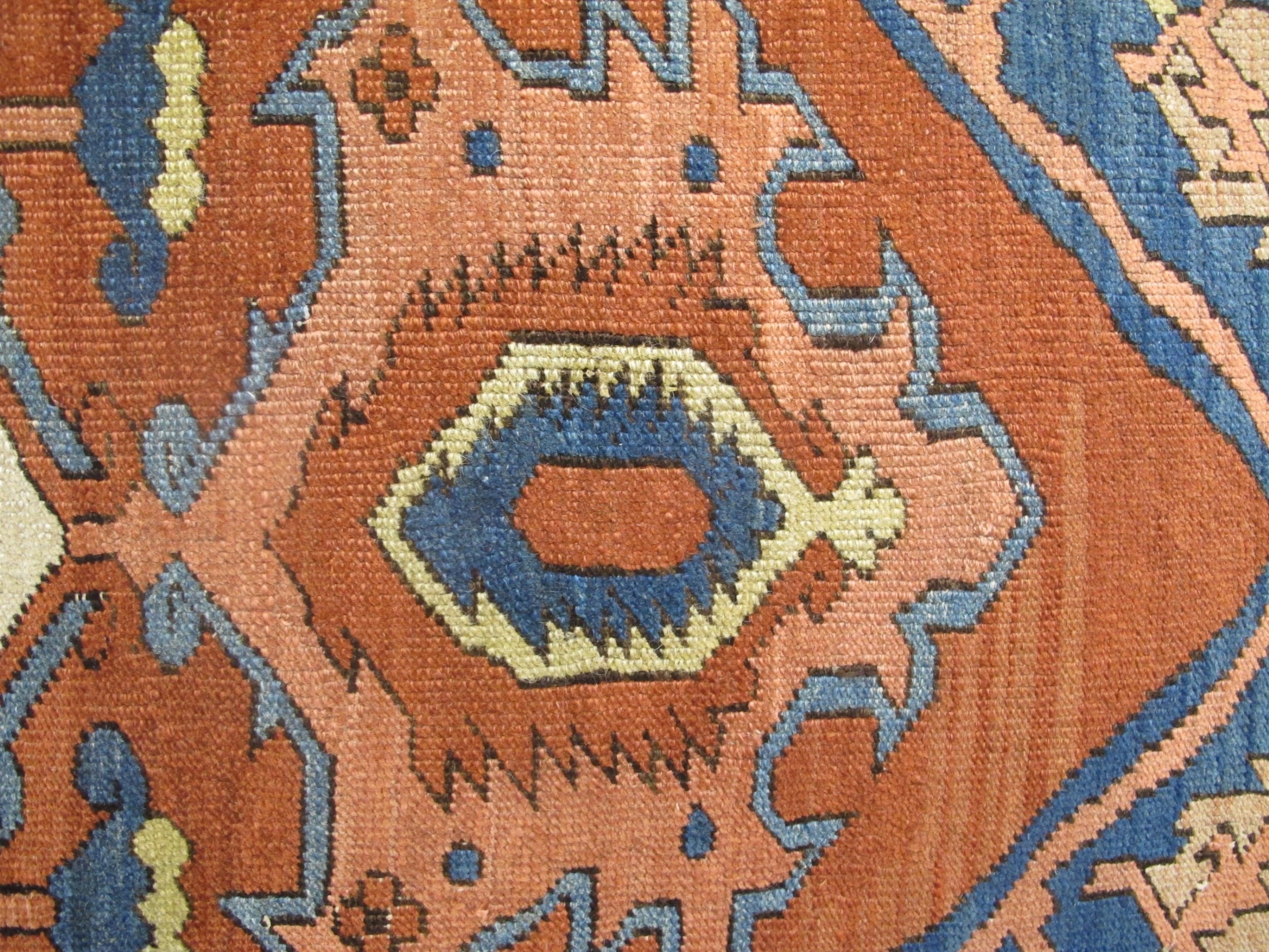
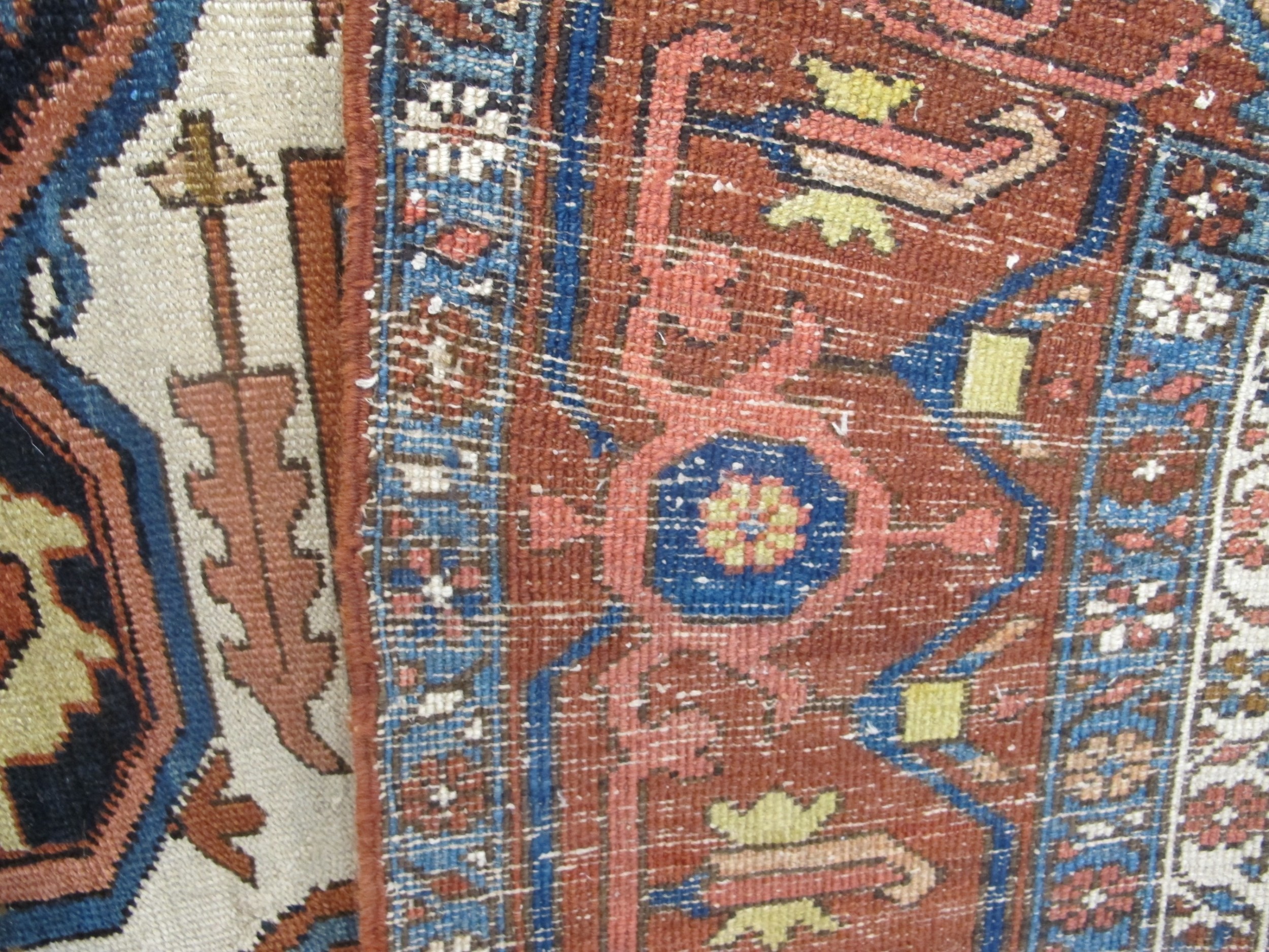
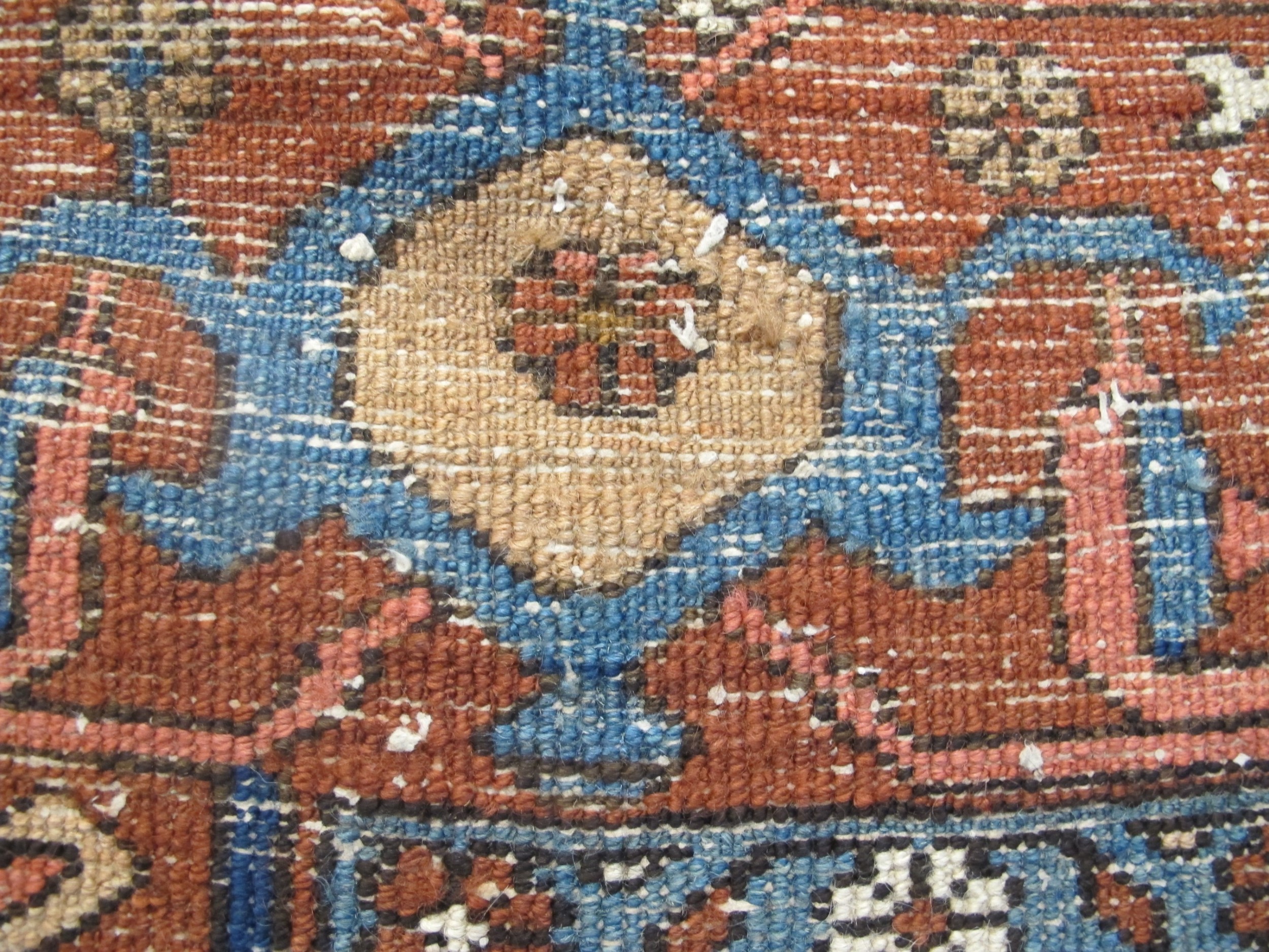
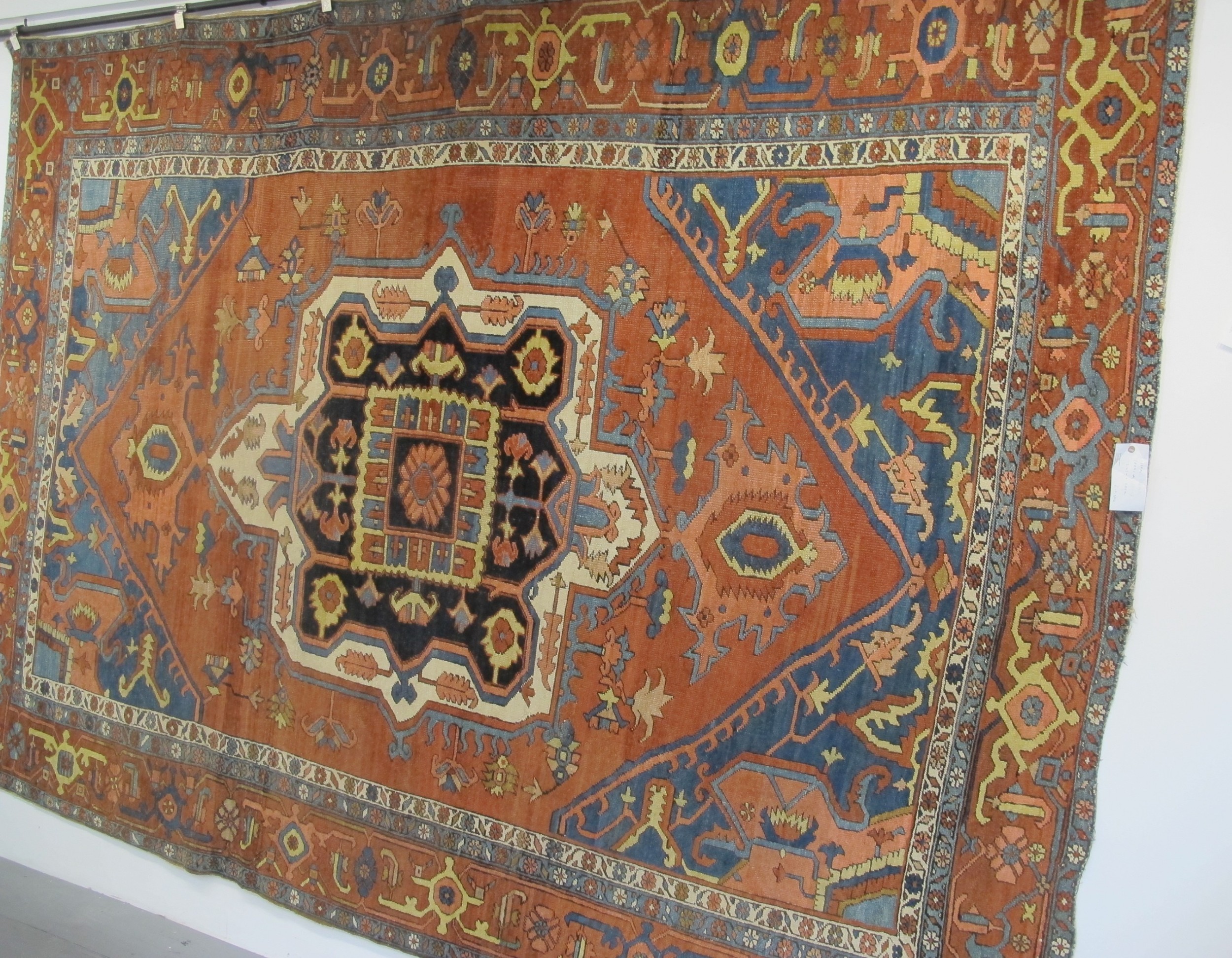
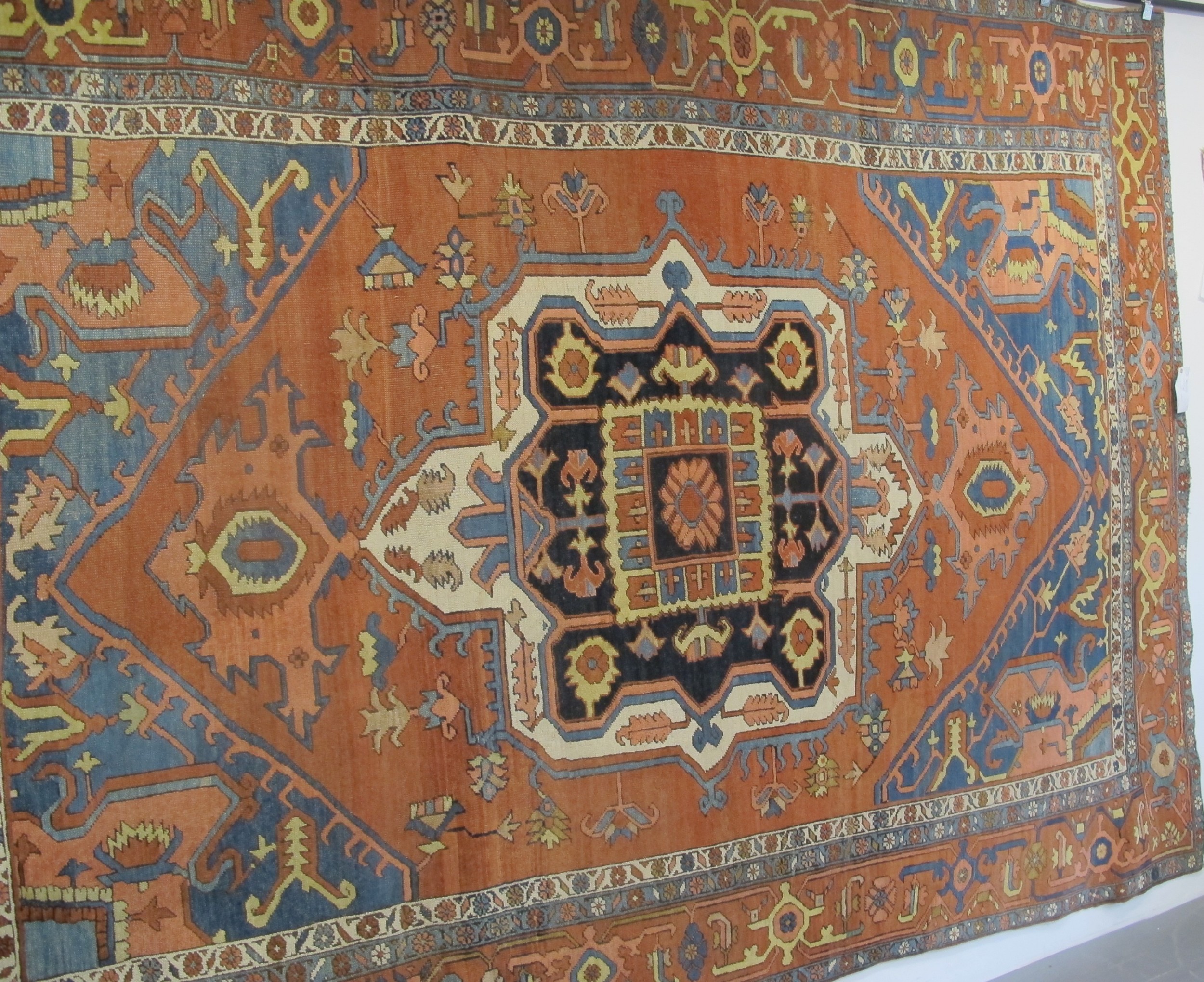
Located in the heart of a thriving carpet weaving district which included other well known towns such as Heriz, Karaja, Ahar and Gorevan, Bakshaish suffered an earthquake at the end of the 19th century which led to the end of carpet weaving. Bakshaish carpets share designs with neighbouring towns but can be identified in a few ways. Structurally, they often use wool for both warp and weft, the weave is generally loose and floppy and designs tend towards an archaic interpretation. One often see animals, birds and archaic symbolism. The medallion carpets also have a dynamism that does not appear in all weavings of the region. The use of colours tends to be restrained, certainly in comparison with weavers in other nearby centres. This lovely carpet exemplifies the tradition. The colours are few but all wonderful, a salmon field complemented by yellows, light blues and pinks. The medallion design has been reduced to its raw basics with very little need for surplus ornamentation. Note the archaic drawing of the spandrels in the corner of the field, and the generous borders. These elements have combined to create a very decorative and impressive carpet which would look superb in both a traditional or contemporary setting. Cherished through the generations, it has survived the generations well, and shows only minimal signs of wear. We have professionally cleaned this piece, secured the ends and selvages and present it in ready condition.
Aaron Nejad Carpets and Rugs has dated this piece to the 1880s.
Specialist in antique rugs, carpets and textiles from the east and europe. We work with interior designers, clients an.
You can view the stock and full dealer information on the Aaron Nejad Carpets and Rugs Profile Page
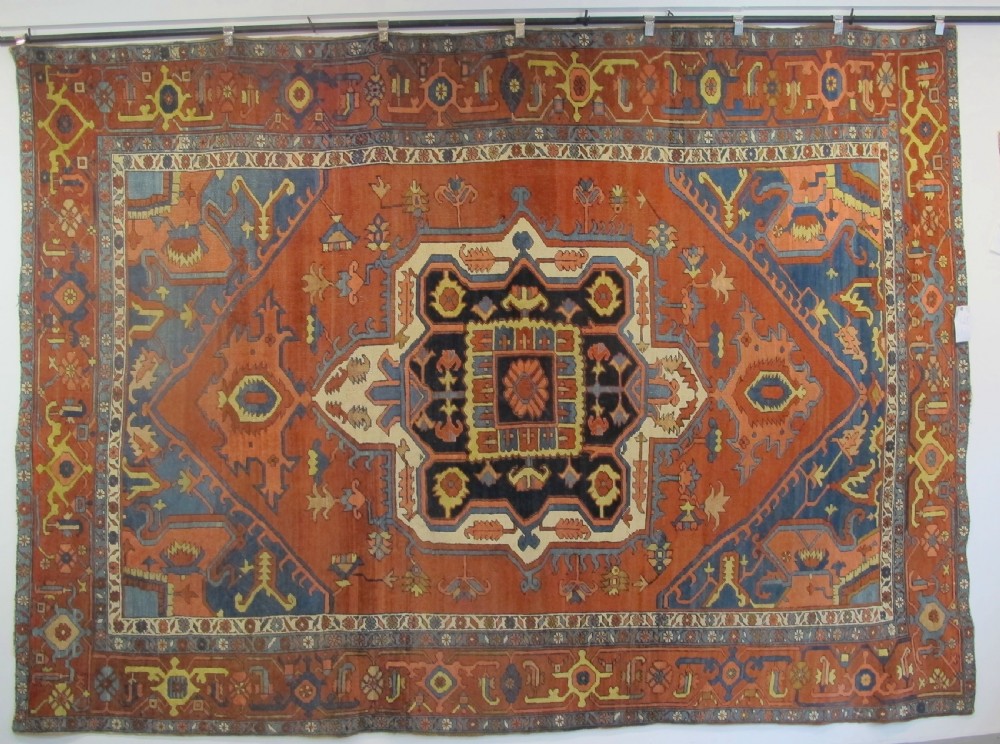
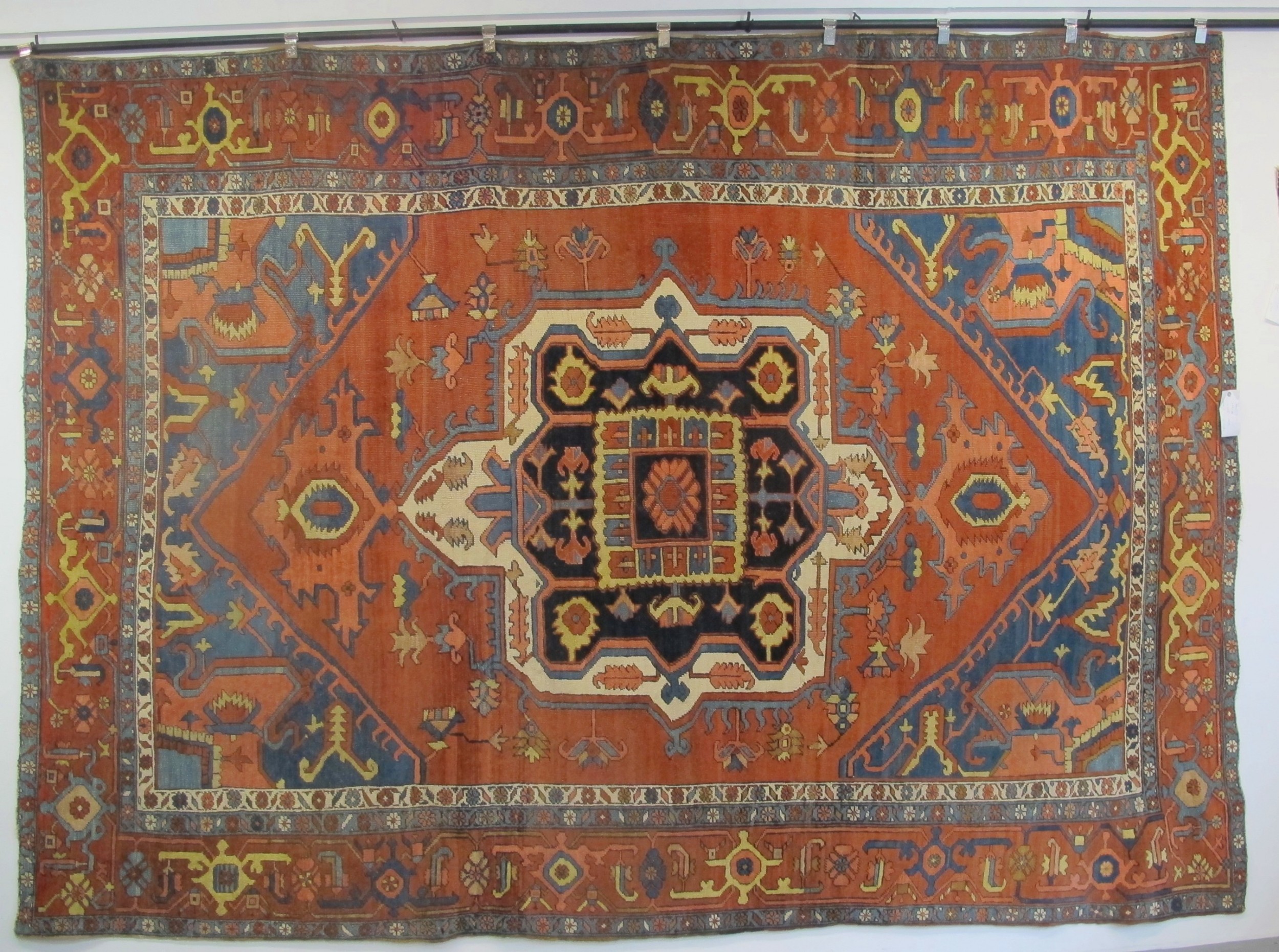
Bakshaish Village Carpet, North-west Persia, Circa 1880, 3.45m X 2.50m