Farnham Antique Carpets has dated this piece to the 1870s.
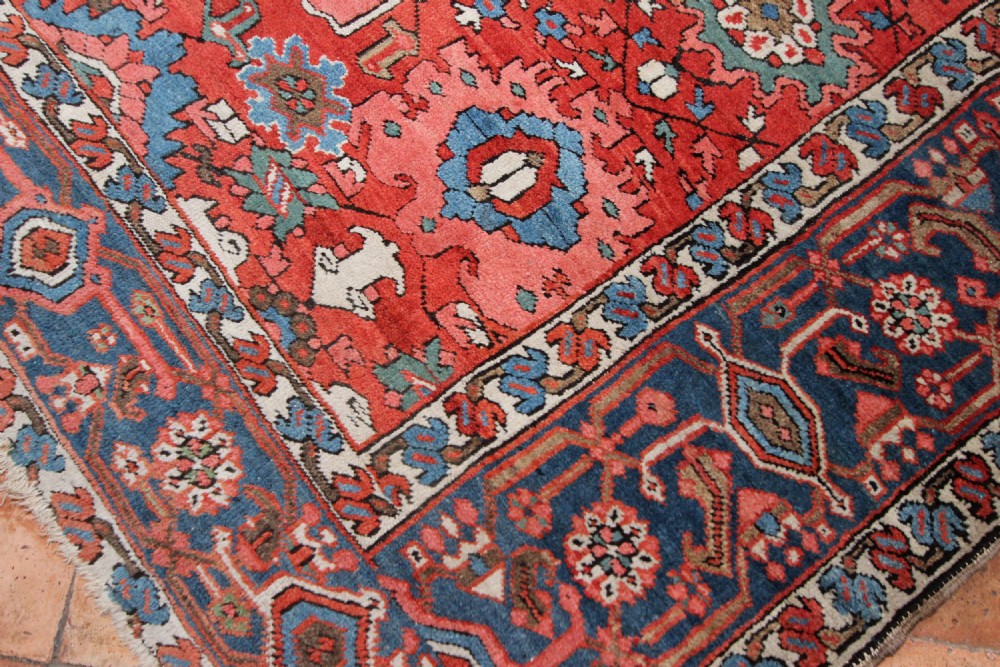
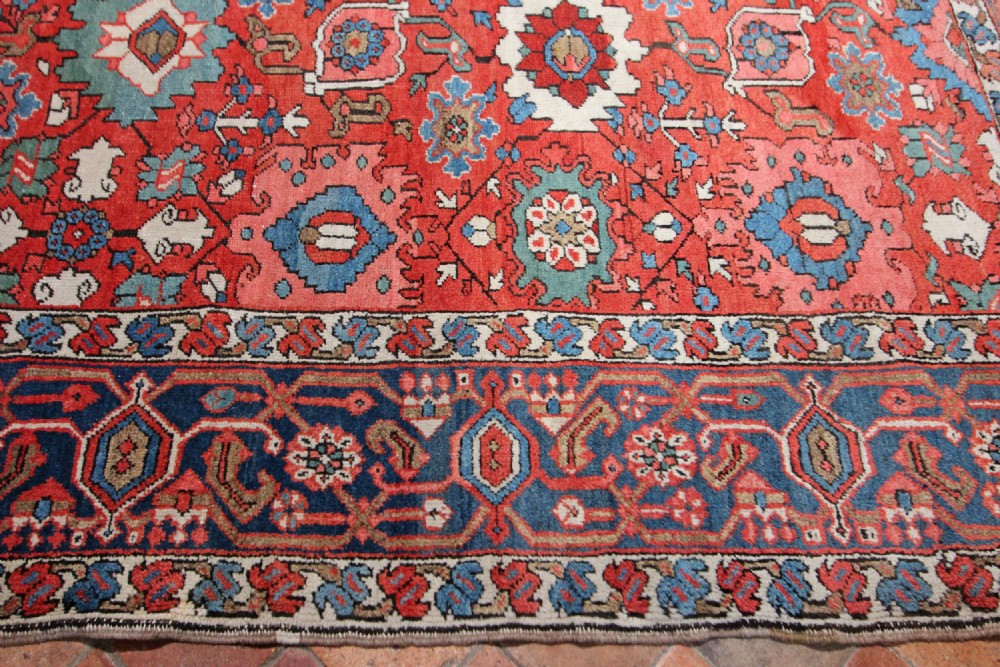
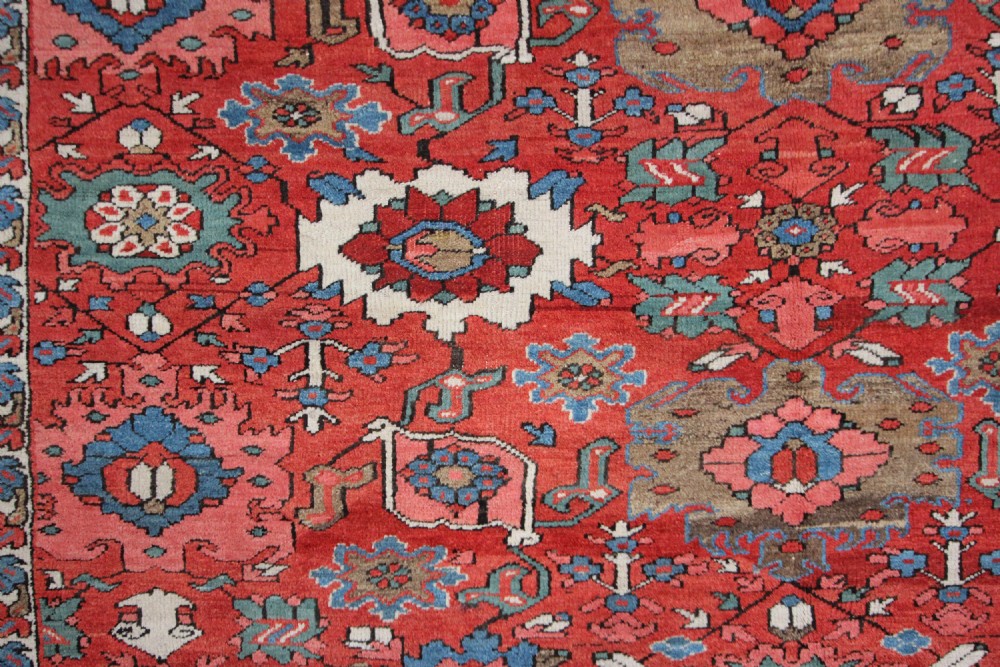
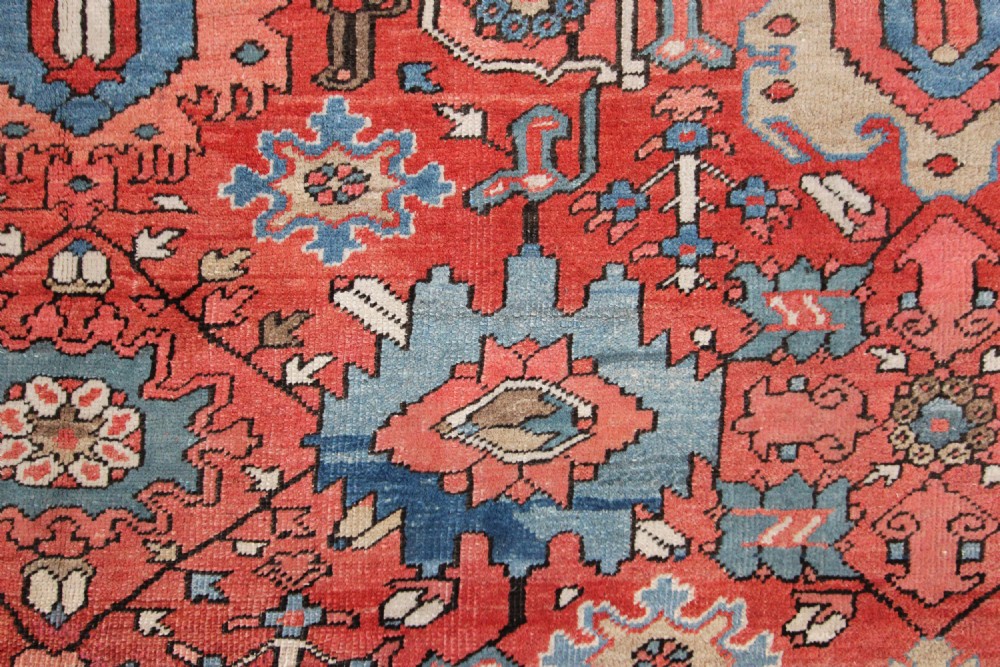
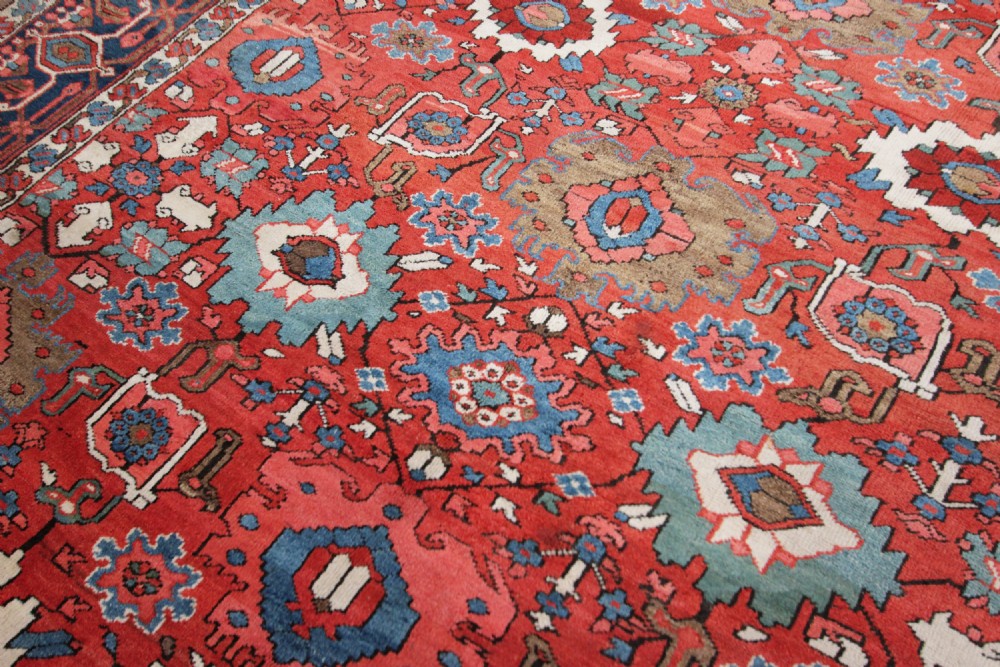
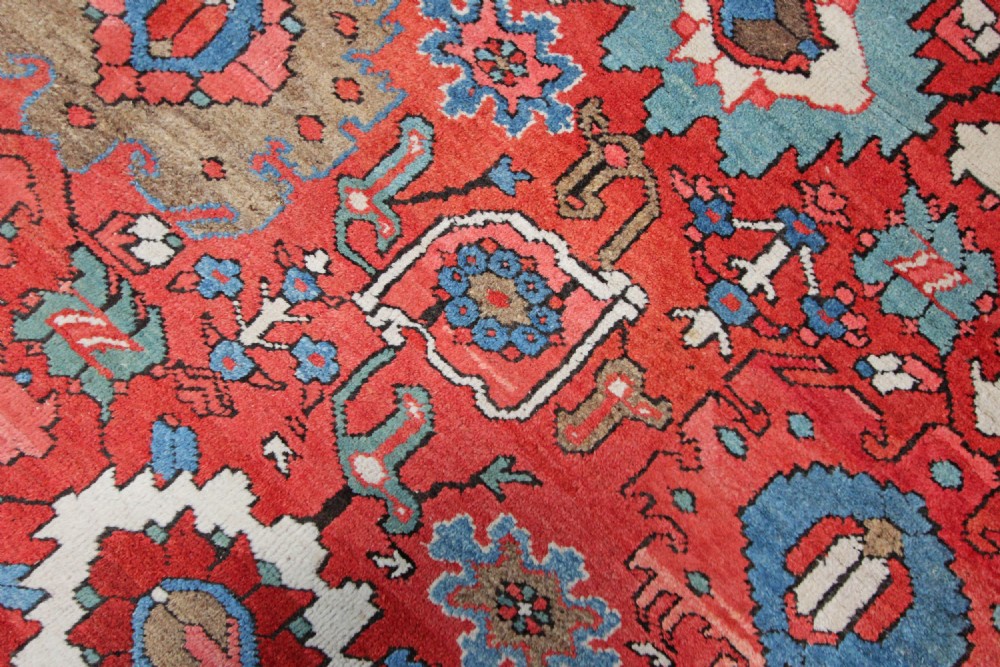
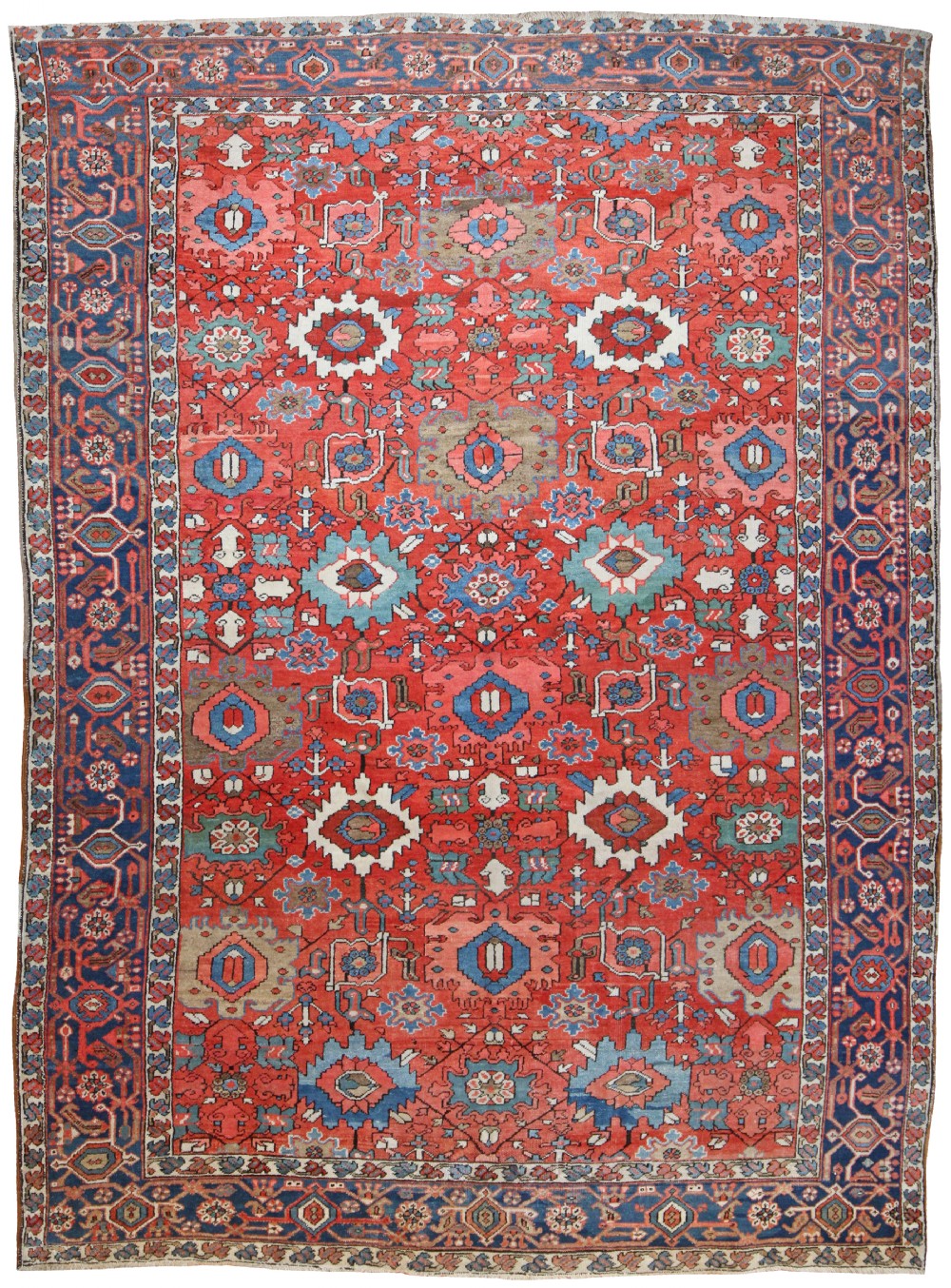
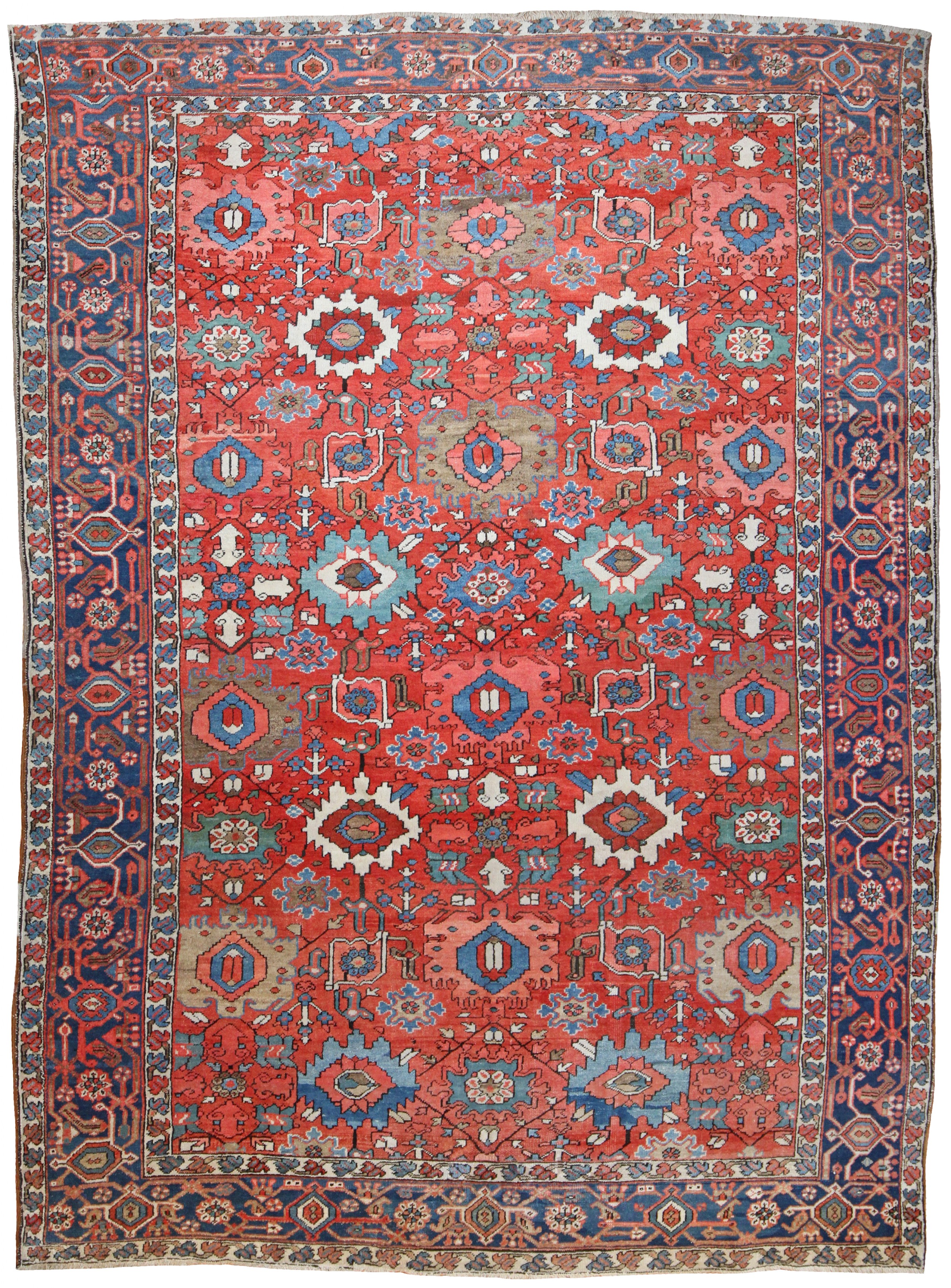
Stunning faded pale blues, sage greens, rustic brick reds and muted pinks combined with ivory wool are famous dyes for these earlier tribal carpets from Heriz in Northern Persia. These finer early Serapi examples from the mid to late 19th century are increasingly rare to come across in such original condition.
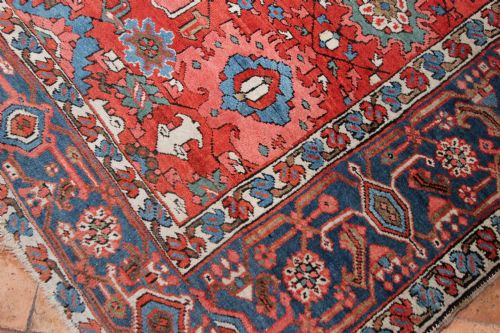
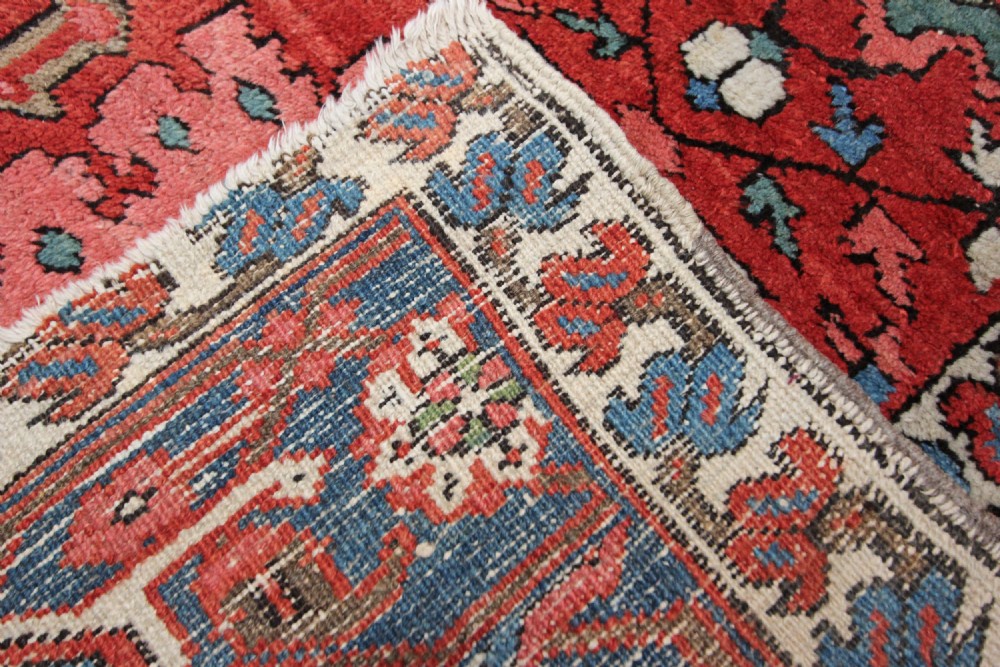
The condition is extremely good, with a finely cut high to medium wool pile height all over. This rare early tribal carpet is in impeccable condition, as we can see from the additional images, just how high the wool pile is which is quite remarkable. Carpets from Heriz were often named 'The Iron rugs of Persia' for their durability and tough wool, this piece enhances that reputation. Both of the ends/fringes have some minimal losses, and we shall be securing both ends professionally to secure them further. The minor ivory outer border is complete at one end, and missing a couple of rows at the other end, you can see this on the main image.
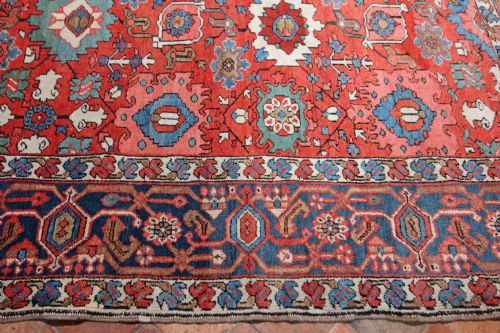
Dating from 1870-1880 it is in truly excellent order for its age of around 150 years old. A rare and collectable Serapi, these early carpets still command high prices in the US and across the world in top auction houses. Visit our barn showroom or request a home viewing to see this Serapi carpet up close with a private viewing.
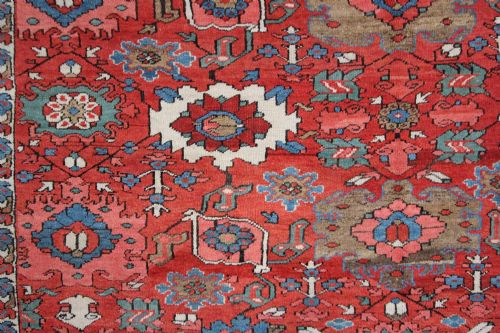
Like Heriz, Serapi carpets will often have a multiple concentric medallion format that emits jutting branches or vines ending in large stylised palmettes, leaves, or flowers. With framing corner pieces at the periphery of the field. The main border is usually some variant of the ‘turtle’ vinescroll pattern. In terms of design, what distinguishes Serapis from Heriz carpets is once again their more refined approach. The articulation of the medallions is crisper, more finely linear, and open, the highest grade in terms of weave, and very probably the oldest type in terms of age. Heriz carpets are generally coarsely woven with as few as 30 knots per square inch. They also have a deeply depressed warp structure with a markedly ribbed back surface. Since the early twentieth century they have come to make use of light blue cotton wefting. Serapis, in contrast, have a higher knot count, sometimes attaining 80 knots per square inch. Their backs are relatively flat, and they have ivory cotton wefting and generally they have a softer floppier handle than a Heriz.
Farnham Antique Carpets has dated this piece to the 1870s.
Specialists in antique decorative carpets, rugs and runners.
You can view the stock and full dealer information on the Farnham Antique Carpets Profile Page
Farnham Antique Carpets is a registered member of LAPADA BADA
Antique Serapi Carpet