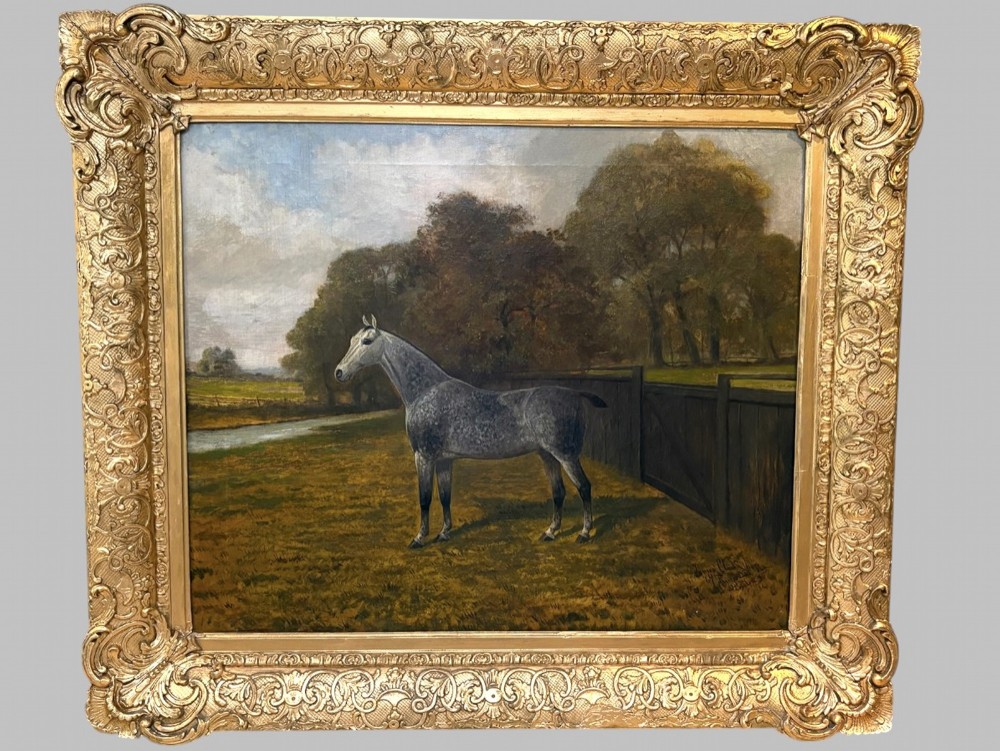
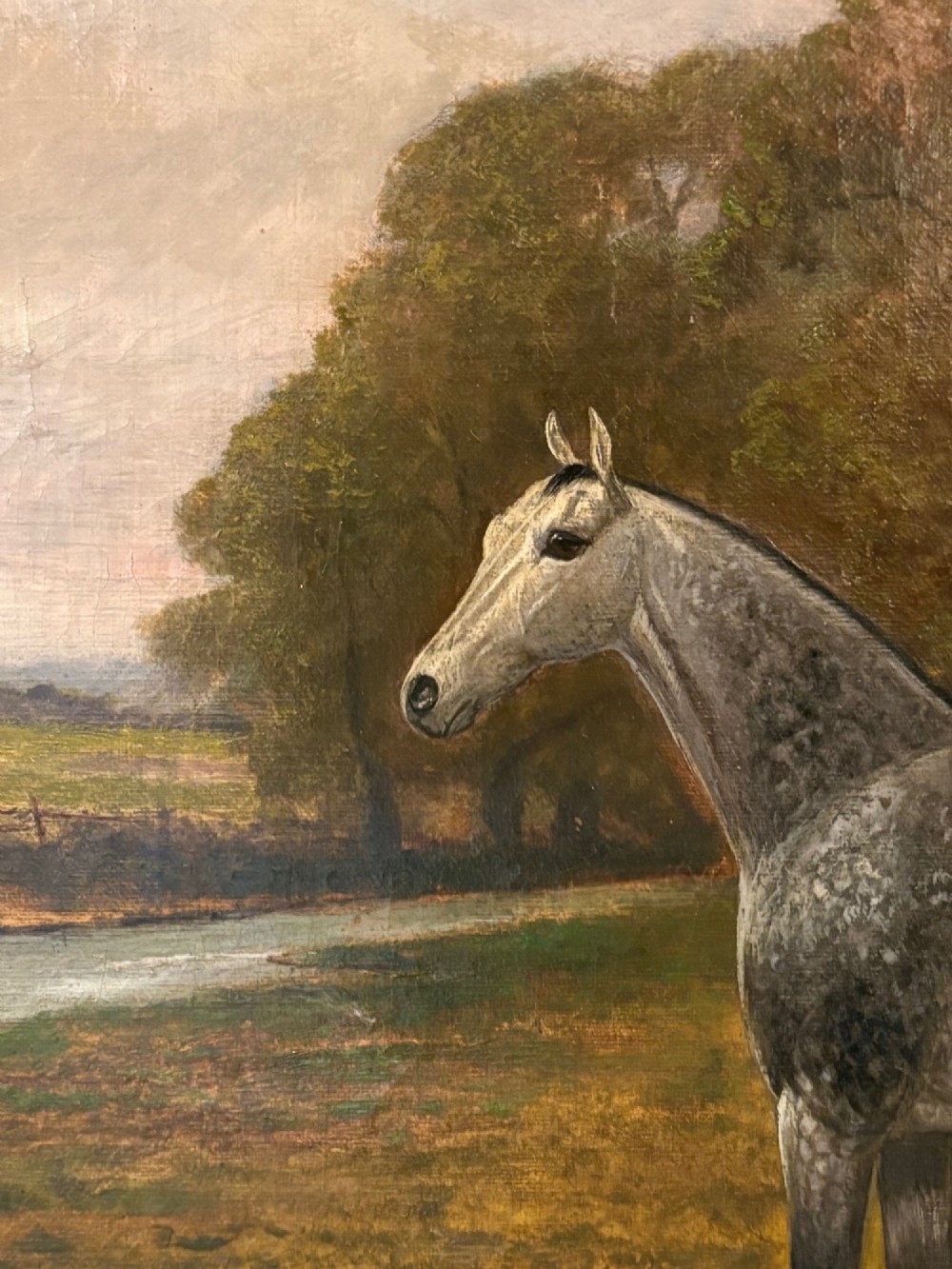
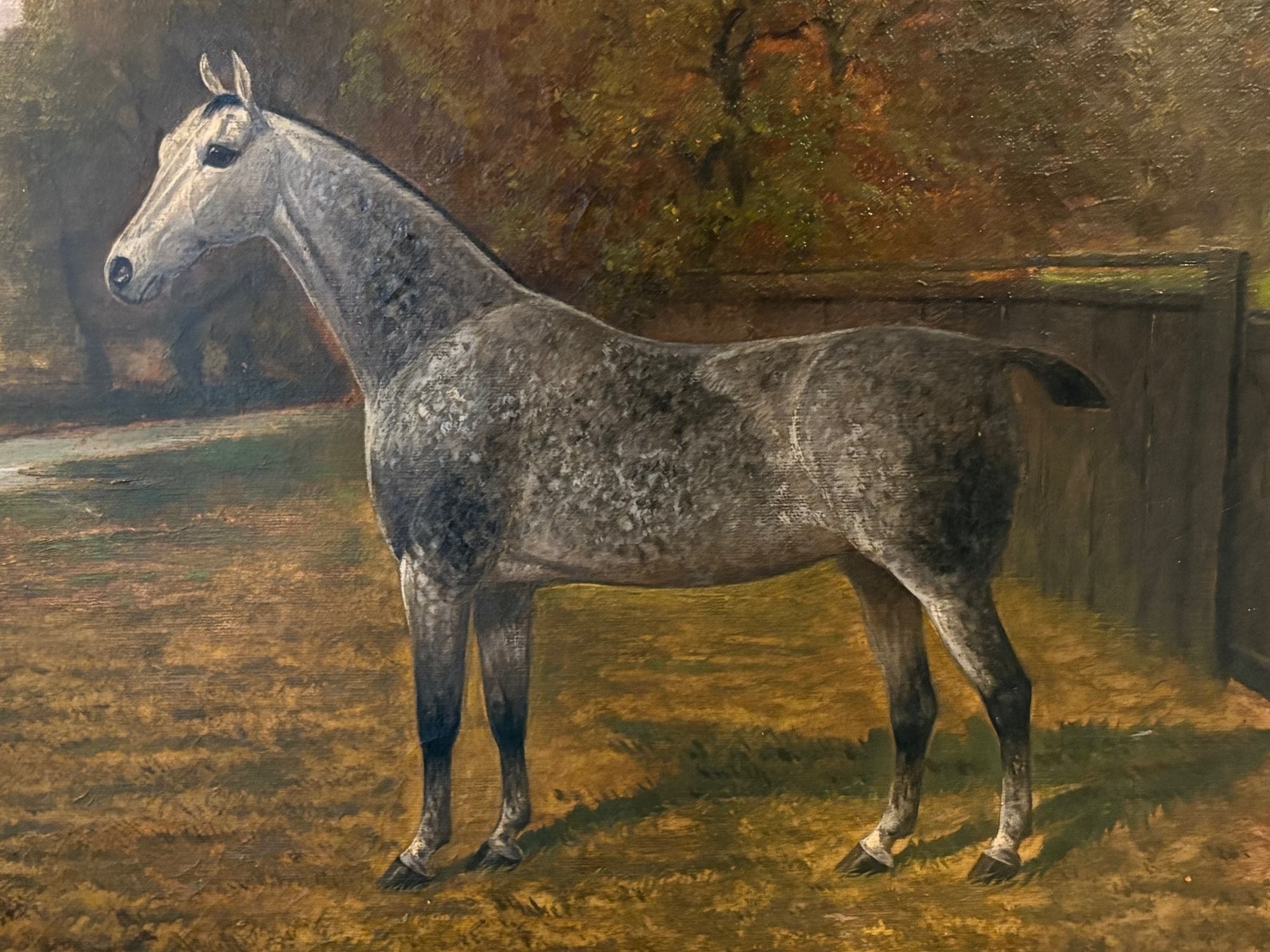
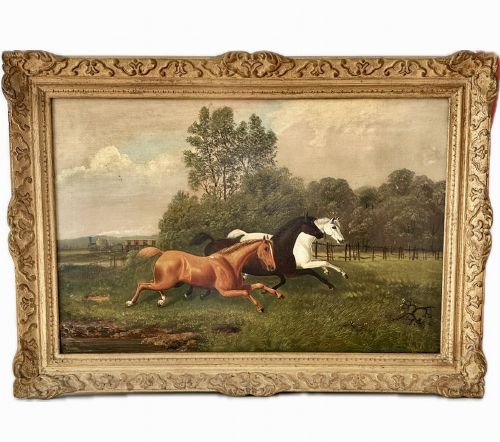
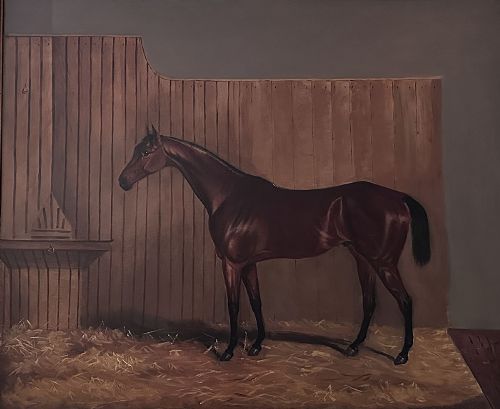
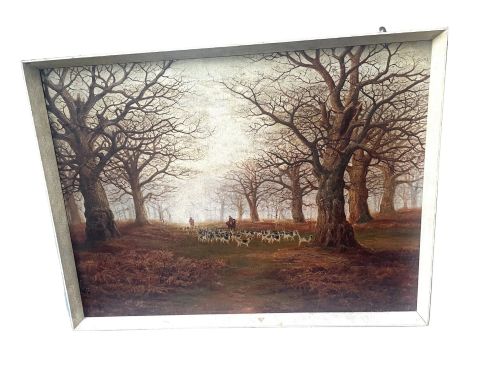
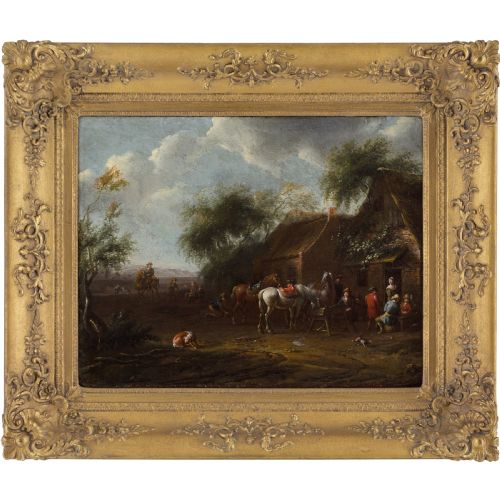
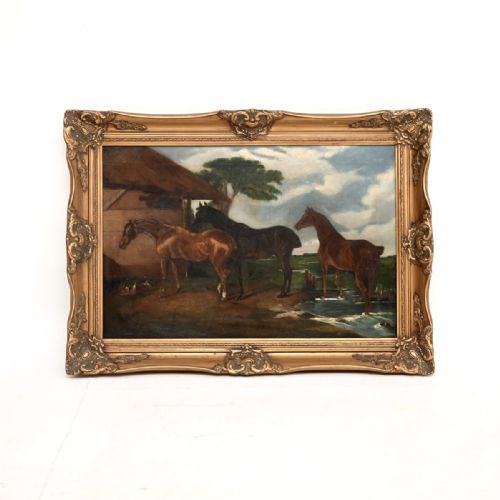
James Clark – Portrait of a Dapple Grey Hunter, 1900
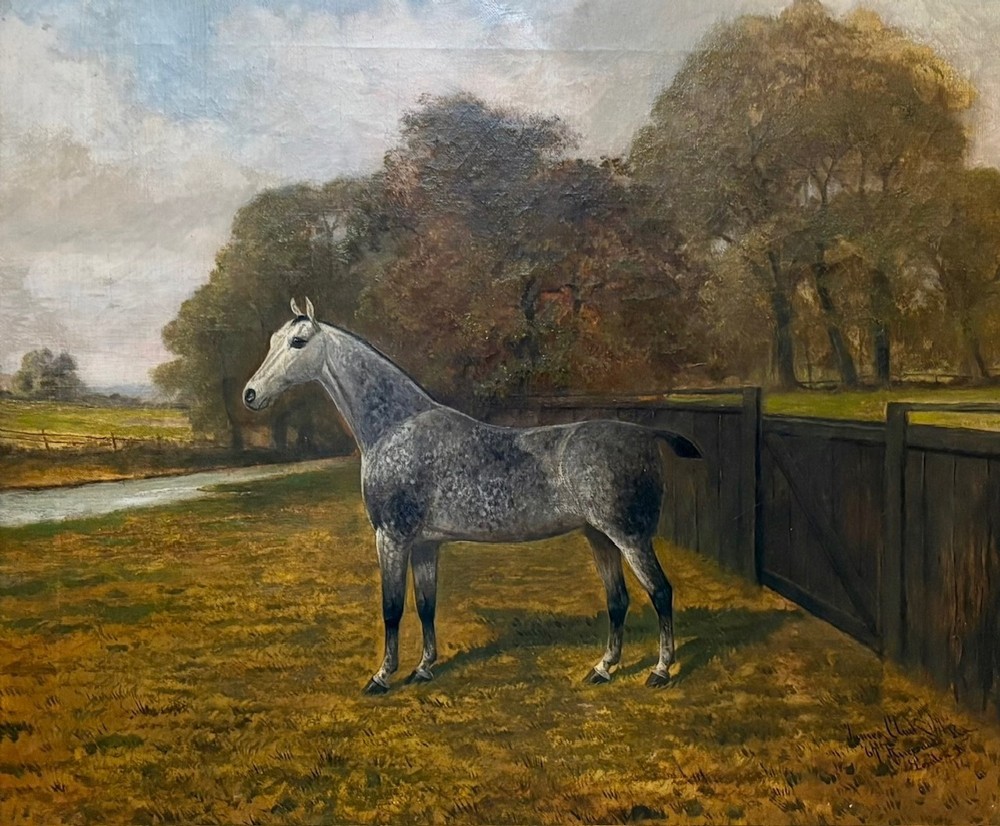
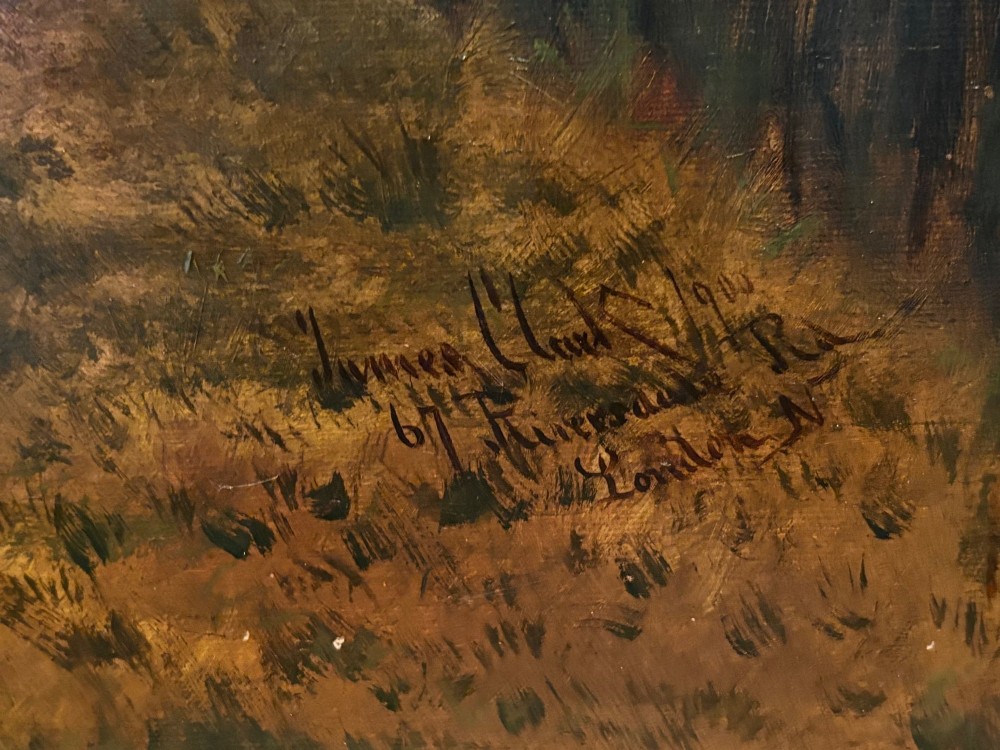
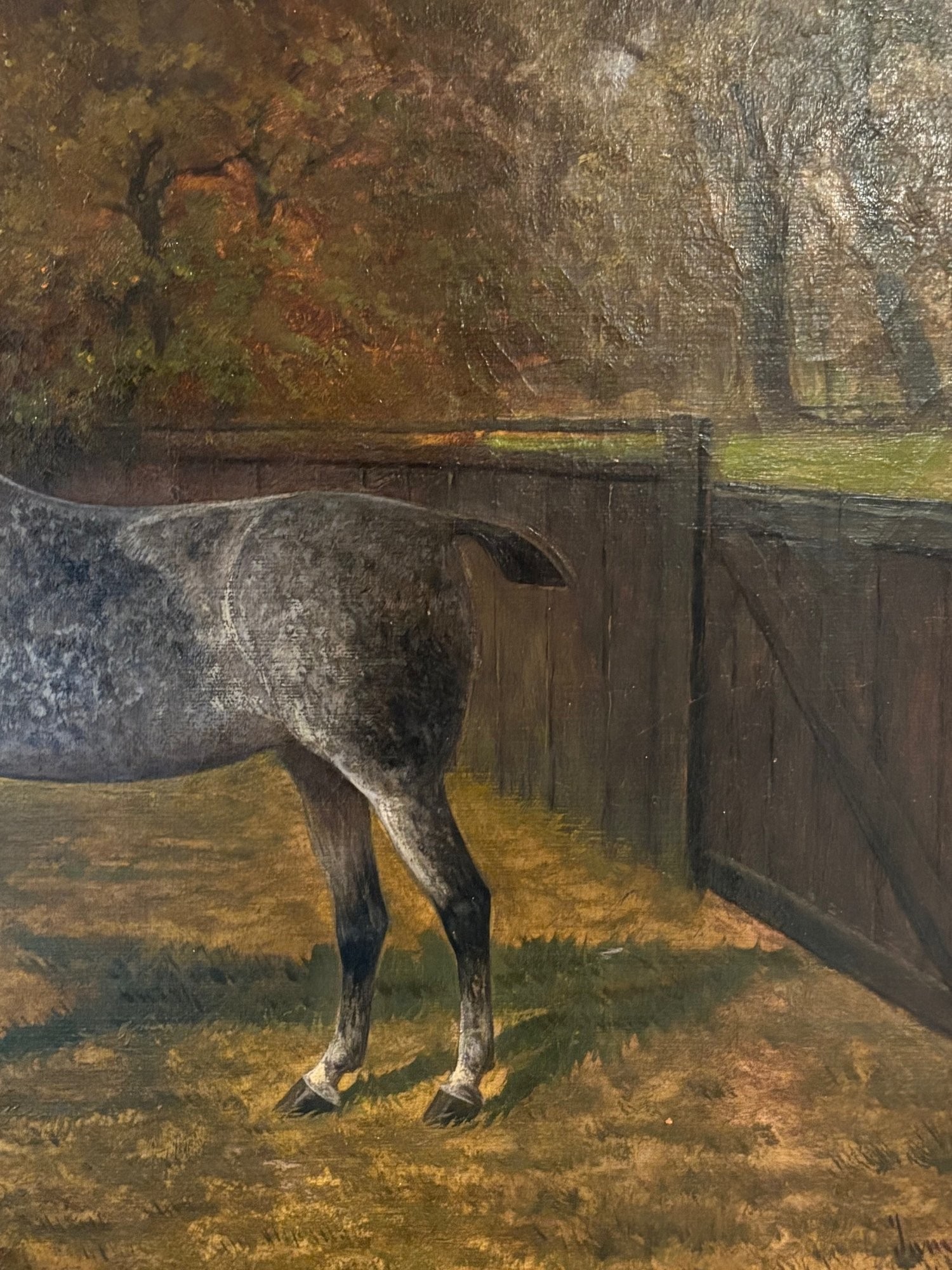
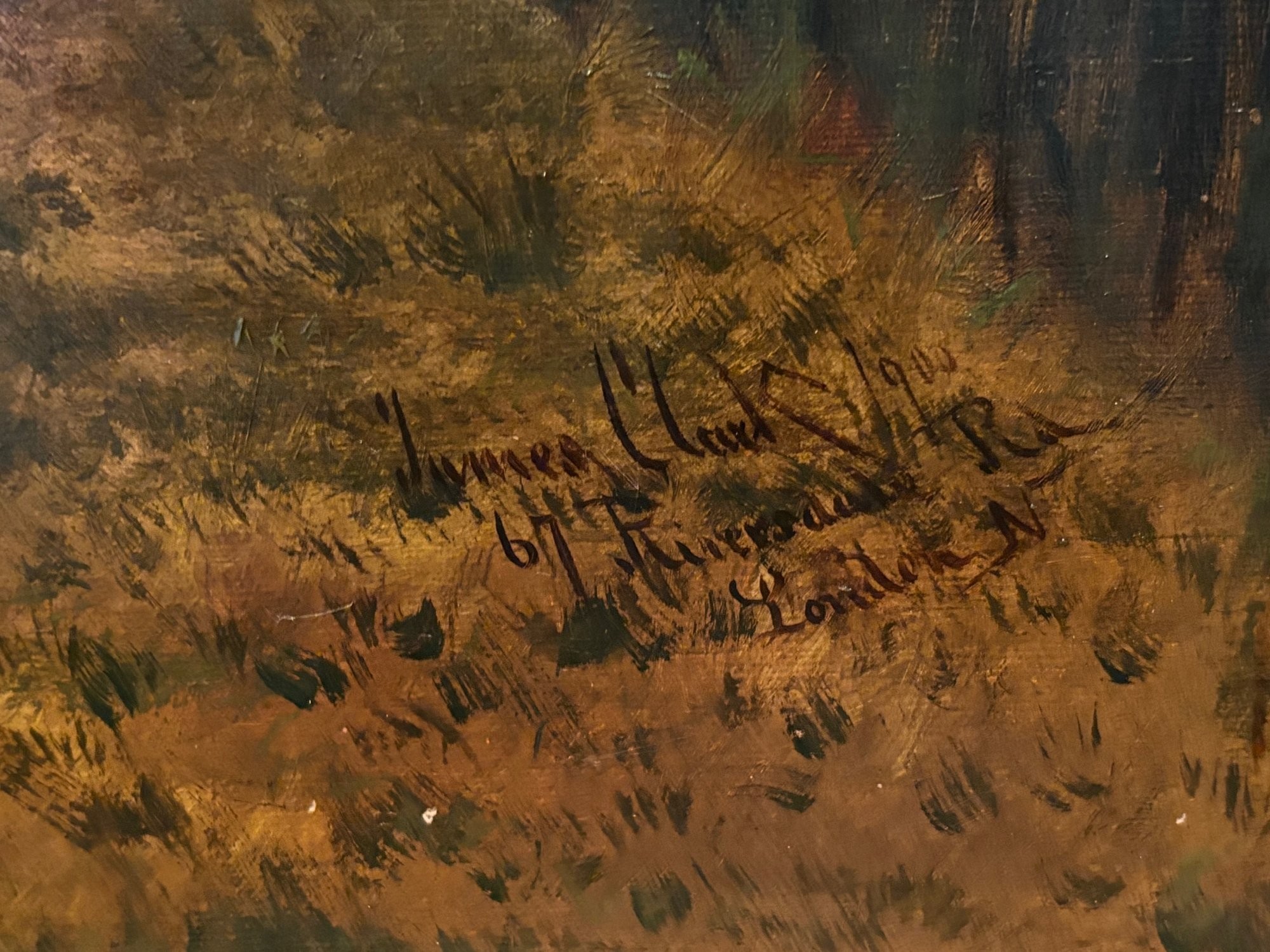
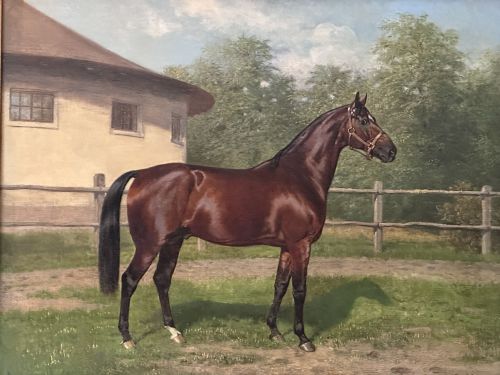
A fine late Victorian sporting oil on canvas by the English equestrian artist James Clark, signed and dated 1900, further inscribed with the artist’s studio address, 67 Riversdale Road, Highbury, London. Image only size Width 60 cm and Height 52 cm
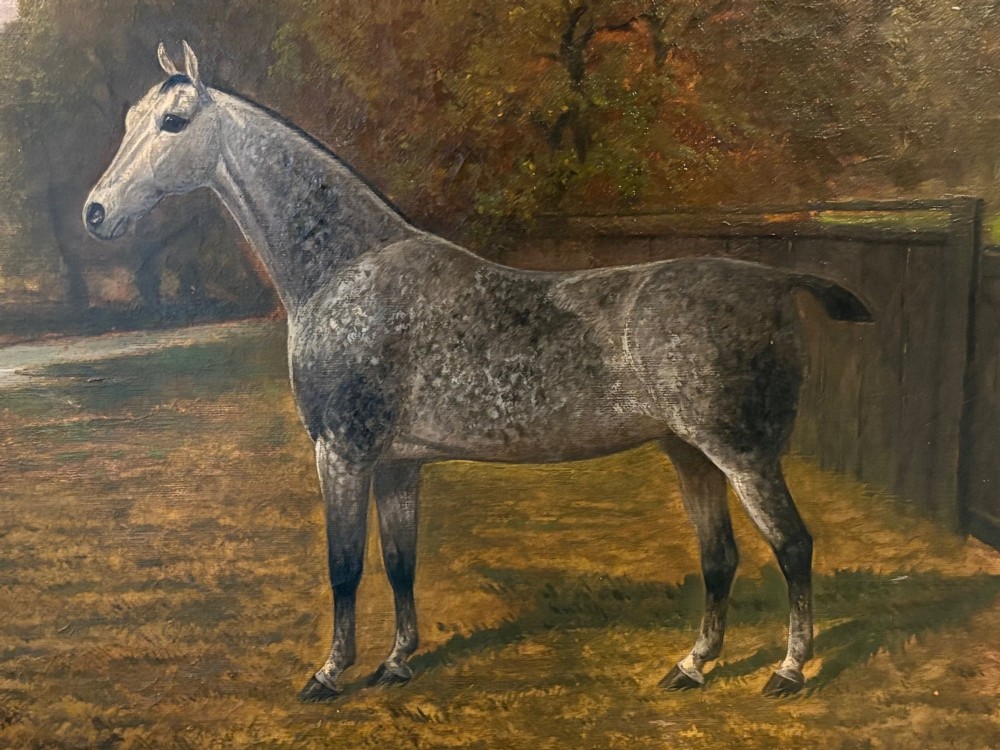
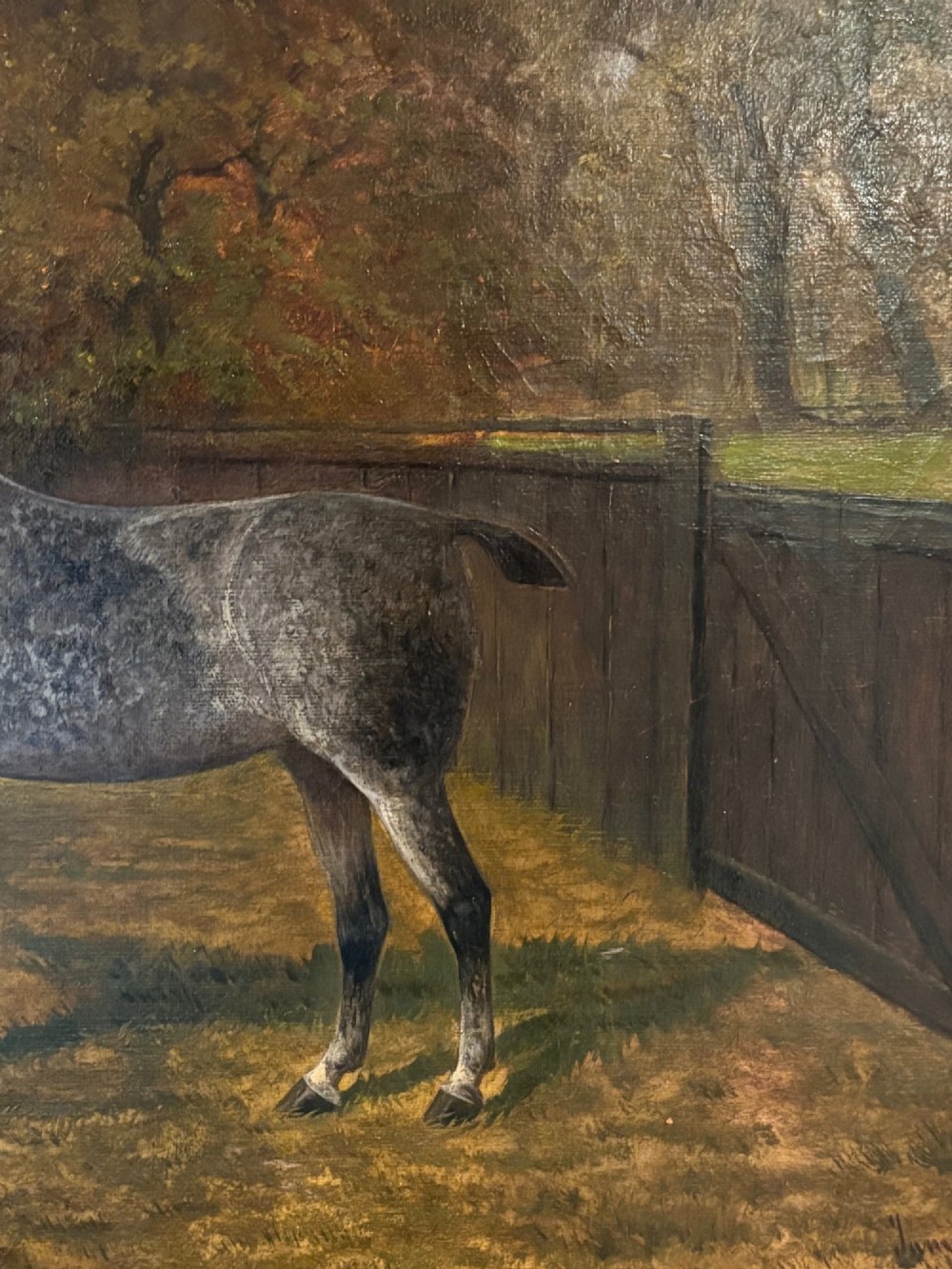
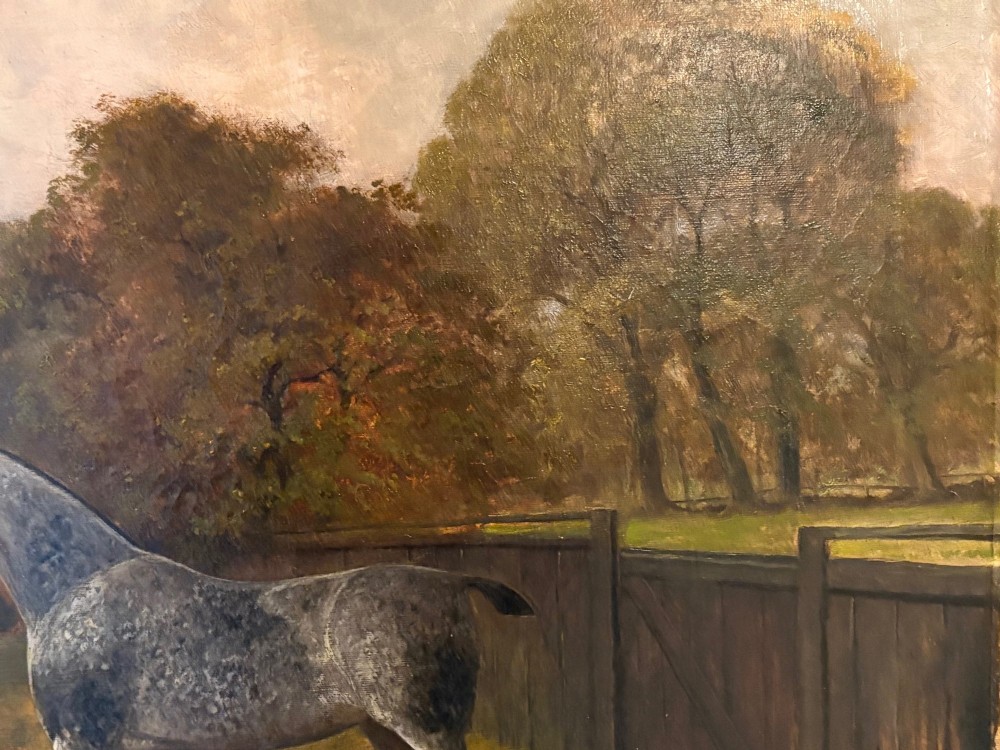
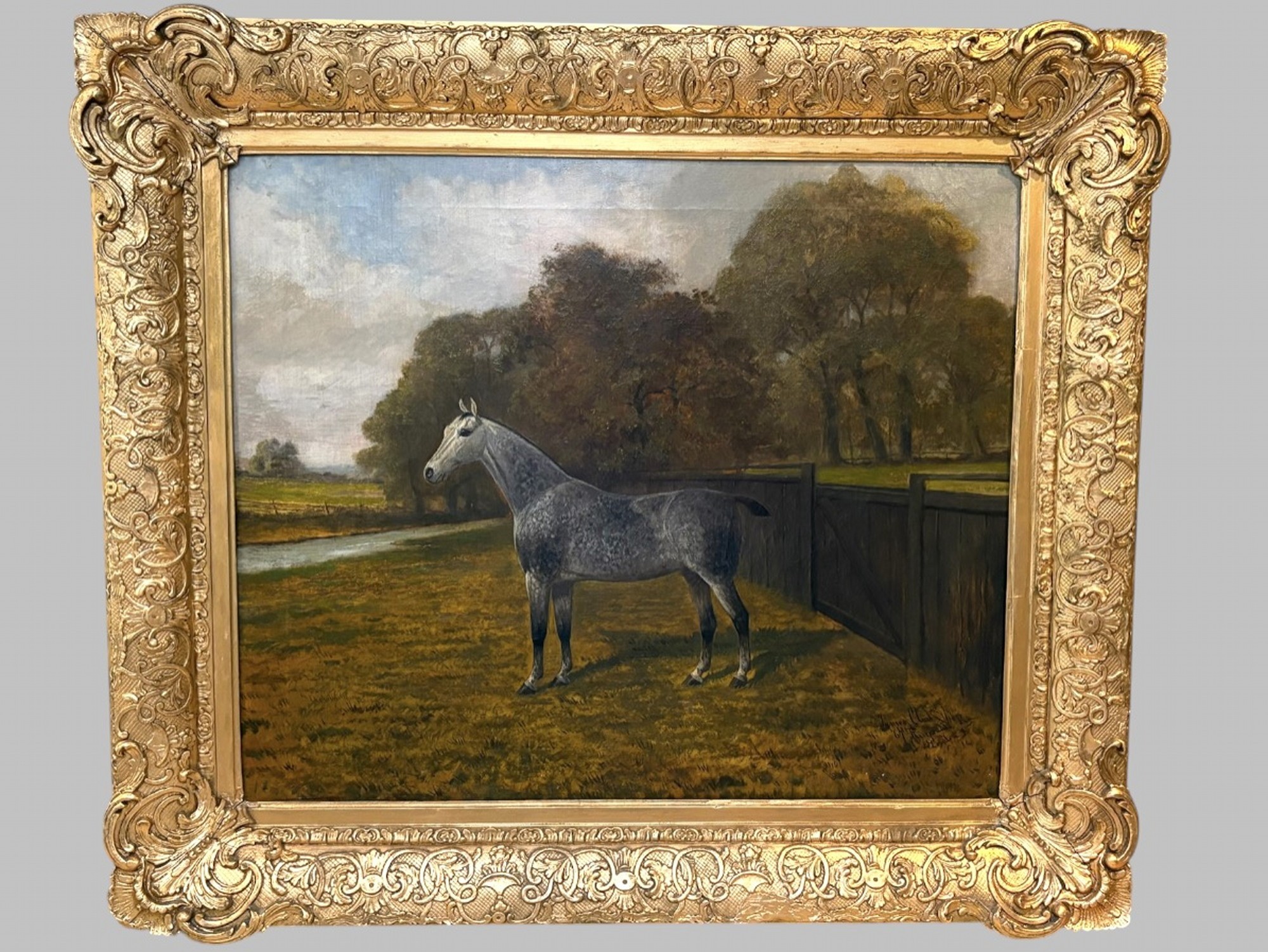
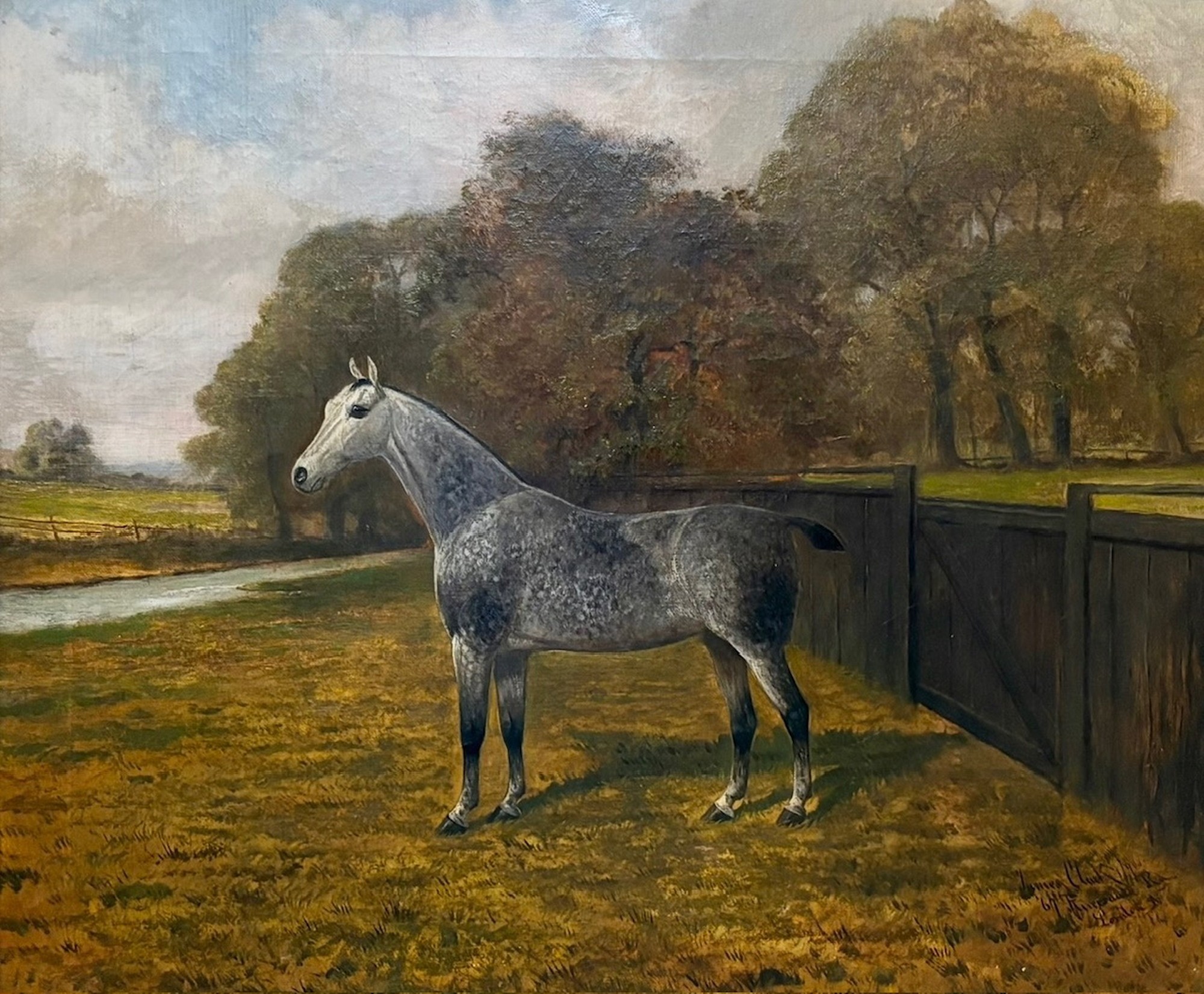
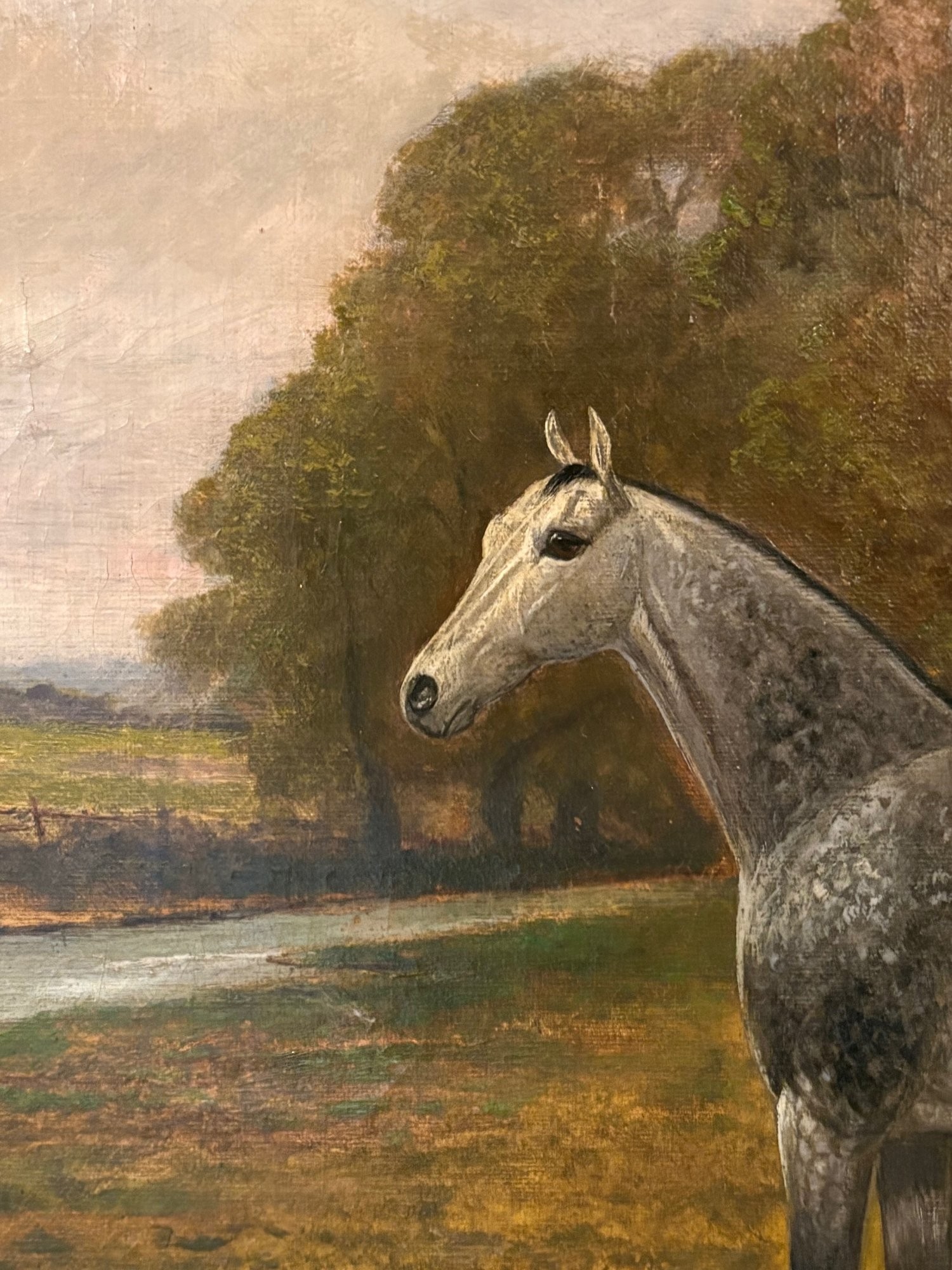
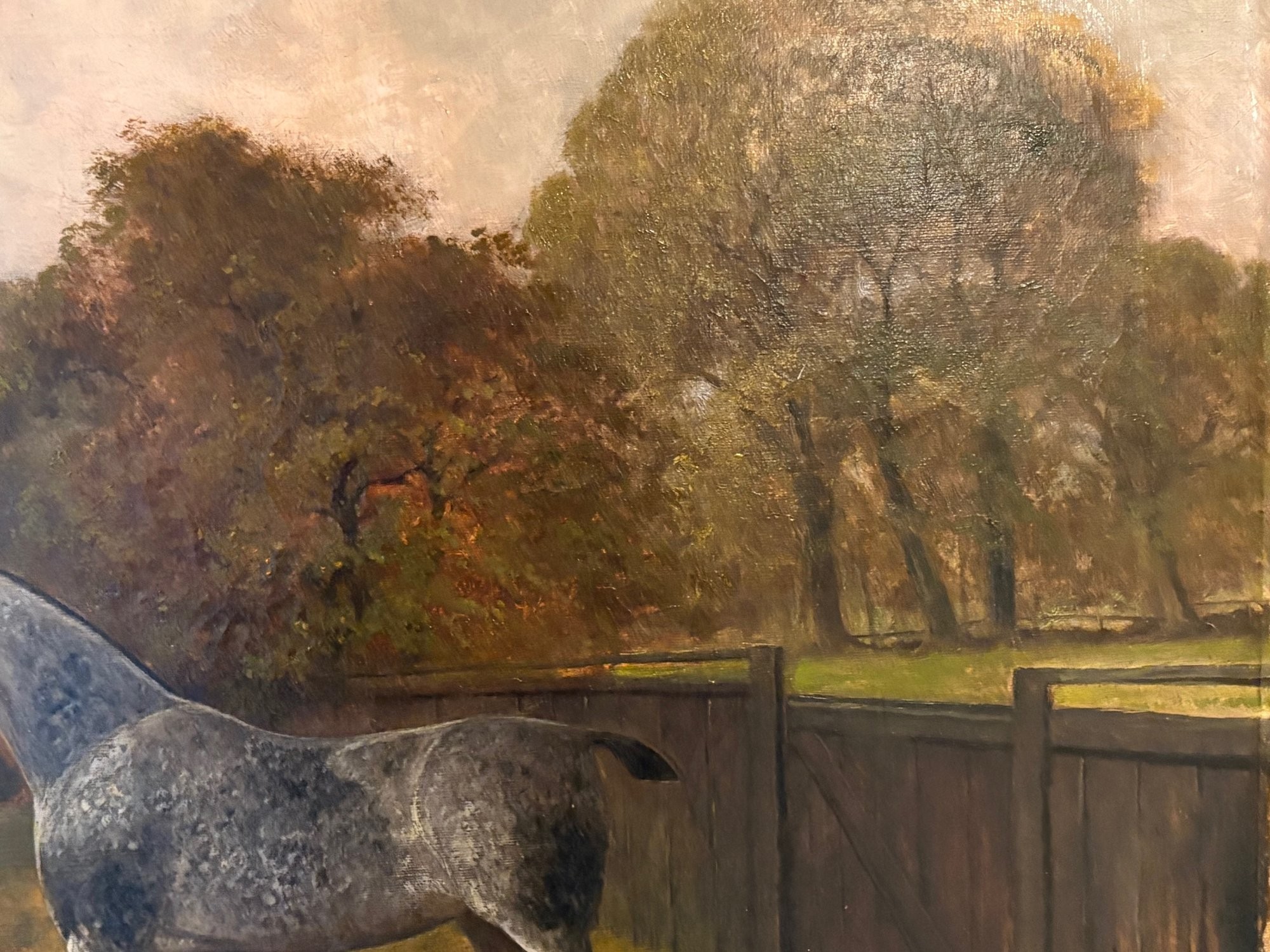
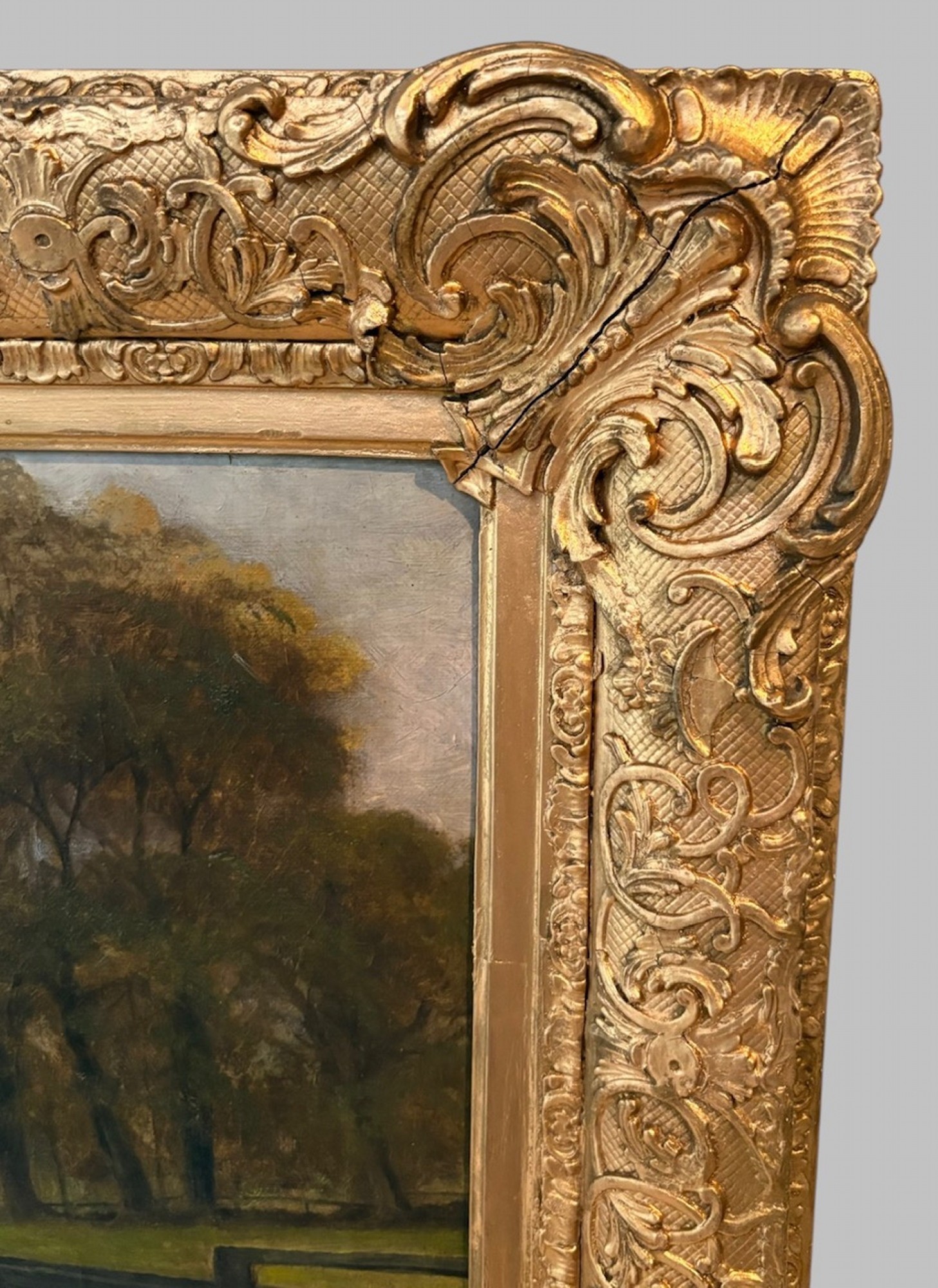
Depicting a handsome dapple grey hunter standing in profile beside a timber fence, set within an attractive English rural landscape of mature trees, open pasture and a meandering stream beneath a softly clouded sky.
The artist has captured the horse’s elegant stance, distinctive dappled coat and alert expression with considerable attention to detail. The rich, earthy tones of the surrounding landscape provide a particularly attractive contrast to the silvery grey of the horse.
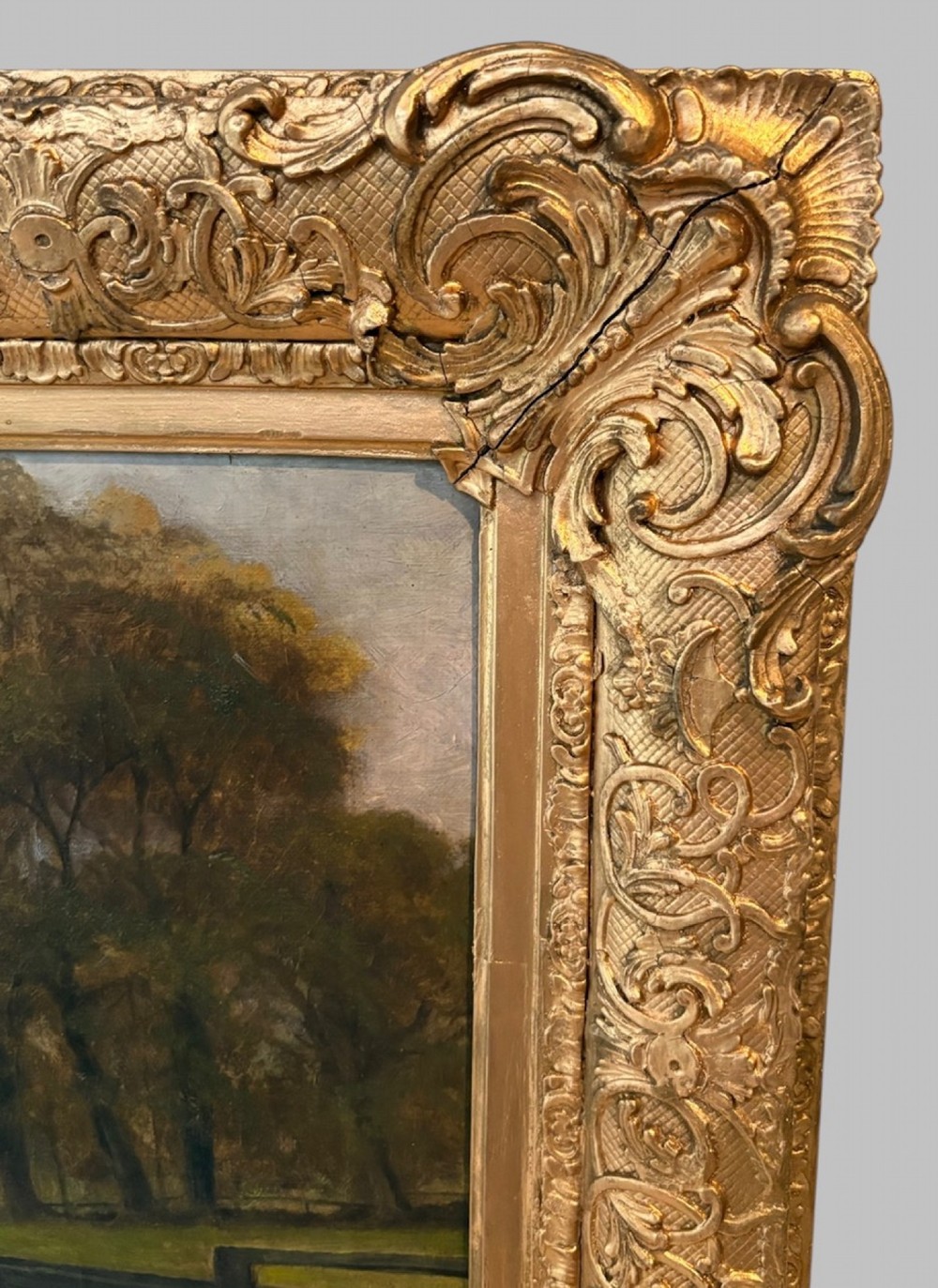
Presented in an impressive ornate gilt frame, decorated with elaborate foliate scrollwork and pronounced Rococo-style corner embellishments.
A charming and highly decorative example of traditional English sporting art.
Medium: Oil on canvas
Artist: James Clark
Date: 1900
Signed: Lower right, incorporating the artist’s London studio address.
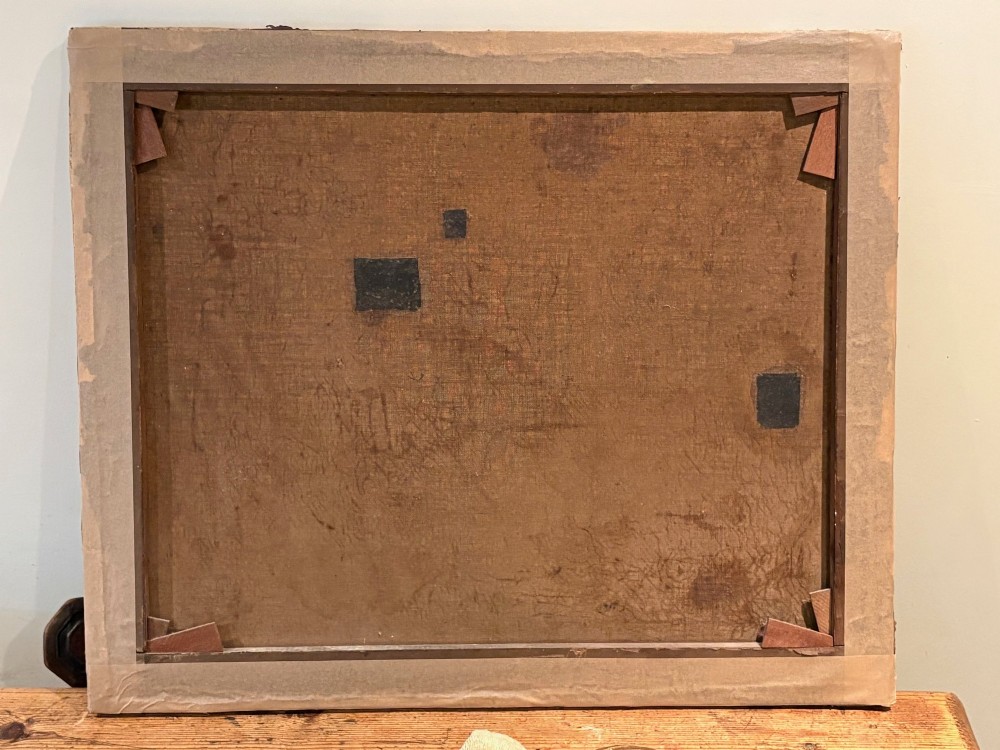
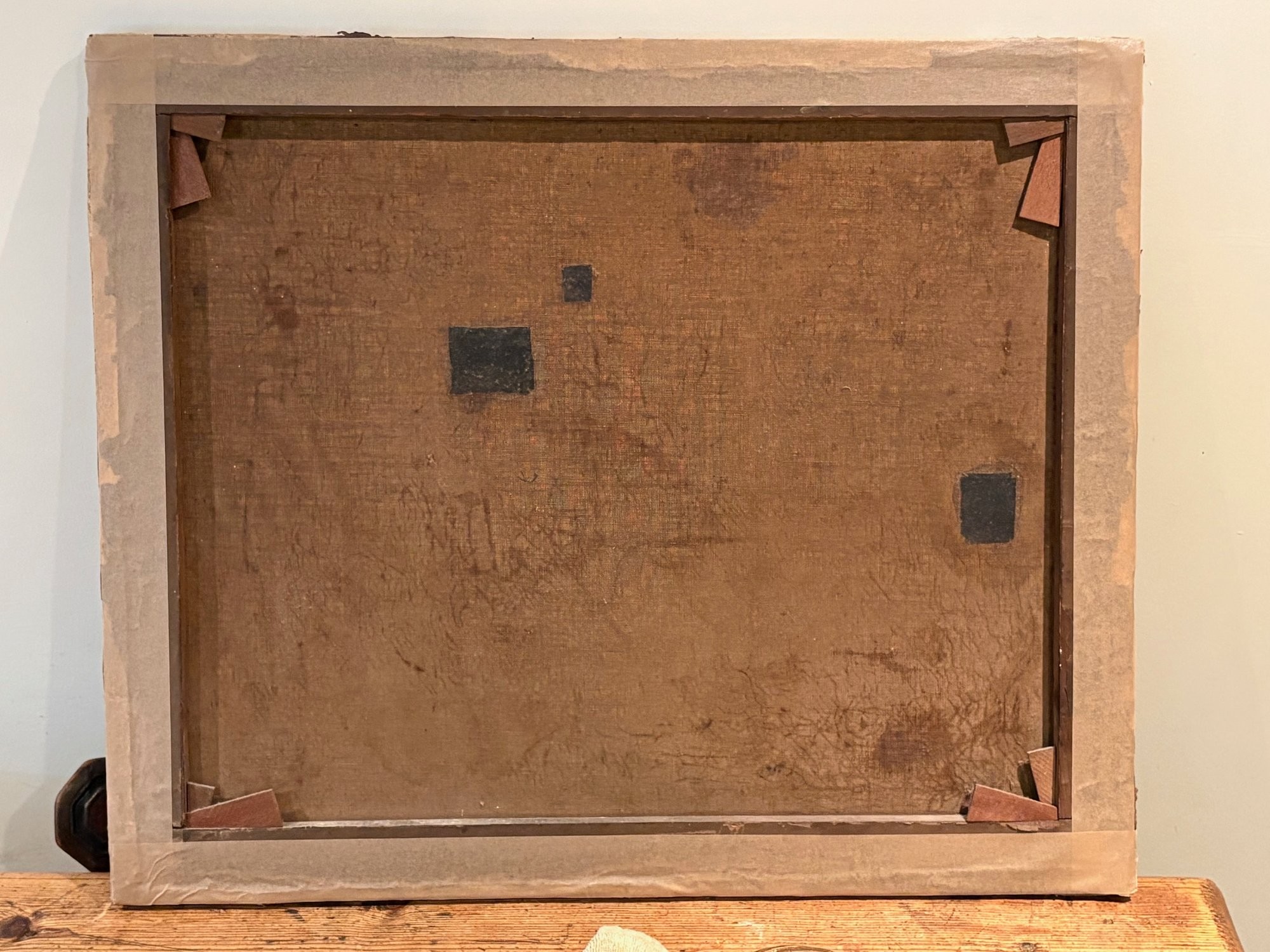
Condition: The canvas has three small historic patch repairs to the reverse, believed to predate 1950, together with small age-related craquelure commensurate with age. The frame has been regilded and has undergone some restoration in two areas. Overall, the painting presents attractively.
James Albert Clark was born 17 February 1863 to animal painter James Clark and his second wife Frances Mary Ann (nee Parsons). They lived at 21 Walbrook Street, Hoxton, and later at 67 Riversdale Road, Islington. He had four older half-brothers who were also artists: Samuel James, Albert, Charles Lawrence and Octavius Thomas Clark. James Albert is best known for his horse portraits.
The family's census return of 1881 gives James Albert Clark's occupation as artist/animal painter, he was then aged 18. Eight years later he married Mary Ann Blight and the couple had one daughter and one son. Mary died in the late 1890's and James subsequently married his cousin Frances Charlotte Parsons. They had one son and one daughter, and the family moved to Landseer Road in Holloway. James' eldest son Horace also worked as an artist but there are no auction records of paintings by him.
During World War I James Albert Clark parted from his second wife Frances. He moved to 79 Hanley Road, Islington, with his two eldest children and lived with Annie Keen, with whom he had another son and daughter. A friend of the family recalls that James used the middle floor of the house as his studio. There he painted country scenes with unfinished cows, bulls, pigs, or horses, etc. He would then walk to the Islington Agricultural Hall with several of these canvases whenever a show was happening. He would sell these paintings to the winners, finishing details of their animal on the day