6,953  PAGES BROWSED TODAY PAGES TODAY • 44 ANTIQUES UPLOADED TODAYNEW ARRIVALS
GIFTS
44 ITEMS ADDED TODAY
Sort Order
Items Per Page
Browse Categories
Sort order
Relevant Links
Items per page
ID #SA1240353
FOR SALE
£9,000
Email Phone Buy
Save
Early 18th Century Portrait of a Gentleman in a Scarlet Jacket - Circle of Jean-baptiste Van Loo (1684-1745)
For sale by Period Portraits
for sale €10,530     $11,430
£9,000
Period Portraits

Period Portraits

Sellingantiques Verified Since Jan 2017
Browse dealers 44 items
  • About Us
    Specialist dealer in portraits from the 17th century to the 20th century. Our stock includes quality oil paintings, drawings, and mezzotints
Id #SA1240353
PDF SHARE
SAVE

Early 18th Century Portrait of a Gentleman in a Scarlet Jacket - Circle of Jean-baptiste Van Loo (1684-1745)

18th century
For Sale by Period Portraits
Description

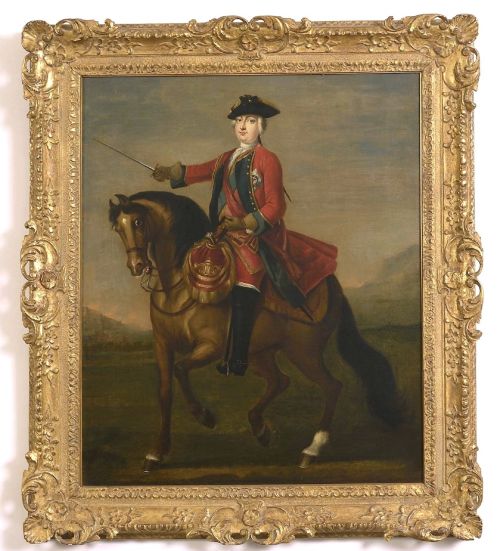
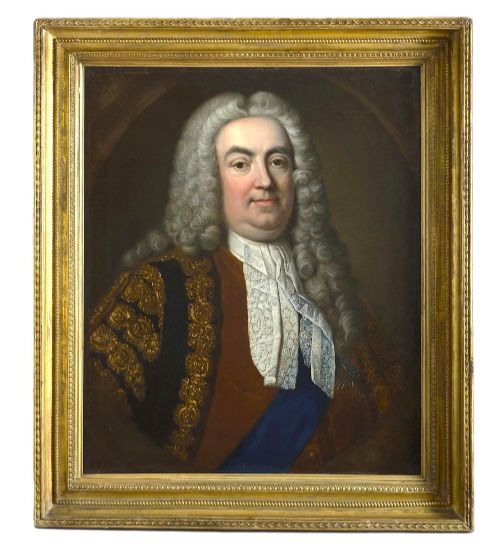
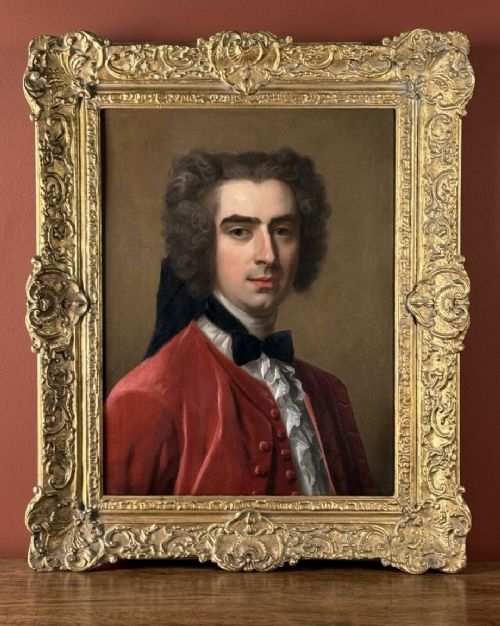
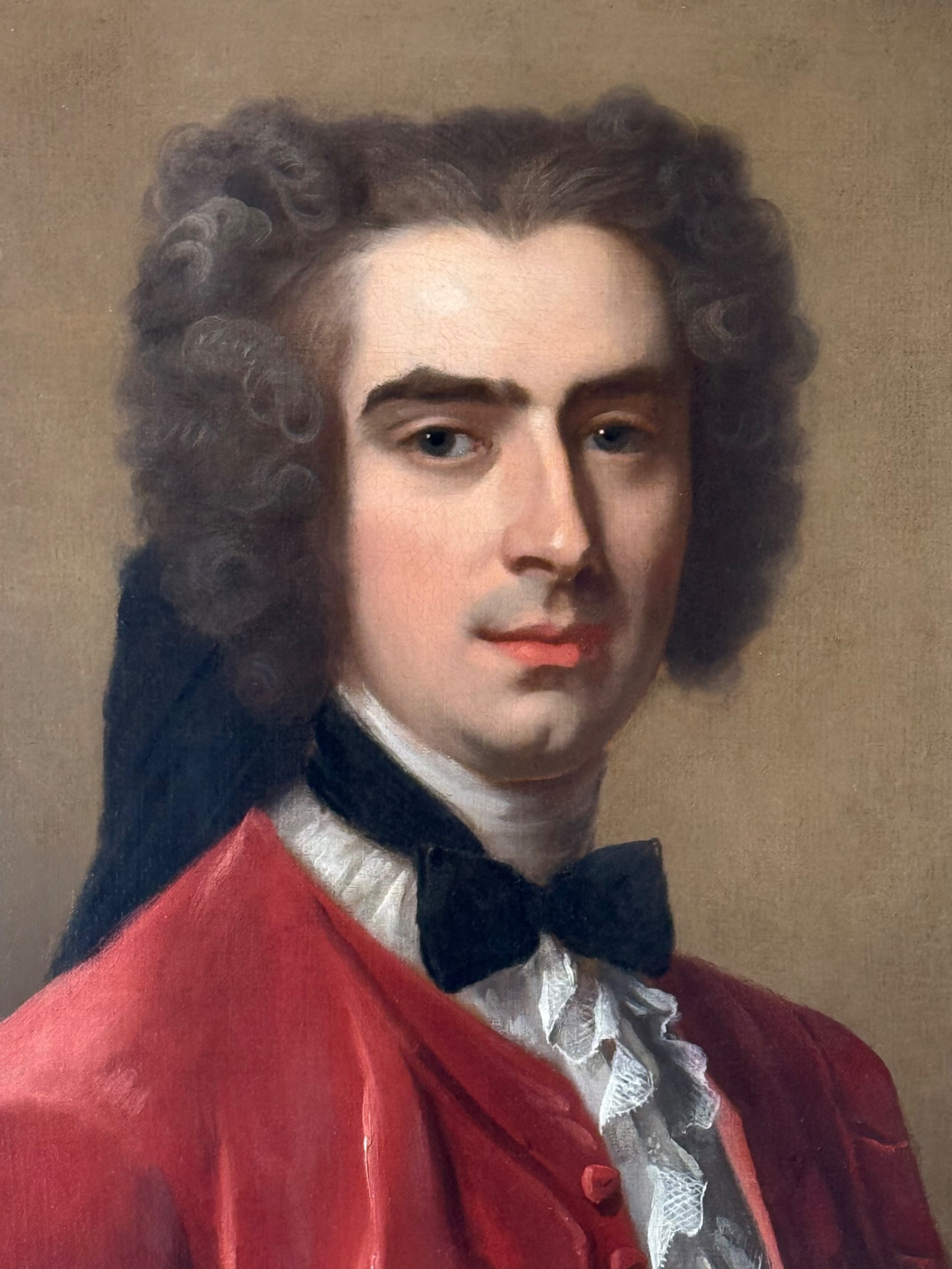
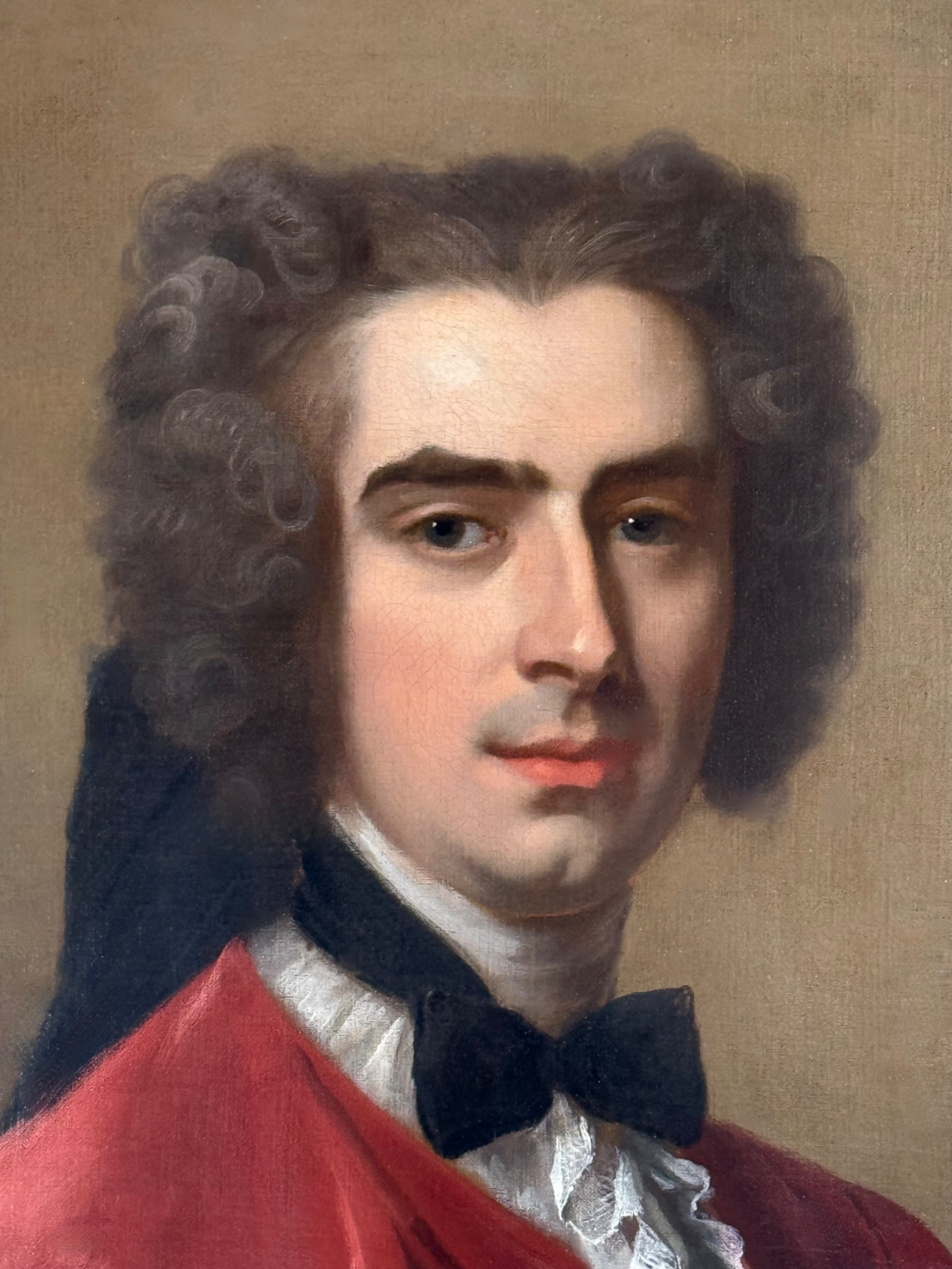
Fine quality and highly decorative 18th century portrait of a nobleman attributed to Jean - Baptiste van Loo (1684-1745).

The elegant and fashionable young sitter is depicted shoulder length against a fawn ground. He wears a costume which is very much ’a la mode’ as it blends elements of English dress with distinctly continental influences.
Trendsetting in the 18th century was a gentlemanly vocation and ‘The Grand Tour’ was a formative experience for many young aristocratic gentlemen. It helped to shape their identities, including their ability to demonstrate their social status through dress.
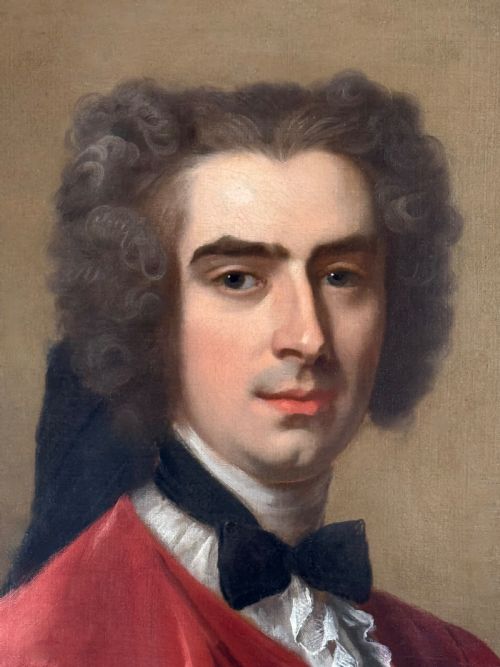
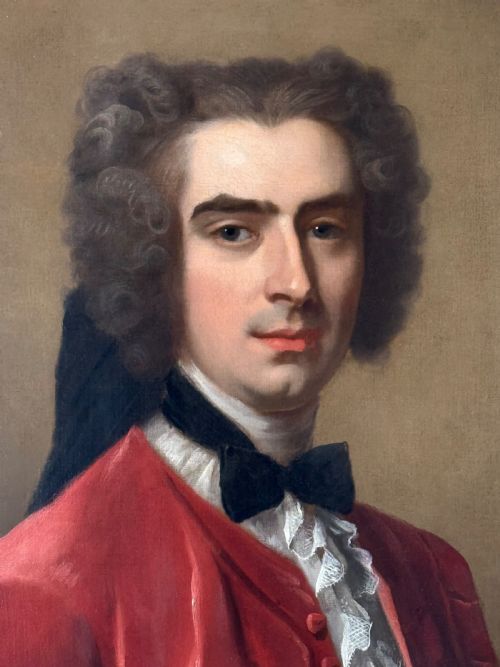
With his body slightly inclined our handsome subject fixes us with an intense yet pleasing gaze. He sports a sumptuous scarlet jacket and matching waistcoat, the colours of which remain vibrant and arresting. The areas of impasto paint visible here, reveal the artists considerable skill in rendering the velvet fabric used in their construction.
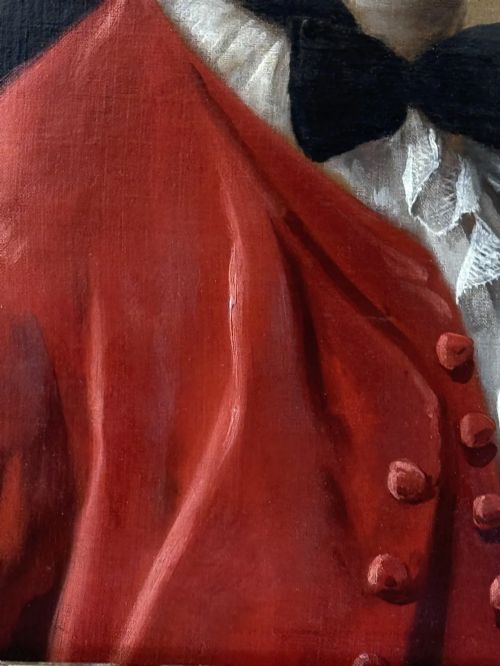
His jabot (the decorative frill of lace or cloth worn down the front of his shirt) has been freely fashioned in bravura cross hatched brushstrokes to create cascading Continental lace. His black silk bow tie is the perfect final counterpoint.
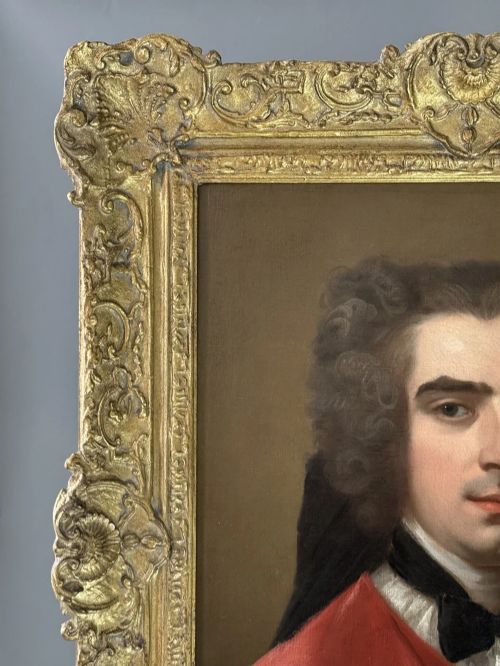
Wigs were also de rigeur and often elaborately styled, so it is highly likely that the sitter is wearing a ‘bag wig’ rather than a coiffure that imitates one. It has large, full curls on the sides, often referred to as bouffant curls or side rolls. The exaggerated black ribbon which is visible at the back of his neck, would hold his own hair or a wig's ponytail (queue).
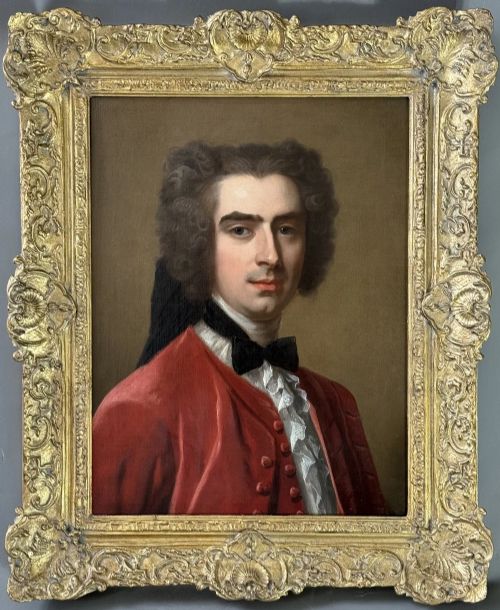
His coiffure also appears to be powdered and wig powder was a cosmetic product widely used in the 18th century and it was a crucial part of the fashionable look of the time and it was typically made from finely ground starch, such as flour from wheat or corn and often scented with a variety of fragrances, including: Lavender Orange flower Orris root. The most common colour was off-white or a greyish hue we see here, however it could also be dyed in different colours like violet, blue, pink, or yellow.

The powder was often puffed onto the hair or wig using a bellows or a special powder puff. To keep it from getting all overclothes and furniture, people would sometimes have a separate room, or a small cabinet, where the powdering was done. This is thought to be one of the origins of the term powder room.

Jean-Baptiste van Loo (1684-1745) Jean-Baptiste van Loo, born at Aix-en-Provence, was taught by his father, Louis-Abraham van Loo. Early on he worked in a number of cities in France and Italy decorating churches and public buildings. While in Turin he painted portraits of Charles Emmanuel II, Duke of Savoy and several members of his court. In 1737, van Loo arrived in England, where his portraits of the playwright and poet, Colley Cibber, and the Irish entrepreneur and patron of the arts, Owen McSwiny, attracted much attention. it was here where he made an international name for himself, causing all who had their portrait painted by him to be in enviable positions.

Van Loo painted portraits of Sir Robert Walpole and the Prince and Princess of Wales. However, his sojourn in England was short-lived, his failing health causing him to return to France in 1742.

This fine portrait is housed in in a fine quality antique frame and is in an excellent state of conservation.

Higher Resolution images on request.

Worldwide shipping available.

Canvas: 22" x 17" / 77cm x 64cm.

Frame: 29" x 24" / 92cm x 79cm

Price: £9,000

Physical Dimensions
Height
92cm (36.22")
Width
79cm (31.10")
Depth
5cm (1.97")
Declaration

Period Portraits has dated this 18th Century Oil Portrait to the 18th Century.

Reference Numbers
Sellingantiques Reference
SA1240353
Description
Fine quality and highly decorative 18th century portrait of a nobleman attributed to Jean - Baptiste van Loo (1684-1745).

The elegant and fashionable young sitter is depicted shoulder length against a fawn ground.

“
He wears a costume which is very much ’a la mode’ as it blends elements of English dress with distinctly continental influences.
Period Portraits
fig 1. An 18th-century oil painting depicting a gentleman in a scarlet jacket with a white cravat, framed in an ornate gilded Rococo-style frame.
fig 1. Early 18th Century Portrait of a Gentleman in a Scarlet Jacket - Circle of Jean-baptiste Van Loo (1684-1745)

Trendsetting in the 18th century was a gentlemanly vocation and ‘The Grand Tour’ was a formative experience for many young aristocratic gentlemen. It helped to shape their identities, including their ability to demonstrate their social status through dress.

fig 2. An 18th-century oil painting depicting a gentleman in a scarlet jacket with a white cravat, framed in an ornate gilded Rococo-style frame.
fig 2. Early 18th Century Portrait of a Gentleman in a Scarlet Jacket - Circle of Jean-baptiste Van Loo (1684-1745)

With his body slightly inclined our handsome subject fixes us with an intense yet pleasing gaze. He sports a sumptuous scarlet jacket and matching waistcoat, the colours of which remain vibrant and arresting. The areas of impasto paint visible here, reveal the artists considerable skill in rendering the velvet fabric used in their construction.

fig 3. An 18th-century oil painting depicting a gentleman in a scarlet jacket with a white cravat, framed in an ornate gilded Rococo-style frame.
fig 3. Early 18th Century Portrait of a Gentleman in a Scarlet Jacket - Circle of Jean-baptiste Van Loo (1684-1745)

His jabot (the decorative frill of lace or cloth worn down the front of his shirt) has been freely fashioned in bravura cross hatched brushstrokes to create cascading Continental lace. His black silk bow tie is the perfect final counterpoint.

fig 4. An 18th-century oil painting depicting a gentleman in a scarlet jacket with a white cravat, framed in an ornate gilded Rococo-style frame.
fig 4. Early 18th Century Portrait of a Gentleman in a Scarlet Jacket - Circle of Jean-baptiste Van Loo (1684-1745)

Wigs were also de rigeur and often elaborately styled, so it is highly likely that the sitter is wearing a ‘bag wig’ rather than a coiffure that imitates one. It has large, full curls on the sides, often referred to as bouffant curls or side rolls. The exaggerated black ribbon which is visible at the back of his neck, would hold his own hair or a wig's ponytail (queue).

fig 5. An 18th-century oil painting depicting a gentleman in a scarlet jacket with a white cravat, framed in an ornate gilded Rococo-style frame.
fig 5. Early 18th Century Portrait of a Gentleman in a Scarlet Jacket - Circle of Jean-baptiste Van Loo (1684-1745)

His coiffure also appears to be powdered and wig powder was a cosmetic product widely used in the 18th century and it was a crucial part of the fashionable look of the time and it was typically made from finely ground starch, such as flour from wheat or corn and often scented with a variety of fragrances, including: Lavender Orange flower Orris root. The most common colour was off-white or a greyish hue we see here, however it could also be dyed in different colours like violet, blue, pink, or yellow.

The powder was often puffed onto the hair or wig using a bellows or a special powder puff. To keep it from getting all overclothes and furniture, people would sometimes have a separate room, or a small cabinet, where the powdering was done. This is thought to be one of the origins of the term powder room.

Jean-Baptiste van Loo (1684-1745) Jean-Baptiste van Loo, born at Aix-en-Provence, was taught by his father, Louis-Abraham van Loo. Early on he worked in a number of cities in France and Italy decorating churches and public buildings. While in Turin he painted portraits of Charles Emmanuel II, Duke of Savoy and several members of his court. In 1737, van Loo arrived in England, where his portraits of the playwright and poet, Colley Cibber, and the Irish entrepreneur and patron of the arts, Owen McSwiny, attracted much attention. it was here where he made an international name for himself, causing all who had their portrait painted by him to be in enviable positions.

Van Loo painted portraits of Sir Robert Walpole and the Prince and Princess of Wales. However, his sojourn in England was short-lived, his failing health causing him to return to France in 1742.

This fine portrait is housed in in a fine quality antique frame and is in an excellent state of conservation.

Higher Resolution images on request.

Worldwide shipping available.

Canvas: 22" x 17" / 77cm x 64cm.

Frame: 29" x 24" / 92cm x 79cm

Price: £9,000

Height
92cm (36.22")
Width
79cm (31.10")
Depth
5cm (1.97")
Date of Manufacture

Period Portraits has dated this 18th Century Oil Portrait to the 18th Century.

Reference Numbers
Sellingantiques Ref
SA1240353
Period Portraits
Period Portraits
Sellingantiques verified Since Jan 2017

Specialist dealer in portraits from the 17th century to the 20th century. Our stock includes quality oil paintings, drawings, and mezzotints

Dealer Profile

You can view the stock and full dealer information on the Period Portraits Profile Page
PDF SHARE
SAVE
An 18th-century oil painting depicting a gentleman in a scarlet jacket with a white cravat, framed in an ornate gilded Rococo-style frame.
1 / 6
Archive I An 18th-century oil painting depicting a gentleman in a scarlet jacket with a white cravat, framed in an ornate gilded Rococo-style frame.

Early 18th Century Portrait of a Gentleman in a Scarlet Jacket - Circle of Jean-baptiste Van Loo (1684-1745)
Archive II An 18th-century oil painting depicting a gentleman in a scarlet jacket with a white cravat, framed in an ornate gilded Rococo-style frame. View II
Archive III An 18th-century oil painting depicting a gentleman in a scarlet jacket with a white cravat, framed in an ornate gilded Rococo-style frame. View III
Archive IV An 18th-century oil painting depicting a gentleman in a scarlet jacket with a white cravat, framed in an ornate gilded Rococo-style frame. View IV
Archive V An 18th-century oil painting depicting a gentleman in a scarlet jacket with a white cravat, framed in an ornate gilded Rococo-style frame. View V
Archive VI An 18th-century oil painting depicting a gentleman in a scarlet jacket with a white cravat, framed in an ornate gilded Rococo-style frame. View VI
FURTHER BROWSING

Visitors also looked at these ⇣

Enlarged Archival View
Telephone 07889 859729
Location
North Yorkshire
United Kingdom
Verified Since Jan 2017
Items For Sale 44
Items Sold 63
Period Portraits
Period Portraits
Verified Since Jan 2017
View Dealer Info
Location: North Yorkshire, United Kingdom
Verified
Jan 2017
For Sale
44
Sold
63
An 18th-century oil painting depicting a gentleman in a scarlet jacket with a white cravat, framed in an ornate gilded Rococo-style frame.
EARLY 18TH CENTURY PORTRAIT OF A GENTLEMAN IN A SCARLET JACKET - CIRCLE OF JEAN-BAPTISTE VAN LOO (1684-1745)
Ref: SA1240353
An 18th-century oil painting depicting a gentleman in a scarlet jacket with a white cravat, framed in an ornate gilded Rococo-style frame.
Detail View 1
Detail View 2
Detail View 3
Detail View 4
Detail View 5
Archival Detail
Every single antique dealer on our platform is individually approved by our internal team. We verify their professional trade history, ethical standards, and photographic quality to ensure a secure, high-standard buying environment. Upon joining, every dealer agrees to a strict 9-point code of conduct. While issues can occasionally arise, our dealers typically resolve them swiftly and directly with the buyer. In fact, since our founding in 2002, Sellingantiques has only had to step in to help resolve an issue on roughly five occasions—a true testament to the quality of our dealers and their dedication to your happiness.
Our dealers are highly experienced in packing and shipping fragile, high-value antiques. Because you are in direct contact with the dealer, you will be able to easily go through all available shipping and insurance options together to ensure your item arrives safely.
Antiques are the ultimate green purchase. By choosing historical pieces over newly manufactured goods, you completely eliminate the carbon footprint of modern mass production while preserving exceptional, timeless craftsmanship.
Written by Sellingantiques from the dealer’s photographs and listing
  • ObjectOil Paintings
  • Period18th century
  • StyleGeorgian
  • MaterialOil on Canvas, Giltwood
  • ColourScarlet Red, Gold
  • MotifsCarved rococo giltwood frame, Powdered hair styling, Scarlet coat with matching buttons, White linen cravat
  • SizeH 92 cm (36 in) x W 79 cm (31 in) x D 5 cm (2 in)

This 18th-century oil painting on canvas depicts a nobleman in the circle of Jean-Baptiste Van Loo. The portrait is housed in a carved rococo giltwood frame featuring elaborate scrollwork and moulding decoration in gold. The sitter wears a scarlet red coat with matching buttons, a white linen cravat with a black silk bow, and powdered hair styled in bouffant side curls with a black ribbon queue at the back against a fawn background. The painting measures 92 cm high, 79 cm wide, and 5 cm deep. It suits a gentleman's library and hangs above the mantel in a home today.

Eighteenth-century European portraiture focused on formal depictions of aristocracy and prominent figures, highlighting status through detailed attire, hair styling, and posture.

Paintings from this period were created using oil pigments on stretched canvas, set into hand-carved timber frames coated with gesso and gold leaf.

Authenticity is determined through consistent craquelure networks in the paint, timber oxidisation on the stretcher bars, historical canvas lining, and hand-cut frame joinery.

Positioning a portrait as a focal point above a fireplace mantelpiece or within a curated gallery wall adds historic narrative to contemporary living spaces.

Keep the canvas away from direct sunlight and fluctuating humidity, and dust the carved frame gently with a dry, soft-bristled brush to protect the gilded finish.
items
Add keywords to the filter
Price
£100
£250000
Era
Period
Style
Material
Origin
Stock Location
Recently Added
Online Payments
Categories