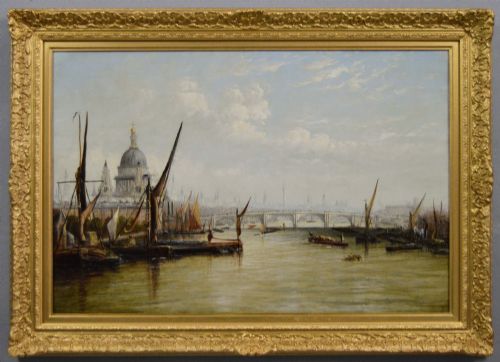
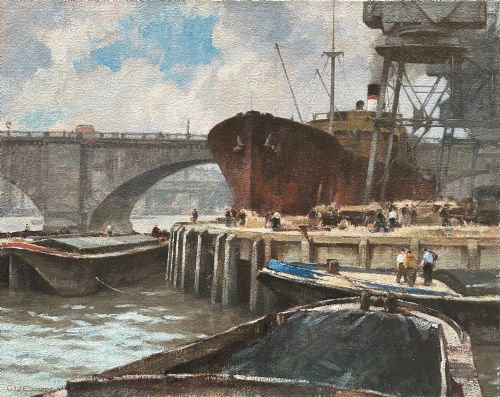
Brave Fine Art has dated this Victorian Thames Oil Painting to the 1850s.
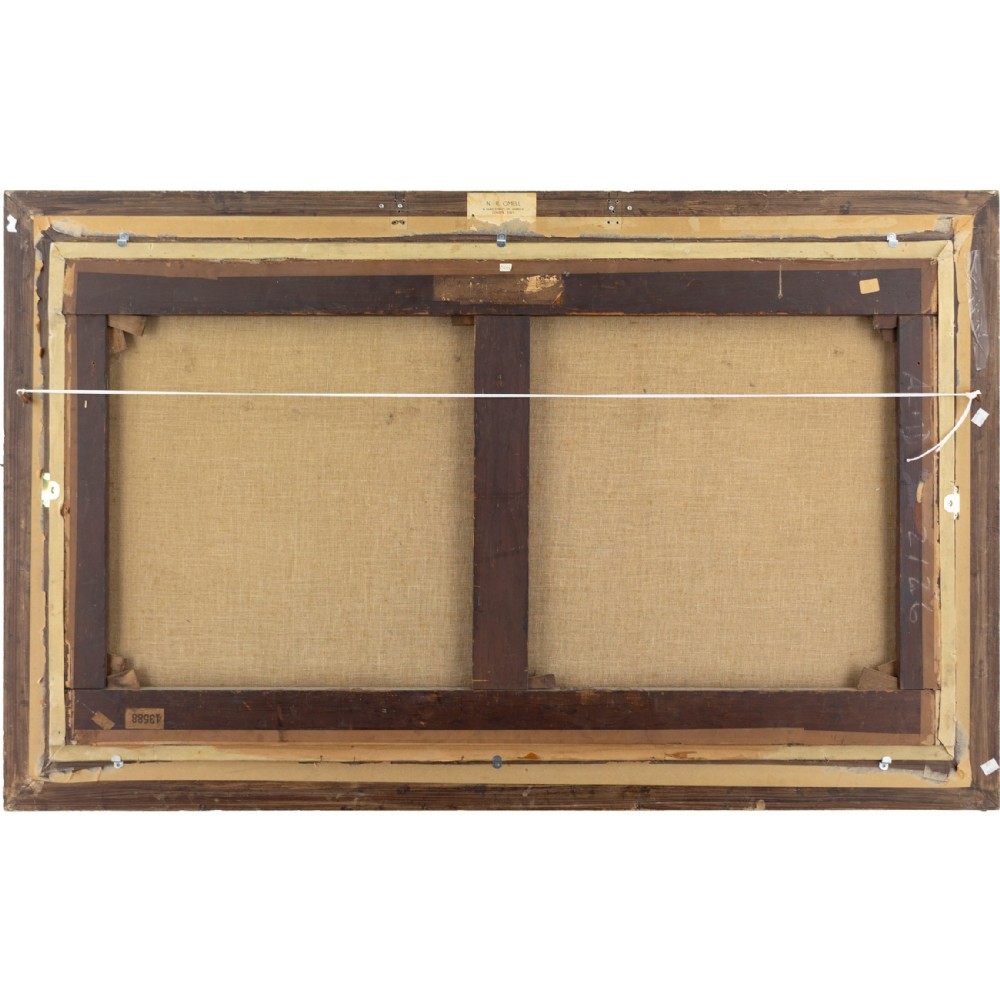
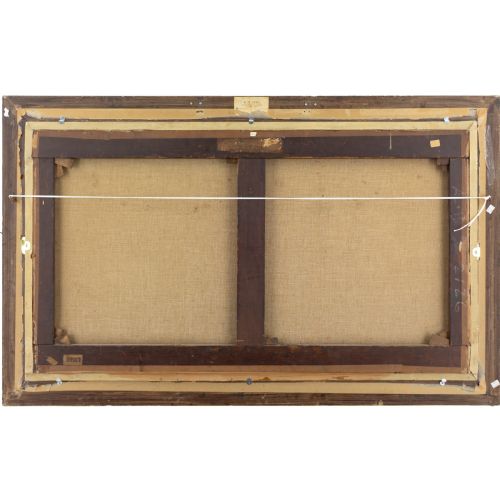
An original label attached to the stretcher bears the title together with his name and this address.
When Williams painted this, the Thames was more than simply a picturesque view. It was part of everyday life: a highway along which goods, animals and people travelled, a source of employment for fishermen, and a thread connecting the rural communities surrounding London with the rapidly expanding metropolis. He evidently knew this world well.
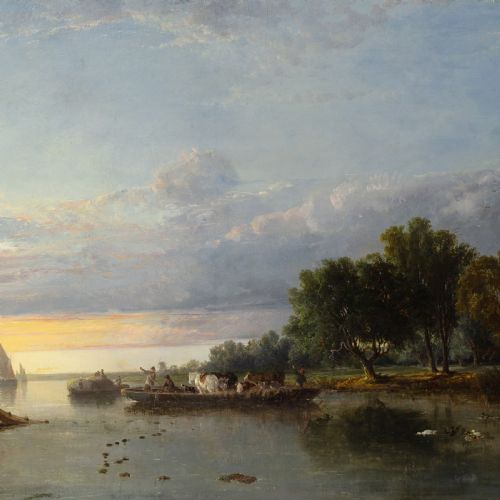
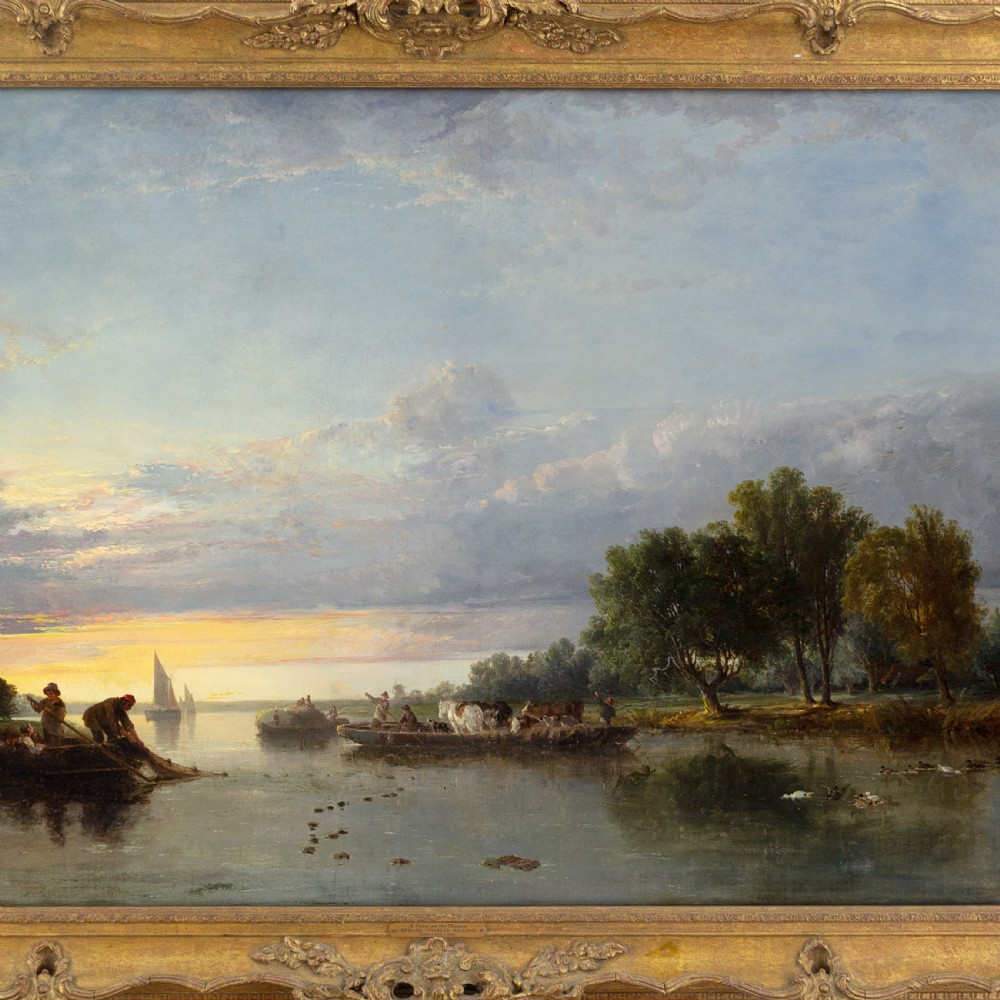
Among his other recorded subjects was 'Netting on the Thames', while his Royal Academy exhibits include numerous paintings concerned with cattle, ferries, riverbanks and working landscapes. In this piece, 'On the Thames', however, he brought several aspects of river life together within one expansive composition.
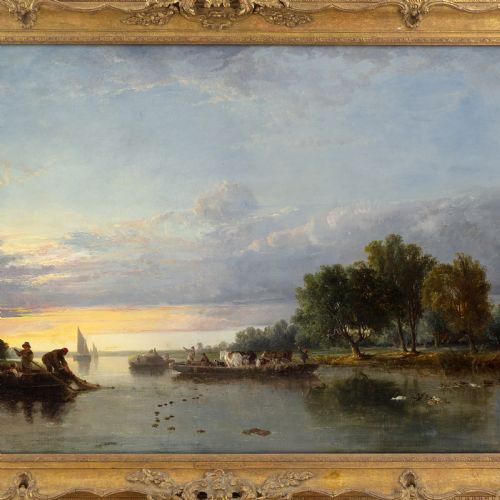
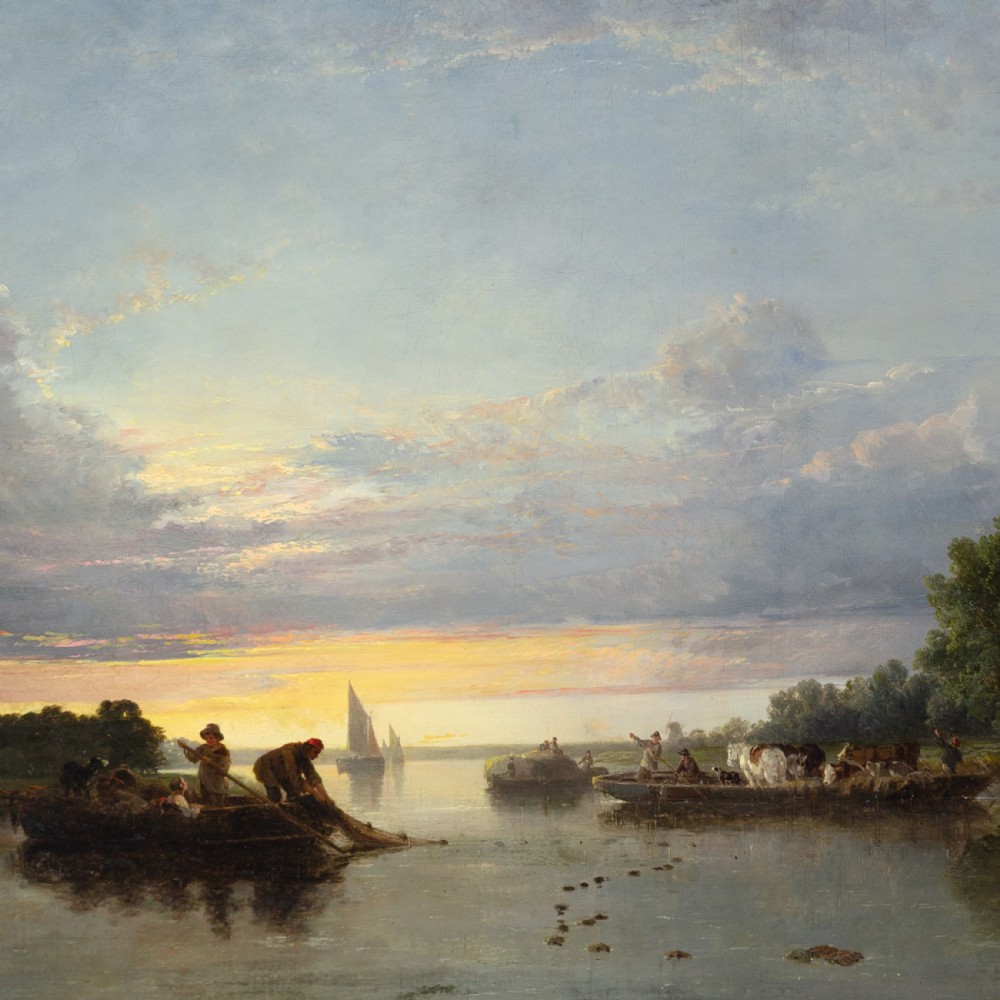
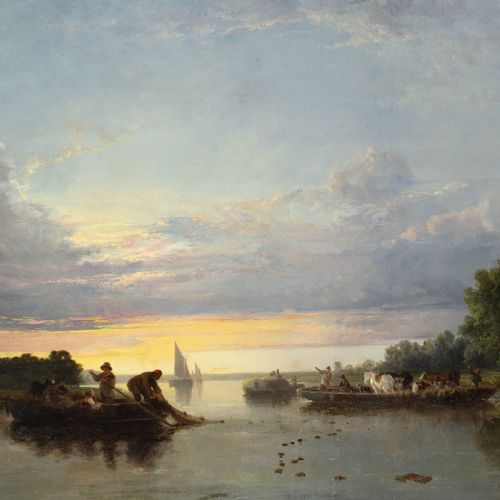
At the left, a group of fishermen are hauling in their nets. One braces himself against the weight as the wet mesh emerges from the water, while another steadies the boat and their companions attend to the catch. Commercial net fishing remained part of life on the Thames during this period, including around the reaches neighbouring Barnes, although pollution and the transformation of the river would severely diminish many of its fisheries later in the century.
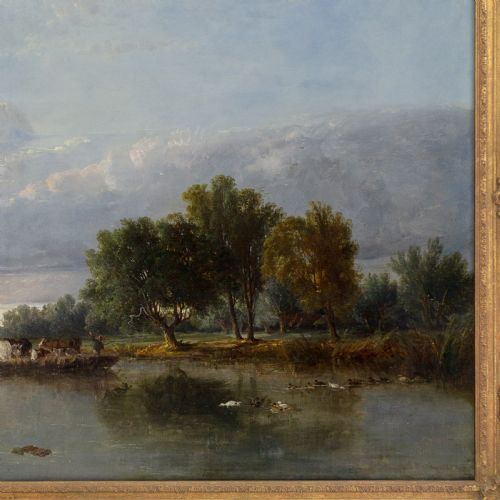
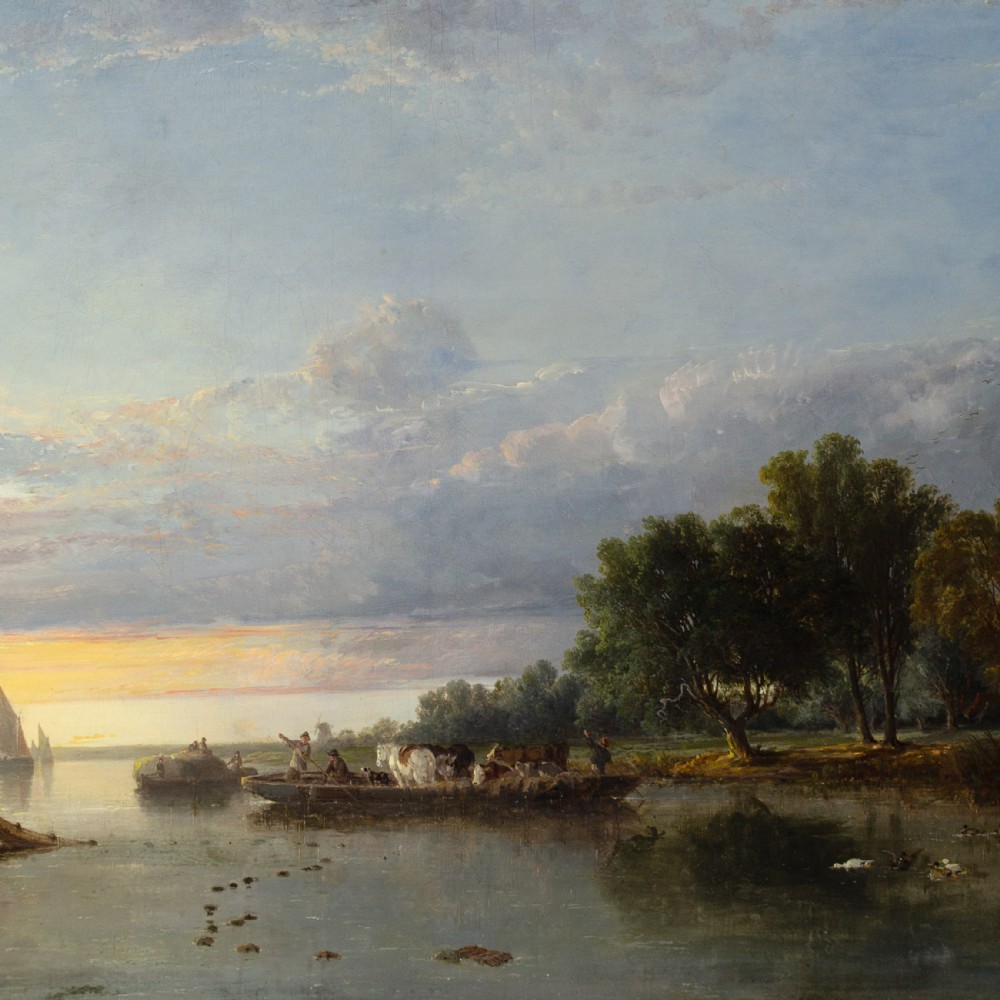
Across the water comes another interesting encounter. A low barge carries a collection of cattle and apparently horses, packed together as several men guide the vessel. Animals were routinely moved through the agricultural and commercial landscape surrounding London, and the Thames itself formed part of the region's transport network. They might be travelling towards a market, farm, grazing land or landing farther along the river.
Behind them, another heavily laden craft approaches through the haze. Farther still, sailing boats become little more than silhouettes against the glowing horizon.
One can easily imagine the artist experiencing scenes such as these from the water himself. The low viewpoint places us almost upon the surface of the Thames, seemingly at the level of the fishermen's boat rather than looking down from the bank. It's tempting to imagine the artist sitting in a small boat, sketchbook in hand, watching these encounters unfold around him - perhaps noting the posture of a fisherman hauling a net on one occasion, or the peculiar way a sail dissolved into the evening haze. Such individual observations could then be brought together in the studio.
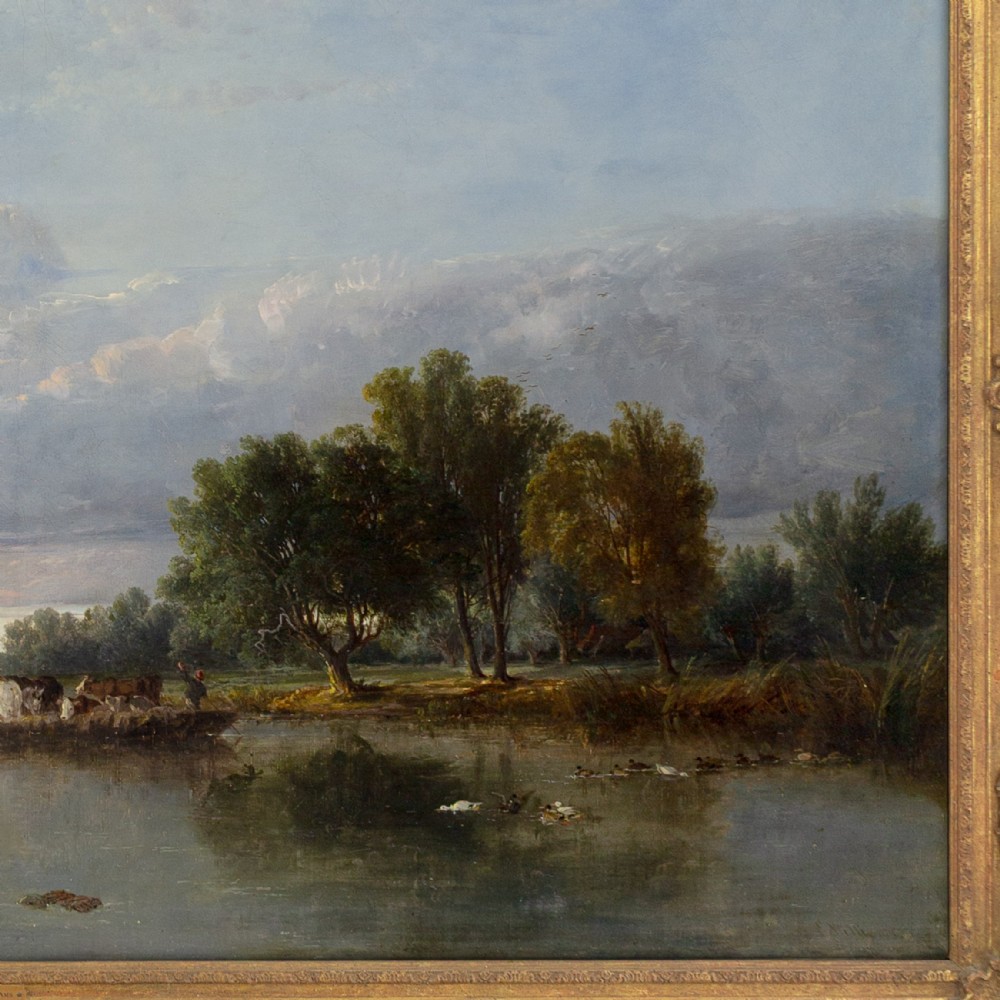
But, despite all this activity, Williams's true protagonist might ultimately be the atmosphere. Almost two-thirds of the canvas is given over to an immense luminous sky. Clouds gather and disperse across passages of blue, grey, cream and rose, while a band of warm evening light settles along the horizon and is reflected almost imperceptibly in the water. Against this immensity, fishermen, cattle and boats become fleeting presences.
That balance is particularly poignant given Williams's own circumstances. By 1846 he was in his mid-sixties and had recently established himself at Barnes, where several members of his artistic family would gather around him. The landscape painters associated with this familial circle subsequently became known collectively as the “Williams family” or “Barnes School”. The Thames and its neighbouring countryside became part of the environment in which the patriarch spent his final years.
On the Thames therefore feels unusually personal among Williams's landscapes. It records the landscape he knew, immediately surrounding his later life, and
Brave Fine Art has dated this Victorian Thames Oil Painting to the 1850s.
Exquisite antique paintings that capture the imagination.
You can view the stock and full dealer information on the Brave Fine Art Profile Page
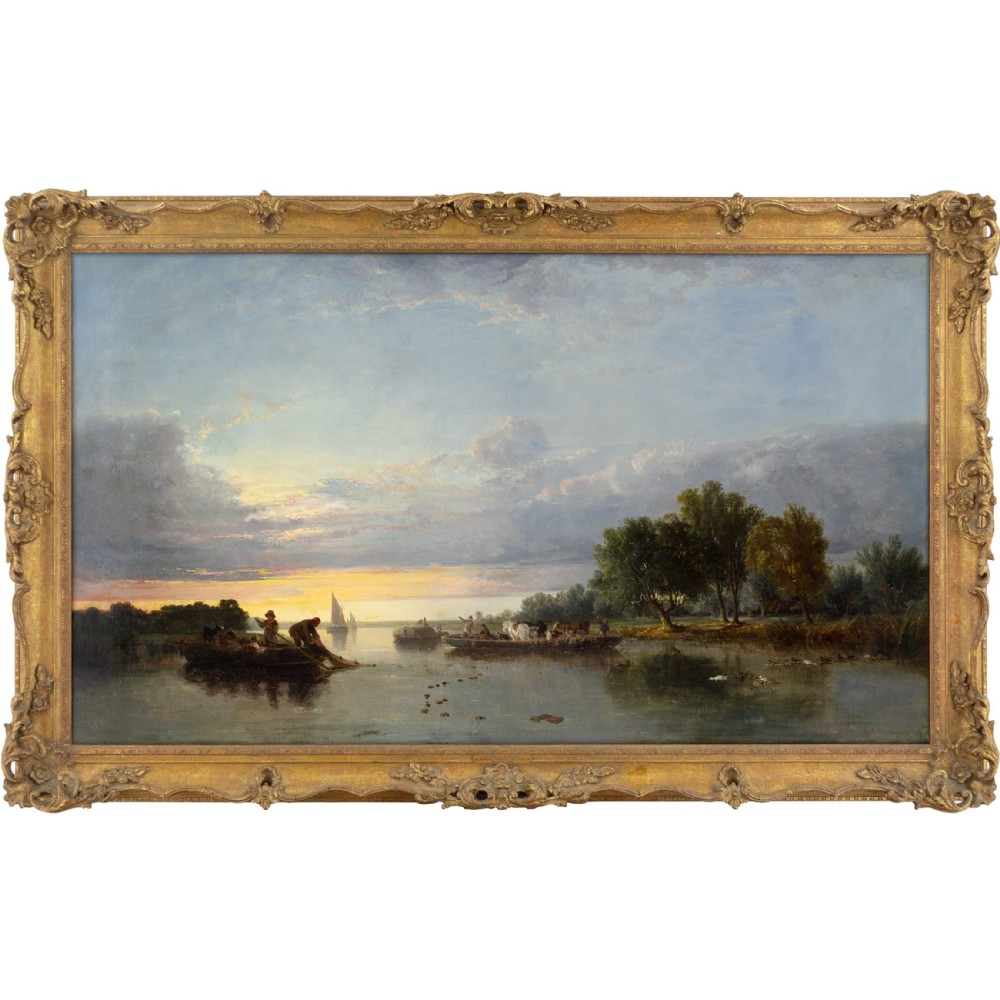
Edward Williams, on the Thames - Antique Oil Painting