21,155  PAGES BROWSED TODAY PAGES TODAY 21 ANTIQUES UPLOADED TODAYNEW ARRIVALS
21 ITEMS ADDED TODAY
Sort Order
Items Per Page
Browse Categories
Sort order
Items per page
ID #SA1232908
FOR SALE
£6,650
Email
Save
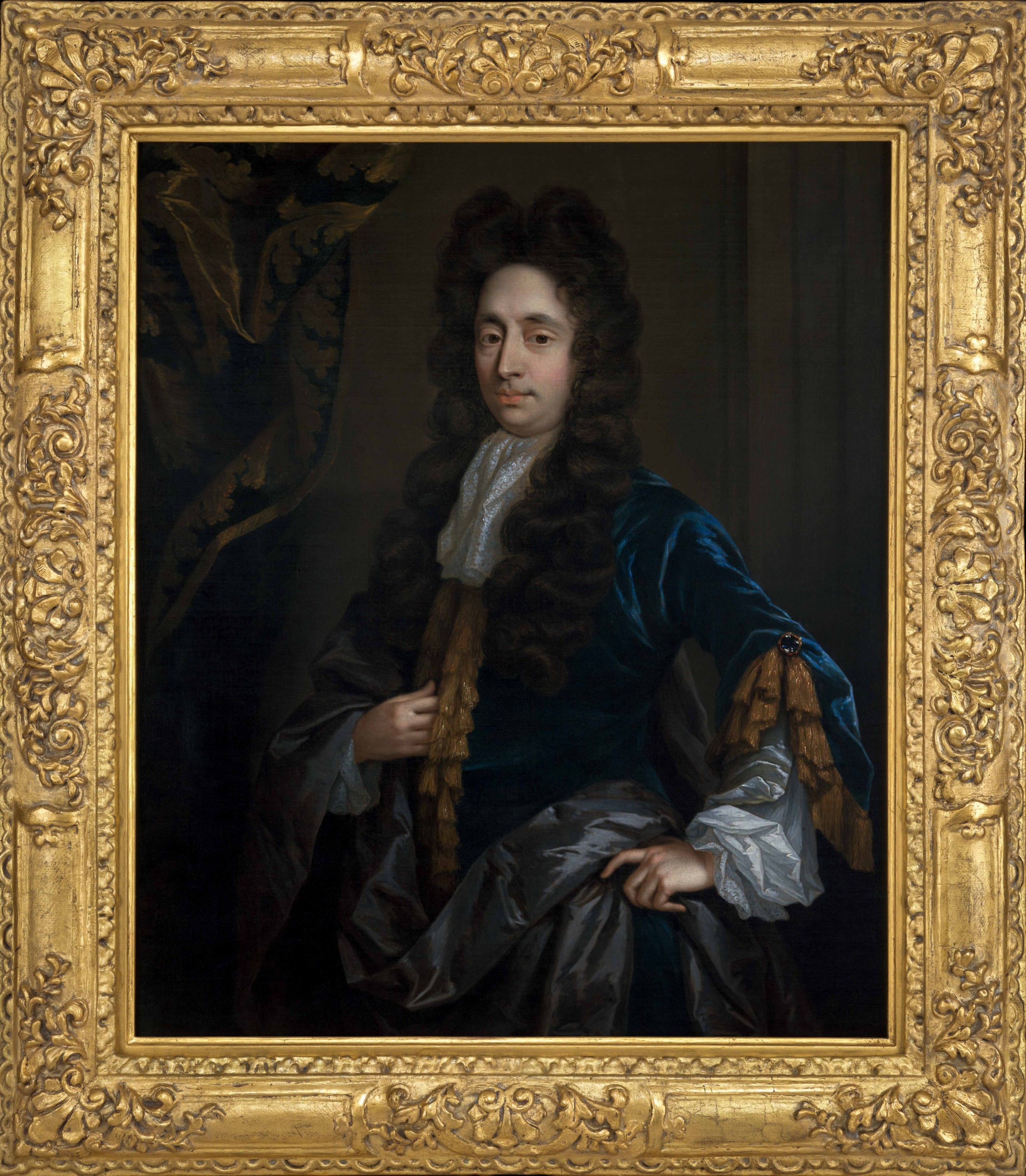
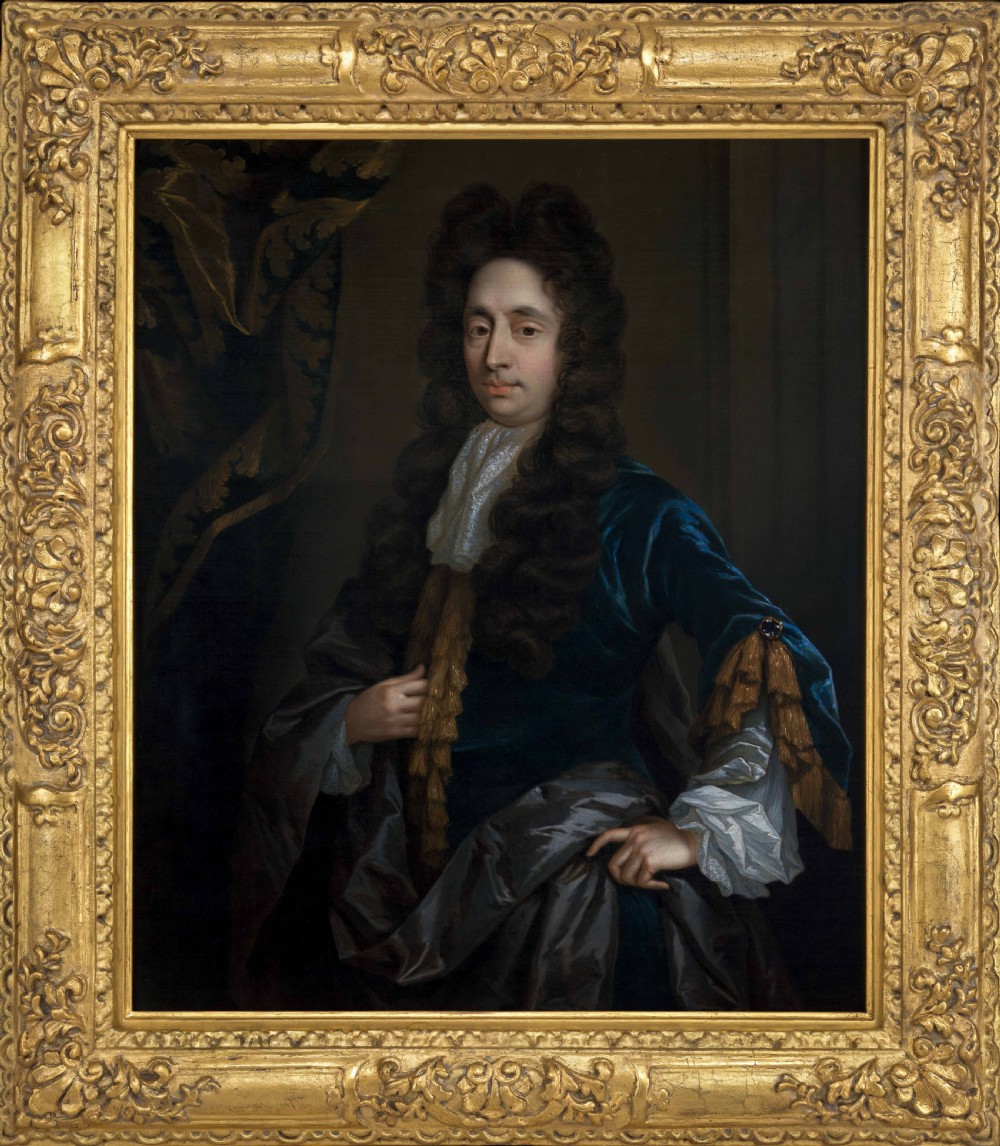
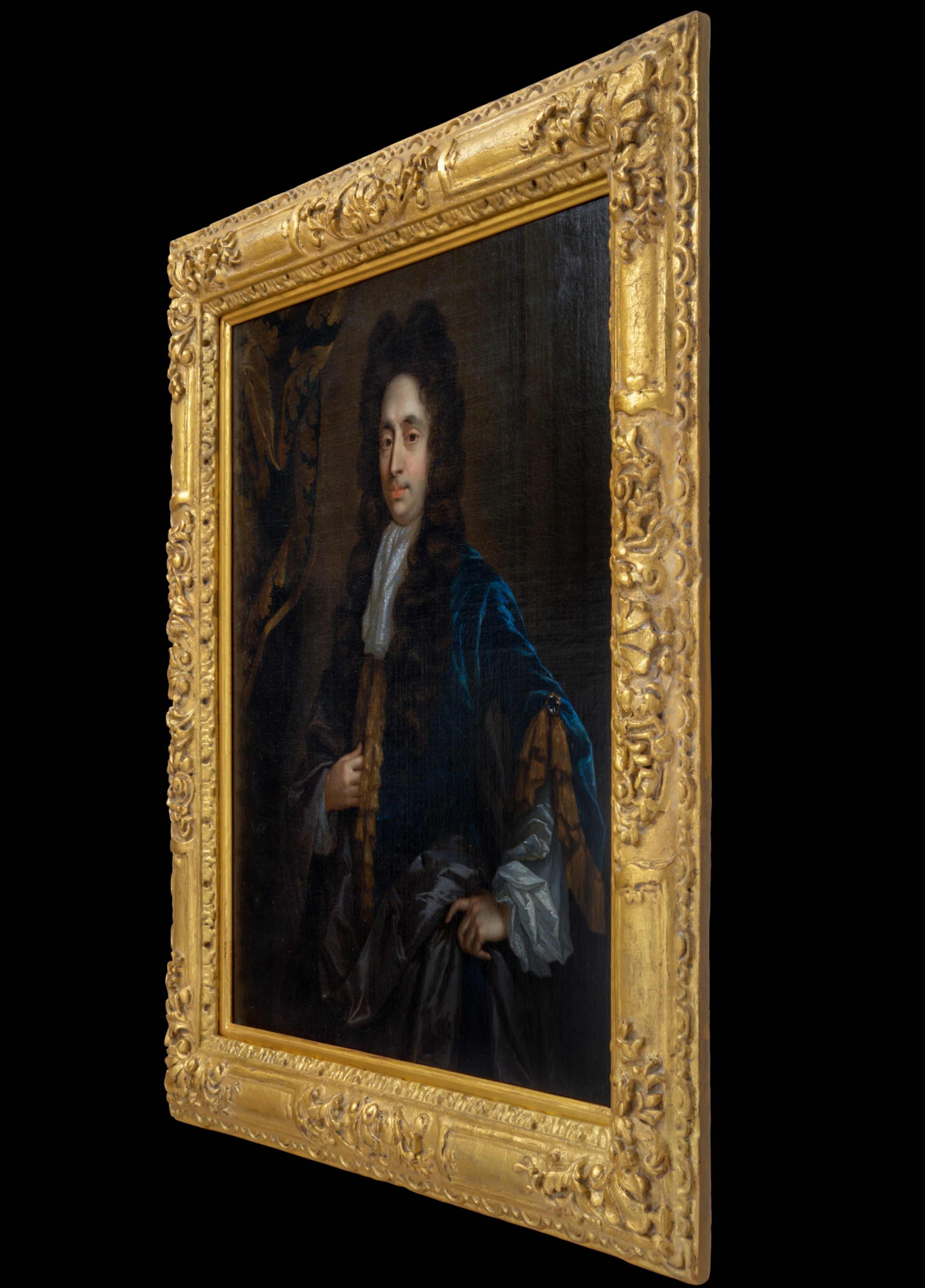
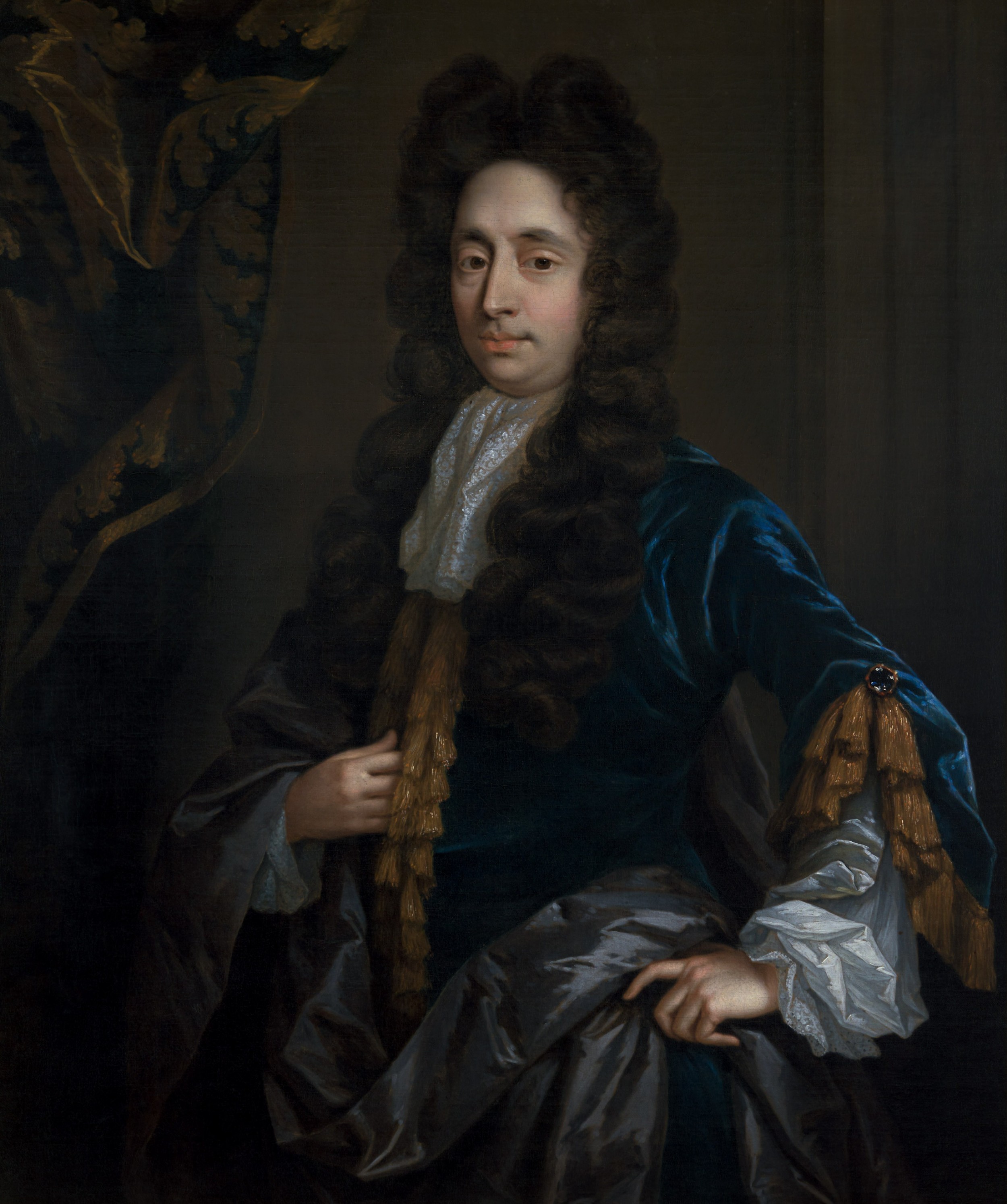
Portrait of a Gentleman in Blue Coat Standing by Curtain C.1695; Attributed to Constantyn Netscher (C.1668-c.1723), Oil on Canvas Painting
Titan Fine Art
for sale €7,781     $8,446
£6,650
Titan Fine Art

Titan Fine Art

Sellingantiques Verified Since Jul 2016
View Dealers Stock Page
  • About Us
    Specialist in 17th & 18thc portraits. Highly curated selection, museum-level research & pro conservation. Exceptional art, expertly vetted.
Id #SA1232908
PDF SHARE
SAVE

Portrait of a Gentleman in Blue Coat Standing by Curtain C.1695; Attributed to Constantyn Netscher (C.1668-c.1723), Oil on Canvas Painting

17th century
For Sale by Titan Fine Art
Description

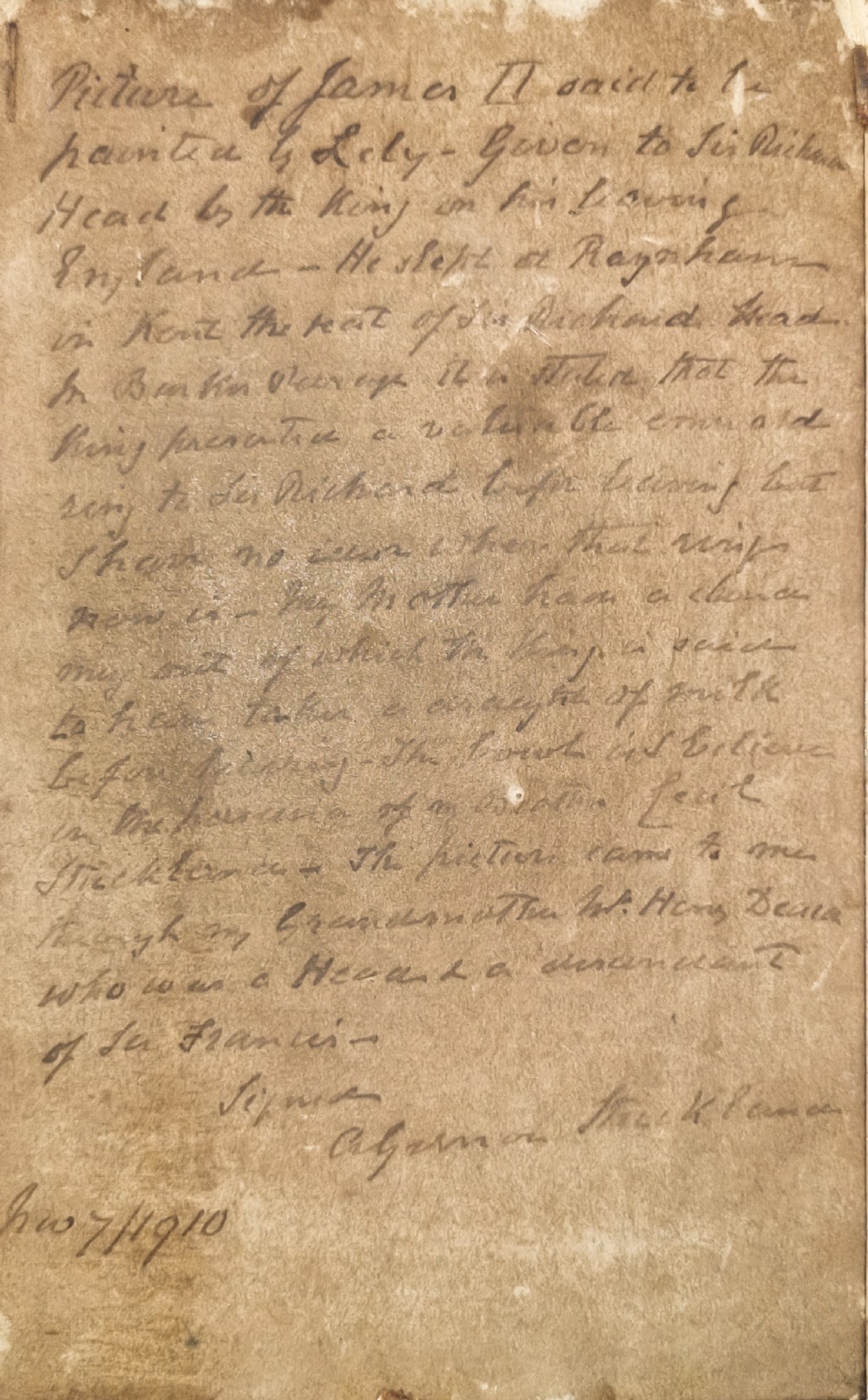
This portrait was in the collection of the Head family, and later their descendants, the Strickland family of Apperley Court, Gloucestershire. It was an important heirloom and descended within the family for generations. On its reverse is an old handwritten note documenting family tradition and how it connects the Strickland and Head families to a notable event in English history:-

“Picture of James Il said to be painted by Lely - Given to Sir Richard Head by the King on his leaving England. He slept a Raynham in Kent, the seat of Sir Richard Head. In Burke’s Peerage it is stated that the King presented a valuable emerald ring to Sir Richard before leaving but I have no idea where that ring now is. My mother had a choice ? ??? of which the King is said to have taken a draught of milk before leaving. The bowl is I believe in the possession of my brother Cecil Strickland. This picture came to me through my grandmother Mrs Henry Deacon who was a Head and a descendant of Sir Francis. Signed, Algernon Strickland. Nov 7/1910”.

In December 1688, during the Glorious Revolution, King James II was captured while attempting to flee England. He was escorted to Rochester, Kent, where he stayed at the house of Sir Richard Head, 1st Baronet (c.1609-1689). Sir Richard was a Member of Parliament and twice Mayor of Rochester. His home later became known as "Abdication House". After spending time there, James II successfully made his second and final escape from England to France on December 23, 1688. Accounts confirm that James II was grateful for Head's hospitality and gave him an emerald ring. The note's reference to Burke's Peerage confirms the family's knowledge of this story.

The note signed by Abernon Strickland in 1910 is valuable for several reasons, not least that it provides a clear chain of provenance for the item, noting it came through a Head-descended grandmother. It also indicates that the milk bowl, from which the king is said to have taken a final draught of milk, was likely with his brother, Cecil Strickland.

Several historical accounts corroborate the core events that are mentioned in the document and it is plausible that Sir Richard Head could have received or purchased a portrait of James II. The Dutch artist Sir Peter Lely (1618–1680) was a prominent court painter who created multiple portraits of James II (while he was still Duke of York) and other members of the royal family. State portraits were often copied for loyal followers, making it possible for Head to have acquired a copy. The specific portrait mentioned in the text may have been an original Lely or from his studio, or a later copy.

Algernon Augustine de Lille Strickland (1837-1914) lived at Apperley Court, Gloucestershire. He left his family estate “and all of his family pictures” to his son Algernon Henry Peter.

The anecdote speaks to the social value of possessing objects connected to royalty, even by families of the lesser gentry – this portrait is a supreme detailed example of portraiture from the end of the seventeenth century. Held in a fine carved and gilded period frame.

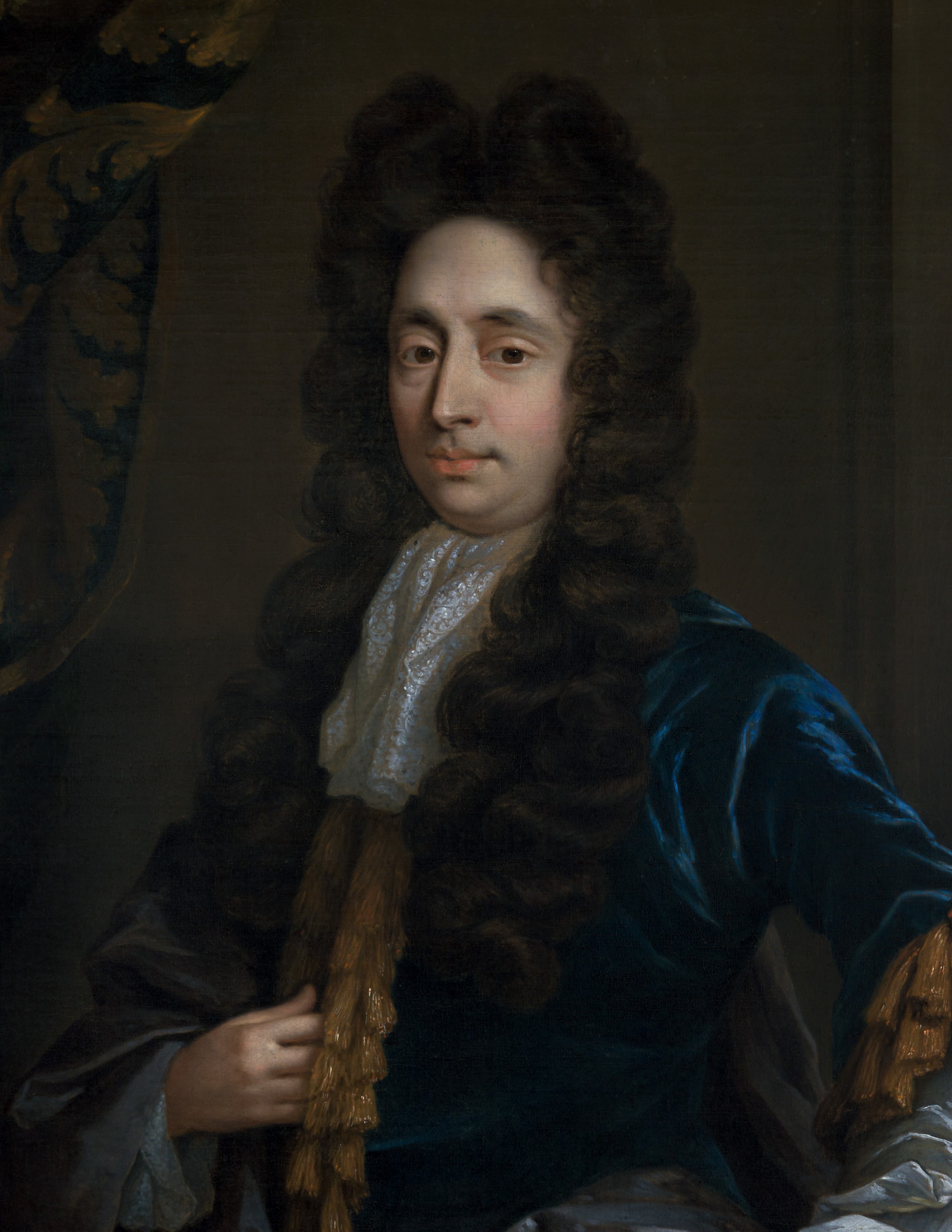
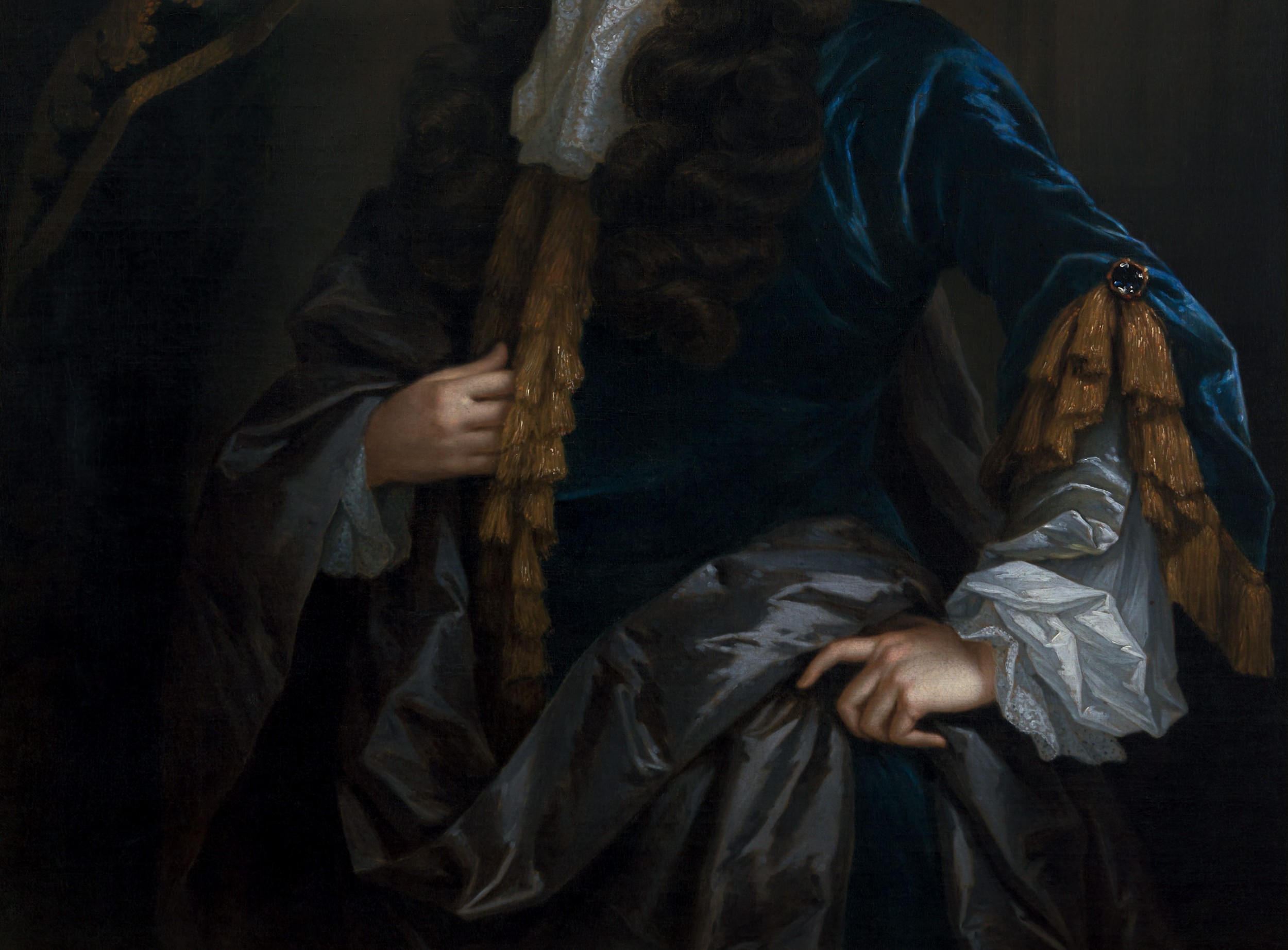
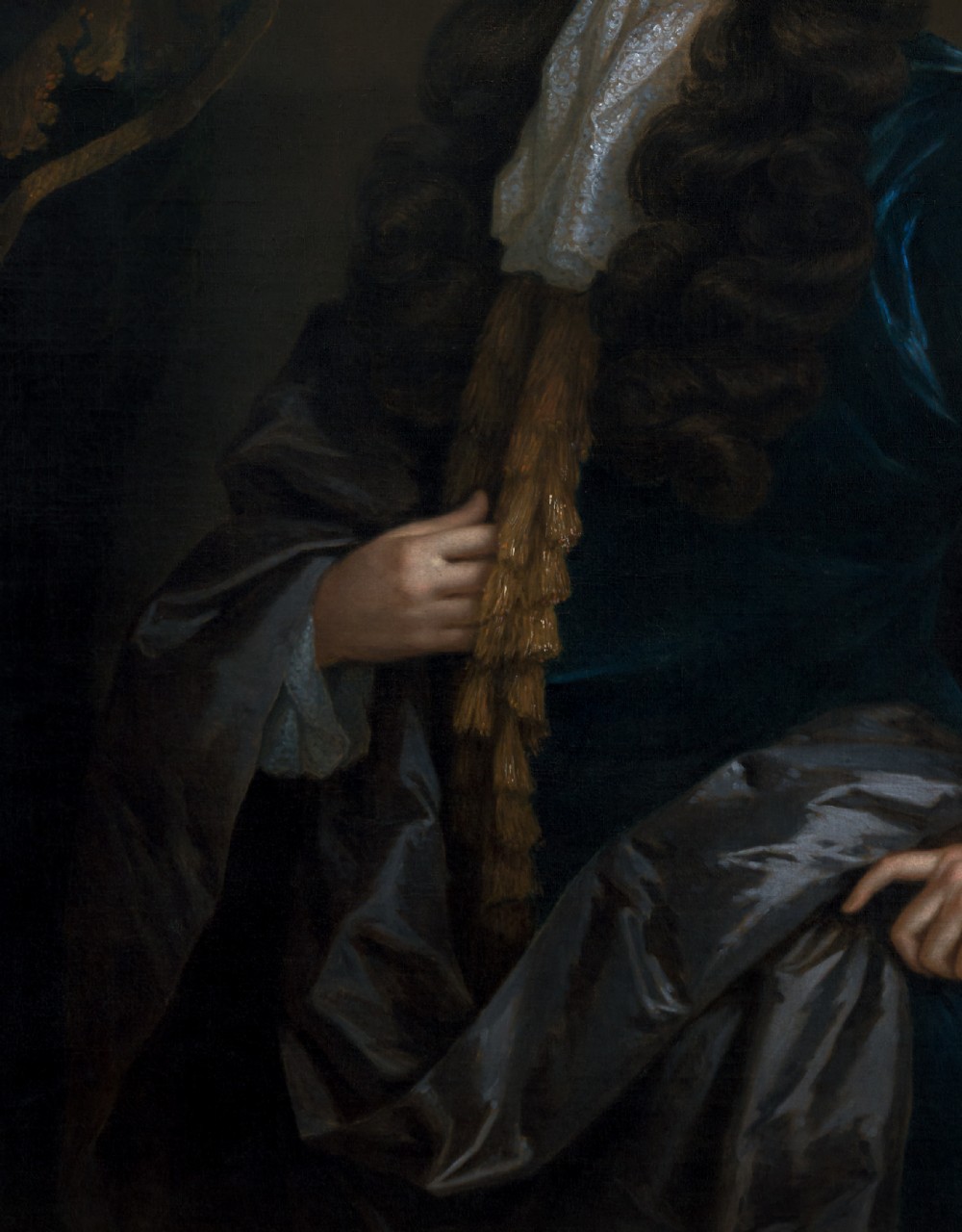
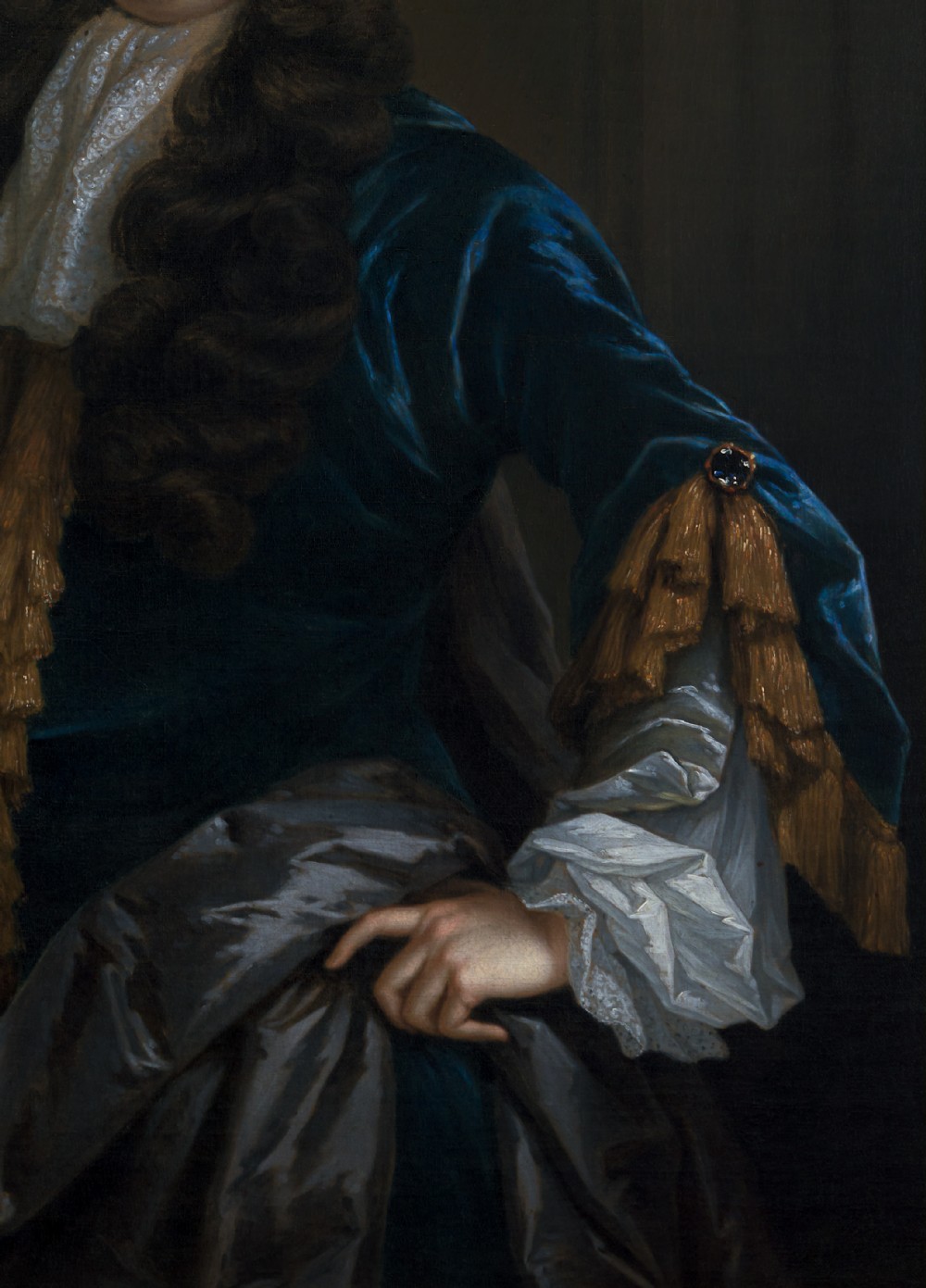
Constantyn Netscher was one of the twelve children of the renowned Court painter Caspar (1639-84), yet he and his brother Theodore were the only children to pursue their father's career. This painting illustrates that Constantyn, similar to his father, focused on small-scale three-quarter length portraits, which exhibit a delicacy and a level of detail that is frequently absent in larger portraits. The treatment of the face, costume, and drapery is very good, but the treatment of the hands is exceptional.

Provenance:

Algernon Augustine de Lille Strickland (1837-1914), Apperley Court, Gloucestershire; family decent to his son

Full description at: www.titanfineart.com

Physical Dimensions
Height
65cm (25.59")
Width
57cm (22.44")
Depth
3cm (1.18")
Declaration

Titan Fine Art has dated this 17th Century Oil Portrait to the 17th Century.
Reference Numbers
Sellingantiques Reference
SA1232908
Dealers Notes

Much more info about this item at: www.titanfineart.com

In a market saturated with available paintings, Titan Fine Art offers a distinct advantage: we sift through thousands of works to provide a specially curated selection. Each piece is meticulously chosen based on technical merit, provenance, and decorative appeal, ensuring our clients view only the finest examples of British and European art.

With over 20 years of expertise and 1,000+ works placed with collectors and institutions, we are one of the most prolific specialists in 17th and 18th-century portraiture. We combine a scholarly approach with museum-level rigor to replace the uncertainty of the open market with absolute confidence.

Why Buy From Titan Fine Art?

• Expertly Curated Selection

We act as your expert eye, selecting only high-quality works that offer genuine historical and artistic value.

• Museum-Level Research

Each portrait is supported by extensive academic research, often exceeding 40 hours, to establish attribution, sitter identity, and historical context.

• Professional Conservation

All paintings are carefully cleaned and stabilised by professional conservators, and are presented ready to hang.

• Transparent Pricing

No buyer’s premium or hidden fees—unlike auction houses, where additional costs can add 25–35%.

• Export Pricing Advantage

Reduced pricing is available for works exported outside the UK.

• Specialist Global Shipping

We manage the entire process, including custom crating, export documentation, and fully tracked delivery worldwide.

• Buy with Confidence

A 7-day return policy and the option to pay in GBP, USD, or EUR for convenience and transparency.

• Original Period Frames

Many works retain their original carved and gilded frames, which are works of art in their own right and enhance both historical authenticity and decorative impact.

• Personal Advisory Service

We work directly with collectors and interior designers, offering guidance on selection, scale, and placement—including bespoke room mock-ups on request.

Subscribe to our monthly 'new item alert' to be the first to hear about new works

Description
This portrait was in the collection of the Head family, and later their descendants, the Strickland family of Apperley Court, Gloucestershire. It was an important heirloom and descended within the family for generations.
On its reverse is an old handwritten note documenting family tradition and how it connects the Strickland and Head families to a notable event in English history:-.
Titan Fine Art
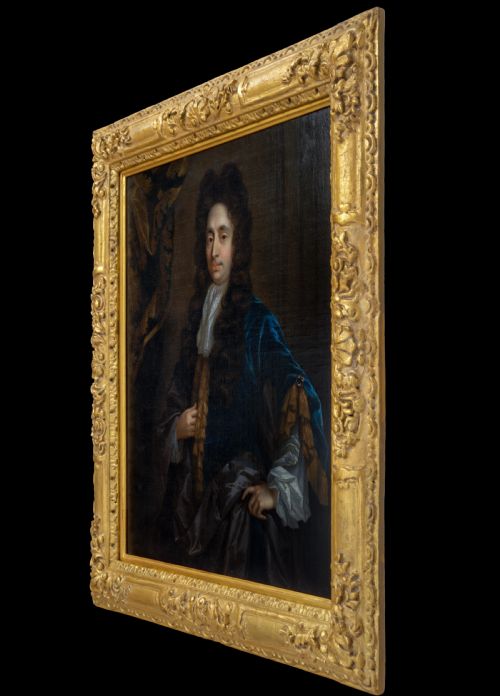
fig 1. A late 17th-century oil painting depicting a gentleman in a blue coat, lace cravat, and dark wig, housed within an carved giltwood frame.
fig 1. Portrait of a Gentleman in Blue Coat Standing by Curtain C.1695; Attributed to Constantyn Netscher (C.1668-c.1723), Oil on Canvas Painting

“Picture of James Il said to be painted by Lely - Given to Sir Richard Head by the King on his leaving England. He slept a Raynham in Kent, the seat of Sir Richard Head. In Burke’s Peerage it is stated that the King presented a valuable emerald ring to Sir Richard before leaving but I have no idea where that ring now is. My mother had a choice ? ??? of which the King is said to have taken a draught of milk before leaving. The bowl is I believe in the possession of my brother Cecil Strickland. This picture came to me through my grandmother Mrs Henry Deacon who was a Head and a descendant of Sir Francis. Signed, Algernon Strickland. Nov 7/1910”.
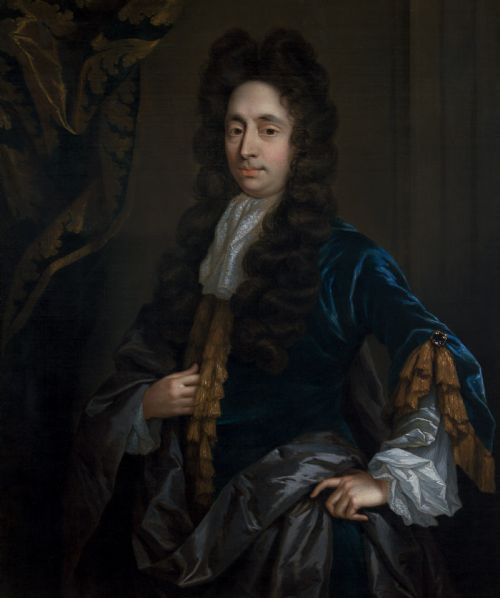
fig 2. A late 17th-century oil painting depicting a gentleman in a blue coat, lace cravat, and dark wig, housed within an carved giltwood frame.
fig 2. Portrait of a Gentleman in Blue Coat Standing by Curtain C.1695; Attributed to Constantyn Netscher (C.1668-c.1723), Oil on Canvas Painting

In December 1688, during the Glorious Revolution, King James II was captured while attempting to flee England. He was escorted to Rochester, Kent, where he stayed at the house of Sir Richard Head, 1st Baronet (c.1609-1689). Sir Richard was a Member of Parliament and twice Mayor of Rochester. His home later became known as "Abdication House". After spending time there, James II successfully made his second and final escape from England to France on December 23, 1688. Accounts confirm that James II was grateful for Head's hospitality and gave him an emerald ring. The note's reference to Burke's Peerage confirms the family's knowledge of this story.
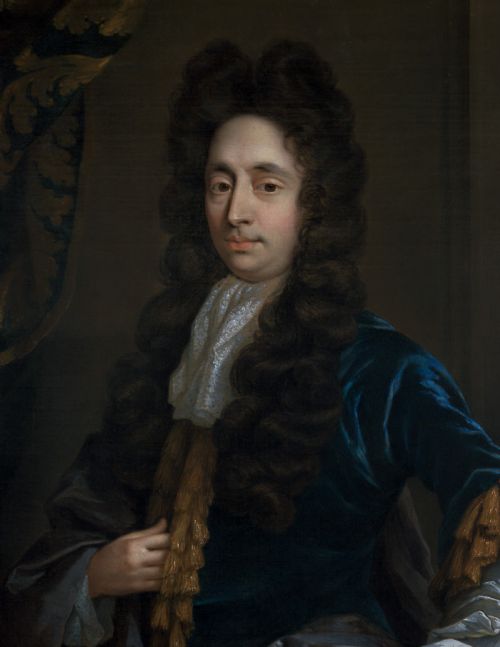
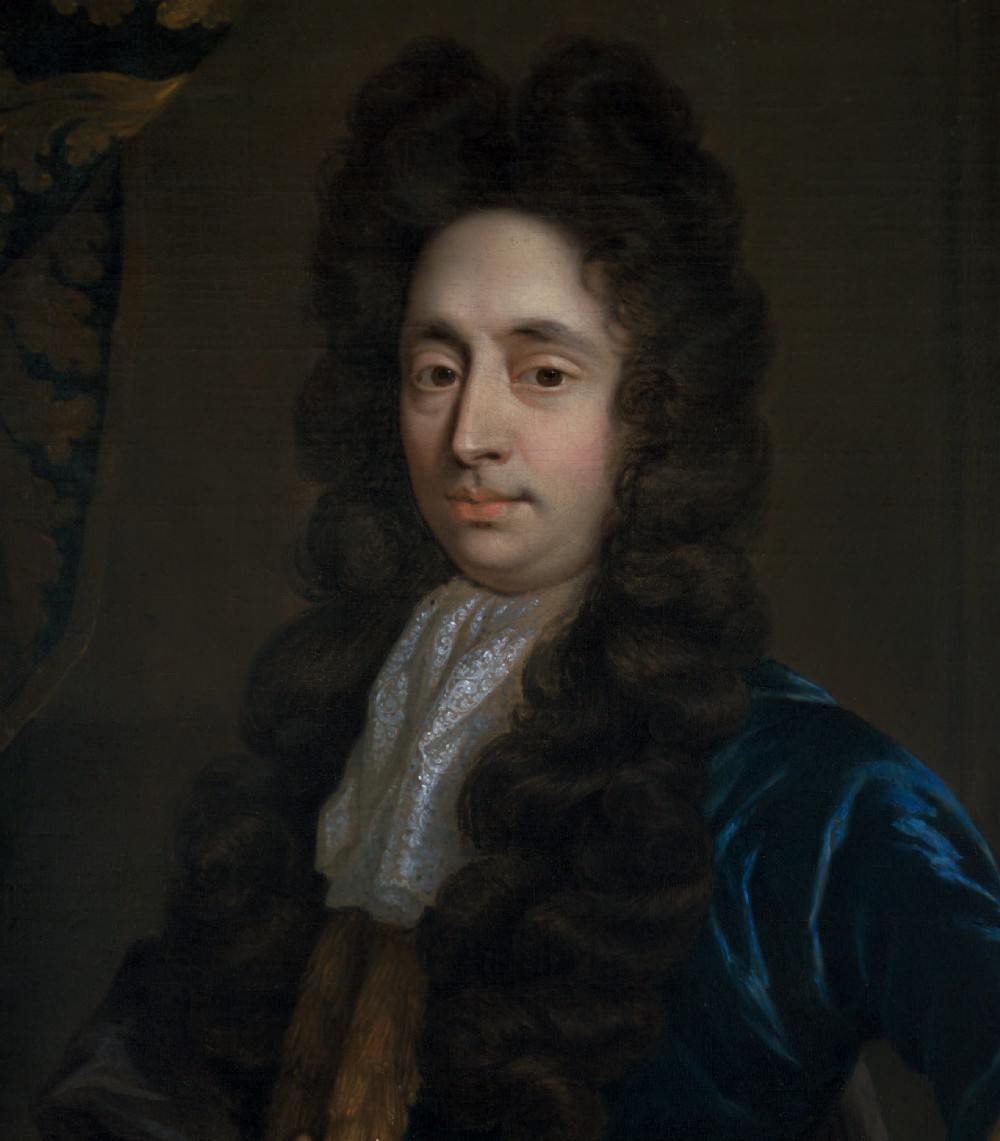
fig 3. A late 17th-century oil painting depicting a gentleman in a blue coat, lace cravat, and dark wig, housed within an carved giltwood frame.
fig 3. Portrait of a Gentleman in Blue Coat Standing by Curtain C.1695; Attributed to Constantyn Netscher (C.1668-c.1723), Oil on Canvas Painting

The note signed by Abernon Strickland in 1910 is valuable for several reasons, not least that it provides a clear chain of provenance for the item, noting it came through a Head-descended grandmother. It also indicates that the milk bowl, from which the king is said to have taken a final draught of milk, was likely with his brother, Cecil Strickland.
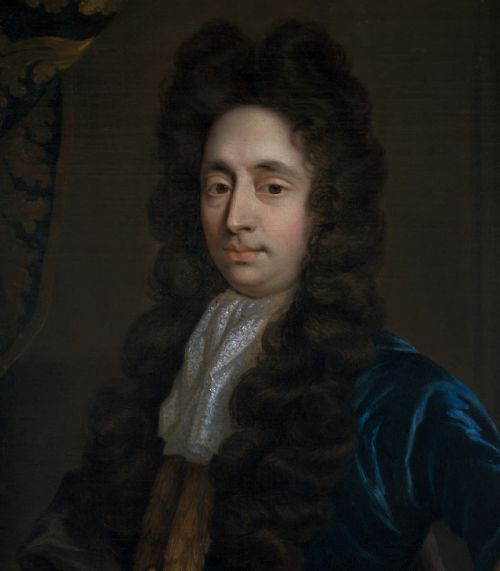
fig 4. A late 17th-century oil painting depicting a gentleman in a blue coat, lace cravat, and dark wig, housed within an carved giltwood frame.
fig 4. Portrait of a Gentleman in Blue Coat Standing by Curtain C.1695; Attributed to Constantyn Netscher (C.1668-c.1723), Oil on Canvas Painting

Several historical accounts corroborate the core events that are mentioned in the document and it is plausible that Sir Richard Head could have received or purchased a portrait of James II. The Dutch artist Sir Peter Lely (1618–1680) was a prominent court painter who created multiple portraits of James II (while he was still Duke of York) and other members of the royal family. State portraits were often copied for loyal followers, making it possible for Head to have acquired a copy. The specific portrait mentioned in the text may have been an original Lely or from his studio, or a later copy.
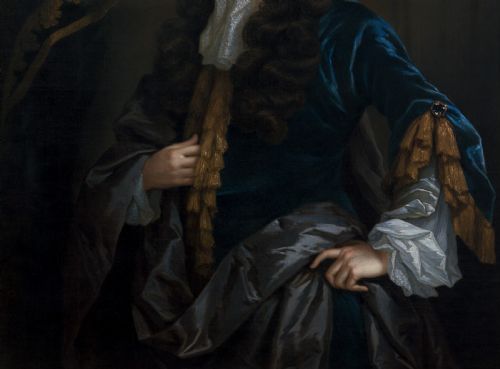
fig 5. A late 17th-century oil painting depicting a gentleman in a blue coat, lace cravat, and dark wig, housed within an carved giltwood frame.
fig 5. Portrait of a Gentleman in Blue Coat Standing by Curtain C.1695; Attributed to Constantyn Netscher (C.1668-c.1723), Oil on Canvas Painting

Algernon Augustine de Lille Strickland (1837-1914) lived at Apperley Court, Gloucestershire. He left his family estate “and all of his family pictures” to his son Algernon Henry Peter.

The anecdote speaks to the social value of possessing objects connected to royalty, even by families of the lesser gentry – this portrait is a supreme detailed example of portraiture from the end of the seventeenth century. Held in a fine carved and gilded period frame.
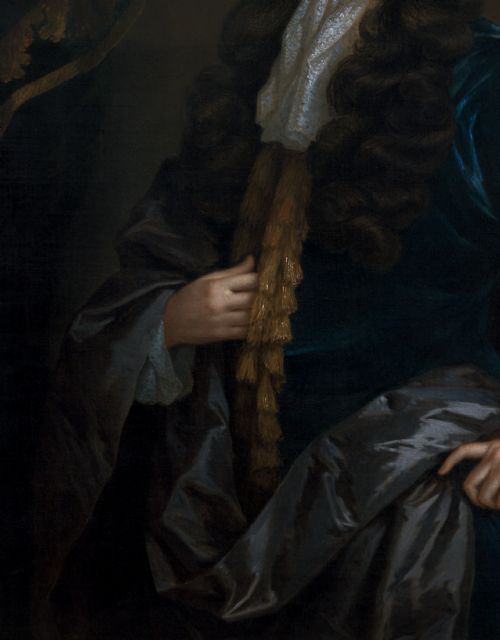
fig 6. A late 17th-century oil painting depicting a gentleman in a blue coat, lace cravat, and dark wig, housed within an carved giltwood frame.
fig 6. Portrait of a Gentleman in Blue Coat Standing by Curtain C.1695; Attributed to Constantyn Netscher (C.1668-c.1723), Oil on Canvas Painting

Constantyn Netscher was one of the twelve children of the renowned Court painter Caspar (1639-84), yet he and his brother Theodore were the only children to pursue their father's career. This painting illustrates that Constantyn, similar to his father, focused on small-scale three-quarter length portraits, which exhibit a delicacy and a level of detail that is frequently absent in larger portraits. The treatment of the face, costume, and drapery is very good, but the treatment of the hands is exceptional.

Provenance:

Algernon Augustine de Lille Strickland (1837-1914), Apperley Court, Gloucestershire; family decent to his son

Full description at: www.titanfineart.com

Height
65cm (25.59")
Width
57cm (22.44")
Depth
3cm (1.18")
Date of Manufacture

Titan Fine Art has dated this 17th Century Oil Portrait to the 17th Century.

Reference Numbers
Sellingantiques Ref
SA1232908
Titan Fine Art
Titan Fine Art
Sellingantiques verified Since Jul 2016

Specialist in 17th & 18thc portraits. Highly curated selection, museum-level research & pro conservation. Exceptional art, expertly vetted.

Dealer Profile

You can view the stock and full dealer information on the Titan Fine Art Profile Page
PDF SHARE
SAVE
A late 17th-century oil painting depicting a gentleman in a blue coat, lace cravat, and dark wig, housed within an carved giltwood frame.
1 / 9
Archive I A late 17th-century oil painting depicting a gentleman in a blue coat, lace cravat, and dark wig, housed within an carved giltwood frame.

Portrait of a Gentleman in Blue Coat Standing by Curtain C.1695; Attributed to Constantyn Netscher (C.1668-c.1723), Oil on Canvas Painting
Archive II A late 17th-century oil painting depicting a gentleman in a blue coat, lace cravat, and dark wig, housed within an carved giltwood frame. View II
Archive III A late 17th-century oil painting depicting a gentleman in a blue coat, lace cravat, and dark wig, housed within an carved giltwood frame. View III
Archive IV A late 17th-century oil painting depicting a gentleman in a blue coat, lace cravat, and dark wig, housed within an carved giltwood frame. View IV
Archive V A late 17th-century oil painting depicting a gentleman in a blue coat, lace cravat, and dark wig, housed within an carved giltwood frame. View V
Archive VI A late 17th-century oil painting depicting a gentleman in a blue coat, lace cravat, and dark wig, housed within an carved giltwood frame. View VI
Archive VII A late 17th-century oil painting depicting a gentleman in a blue coat, lace cravat, and dark wig, housed within an carved giltwood frame. View VII
Archive VIII A late 17th-century oil painting depicting a gentleman in a blue coat, lace cravat, and dark wig, housed within an carved giltwood frame. View VIII
Archive IX A late 17th-century oil painting depicting a gentleman in a blue coat, lace cravat, and dark wig, housed within an carved giltwood frame. View IX
FURTHER BROWSING

Visitors also looked at these ⇣

Enlarged Archival View
Telephone 07875 412 111
Location
London
United Kingdom
Dealer Profile Page sellingantiques.co.uk/titan
Verified Since Jul 2016
Items For Sale 16
Items Sold 401
Titan Fine Art
Titan Fine Art
Verified Since Jul 2016
View Dealer Info
Location: London, United Kingdom
Verified
Jul 2016
For Sale
16
Sold
401
A late 17th-century oil painting depicting a gentleman in a blue coat, lace cravat, and dark wig, housed within an carved giltwood frame.
Portrait of a Gentleman in Blue Coat Standing by Curtain c.1695; Attributed to Constantyn Netscher (c.1668-c.1723), Oil on canvas painting
Ref: SA1232908
A late 17th-century oil painting depicting a gentleman in a blue coat, lace cravat, and dark wig, housed within an carved giltwood frame.
Detail View 1
Detail View 2
Detail View 3
Detail View 4
Detail View 5
Detail View 6
Detail View 7
Detail View 8
Archival Detail
Every single antique dealer on our platform is individually approved by our internal team. We verify their professional trade history, ethical standards, and photographic quality to ensure a secure, high-standard buying environment. Upon joining, every dealer agrees to a strict 9-point code of conduct. While issues can occasionally arise, our dealers typically resolve them swiftly and directly with the buyer. In fact, since our founding in 2002, Sellingantiques has only had to step in to help resolve an issue on roughly five occasions—a true testament to the quality of our dealers and their dedication to your happiness.
Our dealers are highly experienced in packing and shipping fragile, high-value antiques. Because you are in direct contact with the dealer, you will be able to easily go through all available shipping and insurance options together to ensure your item arrives safely.
Antiques are the ultimate green purchase. By choosing historical pieces over newly manufactured goods, you completely eliminate the carbon footprint of modern mass production while preserving exceptional, timeless craftsmanship.

Late 17th-century portraiture often features formal poses, luxurious textiles, prominent wig styles, and dramatic contrast in lighting influenced by late Baroque and Dutch Golden Age traditions.

Artists prepared paint using natural mineral and organic pigments ground in drying oils, which were applied to hand-woven linen canvas stretched over timber frames.

Authenticity is indicated by age-appropriate craquelure across the paint surface, natural timber oxidisation on stretchers, historical canvas weave patterns, and evidence of period pigments.

Position the painting as a focal point above a mantelpiece or console table, balancing the rich tones and gilded frame against neutral or deeply saturated wall colours.

Display the artwork away from direct sunlight, radiator heat, and moisture fluctuations. Dust the frame gently with a soft brush and consult a specialist conservator for surface cleaning.
items
Add keywords to the filter
Price
£100
£250000
Era
Movements
Material
Origin
Stock Location
Freshness
Online Payments
Categories