4,001  PAGES BROWSED TODAY PAGES TODAY 0  ANTIQUES UPLOADED TODAY NEW ARRIVALS
ID #SA1225024
SOLD
Email
Save
English Naïve School Military Watercolour by James Young of the 48th (Northamptonshire) Regiment of Foot
Rob Hall Antiques
sold SA1225024
Sorry, but this item has been sold.

Rob Hall Antiques

Sellingantiques Verified Since Aug 2025
View Dealers Stock Page
Id #SA1225024
PDF SHARE
SAVE

English Naïve School Military Watercolour by James Young of the 48th (Northamptonshire) Regiment of Foot

19th century
Description

English Naïve School Military Watercolour by James Young of the 48th (Northamptonshire) Regiment of Foot

Interior of Carlisle Castle

Signed and dated 15 July 1854

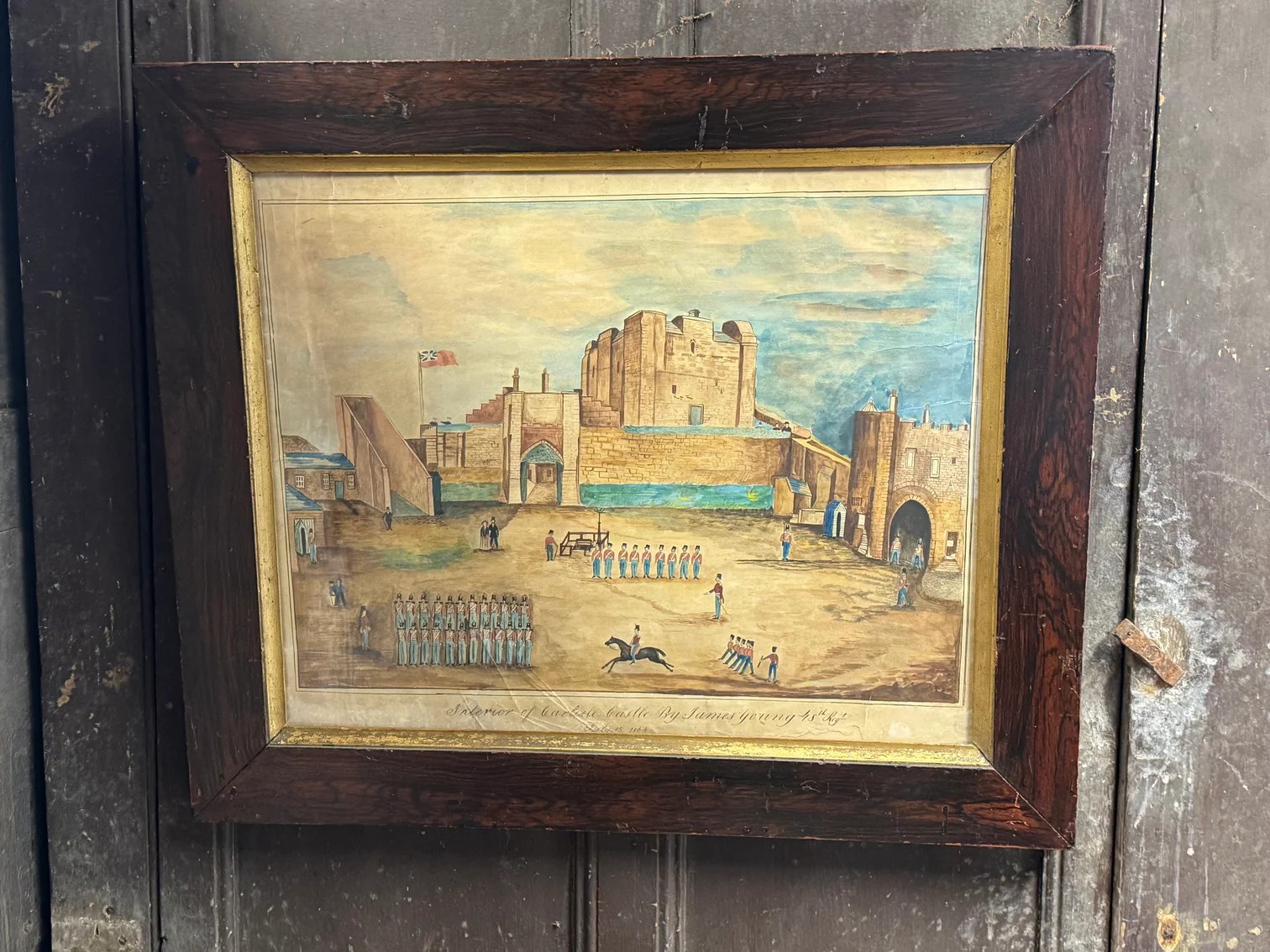
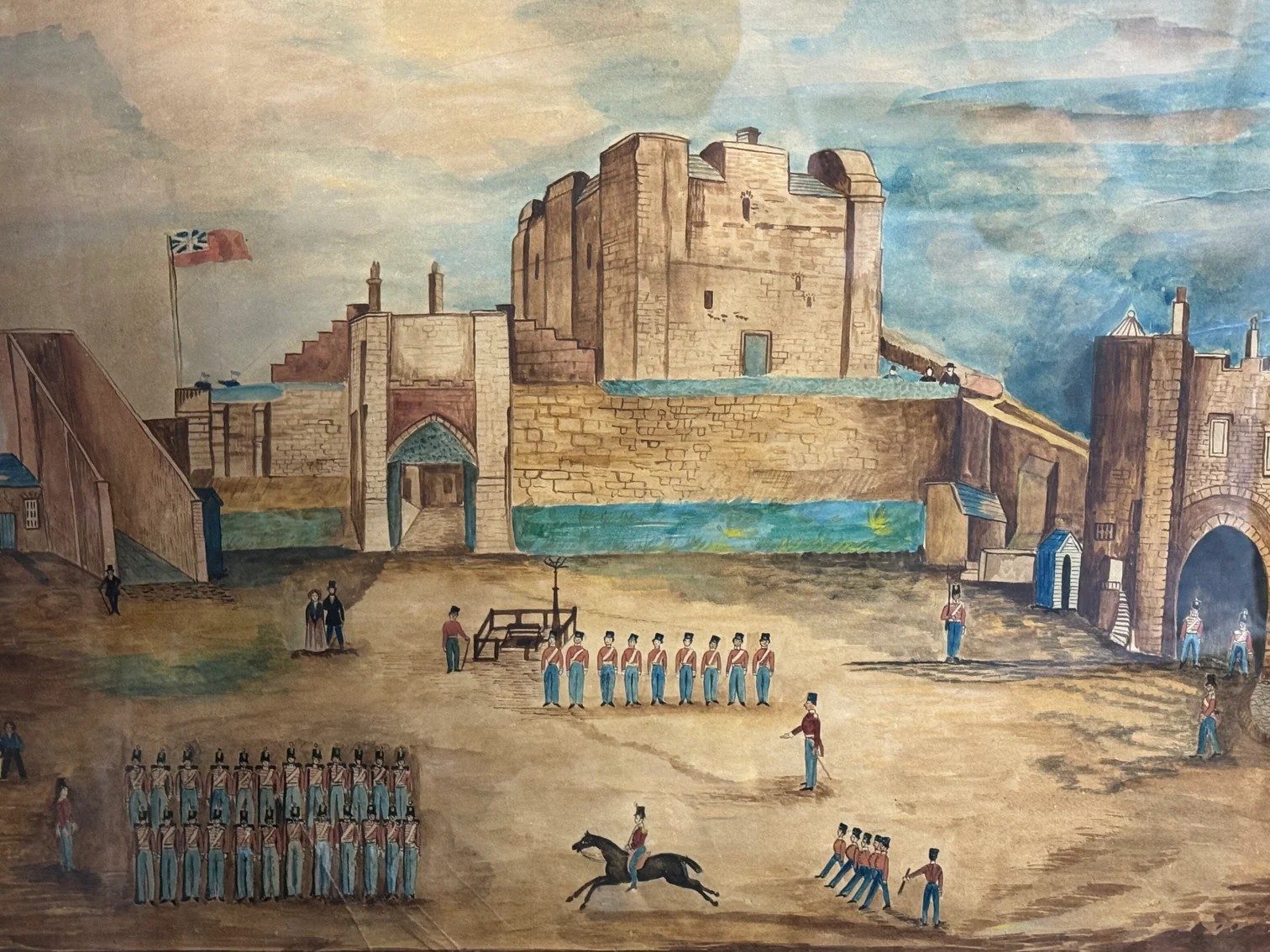
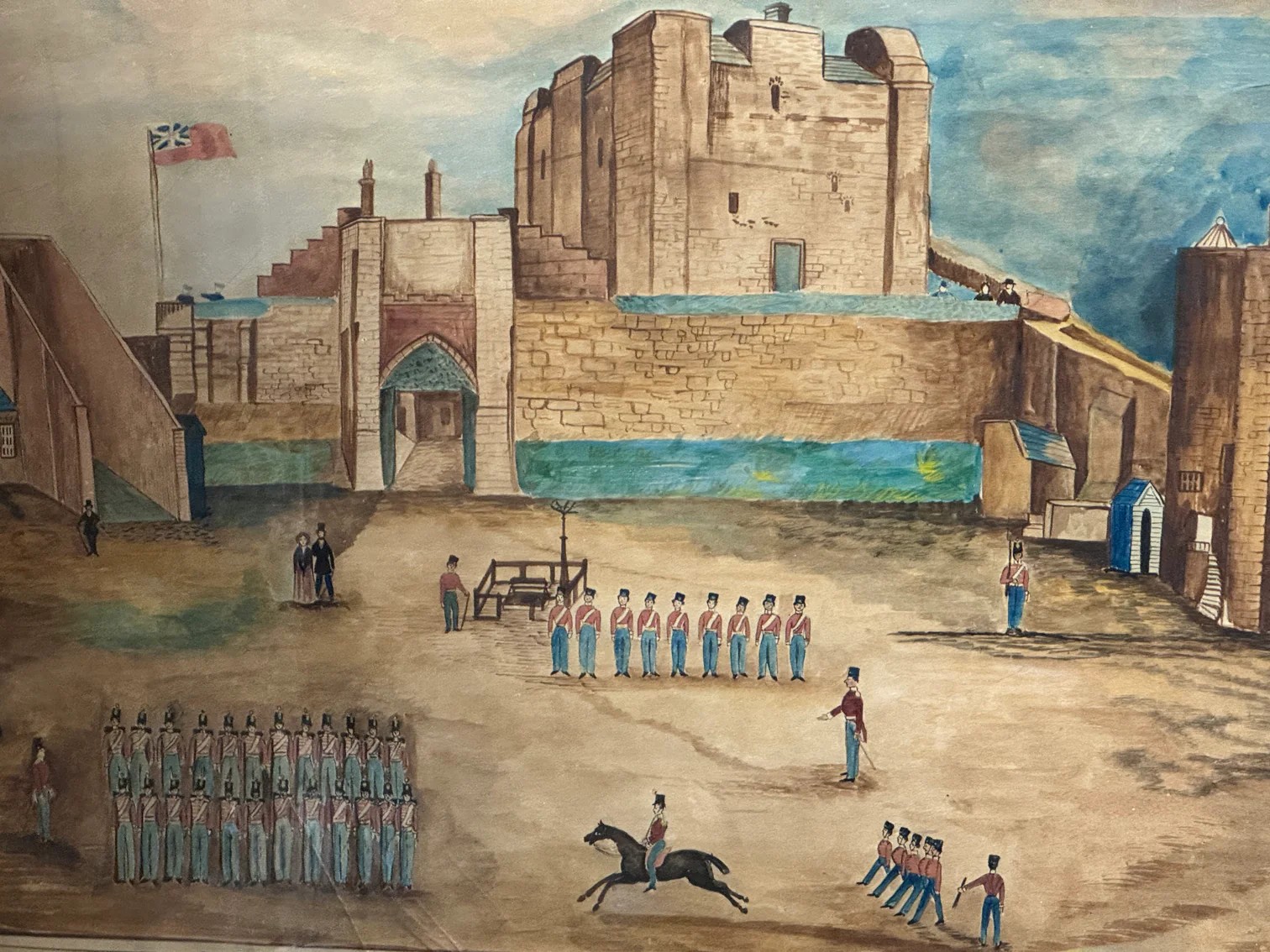
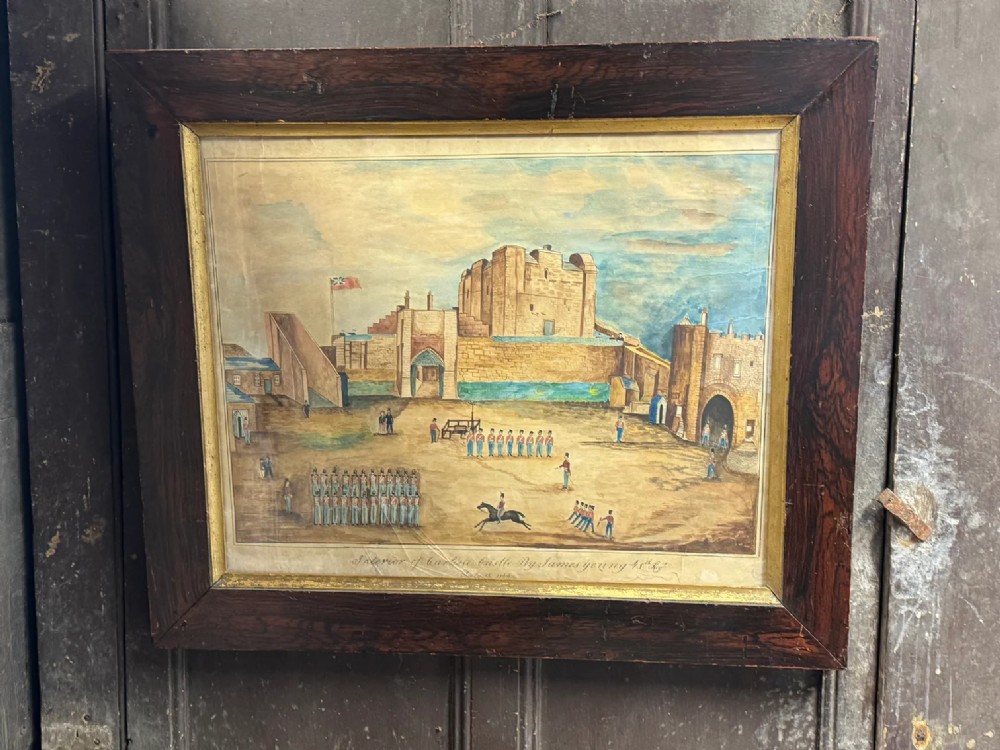
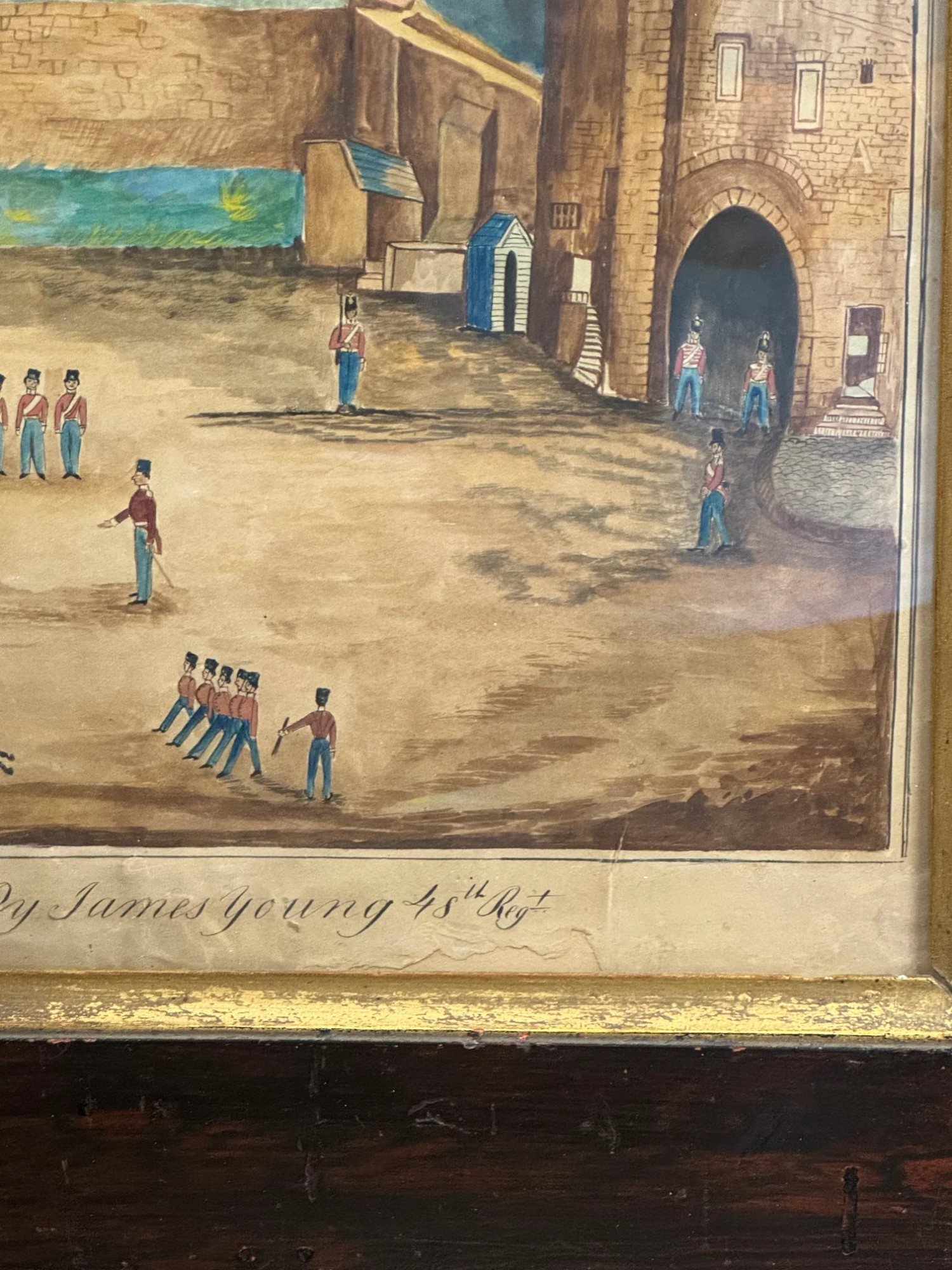
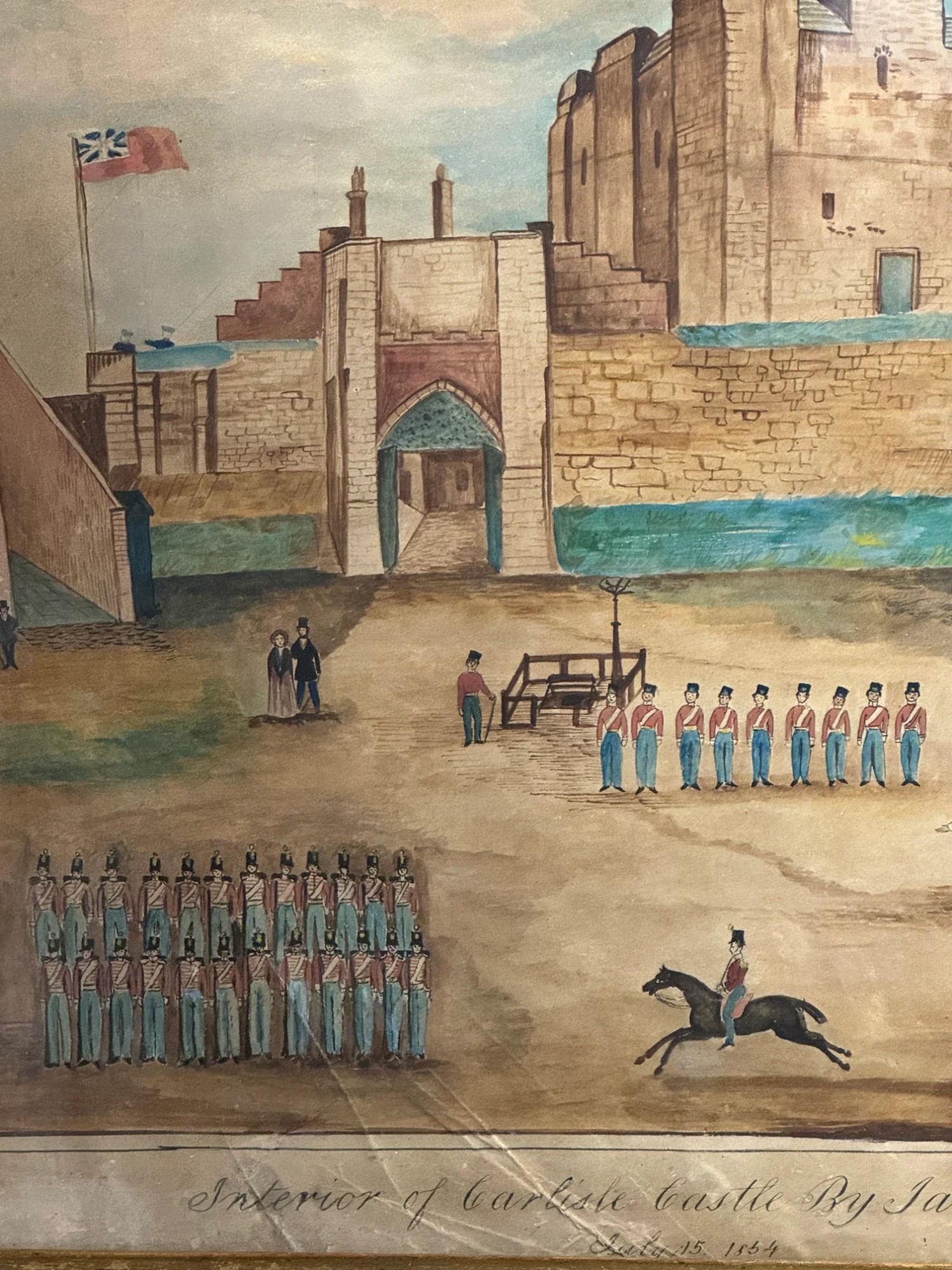
An English Naïve School watercolour depicting the interior of Carlisle Castle, showing infantry engaged in drill across the parade ground beneath the great Norman keep, together with mounted officers, sentries and civilian figures. Executed in the direct and unaffected manner characteristic of nineteenth-century British folk art, the composition combines a carefully observed topographical view with an engaging record of everyday military life within one of Britain’s most important historic garrison fortresses.
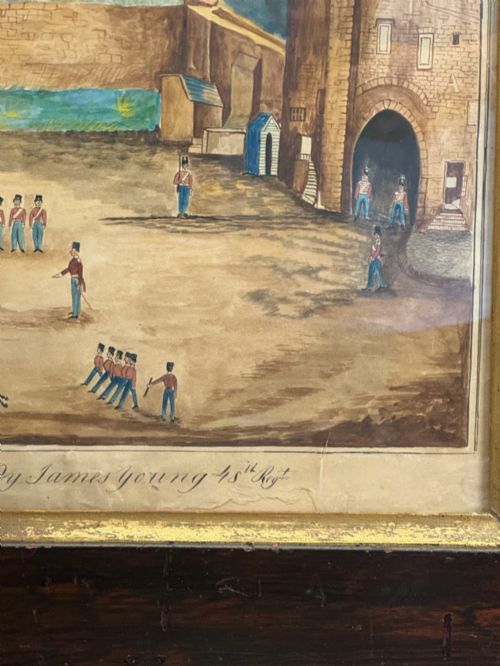
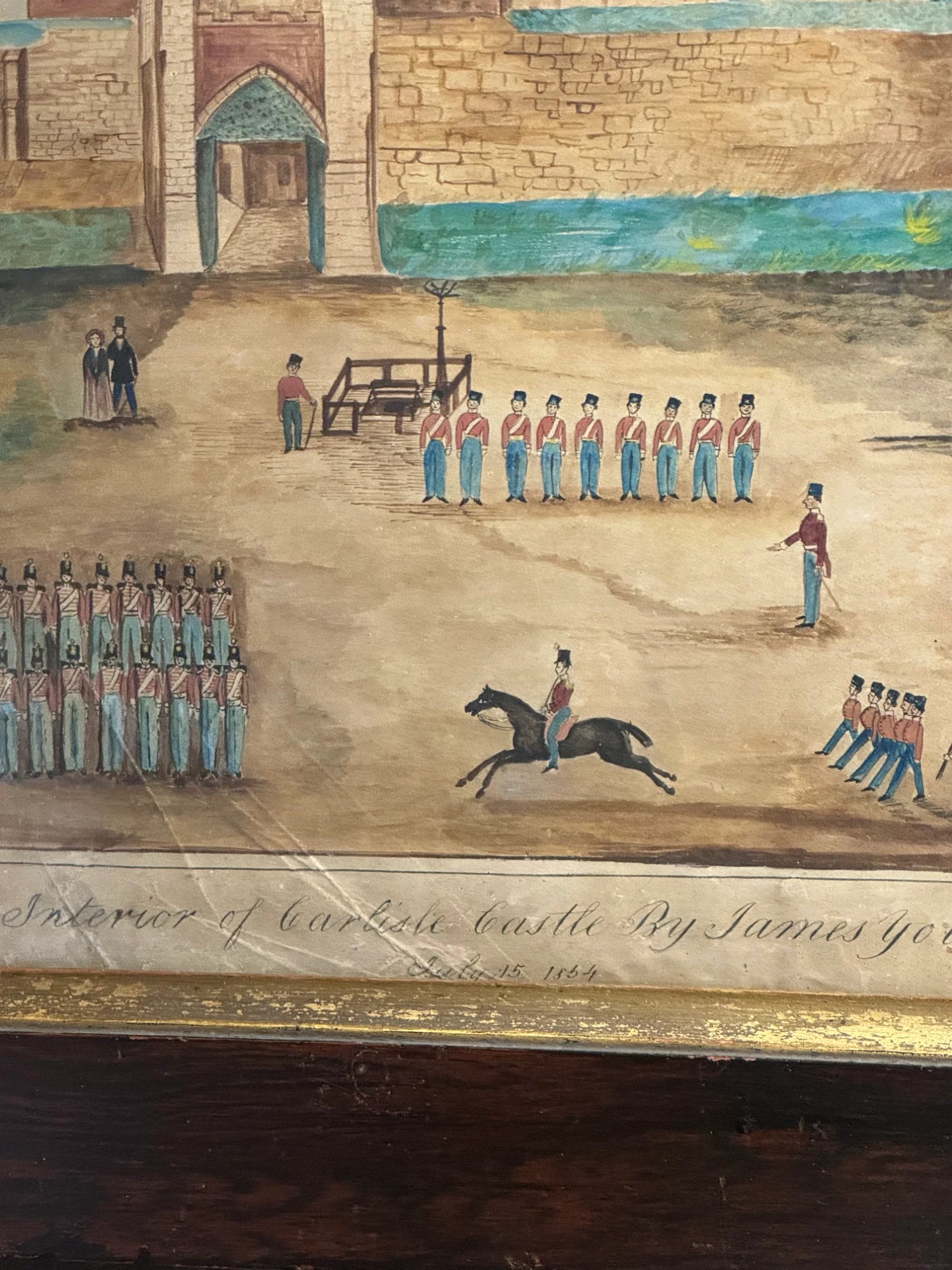
The watercolour is signed and inscribed ‘Interior of Carlisle Castle By James Young 48th Regt.’ and dated 15 July 1854.

James Young entered the British Army Medical Department as a Hospital Assistant Surgeon on 18 March 1824, was promoted Assistant Surgeon later that year and became Surgeon on 19 October 1839. During the First Anglo-Ashanti War, he served in West Africa and was present at the Battle of Dodowa on 7 August 1826, one of the decisive British victories of the campaign against the Ashanti Kingdom. The battle secured British and allied control of the region and remains one of the defining engagements of the war. Following his African service, Young served with the 78th (Highland) Regiment of Foot, the 19th Regiment of Foot, and later the 48th (Northamptonshire) Regiment of Foot, the regiment identified in the inscription to this watercolour.
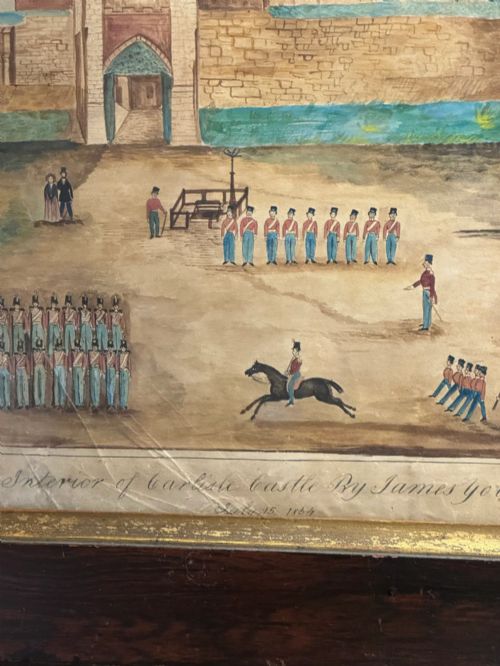
Painted during the opening months of the Crimean War, the work records the routine of a Victorian garrison rather than the drama of the battlefield. Infantry companies drill on the parade ground while officers and civilians move through the castle precincts, creating an authentic contemporary record of military life in Britain immediately before many regiments embarked on overseas service.
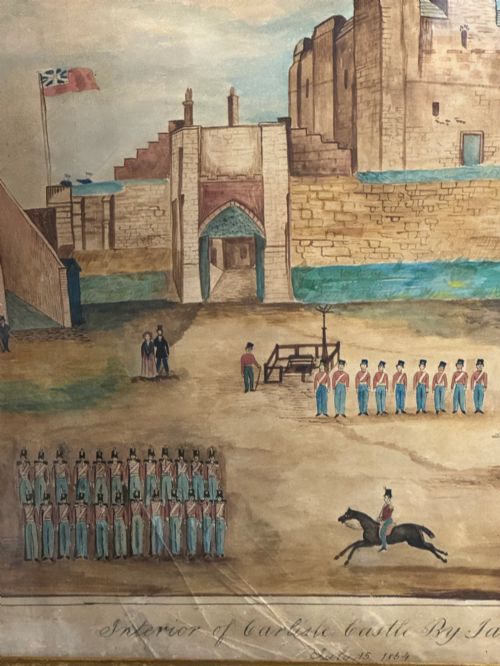
In July 1854 Carlisle Castle was then an active military barracks and regimental depot, and the standard documentary history of the castle records that the 48th Regiment had succeeded the 28th in occupation of the castle during 1853. Official War Office station returns further record the regiment’s depot at Carlisle throughout 1854–55. The painting should therefore be understood as a rare contemporary depiction of the castle executed during the documented period of the 48th Regiment’s occupation and association with Carlisle Castle.
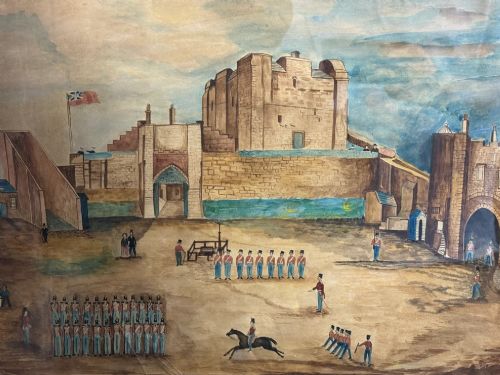
Carlisle Castle, founded in the late eleventh century by William II, had remained an important military stronghold for centuries and continued to serve as an active barracks throughout the nineteenth century. Young’s depiction preserves not only the architecture of the castle but also the atmosphere and daily life of a functioning British garrison.
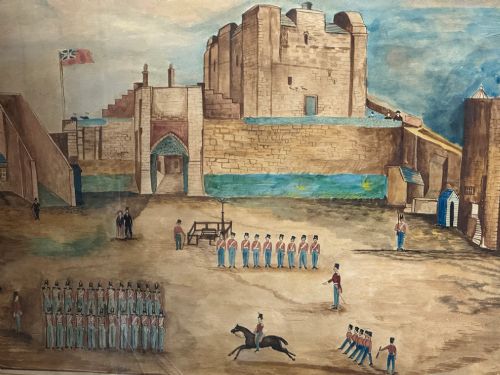
The watercolour has been professionally conserved during its lifetime, with historic repairs to tears and creases. It is presented in a period simulated rosewood frame which complements the work well.

A particularly appealing example of nineteenth-century English military folk art, combining an identifiable artist, a documented military career, an exact date and a historically important setting. Watercolour on paper. Signed, inscribed and dated 15 July 1854. Presented in a period simulated rosewood frame with period glass.

Measuring: Frame 65 cm x 55.5 cm

Carlisle, England, 1854

Declaration

Rob Hall Antiques has dated this Naive School Military Watercolour to the 19th Century.

Reference Numbers
Sellingantiques Reference
SA1225024
Description
English Naïve School Military Watercolour by James Young of the 48th (Northamptonshire) Regiment of Foot

Interior of Carlisle Castle

Signed and dated 15 July 1854

An English Naïve School watercolour depicting the interior of Carlisle Castle, showing infantry engaged in drill across the parade ground beneath the great Norman keep, together with mounted officers, sentries and civilian figures. Executed in the direct and unaffected manner characteristic of nineteenth-century British folk art, the composition combines a carefully observed topographical view with an engaging record of everyday military life within one of Britain’s most important historic garrison fortresses.

fig 1. An antique framed watercolour painting depicting soldiers assembled in a castle courtyard within a wide dark wooden frame.
fig 1. English Naïve School Military Watercolour by James Young of the 48th (Northamptonshire) Regiment of Foot

The watercolour is signed and inscribed ‘Interior of Carlisle Castle By James Young 48th Regt.’ and dated 15 July 1854.

James Young entered the British Army Medical Department as a Hospital Assistant Surgeon on 18 March 1824, was promoted Assistant Surgeon later that year and became Surgeon on 19 October 1839.
Rob Hall Antiques

During the First Anglo-Ashanti War, he served in West Africa and was present at the Battle of Dodowa on 7 August 1826, one of the decisive British victories of the campaign against the Ashanti Kingdom. The battle secured British and allied control of the region and remains one of the defining engagements of the war. Following his African service, Young served with the 78th (Highland) Regiment of Foot, the 19th Regiment of Foot, and later the 48th (Northamptonshire) Regiment of Foot, the regiment identified in the inscription to this watercolour.

fig 2. An antique framed watercolour painting depicting soldiers assembled in a castle courtyard within a wide dark wooden frame.
fig 2. English Naïve School Military Watercolour by James Young of the 48th (Northamptonshire) Regiment of Foot

Painted during the opening months of the Crimean War, the work records the routine of a Victorian garrison rather than the drama of the battlefield. Infantry companies drill on the parade ground while officers and civilians move through the castle precincts, creating an authentic contemporary record of military life in Britain immediately before many regiments embarked on overseas service.

fig 3. An antique framed watercolour painting depicting soldiers assembled in a castle courtyard within a wide dark wooden frame.
fig 3. English Naïve School Military Watercolour by James Young of the 48th (Northamptonshire) Regiment of Foot

In July 1854 Carlisle Castle was then an active military barracks and regimental depot, and the standard documentary history of the castle records that the 48th Regiment had succeeded the 28th in occupation of the castle during 1853. Official War Office station returns further record the regiment’s depot at Carlisle throughout 1854–55. The painting should therefore be understood as a rare contemporary depiction of the castle executed during the documented period of the 48th Regiment’s occupation and association with Carlisle Castle.

fig 4. An antique framed watercolour painting depicting soldiers assembled in a castle courtyard within a wide dark wooden frame.
fig 4. English Naïve School Military Watercolour by James Young of the 48th (Northamptonshire) Regiment of Foot

Carlisle Castle, founded in the late eleventh century by William II, had remained an important military stronghold for centuries and continued to serve as an active barracks throughout the nineteenth century. Young’s depiction preserves not only the architecture of the castle but also the atmosphere and daily life of a functioning British garrison.

fig 5. An antique framed watercolour painting depicting soldiers assembled in a castle courtyard within a wide dark wooden frame.
fig 5. English Naïve School Military Watercolour by James Young of the 48th (Northamptonshire) Regiment of Foot

The watercolour has been professionally conserved during its lifetime, with historic repairs to tears and creases. It is presented in a period simulated rosewood frame which complements the work well.

A particularly appealing example of nineteenth-century English military folk art, combining an identifiable artist, a documented military career, an exact date and a historically important setting. Watercolour on paper. Signed, inscribed and dated 15 July 1854. Presented in a period simulated rosewood frame with period glass.

Measuring: Frame 65 cm x 55.5 cm

Carlisle, England, 1854

Date of Manufacture

Rob Hall Antiques has dated this Naive School Military Watercolour to the 19th Century.

Reference Numbers
Sellingantiques Ref
SA1225024
Rob Hall Antiques
Sellingantiques verified Since Aug 2025
Dealer Profile

You can view the stock and full dealer information on the Rob Hall Antiques Profile Page
PDF SHARE
SAVE
An antique framed watercolour painting depicting soldiers assembled in a castle courtyard within a wide dark wooden frame.
1 / 6
Archive I An antique framed watercolour painting depicting soldiers assembled in a castle courtyard within a wide dark wooden frame.

English Naïve School Military Watercolour by James Young of the 48th (Northamptonshire) Regiment of Foot
Archive II An antique framed watercolour painting depicting soldiers assembled in a castle courtyard within a wide dark wooden frame. View II
Archive III An antique framed watercolour painting depicting soldiers assembled in a castle courtyard within a wide dark wooden frame. View III
Archive IV An antique framed watercolour painting depicting soldiers assembled in a castle courtyard within a wide dark wooden frame. View IV
Archive V An antique framed watercolour painting depicting soldiers assembled in a castle courtyard within a wide dark wooden frame. View V
Archive VI An antique framed watercolour painting depicting soldiers assembled in a castle courtyard within a wide dark wooden frame. View VI
Enlarged Archival View
Telephone 07858 820345
Location
Northamptonshire
United Kingdom
Verified Since Aug 2025
Items For Sale 47
Items Sold 24
Rob Hall Antiques
Verified Since Aug 2025
View Dealer Info
Location: Northamptonshire, United Kingdom
Verified
Aug 2025
For Sale
47
Sold
24
An antique framed watercolour painting depicting soldiers assembled in a castle courtyard within a wide dark wooden frame.
English Naïve School Military Watercolour by James Young of the 48th (Northamptonshire) Regiment of Foot
Ref: SA1225024
An antique framed watercolour painting depicting soldiers assembled in a castle courtyard within a wide dark wooden frame.
Detail View 1
Detail View 2
Detail View 3
Detail View 4
Detail View 5
Archival Detail
Every single antique dealer on our platform is individually approved by our internal team. We verify their professional trade history, ethical standards, and photographic quality to ensure a secure, high-standard buying environment. Upon joining, every dealer agrees to a strict 9-point code of conduct. While issues can occasionally arise, our dealers typically resolve them swiftly and directly with the buyer. In fact, since our founding in 2002, Sellingantiques has only had to step in to help resolve an issue on roughly five occasions—a true testament to the quality of our dealers and their dedication to your happiness.
Our dealers are highly experienced in packing and shipping fragile, high-value antiques. Because you are in direct contact with the dealer, you will be able to easily go through all available shipping and insurance options together to ensure your item arrives safely.
Antiques are the ultimate green purchase. By choosing historical pieces over newly manufactured goods, you completely eliminate the carbon footprint of modern mass production while preserving exceptional, timeless craftsmanship.

English Naive School art refers to works produced by non-formally trained artists, characterised by simplified perspective, clear outlines, and direct observation of local, military, or historical subject matter.

These works were typically executed using water-soluble pigments on handmade rag paper and mounted within timber frames featuring gilt inner slips.

Authentic examples feature period-appropriate rag paper showing natural ageing or foxing, hand-inscribed regimental titles or signatures, and traditional joinery on the framing.

Position the painting alongside dark wood accents, leather upholstery, or polished brass decorative items on a gallery wall to establish a focal point.

Display watercolours away from direct sunlight and high humidity, utilising UV-filtering glass and acid-free mounting materials to prevent fading and discolouration.
items
Add keywords to the filter
Price
£100
£250000
Era
Movements
Material
Origin
Stock Location
Freshness
Online Payments
Categories