

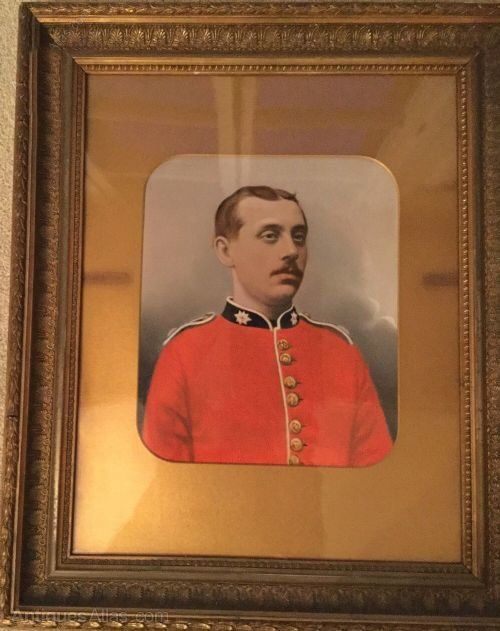


Antique Soldier Painting Frame
An antique soldier painting frame holds centuries of military history, presenting officers and regiments in watercolours and oils.
Antique Soldier Painting Frame
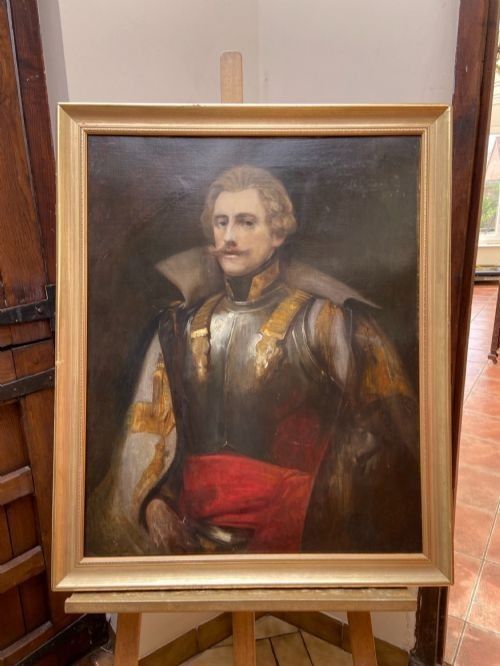
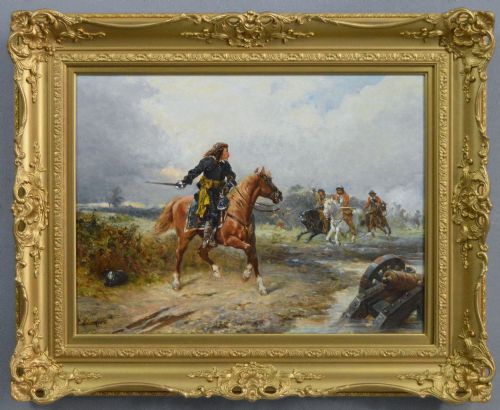
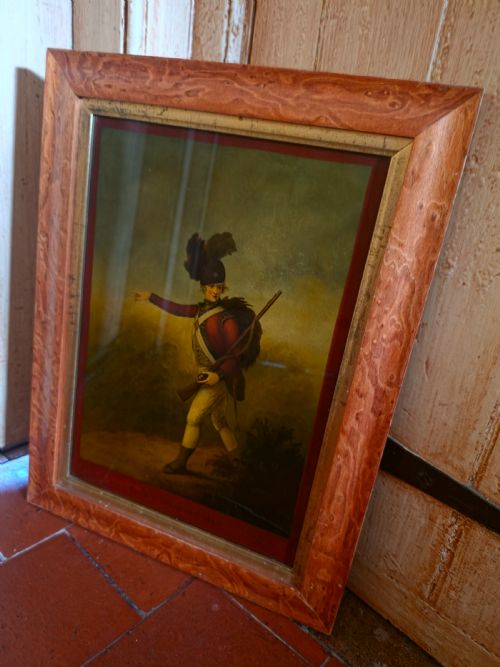
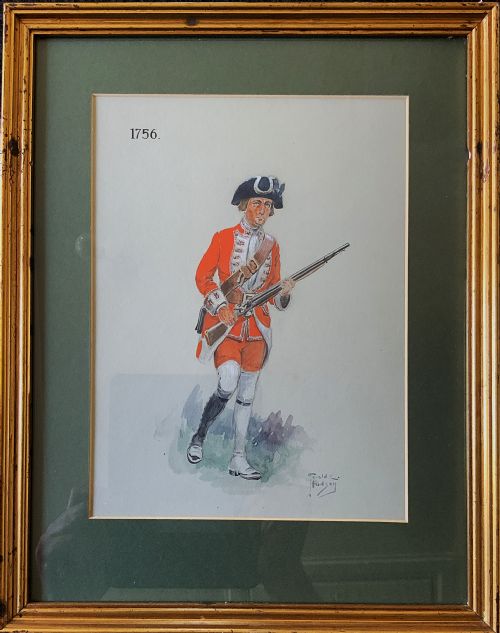
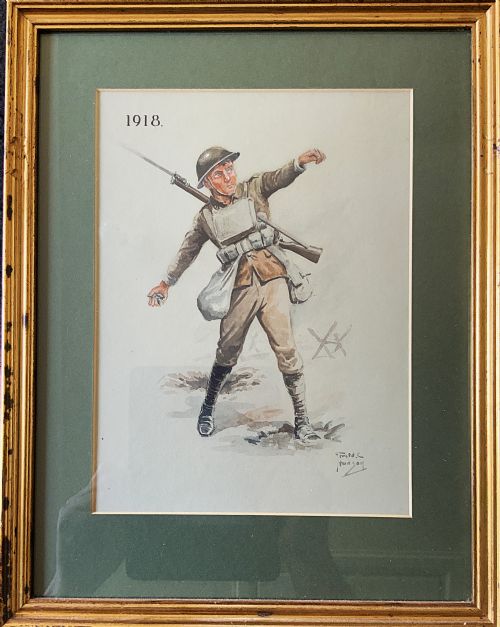
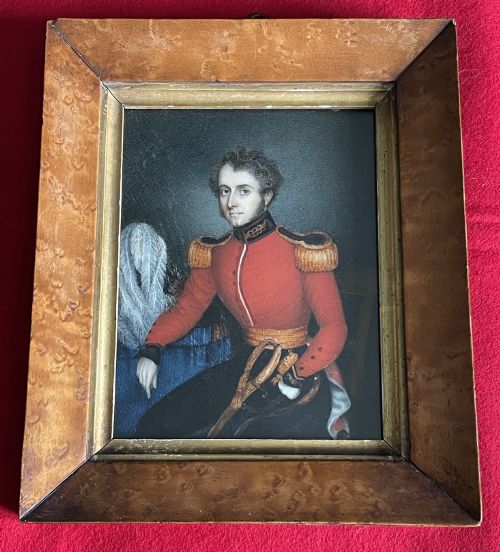
An antique soldier painting frame encloses historical depictions of military figures, from French cuirassiers and British officers to First World War soldiers and earlier cavaliers. These works appear across several periods, stretching from the eighteenth century through the Edwardian era into the mid-twentieth century.
The selections on this page rely heavily on watercolours, oils on canvas, and reverse glass pictures, often presented in wood and gilt wood surrounds. Buyers frequently encounter nineteenth-century military portraiture alongside wartime illustrations and miniatures.
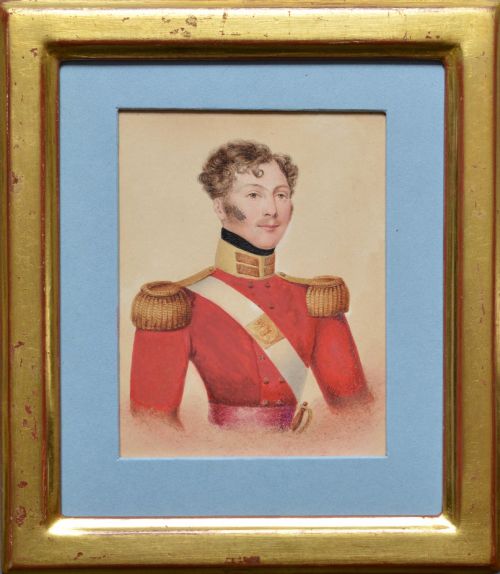
Forms range from individual half-length portraits and watercolours to larger oil paintings and enamel works on copper. Each piece documents a specific regiment, uniform style, or historical campaign through detailed artistic rendering.
Materials and technique
Makers utilised traditional painting mediums, applying oil paints to canvas and panel alongside delicate watercolours and washes on paper. Reverse glass painting required painstaking application directly onto the glass reverse, creating a distinct reflective finish.
Surrounding timber structures incorporate wood and gilt wood framing techniques to house and protect the painted surfaces. Enamel paintings on copper demonstrate specialist firing methods, fixing pigments permanently to metal plates.
Listings feature works spanning the eighteenth, nineteenth, and twentieth centuries, executed in oil, watercolour, and enamel on copper.
Assessing quality
The integrity of the original frame and mounting materials influences the overall cohesion of the piece. Surviving watercolours and oils that retain their period glass and wooden mounts demonstrate better historical preservation.
Bruce Bairnsfather·Jean Sobieski·Gilbert Scott Wright·Paul Leon Jazet·Ernest Crofts·Edward Pugh·Frederick Henry Howard Harris·Frank Dadd·William Edward Millner
The Antique Soldier Painting Frame Glossary
- Cuirassier
- A cavalry soldier equipped with metal body armour consisting of a breastplate and backplate. This term frequently appears in French military portraiture from the eighteenth and nineteenth centuries.
- Reverse glass painting
- An artistic technique where the image is painted directly onto the reverse side of a glass sheet and viewed from the front. This method produces a glossy, preserved surface.
- Miniature portrait
- A small-scale painting executed with fine detail, often depicting a specific military officer or notable individual. These works typically utilised watercolour on vellum or ivory.
- Wash
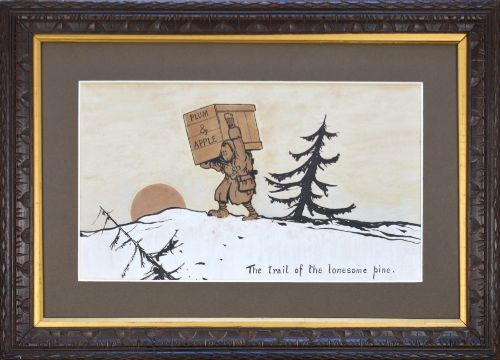
- A thin, semi-transparent layer of diluted watercolour paint applied to paper to create smooth backgrounds or tonal depth. It frequently accompanies detailed pen and ink military sketches.
- Enamel painting
- A technique involving the application of powdered glass melted onto a metal substrate such as copper through high-temperature firing. Limoges served as a primary centre for this craft.
Antique Soldier Painting Frame: Frequently Asked Questions
How do I date a military painting?
Dating relies heavily on the specific uniform style, headwear, and facial hair depicted in the artwork. Regimental records and medal ribbons provide precise chronological markers for uniforms worn during specific campaigns.
The materials used for the support, such as canvas weave, paper watermarks, and the construction of the wooden frame, offer additional clues to the decade of creation.
What regiments appear most frequently?
British and French regiments dominate the selections, featuring units like the Staffordshire Regiment, Coldstream Guards, and Dragoons. Early cavalry units and infantry regiments from the Napoleonic and First World War eras are particularly common.
Foreign forces, including Dutch and Limoges subjects, also appear among the continental European works.
Where were these paintings displayed?
Military portraits originally hung in officers' messes, regimental headquarters, and private country houses to commemorate service and lineage. Families also commissioned miniature portraits to keep likenesses of soldiers serving abroad.
Later works served as patriotic wall art or illustrations for publications during wartime.
How should I care for antique watercolours?
Watercolours require protection from direct sunlight to prevent the pigments and paper from fading over time. Maintaining stable indoor humidity levels prevents warping of the paper and degradation of the mounting materials.
Displaying pieces away from damp walls ensures the wooden frames and backings remain structurally sound.