21,900  PAGES BROWSED TODAY PAGES TODAY • 49 ANTIQUES UPLOADED TODAYNEW ARRIVALS
GIFTS
49 ITEMS ADDED TODAY
Sort Order
Items Per Page
Antiques dealer?
Join as a Seller
Browse Categories
Sort order
Relevant Links
Items per page
sold SA1207863
Sorry, but this item has been sold.
Regent Antiques

Regent Antiques

Sellingantiques Verified Since Sep 2016
Browse dealers 639 items
  • About Us
    We specialise in english and continental furniture, silver, porcelain and decorative items.
  • Trade Associations
    Regent Antiques is a registered member of LAPADA  CINOA
Id #SA1207863
SHARE
SAVE

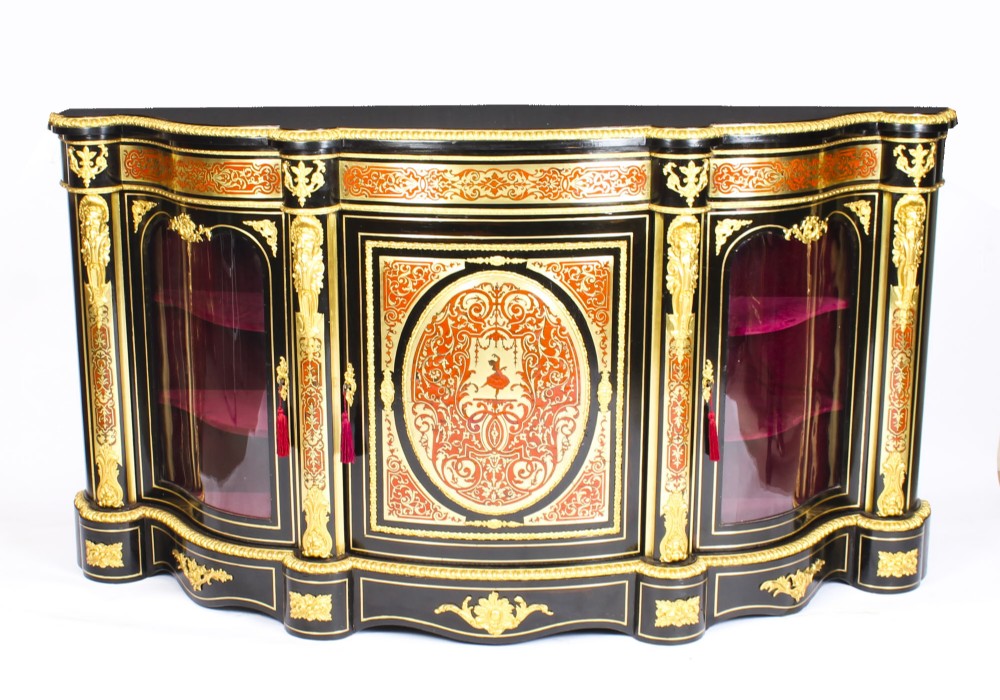
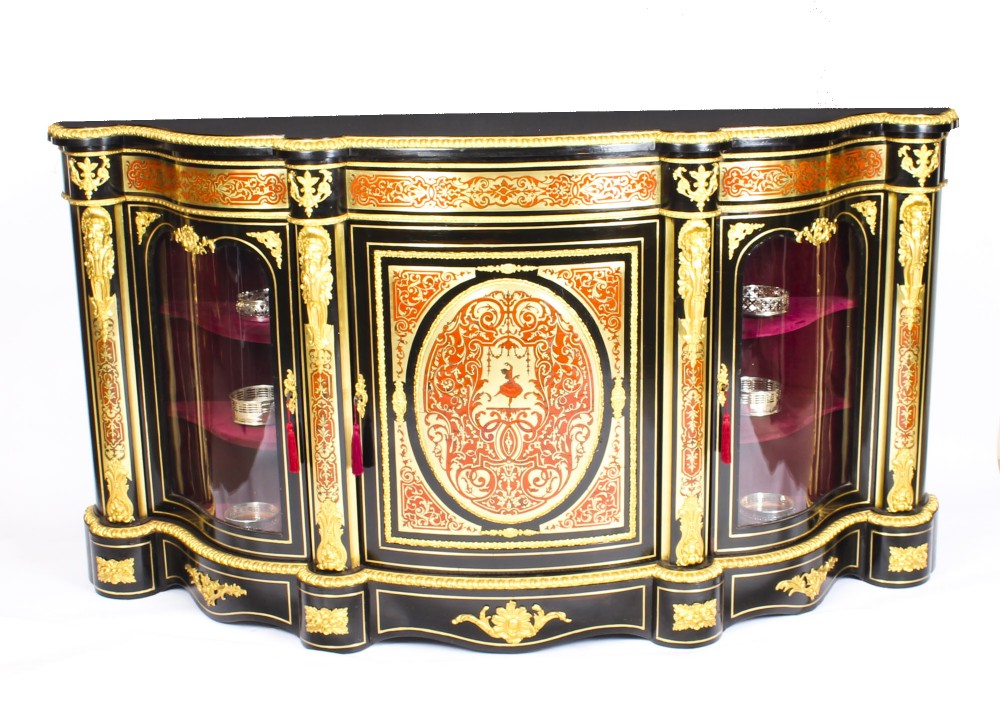
Antique Ormolu Mounted Serpentine Boulle Credenza C.1870 19th C

19th century
Sold 1 January 1900 · Regent Antiques
This “Antique Ormolu Mounted Serpentine Boulle Credenza C.1870 19th C” found a buyer.

It was listed by Regent Antiques. Sold pieces stay on Sellingantiques as a record of what has passed through, and the next one is rarely far away.

Description

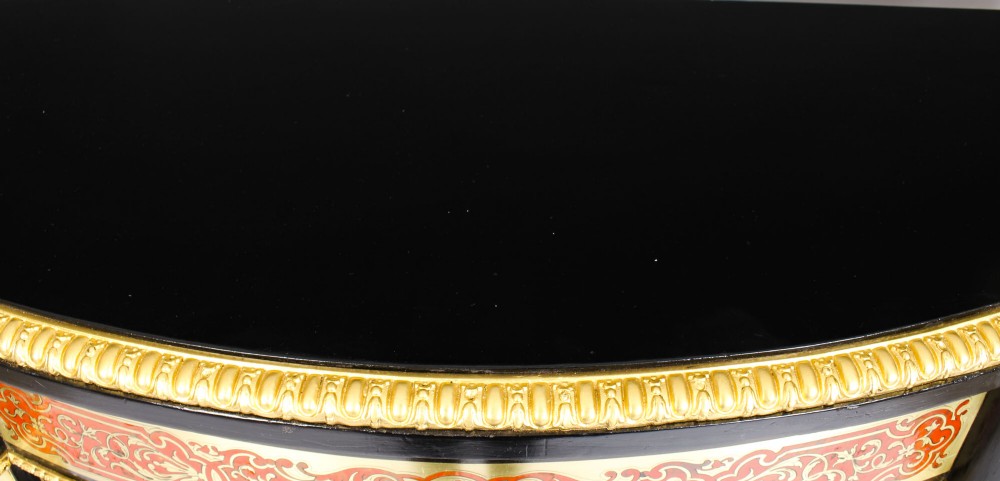
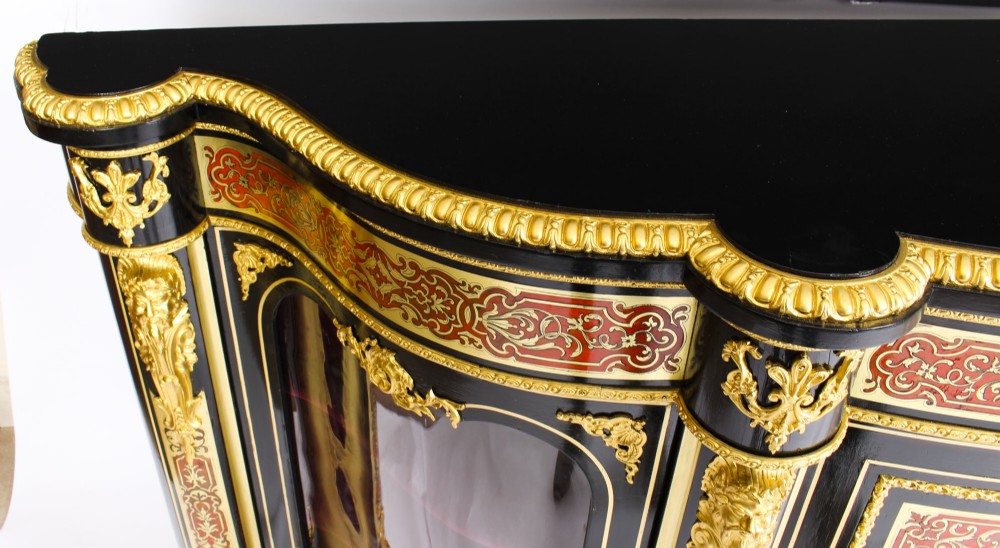
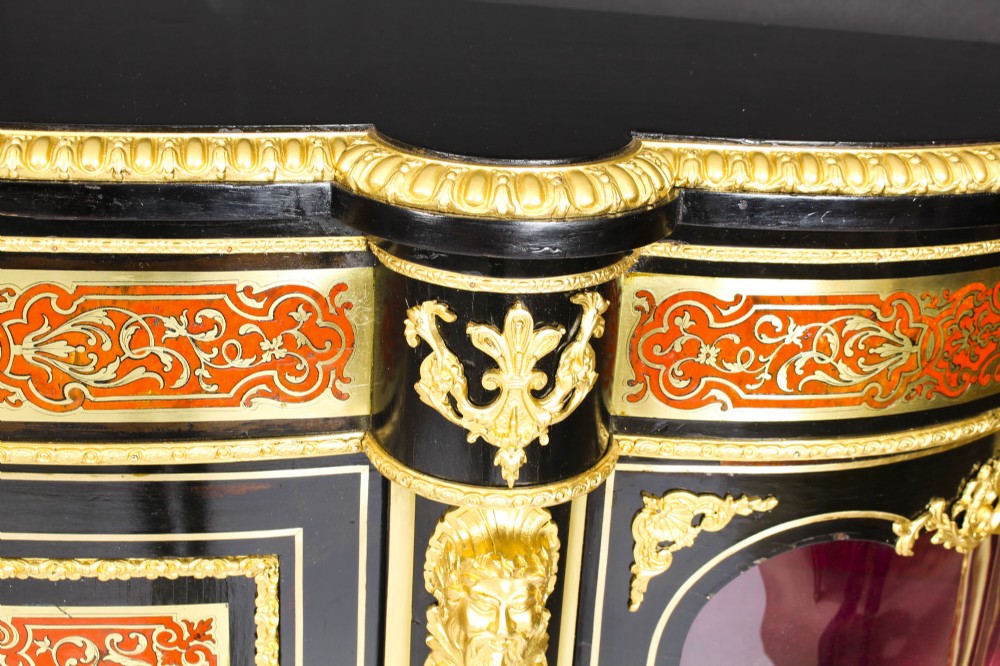
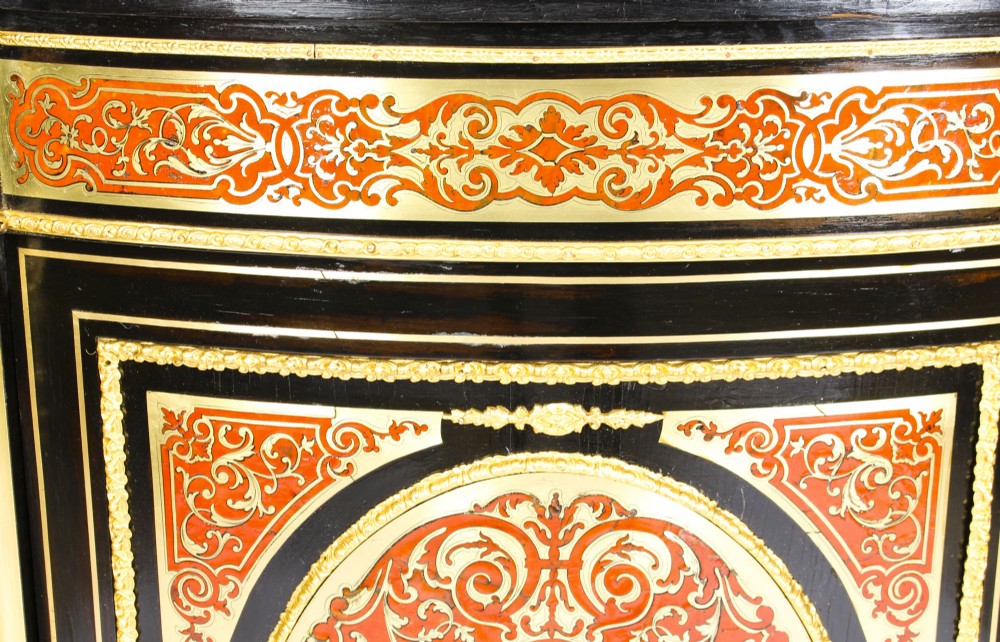
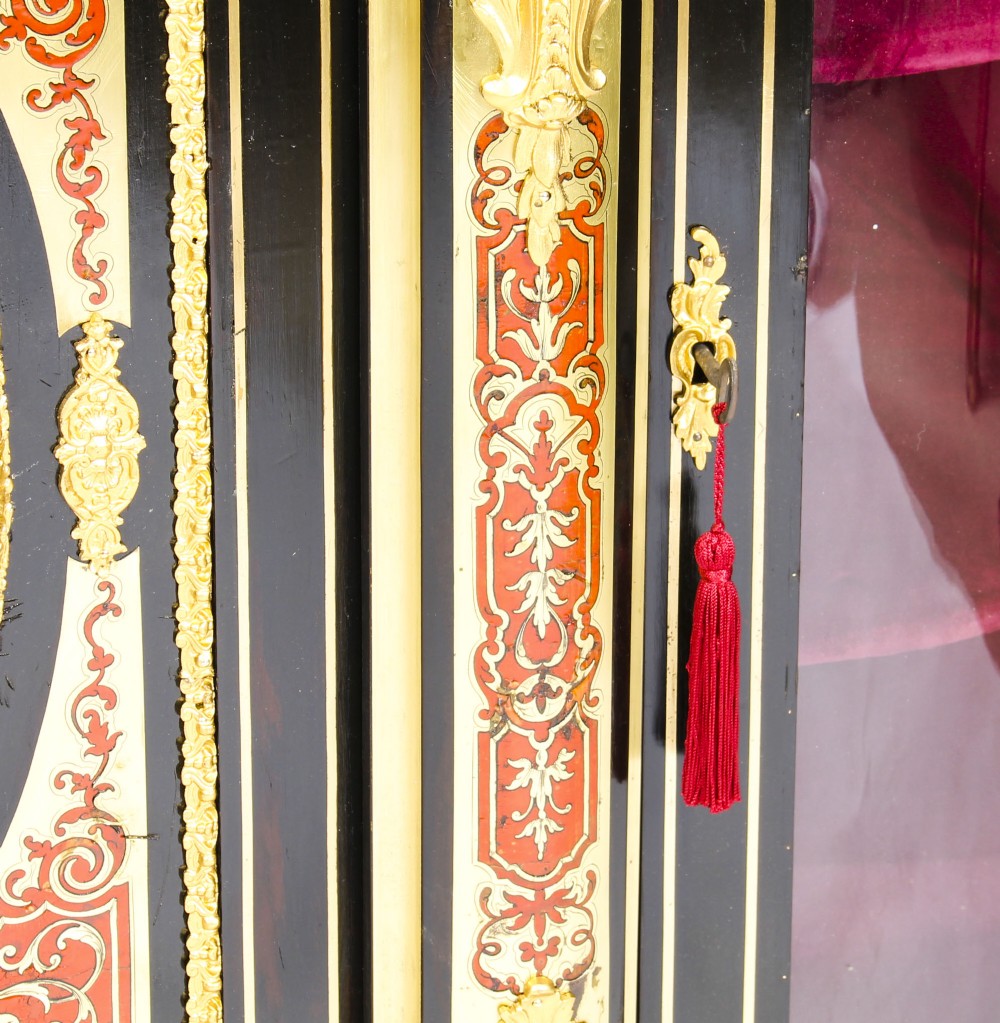
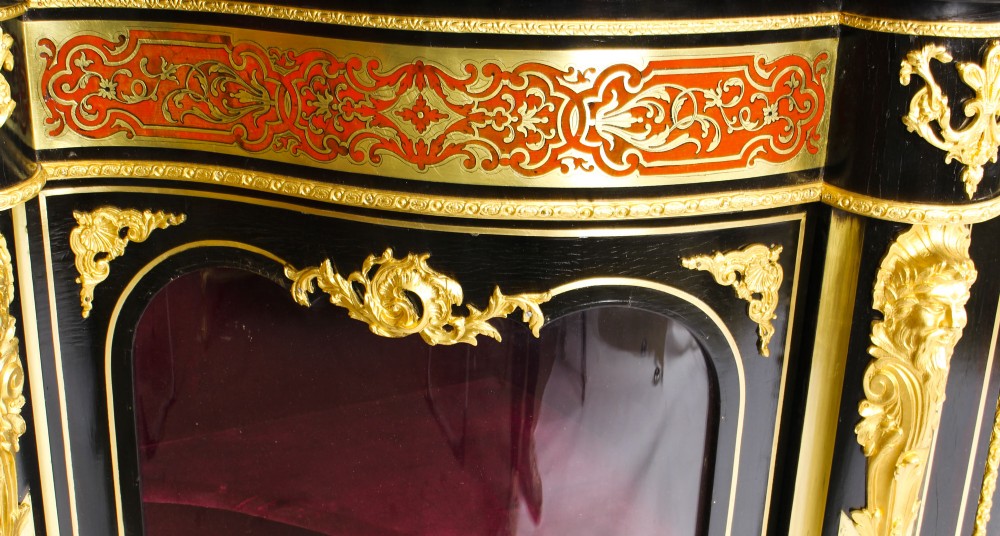
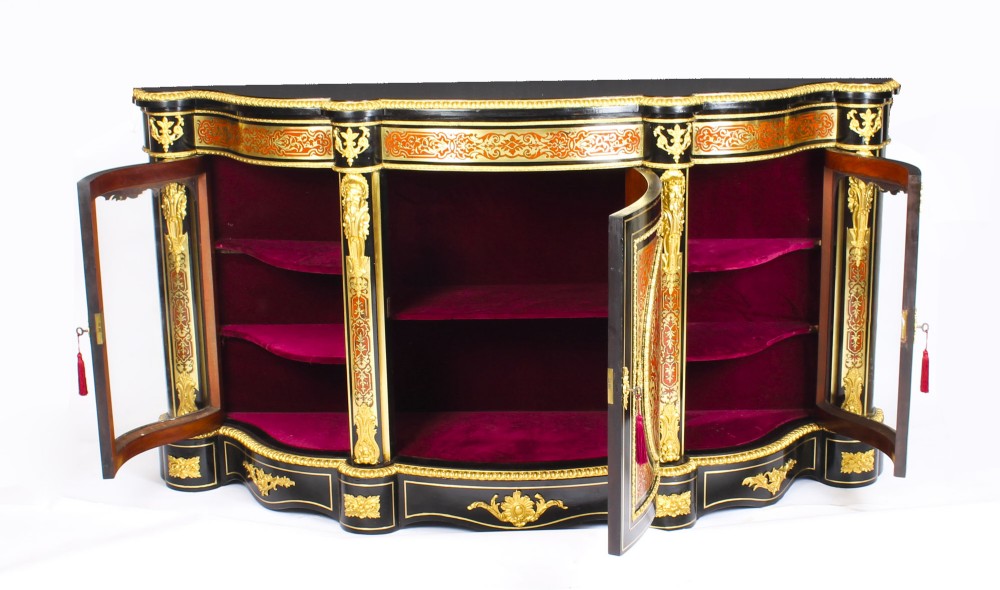
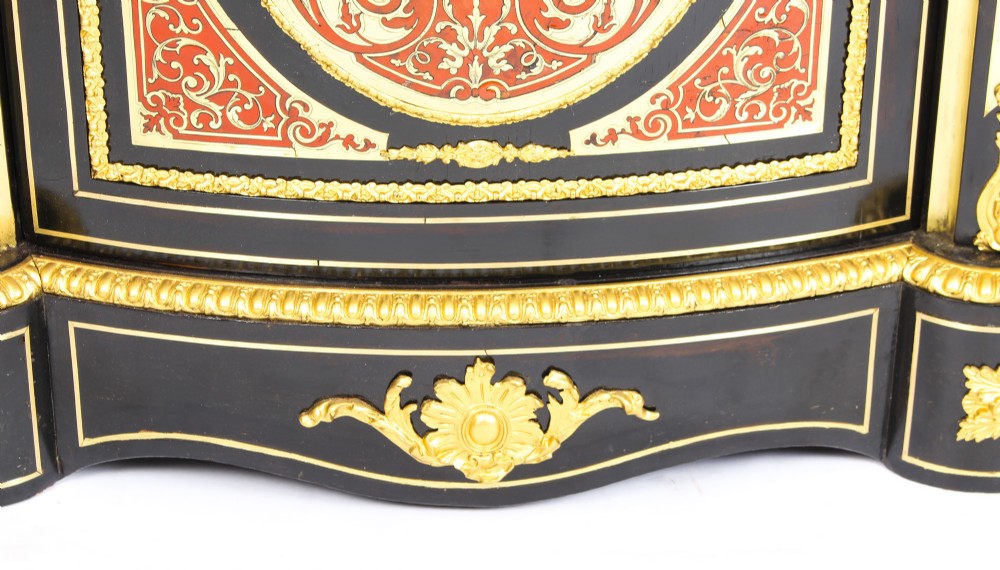
This is an important antique, Victorian, ebonised, ormolu-mounted, and red  Boulle marquetry serpentine credenza, circa 1870 in date.

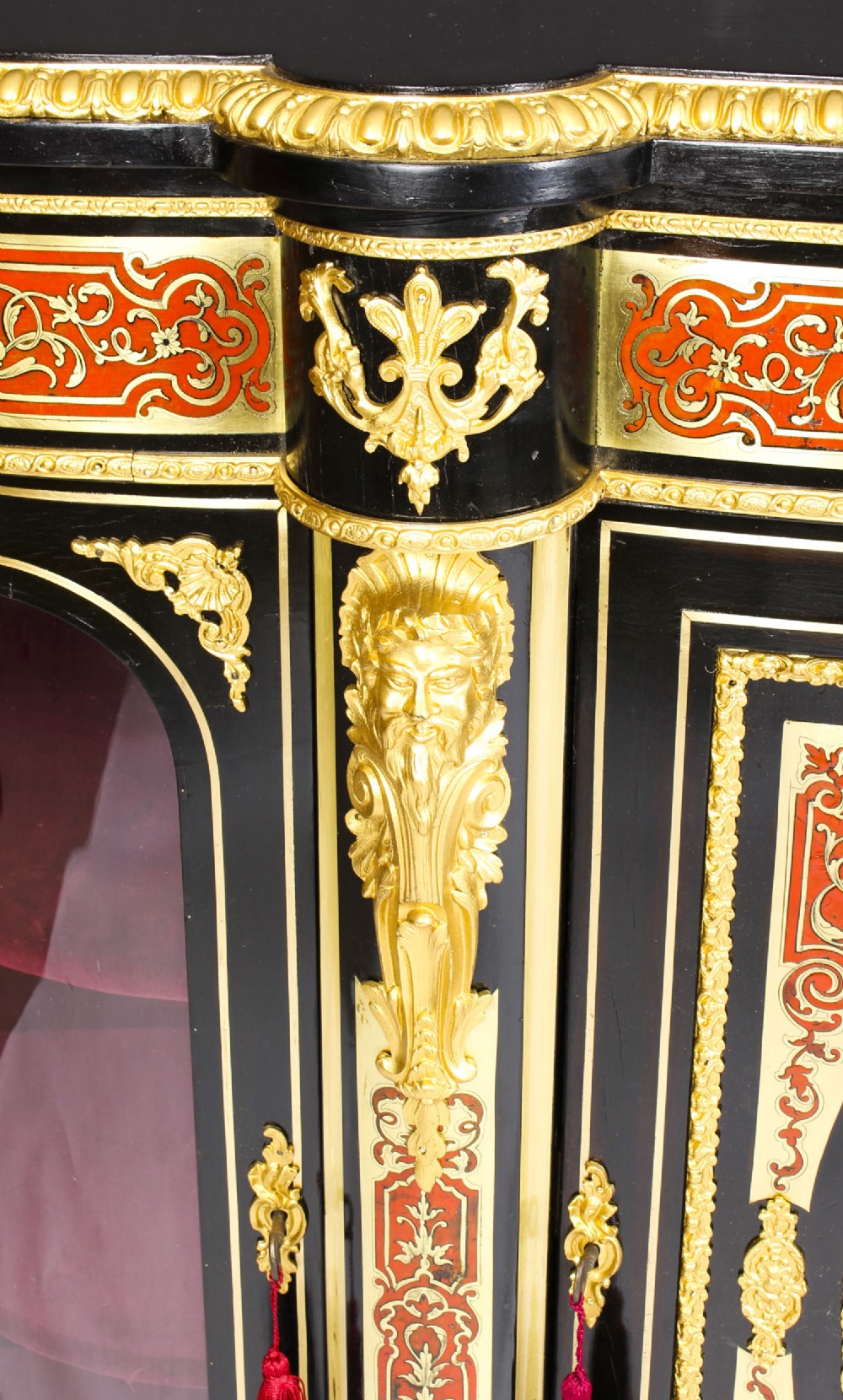
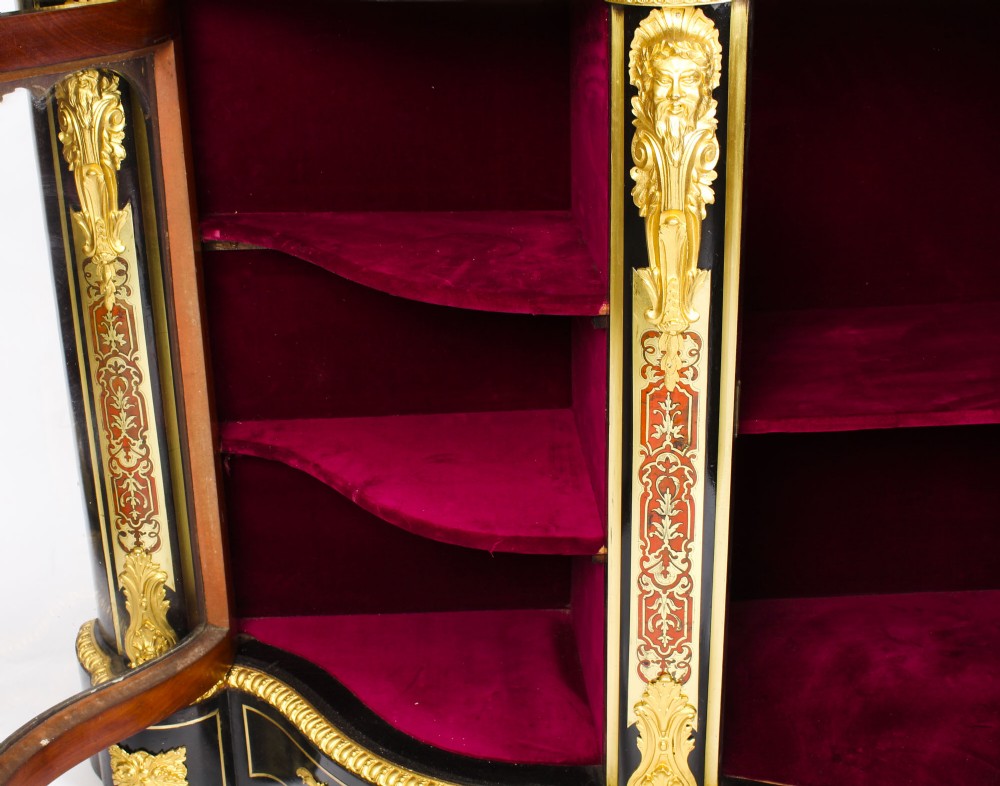
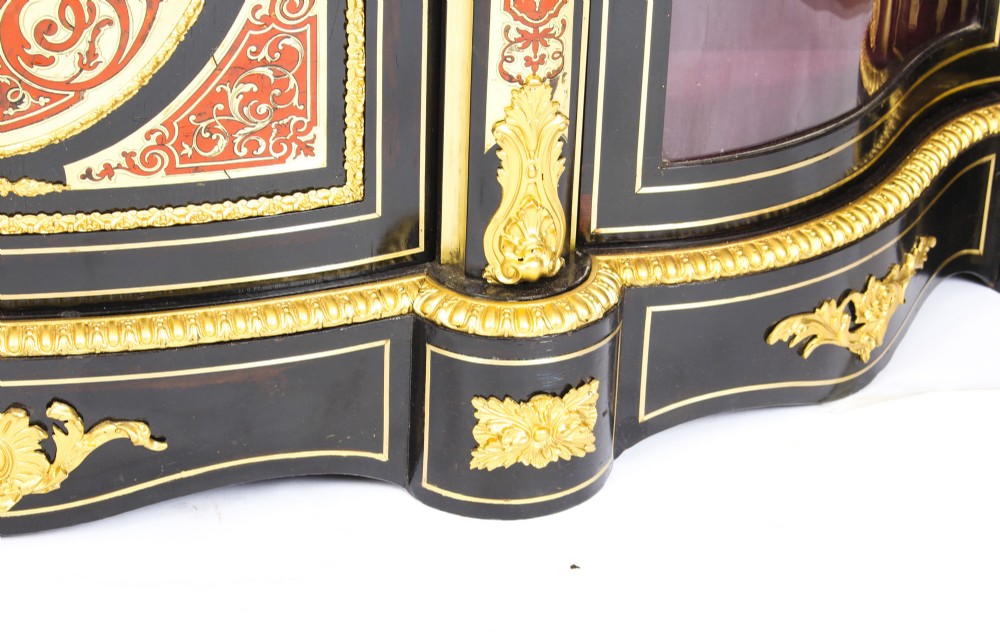
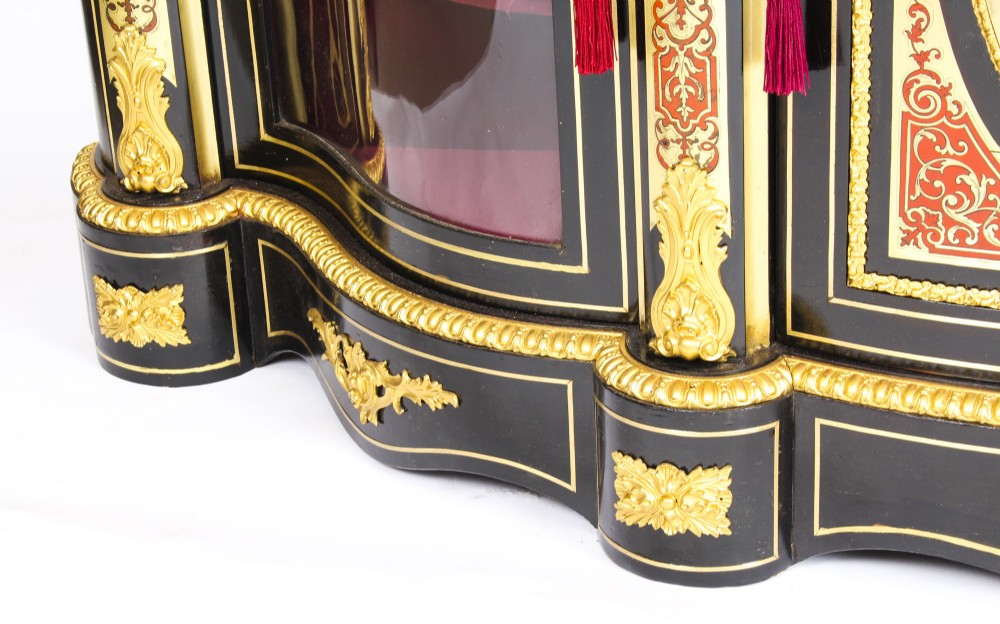
It is beautifully inlaid in cut brass and is further adorned with a plethora of fabulous ormolu mounts of scrolling acanthus foliage with flowers and honeysuckle.

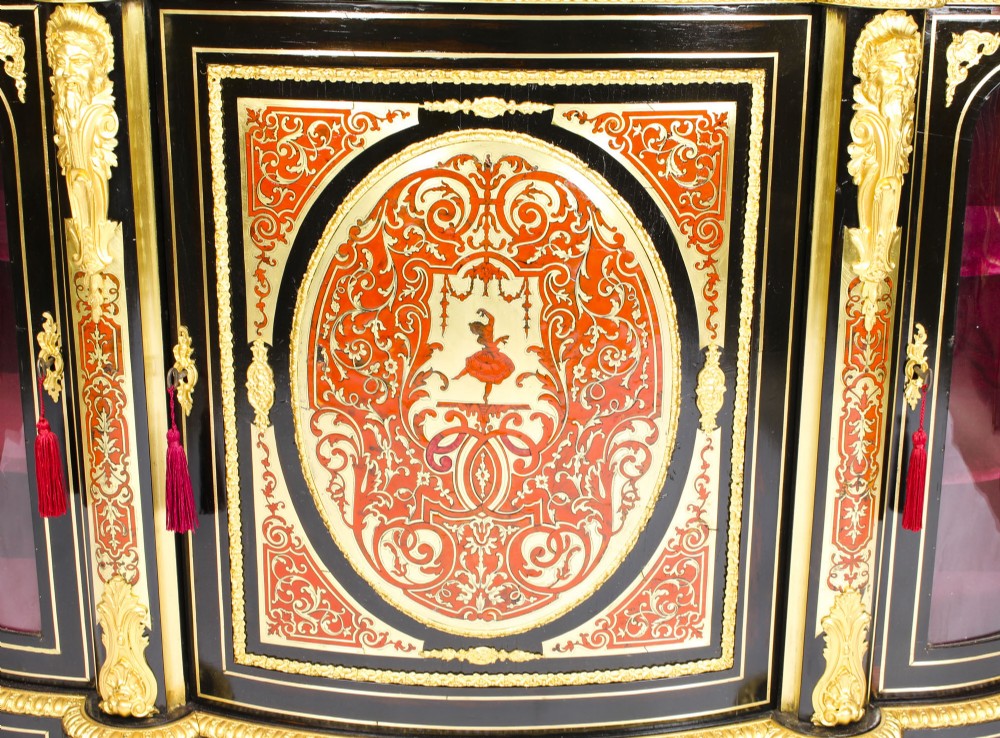
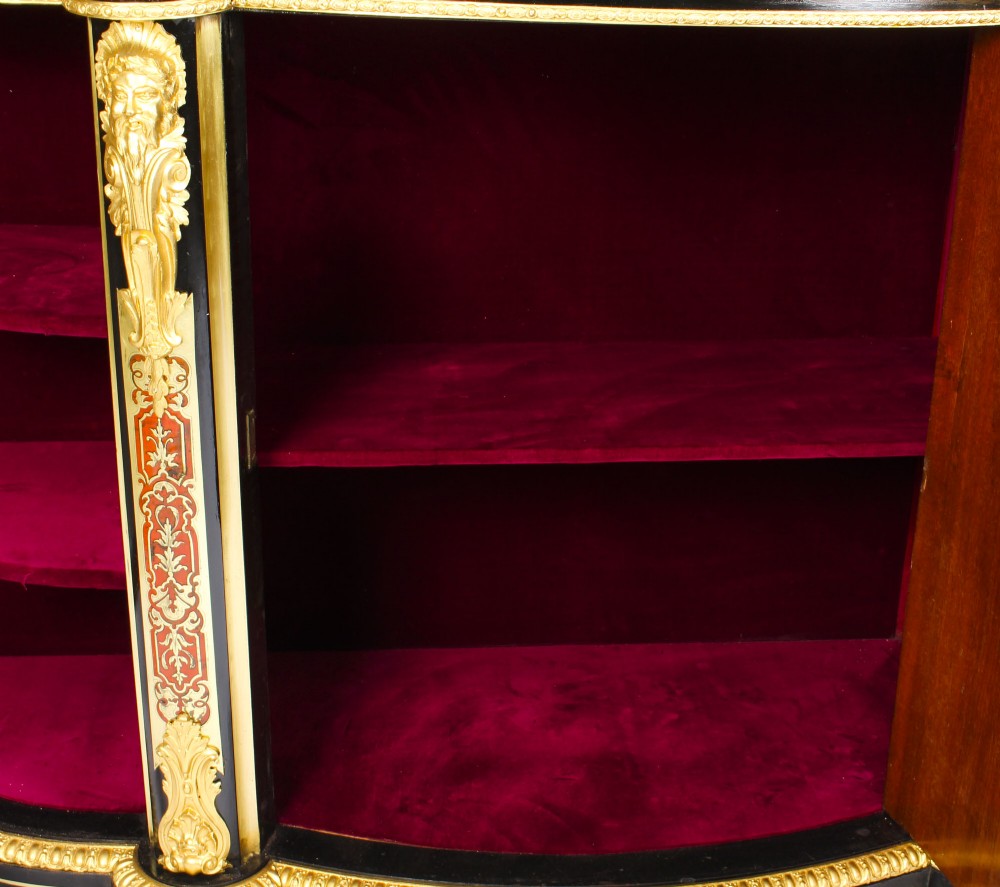
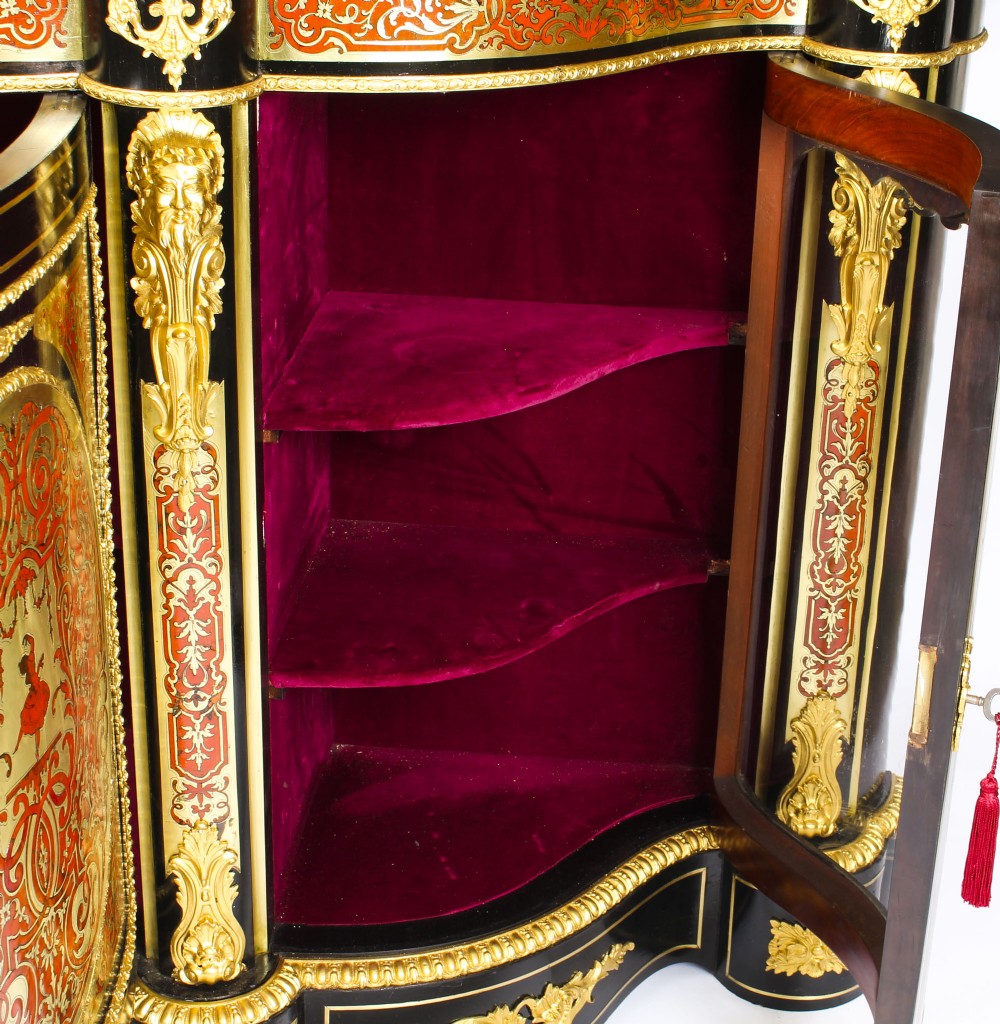
The central cupboard door, with a raised oval panel, encloses a burgundy velvet-lined interior with a shelf, and is flanked by a serpentine glass door opening to shelves on each side.

The credenza is raised on a plinth base and has its original working locks and keys.

This is an absolutely breathtaking piece which is certain to make it a talking point in your home, it is identical to one that was seen in the Award Winning Television Drama, Downton Abbey, which is filmed at Highclere Castle in Hampshire and is the home of the Earl and Countess of Carnarvon. 


Condition:

In excellent condition having been beautifully restored and the interior relined in our workshops, please see photos for confirmation.


Dimensions in cm:

Height 106 cm x Width 197 cm x Depth 47 cm

Dimensions in inches:

Height 3 foot, 6 inches x Width 6 foot, 6 inches x Depth 1 foot, 6 inches

André-Charles Boulle (1642 – 1732), was the French cabinetmaker who is generally considered to be the preeminent artist in the field of marquetry. His fame in marquetry led to his name being given to a fashion of inlaying known as Boulle (or in 19th-century Britain, Buhl work).

Boulle appears to have been originally a painter, since the first payment to him by the crown of which there is any record (1669) specifies ouvrages de peinture. He was employed for many years at Versailles, where the mirrored walls, the floors of wood mosaic, the inlaid paneling and the marquetery furniture in the Cabinet du Dauphin were regarded as his most remarkable work. These rooms were long since dismantled and their contents dispersed, but Boulle's drawings for the work are in the Musée des Arts Décoratifs, Paris.

His royal commissions were numerous, as we learn both from the Comptes des B timents du Roi and from the correspondence of Louvois. Not only the most magnificent of French monarchs, but foreign princes and the great nobles and financiers of his own country crowded to him with commissions, and the mot of the abbé de Marolles, Boulle y lourne en ovale, has become a stock quotation in the literature of French cabinetmaking.

Ormolu - (from French 'or moulu', signifying ground or pounded gold) is an 18th-century English term for applying finely ground, high-carat gold in a mercury amalgam to an object of bronze.The mercury is driven off in a kiln leaving behind a gold-coloured veneer known as 'gilt bronze'.

The manufacture of true ormolu employs a process known as mercury-gilding or fire-gilding, in which a solution of nitrate of mercury is applied to a piece of copper, brass, or bronze, followed by the application of an amalgam of gold and mercury. The item was then exposed to extreme heat until the mercury burned off and the gold remained, adhered to the metal object.

After around 1830 because legislation had outlawed the use of mercury other techniques were used instead. Electroplating is the most common modern technique. Ormolu techniques are essentially the same as those used on silver, to produce silver-gilt..

Our reference: 06443X

Date of Manufacture

Regent Antiques has dated this Ormolu Boulle Serpentine Credenza to the 1870s.

Physical Dimensions
Height
106cm (41.73")
Width
197cm (77.56")
Depth
47cm (18.50")
Reference Numbers
Sellingantiques Reference
SA1207863
Dealers Internal Reference
06443X
A nineteenth-century ebonised serpentine credenza featuring intricate brass and tortoiseshell Boulle marquetry, gilt ormolu mounts, and two side glazed display cabinets.Detail view 1Detail view 2Detail view 3Detail view 4Detail view 5Detail view 6Detail view 7Detail view 8Detail view 9Detail view 10Detail view 11Detail view 12Detail view 13Detail view 14Detail view 15Detail view 16Detail view 17Detail view 18
SOLD6+ MONTHS AGO
1 / 19
1870s · SA1207863
Antique Ormolu Mounted Serpentine Boulle Credenza C.1870 19th C
Sorry, but this item has been sold.
Description
This is an important antique, Victorian, ebonised, ormolu-mounted, and red  Boulle marquetry serpentine credenza, circa 1870 in date.

It is beautifully inlaid in cut brass and is further adorned with a plethora of fabulous ormolu mounts of scrolling acanthus foliage with flowers and honeysuckle.

The central cupboard door, with a raised oval panel, encloses a burgundy velvet-lined interior with a shelf, and is flanked by a serpentine glass door opening to shelves on each side.

The credenza is raised on a plinth base and has its original working locks and keys.

This is an absolutely breathtaking piece which is certain to make it a talking point in your home, it is identical to one that was seen in the Award Winning Television Drama, Downton Abbey, which is filmed at Highclere Castle in Hampshire and is the home of the Earl and Countess of Carnarvon. 


Condition:

In excellent condition having been beautifully restored and the interior relined in our workshops, please see photos for confirmation.


Dimensions in cm:

Height 106 cm x Width 197 cm x Depth 47 cm

Dimensions in inches:

Height 3 foot, 6 inches x Width 6 foot, 6 inches x Depth 1 foot, 6 inches

André-Charles Boulle (1642 – 1732), was the French cabinetmaker who is generally considered to be the preeminent artist in the field of marquetry. His fame in marquetry led to his name being given to a fashion of inlaying known as Boulle (or in 19th-century Britain, Buhl work).

Boulle appears to have been originally a painter, since the first payment to him by the crown of which there is any record (1669) specifies ouvrages de peinture. He was employed for many years at Versailles, where the mirrored walls, the floors of wood mosaic, the inlaid paneling and the marquetery furniture in the Cabinet du Dauphin were regarded as his most remarkable work. These rooms were long since dismantled and their contents dispersed, but Boulle's drawings for the work are in the Musée des Arts Décoratifs, Paris.

His royal commissions were numerous, as we learn both from the Comptes des B timents du Roi and from the correspondence of Louvois. Not only the most magnificent of French monarchs, but foreign princes and the great nobles and financiers of his own country crowded to him with commissions, and the mot of the abbé de Marolles, Boulle y lourne en ovale, has become a stock quotation in the literature of French cabinetmaking.

Ormolu - (from French 'or moulu', signifying ground or pounded gold) is an 18th-century English term for applying finely ground, high-carat gold in a mercury amalgam to an object of bronze.The mercury is driven off in a kiln leaving behind a gold-coloured veneer known as 'gilt bronze'.

The manufacture of true ormolu employs a process known as mercury-gilding or fire-gilding, in which a solution of nitrate of mercury is applied to a piece of copper, brass, or bronze, followed by the application of an amalgam of gold and mercury. The item was then exposed to extreme heat until the mercury burned off and the gold remained, adhered to the metal object.

After around 1830 because legislation had outlawed the use of mercury other techniques were used instead. Electroplating is the most common modern technique. Ormolu techniques are essentially the same as those used on silver, to produce silver-gilt..

Our reference: 06443X
Date1870s
Height106cm (41.73")
Width197cm (77.56")
Depth47cm (18.50")
ReferenceSA1207863
Dealer's reference06443X
Regent Antiques
Regent AntiquesSellingantiques verified since Sep 2016

We specialise in english and continental furniture, silver, porcelain and decorative items.

Member of LAPADA CINOA

SHARE
SAVE
Archive I A nineteenth-century ebonised serpentine credenza featuring intricate brass and tortoiseshell Boulle marquetry, gilt ormolu mounts, and two side glazed display cabinets. SOLD6+ MONTHS AGO

Antique Ormolu Mounted Serpentine Boulle Credenza C.1870 19th C

Archive II A nineteenth-century ebonised serpentine credenza featuring intricate brass and tortoiseshell Boulle marquetry, gilt ormolu mounts, and two side glazed display cabinets. View II
Archive III A nineteenth-century ebonised serpentine credenza featuring intricate brass and tortoiseshell Boulle marquetry, gilt ormolu mounts, and two side glazed display cabinets. View III
Archive IV A nineteenth-century ebonised serpentine credenza featuring intricate brass and tortoiseshell Boulle marquetry, gilt ormolu mounts, and two side glazed display cabinets. View IV
Archive V A nineteenth-century ebonised serpentine credenza featuring intricate brass and tortoiseshell Boulle marquetry, gilt ormolu mounts, and two side glazed display cabinets. View V
Archive VI A nineteenth-century ebonised serpentine credenza featuring intricate brass and tortoiseshell Boulle marquetry, gilt ormolu mounts, and two side glazed display cabinets. View VI
Archive VII A nineteenth-century ebonised serpentine credenza featuring intricate brass and tortoiseshell Boulle marquetry, gilt ormolu mounts, and two side glazed display cabinets. View VII
Archive VIII A nineteenth-century ebonised serpentine credenza featuring intricate brass and tortoiseshell Boulle marquetry, gilt ormolu mounts, and two side glazed display cabinets. View VIII
Archive IX A nineteenth-century ebonised serpentine credenza featuring intricate brass and tortoiseshell Boulle marquetry, gilt ormolu mounts, and two side glazed display cabinets. View IX
Archive X A nineteenth-century ebonised serpentine credenza featuring intricate brass and tortoiseshell Boulle marquetry, gilt ormolu mounts, and two side glazed display cabinets. View X
Archive XI A nineteenth-century ebonised serpentine credenza featuring intricate brass and tortoiseshell Boulle marquetry, gilt ormolu mounts, and two side glazed display cabinets. View XI
Archive XII A nineteenth-century ebonised serpentine credenza featuring intricate brass and tortoiseshell Boulle marquetry, gilt ormolu mounts, and two side glazed display cabinets. View XII
Archive XIII A nineteenth-century ebonised serpentine credenza featuring intricate brass and tortoiseshell Boulle marquetry, gilt ormolu mounts, and two side glazed display cabinets. View XIII
Archive XIV A nineteenth-century ebonised serpentine credenza featuring intricate brass and tortoiseshell Boulle marquetry, gilt ormolu mounts, and two side glazed display cabinets. View XIV
Archive XV A nineteenth-century ebonised serpentine credenza featuring intricate brass and tortoiseshell Boulle marquetry, gilt ormolu mounts, and two side glazed display cabinets. View XV
Archive XVI A nineteenth-century ebonised serpentine credenza featuring intricate brass and tortoiseshell Boulle marquetry, gilt ormolu mounts, and two side glazed display cabinets. View XVI
Archive XVII A nineteenth-century ebonised serpentine credenza featuring intricate brass and tortoiseshell Boulle marquetry, gilt ormolu mounts, and two side glazed display cabinets. View XVII
Archive XVIII A nineteenth-century ebonised serpentine credenza featuring intricate brass and tortoiseshell Boulle marquetry, gilt ormolu mounts, and two side glazed display cabinets. View XVIII
Archive XIX A nineteenth-century ebonised serpentine credenza featuring intricate brass and tortoiseshell Boulle marquetry, gilt ormolu mounts, and two side glazed display cabinets. View XIX
Enlarged Archival View
Location
Manor Warehouse
318 Green Lanes
London
N4 1BX
United Kingdom
Verified Since Sep 2016
Items For Sale 639
Items Sold 2,756
Regent Antiques
Regent Antiques
Verified Since Sep 2016
View Dealer Info
Location: Manor Warehouse, 318 Green Lanes, London, N4 1BX, United Kingdom
Verified
Sep 2016
For Sale
639
Sold
2,756
A nineteenth-century ebonised serpentine credenza featuring intricate brass and tortoiseshell Boulle marquetry, gilt ormolu mounts, and two side glazed display cabinets.
Antique Ormolu Mounted Serpentine Boulle Credenza c.1870 19th C
Ref: SA1207863
A nineteenth-century ebonised serpentine credenza featuring intricate brass and tortoiseshell Boulle marquetry, gilt ormolu mounts, and two side glazed display cabinets.
Detail View 1
Detail View 2
Detail View 3
Detail View 4
Detail View 5
Detail View 6
Detail View 7
Detail View 8
Detail View 9
Detail View 10
Detail View 11
Detail View 12
Detail View 13
Detail View 14
Detail View 15
Detail View 16
Detail View 17
Detail View 18
Archival Detail
Every single antique dealer on our platform is individually approved by our internal team. We verify their professional trade history, ethical standards, and photographic quality to ensure a secure, high-standard buying environment. Upon joining, every dealer agrees to a strict 9-point code of conduct. While issues can occasionally arise, our dealers typically resolve them swiftly and directly with the buyer. In fact, since our founding in 2002, Sellingantiques has only had to step in to help resolve an issue on roughly five occasions—a true testament to the quality of our dealers and their dedication to your happiness.
Our dealers are highly experienced in packing and shipping fragile, high-value antiques. Because you are in direct contact with the dealer, you will be able to easily go through all available shipping and insurance options together to ensure your item arrives safely.
Antiques are the ultimate green purchase. By choosing historical pieces over newly manufactured goods, you completely eliminate the carbon footprint of modern mass production while preserving exceptional, timeless craftsmanship.
Written by Sellingantiques from the dealer’s photographs and listing
  • ObjectSideboards & Credenzas
  • Period19th century
  • StyleNapoleon III
  • MaterialEbonised Wood, Brass, Tortoiseshell, Ormolu, Glass, Velvet
  • ColourBlack and Gold
  • MotifsBoulle marquetry inlay, Ormolu mounts, Serpentine front, Glazed side doors
  • SizeH 106 cm (42 in) x W 197 cm (78 in) x D 47 cm (19 in)

This serpentine credenza dates to 1870 in the Napoleon III style. It is constructed from ebonised wood, brass, tortoiseshell, ormolu, glass, and velvet, with a black and gold colour scheme. The piece incorporates a central cupboard door with a raised oval panel and two glazed side doors, all decorated with Boulle marquetry inlay and ormolu mounts of scrolling acanthus foliage. The interior is lined with burgundy velvet and fitted with shelves, and the structure sits on a plinth base. Measuring 106 cm high, 197 cm wide, and 47 cm deep, it provides display and storage space. Suitable for placement in a dining room, living room, or hallway, it functions as a display cabinet and side storage unit in a domestic interior.

Boulle work is a specialized technique of inlaying brass and tortoiseshell into wood or ebonised surfaces, popularized in 17th-century France by Andre-Charles Boulle and revived extensively during the 19th century.

These cabinets typically feature ebonised wood structures, brass and tortoiseshell marquetry, gilt-bronze (ormolu) mounts, and glass panels revealing velvet-lined interior shelving.

Authentic 19th-century pieces display cast and chased gilt-bronze mounts, fine brass inlay work showing natural age-related patination, and hand-finished timber construction techniques.

A Boulle credenza serves as a focal statement piece in grand hallways, dining rooms, or formal reception spaces, paired with modern minimalist accents to highlight its detailed craft.

Maintain the finish by dusting gently with a soft dry cloth and keeping the piece away from direct sunlight or extreme humidity to prevent brass lifting or wood shrinkage.
items
Add keywords to the filter
Price
£100
£250000
Era
Period
Style
Material
Origin
Stock Location
Recently Added
Online Payments
Categories