Brave Fine Art has dated this piece to the 1880s.
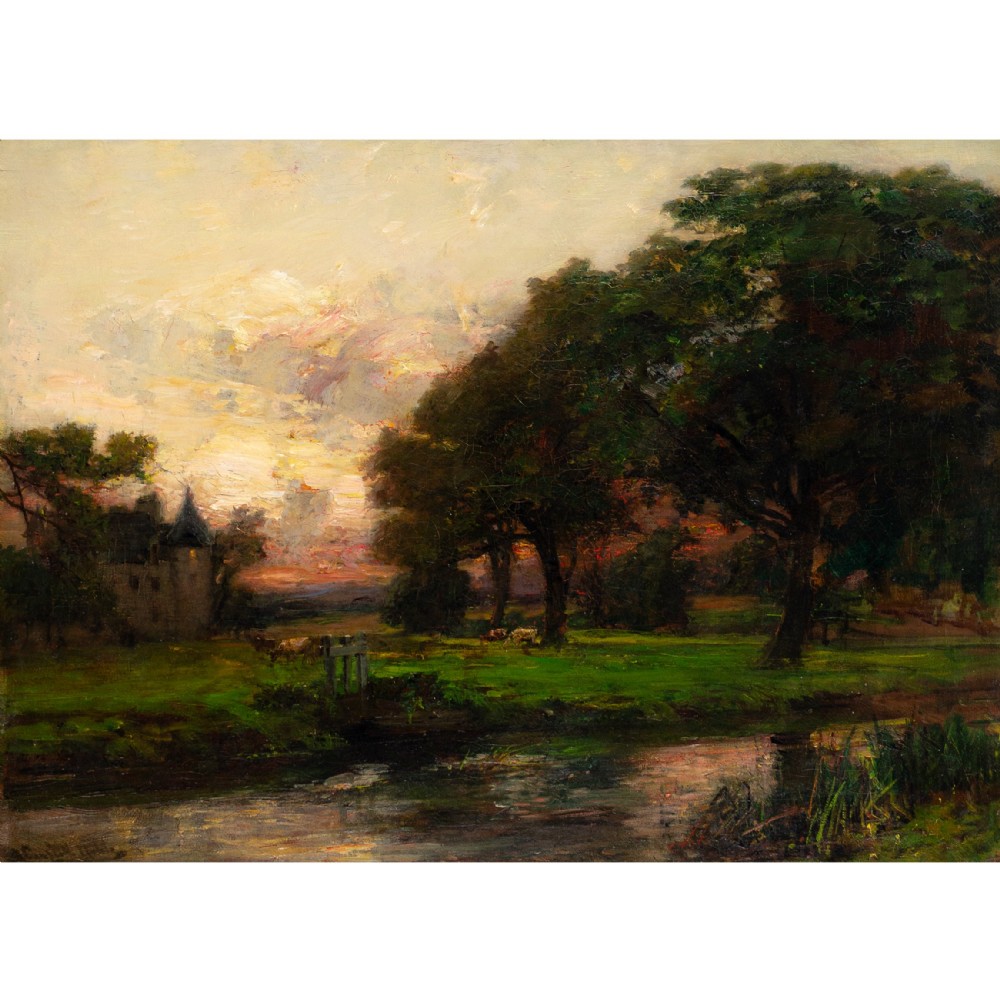
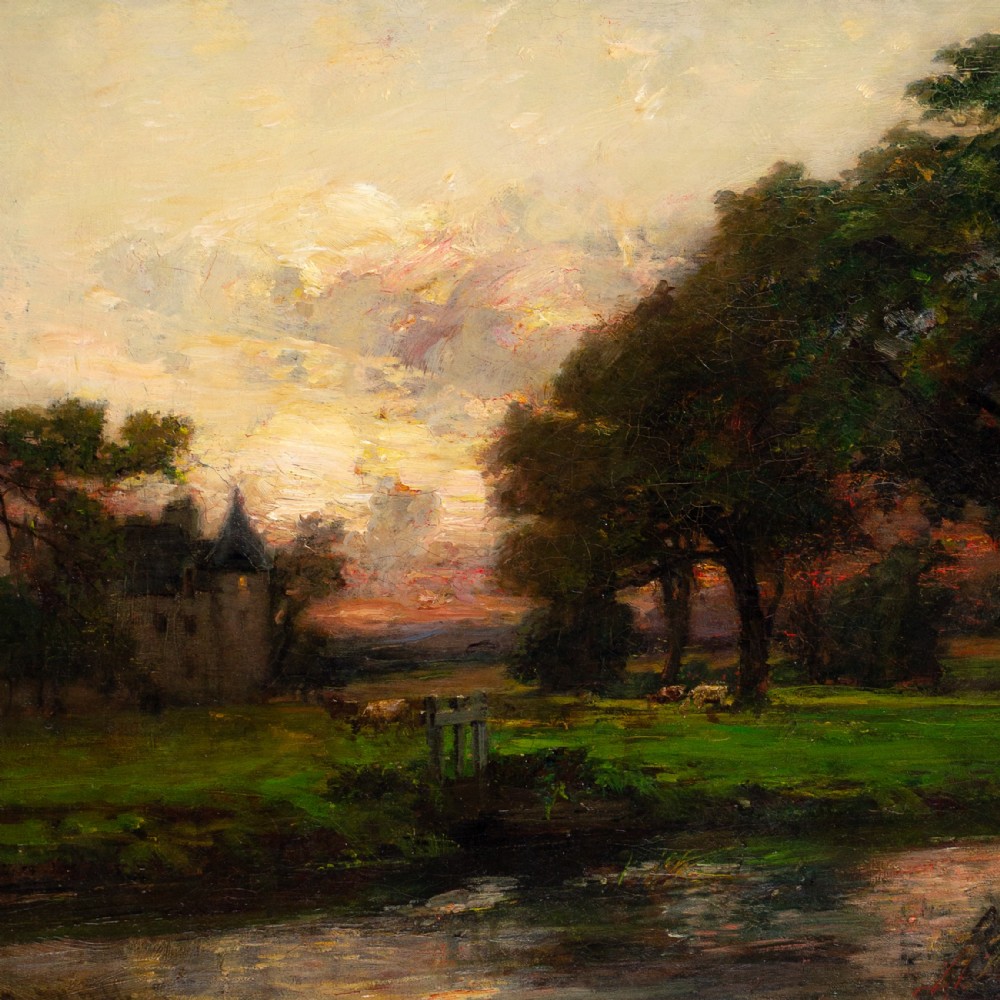
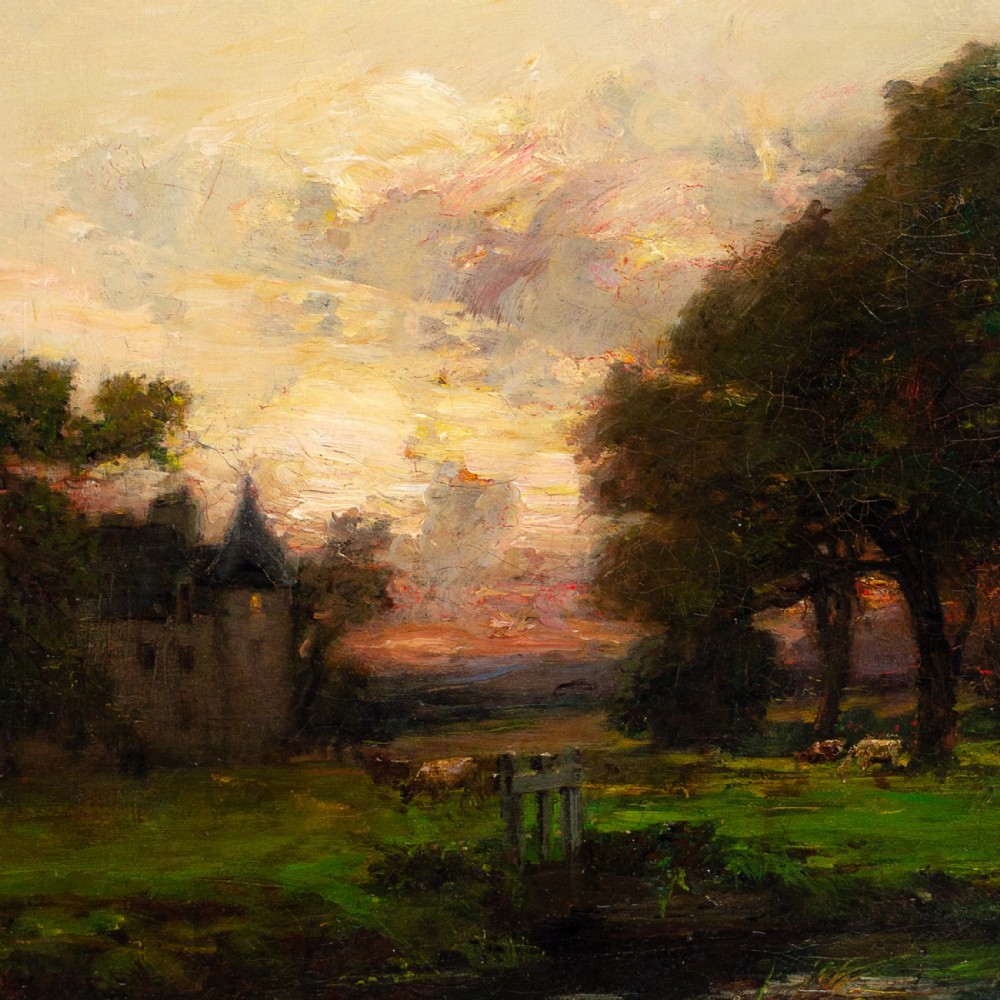
On the left, a structure with a conical roof sits partially obscured. Its form recalls the vocabulary of Scottish baronial architecture, and it's believed to be Gogar House in Edinburgh. Above, the sky is rendered in broad expressive marks, bringing the scene alive.
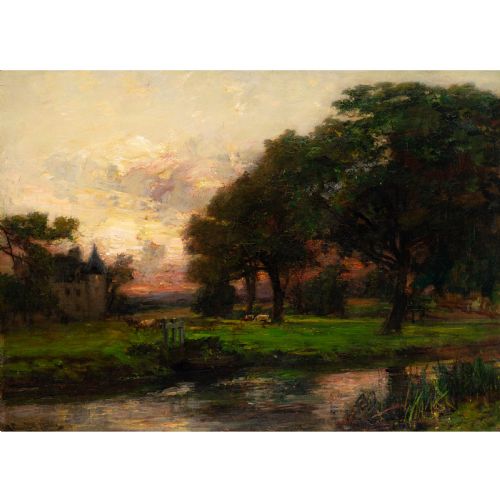
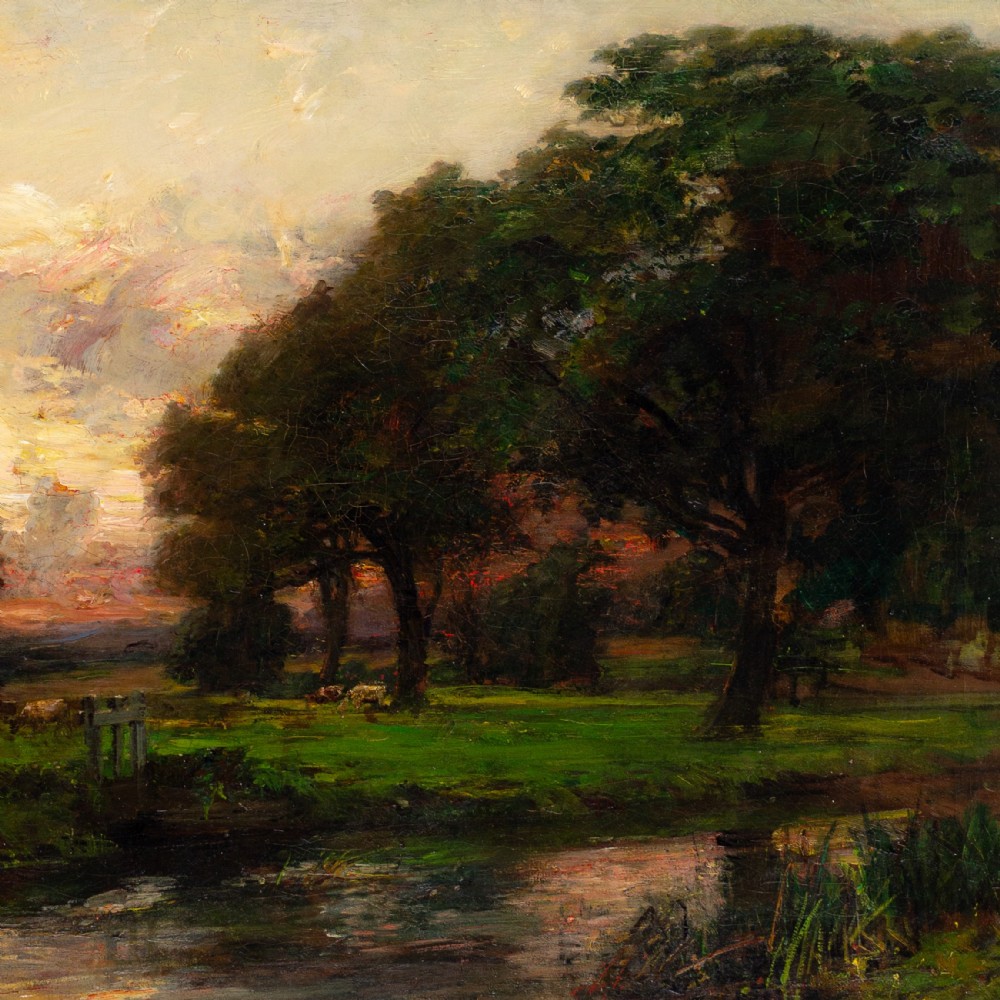
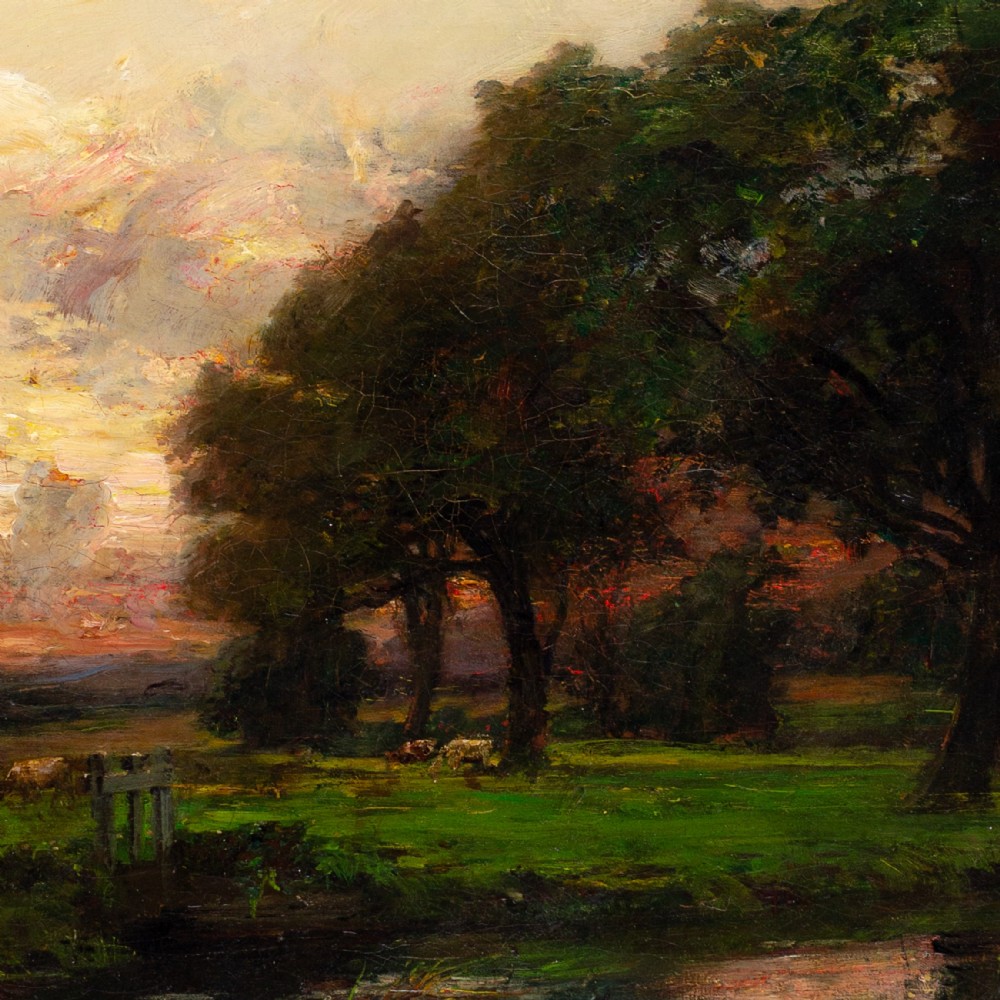
Noble's approach here, in around 1880, is in contrast to much of British landscape painting, as it places experience above exactness. He's asked the question "how does it feel to stand in this place?", rather than "what does this view look like?". He's resisted the notion that truth lies in completion. Allowing, instead, the forms to soften and blend. The water, for instance, is suggested as reflections of dappled light. The trees are little more than tonal masses.
This approach places Noble within a distinctly Scottish current of late 19th-century painting, shaped in part by his training under artists such as William McTaggart and George Paul Chalmers. Like them, he moved beyond the mere recording of nature toward a more immersive, perceptual response. Yet this is not abstraction, nor is it Impressionism in the French sense. Rather, it reflects a different relationship to nature.
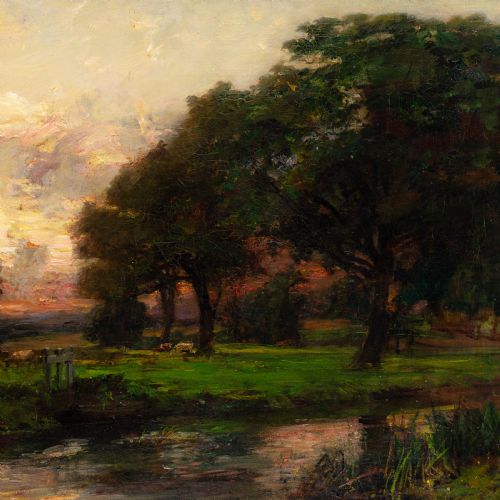
Scottish painting, particularly coastal and Highland-inflected work, often emerges from conditions of exposure: to weather, to sea, and to vastness. It's shaped by a landscape that shifts quickly and resists containment - where light is fleeting and atmosphere envelops form. Alongside this is a cultural inheritance that lends these works a sense of emotional depth.
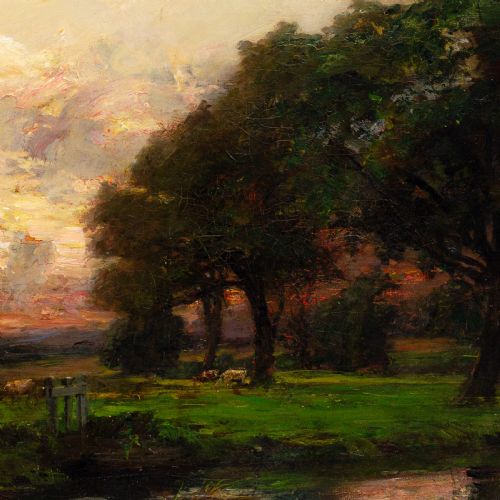
Together, this translates into paintings such as this, whereby hard edges are relinquished in favour of something more suggestive, more elusive, and wholeheartedly more Scottish.
Held in a late 19th-century carved gilt frame with scrolling foliate ornament and pierced corner flourishes.
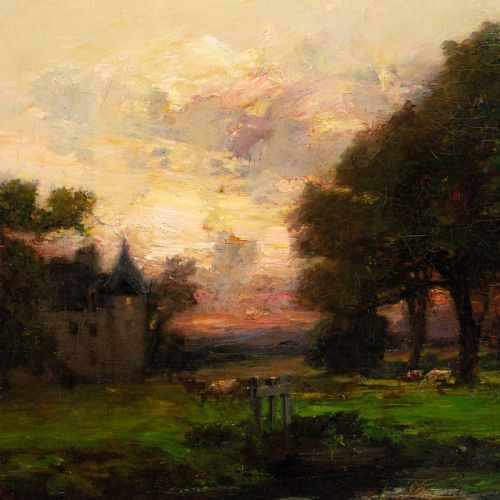
Learn more about James Campbell Noble RSA in our directory.
Medium: Oil on canvas
Overall size: 38” x 30½” / 97cm x 77cm
Year of creation: c. 1880
Provenance: Private collection, UK.
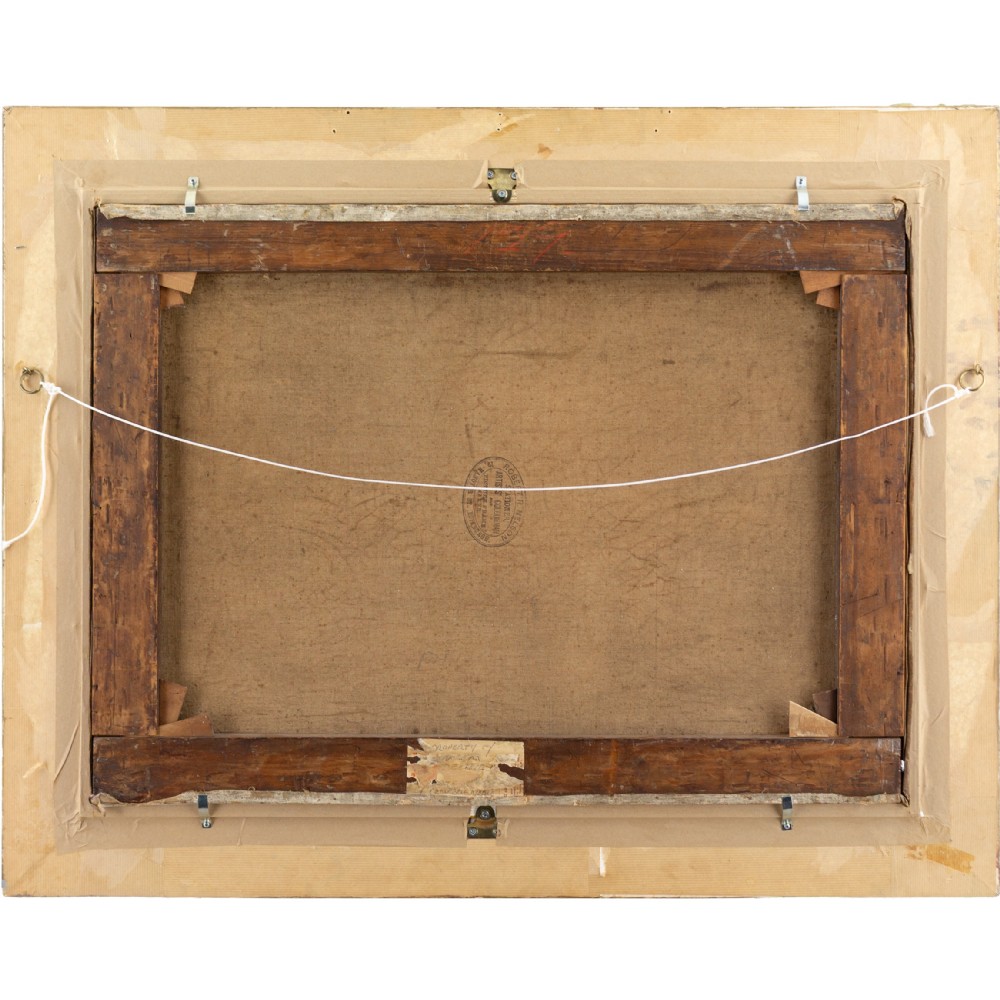
Condition: Cleaned. Craquelure throughout. The paint layer is stable. Frame in good condition with minor age-related wear.
Artist’s auction maximum: £5,450 for ‘Shipping on the Merwede, Dordrecht’, Oil on canvas, Christie’s, Nineteenth Century Art, Amsterdam, The Netherlands, 18 April 2000 (lot 79).
Our reference: BRV2273
Brave Fine Art has dated this piece to the 1880s.
Exquisite antique paintings that capture the imagination.
You can view the stock and full dealer information on the Brave Fine Art Profile Page
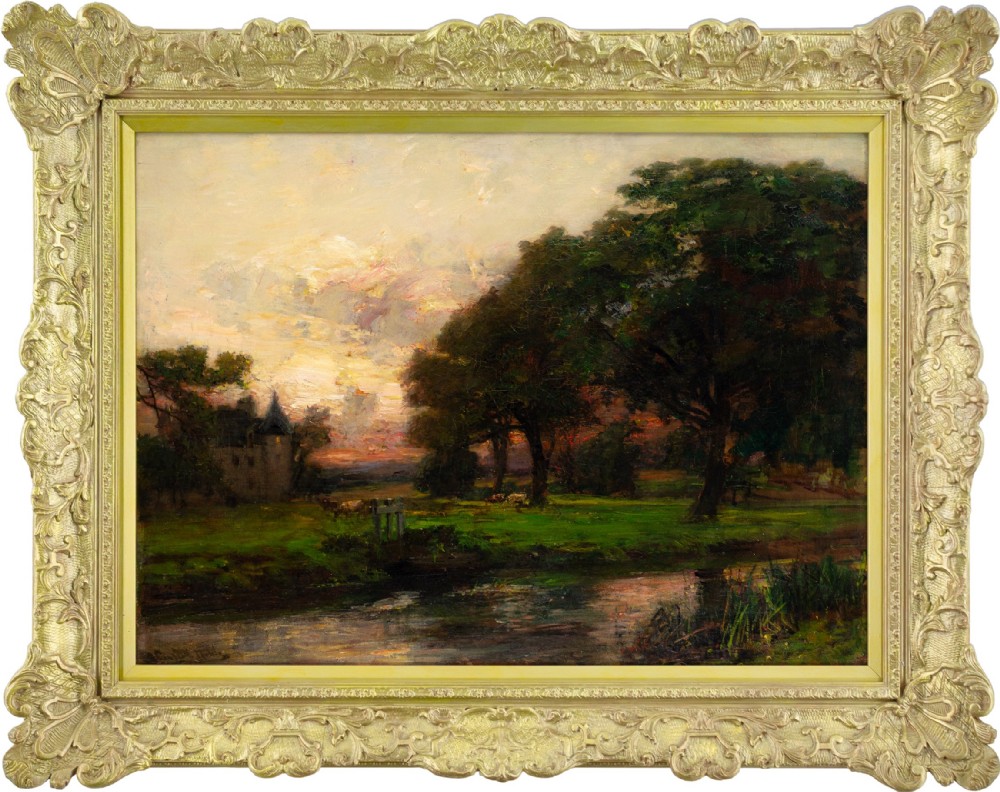
James Campbell Noble Rsa, Evening - Antique Oil Painting