32,689  PAGES BROWSED TODAY PAGES TODAY • 24 ANTIQUES UPLOADED TODAYNEW ARRIVALS
GIFTS
24 ITEMS ADDED TODAY
Sort Order
Items Per Page
Browse Categories
Sort order
Relevant Links
Items per page
ID #SA1201632
SOLD
Email Phone
Save
Frederick Kerseboom (1632-1690) - Portrait of a Nobleman (1)
Sold by Period Portraits
sold SA1201632
Sorry, but this item has been sold.
Period Portraits

Period Portraits

Sellingantiques Verified Since Jan 2017
Browse dealers 46 items
  • About Us
    Specialist dealer in portraits from the 17th century to the 20th century. Our stock includes quality oil paintings, drawings, and mezzotints
Id #SA1201632
PDF SHARE
SAVE

Frederick Kerseboom (1632-1690) - Portrait of a Nobleman (1)

17th century
Sold 30 March 2026 · Period Portraits
This “Frederick Kerseboom (1632-1690) - Portrait of a Nobleman (1)” found a buyer.

It was listed by Period Portraits. Sold pieces stay on Sellingantiques as a record of what has passed through, and the next one is rarely far away.

Description

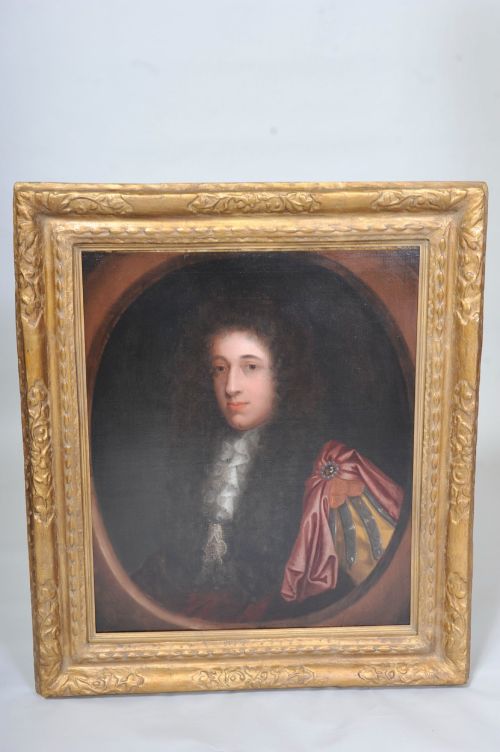
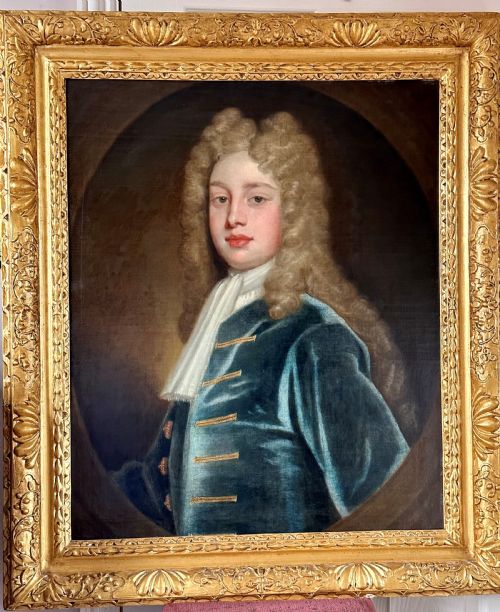
A fine late 17th century British portrait of a Norfolk nobleman attributed to Frederick Kerseboom (1632 - 1690).

The elegant sitter is depicted half length within the oval wearing a large powdered full bottomed periwig and an aristocratic costume which includes a crimson silk wrap, a pale blue silk robe (with all over silver floral embroidery in silver thread) and a pristine white stock.

Although this gentleman’s costume leaves us in no doubt as to his status, despite his grand attire, the soft lighting employed by the artist and the sitters smooth, softly modelled face with its relatively calm expression, creates a portrait which shuns baroque hauteur. This is a warm and welcoming work of a well characterised and sympathetic individual.

Frederick Kerseboom (1632-1690) Frederick Kerseboom was a German painter renowned for his portraiture, who trained across Europe before establishing a successful practice in late 17th-century England, where he captured the likenesses of notable figures including aristocrats and scholars. Born in Solingen, Germany, Kerseboom came from a family of artists and initially pursued history and portrait painting, but found greater demand for portraits among the aristocracy and middle ranks of society upon arriving in London in the 1680s.

Kerseboom's early career took him to Amsterdam for studies, followed by Paris in 1650, where he apprenticed under the prominent court painter Charles Le Brun. He later spent 14 years in Rome, including two under the tutelage of Nicolas Poussin, producing history paintings in Poussin's manner. By the 1680s, he had settled in London's Covent Garden alongside his nephew, the painter Johann Kerseboom, and adapted his style to English tastes, producing rigidly posed works influenced by contemporaries like Willem Wissing.

Among Kerseboom's known works are portraits such as those of Theophilus Leigh (1683) and the Hon. Mary Leigh, as well as experiments with painting on glass; his history scenes are known today mainly through engravings. He was mistakenly referred to as "Casaubon" in contemporary correspondence and burial records. Kerseboom died in London and was buried at St. Paul's, Covent Garden, on 30 March 1693.

This fine portrait is in an excellent state of conservation, it is the companion portrait to another portrait ( the sitters brother) also listed here. They are both ready to hang and enjoy either singly or ad a pair in their matching original carved and gilded oval ‘lely’ style frames.

Higher resolution images on request.

Worldwide shipping available.

Canvas: 86cm x 67cm.

Frame: 105cm x 85 cm.

Price: £6000

Date of Manufacture

Period Portraits has dated this Antique Oil Painting to the 17th Century.

Physical Dimensions
Height
105cm (41.34")
Width
85cm (33.46")
Depth
5cm (1.97")
Reference Numbers
Sellingantiques Reference
SA1201632
Description
A fine late 17th century British portrait of a Norfolk nobleman attributed to Frederick Kerseboom (1632 - 1690).

The elegant sitter is depicted half length within the oval wearing a large powdered full bottomed periwig and an aristocratic costume which includes a crimson silk wrap, a pale blue silk robe (with all over silver floral embroidery in silver thread) and a pristine white stock.

fig 1. An oval oil painting depicting a nobleman in a red drape and blue embroidered vest, enclosed within an ornate carved gilt frame.
fig 1. Frederick Kerseboom (1632-1690) - Portrait of a Nobleman (1)

Although this gentleman’s costume leaves us in no doubt as to his status, despite his grand attire, the soft lighting employed by the artist and the sitters smooth, softly modelled face with its relatively calm expression, creates a portrait which shuns baroque hauteur. This is a warm and welcoming work of a well characterised and sympathetic individual.

fig 2. An oval oil painting depicting a nobleman in a red drape and blue embroidered vest, enclosed within an ornate carved gilt frame.
fig 2. Frederick Kerseboom (1632-1690) - Portrait of a Nobleman (1)

Frederick Kerseboom (1632-1690) Frederick Kerseboom was a German painter renowned for his portraiture, who trained across Europe before establishing a successful practice in late 17th-century England, where he captured the likenesses of notable figures including aristocrats and scholars. Born in Solingen, Germany, Kerseboom came from a family of artists and initially pursued history and portrait painting, but found greater demand for portraits among the aristocracy and middle ranks of society upon arriving in London in the 1680s.

“
Kerseboom's early career took him to Amsterdam for studies, followed by Paris in 1650, where he apprenticed under the prominent court painter Charles Le Brun.
Period Portraits

He later spent 14 years in Rome, including two under the tutelage of Nicolas Poussin, producing history paintings in Poussin's manner. By the 1680s, he had settled in London's Covent Garden alongside his nephew, the painter Johann Kerseboom, and adapted his style to English tastes, producing rigidly posed works influenced by contemporaries like Willem Wissing.

fig 3. An oval oil painting depicting a nobleman in a red drape and blue embroidered vest, enclosed within an ornate carved gilt frame.
fig 3. Frederick Kerseboom (1632-1690) - Portrait of a Nobleman (1)

Among Kerseboom's known works are portraits such as those of Theophilus Leigh (1683) and the Hon. Mary Leigh, as well as experiments with painting on glass; his history scenes are known today mainly through engravings. He was mistakenly referred to as "Casaubon" in contemporary correspondence and burial records. Kerseboom died in London and was buried at St. Paul's, Covent Garden, on 30 March 1693.

fig 4. An oval oil painting depicting a nobleman in a red drape and blue embroidered vest, enclosed within an ornate carved gilt frame.
fig 4. Frederick Kerseboom (1632-1690) - Portrait of a Nobleman (1)

This fine portrait is in an excellent state of conservation, it is the companion portrait to another portrait ( the sitters brother) also listed here. They are both ready to hang and enjoy either singly or ad a pair in their matching original carved and gilded oval ‘lely’ style frames.

fig 5. An oval oil painting depicting a nobleman in a red drape and blue embroidered vest, enclosed within an ornate carved gilt frame.
fig 5. Frederick Kerseboom (1632-1690) - Portrait of a Nobleman (1)

Higher resolution images on request.

Worldwide shipping available.

Canvas: 86cm x 67cm.

Frame: 105cm x 85 cm.

Price: £6000

Date of Manufacture

Period Portraits has dated this Antique Oil Painting to the 17th Century.

Height
105cm (41.34")
Width
85cm (33.46")
Depth
5cm (1.97")
Reference Numbers
Sellingantiques Ref
SA1201632
Period Portraits
Period Portraits
Sellingantiques verified Since Jan 2017

Specialist dealer in portraits from the 17th century to the 20th century. Our stock includes quality oil paintings, drawings, and mezzotints

Dealer Profile

You can view the stock and full dealer information on the Period Portraits Profile Page

PDF SHARE
SAVE
An oval oil painting depicting a nobleman in a red drape and blue embroidered vest, enclosed within an ornate carved gilt frame. SOLD6+ MONTHS AGO
1 / 9
Archive I An oval oil painting depicting a nobleman in a red drape and blue embroidered vest, enclosed within an ornate carved gilt frame. SOLD6+ MONTHS AGO

Frederick Kerseboom (1632-1690) - Portrait of a Nobleman (1)

Archive II An oval oil painting depicting a nobleman in a red drape and blue embroidered vest, enclosed within an ornate carved gilt frame. View II
Archive III An oval oil painting depicting a nobleman in a red drape and blue embroidered vest, enclosed within an ornate carved gilt frame. View III
Archive IV An oval oil painting depicting a nobleman in a red drape and blue embroidered vest, enclosed within an ornate carved gilt frame. View IV
Archive V An oval oil painting depicting a nobleman in a red drape and blue embroidered vest, enclosed within an ornate carved gilt frame. View V
Archive VI An oval oil painting depicting a nobleman in a red drape and blue embroidered vest, enclosed within an ornate carved gilt frame. View VI
Archive VII An oval oil painting depicting a nobleman in a red drape and blue embroidered vest, enclosed within an ornate carved gilt frame. View VII
Archive VIII An oval oil painting depicting a nobleman in a red drape and blue embroidered vest, enclosed within an ornate carved gilt frame. View VIII
Archive IX An oval oil painting depicting a nobleman in a red drape and blue embroidered vest, enclosed within an ornate carved gilt frame. View IX
FURTHER BROWSING

Visitors also looked at these ⇣

Enlarged Archival View
Telephone 07889 859729
Location
North Yorkshire
United Kingdom
Verified Since Jan 2017
Items For Sale 46
Items Sold 63
Period Portraits
Period Portraits
Verified Since Jan 2017
View Dealer Info
Location: North Yorkshire, United Kingdom
Verified
Jan 2017
For Sale
46
Sold
63
An oval oil painting depicting a nobleman in a red drape and blue embroidered vest, enclosed within an ornate carved gilt frame.
FREDERICK KERSEBOOM (1632-1690) - PORTRAIT OF A NOBLEMAN (1)
Ref: SA1201632
An oval oil painting depicting a nobleman in a red drape and blue embroidered vest, enclosed within an ornate carved gilt frame.
Detail View 1
Detail View 2
Detail View 3
Detail View 4
Detail View 5
Detail View 6
Detail View 7
Detail View 8
Archival Detail
Every single antique dealer on our platform is individually approved by our internal team. We verify their professional trade history, ethical standards, and photographic quality to ensure a secure, high-standard buying environment. Upon joining, every dealer agrees to a strict 9-point code of conduct. While issues can occasionally arise, our dealers typically resolve them swiftly and directly with the buyer. In fact, since our founding in 2002, Sellingantiques has only had to step in to help resolve an issue on roughly five occasions—a true testament to the quality of our dealers and their dedication to your happiness.
Our dealers are highly experienced in packing and shipping fragile, high-value antiques. Because you are in direct contact with the dealer, you will be able to easily go through all available shipping and insurance options together to ensure your item arrives safely.
Antiques are the ultimate green purchase. By choosing historical pieces over newly manufactured goods, you completely eliminate the carbon footprint of modern mass production while preserving exceptional, timeless craftsmanship.
Written by Sellingantiques from the dealer’s photographs and listing
  • ObjectPaintings
  • Period17th century
  • StyleBaroque
  • MaterialOil paint, Canvas, Gilt wood
  • ColourGold
  • MotifsOval canvas format, Carved giltwood frame, Rocaille ornamentation, Nobleman portraiture
  • SizeH 105 cm (41 in) x W 85 cm (33 in) x D 5 cm (2 in)

Baroque portraiture emerged in the 17th century, characterised by dramatic lighting, rich textures, and a focus on capturing the status, power, and psychological depth of the subject.

Artists of this era typically painted with oil colours on stretched linen canvas, utilising layered glazes over a monochrome underpainting, housed within carved and gilded wooden frames.

Authentication involves examining the canvas weave, pigment composition via scientific analysis, stretcher frame construction, and checking for natural age-related craquelure under magnification.

Placing an ornate historical portrait against a darkly painted or panelled wall creates a striking focal point, bridging traditional gravitas with modern eclectic design.

Maintain stable relative humidity and temperature levels, keep the artwork away from direct sunlight, and consult a professional conservator for periodic surface cleaning.
items
Add keywords to the filter
Price
£100
£250000
Era
Period
Style
Material
Origin
Stock Location
Recently Added
Online Payments
Categories