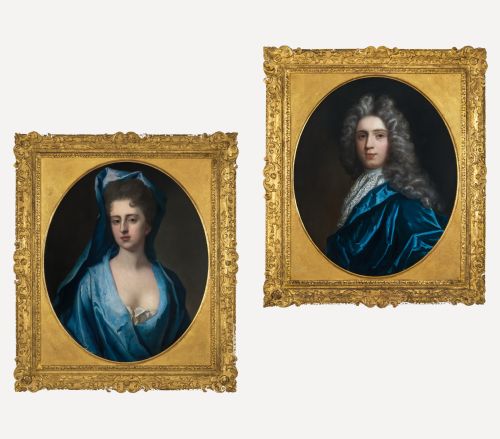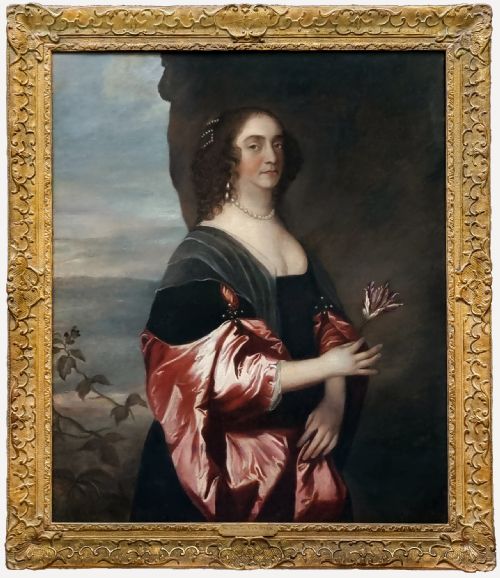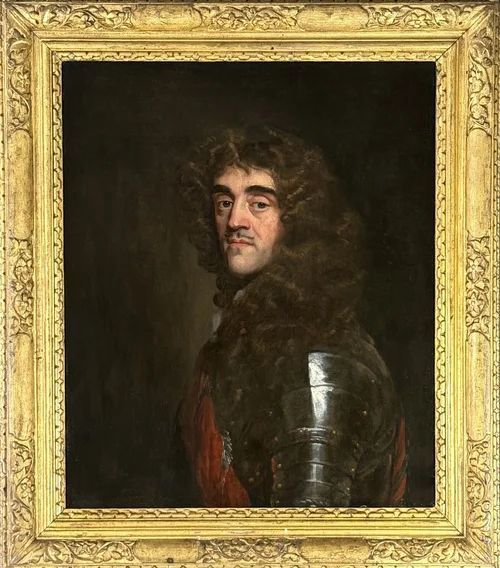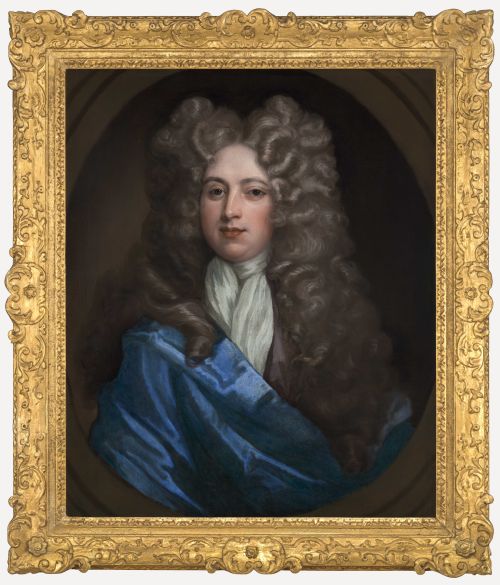
It was listed by Titan Fine Art. Sold pieces stay on Sellingantiques as a record of what has passed through, and the next one is rarely far away.
Titan Fine Art has dated this Antique Oil Painting to the 17th Century.
C. (inv. no. 1952.5.39). Many contemporary versions were painted and ours is one such version.
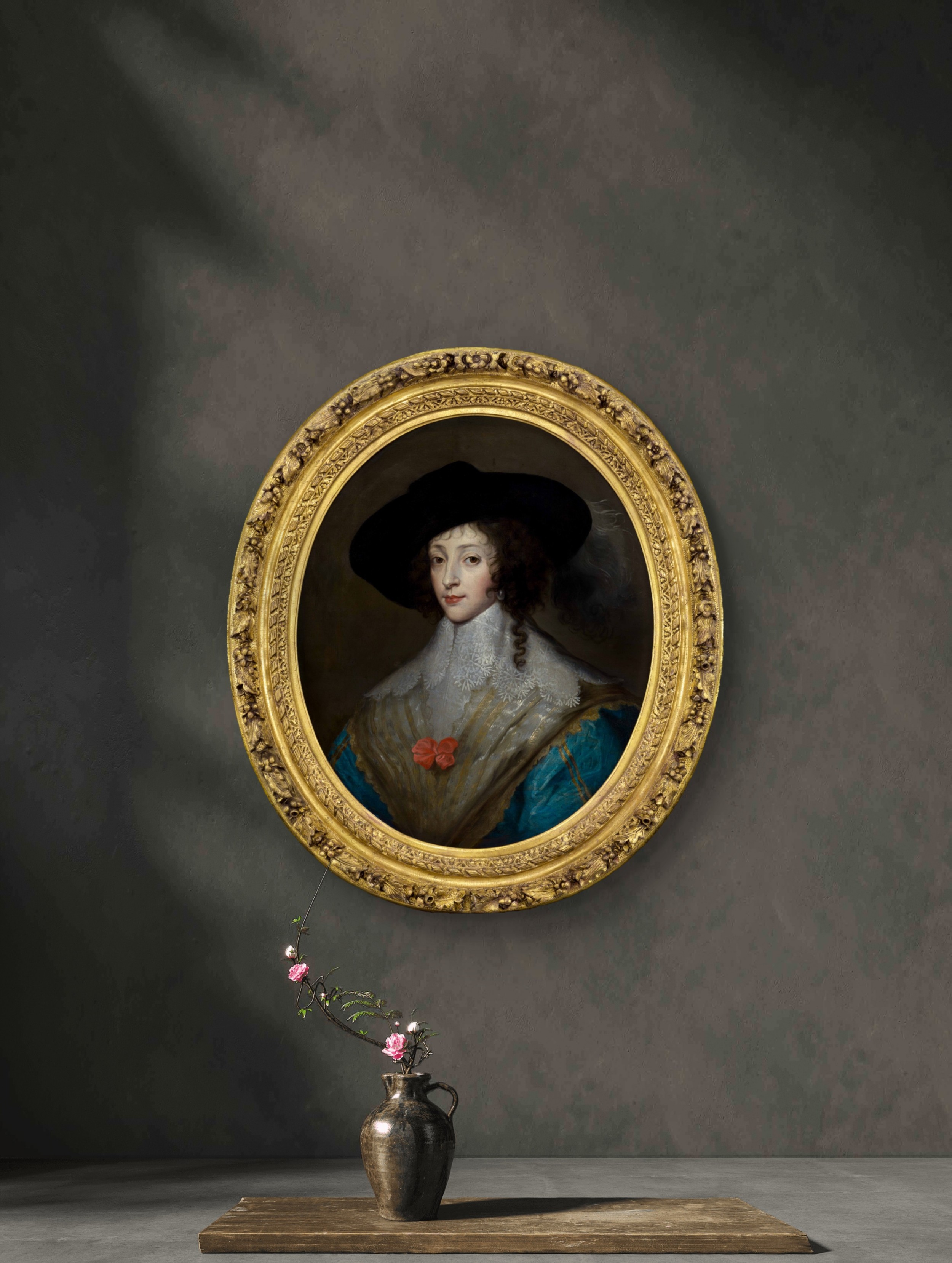
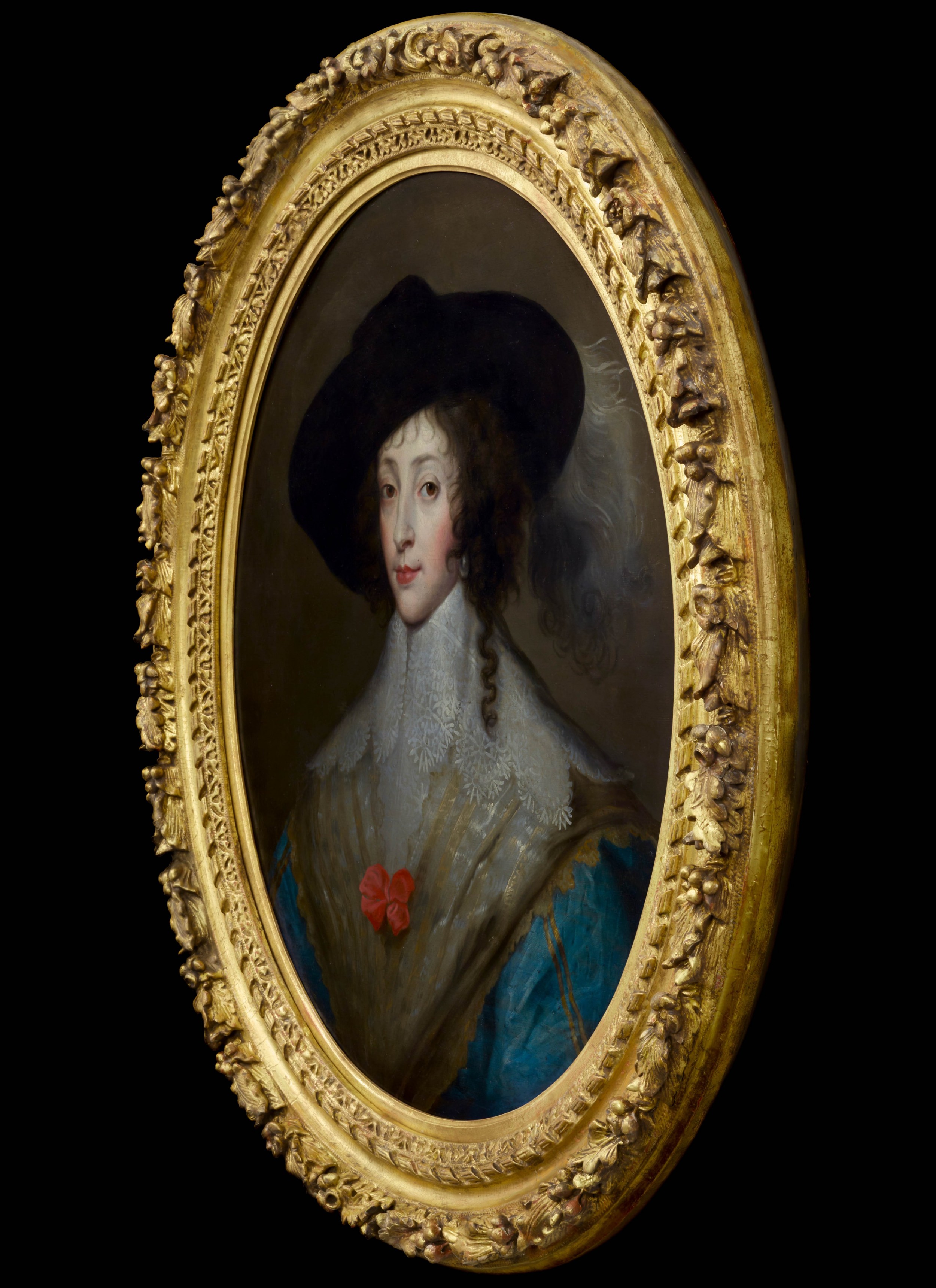
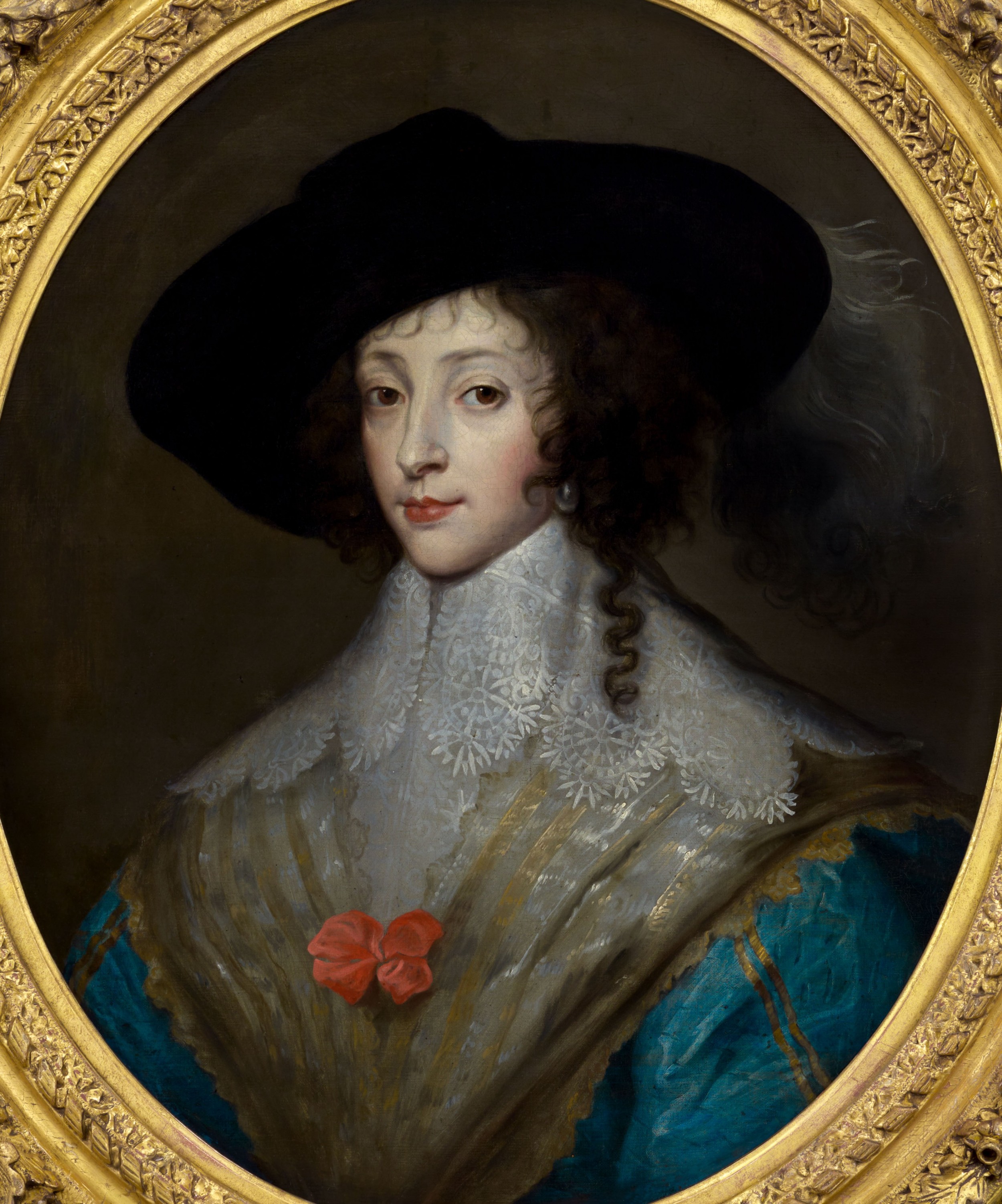
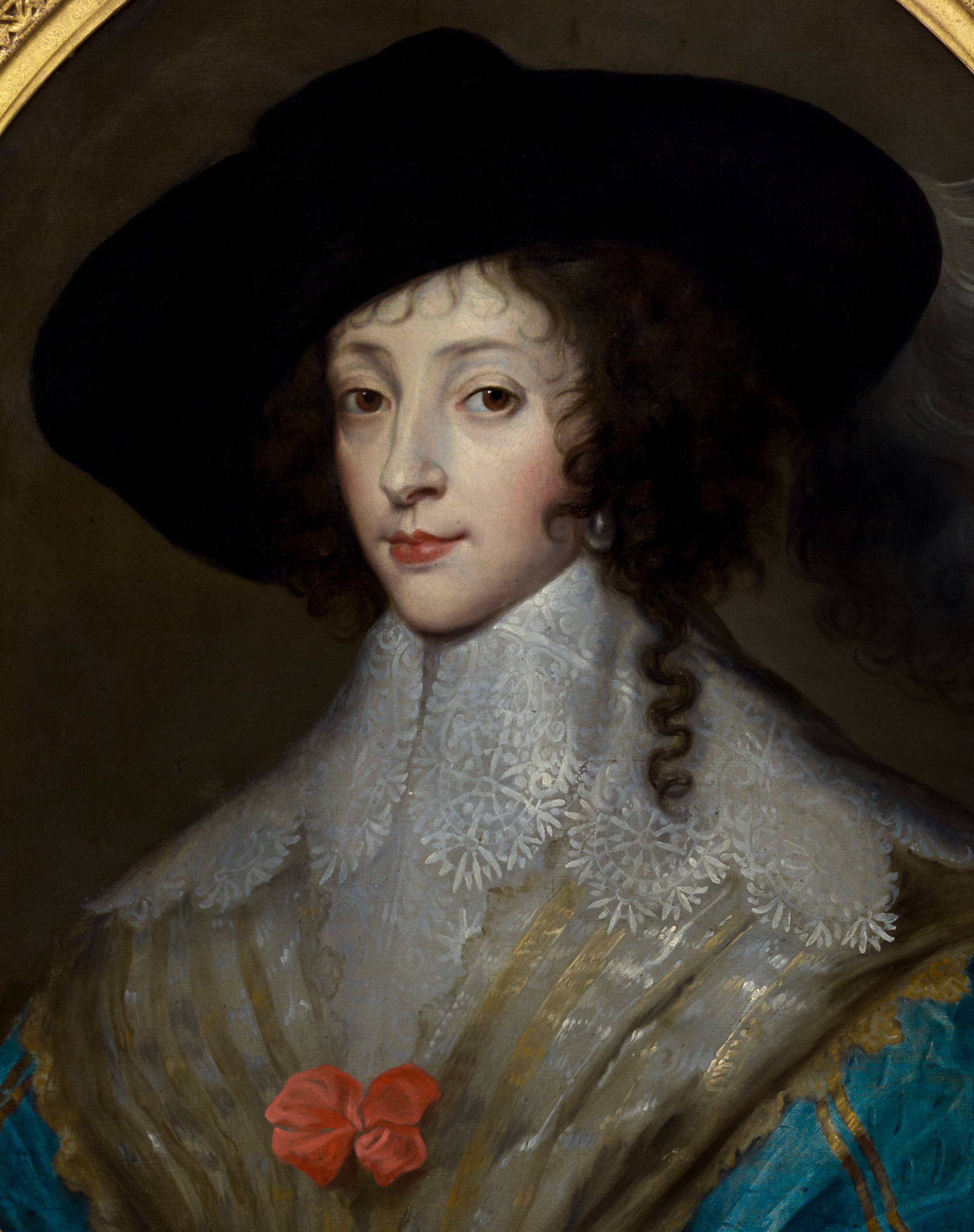
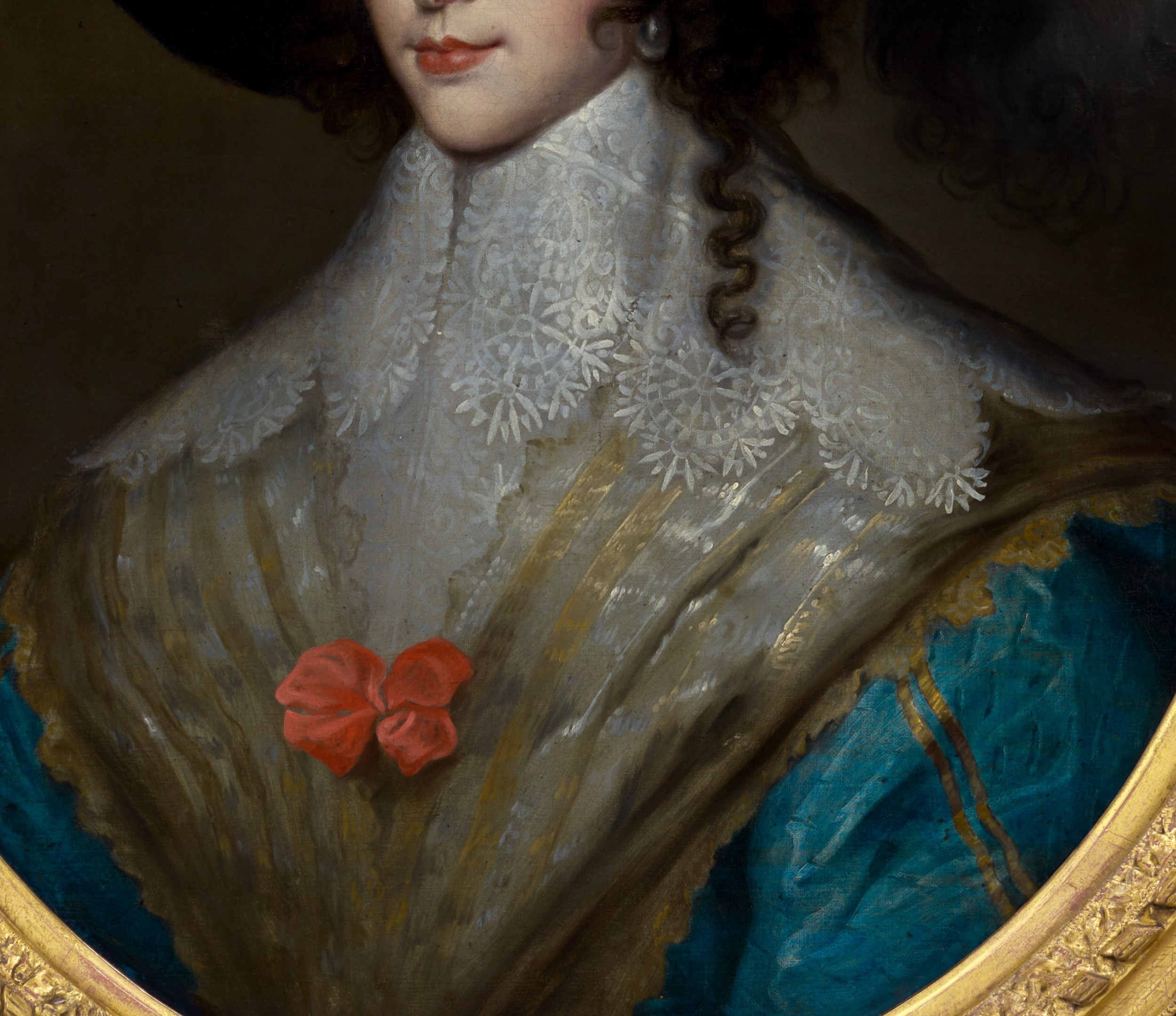
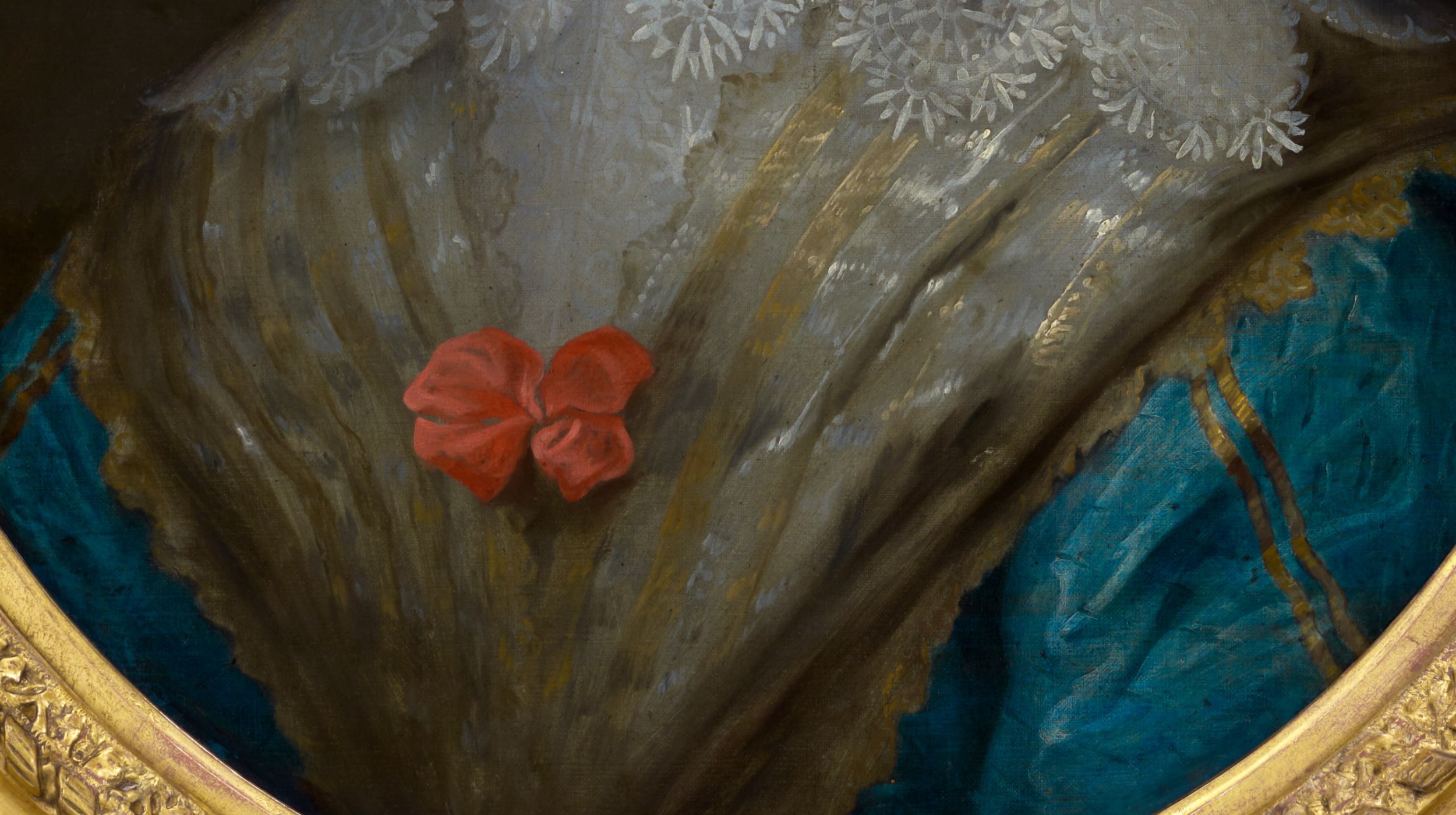
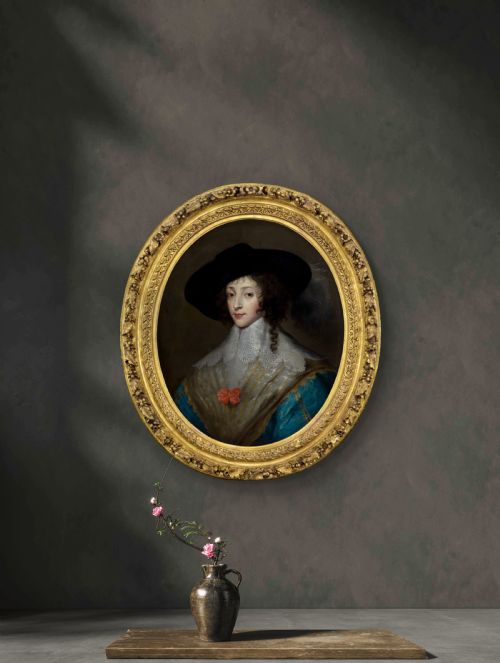
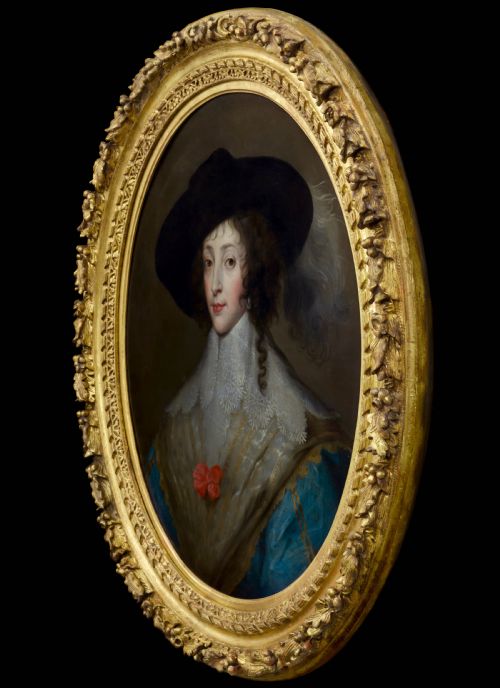
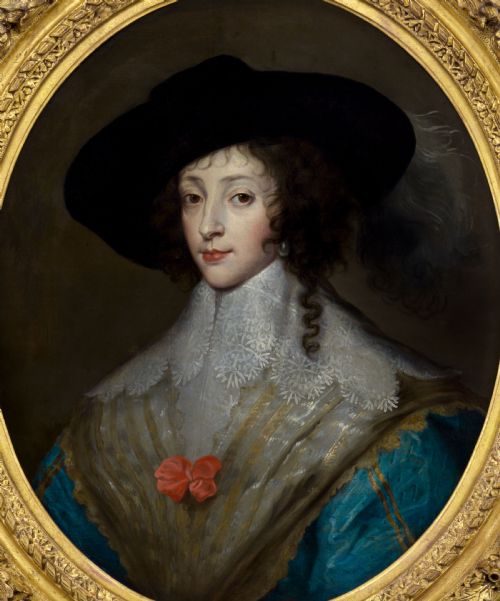
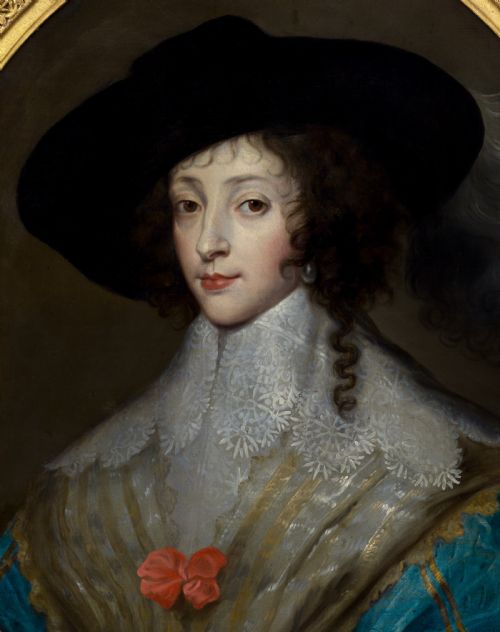
Queen Henrietta Maria, born in 1609, was the consort of King Charles I and an influential and fashionable figure at Court. In this charming full-length portrait, she is wearing a satin hunting dress and hat, with a white lace collar and red bow on the bodice.
Henrietta Maria, the youngest daughter of King Henri IV of France and Marie de Medici, represented an exemplary dynastic alliance for Charles. However, she was far from being a mere pawn; the vivacious and lively aspects of her personality are highlighted in the principal version (at the National Gallery of Art, Washington) through the inclusion of two royal favourites: the fourteen-year-old knight, Sir Jeffery Hudsun, and his monkey. Hudson was introduced to the queen at court by the Duke of Buckingham, making a surprising entrance from within a large pie. He proved to be a loyal companion, remaining by her side until her passing.
Due to Maria's Catholic faith, she was met with suspicion by many in England. When the Civil War erupted, she departed England for the Netherlands, where she successfully raised funds to support the Royalist cause by selling or pawning her jewels, before ultimately returning to England in 1643 to reunite with the king. She never fully recovered from his execution in January 1649, and she wore mourning attire until the end of her life. Following the Restoration in 1660, she returned to England in a failed effort to thwart the Duke of York’s marriage to Anne Hyde. In 1665, she left England for France for the final time and died in 1669.
Van Dyke is considered one of the foremost masters of European baroque portraiture. Born in Antwerp, he was the son of a prosperous silk merchant, while his mother was renowned for her embroidery talents. He exhibited remarkable talent at an early age and spent several years as an apprentice to the artist Hendrik van Balen. By 1618, van Dyck had been registered as a Master in the Guild of St. Luke in Antwerp. He then dedicated the following two years to serving as the principal assistant to Peter Paul Rubens. In 1620, he went to England and is believed to have entered the service of King James I. He was later court painter to King Charles I and his wife. He is buried in St. Paul's Cathedral in London.
Earl of Cork is a title in the Peerage of Ireland, held in conjunction with the Earldom of Orrery since 1753. It was created in 1620 for Richard Boyle, 1st Baron Boyle.
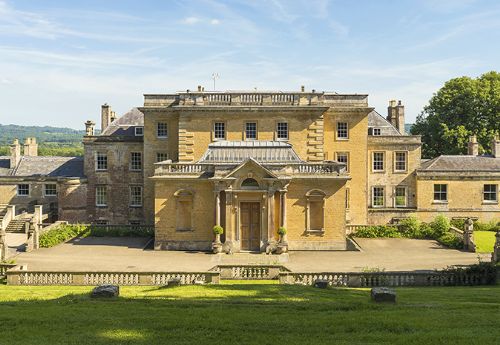
For 250 years, Marston was the principal English home of the Boyle family, Earls of Cork and Orrery. Although there was an earlier home on the estate, Marston’s modern history began only in 1641, when the ‘Great Earl’ of Cork bought the place for his younger son, Lord Broghill, created 1st Earl of Orrery in 1660.
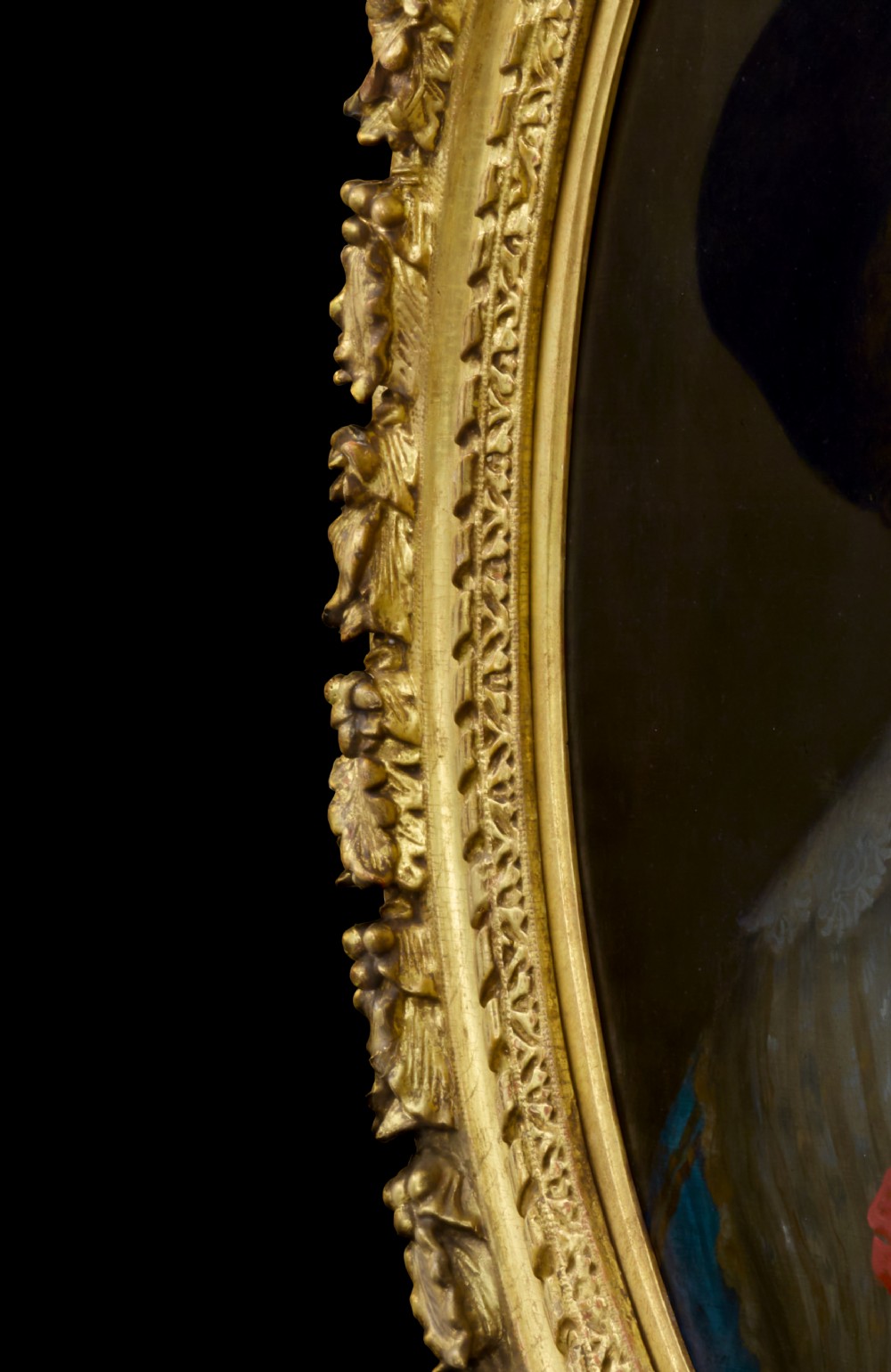
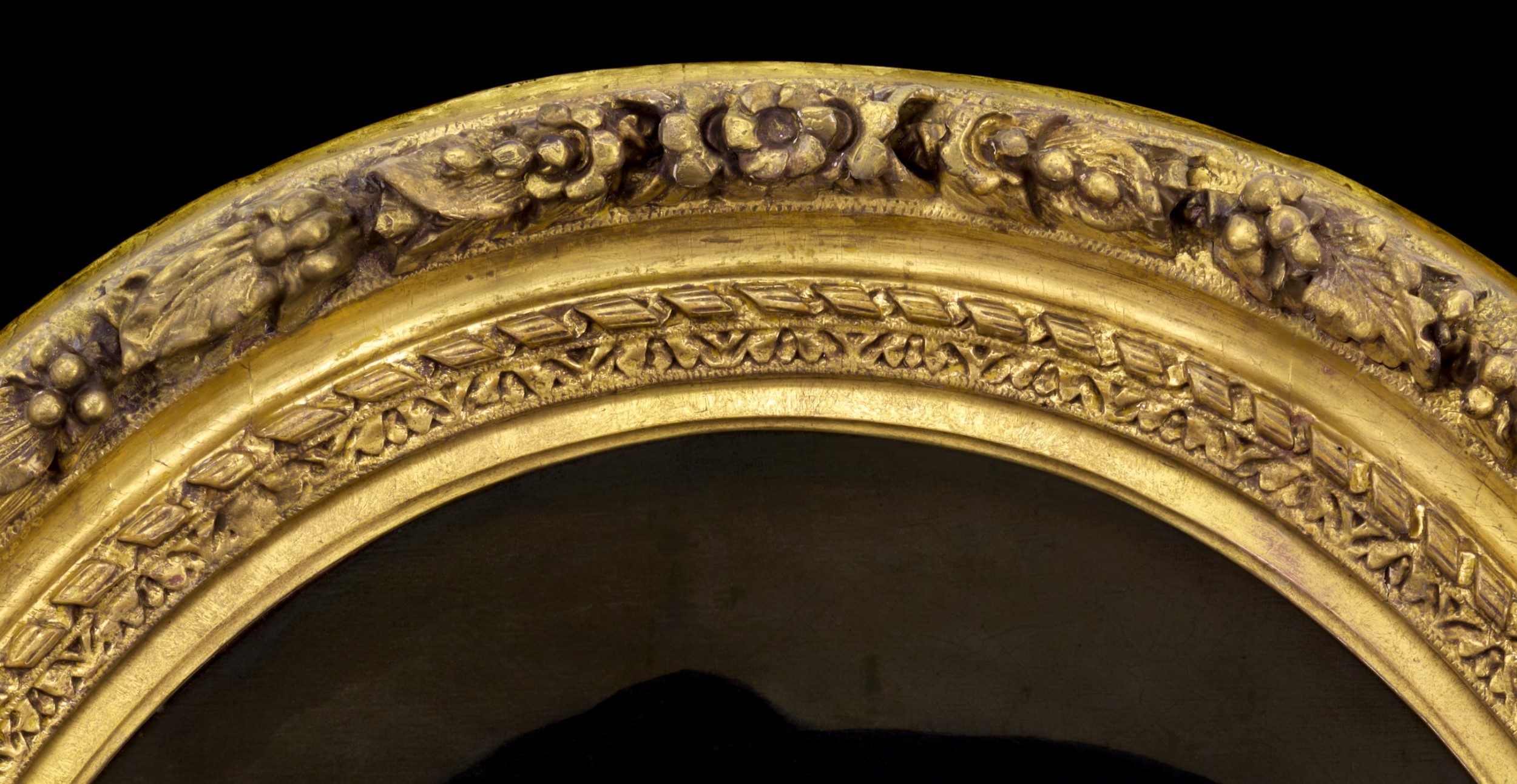
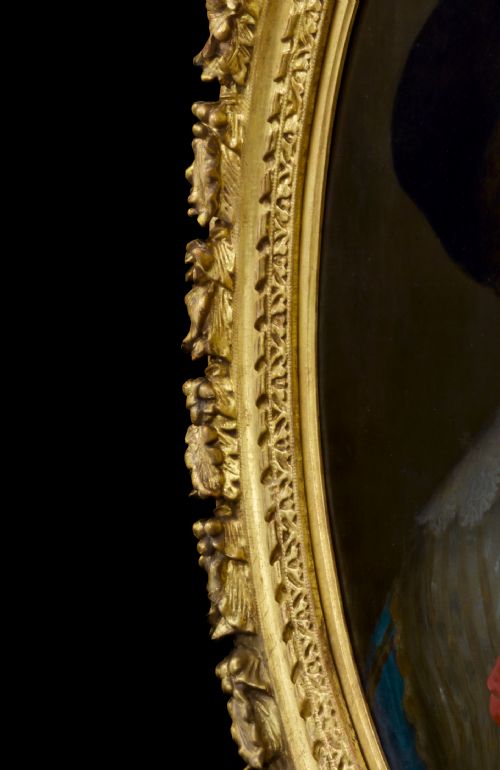
Held in a boldly carved and gilded frame with leaves and acorns.
Charles Boyle, 10th Earl of Cork and Orrery (1861–1925), at Marston House, Frome, Somerset;
His sale ('The Property of the Right Hon. The Earl of Cork and Orrery, removed from Marston, Frome'), London, Christie's, Tuesday, November 25, 1905, lot 71;
Titan Fine Art has dated this Antique Oil Painting to the 17th Century.
Specialist in 17th & 18thc portraits. Highly curated selection, museum-level research & pro conservation. Exceptional art, expertly vetted.
You can view the stock and full dealer information on the Titan Fine Art Profile Page
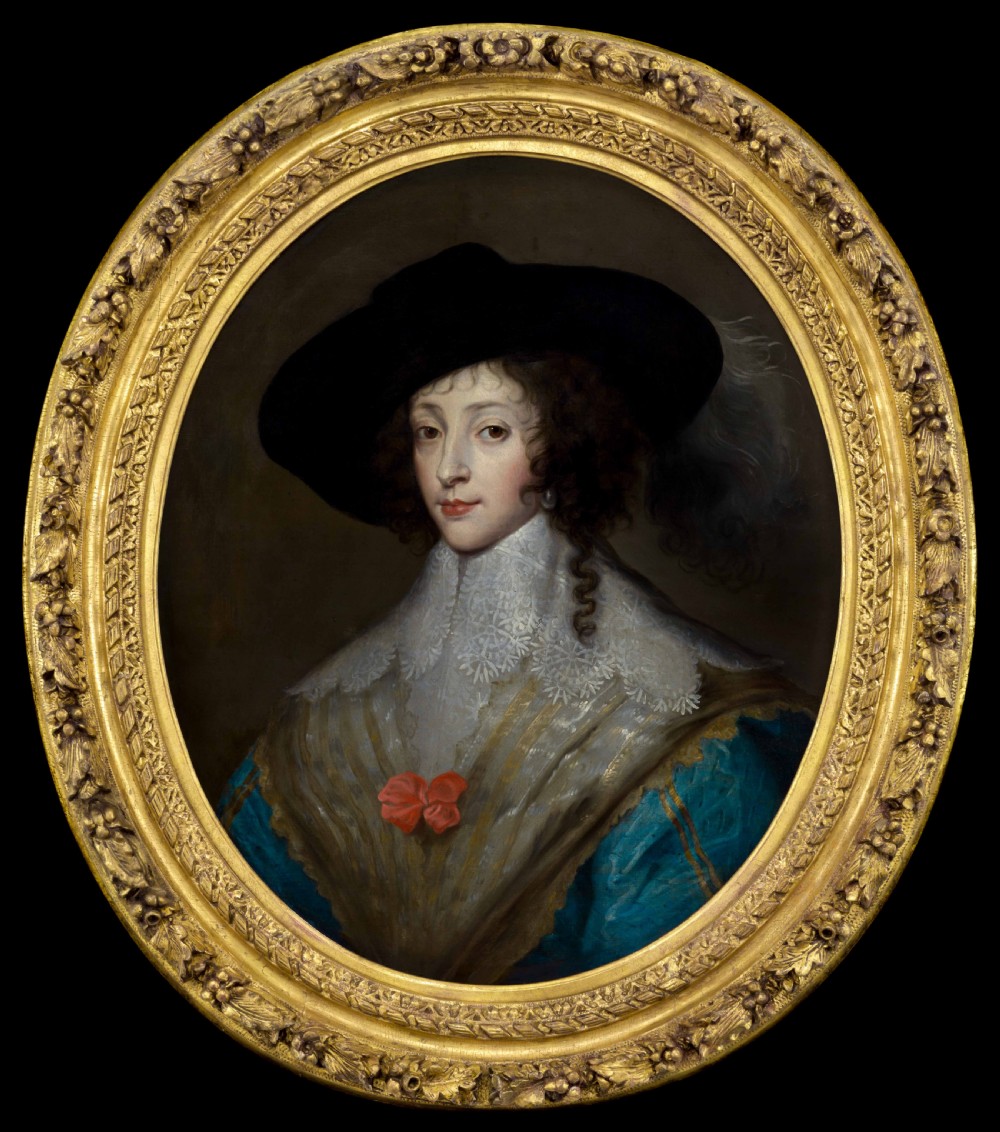
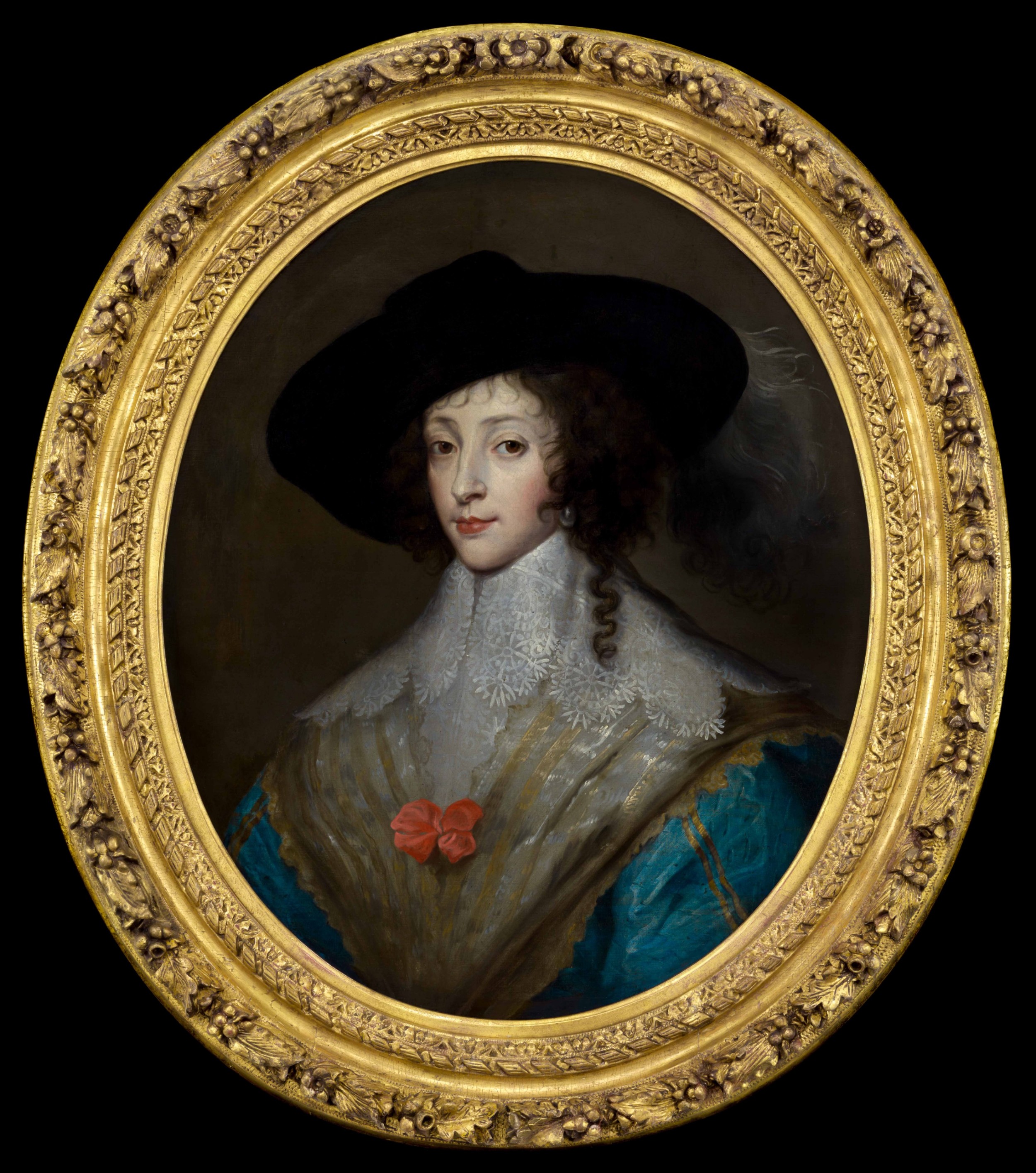
Portrait of a Lady, Queen Henrietta Maria in Riding Dress and Hat C.1640; Studio of Sir Anthony Van Dyck (1599-1641), Oil on Canvas Painting