Brave Fine Art has dated this piece to the 16th Century.
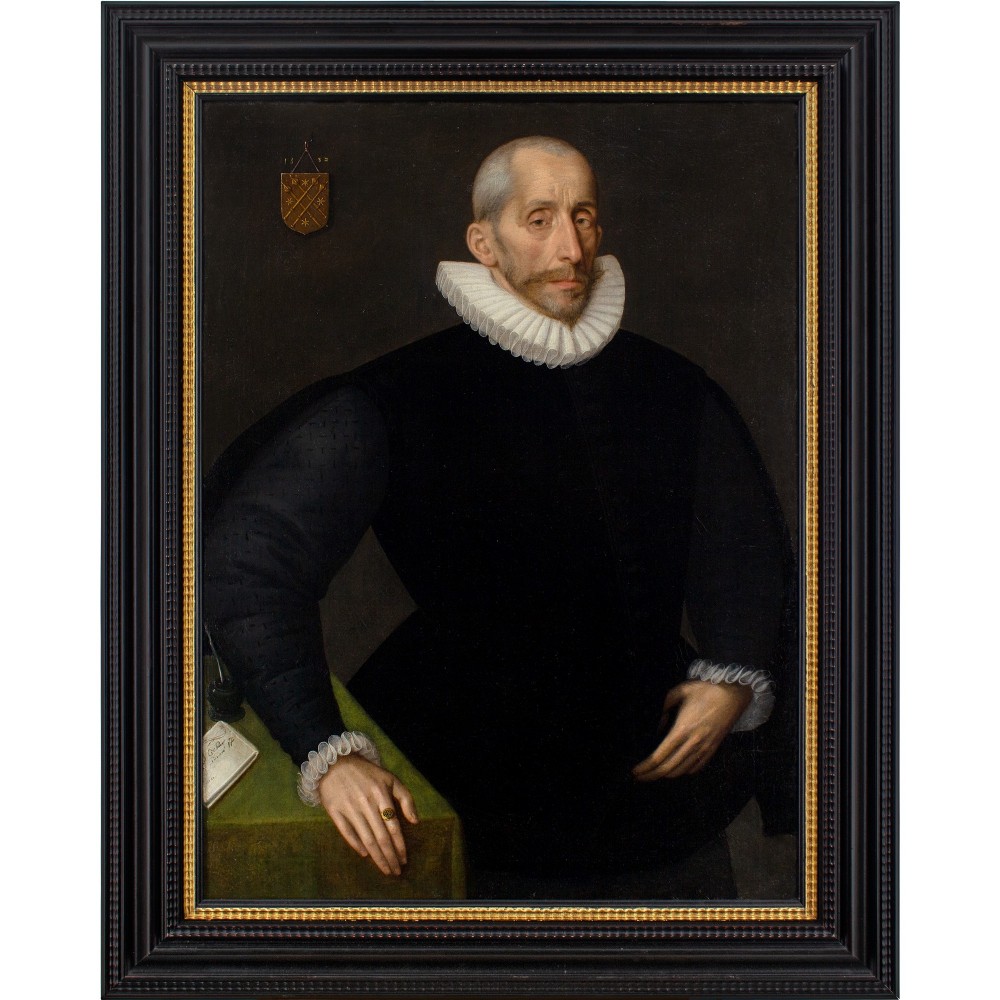
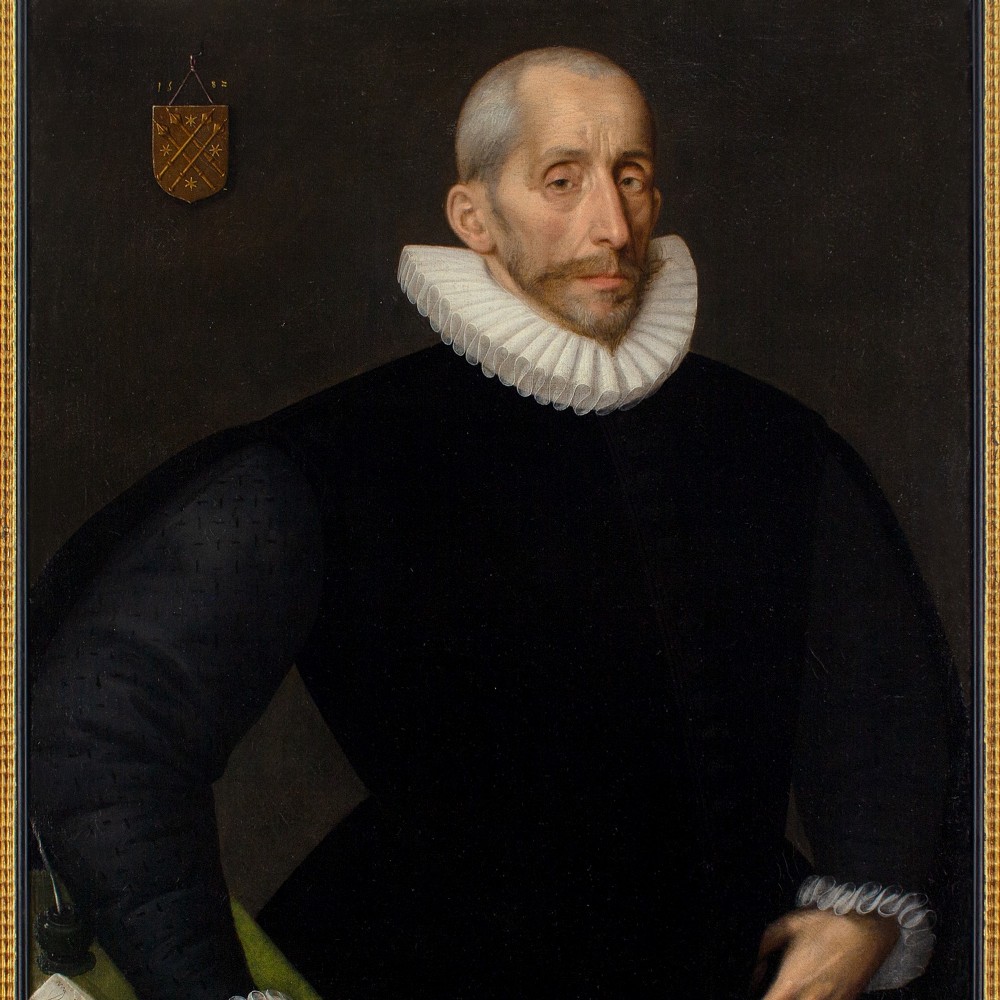
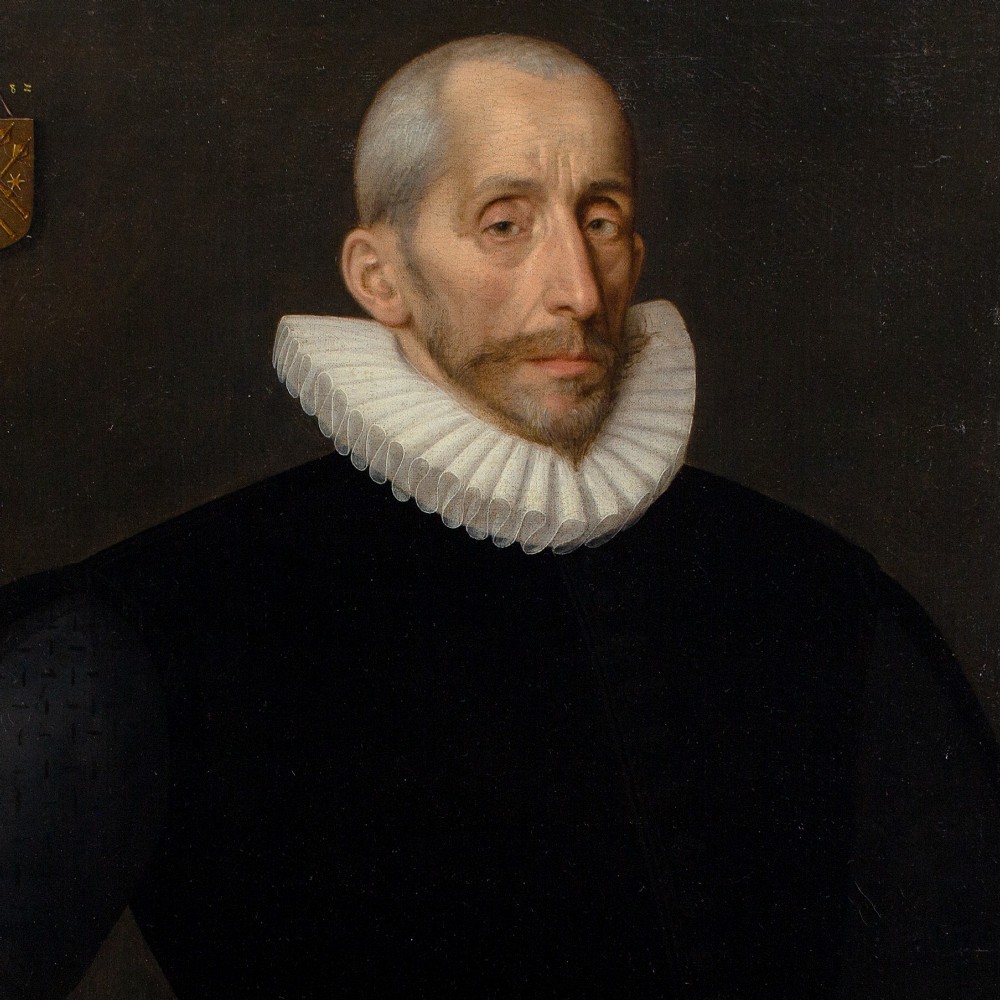
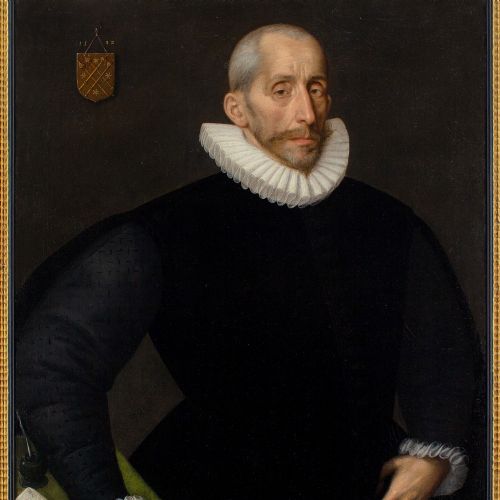
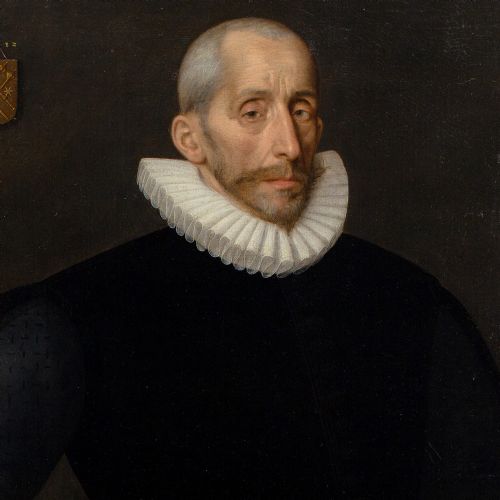
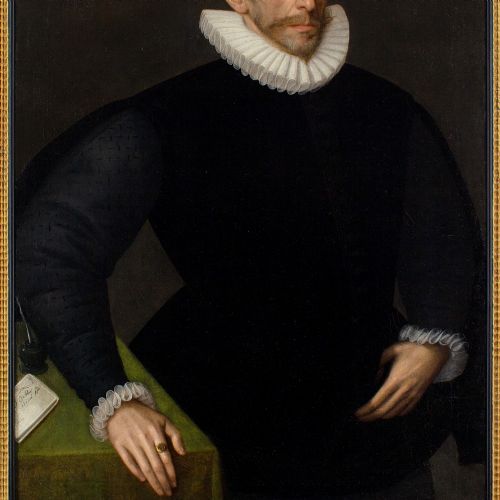
In the top left, a coat of arms represents the Sani family, who were predominantly associated with Tuscany, central Italy. ‘Blazon: azure with four maces of arms passed in a double St. Andrew’s cross, set aside by four stars, all in gold.’
The precise identity of the sitter is unknown, but it’s a surname with links to local government and art patronage, particularly in Siena. For instance, during the late 15th century, Andrea Sani held the role of Chief Magistrate, the highest office in city governance. And in 1550, the Sani family commissioned Italian mannerist painter, Domenico di Pace Beccafumi (1486-1551) to produce an altarpiece of Saint Michael Defeating the Rebel Angels for San Niccolò al Carmine church. 18th-century examples of the coat of arms can still be seen in Siena today.
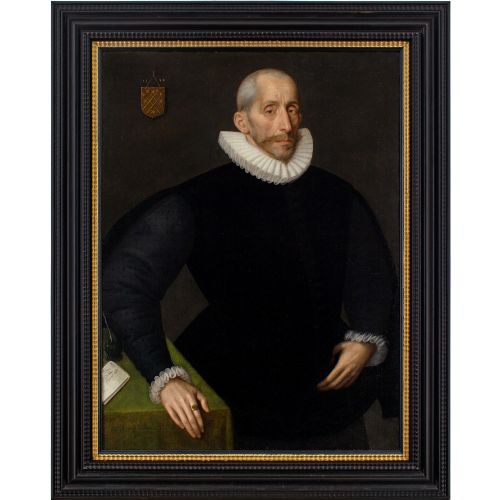
Given the portrait’s date of 1582, another potential candidate is Michele Angiolo Sani, the Chancellor and Notary of Volterra, in the Tuscan mountains. Luigi Biadi’s ‘Storia della citta di Colle in Val d'Elsa’ (1859), refers to him performing civil duties in 1586. Or alternatively, it could relate to the Sanis of Crasciana in Bagni di Lucca, Tuscany, and specifically Salvestro Sani (b.1510).
Gortzius Geldorp was born in Leuven, Flemish Brabant, and information relating to the early part of his career is particularly scant. The art historian, Karel van Mander (1548-1606), was the first to allude to him, referring to him as ‘Gualdrop Gortzius gheseyt Geldrop’ (Gualdrop Gortzius called Geldrop), which suggests that his family hailed from Geldrop in North Brabant, The Netherlands. This remains uncertain however, as nothing is known of his forebears.
It’s generally accepted that he travelled to Antwerp in 1569 and trained under two of its principal painters, Frans Francken I (1542-1616) and Frans Pourbus the Elder (1545-1581). Pourbus was a master of highly individualised portrayals with details rendered with precision.
In 1576, Geldorp was appointed as court painter to the Duke of Terra Nova, Carlo d'Aragona Tagliavia, and accompanied him on numerous European sojourns. In 1579, the pair travelled to Cologne as the Duke was serving as Philip II’s ambassador in peace negotiations with the Dutch. Here, it’s suggested that Geldorp remained and undertook numerous works depicting biblical subjects, such as ‘Esther and Ahasuerus’, yet very little documentation survives. It’s not until 1609 that his presence in Cologne can be verified, when Dutch writer Matthias Quad (1557-1613) records ‘Geldorp, currently living in Cologne, is favoured above all others for likenesses from life’. The same year, he was elected as a representative of the Cologne Painters' Guild.
His location and indeed his activity between 1579 and 1609 is a topic of debate and one explored by Thomas Fusenig and Regina Urbanek in their paper ‘One hundred years of Pseudo-Hans von Aachen: On Cologne portrait painting around 1600’. Also by Horst Vey in ‘Von Geldorp Gortzius in Budapest’. Our portrait appears to shed light on this ‘lost’ period as it suggests that, in 1582, he was working in Italy. This is conceivable when one considers that the Duke of Terra Nova, Carlo d'Aragona Tagliavia, his primary patron, was Italian (b. Castelvetrano, Sicily) and on 18 October 1582, he was appointed Governor of Milan, a post he held until 1592. 1582 also witnessed the marriage of the Duke’s daughter, Giulia Tagliavia d'Aragona, to Fabrizio Carafa, Prince of Roccella.
Furthermore, it’s also plausible th
Brave Fine Art has dated this piece to the 16th Century.
Exquisite antique paintings that capture the imagination.
You can view the stock and full dealer information on the Brave Fine Art Profile Page
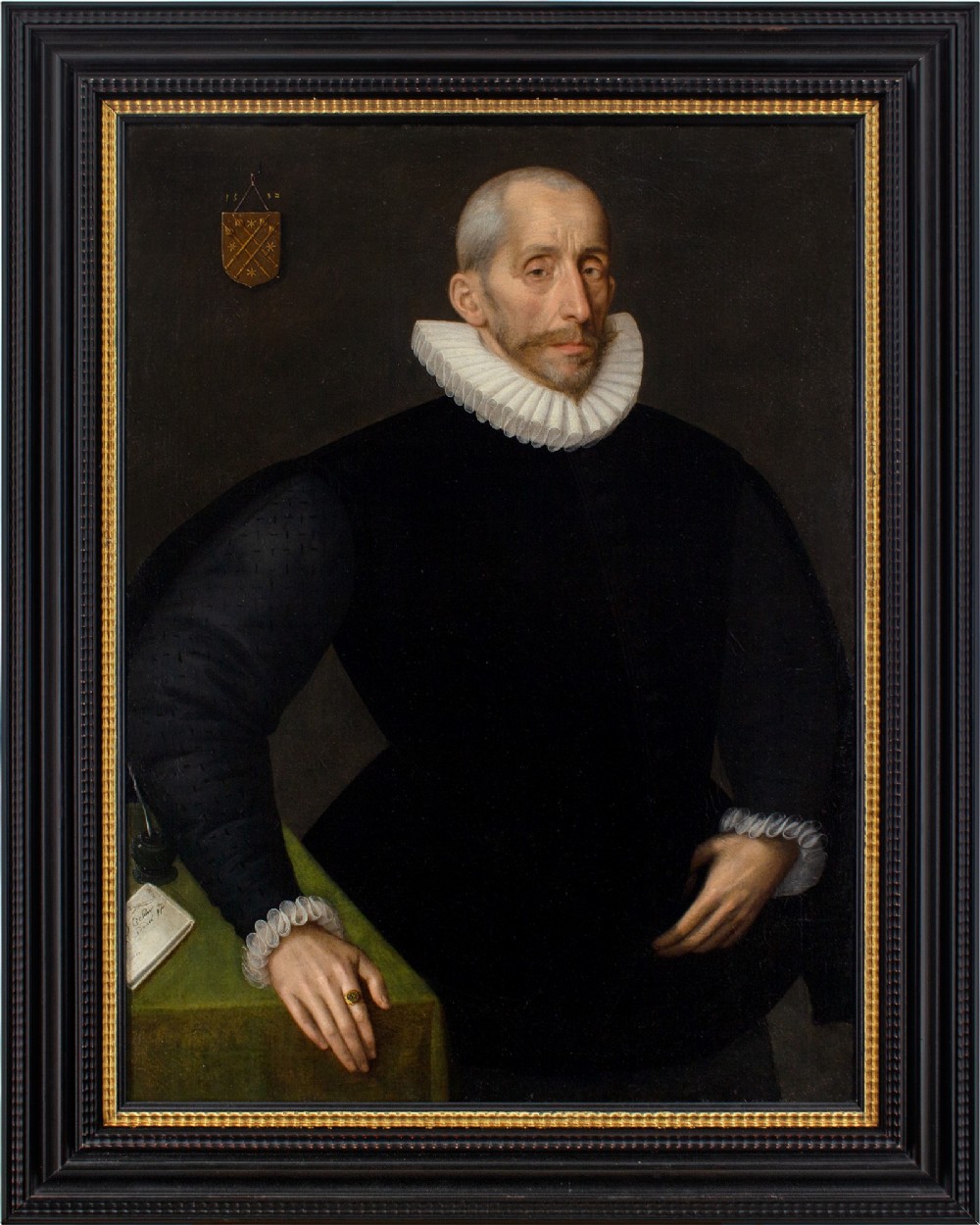
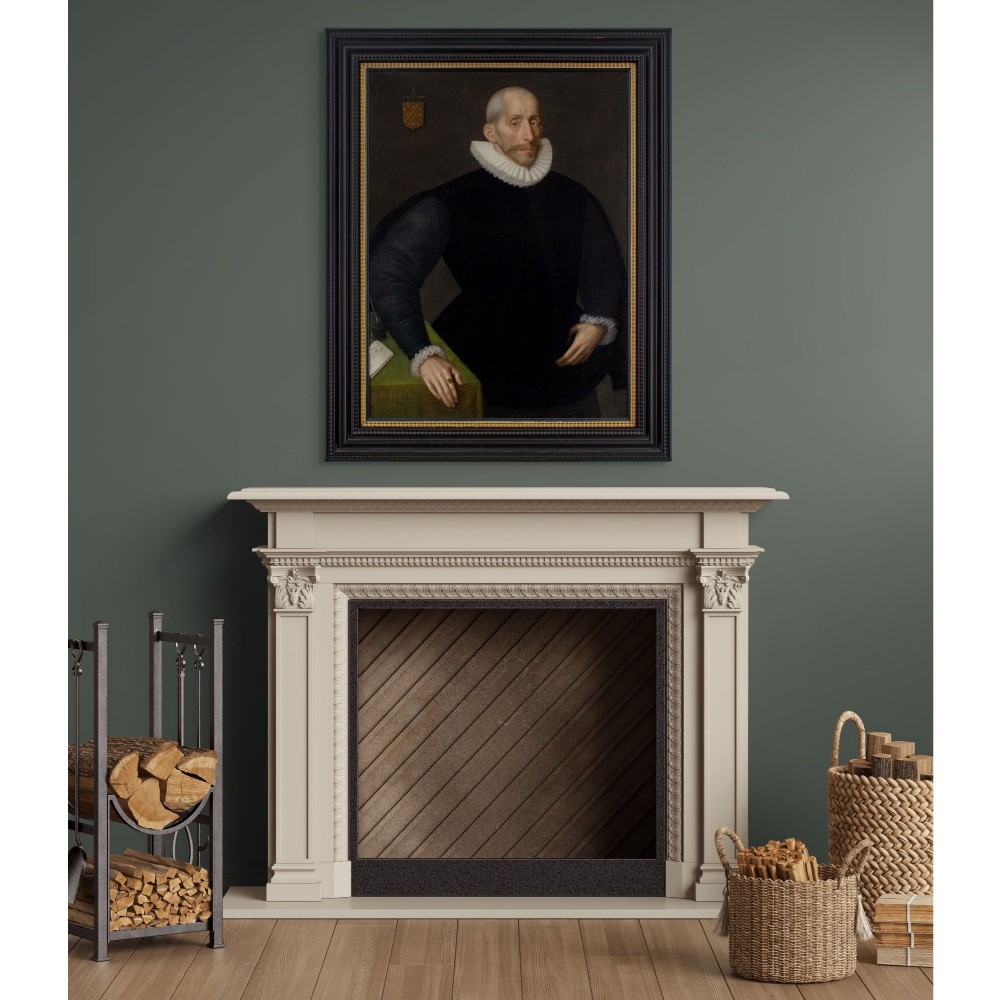
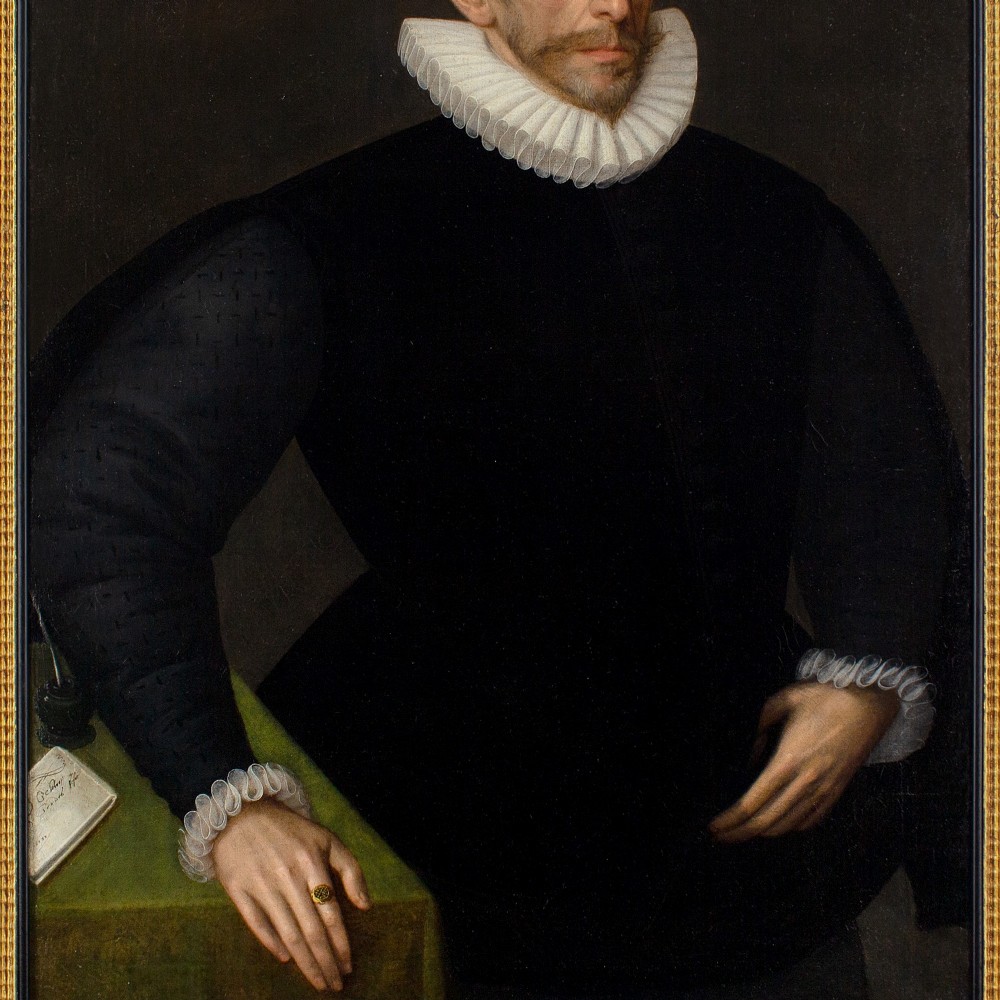
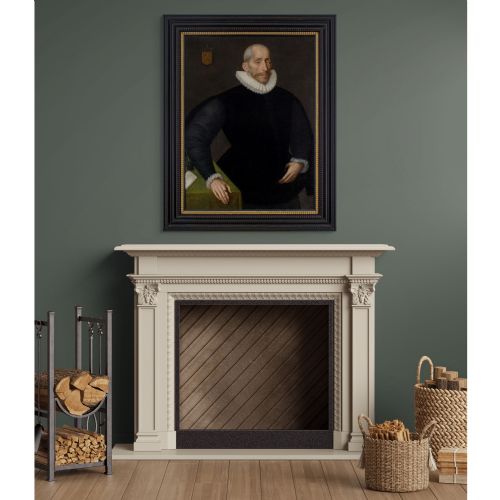
Gortzius Geldorp, Portrait of a Member of the Sani Family, 16th Century Oil Painting