
16,038  PAGES BROWSED TODAY PAGES TODAY • 26 ANTIQUES UPLOADED TODAYNEW ARRIVALS
GIFTS
26 ITEMS ADDED TODAY
Sort Order
Items Per Page
Browse Categories
Sort order
Relevant Links
Items per page
ID #SA1137421
SOLD
Email Phone
Save
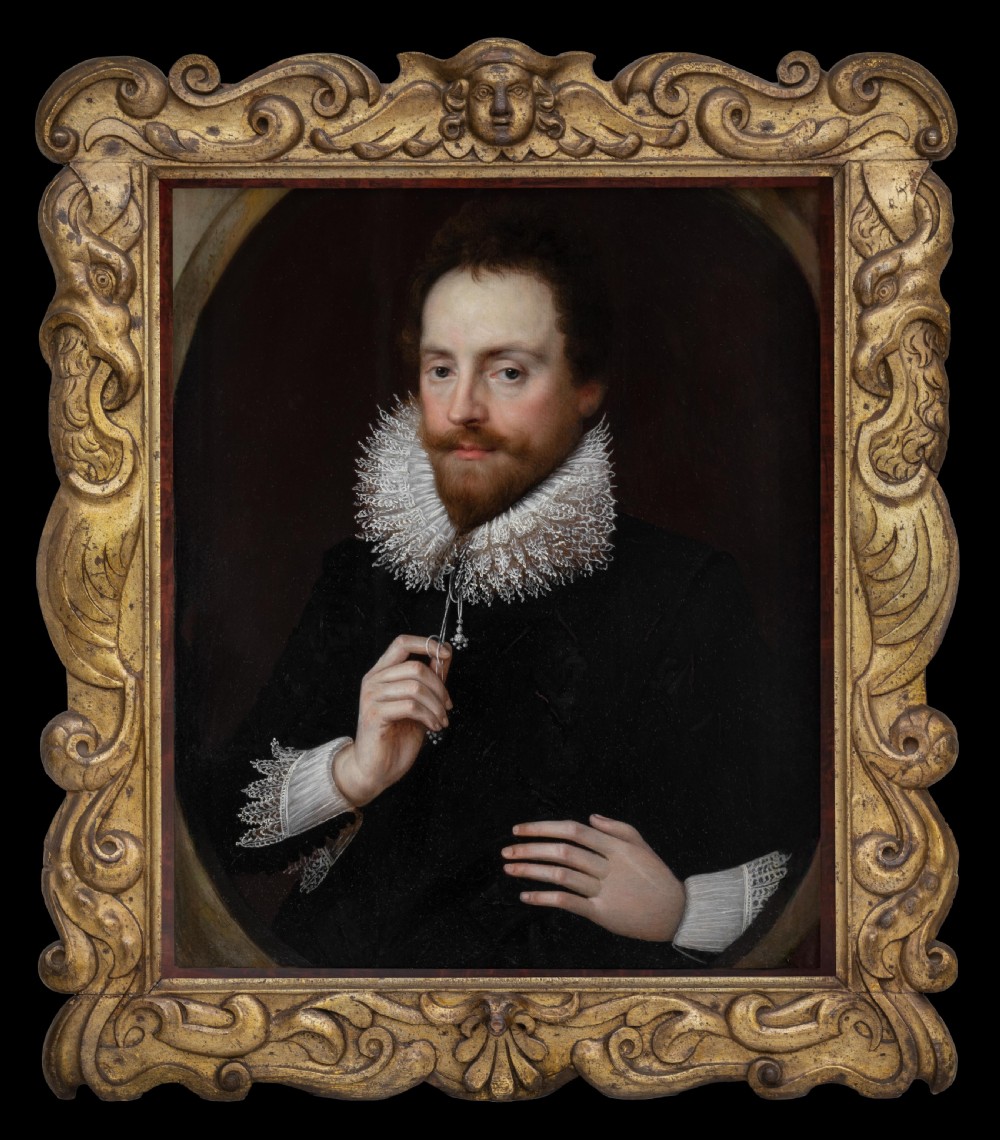
Portrait of Sir Henry Wotton in a Black Doublet & White Ruff C.1610-20; Circle of Cornelius Johnson (1593-1661), Oil on Canvas Painting
Sold by Titan Fine Art
sold SA1137421
Sorry, but this item has been sold.
Titan Fine Art

Titan Fine Art

Sellingantiques Verified Since Jul 2016
Browse dealers 24 items
  • About Us
    Specialist in 17th & 18thc portraits. Highly curated selection, museum-level research & pro conservation. Exceptional art, expertly vetted.
Id #SA1137421
PDF SHARE
SAVE

Portrait of Sir Henry Wotton in a Black Doublet & White Ruff C.1610-20; Circle of Cornelius Johnson (1593-1661), Oil on Canvas Painting

17th century
Sold 29 August 2025 · Titan Fine Art
This “Portrait of Sir Henry Wotton in a Black Doublet & White Ruff C.1610-20; Circle of Cornelius Johnson (1593-1661), Oil on Canvas Painting” found a buyer.

It was listed by Titan Fine Art. Sold pieces stay on Sellingantiques as a record of what has passed through, and the next one is rarely far away.

Description

A feature of this exquisitely rendered oil on panel portrait is its remarkable 17th century carved auricular Sunderland frame – a splendid, and rare, work of art in itself.

The subject is the poet and ambassador, and contemporary of Shakespeare, Sir Henry Wotton, who was the most widely cultivated Englishman of his time during what is known as the great age of Elizabethan literature, from the defeat of the Armada to (almost) the outbreak of the Civil Wars. A ripe classical scholar, an elegant Latinist, trained in Greek, he was an admirable linguist in modern languages as well. He was the friend of most of the learned men of that epoch, both at home and on the Continent; the first English collector of Italian pictures, he brought from Italy, the refined taste in art and architecture, the varied culture of antiquity and the Renaissance. Famous in his own day as a ' wit and fine gentleman ', he deserves to be remembered as a noble example of the 'Italianate' Englishmen - one who, with all his foreign culture, never lost the sincerity and old-fashioned piety of a 'plain Kentish man'.

Born on 30 March 1568, at Boughton or Bocton Hall, in Kent to Thomas Wotton (1489-1551) and Eleanor Finch. At the time of his birth Bocton Hall had been the seat of the Wotton family for about 150 years, his father Thomas being fourth in descent from Nicholas Wotton, Lord Mayor of London in the reign of Henry V. The Wotton’s had prospered and were distinguised by a peculiar honesty, old-fashioned piety, and simplicity of nature. Though high in the public service, they habitually declined, rather than sought, court honours and preferment.

In 1584 Wotton, then aged sixteen, went from Winchester to New College, Oxford but by 1589 he left for abroad travelling on the continent. Returning to England in 1594, he was taken into the service of the Queen's favourite, Robert, Earl of Essex. He again went to Italy where the Grand Duke of Tuscany employed him as a private envoy to James VI of Scotland, and later he was sent as his ambassador to many princes. He was the Provostship of Eton, which he held till his death in 1689.

Exquisitely detailed throughout the sitter is wearing a black doublet and white lace collar and cuffs. These elements are very carefully observed but the excellent treatment of the face is most notable - with the build-up and layering to mimic realistic nuances of skin tones, and the soft appearance by using the ‘sfumato’ technique. This is a very fine example.

This portrait passed by family descent to Anne Eliza Bray (1790-1883) who wrote over a dozen very popular historical novels, travel and history books. She married the artist Charles Alfred Stothard (son of Thomas Stothard) and later Rev. Edward Atkyns Bray, vicar of Tavistock. It is no doubt that she would have been enthralled to be the custodian of this portrait of Sir Henry Wotton, sharing his writing enthusiasm.

Cornelius Johnson (1593-1664) through merit and splendid achievement, can be placed within the first rank of England’s portrait painters of the generation before Van Dyke. Cornelius Johnson was a painter beautifully sensitive to individual character and his careful and faithful depictions of clothing afford a priceless resource to historians. He was sworn in as the King’s own painter in 1632.

Born into a Flemish/German immigrant family in 1593 in London, he is thought to have begun his independent practice in about 1619.

Even his earliest pictures display a level of continental sophistication not often seen in the works of English Jacobean artists. He painted elegant images of the King, the Queen, and the whole court, many leading lawyers and public servants, but also a regional clientele.

In 1632, the same year Van Dyck arrived in England, Johnson was appointed one of King Charles I’s painters but in 1643, just prior to the the Civil Wars, he left for Holland where he worked and remained until his death.

Physical Dimensions
Height
95cm (37.40")
Width
82cm (32.28")
Depth
10cm (3.94")
Declaration

Titan Fine Art has dated this Jacobean Oil Painting to the 17th Century.

Reference Numbers
Sellingantiques Reference
SA1137421
Dealers Notes

Much more info about this item at: www.titanfineart.com

In a market saturated with available paintings, Titan Fine Art offers a specially curated selection. Each piece is meticulously chosen based on technical merit, provenance, and decorative appeal, professionally conserved and researched, ensuring our clients view only the finest examples of British and European art.

With over 20 years of expertise and 1,000+ works placed with collectors and institutions, we are one of the most prolific specialists in 17th and 18th-century portraiture. We combine a scholarly approach with museum-level rigor to replace the uncertainty of the open market with absolute confidence.

Why Buy From Titan Fine Art?

• Expertly Curated Selection

We act as your expert eye, selecting only high-quality works that offer genuine historical and artistic value.

• Museum-Level Research

Each portrait is supported by extensive academic research, often exceeding 40 hours, to establish attribution, sitter identity, and historical context.

• Professional Conservation

All paintings are carefully cleaned and stabilised by professional conservators, and are presented ready to hang.

• Transparent Pricing

No buyer’s premium or hidden fees—unlike auction houses, where additional costs can add 25–35%.

• Export Pricing Advantage

Reduced pricing is available for works exported outside the UK.

• Specialist Global Shipping

We manage the entire process, including custom crating, export documentation, and fully tracked delivery worldwide.

• Buy with Confidence

A 7-day return policy and the option to pay in GBP, USD, or EUR for convenience and transparency.

• Original Period Frames

Many works retain their original carved and gilded frames, which are works of art in their own right and enhance both historical authenticity and decorative impact.

• Personal Advisory Service

We work directly with collectors and interior designers, offering guidance on selection, scale, and placement—including bespoke room mock-ups on request.

Subscribe to our monthly 'new item alert' to be the first to hear about new works

Description
A feature of this exquisitely rendered oil on panel portrait is its remarkable 17th century carved auricular Sunderland frame – a splendid, and rare, work of art in itself.

The subject is the poet and ambassador, and contemporary of Shakespeare, Sir Henry Wotton, who was the most widely cultivated Englishman of his time during what is known as the great age of Elizabethan literature, from the defeat of the Armada to (almost) the outbreak of the Civil Wars.

“
A ripe classical scholar, an elegant Latinist, trained in Greek, he was an admirable linguist in modern languages as well.
Titan Fine Art

He was the friend of most of the learned men of that epoch, both at home and on the Continent; the first English collector of Italian pictures, he brought from Italy, the refined taste in art and architecture, the varied culture of antiquity and the Renaissance. Famous in his own day as a ' wit and fine gentleman ', he deserves to be remembered as a noble example of the 'Italianate' Englishmen - one who, with all his foreign culture, never lost the sincerity and old-fashioned piety of a 'plain Kentish man'.

fig 1. An antique oil painting depicting a male subject in a black doublet and ruff, enclosed within an elaborately carved and gilded wooden frame.
fig 1. Portrait of Sir Henry Wotton in a Black Doublet & White Ruff C.1610-20; Circle of Cornelius Johnson (1593-1661), Oil on Canvas Painting

Born on 30 March 1568, at Boughton or Bocton Hall, in Kent to Thomas Wotton (1489-1551) and Eleanor Finch. At the time of his birth Bocton Hall had been the seat of the Wotton family for about 150 years, his father Thomas being fourth in descent from Nicholas Wotton, Lord Mayor of London in the reign of Henry V. The Wotton’s had prospered and were distinguised by a peculiar honesty, old-fashioned piety, and simplicity of nature. Though high in the public service, they habitually declined, rather than sought, court honours and preferment.

fig 2. An antique oil painting depicting a male subject in a black doublet and ruff, enclosed within an elaborately carved and gilded wooden frame.
fig 2. Portrait of Sir Henry Wotton in a Black Doublet & White Ruff C.1610-20; Circle of Cornelius Johnson (1593-1661), Oil on Canvas Painting

In 1584 Wotton, then aged sixteen, went from Winchester to New College, Oxford but by 1589 he left for abroad travelling on the continent. Returning to England in 1594, he was taken into the service of the Queen's favourite, Robert, Earl of Essex. He again went to Italy where the Grand Duke of Tuscany employed him as a private envoy to James VI of Scotland, and later he was sent as his ambassador to many princes. He was the Provostship of Eton, which he held till his death in 1689.

fig 3. An antique oil painting depicting a male subject in a black doublet and ruff, enclosed within an elaborately carved and gilded wooden frame.
fig 3. Portrait of Sir Henry Wotton in a Black Doublet & White Ruff C.1610-20; Circle of Cornelius Johnson (1593-1661), Oil on Canvas Painting

Exquisitely detailed throughout the sitter is wearing a black doublet and white lace collar and cuffs. These elements are very carefully observed but the excellent treatment of the face is most notable - with the build-up and layering to mimic realistic nuances of skin tones, and the soft appearance by using the ‘sfumato’ technique. This is a very fine example.

fig 4. An antique oil painting depicting a male subject in a black doublet and ruff, enclosed within an elaborately carved and gilded wooden frame.
fig 4. Portrait of Sir Henry Wotton in a Black Doublet & White Ruff C.1610-20; Circle of Cornelius Johnson (1593-1661), Oil on Canvas Painting

This portrait passed by family descent to Anne Eliza Bray (1790-1883) who wrote over a dozen very popular historical novels, travel and history books. She married the artist Charles Alfred Stothard (son of Thomas Stothard) and later Rev. Edward Atkyns Bray, vicar of Tavistock. It is no doubt that she would have been enthralled to be the custodian of this portrait of Sir Henry Wotton, sharing his writing enthusiasm.

fig 5. An antique oil painting depicting a male subject in a black doublet and ruff, enclosed within an elaborately carved and gilded wooden frame.
fig 5. Portrait of Sir Henry Wotton in a Black Doublet & White Ruff C.1610-20; Circle of Cornelius Johnson (1593-1661), Oil on Canvas Painting

Cornelius Johnson (1593-1664) through merit and splendid achievement, can be placed within the first rank of England’s portrait painters of the generation before Van Dyke. Cornelius Johnson was a painter beautifully sensitive to individual character and his careful and faithful depictions of clothing afford a priceless resource to historians. He was sworn in as the King’s own painter in 1632.

Born into a Flemish/German immigrant family in 1593 in London, he is thought to have begun his independent practice in about 1619.

Even his earliest pictures display a level of continental sophistication not often seen in the works of English Jacobean artists. He painted elegant images of the King, the Queen, and the whole court, many leading lawyers and public servants, but also a regional clientele.

In 1632, the same year Van Dyck arrived in England, Johnson was appointed one of King Charles I’s painters but in 1643, just prior to the the Civil Wars, he left for Holland where he worked and remained until his death.

Height
95cm (37.40")
Width
82cm (32.28")
Depth
10cm (3.94")
Date of Manufacture

Titan Fine Art has dated this Jacobean Oil Painting to the 17th Century.

Reference Numbers
Sellingantiques Ref
SA1137421
Titan Fine Art
Titan Fine Art
Sellingantiques verified Since Jul 2016

Specialist in 17th & 18thc portraits. Highly curated selection, museum-level research & pro conservation. Exceptional art, expertly vetted.

Dealer Profile

You can view the stock and full dealer information on the Titan Fine Art Profile Page
PDF SHARE
SAVE
An antique oil painting depicting a male subject in a black doublet and ruff, enclosed within an elaborately carved and gilded wooden frame. SOLD6+ MONTHS AGO
1 / 6
Archive I An antique oil painting depicting a male subject in a black doublet and ruff, enclosed within an elaborately carved and gilded wooden frame. SOLD6+ MONTHS AGO

Portrait of Sir Henry Wotton in a Black Doublet & White Ruff C.1610-20; Circle of Cornelius Johnson (1593-1661), Oil on Canvas Painting

Archive II An antique oil painting depicting a male subject in a black doublet and ruff, enclosed within an elaborately carved and gilded wooden frame. View II
Archive III An antique oil painting depicting a male subject in a black doublet and ruff, enclosed within an elaborately carved and gilded wooden frame. View III
Archive IV An antique oil painting depicting a male subject in a black doublet and ruff, enclosed within an elaborately carved and gilded wooden frame. View IV
Archive V An antique oil painting depicting a male subject in a black doublet and ruff, enclosed within an elaborately carved and gilded wooden frame. View V
Archive VI An antique oil painting depicting a male subject in a black doublet and ruff, enclosed within an elaborately carved and gilded wooden frame. View VI
Enlarged Archival View
Telephone 07875 412 111
Location
London
United Kingdom
Dealer Profile Page sellingantiques.co.uk/titan
Verified Since Jul 2016
Items For Sale 24
Items Sold 402
Titan Fine Art
Titan Fine Art
Verified Since Jul 2016
View Dealer Info
Location: London, United Kingdom
Verified
Jul 2016
For Sale
24
Sold
402
An antique oil painting depicting a male subject in a black doublet and ruff, enclosed within an elaborately carved and gilded wooden frame.
Portrait of Sir Henry Wotton in a Black Doublet & White Ruff c.1610-20; Circle of Cornelius Johnson (1593-1661), Oil on canvas painting
Ref: SA1137421
An antique oil painting depicting a male subject in a black doublet and ruff, enclosed within an elaborately carved and gilded wooden frame.
Detail View 1
Detail View 2
Detail View 3
Detail View 4
Detail View 5
Archival Detail
Every single antique dealer on our platform is individually approved by our internal team. We verify their professional trade history, ethical standards, and photographic quality to ensure a secure, high-standard buying environment. Upon joining, every dealer agrees to a strict 9-point code of conduct. While issues can occasionally arise, our dealers typically resolve them swiftly and directly with the buyer. In fact, since our founding in 2002, Sellingantiques has only had to step in to help resolve an issue on roughly five occasions—a true testament to the quality of our dealers and their dedication to your happiness.
Our dealers are highly experienced in packing and shipping fragile, high-value antiques. Because you are in direct contact with the dealer, you will be able to easily go through all available shipping and insurance options together to ensure your item arrives safely.
Antiques are the ultimate green purchase. By choosing historical pieces over newly manufactured goods, you completely eliminate the carbon footprint of modern mass production while preserving exceptional, timeless craftsmanship.
Written by Sellingantiques from the dealer’s photographs and listing
  • ObjectPaintings
  • Period17th century
  • StyleJacobean
  • MaterialOil, Canvas, Gilt Wood
  • ColourGilded Gold
  • MotifsGilded scrollwork, Carved putto, Oval sight edge, Acorn molding
  • SizeH 95 cm (37 in) x W 82 cm (32 in) x D 10 cm (4 in)

Jacobean portraits are characterised by linear precision, flat perspectives, and detailed rendering of elaborate costumes such as doublets and ruffs, reflecting the artistic style of the court of James I.

These works were typically executed in oil paint on stretched canvas or wooden panels, utilising ground earth pigments and natural resins, housed within hand-carved, gilded wooden frames.

Authentication involves examining canvas weave, craquelure patterns, pigment composition via scientific analysis, stretcher bar construction, and checking for historical provenance and stylistic consistency.

Historic portraits create a strong focal point when paired with contemporary minimalist furniture, allowing the rich textures of the antique frame and dark tones of the canvas to contrast effectively against neutral walls.

Preservation requires maintaining stable temperature and humidity levels, avoiding direct sunlight to prevent fading, and keeping the canvas free from dust using a soft, dry brush without chemical cleaners.
items
Add keywords to the filter
Price
£100
£250000
Era
Period
Style
Material
Origin
Stock Location
Recently Added
Online Payments
Categories