Cheshire Antiques Consultant Ltd has dated this Antique Maritime Oil Painting to the Victorian era.
Painting in the style follower of Richard Brydges Beechey.
Oil on canvas.
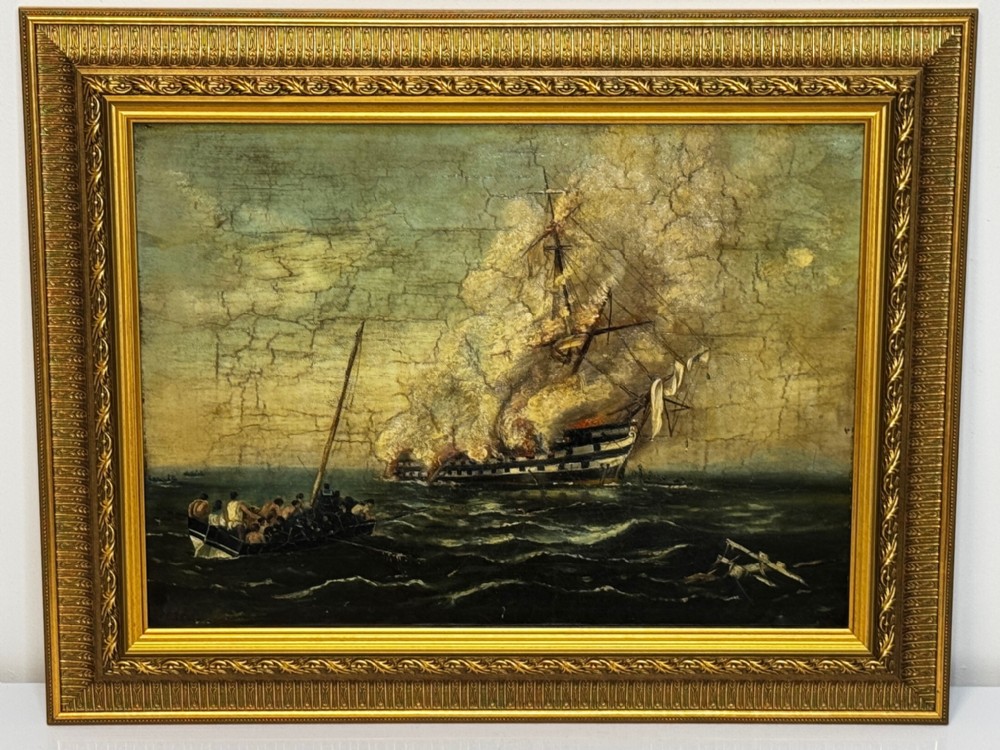
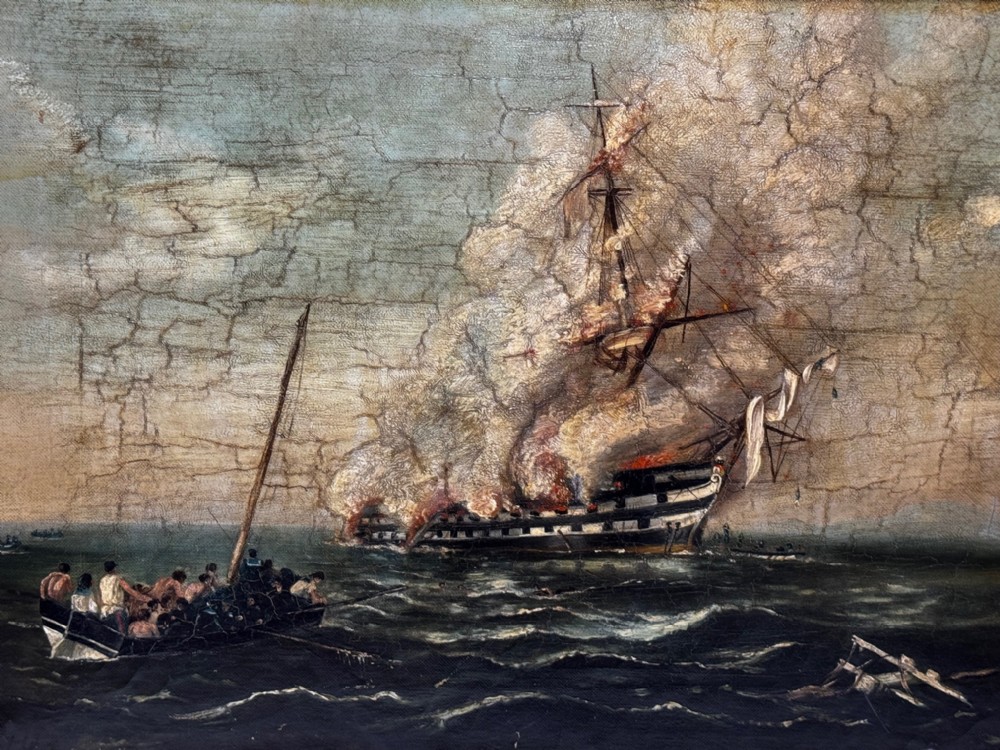
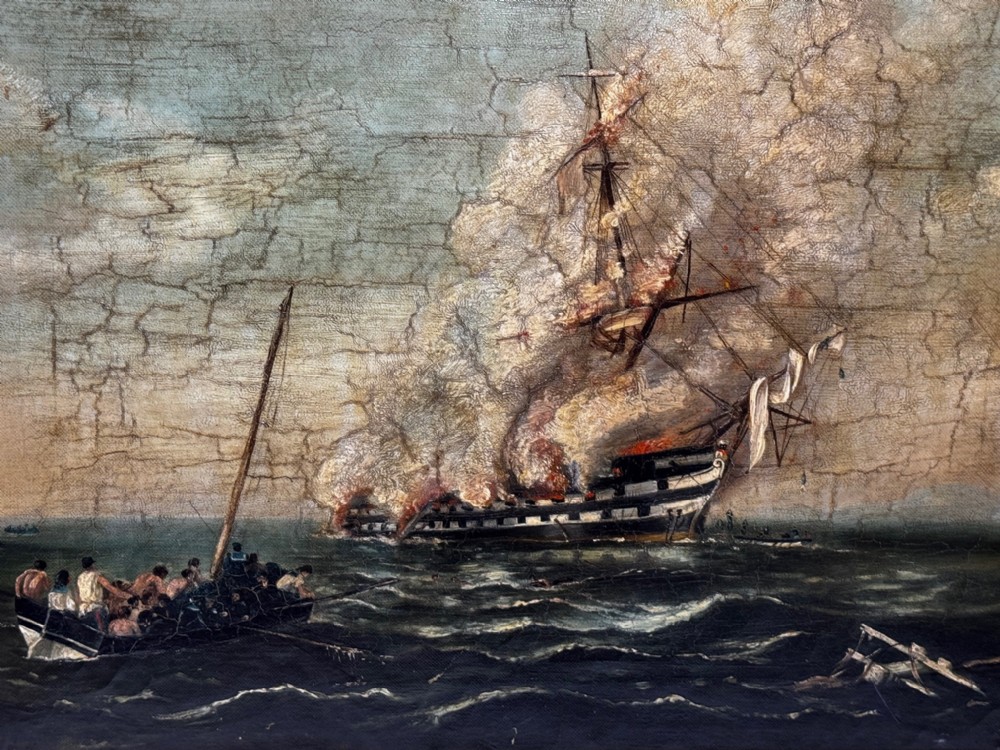
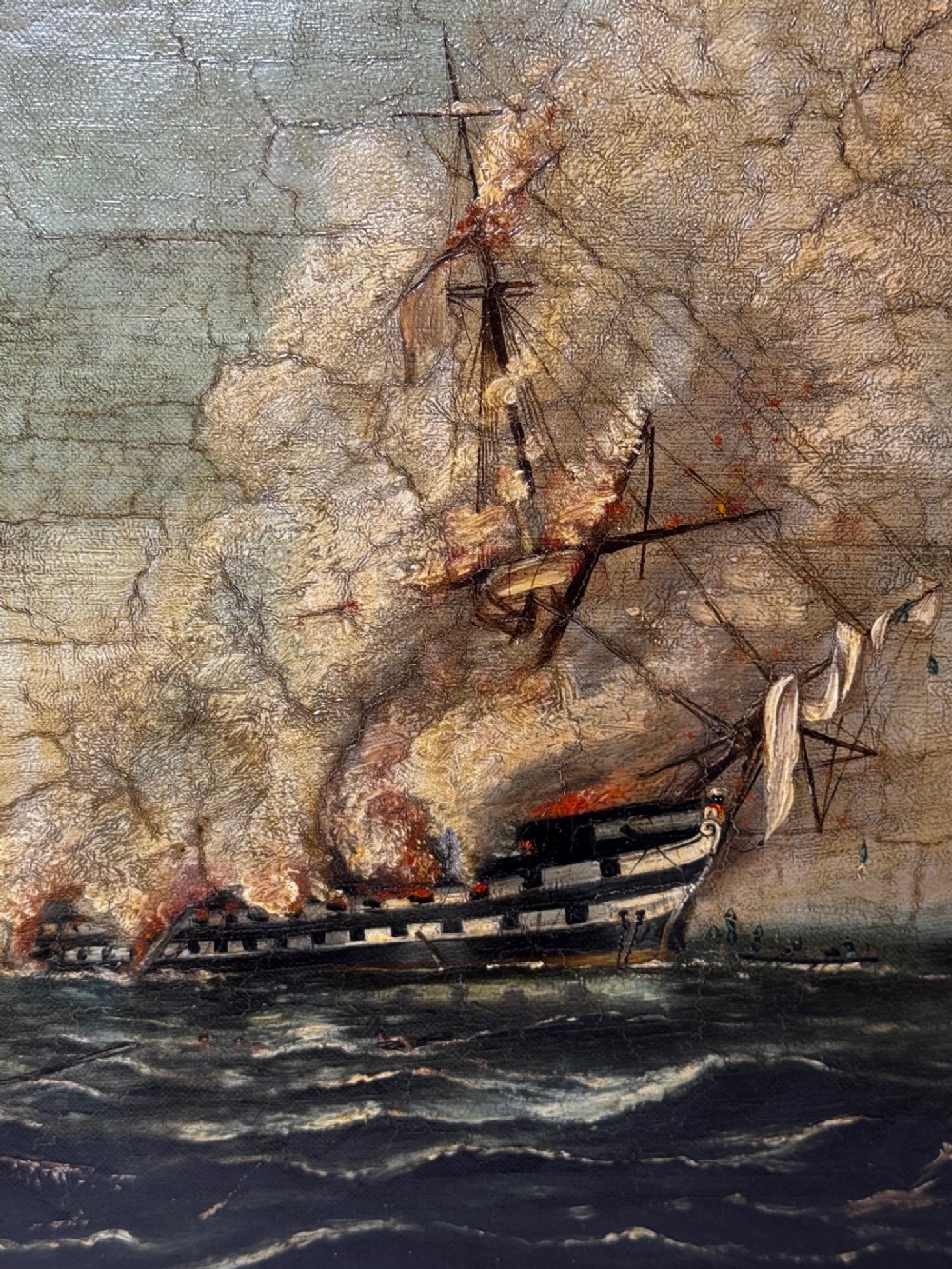
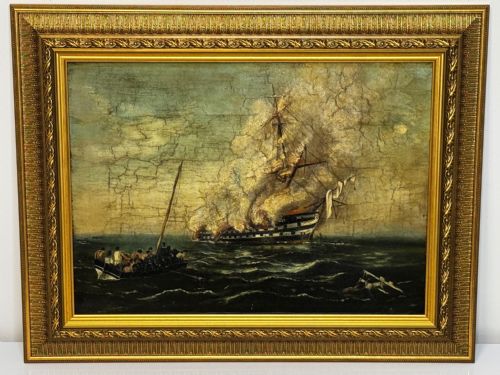
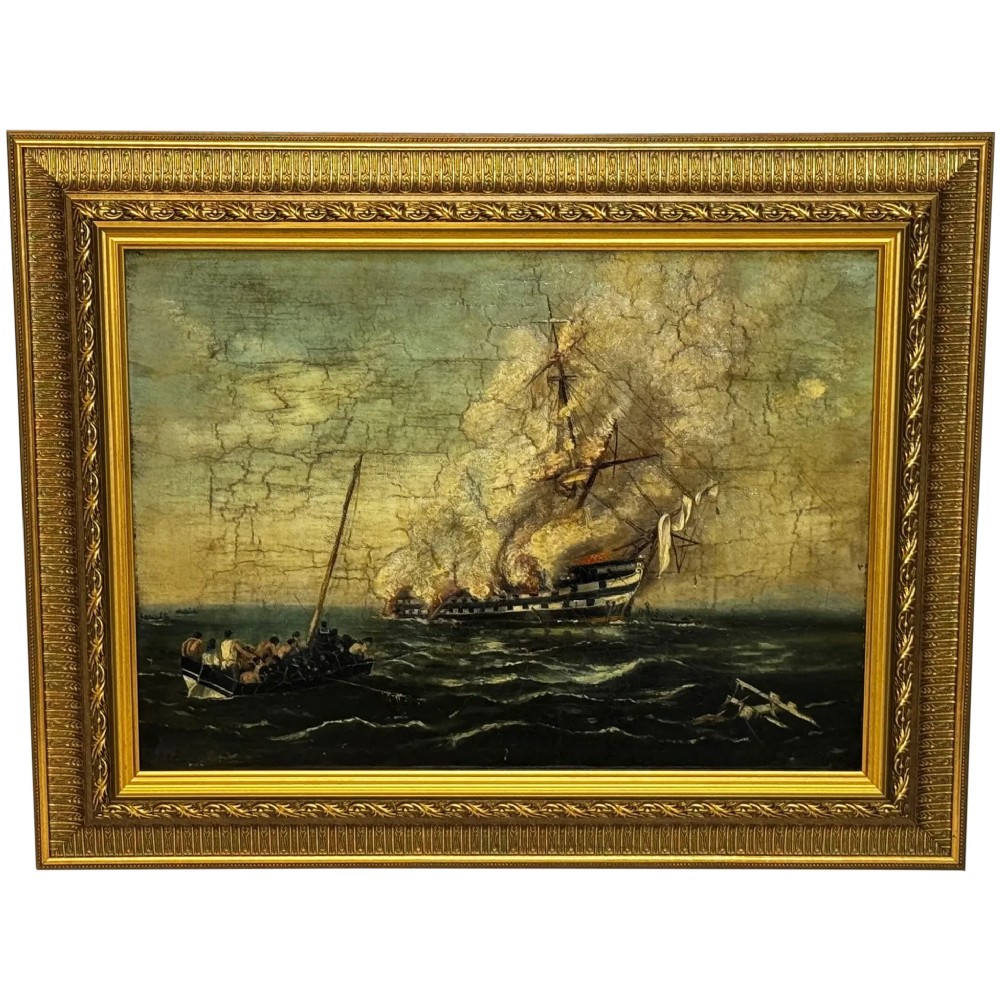
Title “Burning of H.M.S Bombay” Follower of Richard Brydges Beechey.
Inscribed verso.
Circa 1870 late 19th century Victorian era.
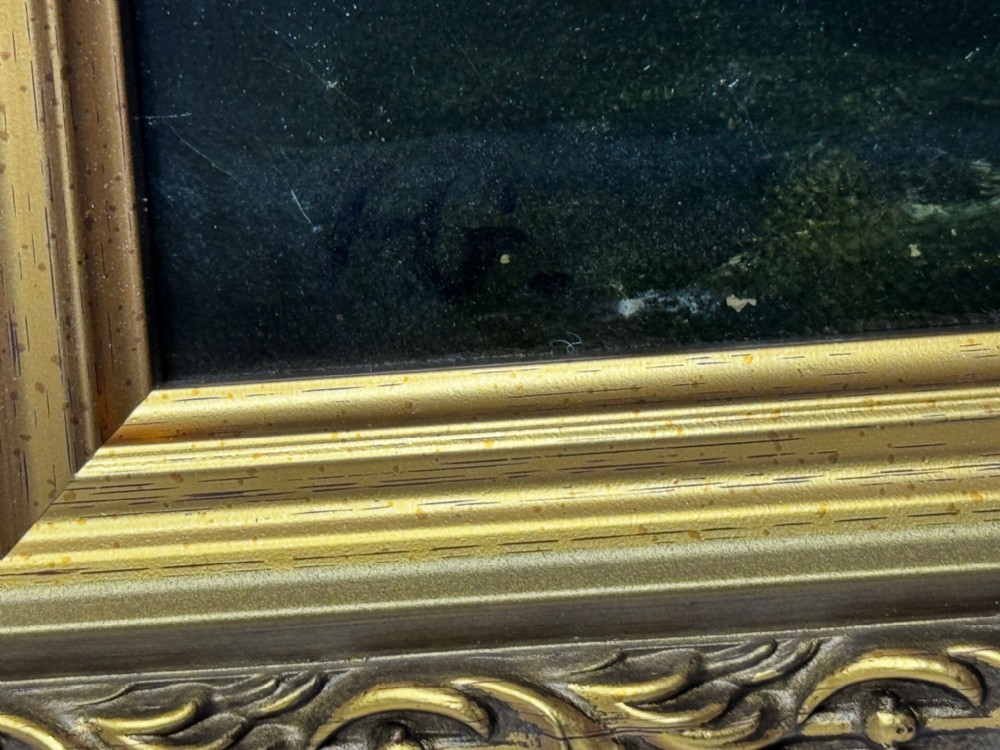
Initial signed bottom corner by the English school artist Hr.
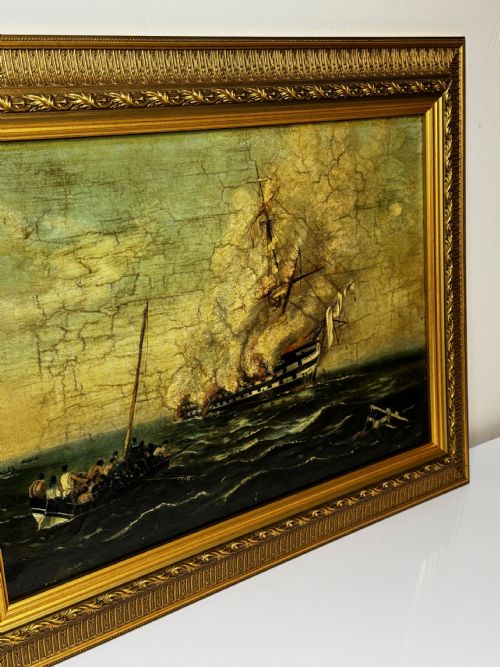
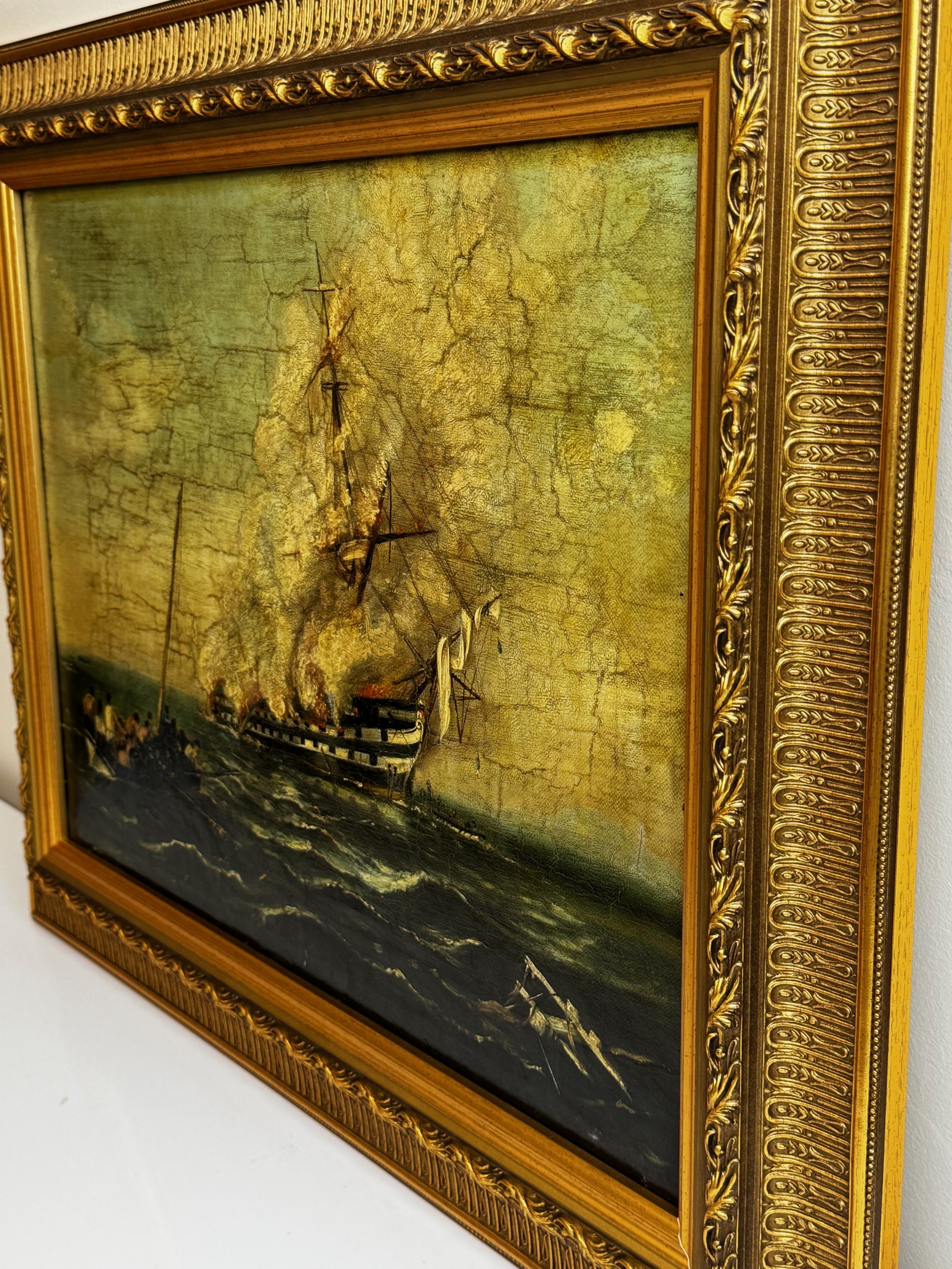
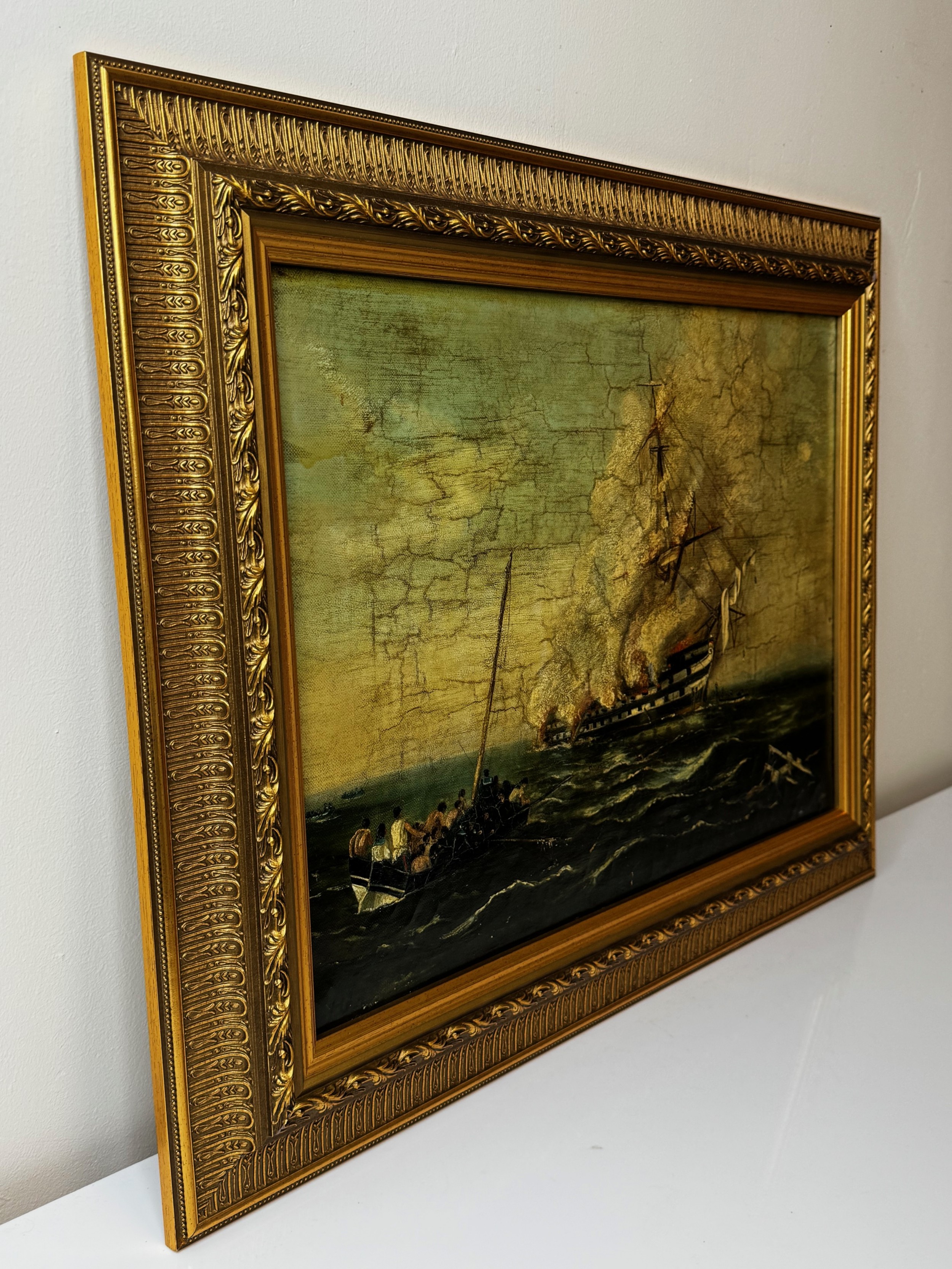
Set in a recent larson juhl moulded gilt wood frame which really enhances this work even further.
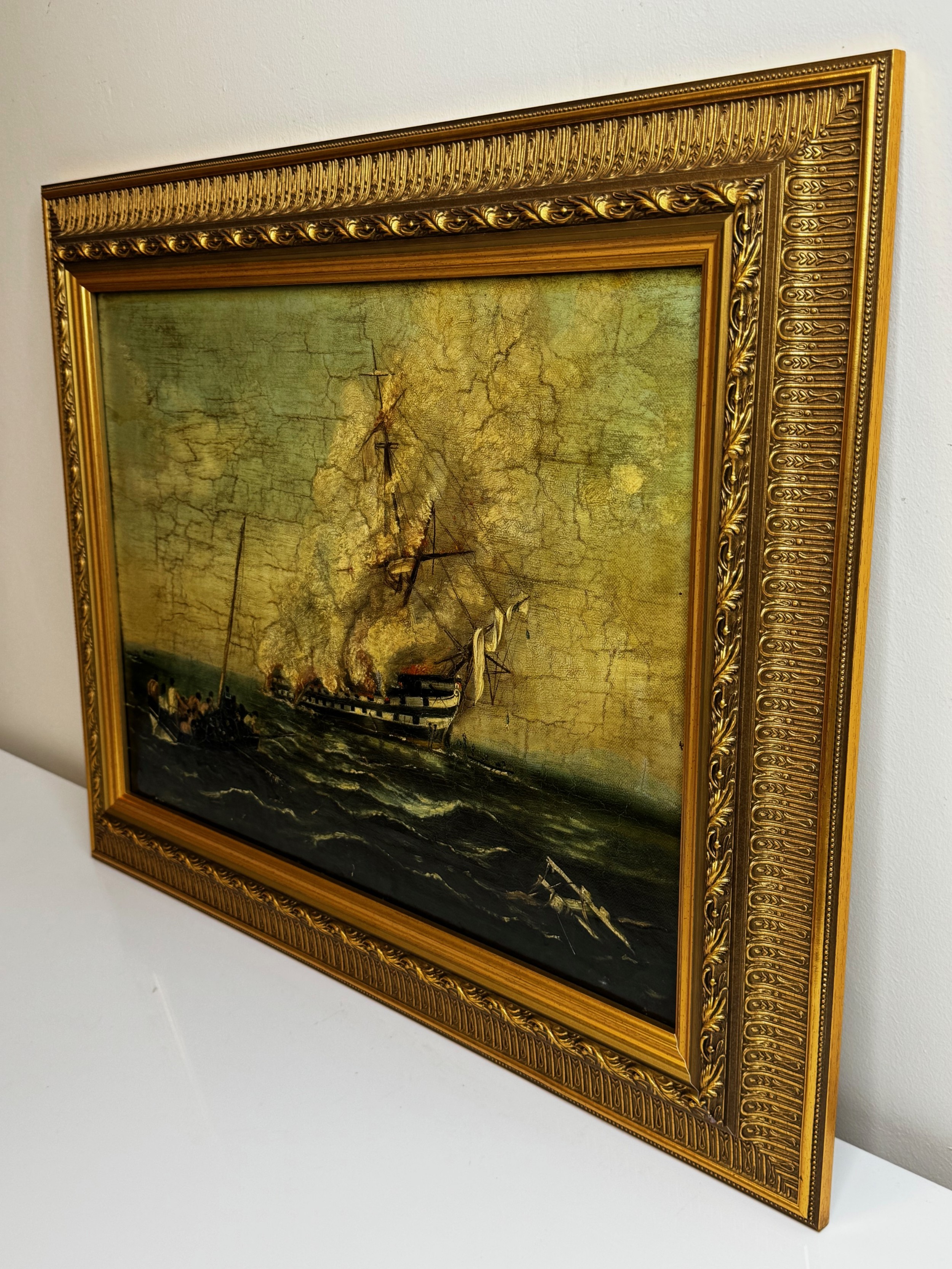
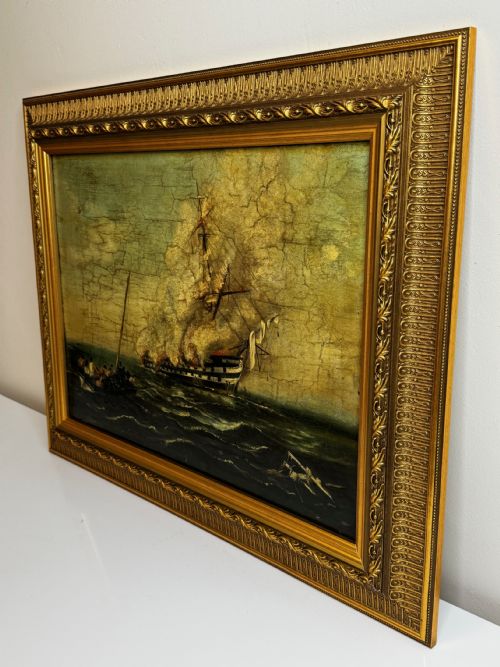
A delightful display size with the frame being 71 cm wide and 56.3 cm high.
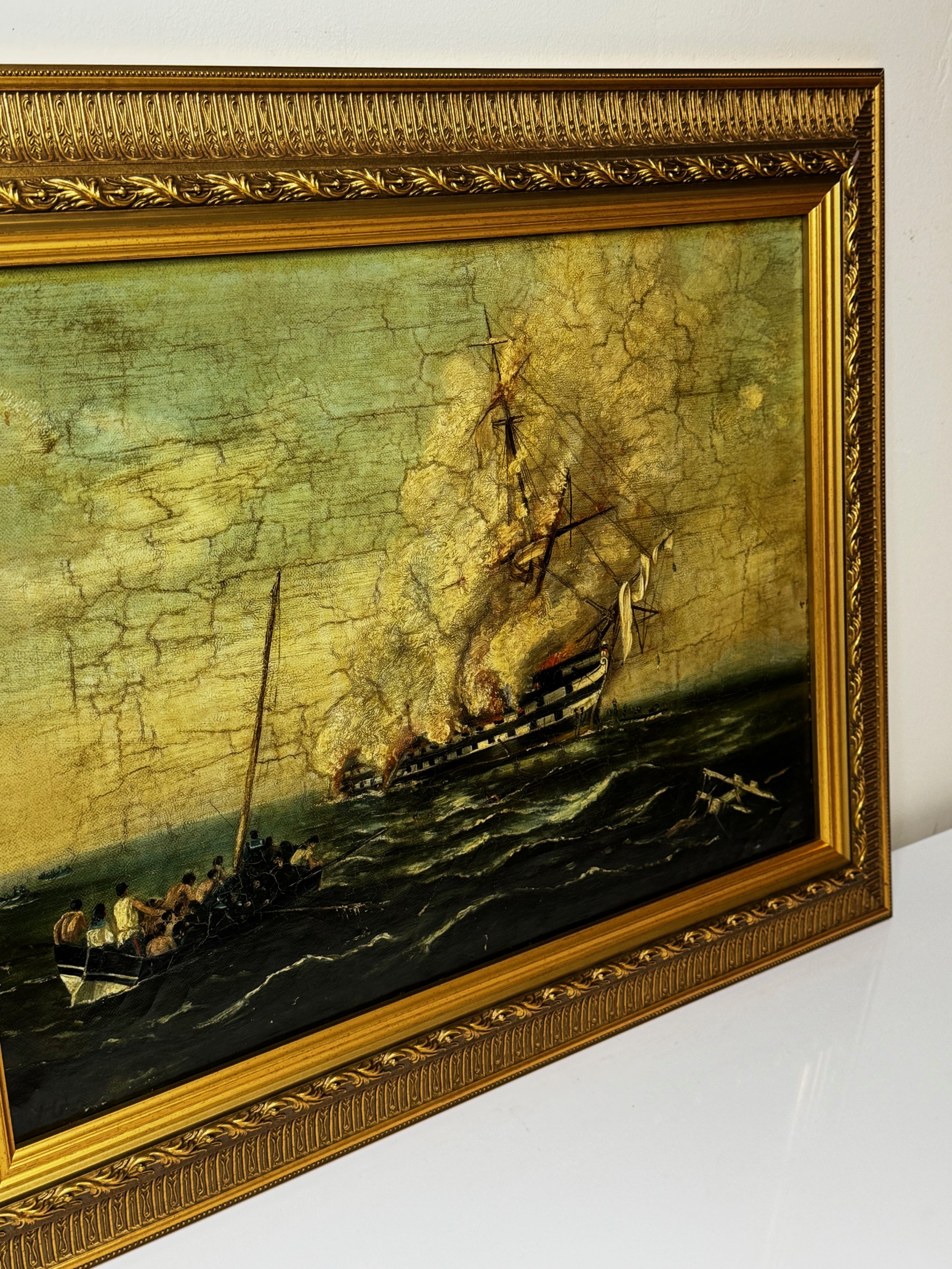
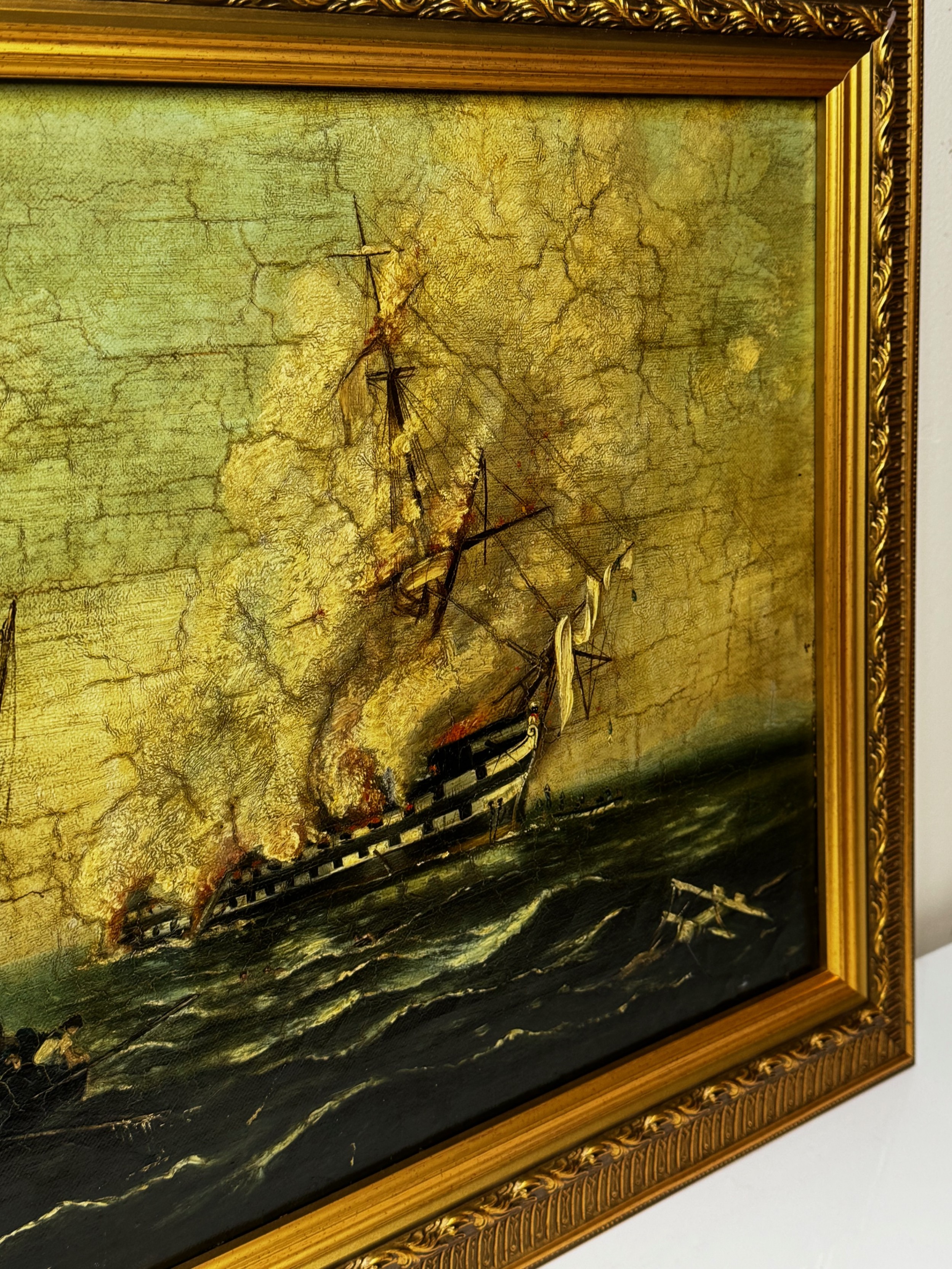
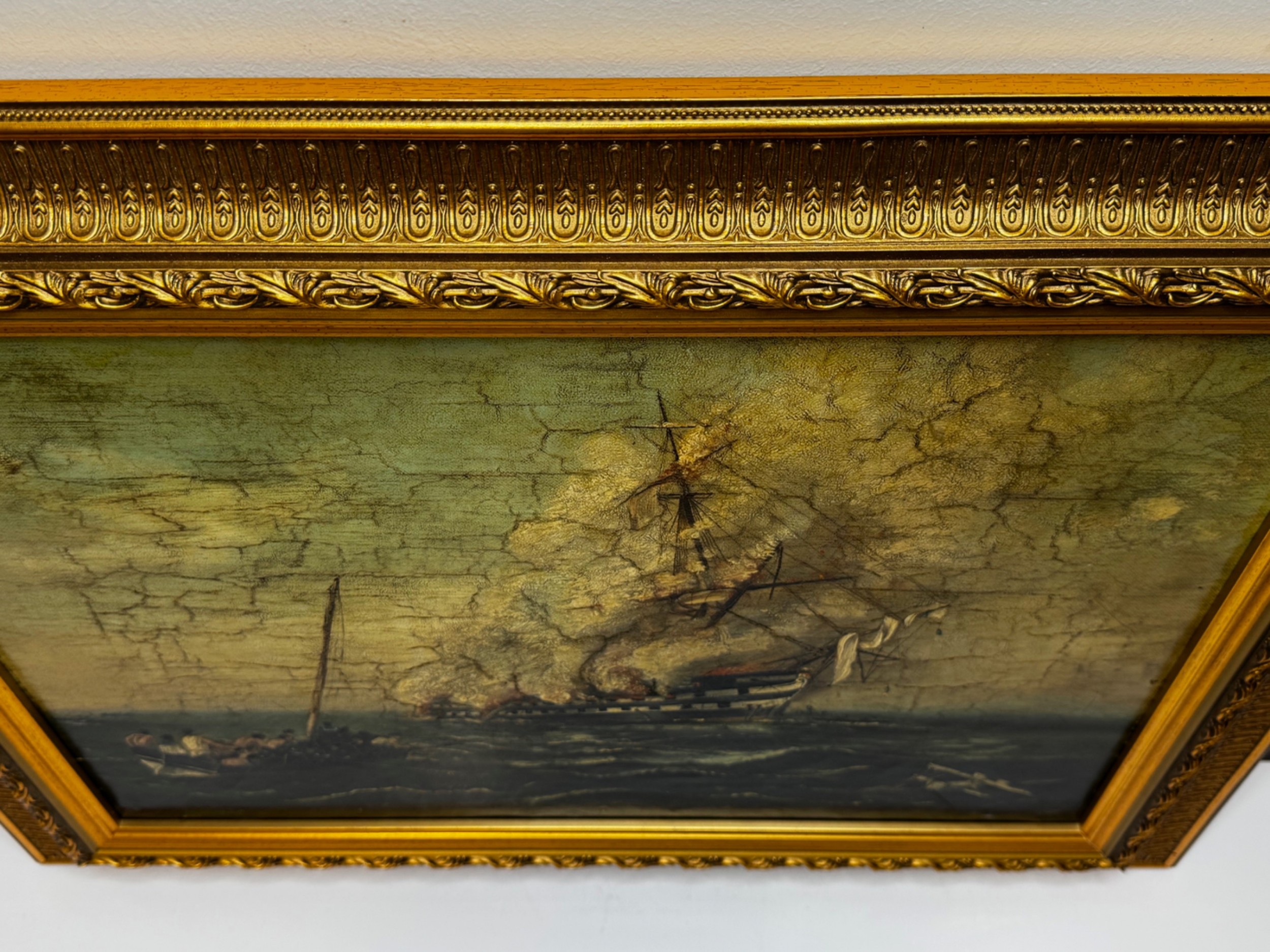
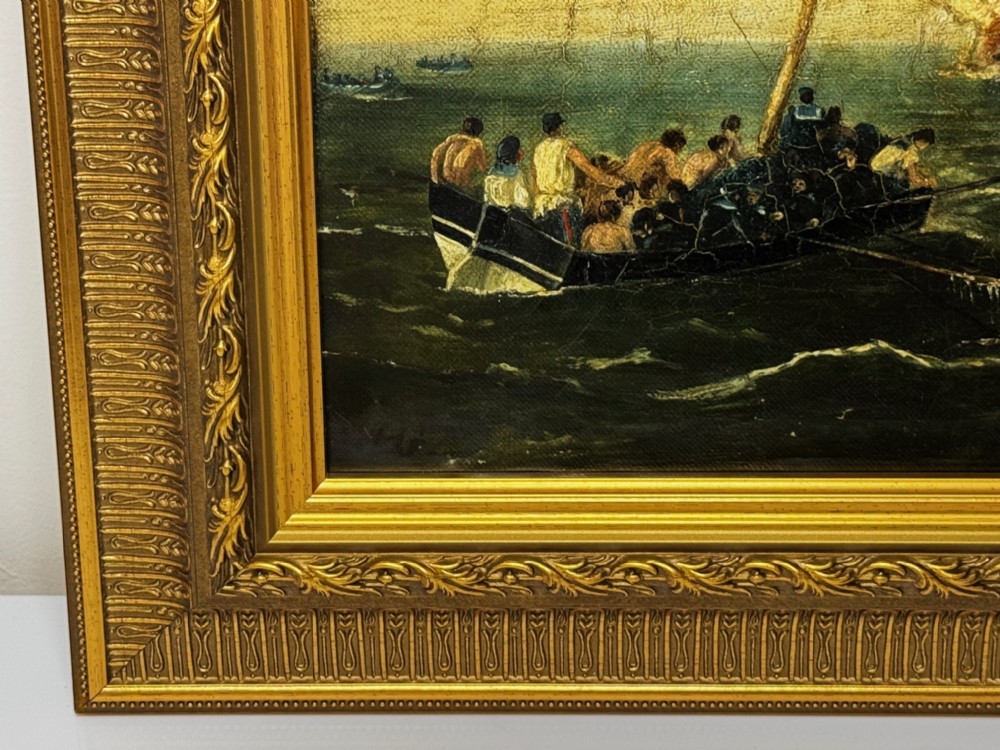
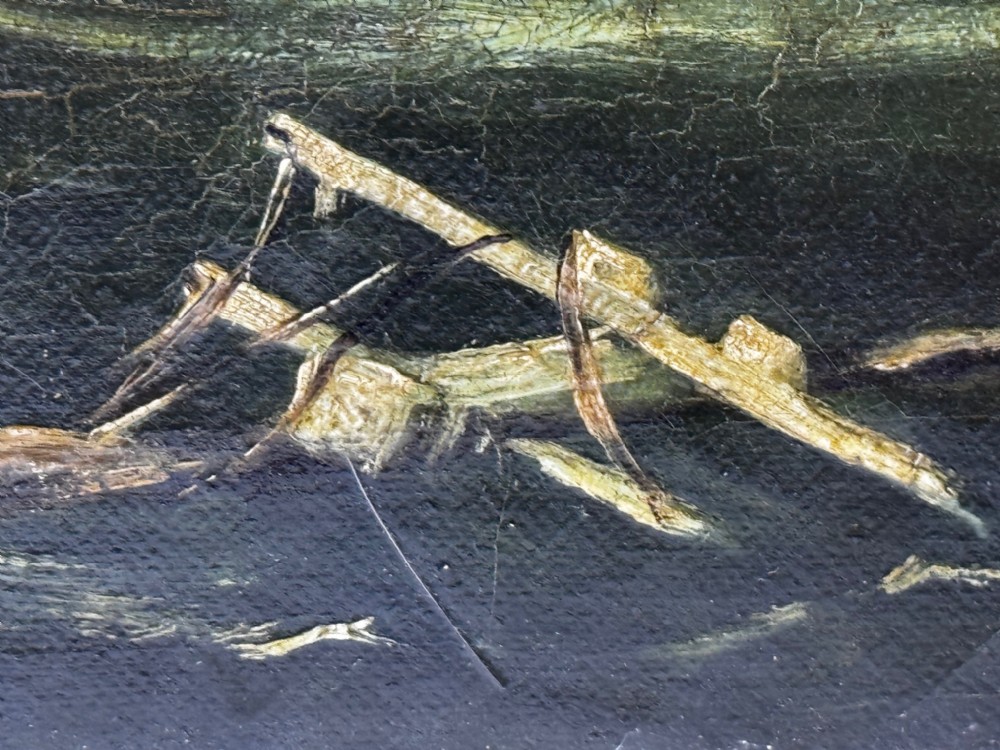
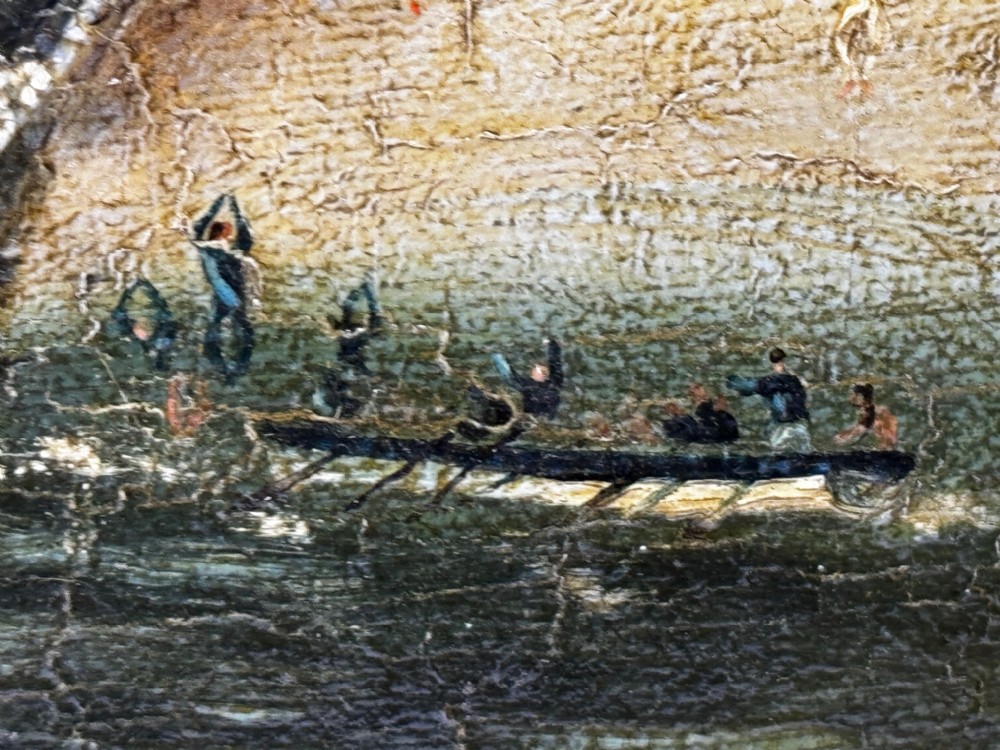
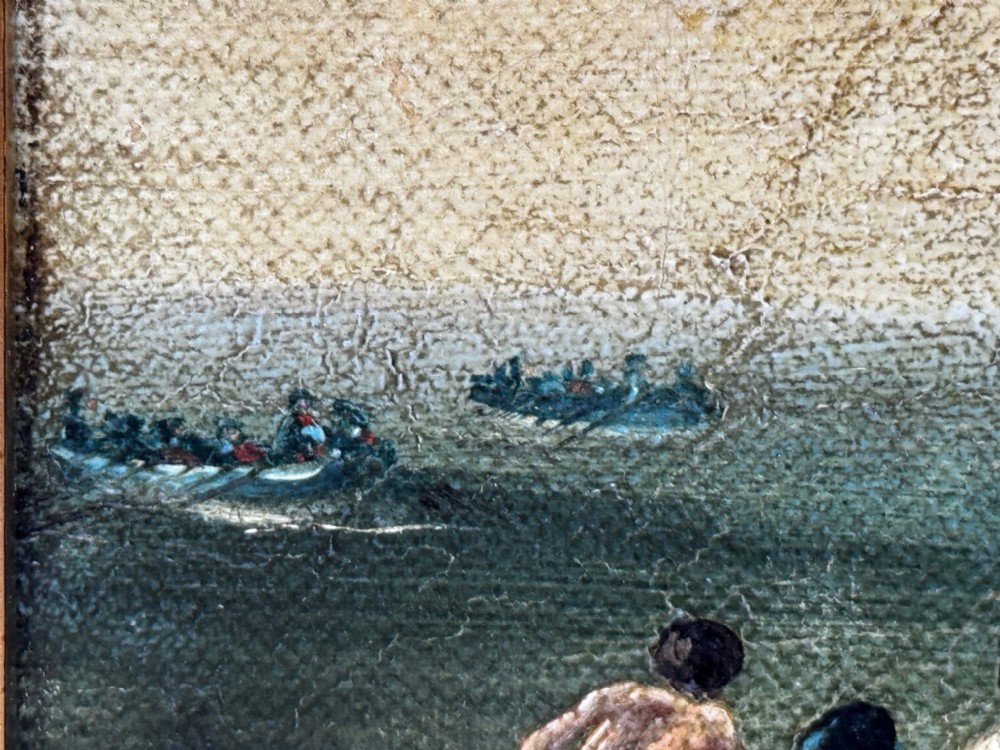
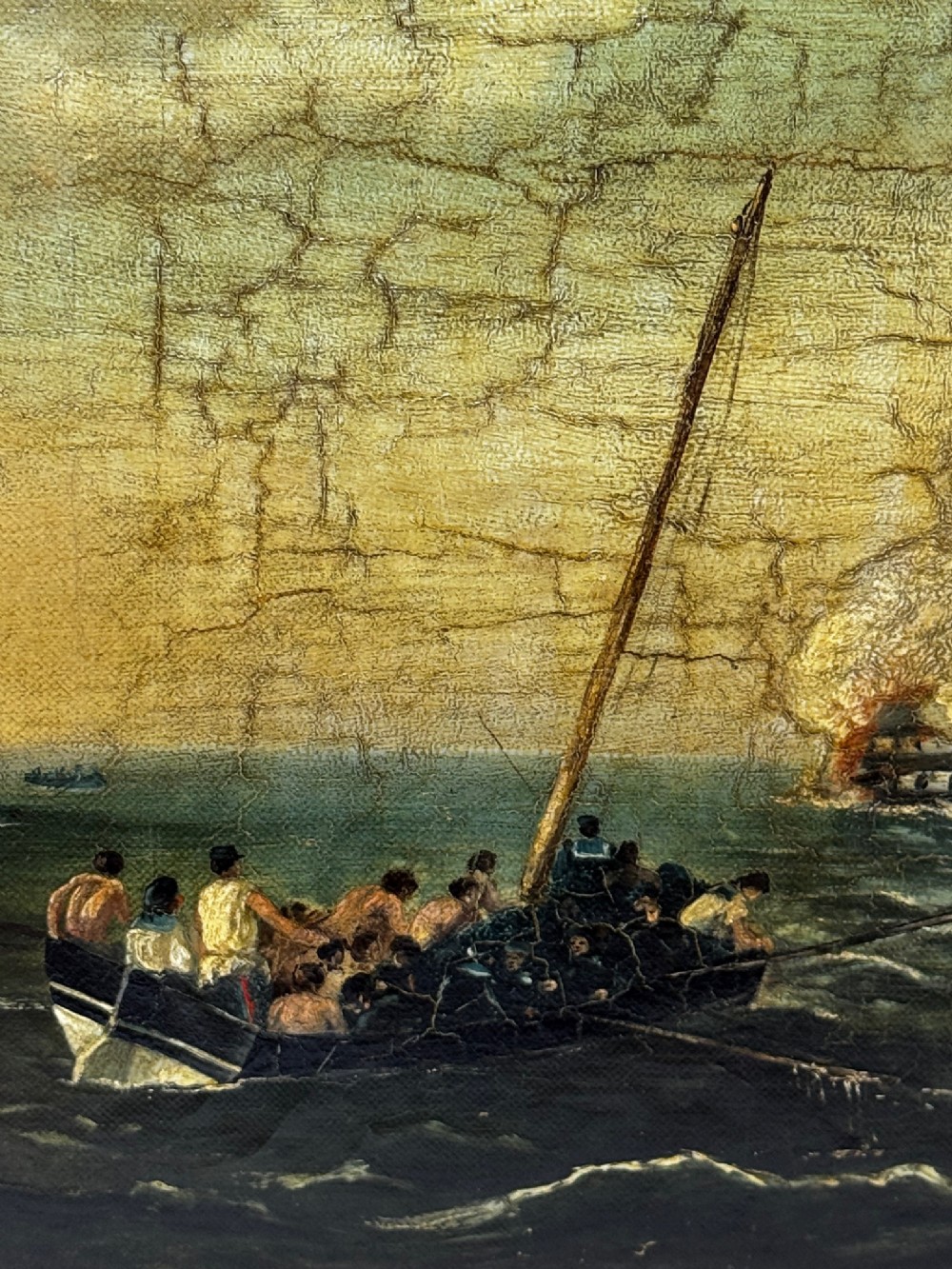
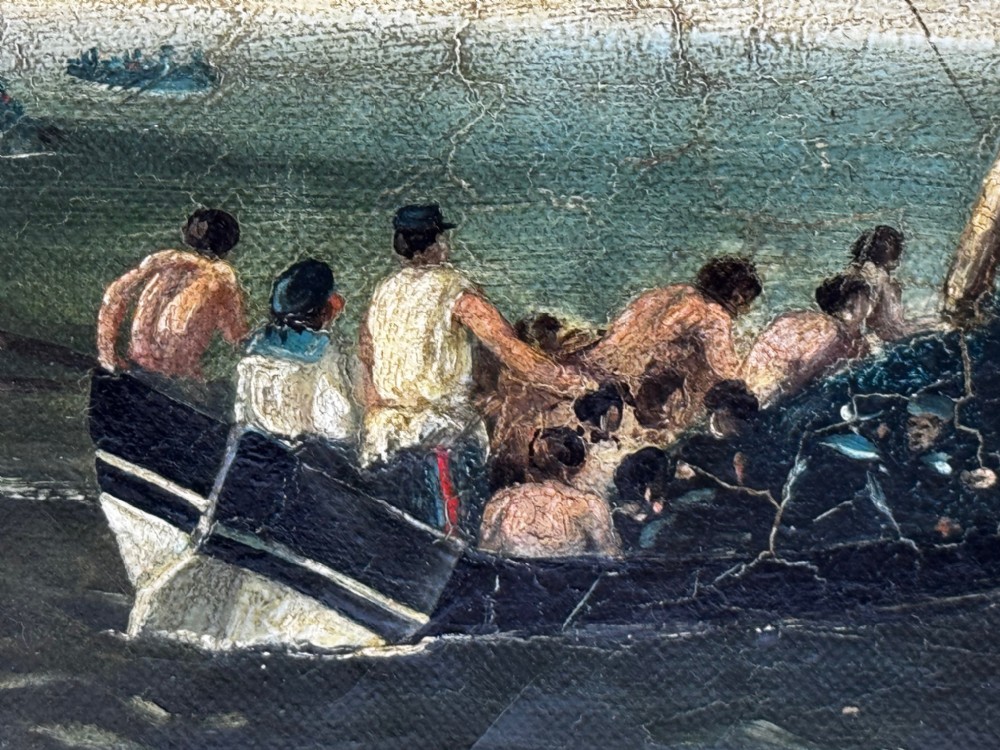
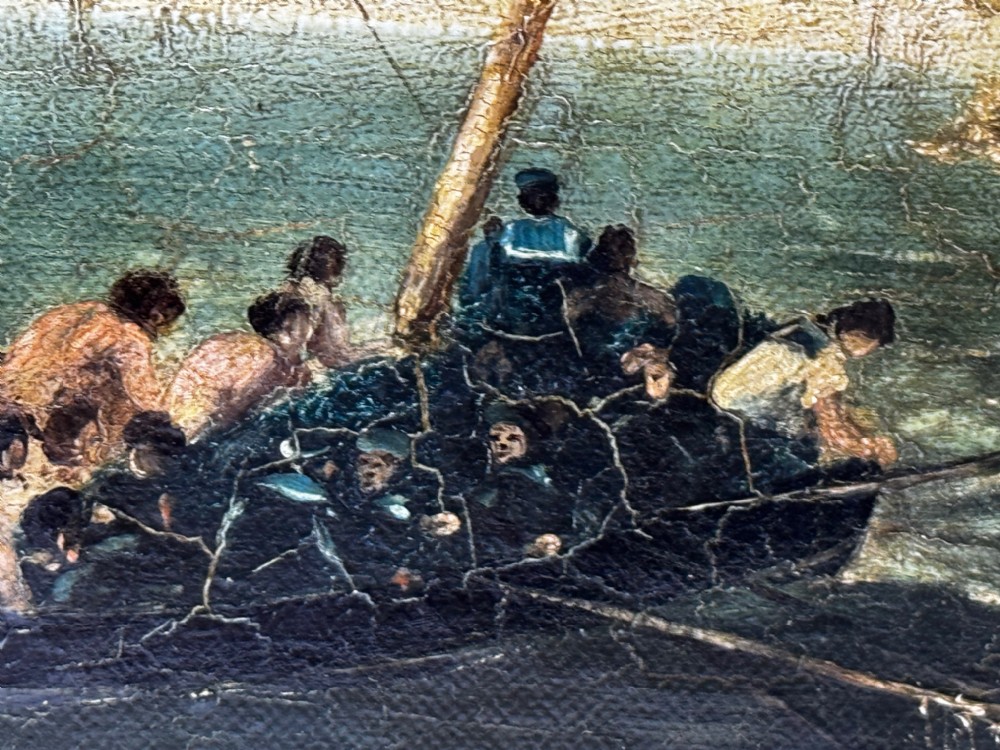
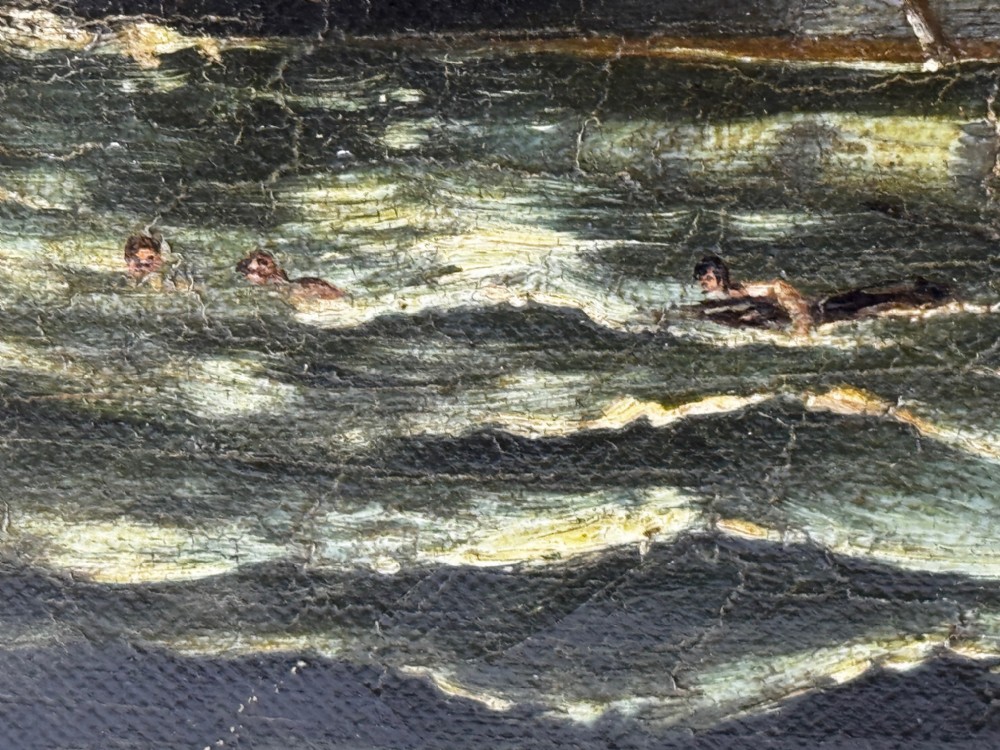
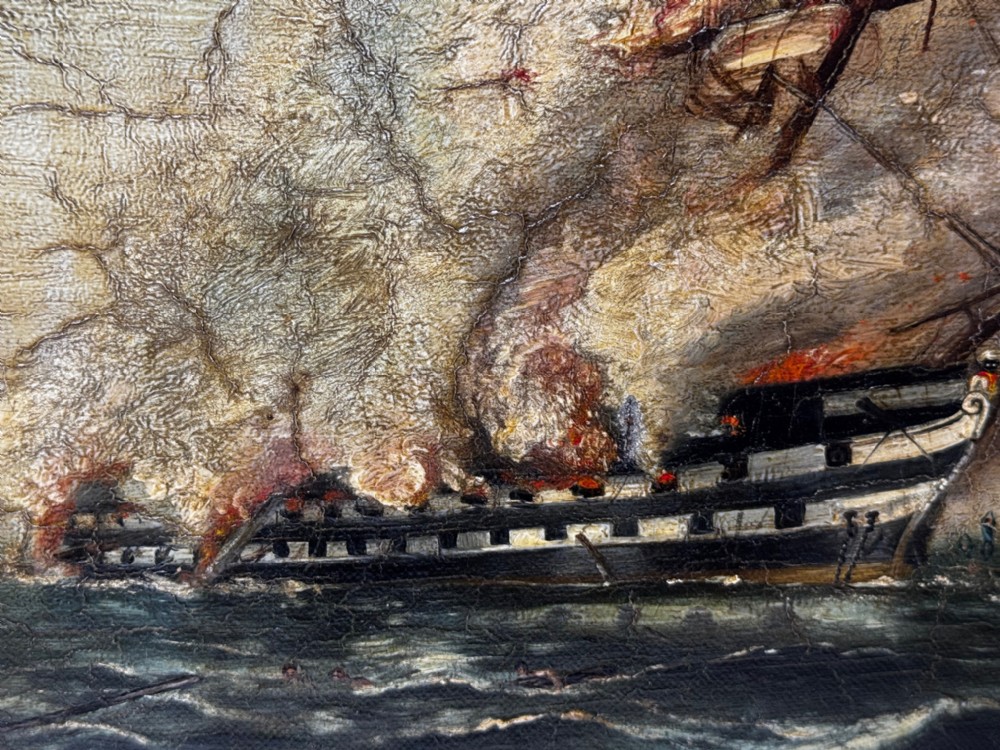
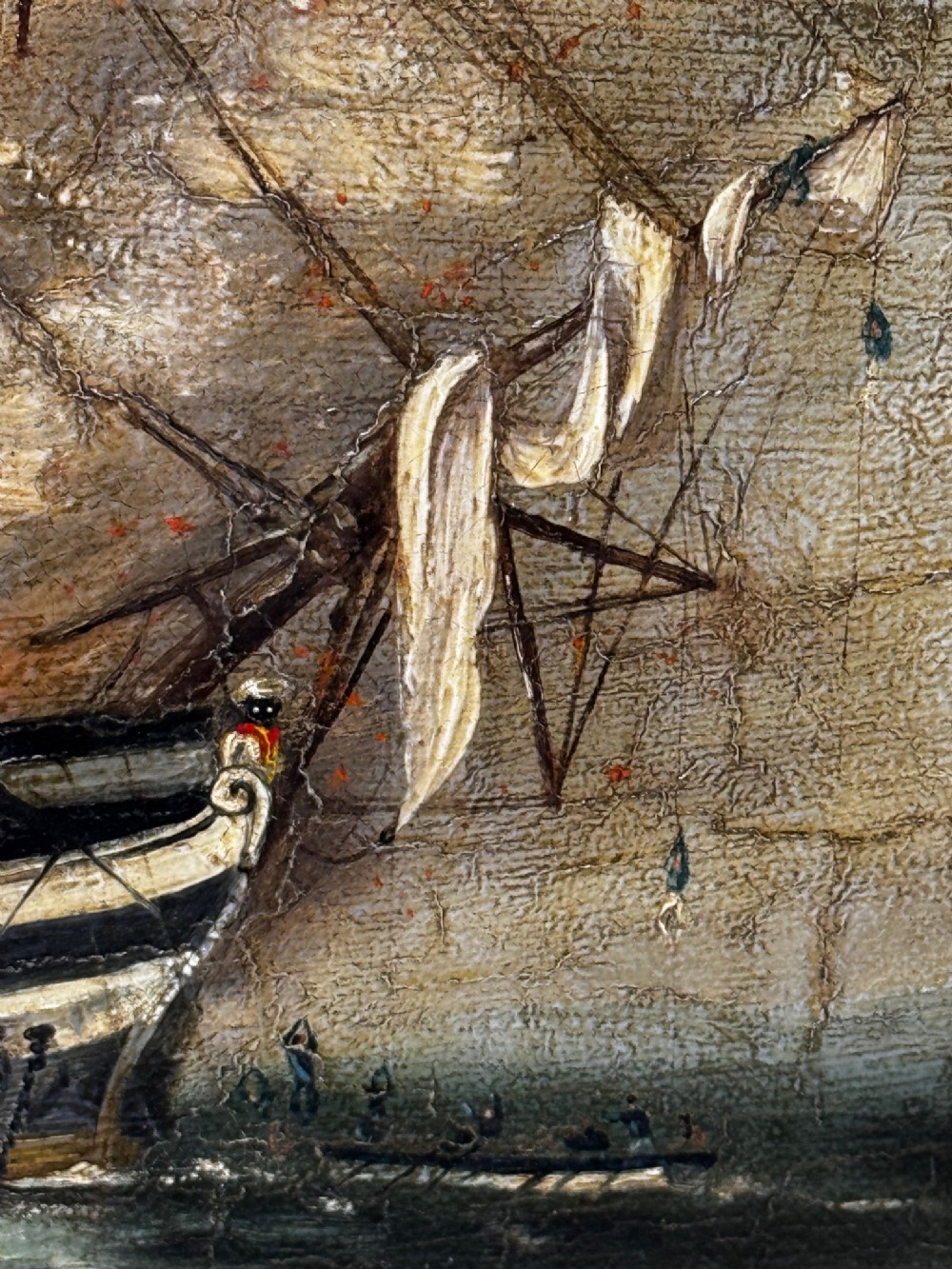
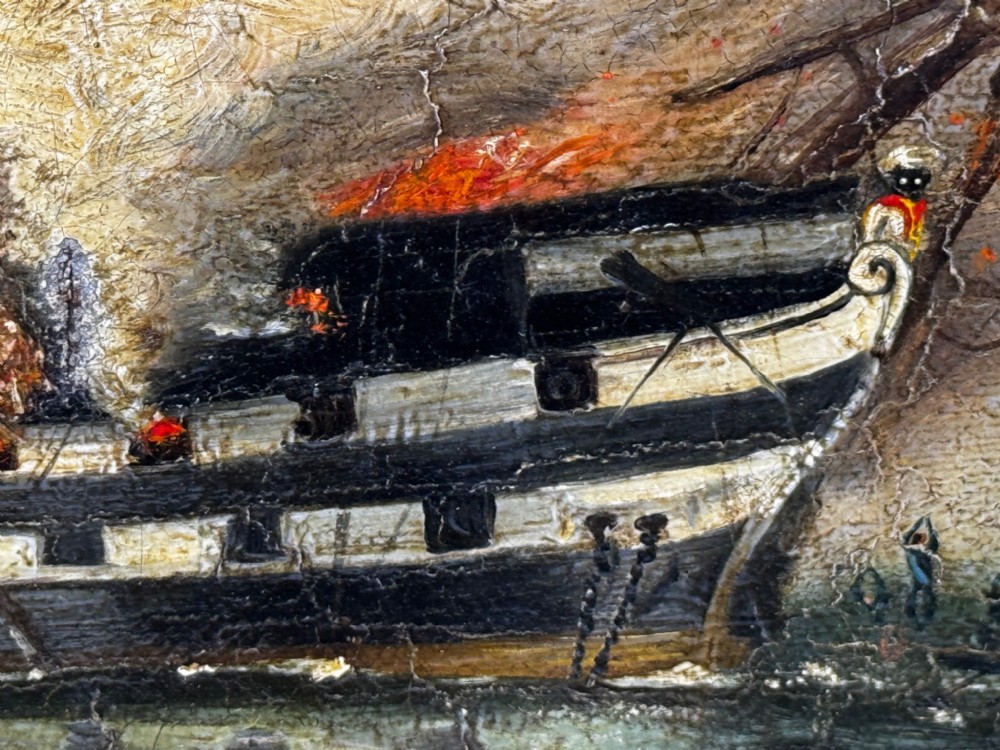
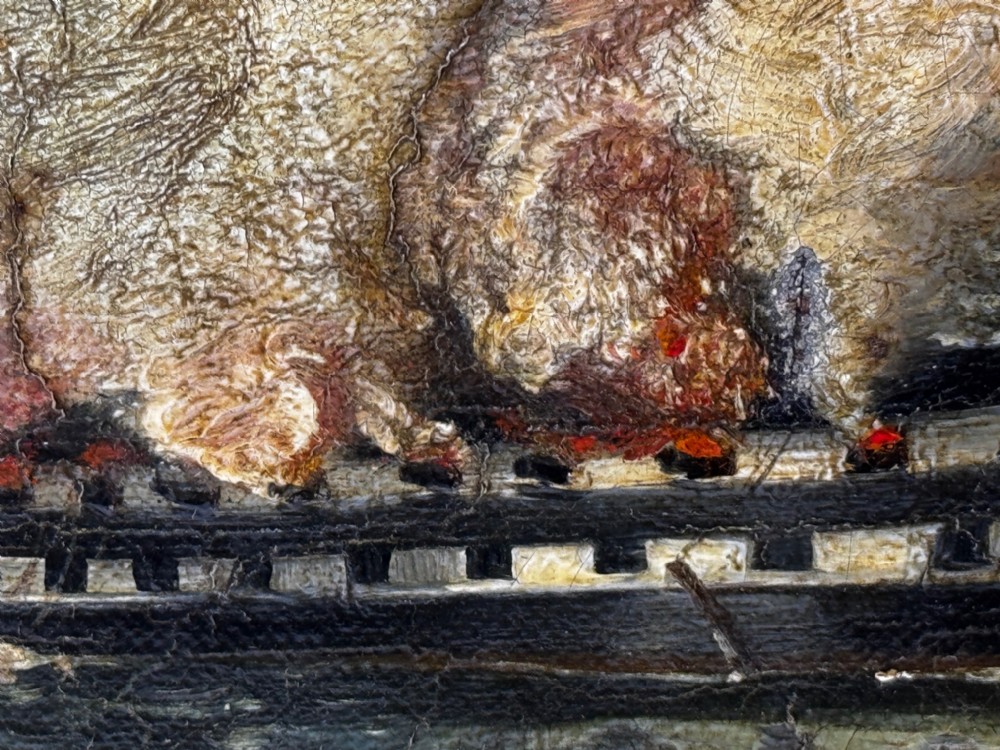
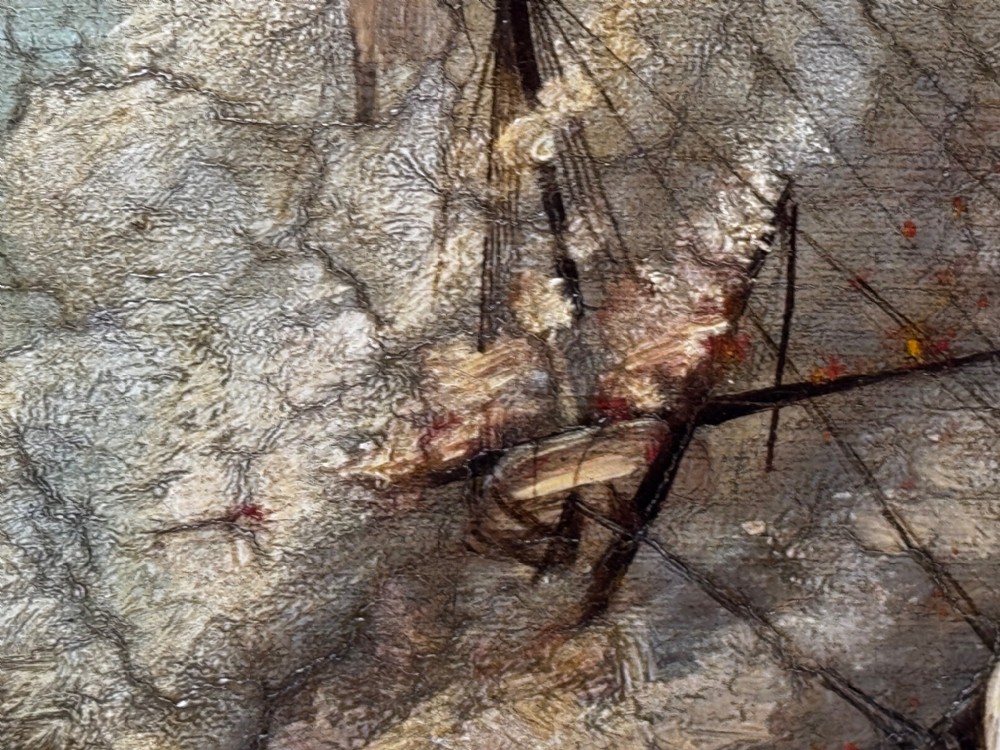
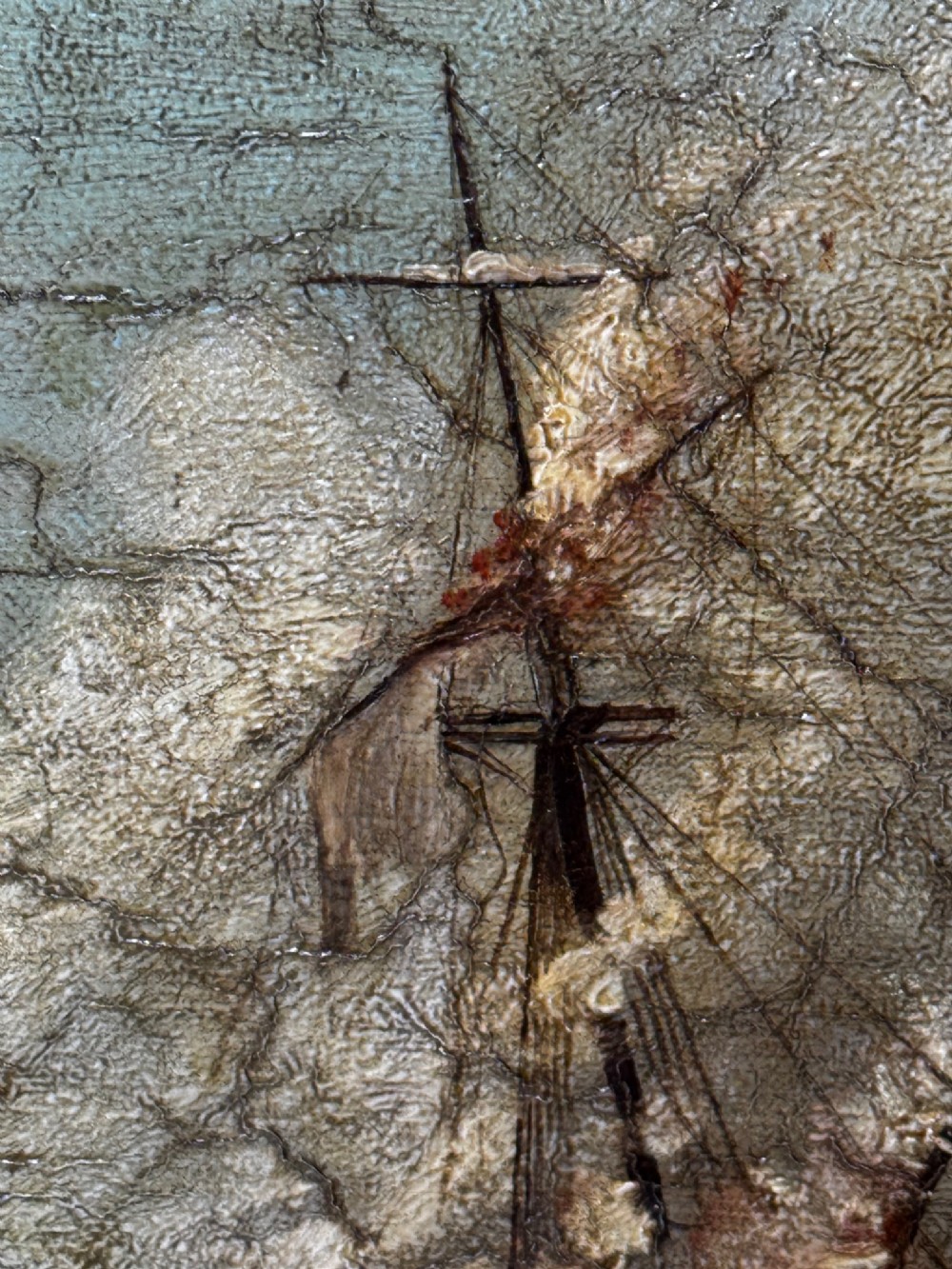
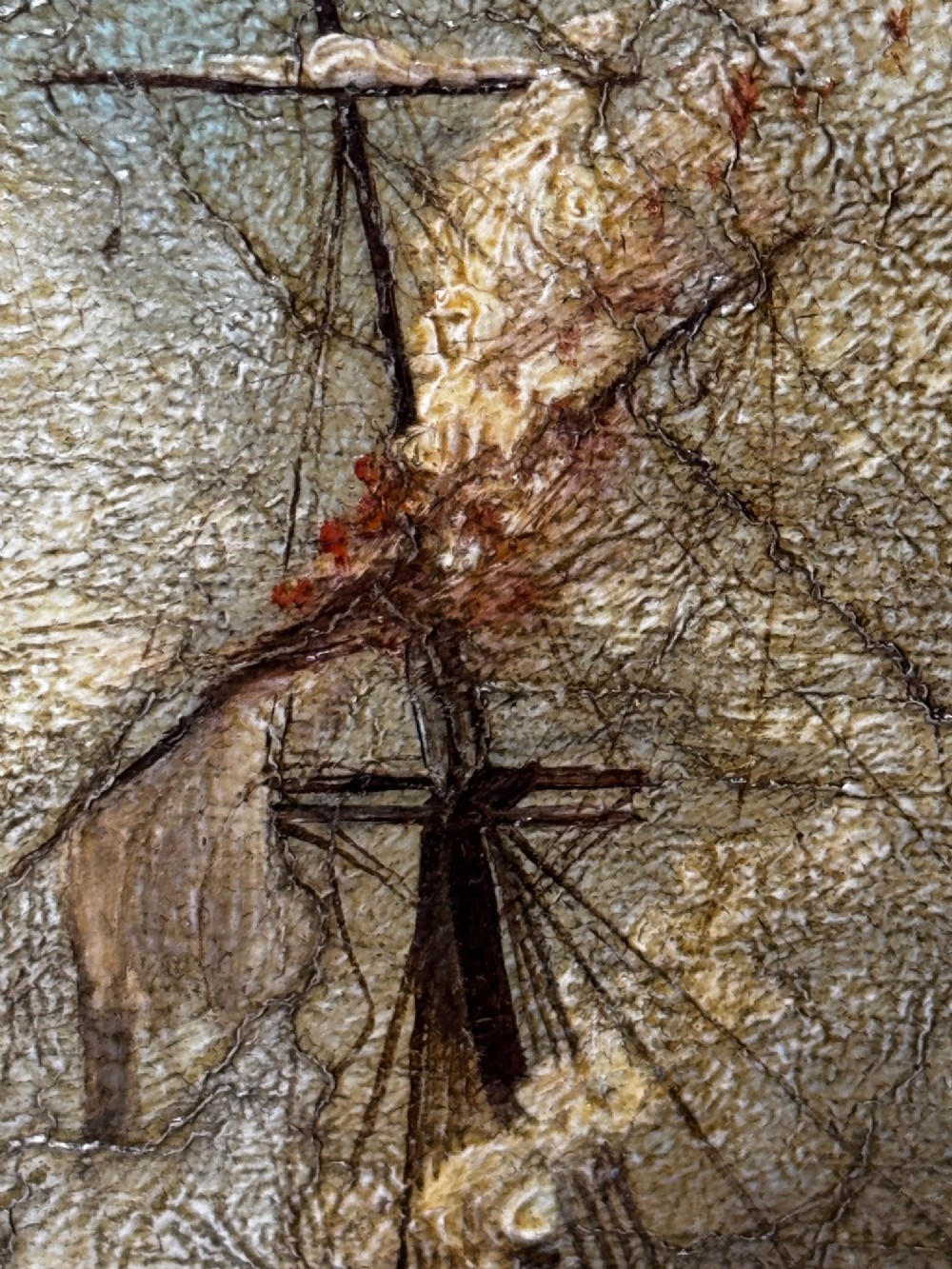
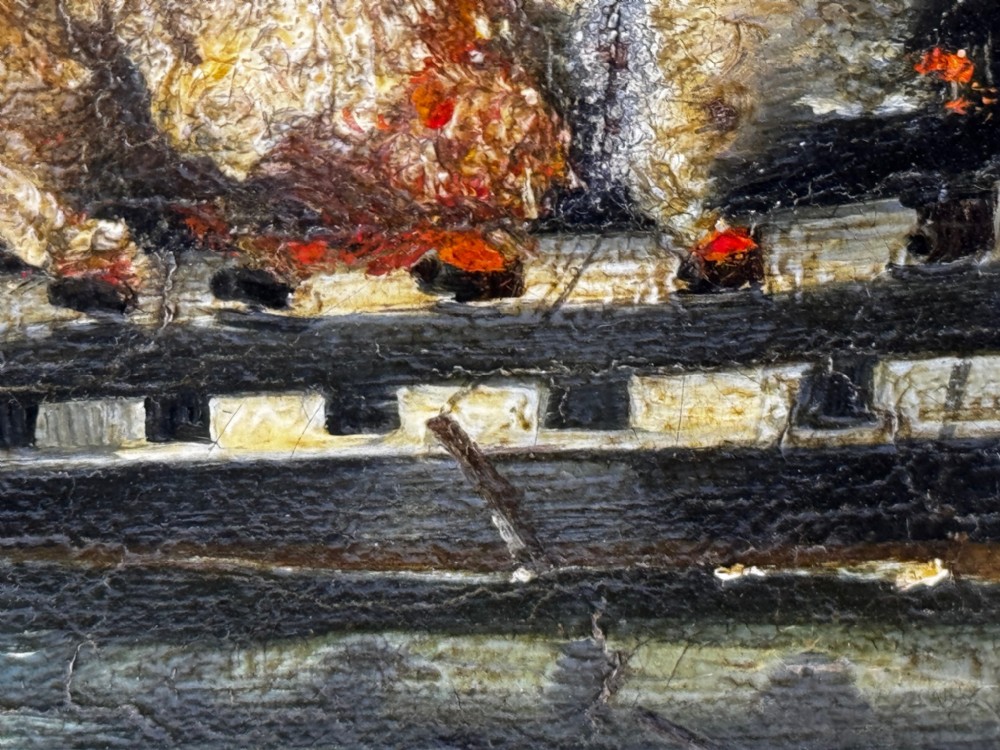
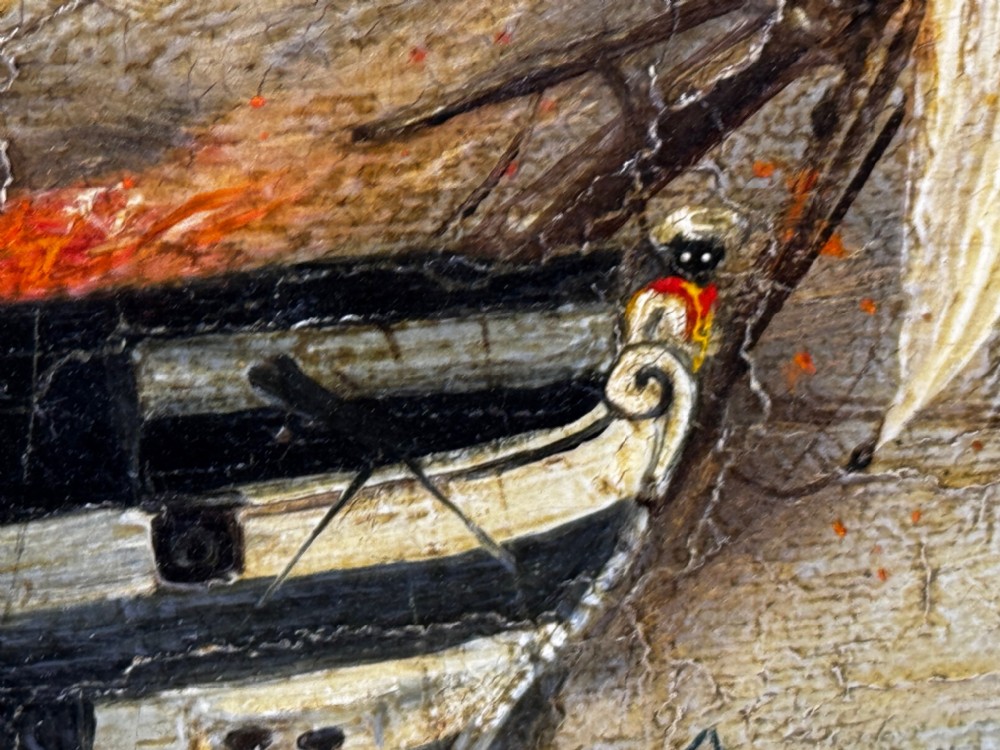
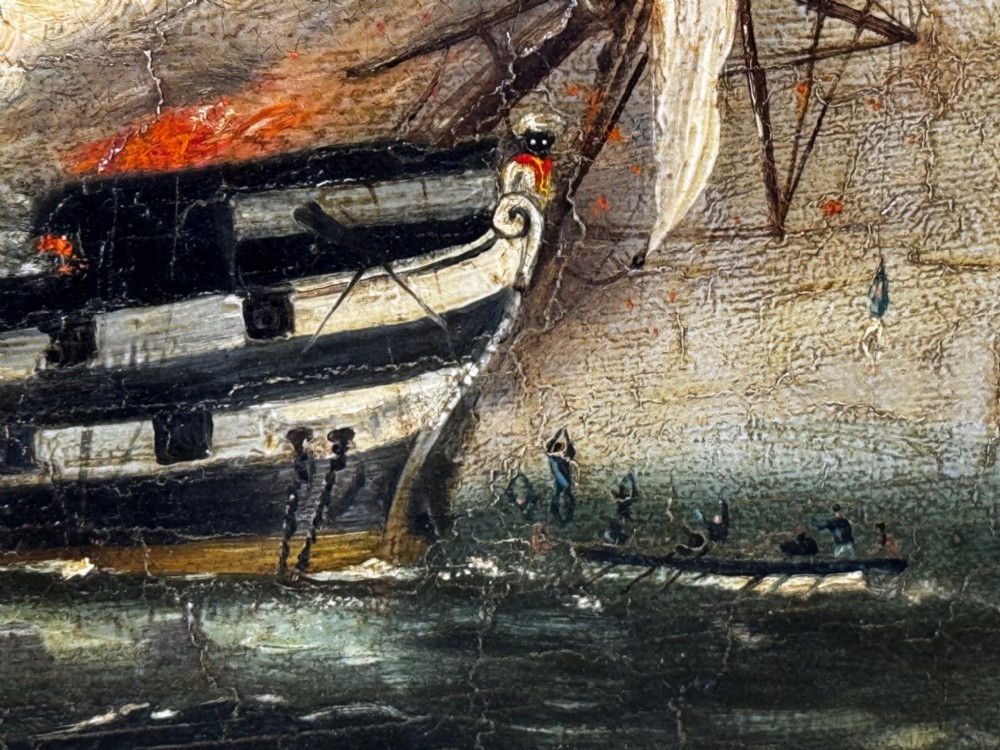
Subject seascape marine view of the known HMS ship Bombay which is sinking on the River Plate Uruguay your focus is drawn to the ferocious burning fires with various smouldering thick smoke billowing throughout the ship, only 1 mast remains which is also starting to fall apart in total ablaze. To the stern of the ship you can see desperate sailor crew clinging & climbing down ropes in such a hurry to escape being burnt & jump into the longboat waiting below. 1 of the ships main masts can be seen floating to the lower right. In the foreground to the left a longboat which is full of escaping survivors, most are watching on at a safe distance, hoping that more crew are saved. Two further longboats full of other crew survivors are further back middle left.
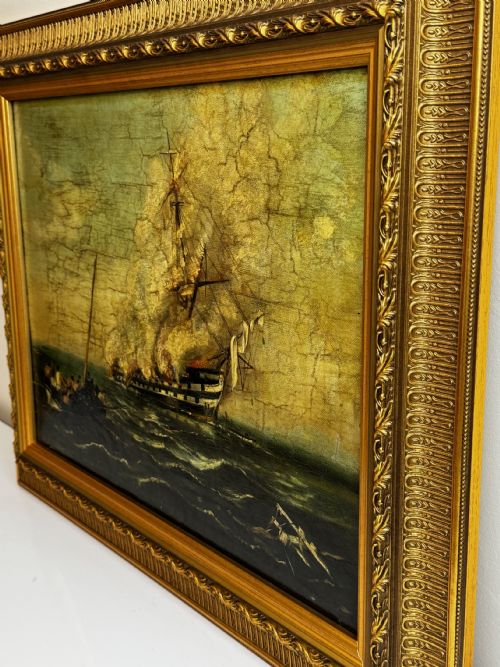
In our opinion this is exceptional historic marine masterpiece.
HMS Bombay was an 84-gun second rate ship of the line of the Royal Navy, launched on 17 February 1828 at Bombay Dockyard. She was a Canopus-class ship of the line, its tons burthen weight 2279 bm. Length of the ship 59.08m (gundeck). Its beam 15.964m. Depth of hold 6.86m. Propulsion sails & since 1861 added a steam engine. Sail plan full rigged ship. Armament 84 guns, on the gundeck having 28 x 32 pounders and 2 x 68 pounder carronades. On the upper gundeck having 32x 24 pounders. Quarterdeck 6 x 24 pounders and 10 32 x pounder carronades. Forecastle 2 x 24 pounders and 4 x 32 pounder carronades.
She was fitted with screw propulsion in 1861 at Chatham Dockyard. This was a significant modification and involved cutting the ship in half and inserting a section to lengthen her, as well as fitting a Humphrys, Tennant and Dykes steam engine that gave a speed of 10 knots. Under the command of Captain Colin Andrew Campbell, she was sent to South America as the flagship of Rear-Admiral Charles Elliot.On 8 December 1864, members of the crew fielded a cricket side to play against the Buenos Aires Cricket Club in the opening of the BACC's new game field in Parque Tres de Febrero in Palermo, Buenos Aires, located where the Galileo Galilei planetarium is today. That day the BACC defeated the Bombay team by 85 runs to 31.
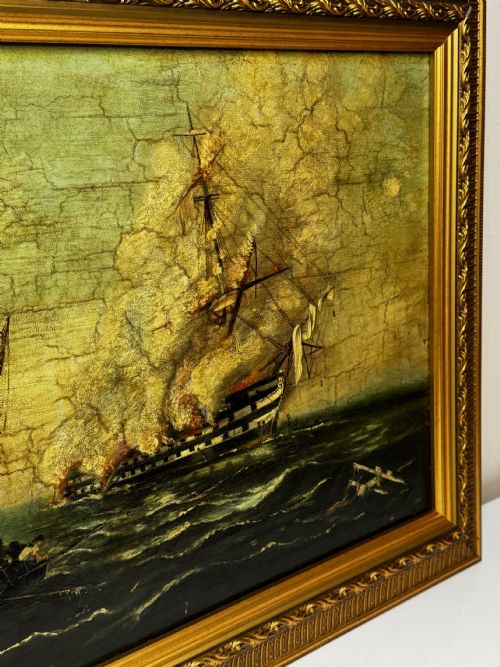
The ship would be destroyed in a fire on the River Plate, in a freak target practice accident. Her efficient ventilation system spread the fire of unknown origin during the target practice off Uruguay near Isla de Flores near Montevideo in the River Plate on 14 December 1864. destroying her and costing the lives of 93 of her crew of 619. At the time the ship was under sail, and the engines were not in use. The fire was reported at 3.35pm, having started in the area of the aft-hold. It spread quickly; by 4pm flames were coming out of the hatchways and setting the sails on fire. The ships boats were launched, but many men went into the water; some were killed by the ship's anchors when the cables holding them burnt through and they dropped into the sea. At 8:25pm, the ship's after gunpowder magazine exploded and she quickly sank in shallow water. Bombay's bowsprit remained visible above the water for some years afterwards, though it had disappeared by 1885
Biography of Richard Brydges Beechey (1808
Cheshire Antiques Consultant Ltd has dated this Antique Maritime Oil Painting to the Victorian era.
Source the historic in 17th, 18th, 19th & 20th century fine arts, painting, sculptures & collectibles
You can view the stock and full dealer information on the Cheshire Antiques Consultant Ltd Profile Page
Oil Painting Burning Hms Bombay Ship Follower Richard Brydges Beechey