13,284  PAGES BROWSED TODAY PAGES TODAY 36  ANTIQUES UPLOADED TODAY NEW ARRIVALS
ID #SA1122067
FOR SALE
£1,200
Email
Save
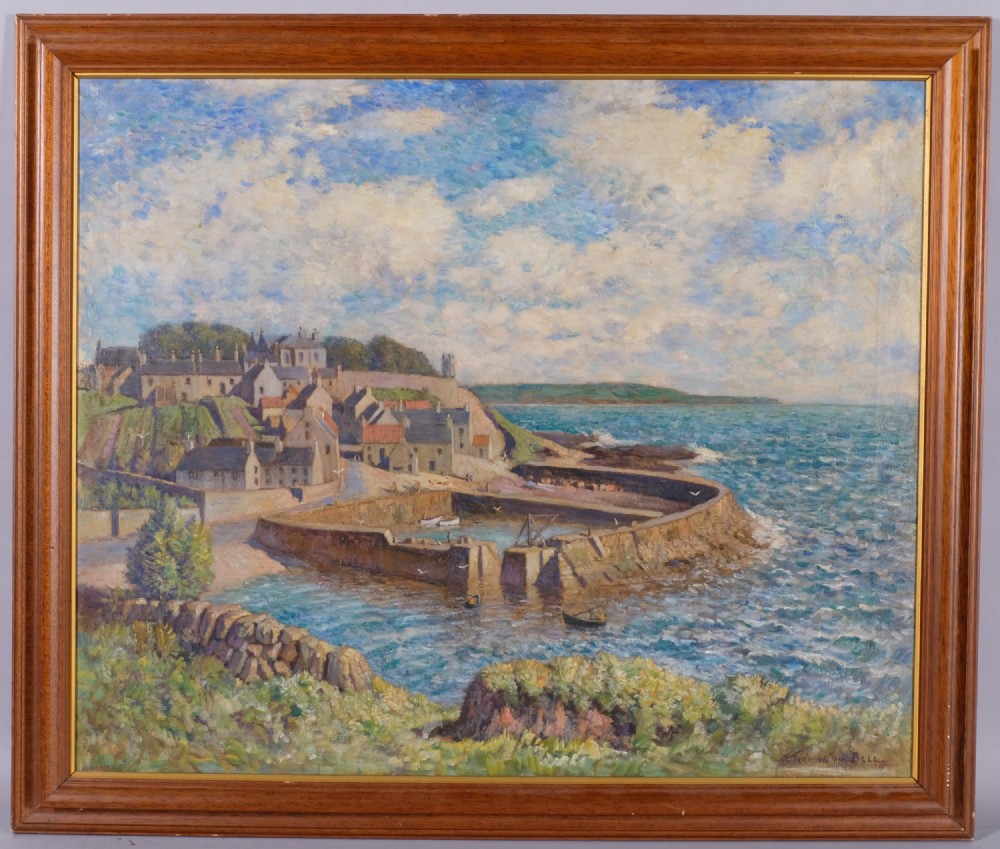
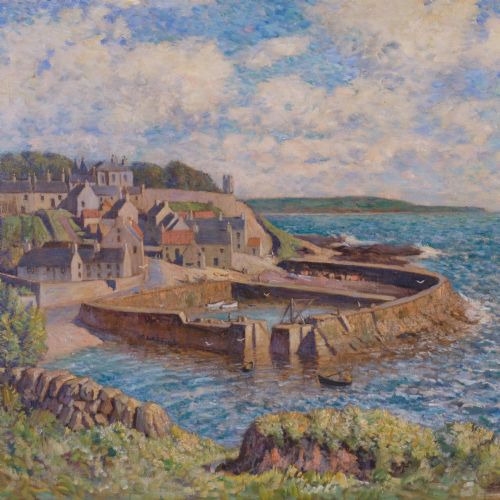
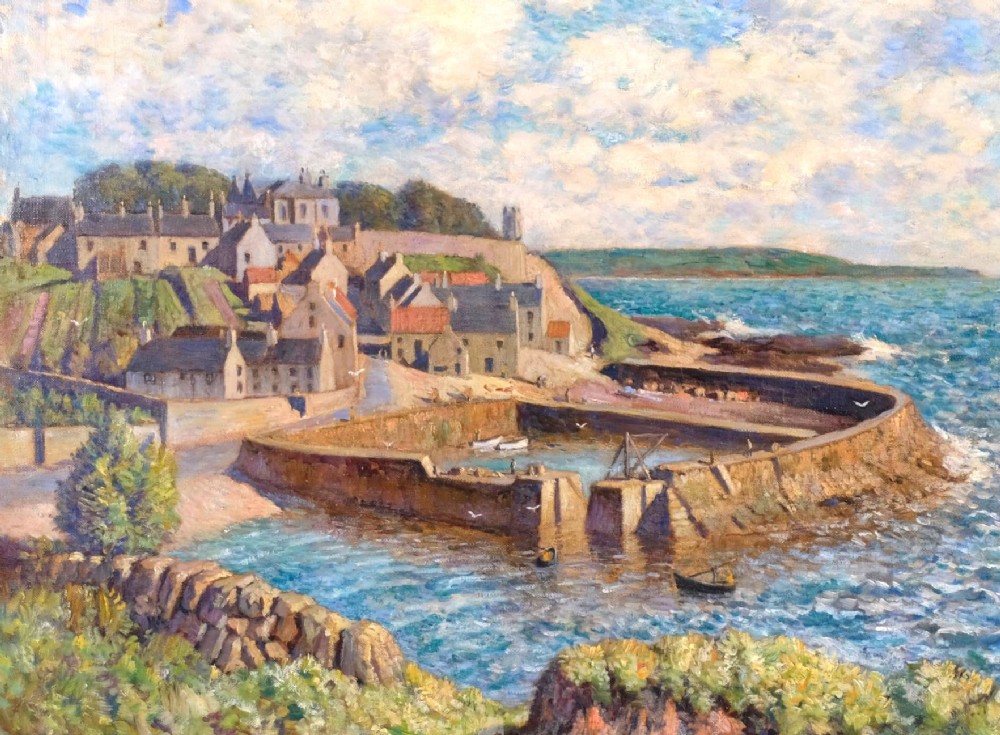
James Torrington Bell 1898 - 1950 Crail Harbour Fife, Scotland " J Torrington Bell" oil on Canvas 64 X 77 Cm.
Artware Fineart
for sale €1,404     $1,524
£1,200

Artware Fineart

Sellingantiques Verified Since Sep 2008
View Dealers Stock Page
Id #SA1122067
PDF SHARE
SAVE

James Torrington Bell 1898 - 1950 Crail Harbour Fife, Scotland " J Torrington Bell" oil on Canvas 64 X 77 Cm.

1900 - 1920
For Sale by Artware Fineart
Description

James Torrington Bell 1898 - 1950

Crail Harbour Fife, Scotland

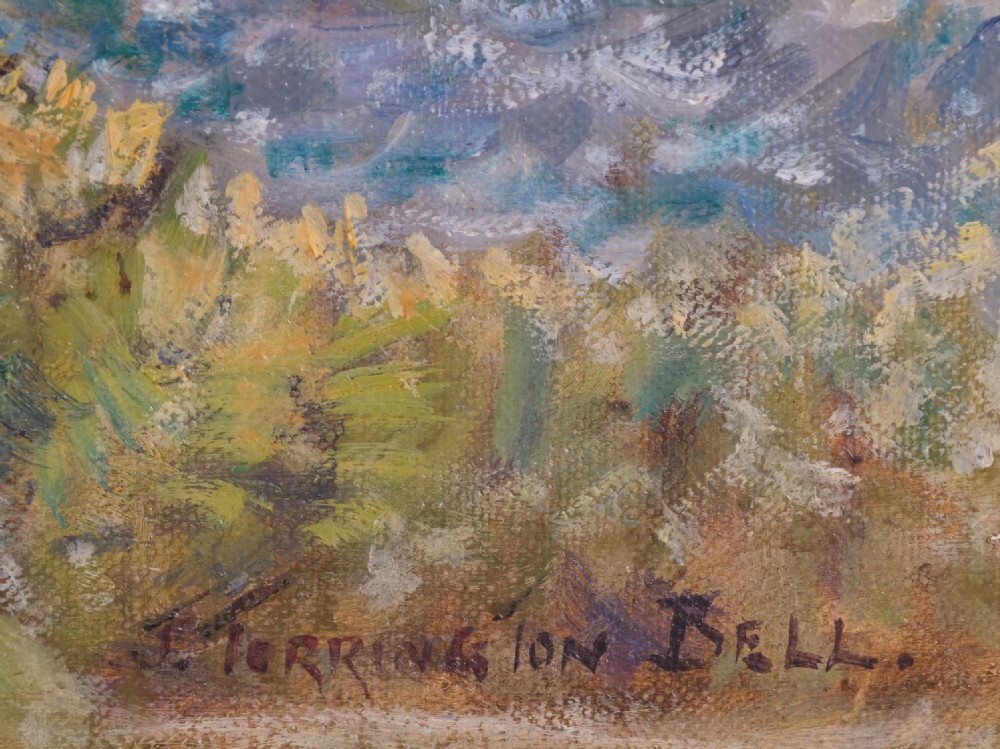
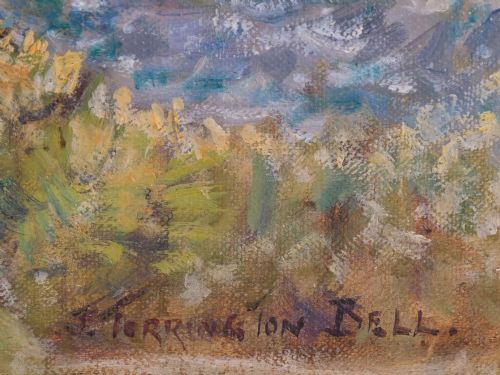
" J Torrington Bell"

oil on canvas

64 x 77 cm.
Crail is a former royal burgh, parish, and community council area (Royal Burgh of Crail and District) in the East Neuk of Fife, Scotland.

The locality has an estimated population of 1,630 (2018).

The name Crail was recorded in 1148 as Cherel and in 1153 as Karel. The first element is the Pictish *cair (c.f. Welsh caer) meaning "fort", though this word seems to have been borrowed into Gaelic. The second element may be either Gaelic ail, "rocks", or more problematically Pictish *al; no certain instance of this word exists in P-Celtic. However, if the generic element were Pictish, then this is likely of the specific.
The site on which the parish church is built appears to have religious associations that pre-date the parish church's foundation in early medieval times, as evidenced by an 8th-century cross-slab preserved in the church.The parish church was itself dedicated (in the 13th century) to the early holy man St. Maelrubha of Applecross in Wester Ross.
Crail Castle was an occasional residence of David I of Scotland during the 12th century but subsequently fell into ruin. Became a royal burgh in 1178 during the reign of King William the Lion. Robert the Bruce granted permission to hold markets on a Sunday.
Mary of Guise, afterward consort of James V, landed in Crail in June 1538 after a severe storm, and was hospitably entertained in the ancient mansion of Balcomie Castle, whence, accompanied by the king, she proceeded to St. Andrew's.
John Knox, visiting Crail on his way to St Andrews in 1559, was moved to deliver a sermon in Crail Parish Church. Afterwards, protesters went through the church and forcefully removed images which were put in place by previous generations but were now considered ideologically unsound. In August 1583, many of the inhabitants of Crail attacked nearby Wormiston House, which belonged to Sir John Anstruther. They filled up newly made ponds and ditches, and destroyed a plantation of ash trees. They were vexed at Anstruther because his new ditches had been built on land they claimed to belong to them as common land. The Privy Council of Scotland ordered them to rebuild the dykes.

In 2017, the Community Council was granted the Letters Patent to the Crail Shield and Coat of Arms. This was lost when the Royal Burgh of Crail Council was abolished in 1976.

Crail Tolbooth (on the left)

The most notable building in the town is the parish church, situated in the Marketgate – from the mid-13th century St Maelrubha's, in later medieval times St Mary's, but now, as part of the Church of Scotland's ministry, known just as Crail Parish Church. It was founded in the second half of the 12th century. From early in its history, it belonged to the Cistercian Nunnery of St Clare in Haddington, East Lothian, and remained the Nunnery's possession until the Reformation. The kirkyard also includes a war memorial gateway of 1921.

Crail Tolbooth is near the juncture of Tolbooth Wynd and the Marketgate. It stands on its own at the edge of the large marketplace with its Mercat cross in the centre of the town. This is where the Sunday markets were once held. (The former marketplace is now used as a car park.) The tolbooth has a characteristic tower dating from about 1600 and a European-style roof, similar to buildings in Holland. The weathervane on the spire is in the form of a smoked haddock (known locally as a Crail Capon) rather than the traditional cockerel form.

The Crail Museum and Heritage Centre, largely staffed by volunteers and open every day in summer, is sited in a neighbouring building, also of historical interest, at the top of Tolbooth Wynd. It houses temporary exhibitions and has a permanent exhibition on RNAS Crail.

The Golf Hotel, on High Street, is Categ

Physical Dimensions
Height
64cm (25.20")
Width
77cm (30.31")
Depth
1cm (0.39")
Declaration

Artware Fineart has dated this Scottish Coastal Oil Painting to the 1920s.

Reference Numbers
Sellingantiques Reference
SA1122067
Dealers Internal Reference
5157
Description
James Torrington Bell 1898 - 1950

Crail Harbour Fife, Scotland

" J Torrington Bell"

oil on canvas

64 x 77 cm.

Crail is a former royal burgh, parish, and community council area (Royal Burgh of Crail and District) in the East Neuk of Fife, Scotland.
Artware Fineart
fig 1. An impressionist oil painting depicting Crail Harbour in Fife with stone harbour walls, coastal cottages, and ocean waves under a cloudy sky.
fig 1. James Torrington Bell 1898 - 1950 Crail Harbour Fife, Scotland " J Torrington Bell" oil on Canvas 64 X 77 Cm.

The locality has an estimated population of 1,630 (2018).

The name Crail was recorded in 1148 as Cherel and in 1153 as Karel. The first element is the Pictish *cair (c.f. Welsh caer) meaning "fort", though this word seems to have been borrowed into Gaelic. The second element may be either Gaelic ail, "rocks", or more problematically Pictish *al; no certain instance of this word exists in P-Celtic. However, if the generic element were Pictish, then this is likely of the specific.

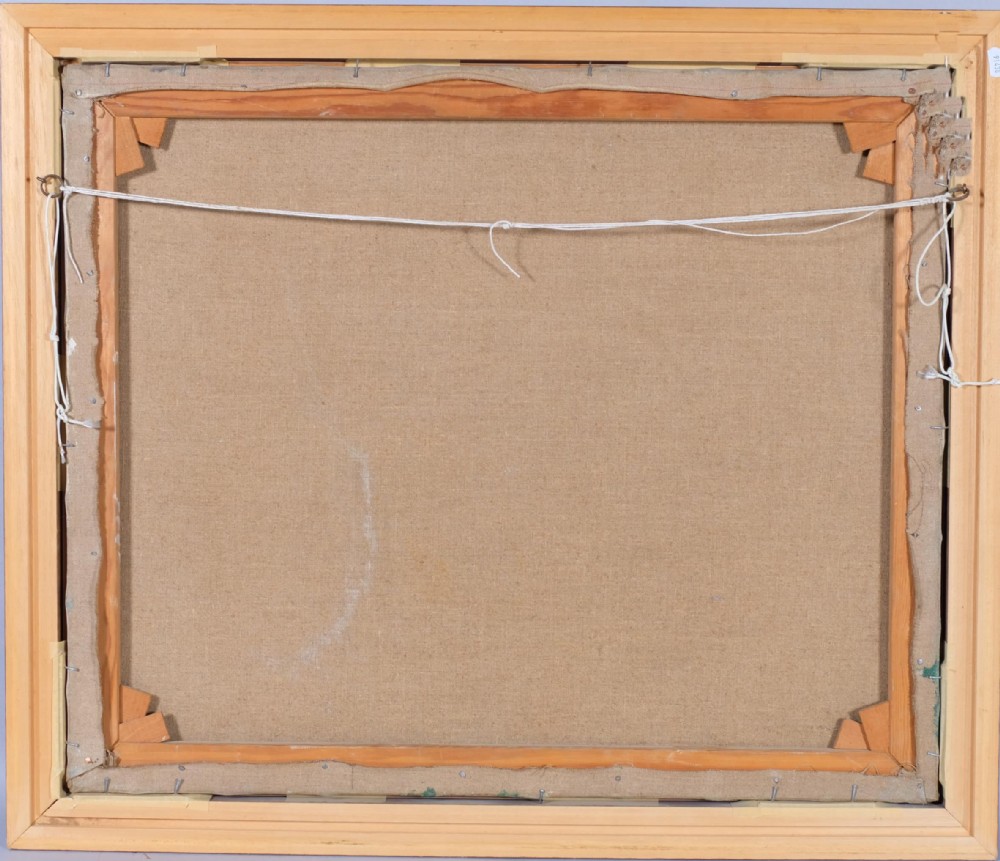
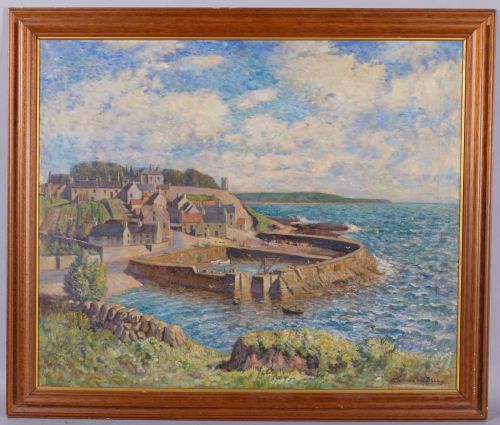
fig 2. An impressionist oil painting depicting Crail Harbour in Fife with stone harbour walls, coastal cottages, and ocean waves under a cloudy sky.
fig 2. James Torrington Bell 1898 - 1950 Crail Harbour Fife, Scotland " J Torrington Bell" oil on Canvas 64 X 77 Cm.

The site on which the parish church is built appears to have religious associations that pre-date the parish church's foundation in early medieval times, as evidenced by an 8th-century cross-slab preserved in the church.The parish church was itself dedicated (in the 13th century) to the early holy man St. Maelrubha of Applecross in Wester Ross.

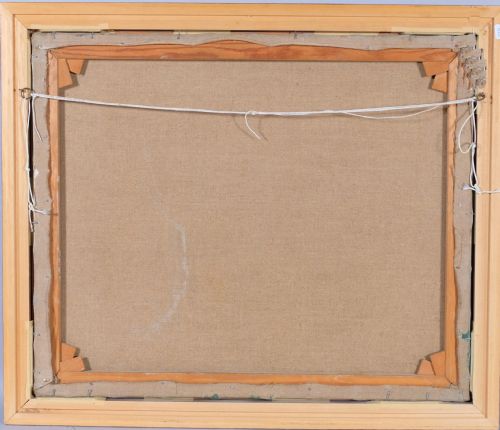
fig 3. An impressionist oil painting depicting Crail Harbour in Fife with stone harbour walls, coastal cottages, and ocean waves under a cloudy sky.
fig 3. James Torrington Bell 1898 - 1950 Crail Harbour Fife, Scotland " J Torrington Bell" oil on Canvas 64 X 77 Cm.

Crail Castle was an occasional residence of David I of Scotland during the 12th century but subsequently fell into ruin. Became a royal burgh in 1178 during the reign of King William the Lion. Robert the Bruce granted permission to hold markets on a Sunday.

fig 4. An impressionist oil painting depicting Crail Harbour in Fife with stone harbour walls, coastal cottages, and ocean waves under a cloudy sky.
fig 4. James Torrington Bell 1898 - 1950 Crail Harbour Fife, Scotland " J Torrington Bell" oil on Canvas 64 X 77 Cm.

Mary of Guise, afterward consort of James V, landed in Crail in June 1538 after a severe storm, and was hospitably entertained in the ancient mansion of Balcomie Castle, whence, accompanied by the king, she proceeded to St. Andrew's.

fig 5. An impressionist oil painting depicting Crail Harbour in Fife with stone harbour walls, coastal cottages, and ocean waves under a cloudy sky.
fig 5. James Torrington Bell 1898 - 1950 Crail Harbour Fife, Scotland " J Torrington Bell" oil on Canvas 64 X 77 Cm.

John Knox, visiting Crail on his way to St Andrews in 1559, was moved to deliver a sermon in Crail Parish Church. Afterwards, protesters went through the church and forcefully removed images which were put in place by previous generations but were now considered ideologically unsound. In August 1583, many of the inhabitants of Crail attacked nearby Wormiston House, which belonged to Sir John Anstruther. They filled up newly made ponds and ditches, and destroyed a plantation of ash trees. They were vexed at Anstruther because his new ditches had been built on land they claimed to belong to them as common land. The Privy Council of Scotland ordered them to rebuild the dykes.

In 2017, the Community Council was granted the Letters Patent to the Crail Shield and Coat of Arms. This was lost when the Royal Burgh of Crail Council was abolished in 1976.

Crail Tolbooth (on the left)

The most notable building in the town is the parish church, situated in the Marketgate – from the mid-13th century St Maelrubha's, in later medieval times St Mary's, but now, as part of the Church of Scotland's ministry, known just as Crail Parish Church. It was founded in the second half of the 12th century. From early in its history, it belonged to the Cistercian Nunnery of St Clare in Haddington, East Lothian, and remained the Nunnery's possession until the Reformation. The kirkyard also includes a war memorial gateway of 1921.

Crail Tolbooth is near the juncture of Tolbooth Wynd and the Marketgate. It stands on its own at the edge of the large marketplace with its Mercat cross in the centre of the town. This is where the Sunday markets were once held. (The former marketplace is now used as a car park.) The tolbooth has a characteristic tower dating from about 1600 and a European-style roof, similar to buildings in Holland. The weathervane on the spire is in the form of a smoked haddock (known locally as a Crail Capon) rather than the traditional cockerel form.

The Crail Museum and Heritage Centre, largely staffed by volunteers and open every day in summer, is sited in a neighbouring building, also of historical interest, at the top of Tolbooth Wynd. It houses temporary exhibitions and has a permanent exhibition on RNAS Crail.

The Golf Hotel, on High Street, is Categ

Height
64cm (25.20")
Width
77cm (30.31")
Depth
1cm (0.39")
Date of Manufacture

Artware Fineart has dated this Scottish Coastal Oil Painting to the 1920s.

Reference Numbers
Sellingantiques Ref
SA1122067
Dealers Internal Ref
5157
Artware Fineart
Sellingantiques verified Since Sep 2008
Dealer Profile

You can view the stock and full dealer information on the Artware Fineart Profile Page

PDF SHARE
SAVE
An impressionist oil painting depicting Crail Harbour in Fife with stone harbour walls, coastal cottages, and ocean waves under a cloudy sky.
1 / 6
Archive I An impressionist oil painting depicting Crail Harbour in Fife with stone harbour walls, coastal cottages, and ocean waves under a cloudy sky.

James Torrington Bell 1898 - 1950 Crail Harbour Fife, Scotland " J Torrington Bell" oil on Canvas 64 X 77 Cm.
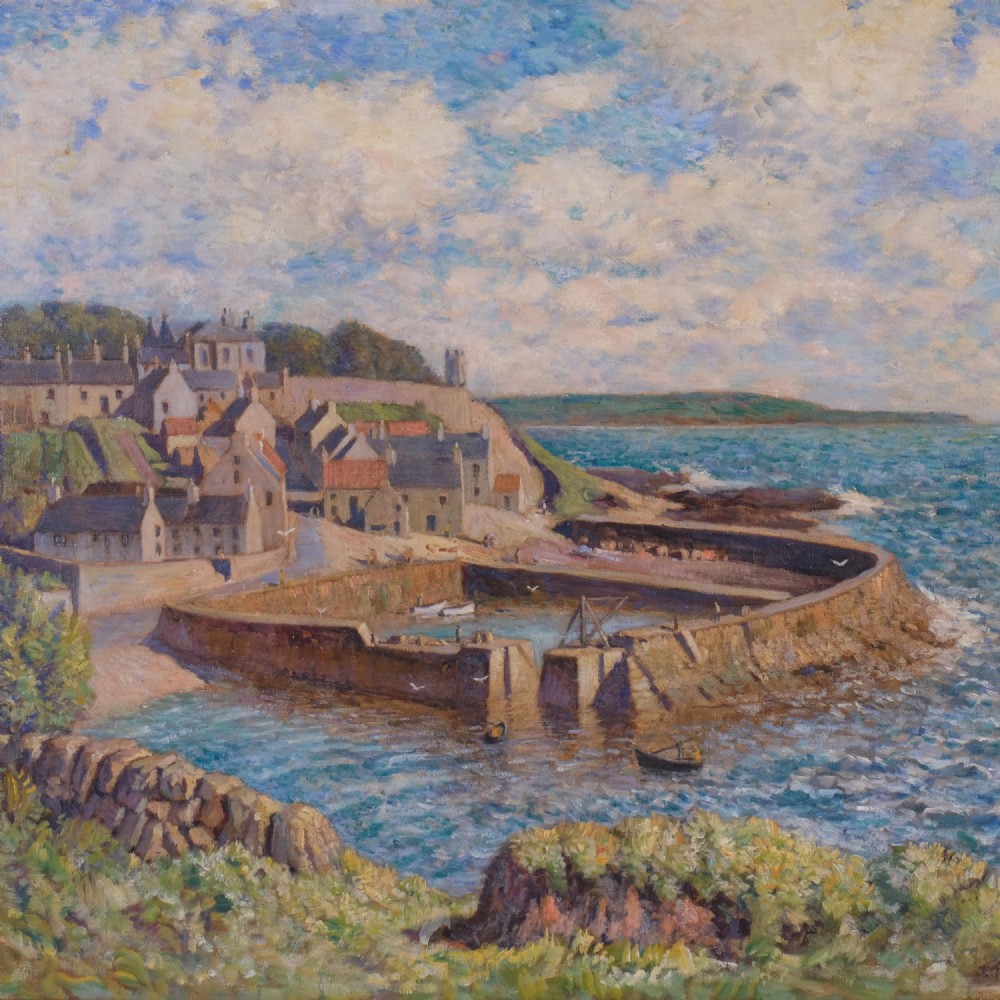
Archive II An impressionist oil painting depicting Crail Harbour in Fife with stone harbour walls, coastal cottages, and ocean waves under a cloudy sky. View II
Archive III An impressionist oil painting depicting Crail Harbour in Fife with stone harbour walls, coastal cottages, and ocean waves under a cloudy sky. View III
Archive IV An impressionist oil painting depicting Crail Harbour in Fife with stone harbour walls, coastal cottages, and ocean waves under a cloudy sky. View IV
Archive V An impressionist oil painting depicting Crail Harbour in Fife with stone harbour walls, coastal cottages, and ocean waves under a cloudy sky. View V
Archive VI An impressionist oil painting depicting Crail Harbour in Fife with stone harbour walls, coastal cottages, and ocean waves under a cloudy sky. View VI
Enlarged Archival View
Telephone 07958 699 645
Location
18 La Gare
51 Surrey Row
London
SE1 0BZ
United Kingdom
Verified Since Sep 2008
Items For Sale 243
Items Sold 223
Artware Fineart
Verified Since Sep 2008
View Dealer Info
Location: 18 La Gare , 51 Surrey Row , London , SE1 0BZ , United Kingdom
Verified
Sep 2008
For Sale
243
Sold
223
An impressionist oil painting depicting Crail Harbour in Fife with stone harbour walls, coastal cottages, and ocean waves under a cloudy sky.
James Torrington Bell 1898 - 1950 Crail Harbour Fife, Scotland " J Torrington Bell" oil on canvas 64 x 77 cm.
Ref: SA1122067
An impressionist oil painting depicting Crail Harbour in Fife with stone harbour walls, coastal cottages, and ocean waves under a cloudy sky.
Detail View 1
Detail View 2
Detail View 3
Detail View 4
Detail View 5
Archival Detail
Every single antique dealer on our platform is individually approved by our internal team. We verify their professional trade history, ethical standards, and photographic quality to ensure a secure, high-standard buying environment. Upon joining, every dealer agrees to a strict 9-point code of conduct. While issues can occasionally arise, our dealers typically resolve them swiftly and directly with the buyer. In fact, since our founding in 2002, Sellingantiques has only had to step in to help resolve an issue on roughly five occasions—a true testament to the quality of our dealers and their dedication to your happiness.
Our dealers are highly experienced in packing and shipping fragile, high-value antiques. Because you are in direct contact with the dealer, you will be able to easily go through all available shipping and insurance options together to ensure your item arrives safely.
Antiques are the ultimate green purchase. By choosing historical pieces over newly manufactured goods, you completely eliminate the carbon footprint of modern mass production while preserving exceptional, timeless craftsmanship.

Early 20th-century Scottish landscape and marine paintings often reflect post-impressionist influences, featuring expressive brushwork, vibrant natural light, and maritime subjects along the Scottish coastline.

Artists typically worked with stretched natural linen or cotton canvas, applying ground gesso before painting in oil pigments bound with linseed oil, supported by wooden stretcher bars.

Authentic works feature period-appropriate stretched canvas, visible brushwork or impasto technique, artist signatures consistent with period records, and natural age craquelure.

Display fine art paintings as focal points above a mantelpiece or console table, pairing cool marine tones with natural timber, neutral linen fabrics, or muted wall colour schemes.

Keep canvas paintings away from direct sunlight, extreme humidity, and heat sources. Clean gently using a soft, dry camel-hair brush, avoiding water or chemical solvents.
items
Add keywords to the filter
Price
£100
£250000
Era
Movements
Material
Origin
Stock Location
Freshness
Online Payments
Categories