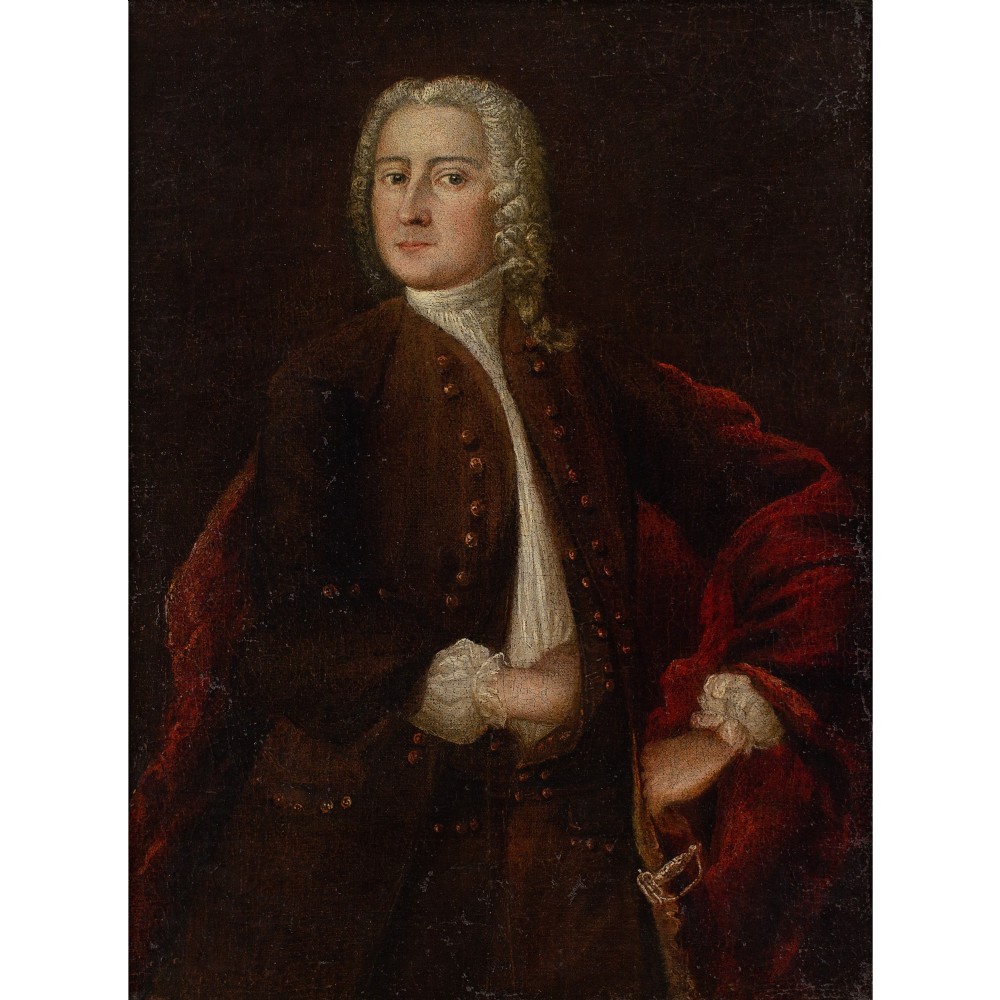
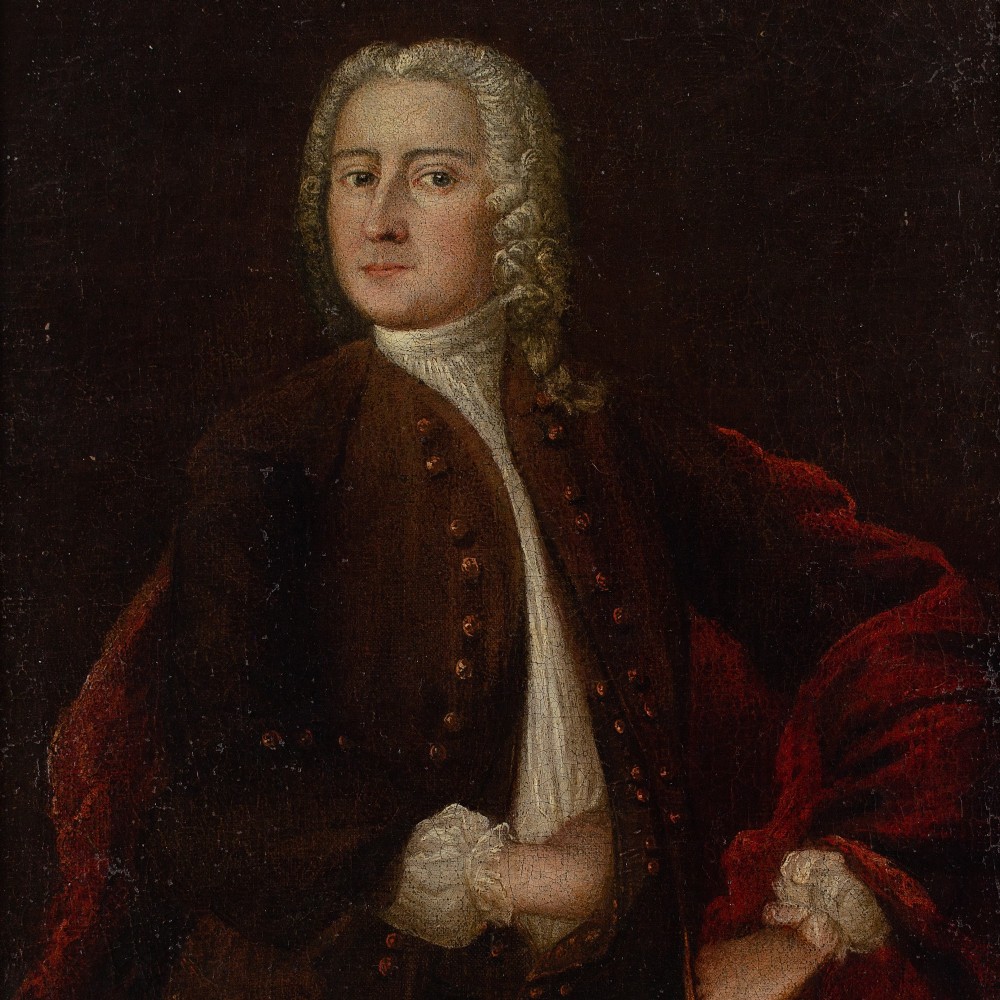
Brave Fine Art has dated this piece to the 18th Century.
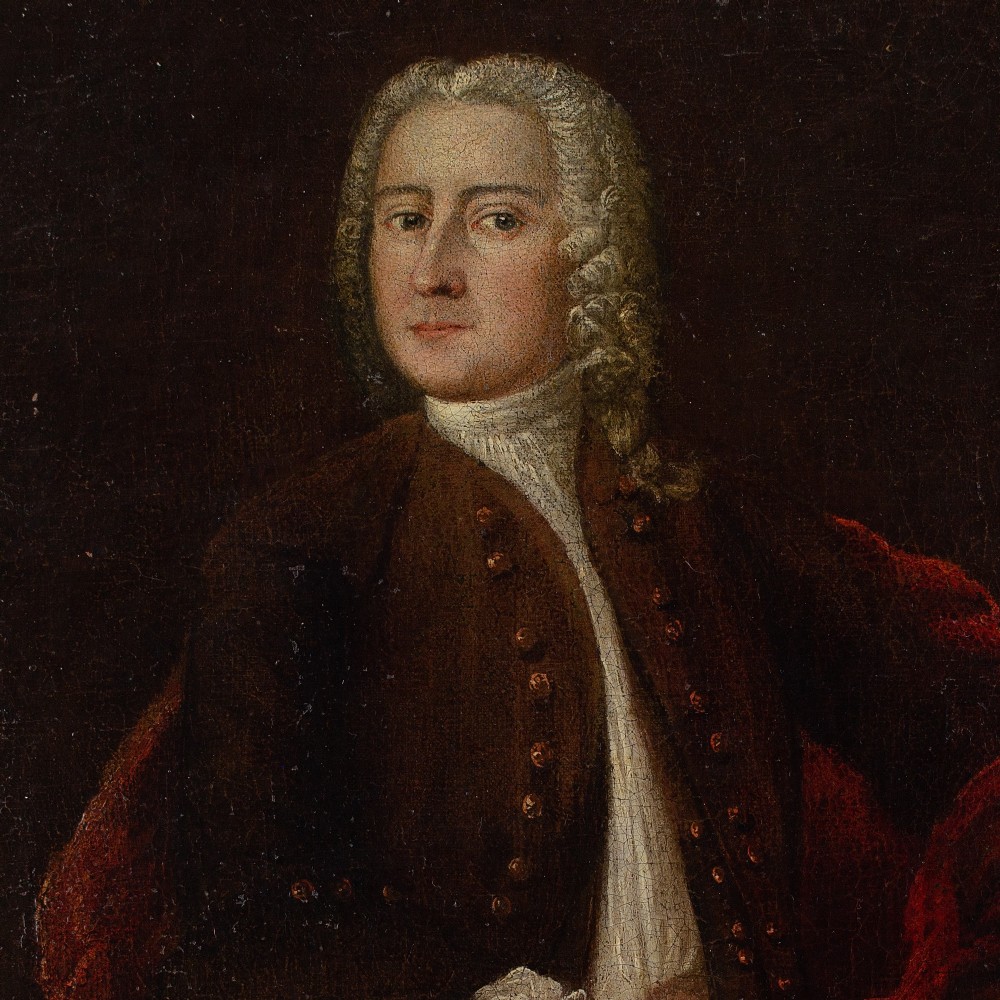
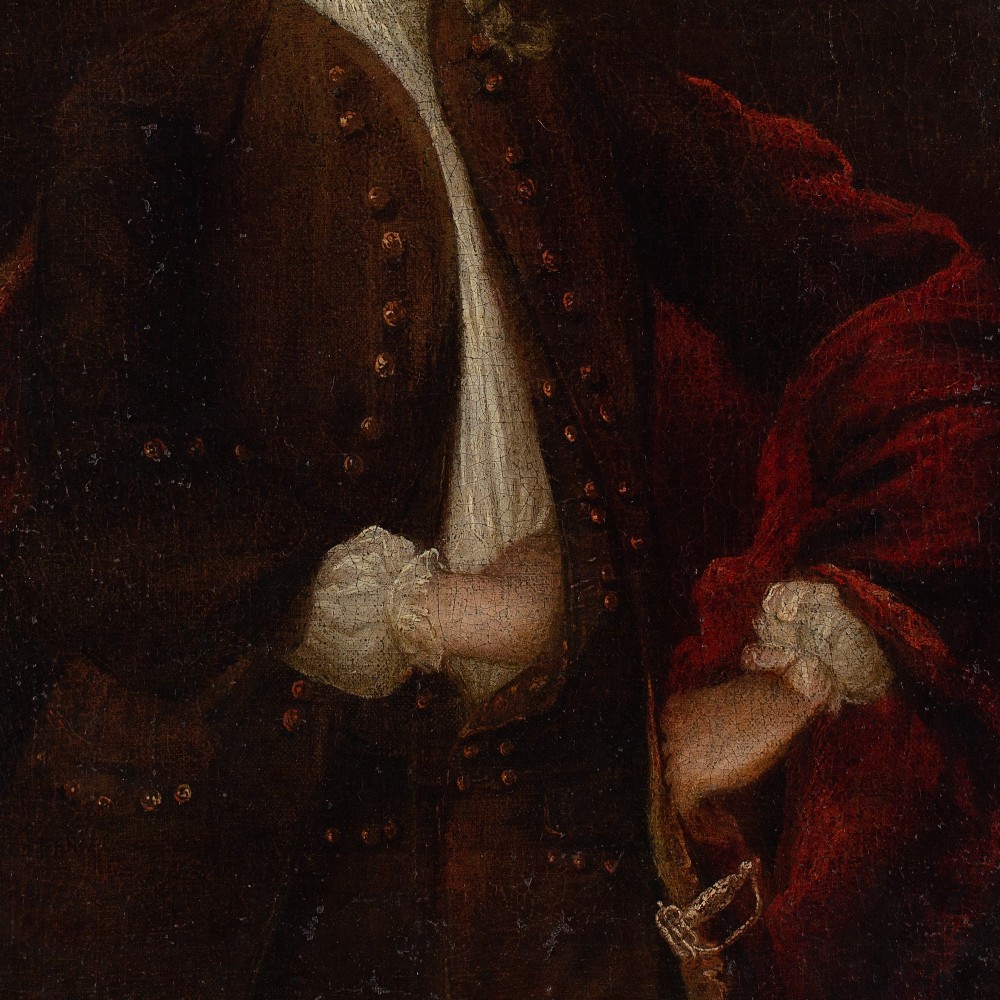
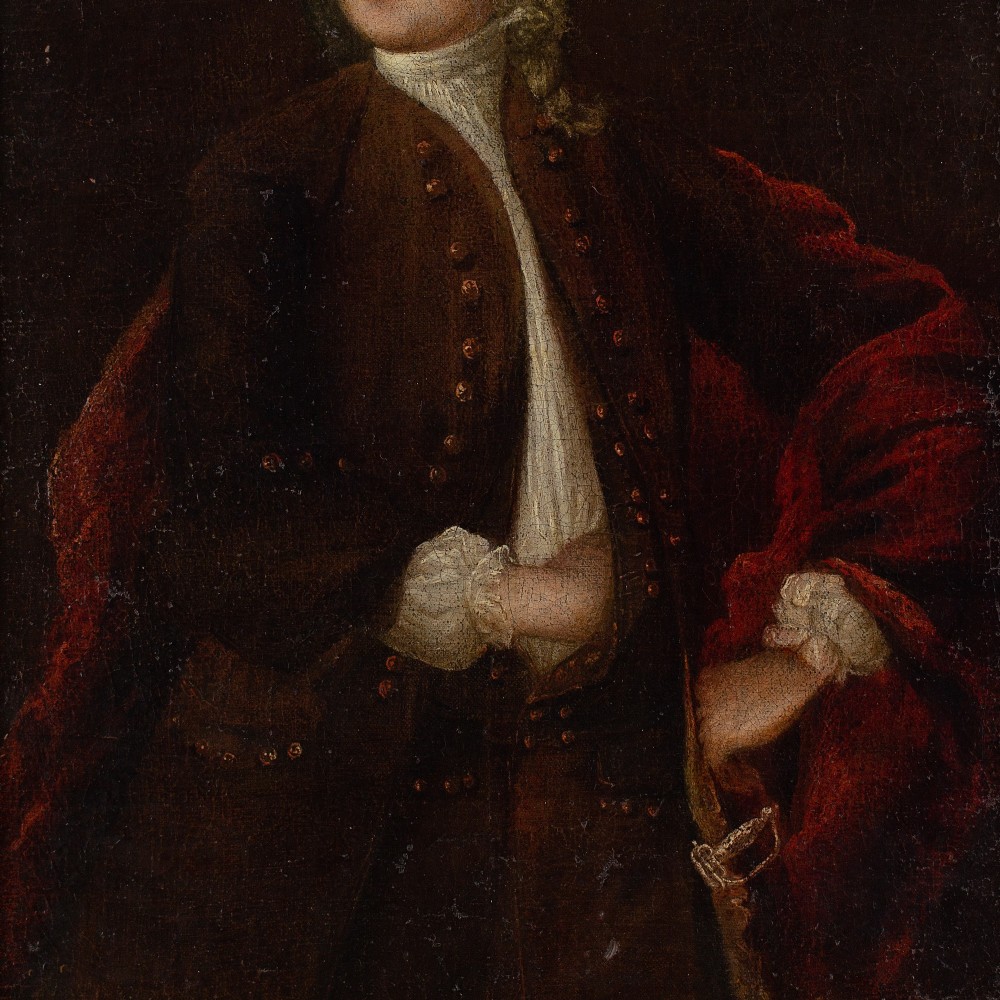
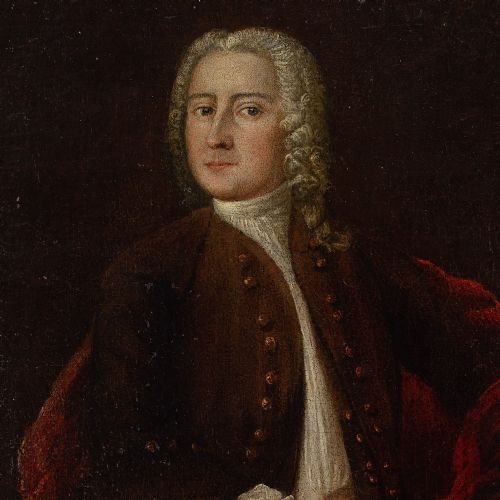
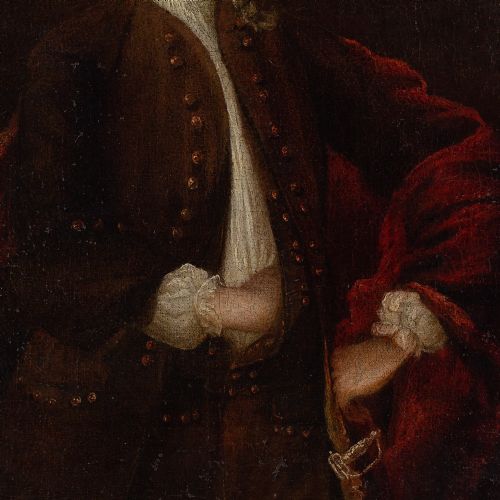
His elegant suit is skillfully tailored and accessorised with an obligatory powdered wig and sword.
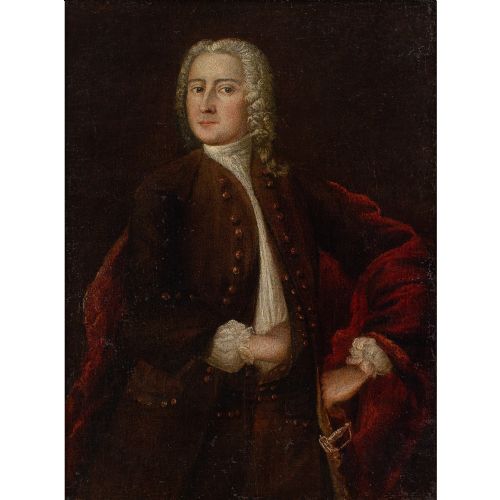
During this period, any self-respecting nobleman would don a wig, styled in the latest fashion. To ignore this societal requirement, would convey eccentricity, or worse, poverty. They were the source of much consternation, as the finest were made of human hair - but with questionable origins. Advertisements, such as this from the late 1730s, promoted their offerings while also seeking fresh raw materials.
“Curiously made after the most exact and best manner, by William Hills, at the Rose in St George’s, Canterbury, all sorts of perukes, clergymens bobs, spencer wigs, bag wigs, and natural wigs, sold at reasonable rates, for ready money. Also ready money for good hair.” As a result, often the hair was derived from corpses, prostitutes or villains.
For further examples of similar clothing from the period, please see William Hogarth’s ‘Portrait Of A Family’, circa 1735.
Amalia von Königsmarck was a painter, actor and poet, who was trained by court artist, David Klöcker Ehrenstrahl. Her oeuvre contains several stylistically comparable works including a self-portrait.
It’s likely that the artist of our piece worked within her circle and was perhaps also trained by Ehrenstrahl.
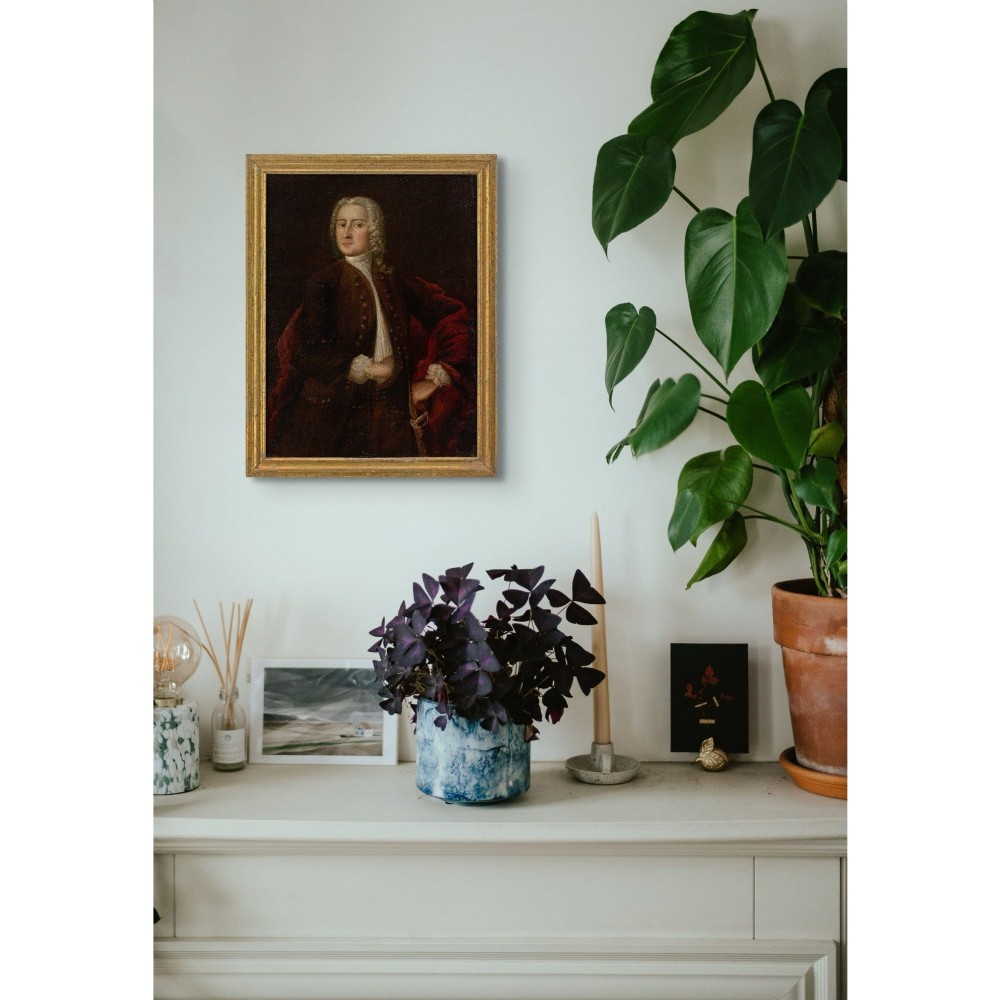
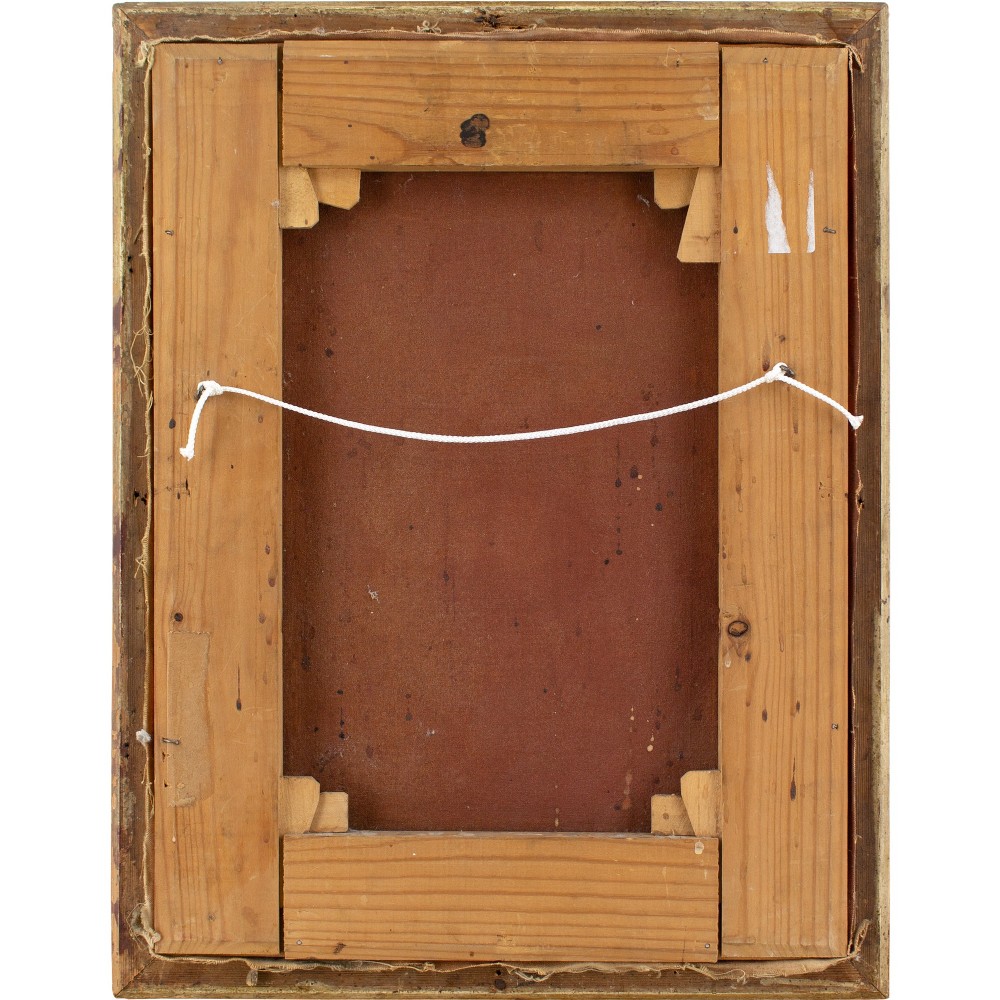
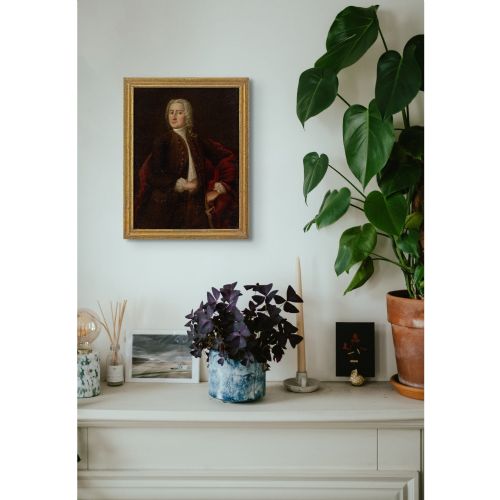
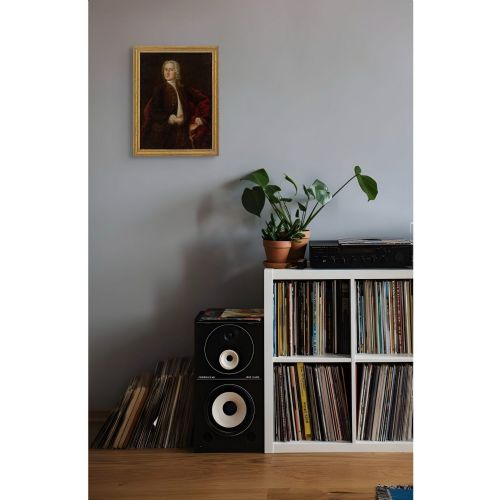
Held in a later gilt frame.
Medium: Oil on canvas
Overall size: 14½” x 19” / 37cm x 48cm
Year of creation: c. 1735
Provenance: Family estate, Vellinge, Skåne, Sweden (for over 100 years).
Condition: Cleaned. Canvas relined. Later stretcher. Fine craquelure throughout. The paint layer is stable. Frame with various marks and showing its age.
Our reference: BRV1966
Brave Fine Art has dated this piece to the 18th Century.
Exquisite antique paintings that capture the imagination.
You can view the stock and full dealer information on the Brave Fine Art Profile Page
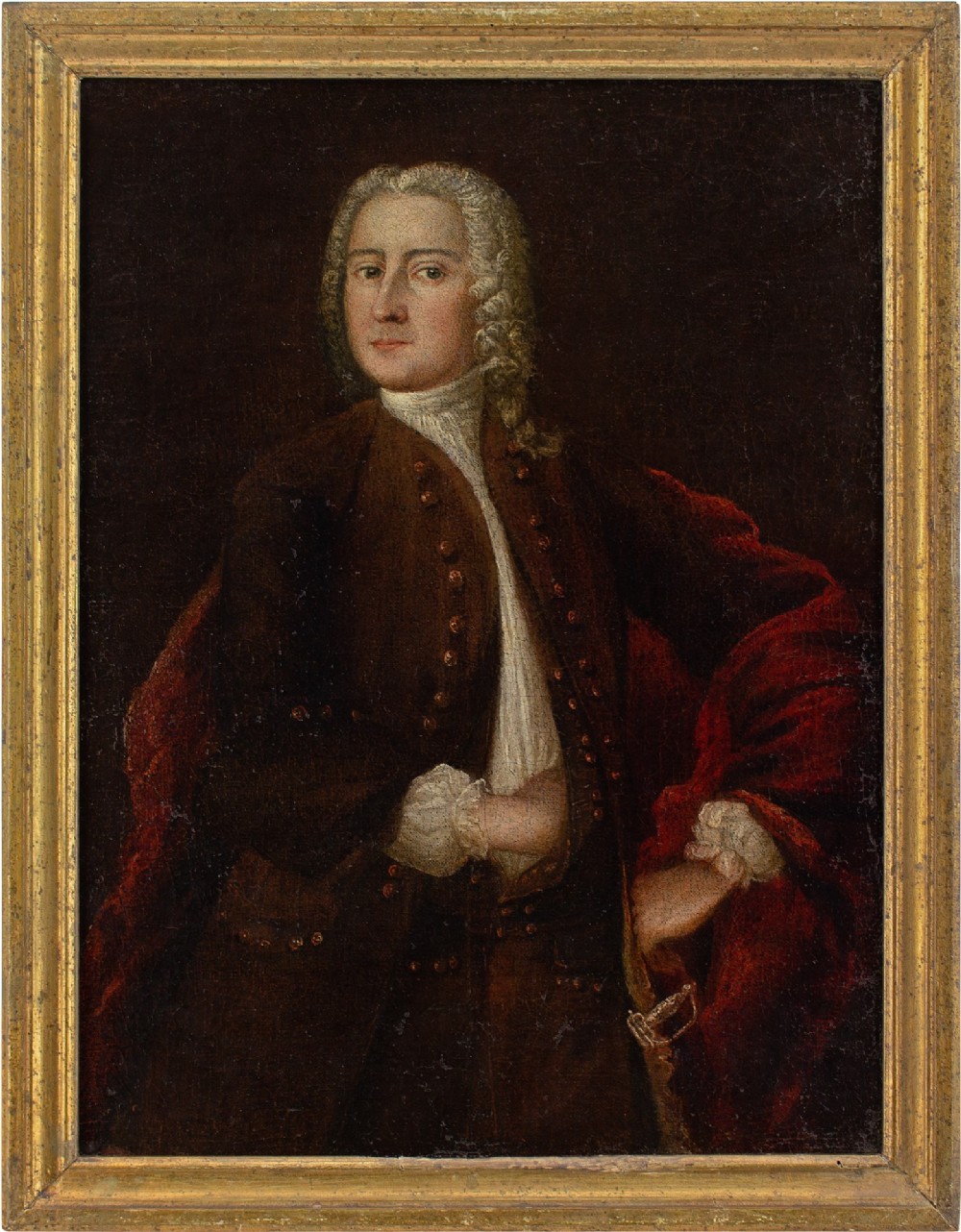
Amalia Von Königsmarck (Circle), Portrait of a Nobleman - Antique Oil Painting