It was listed by The English Interior. Sold pieces stay on Sellingantiques as a record of what has passed through, and the next one is rarely far away.
The English Interior has dated this Flemish School Oil Painting to the 18th Century.
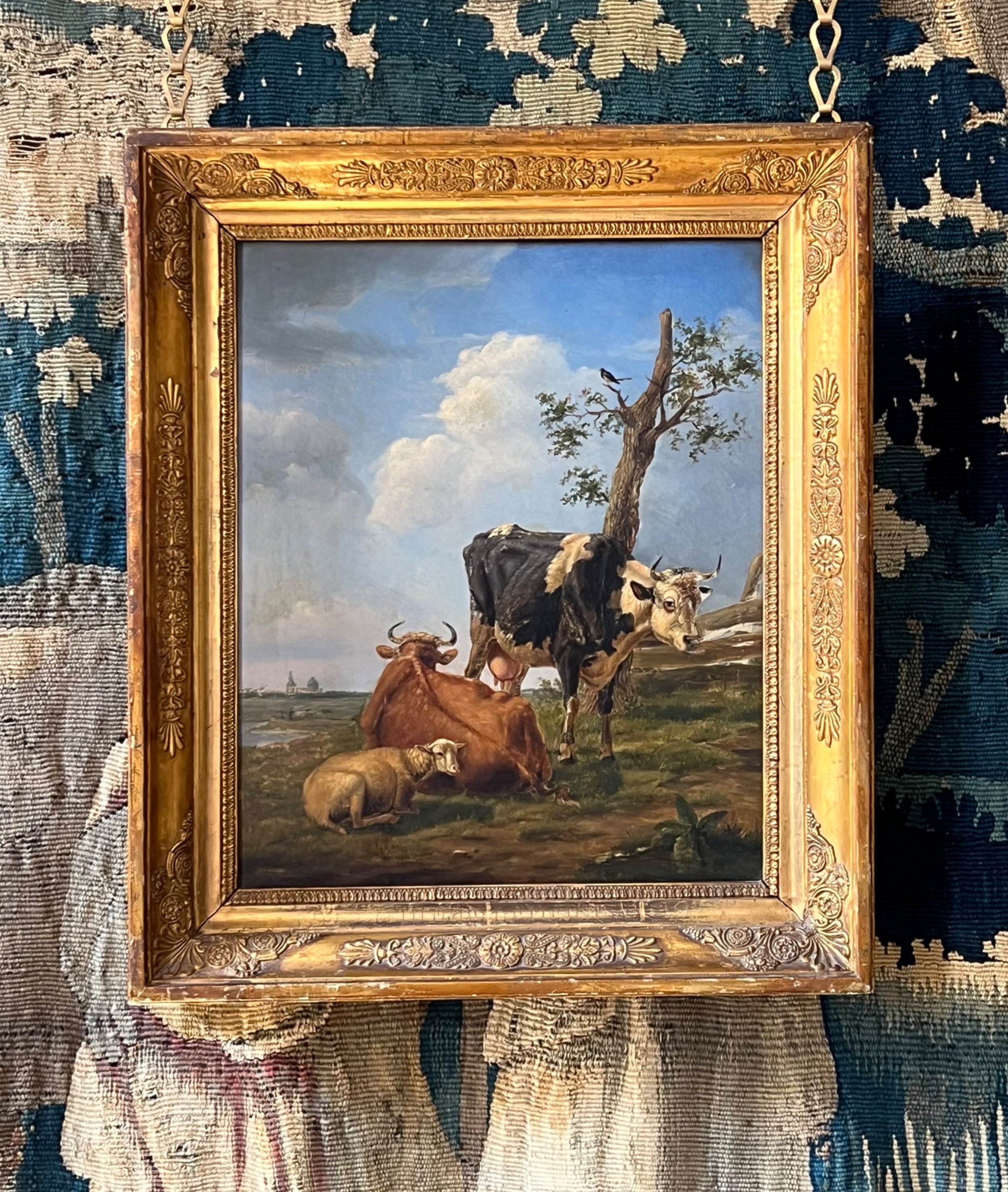
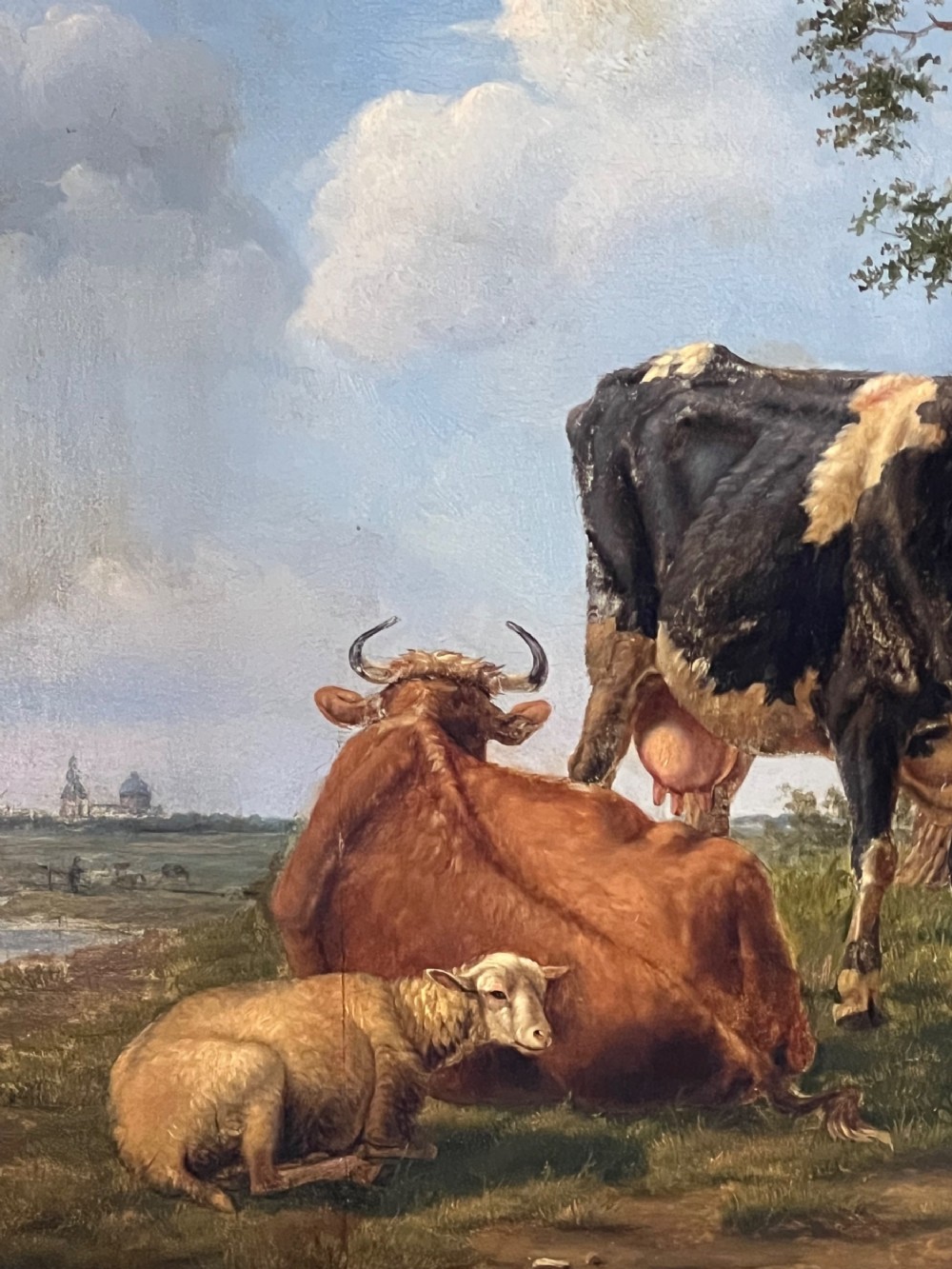
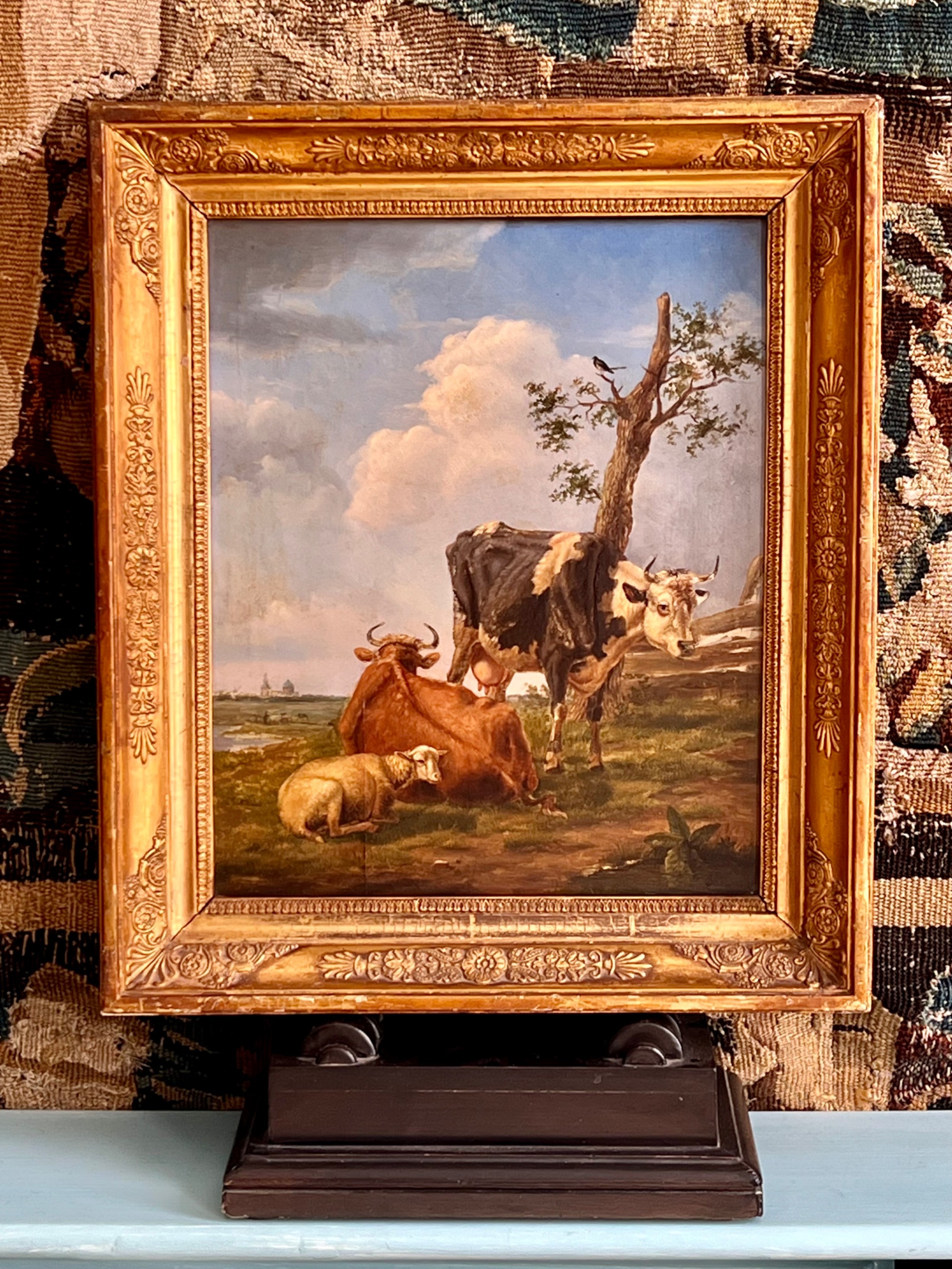
The pastoralist mode in which the landscape is composed is Italianate, executed in the manner of artists like Nicolaes Berchem and Jan Hackaert.
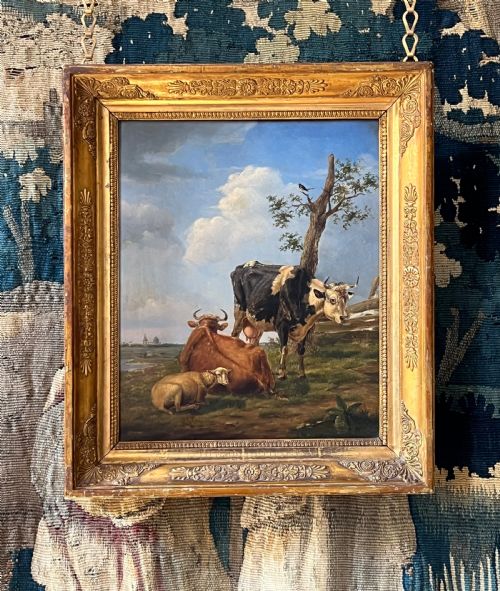
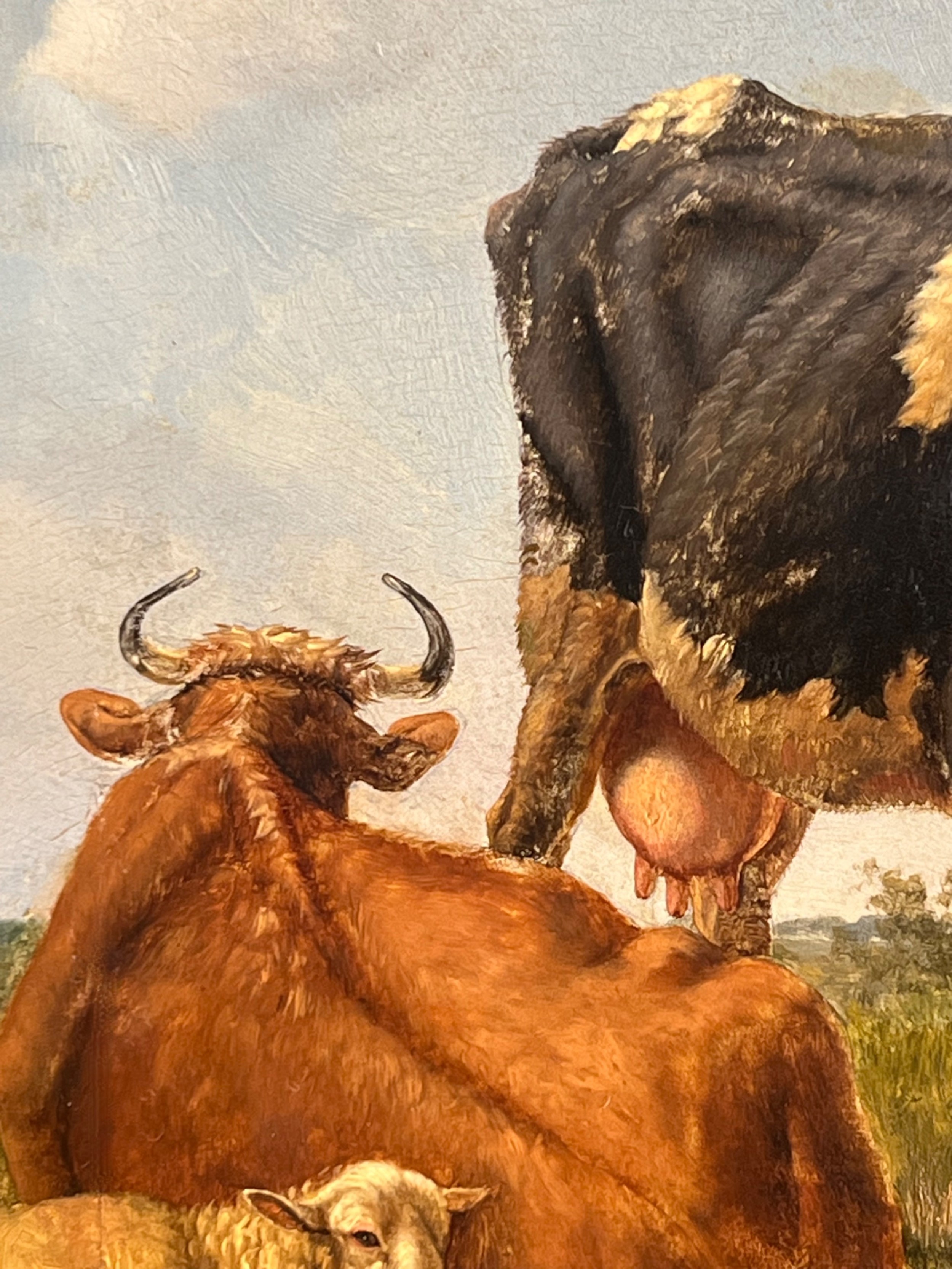
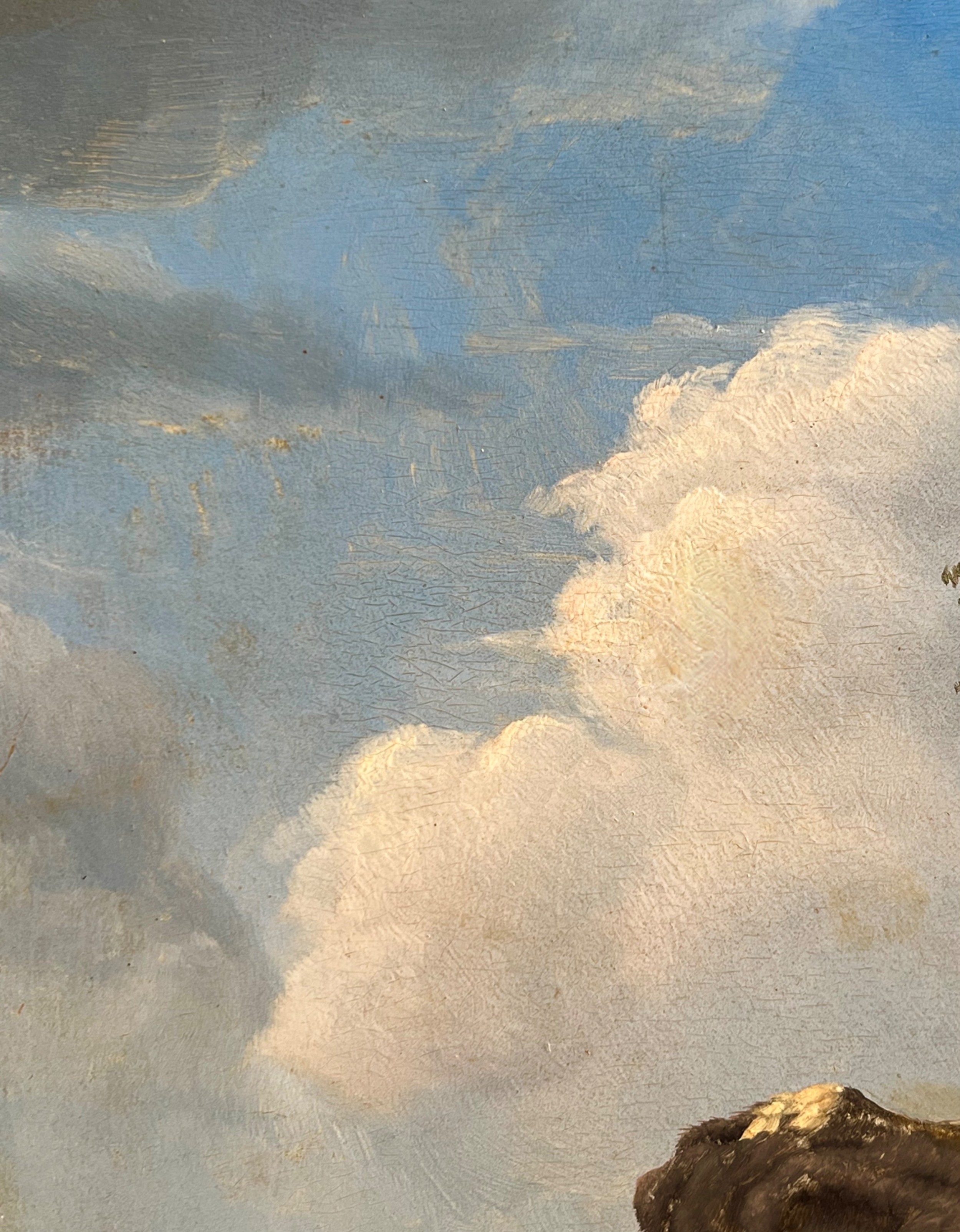
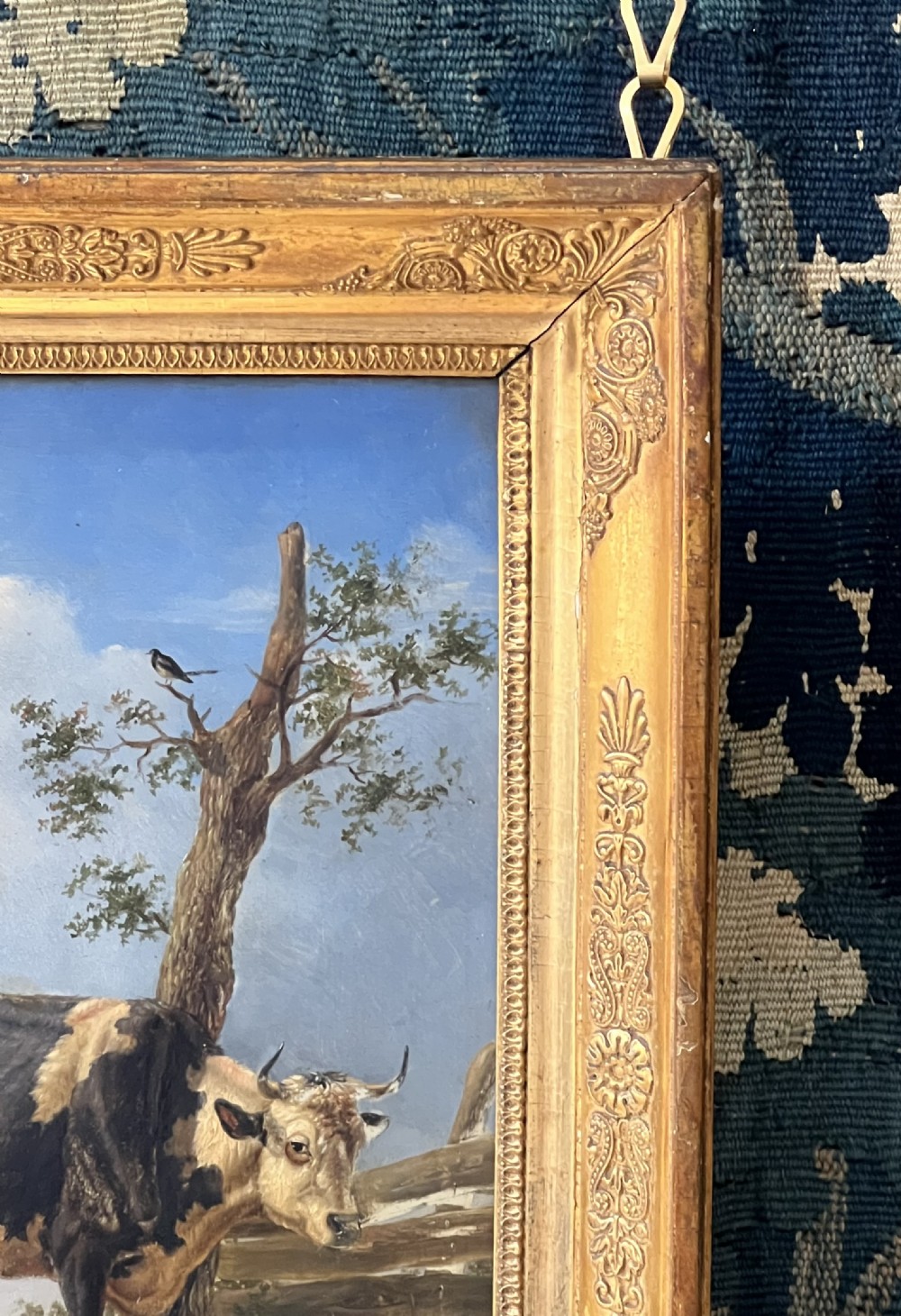
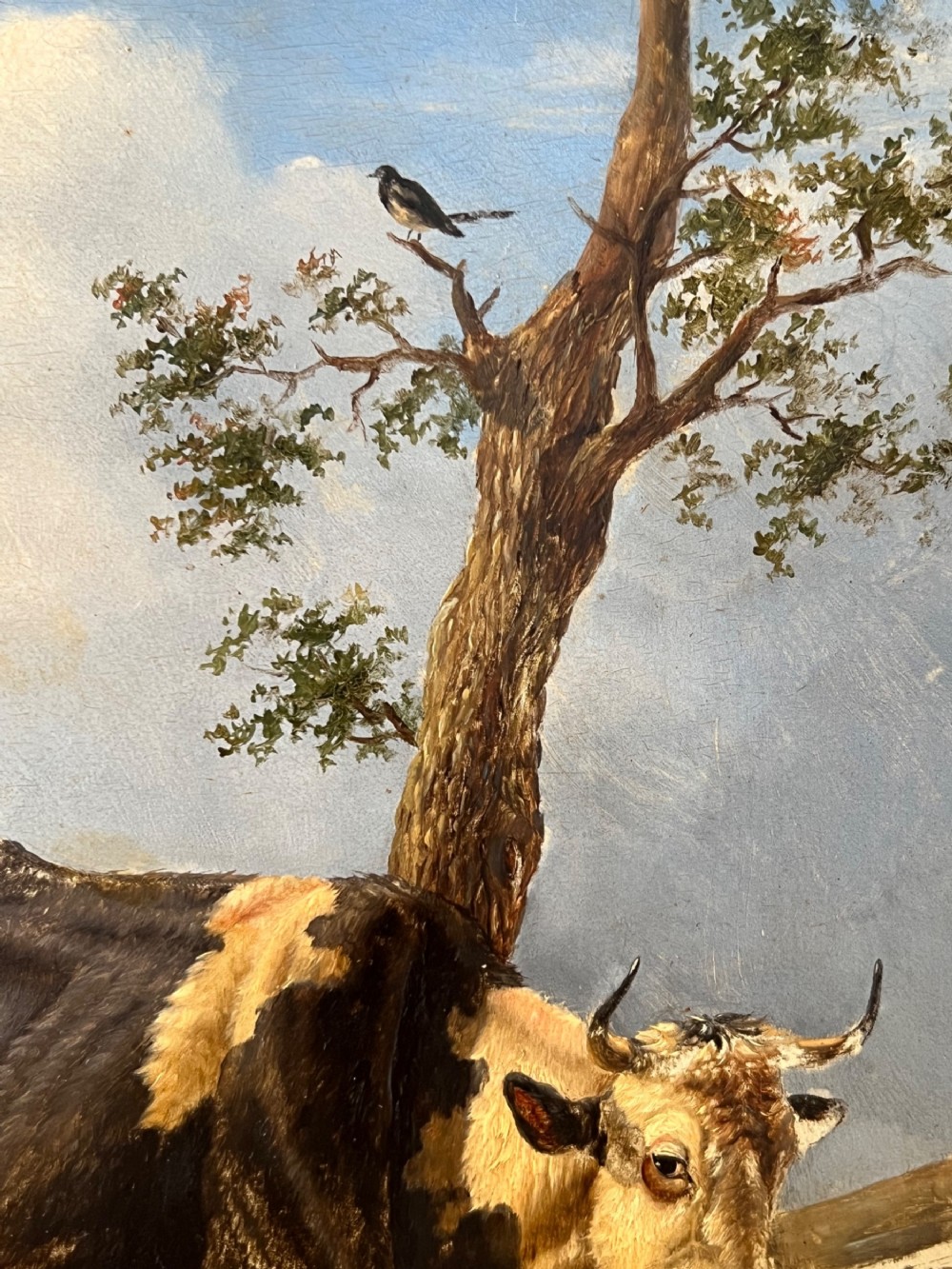
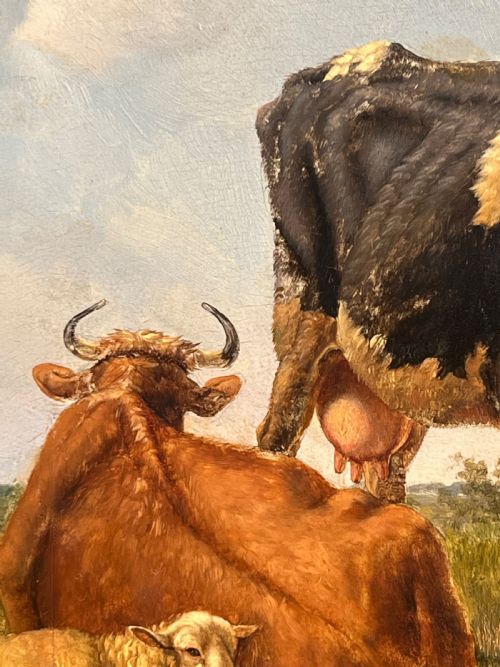
The animals rest upon a grassy bank in the foreground, almost in shadow which emphasises the depth of the landscape. The main subject of this painting, is the black and white animal which stands proudly half gazing at the viewer. A river runs to the left and in the distance, through the haze across a further expanse of water is the skyline of a small settlement, a tower rising through the mist.
Eugène Joseph Verboeckhoven (1798-1881) was taught at first by his father, the sculptor Barthélemy Verboeckhoven, before attending the Ghent Academy where he was a pupil of the landscape painter Balthasar-Paul Ommeganck (1755-1826). He moved to Brussels in 1827, where he became director of the Musée de Bruxelles and later a teacher at the Académie Royale. He had many pupils among whom Louis-Pierre Verwée (1807-1877), the brothers Charles (1815-1894) and Edmond Tschaggeny (1818-1873). He also painted staffage for other painters' landscapes such as Jean-Baptiste De Jonghe (1785-1844), Henri van Assche (1774-1841), Barend Cornelis Koekkoek (1803-1862) and Louis-Pierre Verwée. He was also a prolific engraver.
This painting, showing a shepherd, sheep and a bull silhouetted against a white and blue sky, is a typical example of Verboeckhoven's depictions of animals in carefully arranged, flat landscapes. He also executed scenes of animals and farmers in the farmyard. The artist was deeply influenced by the 17th-century imagery and the work of Paulus Potter, the great animal painter of the Golden Age.
The English Interior has dated this Flemish School Oil Painting to the 18th Century.
Specialist dealer in 17th century to the 20th century fine art, furniture and decorative antiques for your home.
You can view the stock and full dealer information on the The English Interior Profile Page
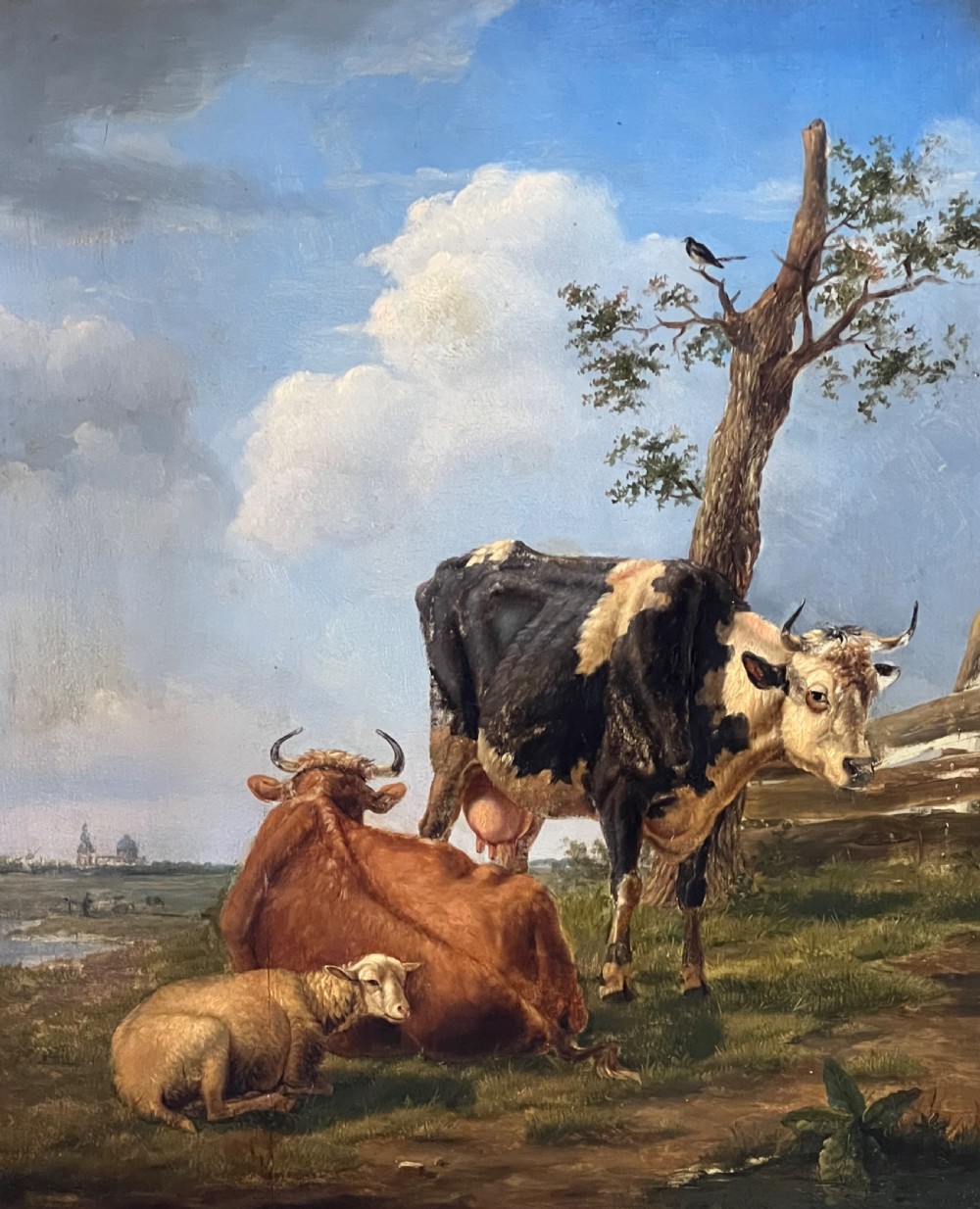
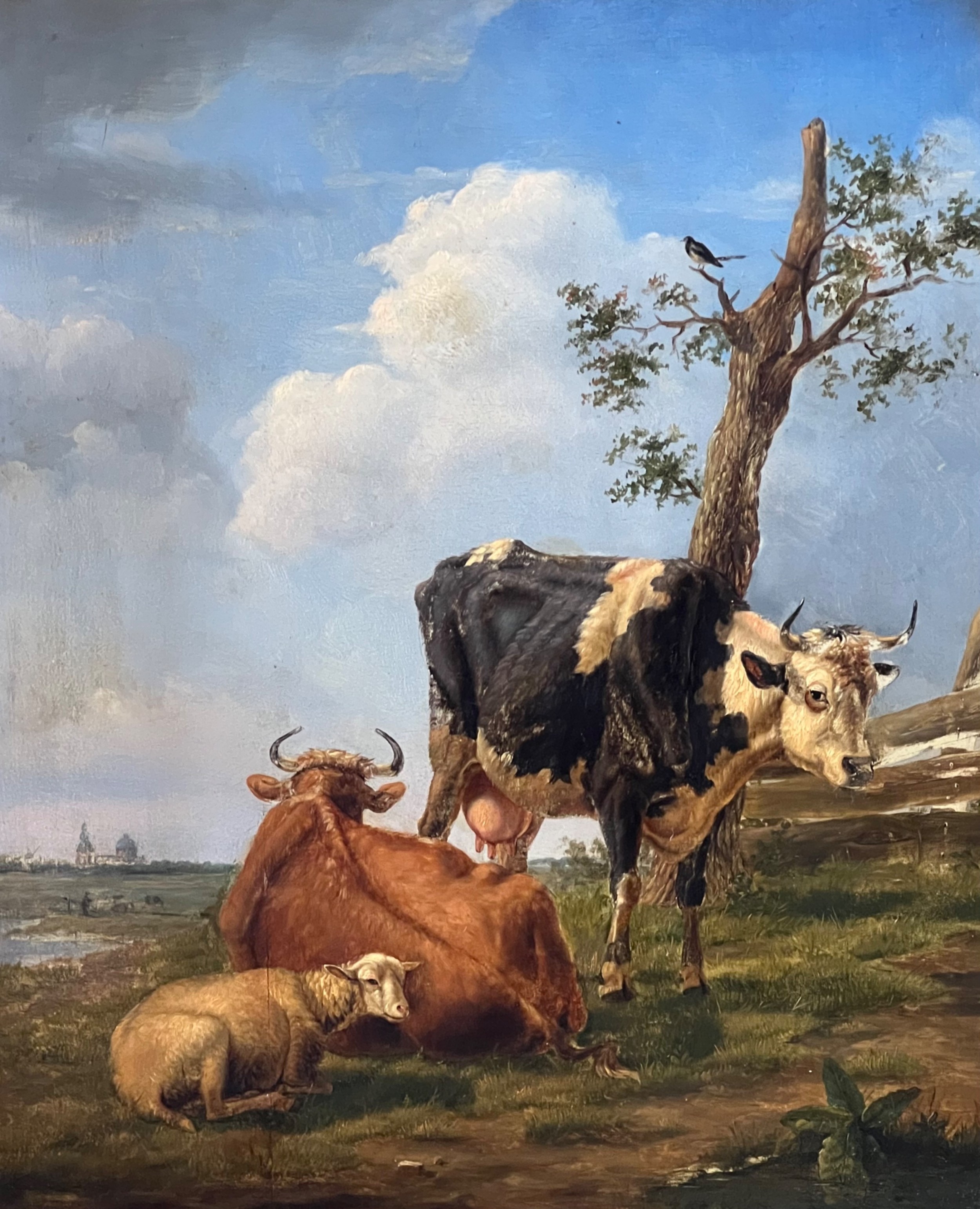
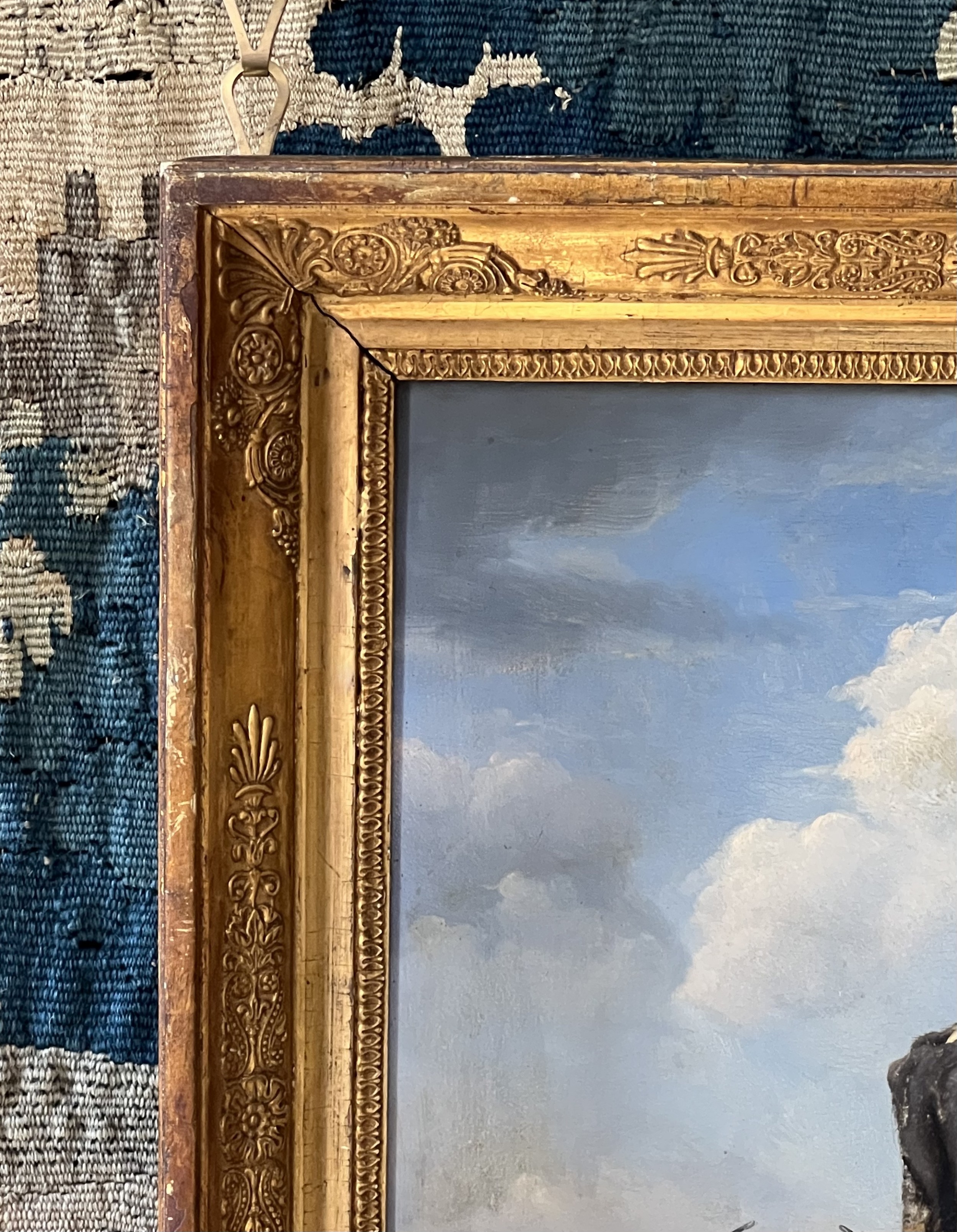
Late 18th Century Flemish School Oil on Panel Study of Two Cows and Shep at Rest - Circle of Joseph Verboeckhoven