




Antique Pastoral Art
Antique pastoral art brings the quiet of the countryside indoors through rural scenes painted on canvas and wood.
Antique Pastoral Art
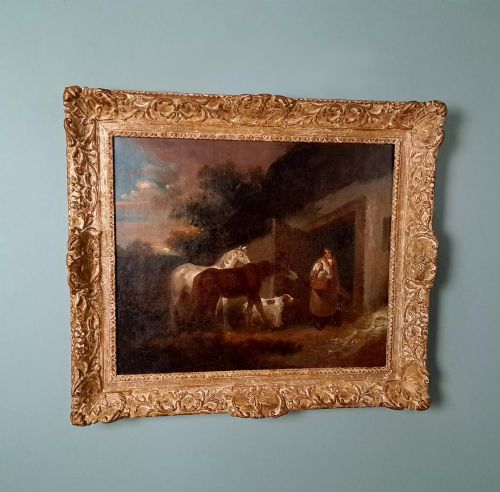
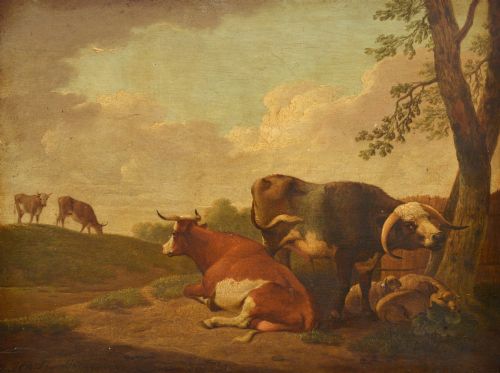
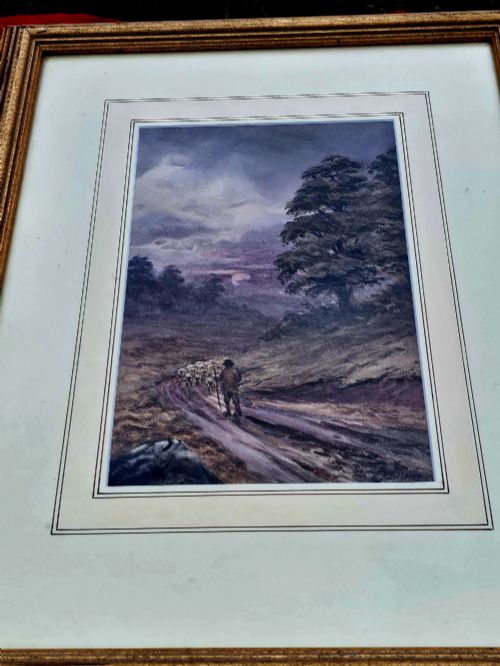
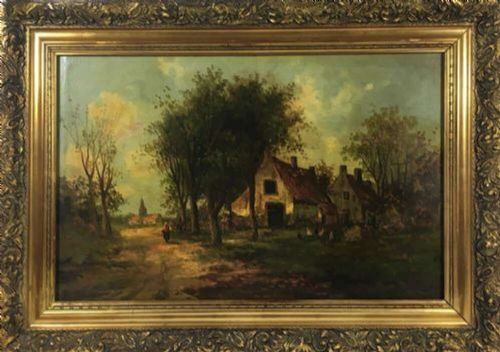
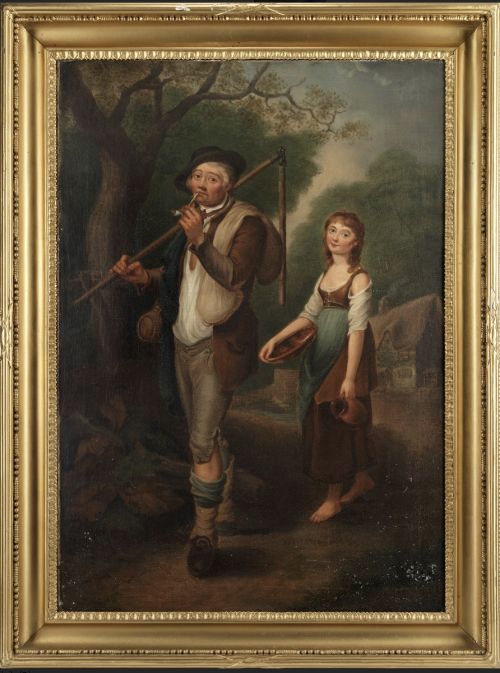
Antique pastoral art captures rural life, agricultural labour, and domestic animals across centuries of painting and drawing. When exploring antique pastoral art, visitors encounter depictions of shepherds, cattle, and harvesters rendered in oils and watercolours.
The material record spans from the seventeenth century through the Edwardian era, with nineteenth-century pieces dominating the selection. Oil paintings on canvas or wood panels and watercolours on paper form the primary visual formats.
Works range from British landscapes and Scottish Highland scenes to French farmyards and Italian countryside views. Artists from established regional schools sit alongside provincial makers producing naive folk pieces.
Materials and Techniques
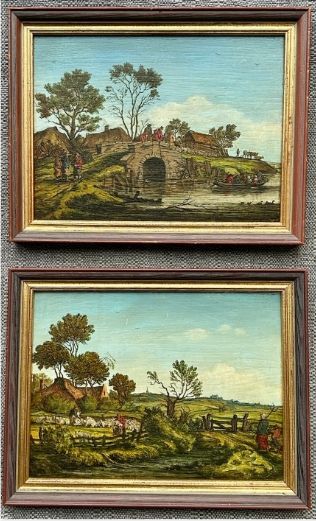
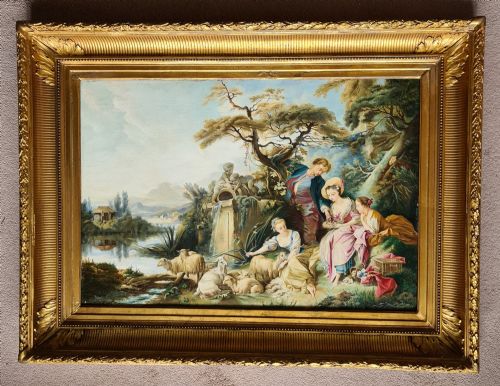
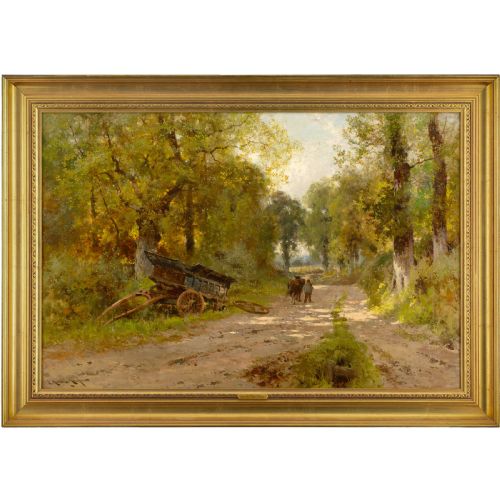
Painters utilised oil on canvas and wood panels, alongside watercolours on paper, building scenes through layered pigments and brushwork. Giltwood and gesso frames often house these works, complementing the compositions.
Etchings and Berlin silk works expand the medium beyond paint, showing varied methods of recording rural life. Textile pieces such as Aubusson verdure tapestries introduce woven foliage and landscape motifs into the category.
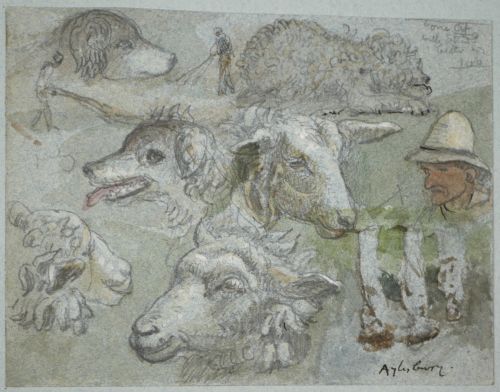
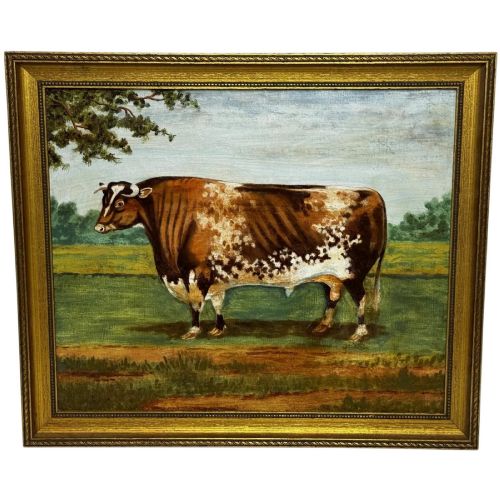
Cattle, sheep, and kittens share these pastoral scenes with generations of hard-working farmers and fishermen.
Distinctions in Quality
Execution of light, atmospheric depth, and anatomical accuracy in figures and animals separate ambitious works from simpler provincial pieces. Skilled handling of brushwork on wood panels or canvas defines the upper tier.
Condition of the surface paint and the presence of original framing elements influence the integrity of surviving works. Documentation of maker attribution or school context adds weight to historical pieces.
Eugène Verboeckhoven·William H Myers·Tom Campbell·Francois Boucher·John Horace Hooper·William Joseph Shayer Senior·Hendrik Willem Schweickhardt·EJ Letheren·Thomas Barker of Bath·Mark William Langlois·David Bates·Walter Heath Williams·Robert W Macbeth·Jacob Philipp Hackert·Thomas Sidney Cooper·Frederick Walker·Richard Redgrave·Ernest Higgins Rigg·George Oyston·Frederick James Kerr·Robert Watson·Albert Rieger·Russell Sidney Reeves
The Antique Pastoral Art Glossary
- Oil on Canvas
- A painting medium where pigments suspended in drying oil are applied to stretched fabric. This ground allows for deep blending of colour and rich surface texture.
- Wood Panel
- A rigid support for paintings, frequently utilised before canvas became dominant. Wooden boards provide a stable surface for detailed brushwork.
- Watercolour
- A painting method where water-soluble pigments are applied to paper. This technique produces translucent washes of colour suited for sketches and light landscapes.
- Verdure Tapestry
- A woven wall hanging featuring plant motifs and pastoral foliage. These textiles often depict stylised trees and rural backgrounds.
- Pentimento
- A visible trace of earlier painting underneath the final layer, revealing an artist's changes. Such alterations show the creative process directly on the canvas.
Antique Pastoral Art: Frequently Asked Questions
What subjects appear in pastoral art?
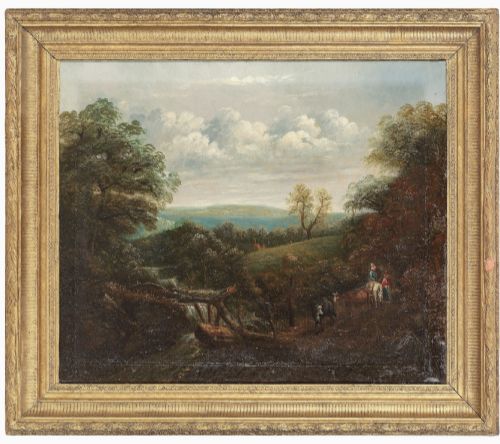
These works typically depict shepherds, cattle, farm workers, and domestic animals within rural landscapes. Rivers, woodlands, and harvest fields serve as common settings.
Scenes range from quiet daily labour to expansive country views influenced by British and European art traditions.
How do oil and watercolour pieces differ?
Oil paintings utilise pigment bound in drying oil on canvas or wood panels, offering rich texture and deep colour saturation. Watercolours apply water-soluble paint to paper for lighter, transparent effects.
Oils generally hang as finished display pieces, while watercolours often preserve finer graphic detail from preparatory studies.
What periods do these artworks represent?
The selection spans from the seventeenth century through the early twentieth century. Nineteenth-century and Edwardian pieces appear most frequently.
Earlier works often reflect regional European traditions, while Victorian and Edwardian examples focus closely on British landscapes.
How should framed antique paintings be maintained?
Artworks require stable indoor humidity and protection from direct sunlight to preserve pigments and paper. Giltwood frames benefit from gentle dusting with dry cloths.
Avoiding moisture prevents warping on wooden panels and degradation of canvas supports.