

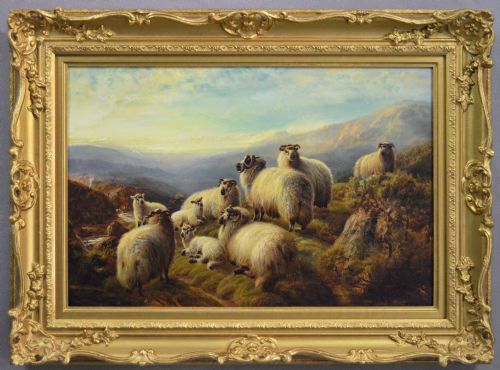
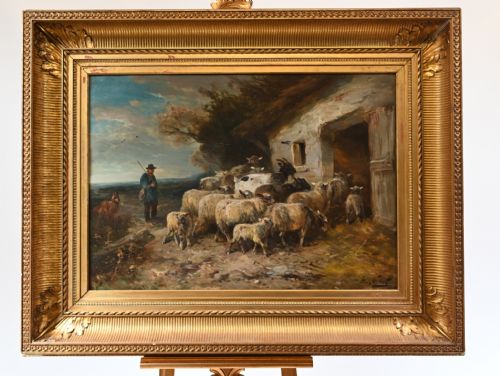


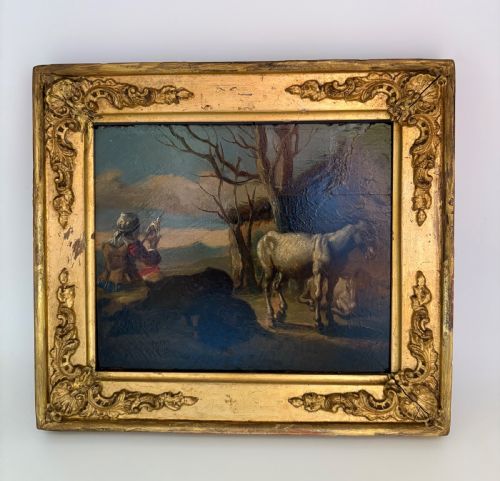


Framed Pastoral Livestock Painting
A framed pastoral livestock painting brings the quiet weight of nineteenth-century fields and farmyards directly onto the wall.
Framed Pastoral Livestock Painting
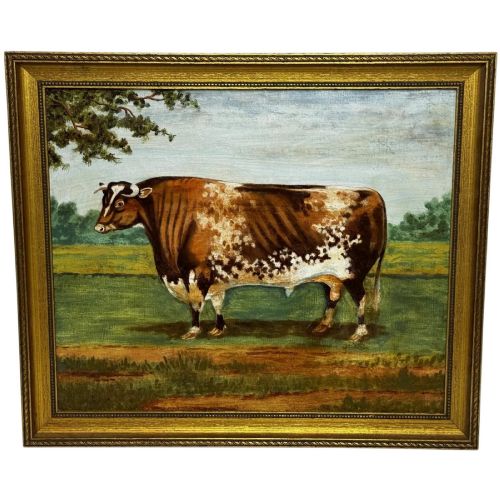
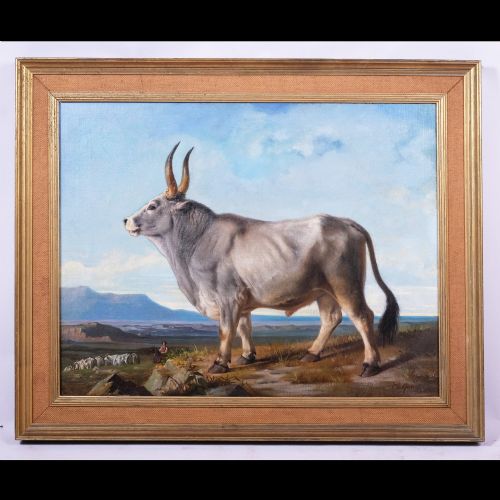
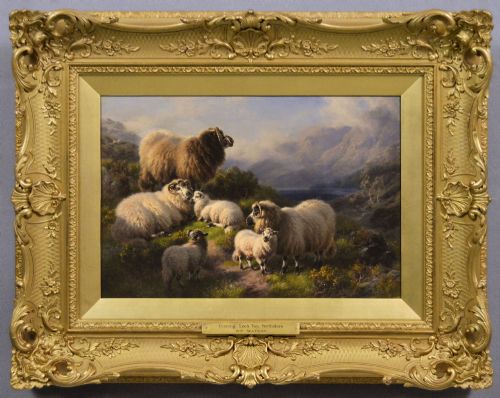
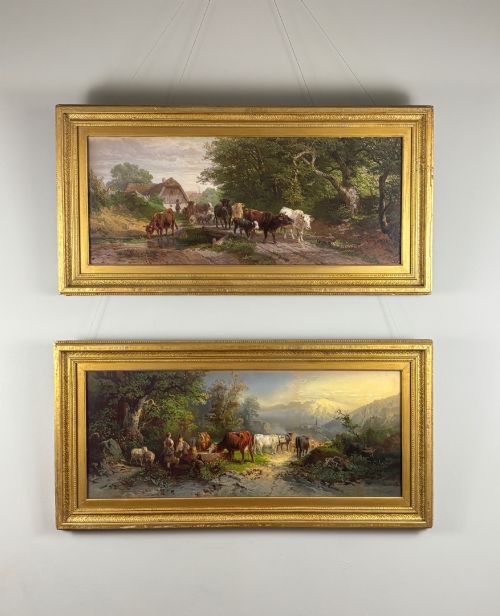
A framed pastoral livestock painting captures scenes of cattle, sheep, and horses resting within rural British and European landscapes. These works emerged predominantly across the nineteenth century, reflecting a deep cultural connection to agriculture and rural life.
The pieces on this page span Victorian compositions, romanticized countryside views, and realist depictions of farm animals. Buyers encounter both expansive oil paintings on canvas and detailed watercolours housed in period frames.
Subjects range from solitary bulls and grazing flocks to bustling farmyard scenes with shepherds and cattle near rivers. Most examples date from the Victorian era through the early twentieth century, executed by regional and continental artists.
How they were made
Artists painted primarily with oil paint on stretched canvas or wooden oak panels, building up rich textures for animal coats and atmospheric skies. Watercolour on paper also appears frequently, often preserved behind glass within original surrounds.
Frames play a structural and aesthetic role, constructed from wood and finished with gesso and gold leaf or burr veneer. These ornate housings protect the delicate pigments and complement the rural subject matter.
Listings feature nineteenth-century oil paintings and watercolours on canvas, wood panel, and paper.
What varies in quality
Anatomical precision and brushwork define the upper tier of these works, where artists render the musculature of cattle and the wool of sheep with acute observation. Lesser examples rely on formulaic repetition and stiff postures for the animals.
The integration of animal and landscape separates masterworks from standard studio production. In finer pieces, the light unifies the livestock, pasture, and sky into a coherent pastoral mood.
Eugène Verboeckhoven·William Watson Jnr·Johann Friedrich Voltz·Robert Watson·Henry Schouten·William Henry Mander·Thomas Sidney Cooper·Franz van Severdonck·Ernest Pile Bucknall·Heinrich Harder·James de Rijk·Julius Caesar Ibbetson·Frederick Richard Lee
The Framed Pastoral Livestock Painting Glossary
- Oil on Canvas
- Pigment mixed with drying oil applied to a woven fabric support. This technique allowed artists to achieve deep colour saturation and gradual tonal transitions.
- Gesso
- A plaster-like mixture applied to wooden frames as a base before gilding or painting. It provides a smooth surface for intricate mouldings.
- Giltwood
- Timber carved and coated with thin layers of gold leaf. It framed prestigious nineteenth-century artworks to enhance their visual weight.
- Watercolour
- Paint consisting of colourants suspended in a water-soluble vehicle. It produces luminous, transparent washes on paper.
- Pastoral
- A genre of art depicting rural life and domesticated animals in idealized landscapes. It celebrates the simplicity of agricultural existence.
Framed Pastoral Livestock Painting: Frequently Asked Questions
What subjects feature in these paintings?
These artworks predominantly display cattle, sheep, horses, and farmyard poultry set against rural British or continental landscapes.
Scenes often include shepherds tending flocks, cattle resting by rivers, or highland livestock under expansive skies.
Are original frames common?
Many pieces retain their period frames constructed from giltwood, gesso, or wood veneer.
Original housings complement the age of the canvas and contribute significantly to the overall aesthetic of the artwork.
How do I date a pastoral painting?
Dates are typically assessed through stylistic markers, artist signatures, and the construction methods of the canvas or frame.
Nineteenth-century works often show distinct realist or romantic tendencies that separate them from later twentieth-century interpretations.
Where should I hang these artworks?
These paintings suit traditional living spaces, studies, or dining rooms where their rural themes create a grounded atmosphere.
They require placement away from direct sunlight and excessive moisture to protect the oil pigments and paper watercolours.