





Flemish Landscape Art
Flemish landscape art captures centuries of pastoral life, mythological scenes, and dense wooded verdure through oil paint and woven textiles.
Flemish Landscape Art
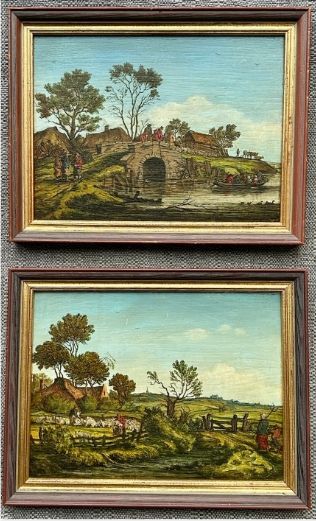
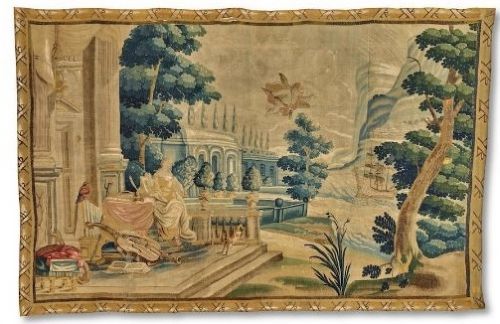
When you search for flemish landscape art, you encounter oil paintings and wall tapestries spanning from the seventeenth century through to mid-century impressionism. The selections on this page range from grand scale mythologies and village fetes to quiet riverscapes and winter scenes with figures skating on lakes.
The seventeenth-century works often reflect the Baroque tradition, featuring deep verdure scenes and complex figure groupings attributed to schools and studios. Later pieces show the persistence of these styles into the nineteenth and twentieth centuries, alongside mid-century interpretations on wood panels and canvas.
Assessing quality and execution
The distinction between pieces rests on the dexterity of the brushwork and the complexity of the composition. Finer oil paintings demonstrate precise control over light, shadow, and figural proportions, while simpler works rely on more formulaic execution.
For tapestries, quality depends on the density of the weave, the preservation of the wool and silk fibres, and the intricacy of the verdure detailing. Larger scale works with well-preserved colour palettes occupy the upper tier of the range.
Flemish Landscape Art Retail Price Guide 2026
Typical asking prices for flemish landscape art among the pieces listed under this phrase on Sellingantiques today, from the lower quarter to the upper quarter. They describe what is for sale here now, not the wider market.
Several landscapes include small figures skating on ice, proving that even centuries ago, everyone rushed outside the moment a puddle froze.
David Teniers II·Pieter Bout·Adriaen Frans Boudewyns·Marmaduke Cradock·Jacob Bogdani·Job de Vogel·Louis Smets
The Flemish Landscape Art Glossary
- Verdure tapestry
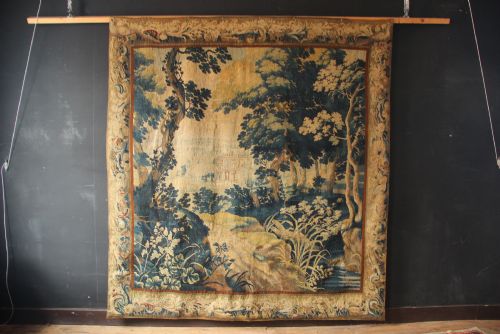
- A wall hanging dominated by lush botanical and foliage motifs, often featuring trees, plants, and occasional animals or distant buildings. These textiles were popular for bringing natural scenery into interior spaces.
- Baroque
- An artistic style from the seventeenth century characterised by drama, rich detail, deep colour contrast, and grand scale. In Flemish works, this manifests in dynamic movement and theatrical lighting.
- Giltwood
- Wood that has been coated with a thin layer of gold leaf or gilt powder. It is frequently found on the decorative frames enclosing historic oil paintings.
- Panel painting
- A painting executed on a flat piece of wood rather than stretched canvas. This rigid support was common in earlier European traditions before canvas became dominant.
Flemish Landscape Art: Frequently Asked Questions
What is a verdure tapestry?
A verdure tapestry is a woven wall hanging dominated by dense foliage, trees, and landscape elements rather than human figures or historical narratives. These large textiles were designed to insulate stone walls and bring natural scenery indoors.
The materials typically include wool and silk, which have survived centuries when kept in appropriate environmental conditions. They serve as major decorative focal points in large rooms.
How do I care for an antique oil painting?
Antique oil paintings require stable indoor humidity and temperature to prevent the canvas or wood panel from warping and the paint layer from cracking. Direct sunlight should be avoided to protect the pigments from fading over time.
Dusting should be done gently with a soft, dry brush by someone experienced with historic art. Professional conservation is recommended for any cleaning or structural repairs.
What subjects appear in Flemish landscapes?
The subjects range from tranquil riverscapes and winter scenes with ice skaters to mythological narratives and village fetes with figures. Woodland scenes featuring exotic birds and dense foliage are also common.
Many compositions reflect the influence of Dutch and Flemish painting traditions, combining observed natural details with idealised or theatrical elements.
How do I date a Flemish landscape?
Dating relies on stylistic evidence, materials such as wood panels versus canvas, and any visible signatures or studio attributions. Seventeenth-century works often show Baroque characteristics, while later pieces adopt nineteenth-century or mid-century impressionist techniques.
Comparative analysis with documented works by known painters or regional schools helps narrow down the period of execution.