

Wigs on the Green has dated this piece to the 18th Century.
The frame is ever so slightly dinged on the reverse side.
It was a rival silhouette artist Jacob Spornberg who invented an Etruscan-style of profile. Reminiscent of the red-figure Etruscan pottery invented at Athens about 530 BC, an outline of the sitter was initially drawn in thin black paint against a black ground before the whole was coated in vermilion enamel. It was this striking effect that Rosenberg sought to emulate though he reversed the colours and dubbed it ‘anti-Etruscan’. It would appear though that these silhouettes were not popular as very few examples of them are recorded.
Born in Vienna, Charles Rosenberg (1745-1844) is thought to have come to England in 1761 as a fourteen-year-old page to Princess Charlotte of Mecklenburg-Strelitz when she arrived to marry King George III. As a favourite of the King’s, Rosenberg was promoted from page to King’s Messenger and this connection likely explains why he enjoyed royal and aristocratic patronage throughout his artistic career. In 1816 Rosenberg and his son were honoured by an invitation to paint a likeness of Princess Charlotte a few days prior to her marriage.
Rosenberg settled in Bath around 1788 and married Elizabeth Woolley at Bath Abbey in September 1790. He initially ran a shop selling jewellery, trinkets and artificial flowers but when his artistic career took off, he advertised ‘an absolute sale’ and became a full-time silhouette artist and drawing master.
Size: 53 x 40m + hanger
Provenance: Ex. Wellesley Collection; acquired for the Christie Collection in January 1842 from W.J. ‘Polly’ Perkins
Literature: McKechnie, Silhouette Artists and their Work illus. p.602
Wigs on the Green has dated this piece to the 18th Century.
Small portraiture of character & historical interest
You can view the stock and full dealer information on the Wigs on the Green Profile Page
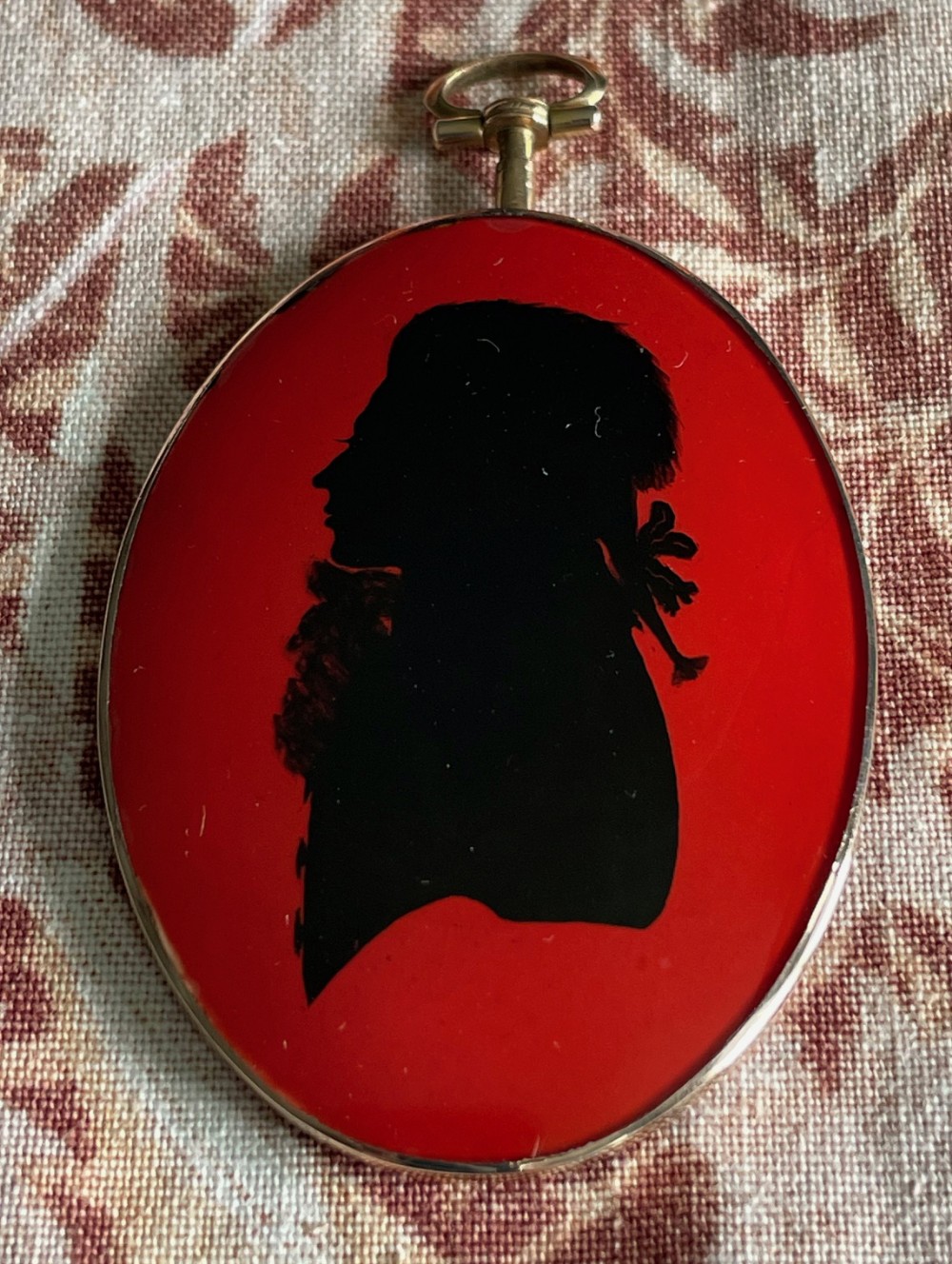
Rare Anti-etruscan Style Silhouette by Charles Rosenberg