



Georgian Shadow Portrait
A georgian shadow portrait captures a likeness in profile, offering a direct glimpse into the personal histories of past generations.
Georgian Shadow Portrait
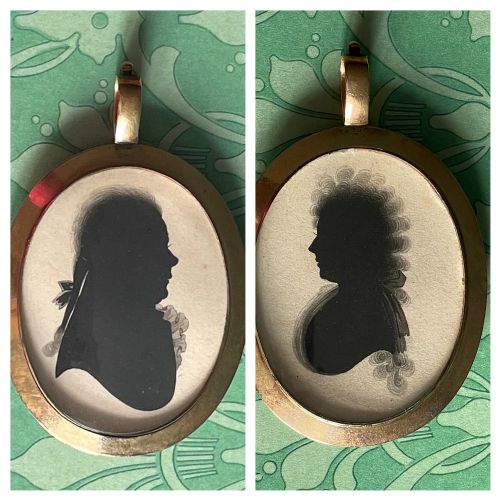
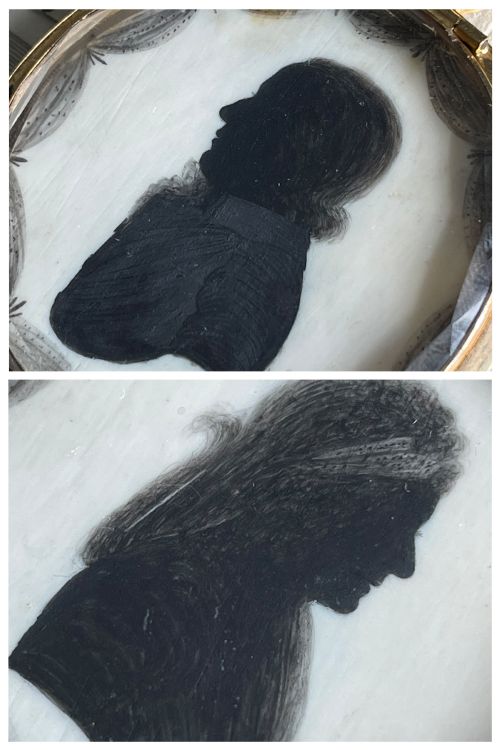
A georgian shadow portrait represents a distinct form of profile likeness created through cutting, painting, or reverse painting on glass. These works range from intimate bust portraits to full-length depictions of individuals, children, and family groups.
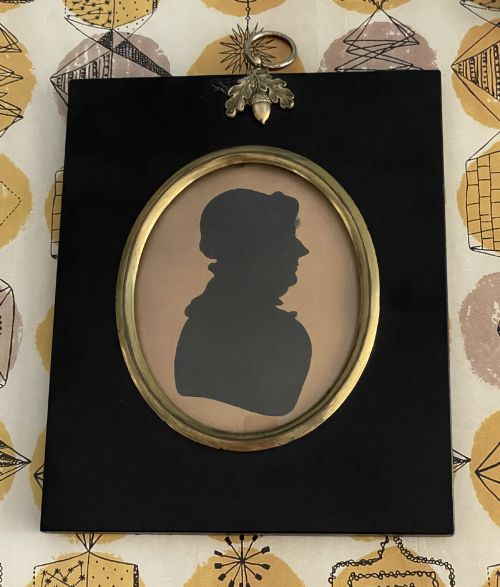
The pieces on this page span the late eighteenth century, the regency era, and the early nineteenth century. Collectors will encounter framed examples executed on paper, card, and glass, often housed in traditional wooden frames made of rosewood, maple, or ebonised wood.
Common formats include solo portraits of gentlemen and ladies, conversation pieces showing multiple figures, and works enhanced with delicate gold leaf details or watercolour highlights.
How They Were Made
Portraits are secured behind glass to protect the delicate paper or pigment, then mounted within brass fittings and wooden frames. Materials such as ebonised wood, maple, and rosewood provide a dark border that accentuates the pale background and the deep contrast of the shadow.
Georgian Shadow Portrait Retail Price Guide 2026
Typical asking prices for georgian shadow portrait among the pieces listed under this phrase on Sellingantiques today, from the lower quarter to the upper quarter. They describe what is for sale here now, not the wider market.
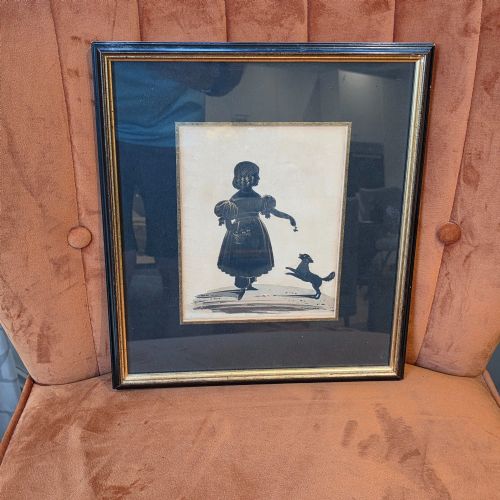
Several profiles immortalise beloved family pets joining their owners, ensuring faithful hounds share the spotlight in miniature.
What Varies in Quality
Quality rests in the precision of the cutting or brushwork, where master practitioners capture specific facial structures, hairstyles, and clothing details with minimal lines. The finesse of added gold leaf ornamentation and the preservation of the original glass and frame also elevate a piece.
Works bearing legible signatures, studio stamps, or documented provenance carry distinct historical weight. The complexity of the composition, such as full-length figures, animals, or multi-person conversation pieces, demands greater skill than a standard bust.
William James Hubard·John Miers·Augustin Edouart·George Atkinson·James Gillespie·J. Deacon
The Georgian Shadow Portrait Glossary
- Silhouette
- A profile portrait filled in with a solid dark colour, typically black, against a lighter background. This form of likeness relies entirely on the outline to convey identity.
- Reverse painting on glass
- A technique where the artist paints the portrait directly onto the rear side of the glass panel. When viewed from the front, the glass provides a glossy protective finish.
- Conversation piece
- An artwork depicting a group of figures engaged in a common activity or interaction. These compositions often show family members or children with pets in domestic settings.
- Ebonised wood
- Timber treated with a finish to imitate expensive ebony. This dark framing material creates a sharp border that contrasts with the light ground of the portrait.
- Gilded silhouette
- A profile enhanced with applied gold leaf details. Artists use this method to delineate lace, buttons, or hair accessories upon the dark shadow.
Georgian Shadow Portrait: Frequently Asked Questions
What is a georgian shadow portrait?
A georgian shadow portrait is a profile likeness produced by cutting paper or painting on glass during the georgian and regency periods. These profiles serve as historical records of individuals before the widespread use of photography.
Artists captured the likeness by tracing shadows or cutting freehand, creating high-contrast images that emphasised the subject's distinct facial outline.
How do I identify a regency silhouette?
Regency silhouettes often feature specific hairstyles such as turban caps for ladies or cropped hair for gentlemen. The framing frequently utilises brass bezels set within dark wooden surrounds like maple or rosewood.
Many examples from this era incorporate delicate gold leaf painting to highlight clothing textures and jewellery against the dark profile.
How should I display them at home?
These framed works require placement away from direct sunlight to prevent the fading of paper, ink, and watercolour pigments. Maintaining stable indoor humidity protects the original wooden frames and glass panels.
Grouping several pieces together creates a traditional gallery effect that mirrors how historical collectors displayed their profile collections.