



Brass Framed Silhouette
These brass framed silhouette pieces capture intimate likenesses through dark profiles, offering a direct window into Georgian and Regency life.
Brass Framed Silhouette
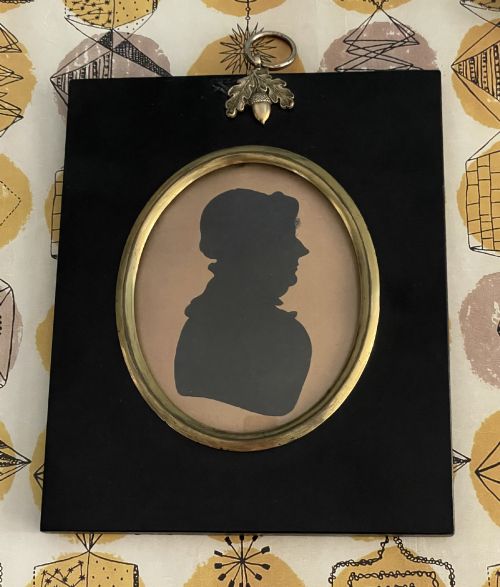
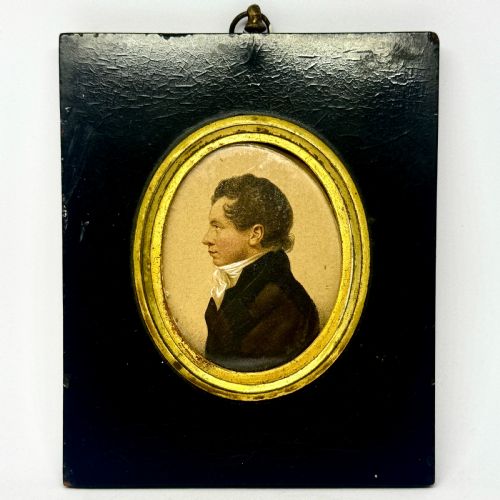
A brass framed silhouette presents a profile portrait of an individual captured in miniature, typically housed within a protective metal border. These works emerge from the Georgian, Regency, and nineteenth century periods, recording the likenesses of sitters before the widespread adoption of photography. The examples gathered under the search for a brass framed silhouette show a distinct focus on profile portraiture executed by hand.
Most pieces on this page take the form of miniature portraits or framed wall art depicting named or anonymous sitters. You will encounter painted surfaces, cut paper, and works rendered upon plaster or glass within these metal surrounds. The styles span Georgian crispness and Regency elegance through to the broader nineteenth century tradition.
Makers recorded in these listings include notable profile artists such as John Miers, J. Deacon, George Atkinson, James Gillespie, and Thomas London. Their work ranges from delicate painted miniatures with added colour to precise cut paper profiles and plaster medallions. Each format employs the contrasting dark profile to create an immediate visual impact within its compact boundary.
Materials and construction
The construction of these pieces relies on a combination of metalwork, glass, and backing materials to protect the delicate image within. Brass frames provide the outer structure, often paired with ebonised wood or papier-mâché surrounds that heighten the contrast of the central profile. Glazing sits directly over the portrait to shield the paper, plaster, or painted surface from dust and handling.
A tiny painted detail of a turban cap captures the exact fashion of a Regency morning.
Distinguishing quality in profiles
The condition of the surrounding brass frame and the integrity of the original glass or backing materials also influence the character of the piece. Intact original mountings with clear provenance or signed attribution elevate the historical interest of the work. Conversely, replacements or heavy wear to the delicate interior surface diminish the overall coherence of the miniature.
George Atkinson·James Gillespie·Thomas London·J. Deacon·John Miers
The Brass Framed Silhouette Glossary
- Silhouette
- A solid dark profile portrait, usually cut from paper or painted onto a pale background. This form of likeness gained immense popularity during the eighteenth and nineteenth centuries for its economy and accuracy.
- Plaster
- A fine composition material used as a solid base for profile portraits, particularly associated with the studio of John Miers. These panels provide a smooth, durable surface that takes fine painted details well.
- Ebonised wood
- Timber treated to resemble heavy, black ebony, frequently used for the deep frames surrounding these miniature portraits. This dark border creates a distinct visual barrier between the wall and the inner brass bezel.
- Papier-mâché
- A composite material formed from paper pulp and binding agents, pressed and dried into sturdy frames or backing plates. It offers a lightweight yet resilient housing for delicate painted glass and paper works.
- Provenance
- The documented history of ownership attached to an antique piece. A strong record connects the artwork directly to its maker or past collections, confirming its authenticity.
Brass Framed Silhouette: Frequently Asked Questions
What materials make up a silhouette?
These works are constructed from paper, plaster, glass, or watercolour pigments mounted on suitable grounds. The outer casing typically combines brass frames with ebonised wood or papier-mâché surrounds.
Protective glass sits over the portrait surface to prevent damage from the atmosphere and handling.
Who were the notable silhouette artists?
Recorded practitioners include John Miers, known for his plaster profiles, alongside artists such as George Atkinson, James Gillespie, Thomas London, and J. Deacon. Their work defined the standards of portrait miniature production during the Georgian and Regency eras.
Signed pieces or those with documented attributions carry particular weight for collectors.
How were these portraits displayed?
Miniatures were designed to be hung closely together on walls in small clusters or kept within private domestic spaces. Their compact scale allowed owners to arrange them in decorative groupings within parlours and bedchambers.
The brass rings attached to the frames facilitated secure wall hanging.
How do I date a silhouette?
Dating relies on the costume of the sitter, the framing materials, and any signature or handwritten notes on the reverse. Regency pieces often feature distinct hairstyles, high-waisted dresses, or turban caps like those seen in the evidence.
Changes in frame style from Georgian wood borders to later nineteenth-century mountings also offer chronological clues.