Period Portraits has dated this piece to the 17th Century.
Charles Le Brun (bapt. Paris, 24 Feb. 1619; d Paris, 12 Feb. 1690). French painter, designer, and art theorist, the dominant artist of Louis XIV's reign. He trained under Vouet and quickly made a name for himself, winning a commission from Cardinal Richelieu when he was barely out of his teens; the only surviving picture from this commission (for the Palais Cardinal in Paris) is Hercules and the Horses of Diomedes (c.1640, Castle Mus., Nottingham).
After his return to Paris he was soon busy with varied commissions and during the 1650s he established himself as the leading decorative painter in France. In 1662 he was raised to the nobility and named first painter to the king, and in 1663 he was made director of the Gobelins factory and of the Académie Royale.

Claude Vaillant (d.1708) The surname Vaillant was first found in Lorraine where this distinguished family held a family seat at Guélis, and were important members of the aristocracy of that region. Alongside Claud Vaillant, noteable other members of this family were: French Botanist, Sébastien Vaillant, 1669-1722; Jean-Baptiste Vaillant, Marshall of France, born 1790 and died in Paris in 1872; Edouard Vaillant, French Socialist, 1840-1915; Auguste Vaillant, Anarchist, 1861-1894; Paul Vaillant-Couturier, 1892-1937, Member of the French Central Communist Party.

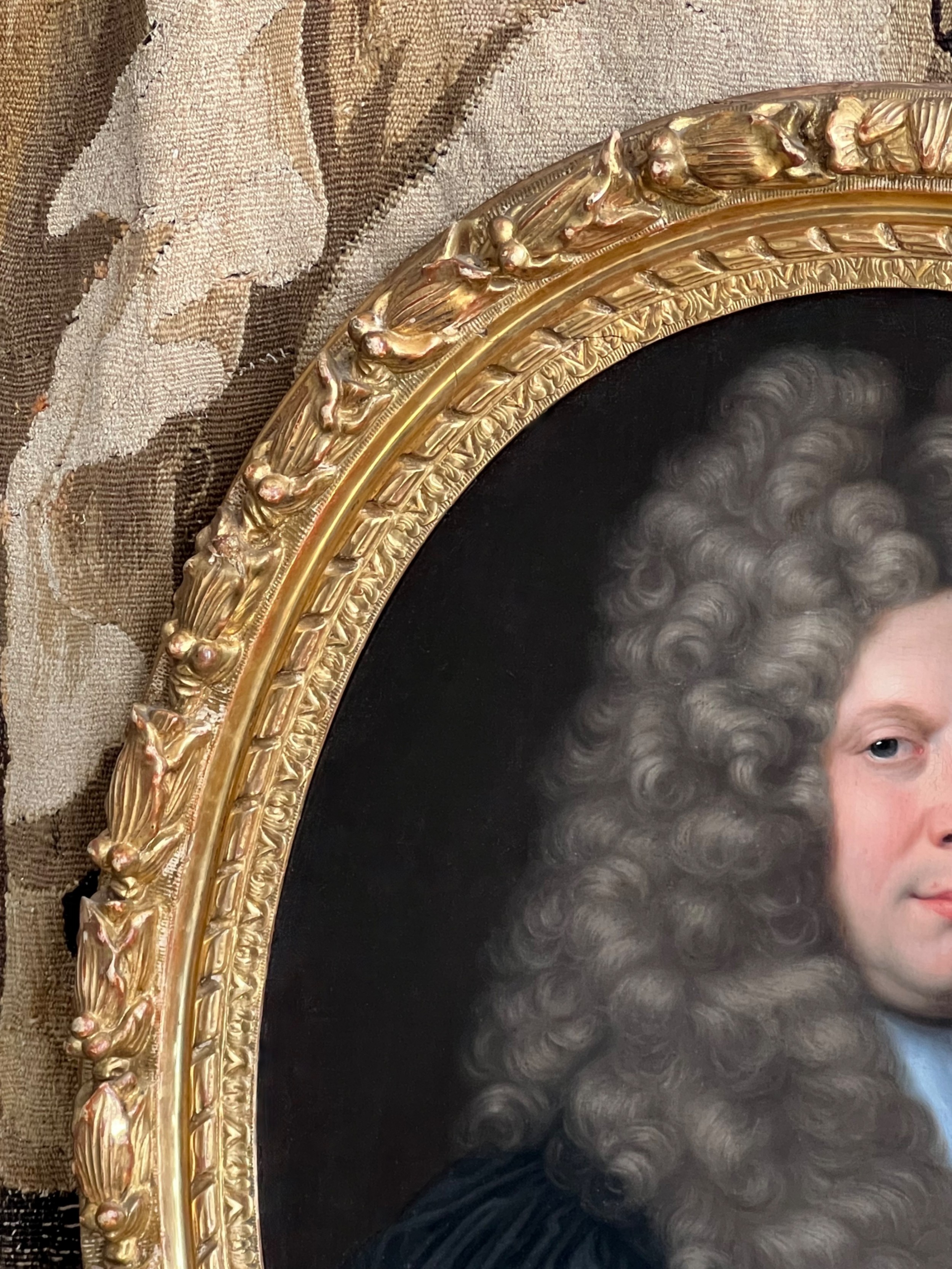
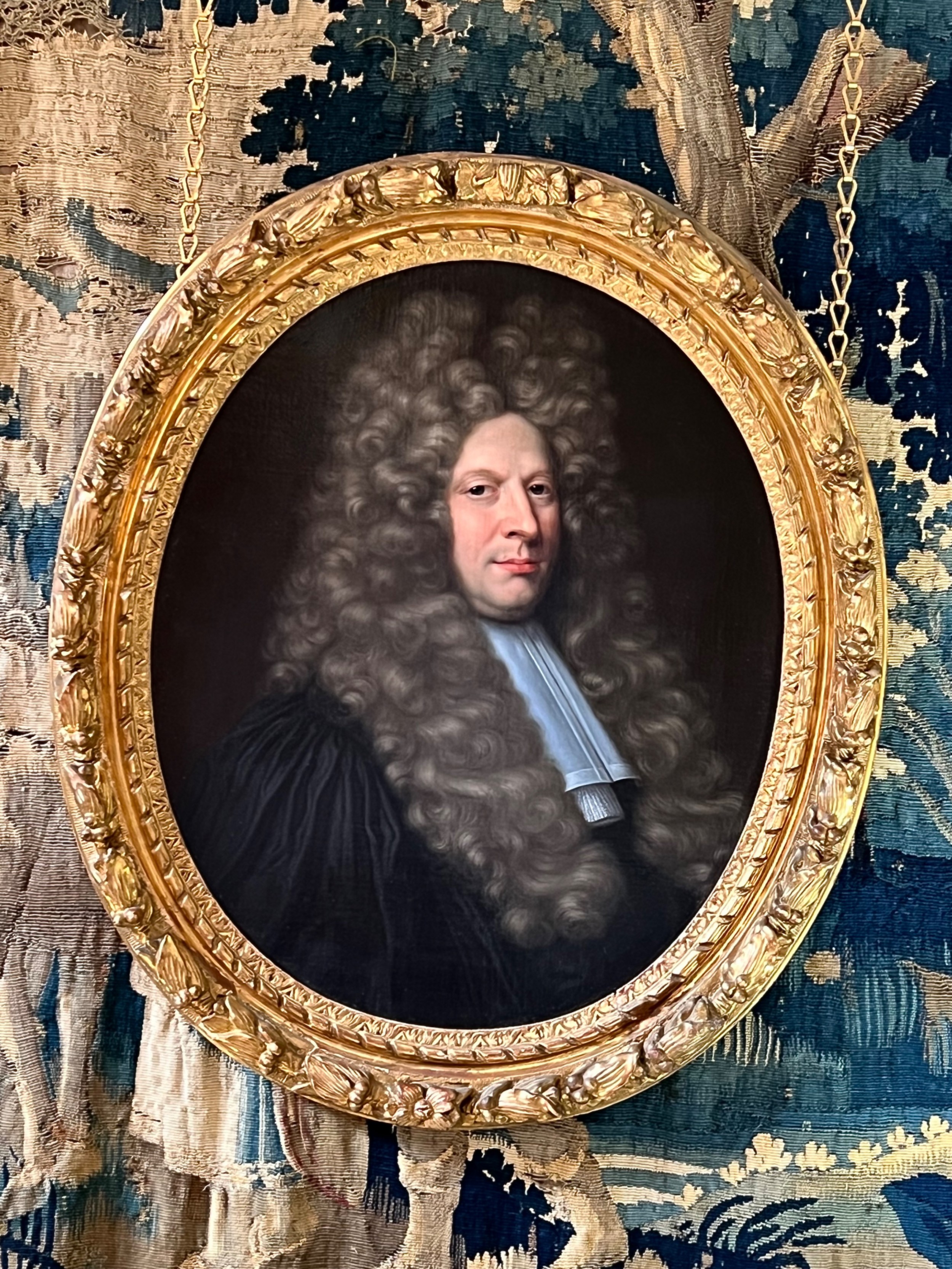
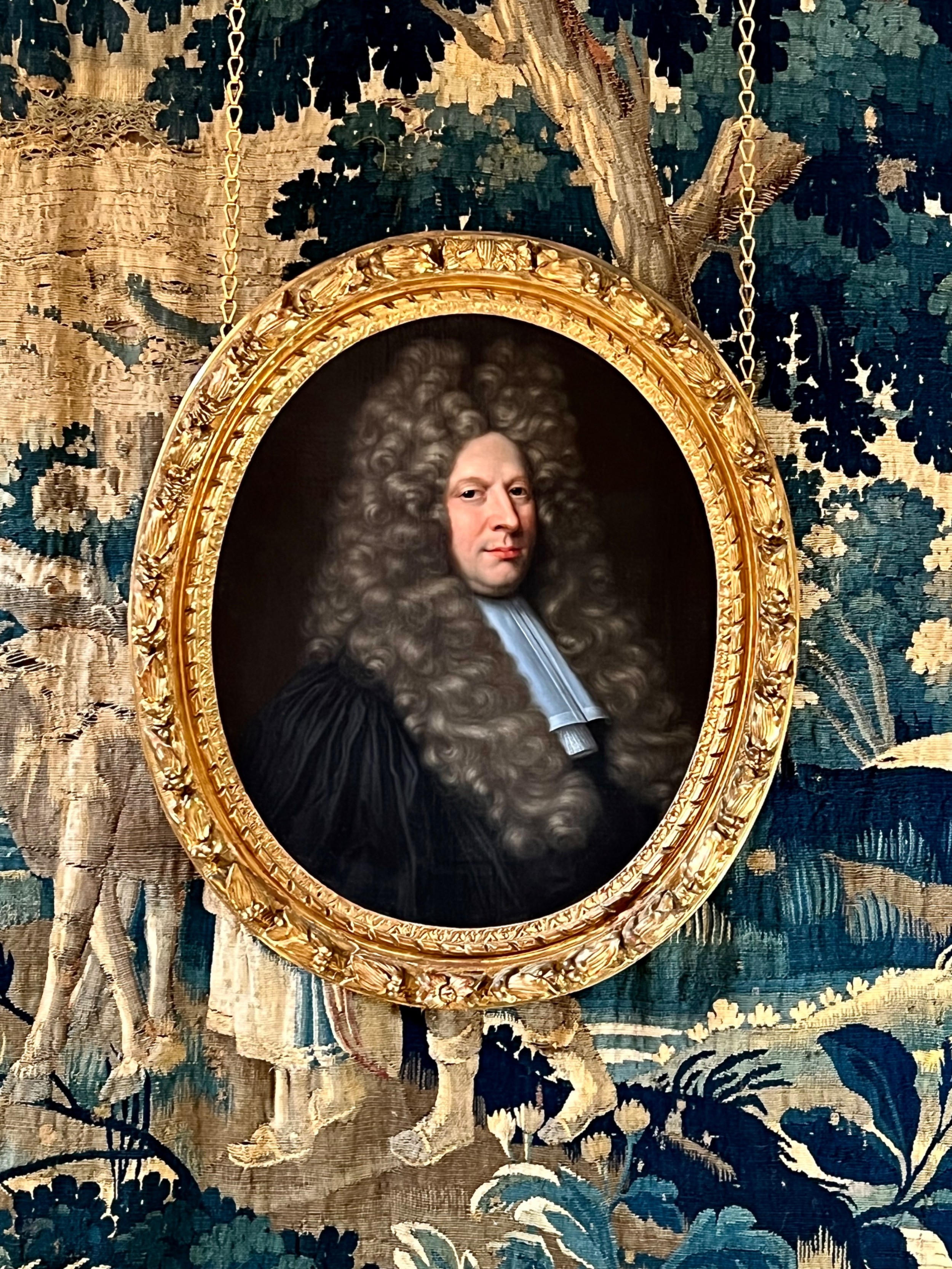
The most striking aspect of this sitters costume is his luxuriant wig and we can blame the Bourbon kings of France for starting this fashion When Louis XIII (1601 - 1643) went prematurely bald and took to sporting a hairpiece. At that time ostentation was the order of the day, and soon wigs had become towering, often to the point of absurdity, with some even requiring scaffolding. By the middle of the 17th century, and particularly during the reign of Louis XIV, The Sun King, wigs were as good as obligatory for all ‘persons of quality’ In England they were known as periwigs (shortened to wig by 1675) they were expensive to purchase and titivate making them the preserve of the rich, hence the term 'big-wig' emerged to refer to the moneyed and powerful.

This high quality work has been executed by a most skilled artist. This is clear not only from his acute observation of the sitters character, which is so sensitively rendered but also from the bravura brushwork and the minute detail of the sitters costume. This striking work is available to purchase in its original carved and gilded frame and is an excellent state of conservation.
Period Portraits has dated this piece to the 17th Century.
Specialist dealer in portraits from the 17th century to the 20th century. Our stock includes quality oil paintings, drawings, and mezzotints
You can view the stock and full dealer information on the Period Portraits Profile Page
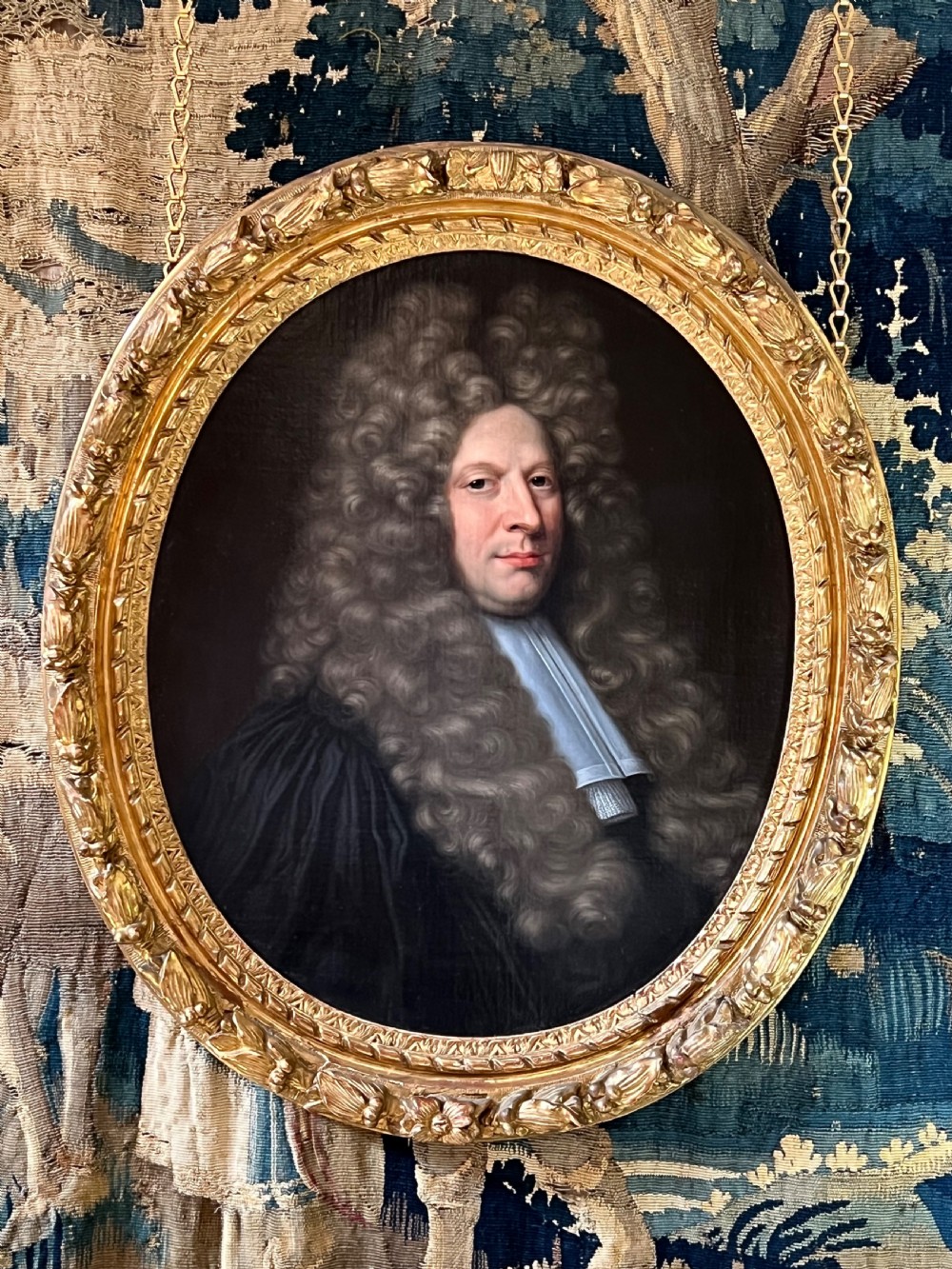
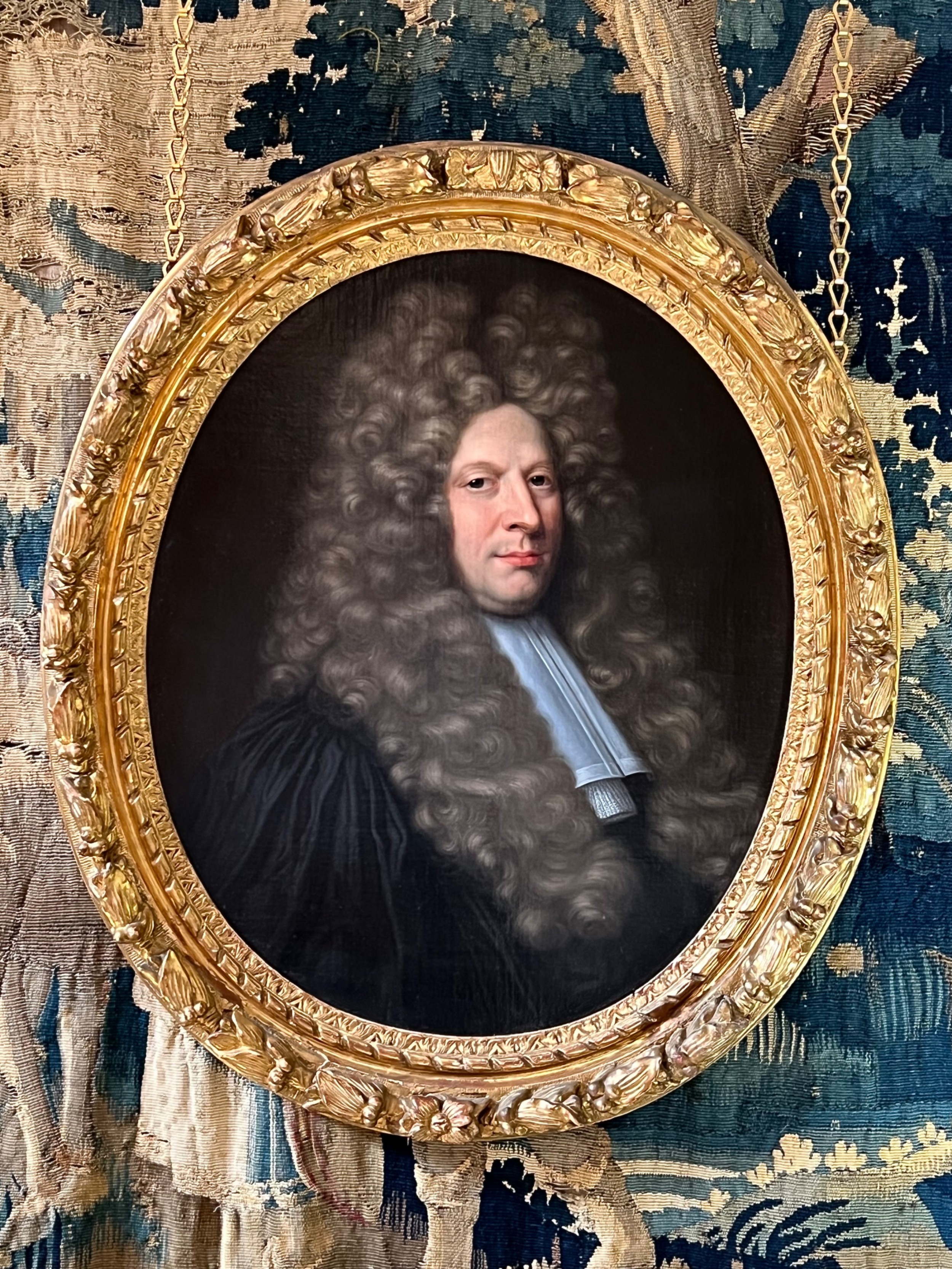
Late 17th Century Oil Portrait of Claude Vaillant (C.1700) - Circle of Charles Le Brun (1619 - 1690)