






Yomut Rug Face
These Yomut rug face pieces are striking Central Asian tribal weavings from the Trans-Caspian steppes, prized for rich geometric designs and wool craftsmanship.
Yomut Rug Face
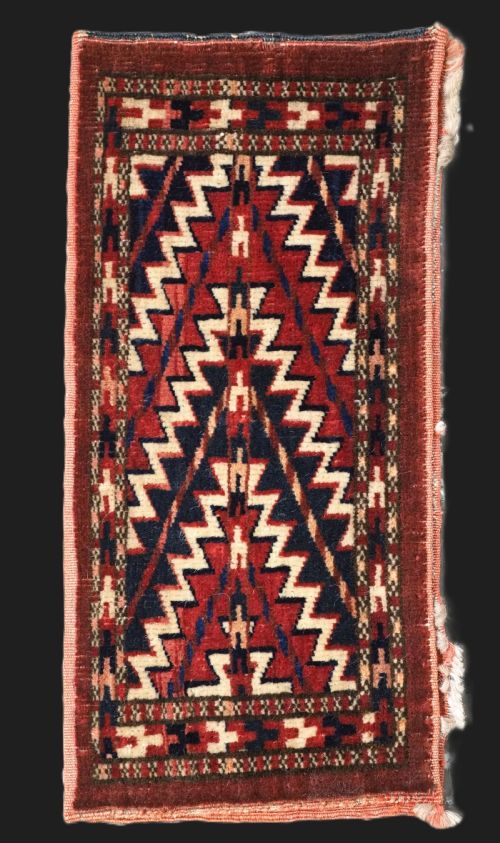
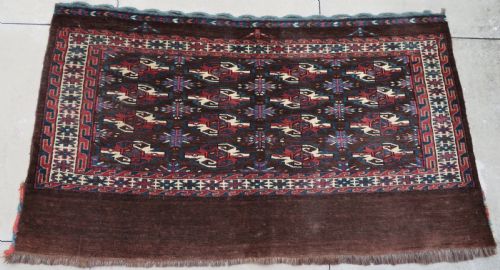
When you search for yomut rug face, you encounter authentic Turkmen tribal weavings originating from the Trans-Caspian steppes of Central Asia. These items typically take the form of torbas, chuvals, spindle bags, and textile fragments dating from the nineteenth century into the early twentieth century.
The pieces appearing here include bag faces and complete storage sacks showcasing traditional tribal patterns. Collectors frequently find formats such as the sixteen-gul chuval, the nine-gul chuval, and torbas featuring the distinctive kepse or aishk gul designs.
What Varies in Quality
The refinement of the knotting and the crispness of the geometric gul patterns dictate the distinction between standard examples and finer works. Pieces exhibiting tighter wool density and sophisticated natural dye palettes demonstrate superior tribal craftsmanship.
Preservation of the original structure also influences the standing of a piece, whether a textile survives as a complete bag with its reverse intact or as a fragment. Greater precision in the layout of motifs like the kepse design separates ordinary weaving from exceptional material.
Nomadic weavers packed these sturdy bags with everything from wool yarn to spare boots, little knowing their laundry bags would become art.
The Yomut Rug Face Glossary
- Gul
- A primary octagonal medallion motif repeated across Turkmen carpets and bag faces. Each tribe utilised specific gul designs to identify their lineage.
- Torba
- A small storage bag produced by nomadic weavers for household use inside a yurt. These items often hang on tent walls.
- Chuval
- A large storage sack utilised by Turkmen tribes for bedding and household goods. They display multiple gul motifs across the face.
- Mafrash
- A rectangular storage container or bedding bag created in flatweave or pile techniques. They form part of traditional nomadic furnishings.
- Kepse
- A specific geometric gul pattern characteristic of Yomut tribal weaving. The design resembles a plant or tree form.
Yomut Rug Face: Frequently Asked Questions
What is a yomut rug face?
A yomut rug face is the decorative front portion of a nomadic storage bag, such as a torba or chuval, woven by the Yomut tribe in Central Asia.
These panels feature distinct geometric gul patterns and natural dyes created for utilitarian use within traditional tents.
How were these bags used?
Nomadic families utilised these woven pieces as storage sacks for bedding, clothing, and household possessions inside traditional dwellings.
They hung against yurt walls or served as functional containers during seasonal migrations across the Trans-Caspian steppes.
How do I date an antique yomut piece?
Dating relies on examining the materials, particularly the presence of hand-spun wool and early natural dye palettes characteristic of the nineteenth century.
Structural details and traditional tribal motifs also help place pieces within specific periods from the eighteen-sixties to the early nineteen-hundreds.
Can I hang these textiles on a wall?
Many collectors display these tribal weavings as wall art to highlight the intricate geometric patterns and rich wool textures.
Proper mounting ensures the textile weight distributes evenly without damaging the antique wool foundation or flatweave edges.