


Yellow Wool Tribal Rug
When searching for a yellow wool tribal rug, you find hand-woven floor coverings originating from Anatolia, the Caucasus, and Central Asia.
Yellow Wool Tribal Rug
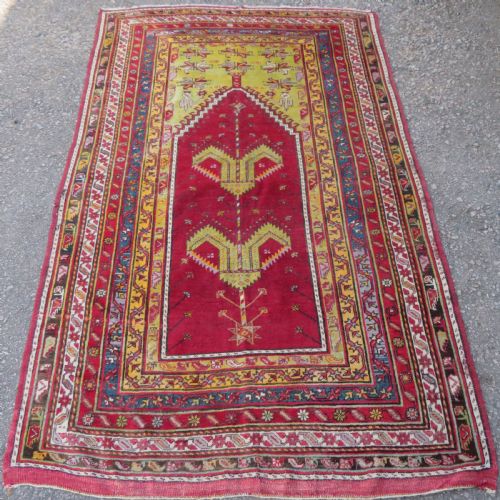
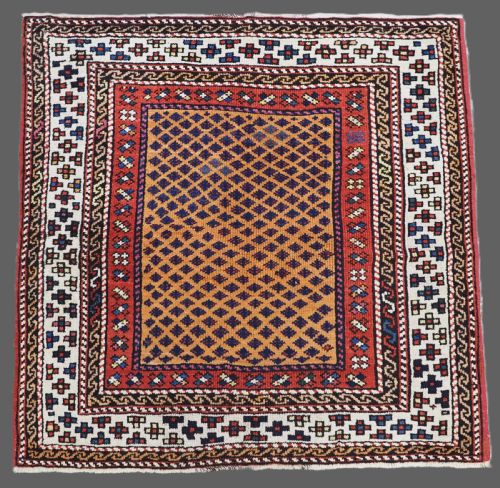
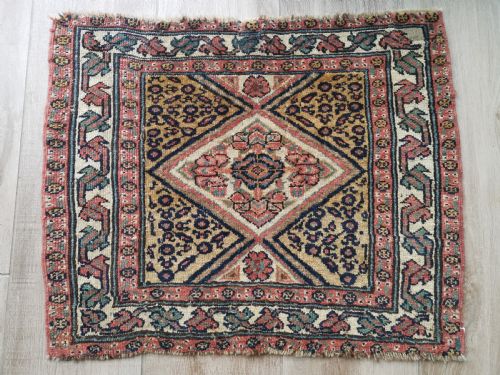
A yellow wool tribal rug is a hand-knotted or flat-woven textile produced by nomadic and village weavers across the Caucasus, Anatolia, and Central Asia during the nineteenth and early twentieth centuries. These pieces encompass regional formats such as prayer rugs, runners, bagfaces, and square scatter sizes. They serve as functional floor coverings and domestic textiles created for tribal use.
The yellow wool tribal rug most commonly met on this page dates from the nineteenth century up to the early twentieth century, spanning periods from eighteen-fifty to nineteen-twenty. Makers utilised local wool, often hand-spun, combined with natural dyes to achieve various grounds, including distinct yellow fields. Geometric patterns, lattice designs, floral motifs, and medallions dominate the visual composition of these textiles.
Regional attributions include Kurdish, Turkish, Caucasian, and Turkmen origins, reflecting specific weaving traditions and local aesthetics. Examples range from complete room-size long rugs to smaller remnants, fragments, and specific tribal utilitarian items like spindle-bags. Each piece records the traditional techniques and cultural expressions of its specific geographic source.
How they were made
Weavers constructed a yellow wool tribal rug using natural wool fibres for the pile, warp, and weft, occasionally incorporating cotton foundations. Much of the yarn was hand-spun before knotting or weaving, creating durable surfaces suited to nomadic daily life. Natural dyes provided the colour palette, yielding traditional shades across the yellow grounds and secondary patterns.
Techniques varied between pile knotting, flat-weaving as seen in kilims, and Soumak wrapping structures. Workshops and nomadic groups utilised upright or horizontal looms to execute traditional regional designs, including floral lattices, shrub motifs, and geometric medallions. The integration of wool and natural dyes dictated the texture and ageing characteristics of each textile.
Object types recorded include runner rugs, prayer rugs, kilims, bagfaces, and Soumak fragments.
What varies in quality
Quality in a yellow wool tribal rug relates to the fineness of the spin, the stability of the natural dyes, and the clarity of the design execution. Tighter knotting or more precise flat-weaving structure distinguishes superior pieces from standard domestic production. The depth and saturation of the yellow ground colour further influence the visual strength of the textile.
Preservation of the original edges, pile height, and structural integrity separates intact examples from distressed remnants and fragments. The balance between the primary ground colour and secondary motifs demonstrates the skill of the original weaver. Regional execution varies, with certain Armenian, Caucasian, and Anatolian pieces exhibiting greater complexity in their geometric layouts.
The Yellow Wool Tribal Rug Glossary
- Ground
- The main background colour of the rug field. In these pieces, a yellow ground defines the primary visual field.
- Kilim
- A flat-woven carpet or rug produced without a pile. These textiles rely on interlocked or slit-tapestry weave techniques.
- Soumak
- A flat-weave technique utilising a wrapping method over the warp threads. This produces a textured surface distinct from standard knotted piles.
- Prayer rug
- A small rug featuring a mihrab or niche design used historically for Islamic prayer. Examples often originate from Turkish and Caucasian weaving centres.
- Bagface
- The decorative front panel of a utilitarian nomadic storage bag. These represent portable tribal weaving traditions.
Yellow Wool Tribal Rug: Frequently Asked Questions
What is a yellow wool tribal rug?
A yellow wool tribal rug is a hand-woven textile created by nomadic or village weavers in regions such as the Caucasus, Anatolia, and Central Asia. These pieces utilise wool materials and natural dyes to form distinctive regional patterns on yellow grounds.
Production dates span from the nineteenth century into the early twentieth century. They include various formats such as runners, scatter rugs, and prayer rugs.
How were these rugs used originally?
Nomadic and village communities utilised these textiles as functional floor coverings, sleeping mats, and decorative tent furnishings. Specific items like bagfaces served practical storage purposes within tribal dwellings.
They formed an essential part of domestic life and traditional dowries across Central Asian and Caucasian households. Their durable construction suited the demands of daily nomadic use.
How do I care for an antique wool rug?
Care for antique wool textiles requires gentle vacuuming without rotary brushes to protect the historic pile and natural fibres. Professional conservation cleaning is recommended to preserve natural dyes and structural integrity.
Keep the rug away from direct, prolonged sunlight to prevent fading of the yellow ground and secondary colours. Rotating the piece periodically ensures even wear in high-traffic interior spaces.
How can I tell different regional styles apart?
Regional styles are distinguished by specific structural characteristics, colour palettes, and repeating motifs. Caucasian and Anatolian pieces often feature geometric lattices and medallions, while Turkmen and Uzbek examples display distinct tribal guls or flat-woven kilim structures.
Examining the materials, such as hand-spun wool and foundation types, helps identify specific origins like Karabagh, Kazak, or Kirsehir.