
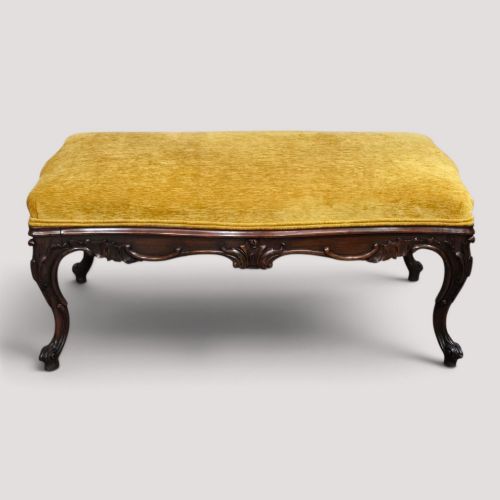
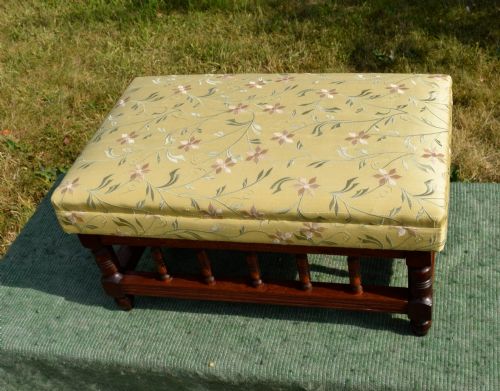
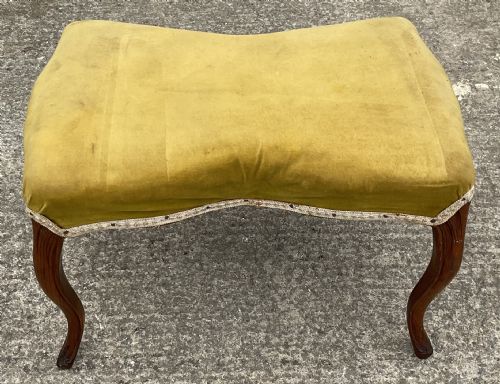
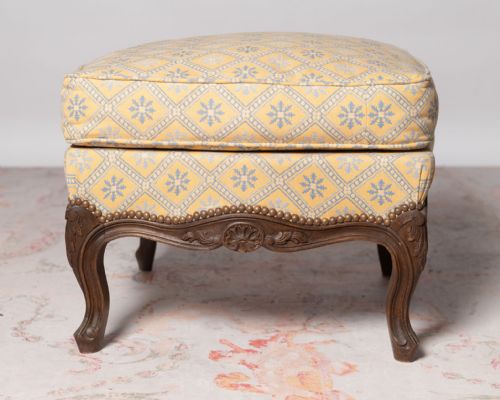


Yellow Upholstered Stool
These yellow upholstered stool examples offer practical seating and footrests in various period woods, bringing a bright traditional touch to a room.
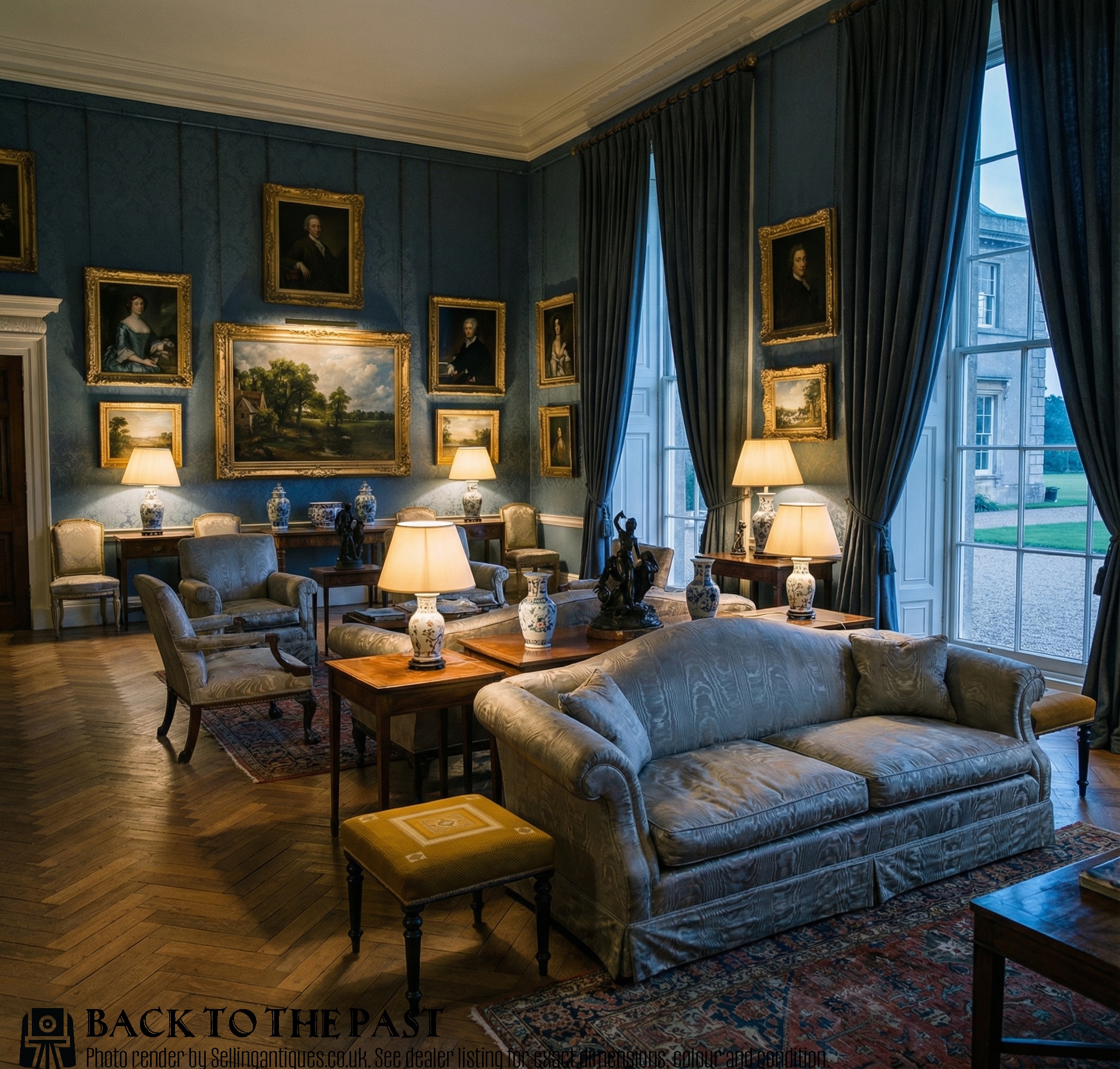
Yellow Upholstered Stool
A yellow upholstered stool sits within a category spanning footstools, ottomans, piano stools, and window seats from the Regency, Victorian, and Edwardian eras. Buyers searching for a yellow upholstered stool encounter functional seating designed for dressing tables, drawing rooms, and large country houses.
Originating predominantly from the nineteenth and early twentieth centuries, these pieces demonstrate traditional joinery combined with various period upholstery styles, including buttoned finishes and newly covered surfaces.
Factors influencing quality
Quality in a yellow upholstered stool rests upon the crispness of timber carving, the selection of premium woods like rosewood and walnut, and the structural integrity of the frame. Superior examples display balanced proportions, refined cabriole or X-framed supports, and harmonious integration of the textile cover with the underlying woodwork.
Lower tiers typically involve simpler turning, plain secondary woods, or unadorned forms where the joinery lacks the refinement found in pieces attributed to specific revival styles or country house origins.
Yellow Upholstered Stool Retail Price Guide 2026
Typical asking prices for yellow upholstered stool among the pieces listed under this phrase on Sellingantiques today, from the lower quarter to the upper quarter. They describe what is for sale here now, not the wider market.
Listings for a yellow upholstered stool span the Regency, Victorian, and Edwardian eras, utilising mahogany, walnut, rosewood, and ebonised wood frames.
The Yellow Upholstered Stool Glossary
- Ottoman
- A low upholstered seat or bench without arms or a back, frequently used as a footrest or coffee table. These pieces often feature internal storage compartments.
- Cabriole leg
- A furniture leg that curves out and then in, resembling the leg of an animal. This form appears frequently on Victorian walnut and mahogany stools.
- Window seat
- A long, narrow form of seating designed to fit into a bay or recess of a window. They often match the decorative style of surrounding room furniture.
- Ebonised wood
- Timber treated with a stain or finish to simulate the appearance of ebony. This dark surface treatment creates a strong contrast against bright upholstery fabrics.
- X-framed
- A structural support design where two legs cross in the shape of an X beneath the seat. This configuration provides stability and decorative interest to piano stools and small seats.
Yellow Upholstered Stool: Frequently Asked Questions
Where should I place a yellow upholstered stool?
These stools fit well at the foot of a bed, beside a fireplace, or in front of a dressing table. Their bright upholstery adds a focal point to seating areas and corners.
Larger ottoman versions also serve as low coffee tables in living rooms, combining soft surfaces with functional tabletop utility.
How do I identify a Victorian stool?
Victorian examples frequently utilise walnut or mahogany, often featuring carved cabriole legs, buttoned upholstery, or elaborate rosewood frames. The proportions tend to be robust and decorative.
Construction methods from this period include hand-cut joinery and traditional stuffing materials beneath the fabric layer.
Are these stools suitable for daily seating?
Most of these pieces are structurally sound for everyday use, provided the wooden frame and internal webbing remain stable. Dressing stools and window seats were built for regular seating.
Delicate antique frames or those awaiting upholstery require careful placement or restoration before enduring heavy daily loads.
What is the difference between a footstool and an ottoman?
Footstools are generally smaller items intended primarily for resting feet while seated in a chair. Ottomans are larger, often box-shaped pieces that function as independent seats or low tables.
Some period ottomans also include hinged lids providing hidden storage space inside the upholstered body.