


Yellow Gold Cameo Brooch
A yellow gold cameo brooch offers sculpted classical imagery set in precious metal, capturing nineteenth-century artistry.
Yellow Gold Cameo Brooch
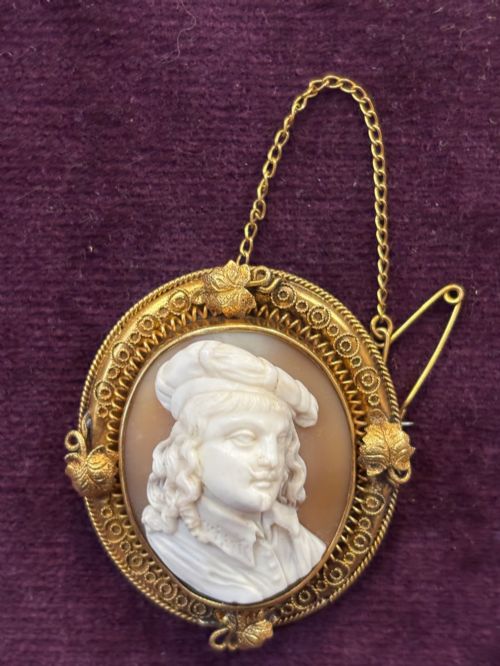
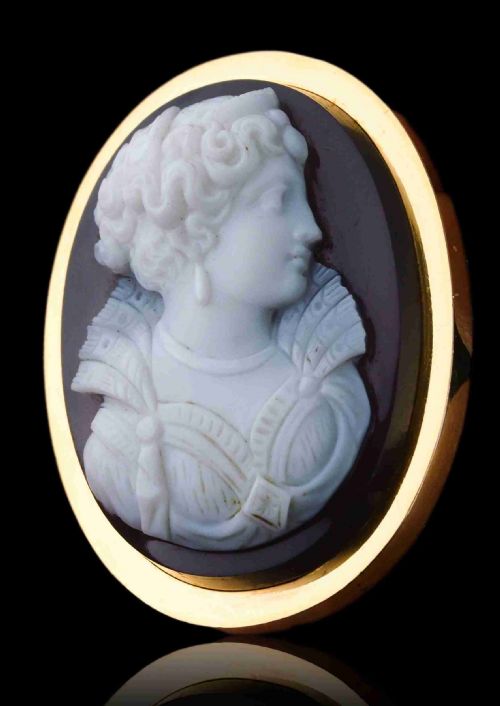
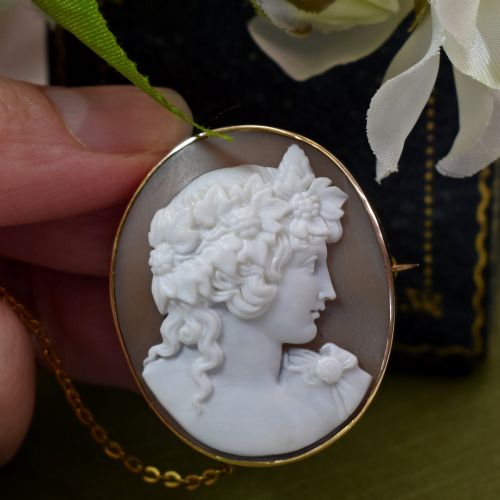
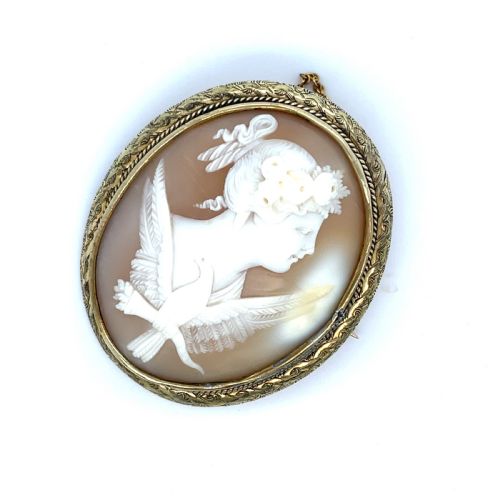
A yellow gold cameo brooch brings together carved relief profiles and precious metal mounts, predominantly originating from the Victorian era and the broader nineteenth century. These pieces combine miniature sculpture with wearable jewellery, often depicting classical deities, historical figures or mythological scenes.
The most common examples encountered on this page feature shell or hardstone panels mounted in high-carat gold frames, ranging from standard Victorian scrollwork to elaborate filigree and pendant combinations. French and Italian craftsmanship frequently appears alongside British regional items, such as a Glasgow piece.
Buyers searching for a yellow gold cameo brooch find objects spanning from the mid-nineteenth century up to the Edwardian period, with subjects like Aphrodite, Flora, and Cupid and Psyche recurring across shell and agate mediums.
How they were made
Carvers utilised natural materials like layered shells, agate, onyx and hardstone, exploiting colour variations in the strata to create contrast between the raised figure and the dark background. Master artisans shaped these profiles by hand using fine gravers.
Goldsmiths housed these carved panels in secure metal settings, employing gold ranging from twelve to twenty-one carats, alongside detailed techniques like wirework filigree and occasional diamond or emerald gemstone accents.
Listings feature materials spanning shell, eighteen-carat gold, agate, onyx, coral, and rock crystal across Victorian and Edwardian periods.
What varies in quality
Frame construction and metal purity influence overall worth, moving from standard gold mounts to heavier twenty-carat settings or intricate frames enhanced with diamonds and rock crystal.
R. Pernice
The Yellow Gold Cameo Brooch Glossary
- Cameo
- A method of carving an object such as a gemstone or shell where a relief image stands out distinctly from a background of a different colour. This technique creates a miniature two-tone portrait or scene.
- Hardstone
- A collective term for semi-precious stones used in carving, including agate and onyx. These stones offer durability and sharp colour contrast.
- Filigree
- Delicate jewellery ornamentation made from fine gold or silver twisted wire soldered together in openwork patterns. It adds ornate texture to the brooch frame.
- Neoclassical Revival
- An artistic movement drawing inspiration from the classical art and culture of ancient Greece and Rome. This aesthetic heavily influences the mythological subjects carved on the brooches.
Yellow Gold Cameo Brooch: Frequently Asked Questions
How do I wear a yellow gold cameo brooch?
These pieces pin securely onto heavy fabrics such as wool coats, heavy scarves or structured jacket lapels, where the weight of the gold frame and carved panel is properly supported.
Some variants include integrated loops, allowing them to transform into pendants worn on a chain as well as traditional brooches.
Are these brooches made of real shell?
Yes, many traditional examples utilise natural marine shells, specifically varieties like conch or helmet shells, which possess distinct colour layers suited for carving relief profiles.
Alternative materials in the listings include hardstones such as agate and onyx, alongside rock crystal.
How can I tell the period of a cameo?
Dating relies on the style of the gold mount, the catch mechanism on the reverse, and the clothing or hairstyle depicted on the carved figure. Victorian pieces often feature ornate scroll frames and tube hinges.
Later Edwardian items or twentieth-century pieces introduce different fastening designs and refined gemstone pavé settings.
What subjects are usually depicted?
Carvings frequently draw from classical mythology and antiquity, portraying figures such as Aphrodite, Flora, Antinous, and various deities or allegorical scenes.
Historical portraits, including Bonnie Prince Charlie, also appear among specific regional British and Scottish pieces.