
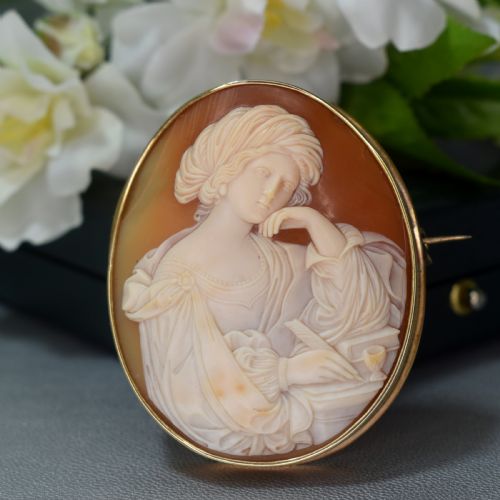


Carved Cameo Brooch
A carved cameo brooch brings classical myth and portraiture to the lapel, prized for its miniature relief carving and precious metal mount.
Carved Cameo Brooch
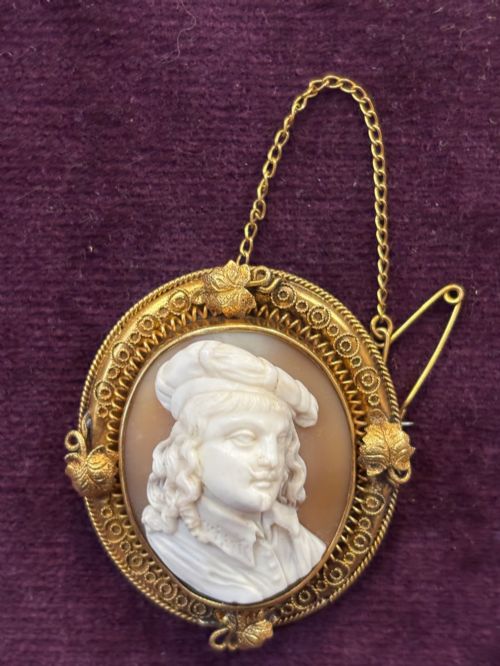
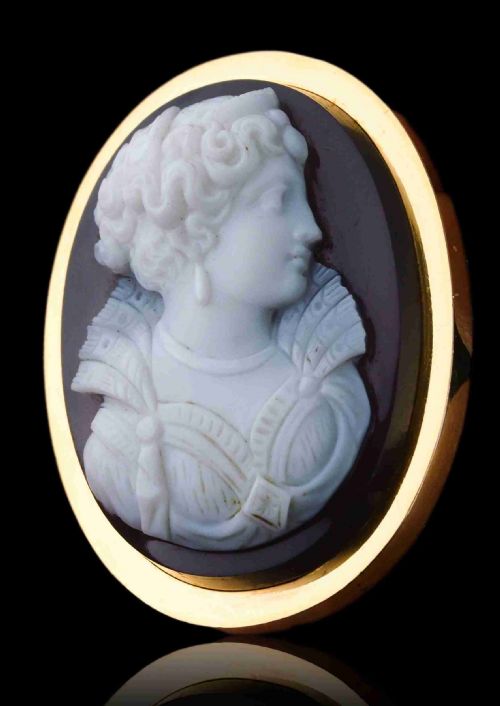
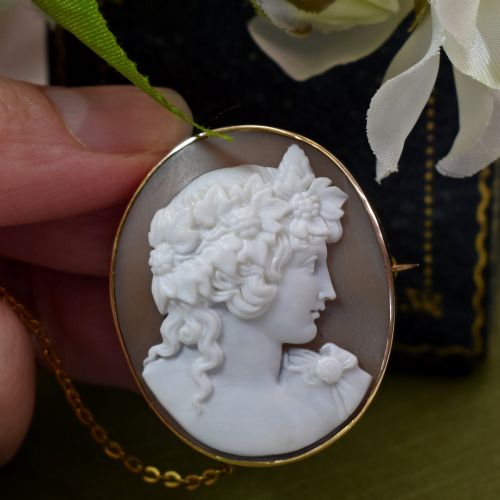
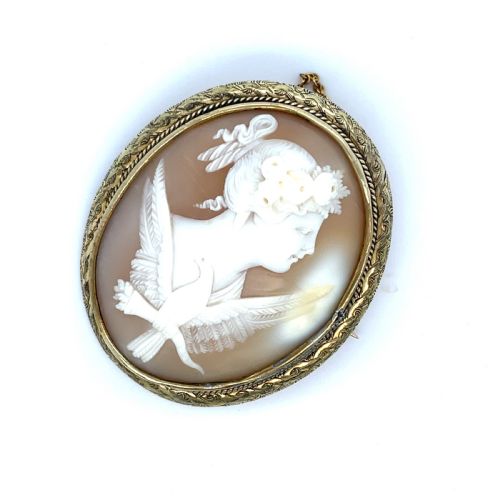
A carved cameo brooch presents a raised relief portrait or mythological scene carved from shell, hardstone, agate, or lava stone. Most pieces found here date from the Victorian and nineteenth-century periods, with subjects ranging from classical deities such as Flora and Aurora to historic figures.
The format serves as both a brooch and often a pendant, mounted in gold, silver, or pinchbeck frames. These ornaments reflect the Grand Tour travels of the nineteenth century, bringing Italian craftsmanship and neoclassical revival styles directly to British collectors.
How they were made
Carvers exploit the natural colour layers of conch shells, banded agates, or volcanic lava to separate the pale relief subject from a darker background layer. The resulting miniature is then set by hand into mounts of nine-carat, fifteen-carat, or eighteen-carat gold, silver, or pinchbeck.
Fine detail work relies entirely on small gravers and abrasive powders, shaping subjects like Psyche and Cupid with microscopic precision. Master workshops then secure these carved gems within ornate filigree, plain polished collets, or diamond-accented frames.
Listings span the Georgian, Victorian, and Edwardian periods, utilising shell, hardstone, lava stone, and various grades of gold and silver.
What varies in quality
Quality rests principally on the crispness and depth of the carving, where a master hand achieves subtle facial expressions, correct human anatomy, and high relief rather than a flat, hurried scrape. Signed pieces by established carvers command higher regard than anonymous workshop output.
The surrounding mount plays an equal role in distinction, separating simple brass frames from substantial fifteen-carat or eighteen-carat gold settings embellished with pearls, diamonds, or intricate wirework.
R. Pernice
The Carved Cameo Brooch Glossary
- Cameo
- A method of carving an object such as an engraved gem or shell where a design is raised above a contrasting background. It relies on the distinct colour strata found in natural materials.
- Hardstone
- A collective term for semi-precious stones used in jewellery, including agate, onyx, and jasper. These minerals are tougher than shell and permit exceptionally sharp, durable relief work.
- Grand Tour
- A cultural journey of Europe undertaken by wealthy young Englishmen in the eighteenth and nineteenth centuries. Travellers frequently returned with Italian carved shell and lava souvenirs.
- Pinchbeck
- An alloy of copper and zinc invented in the eighteenth century to simulate gold. It provides a warm, durable yellow metal mount for period jewellery.
- Collet
- A band of metal that holds a stone or cameo in place by its edge. It forms a clean, secure border around the carved subject.
Carved Cameo Brooch: Frequently Asked Questions
How do I date a cameo brooch?
Dating relies on the style of the mount, the clasp mechanism, and the subject matter depicted. Victorian pieces often feature high-relief classical subjects in heavy gold frames.
Earlier Georgian examples display distinct Neoclassical motifs, whereas later Edwardian and twentieth-century pieces shift toward lighter silver or white gold settings.
What materials are cameos carved from?
The most common material is seashell, particularly conch or helmet shell, which yields white figures against a peach or brown background. Hardstone and layered agates provide greater durability and contrast.
Lava stone was also used during the nineteenth century, offering a soft, matte finish favoured by Grand Tour travellers.
Can a brooch also be worn as a pendant?
Many period pieces feature a hidden or hinged loop alongside the pin mechanism, allowing the mount to double as a pendant necklace. This dual function was common in the nineteenth century.
Inspect the reverse of the frame to locate the bale or ring before suspending it from a chain.
How should I care for shell jewellery?
Shell is a delicate organic material that can be damaged by harsh chemicals, ultrasonic cleaners, and excessive moisture. Clean the surface gently with a soft, dry cloth after wearing.
Store the piece away from direct sunlight and hard objects to prevent scratching the fragile relief.