


Vintage Cameo Brooch
A vintage cameo brooch is a carved portrait relief set in precious metal, offering wearers a touch of classical artistry.
Vintage Cameo Brooch
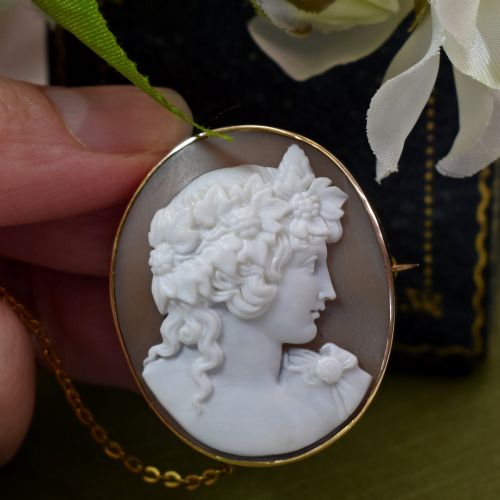
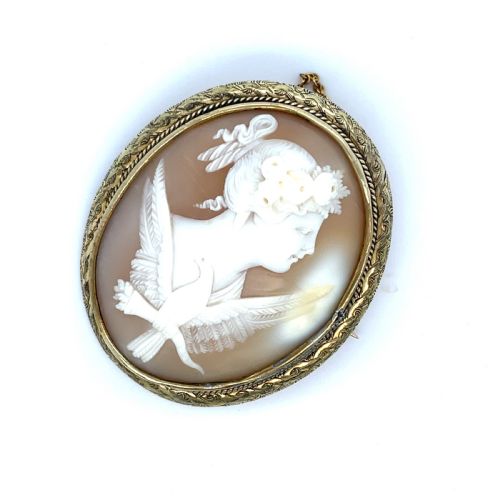
A vintage cameo brooch is a wearable relief carving, usually depicting classical figures, mythological scenes, or portraits. When you search for a vintage cameo brooch, you encounter pieces spanning the nineteenth century up to the mid-twentieth century, including Victorian and Edwardian examples.
The forms on this page include shell cameos and jasperware pieces mounted as brooches and pins. Origins stretch from British assay offices in London and Glasgow to Italian workshops producing Grand Tour souvenirs.
You are most likely to meet shell carvings set in gold mounts, alongside silver and pinchbeck frames. These items function primarily as fastened dress ornaments and historical jewellery.
How they were made
Carvers utilise natural shells with contrasting colour layers to create the raised relief effect characteristic of these brooches. Artisans hand-carve the upper strata to leave a pale figure against a darker background.
Metalworkers house these carved reliefs within secured settings, employing yellow gold, solid gold frames, nine-carat gold, silver, and pinchbeck. Some mounts feature detailed wirework or heavy bezels designed to protect the fragile shell or ceramic material.
What varies in quality
The choice of mounting metal contributes significantly to the overall substance of the brooch. Solid gold frames and marked precious metals denote higher manufacturing standards compared to base metal alloys like pinchbeck.
R. Pernice·Wedgwood
The Vintage Cameo Brooch Glossary
- Cameo
- A method of carving an object such as a engraved gem or shell where a design stands out in relief. This technique relies on distinct colour layers within the material to create visual contrast.
- Pinchbeck
- An alloy of copper and zinc invented in the eighteenth century to imitate gold. It provides a warm metallic appearance without the expense of precious metals.
- Jasperware
- A type of fine stoneware developed by Josiah Wedgwood, characterised by a matte finish and contrasting white reliefs. It appears in several nineteenth-century brooch mountings.
- Grand Tour
- A traditional trip through Europe undertaken by upper-class Europeans in the eighteenth and nineteenth centuries. Travellers frequently purchased carved Italian shell cameos as mementos.
- Bezel
- A collar of metal that holds a carved shell or stone securely within a frame. A well-fitted bezel protects the fragile edges of the cameo.
Vintage Cameo Brooch: Frequently Asked Questions
What is a cameo brooch made of?
These brooches combine carved natural materials with metal frames. Shell and jasperware serve as the primary carving mediums.
Settings utilise yellow gold, nine-carat gold, silver, and pinchbeck.
How do I date a cameo brooch?
Dating relies on material combinations, frame styles, and hallmarks. Victorian and Edwardian pieces exhibit distinct mount designs and metal standards.
Assay office marks on silver or gold mounts provide precise decade markers.
Who made these brooches?
Production involved specialised carvers and metalworkers, particularly in Italy and Britain. Some pieces bear signatures from prominent workshops.
Factory ceramics like jasperware also appear in nineteenth-century brooch mounts.
How were cameos worn historically?
Wearers pinned these ornaments to collars, shawls, and bodices as focal accessories. They served as personal adornments during the Victorian and Edwardian eras.
Matching sets sometimes included companion earrings alongside the main brooch.