



Carved Portrait Pendant
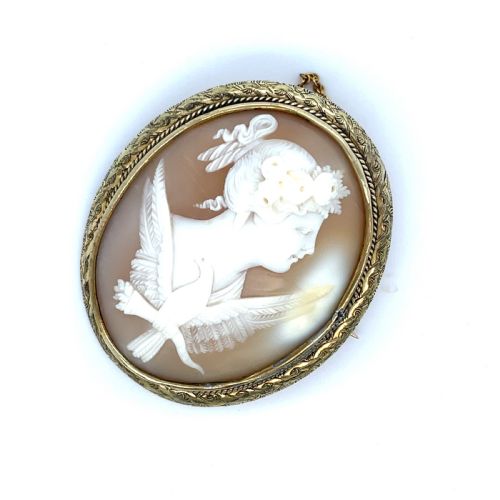
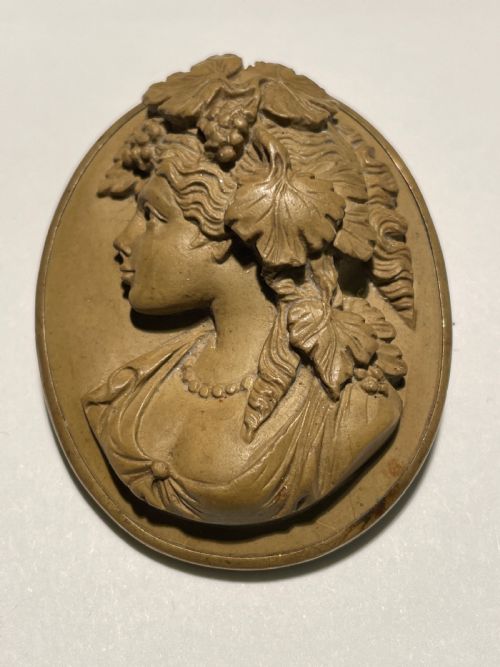
A carved portrait pendant brings history to the neckline, offering miniature relief portraits carved from shell, stone, or mother of pearl.
Carved Portrait Pendant
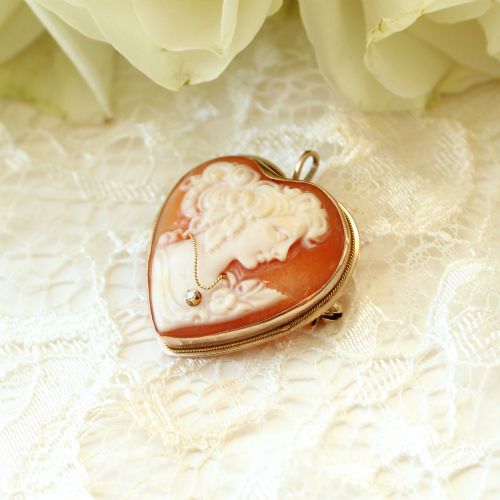
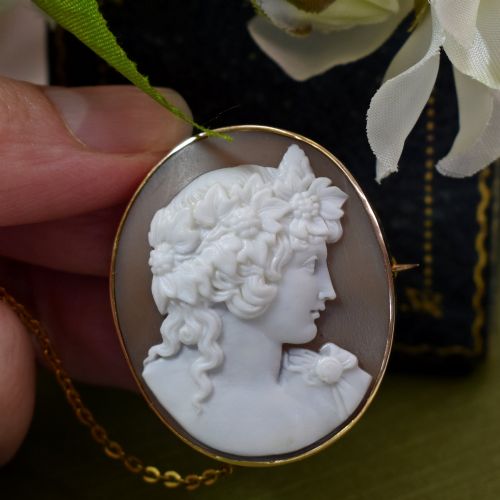
When you search for a carved portrait pendant, you are looking at miniature relief carvings mounted as personal ornaments, often dual-purpose items that function as both brooches and pendants. The examples found here span the Victorian, Edwardian, and Art Nouveau periods, alongside Georgian pieces and Italian Grand Tour souvenirs.
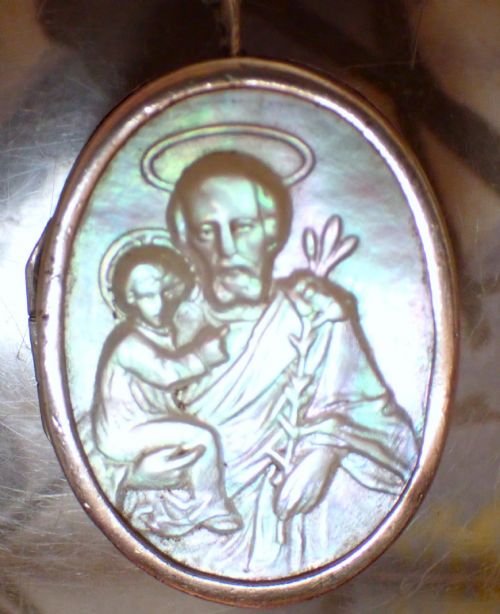
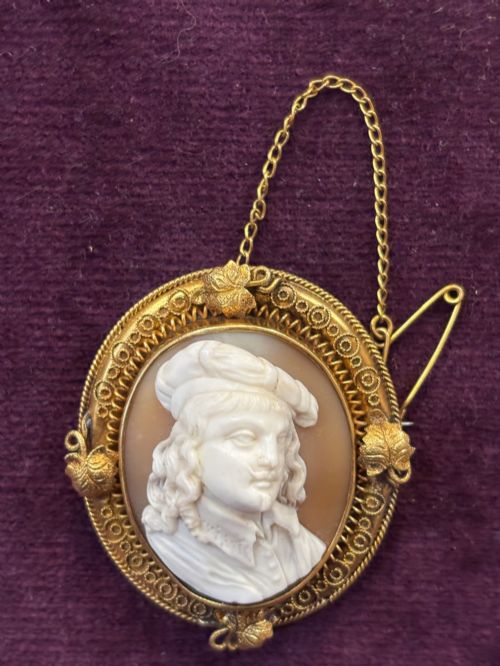
Most pieces meet you as shell or mother of pearl cameos mounted in gold or silver settings, depicting classical figures, literary icons like Shakespeare, or religious subjects such as St Christopher. Forms range from teardrop earrings and fob seal rings to lockets and substantial brooches with integrated pendant loops.
How they were made
Metalworkers then housed these miniature reliefs in frames fashioned from sterling silver, pinchbeck, and golds ranging from nine to twenty carats. Mounts frequently incorporated detailed wirework, seed pearls, or hinged bails to allow the piece to be worn interchangeably on a chain or pinned to a garment.
Carved Portrait Pendant Retail Price Guide 2026
Typical asking prices for carved portrait pendant among the pieces listed under this phrase on Sellingantiques today, from the lower quarter to the upper quarter. They describe what is for sale here now, not the wider market.
William Shakespeare makes an unexpected appearance carved into rock crystal alongside classical deities.
What varies in quality
The choice and execution of the mounting frame also dictate the overall standard, distinguishing mass-produced commercial items from bespoke pieces with heavy gold frames, integrated pearls, or secure, high-grade silver settings.
The Carved Portrait Pendant Glossary
- Cameo
- A method of carving where a design is raised above its background. This technique uses layered materials such as shell or agate to create a two-tone contrast between the subject and the backing.
- Intaglio
- A design incised into the surface of a gemstone or crystal rather than raised. This technique allows the carved stone to leave a raised impression when pressed into sealing wax.
- Pinchbeck
- An alloy of copper and zinc invented to imitate gold. It provides a warm, durable yellow metal appearance without the expense of solid precious metal.
- Grand Tour
- A cultural journey undertaken by wealthy Europeans in the eighteenth and nineteenth centuries. Travellers frequently collected local lava and shell carvings as souvenirs of their travels.
Carved Portrait Pendant: Frequently Asked Questions
How do I wear a convertible brooch pendant?
Many Victorian and Edwardian frames feature a hidden fold-down loop alongside a pin fastening on the reverse. This allows the piece to transition easily from a jacket brooch to a necklace pendant.
Ensure the pin is securely locked into its safety clasp when worn as a brooch, or use a suitable chain threaded through the bail for neck wear.
What is the difference between shell and stone cameos?
Shell cameos utilise natural marine shells which present distinct colour layers like white on orange-brown. Stone cameos utilise hardstones such as agate, offering greater durability and sharper detail.
Stone carvings often date to earlier periods or specific classical revivals, whereas shell versions are more commonly found from the Victorian era onward.
How do I clean a carved portrait pendant?
Dust accumulation in the recesses of a shell or stone carving can be gently removed using a very soft, dry artist's brush. Avoid soaking shell pieces in water or using harsh chemical cleaners.
Precious metal mounts can be polished carefully with a specialist jewellery cloth, taking care not to rub abrasive cleaners against the softer carved material.
Were these pendants originally mourning jewellery?
While some portrait and locket pieces contained hair or commemorated deceased individuals, many served purely as fashion accessories or romantic tokens. Subject matter such as classical deities, literary figures, and saints indicates decorative or personal significance rather than mourning.
Check the reverse of the piece for glass-covered compartments or engraved inscriptions to determine if it served a memorial purpose.