



Yellow Gold Cameo
A yellow gold cameo brings centuries of classical carving together with warm precious metal to create wearable miniature art.
Yellow Gold Cameo
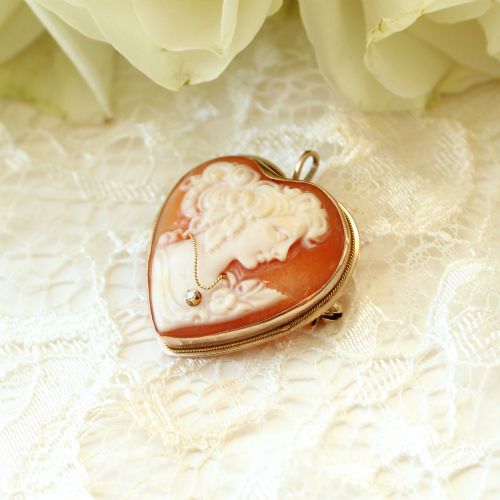
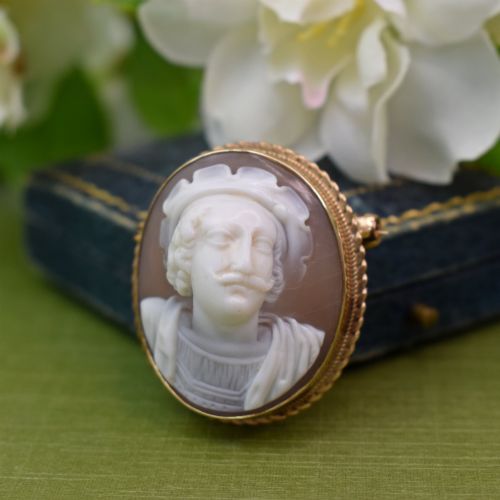
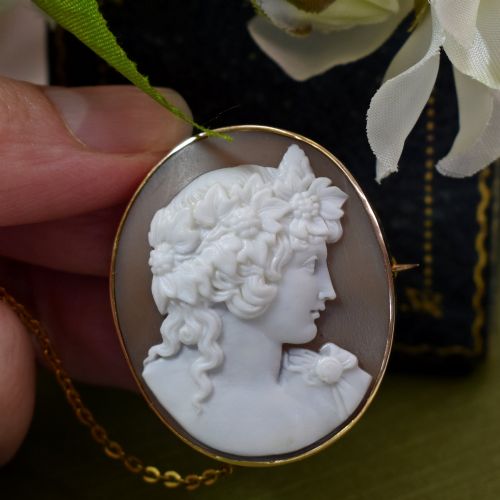
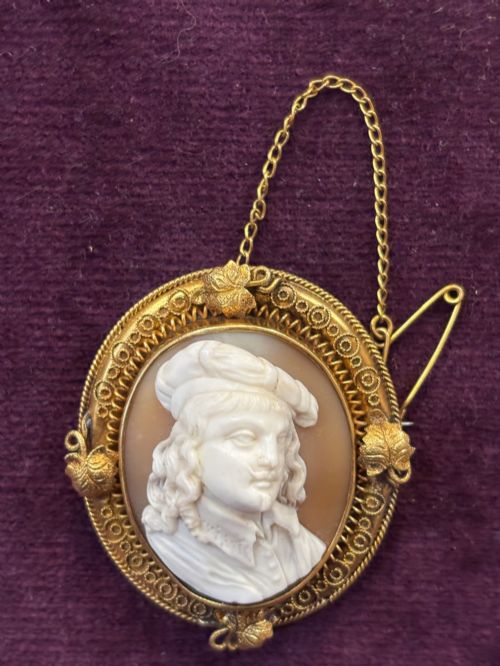
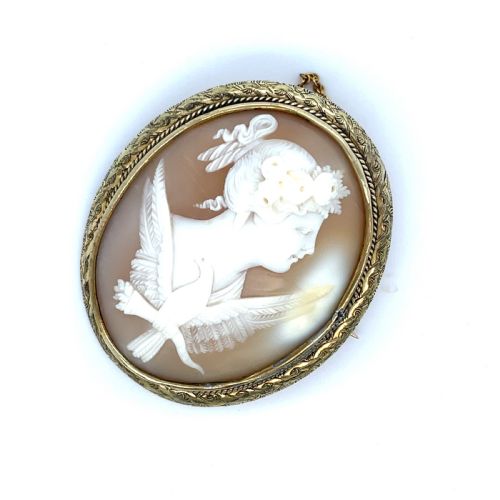
A yellow gold cameo combines relief-carved natural materials with gold mountings, appearing predominantly as brooches, rings, and pendants from the Victorian and Edwardian eras. These pieces frequently depict classical figures, mythological scenes, or historical portraits carved into shell or hardstone. Buyers seeking a yellow gold cameo will encounter substantial nineteenth-century examples alongside mid-century Italian work.
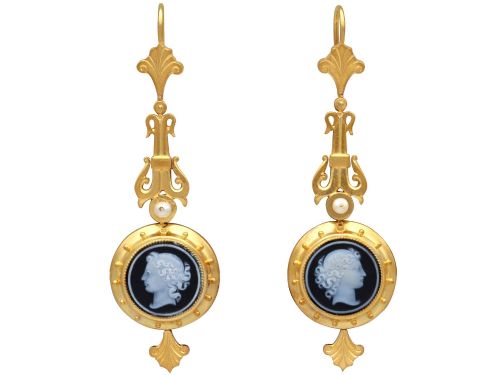
The format spans intricate multi-figure narrative scenes mounted in ornate frames to simpler single-portrait rings and drop earrings. Shell cameos offer soft organic warmth and detailed carving potential, whilst hardstone and agate versions provide crisp contrasts and durable longevity. Every yellow gold cameo balances the artistry of the carver with the goldsmith's setting techniques.
Materials and construction methods
Carvers shaped shell, coral, agate, onyx, and other hardstones by hand, cutting away upper layers to leave raised motifs against contrasting backgrounds. The choice of material dictated the depth and sharpness of the final carved image.
Goldsmiths encased these carvings in yellow gold mounts, ranging from standard carat weights up to high-carat frames, often incorporating filigree, foxtail tassels, or diamond accents. Bezel settings and pin mechanisms secured the fragile carved panels within robust precious metal structures.
Yellow Gold Cameo Retail Price Guide 2026
Typical asking prices for yellow gold cameo among the pieces listed under this phrase on Sellingantiques today, from the lower quarter to the upper quarter. They describe what is for sale here now, not the wider market.
Some cameos depict mythological figures like Cupid and Psyche, bringing ancient romantic drama straight to your lapel.
Distinguishing quality factors
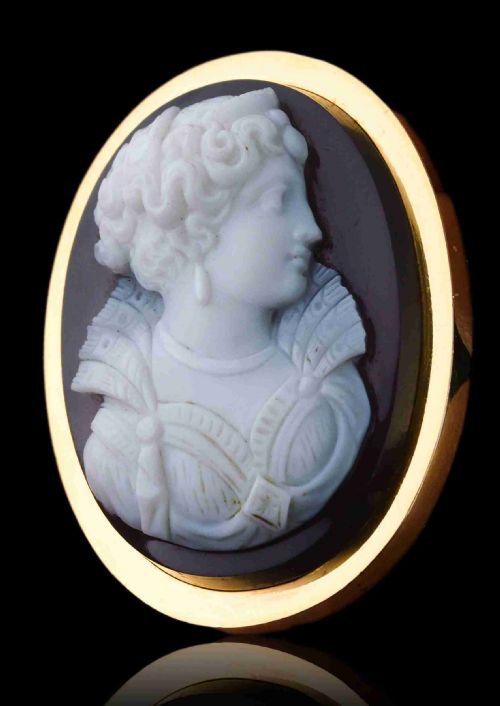
The precision and depth of the carver's execution separate ordinary production from superior examples, visible in the anatomical accuracy and facial expression of the subject. A well-modelled nose, subtle drapery folds, and clean undercutting define finer artistic skill.
The weight and purity of the gold mountings, along with the integration of supporting gemstones like diamonds, emeralds, or crystal, elevate the overall standard. Original frames showing intact granulation or filigree work alongside undamaged carved material indicate superior preservation.
R.Pernice
The Yellow Gold Cameo Glossary
- Cameo
- A method of carving an object such as an engraved gem, item of jewellery, or vessel. In these pieces, the technique creates a raised relief design from a multi-layered material.
- Hardstone
- A term for semi-precious stones used in glyptic art, including agate and onyx. These stones allow for sharper detail and greater durability than shell.
- Filigree
- An intricate ornamental work of fine wire, usually gold, soldered together in delicate patterns. This technique frequently frames Victorian settings.
- Bezel
- A collar of metal that holds a carved stone or shell in place by overlapping its edge. This traditional setting method secures the carving safely.
- Intaglio
- A gem carving technique opposite to a cameo, where the design is incised into the surface rather than raised. Such pieces were historically used as wax seals.
Yellow Gold Cameo: Frequently Asked Questions
How do I date a yellow gold cameo?
Dating relies on stylistic clues, mounting techniques, and the subject matter depicted. Victorian examples often feature deep, ornate gold frames with classical motifs, whilst later periods introduce distinct proportions and gemstone pairings.
Examining the pin mechanism on brooches or the shank style on rings provides additional chronological markers. Comparing the carving depth and framing style against known period pieces confirms the era of production.
What is the difference between shell and hardstone cameos?
Shell cameos utilise natural conch or helmet shells, yielding warm pink or cream tones with softer dimensional depth. Hardstone cameos employ layered minerals like agate or onyx, offering sharper contrast and crisper details.
Hardstone is significantly harder and more durable than shell, making it resistant to surface wear over time. Shell carvings often present larger narrative scenes, whereas hardstone frequently suits compact rings and pins.
How should I care for an antique cameo?
Antique cameos require gentle handling, particularly shell examples which are sensitive to harsh chemicals, cosmetics, and sudden temperature changes. Store them individually in padded boxes to prevent friction against other jewellery.
Cleaning should be limited to a soft, dry cloth rather than liquid immersion or ultrasonic cleaning. Ensuring the gold mount remains secure protects the delicate carved centre from loosening.
Can these brooches be worn as pendants?
Many yellow gold cameo brooches feature integrated fold-down loops or safety chains that allow them to double as pendants. This dual functionality was common in nineteenth-century jewellery design.
If a loop is absent, a jeweller can sometimes add a discreet removable converter without altering the original gold frame. Checking the reverse of the piece reveals whether original suspension loops were part of the mounting.