

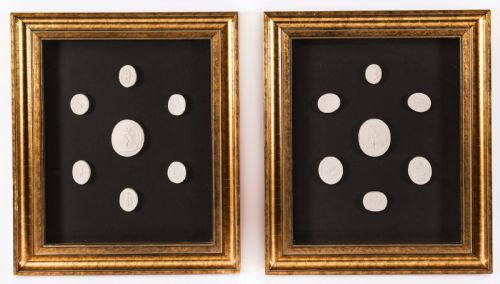


Antique Cameo Frame
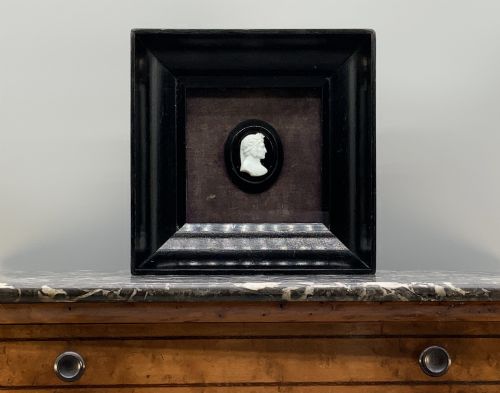
An antique cameo frame holds carved profiles and miniature reliefs, preserving classical portraits and souvenir casts for display on walls or tabletops.
Antique Cameo Frame
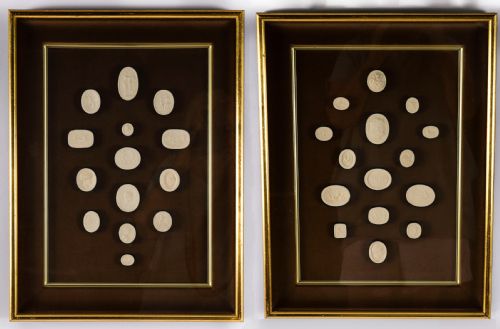
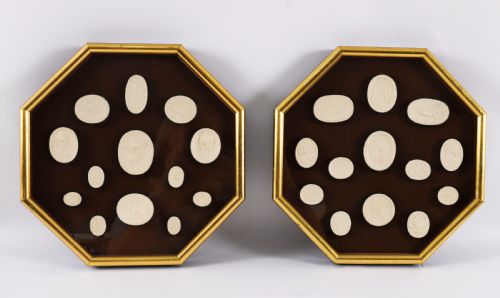
When you search for an antique cameo frame, you encounter wall plaques, framed intaglios, and portrait miniatures originating from the eighteenth and nineteenth centuries. These pieces encompass Grand Tour collections, wax relief portraits, and mounted shell cameos designed to showcase classical profiles and historical figures.
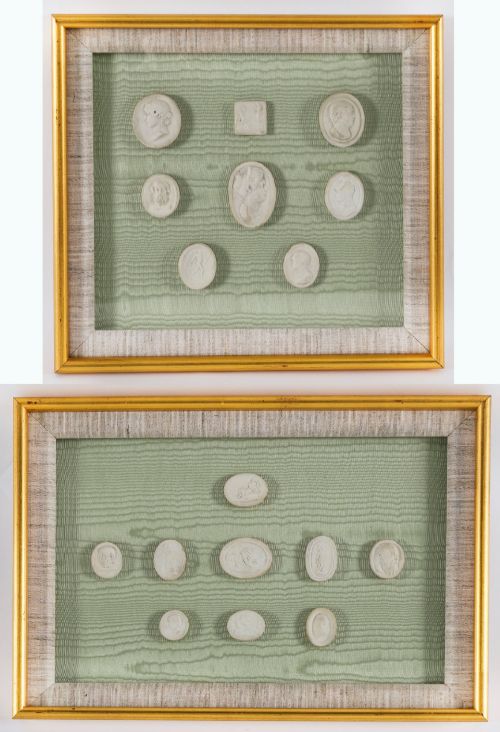
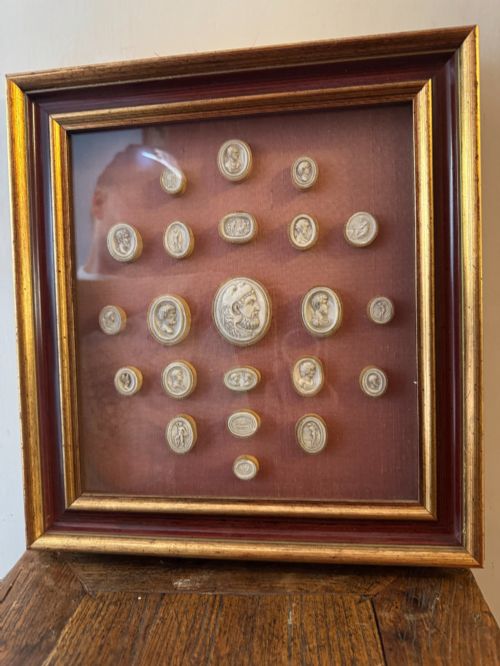
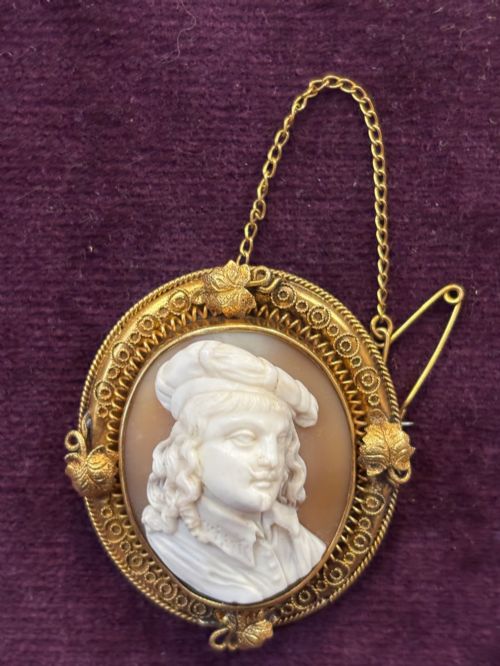
The most common formats on this page are framed groupings of plaster, gypsum, or wax casts, alongside individual shell and hardstone cameos set within gold or pinchbeck mounts. These domestic displays reflect the nineteenth-century passion for classical antiquity and continental travel souvenirs.
Materials and Construction
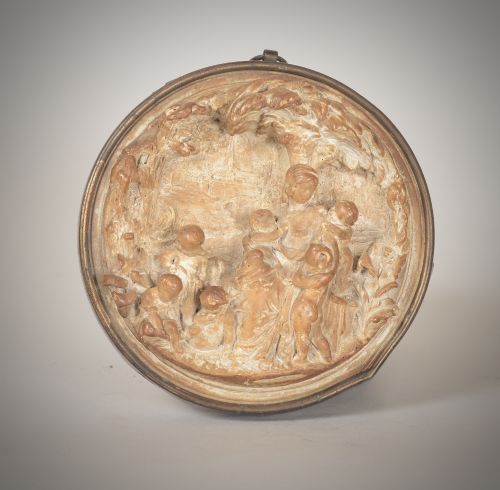
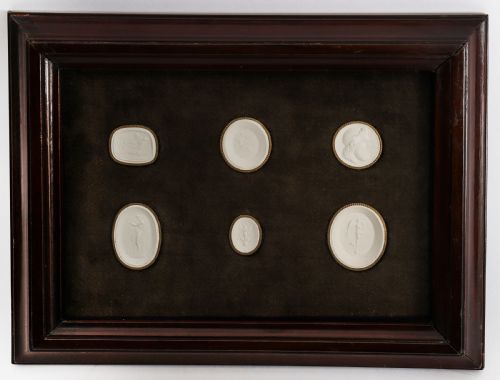
Plaster, wax, and gypsum form the basis of the relief casts, often arranged within wood, giltwood, or velvet-lined box frames. Makers poured plaster or pressed wax into moulds taken from ancient gems and modern sculptures, creating crisp white or bronzed profiles against contrasting backgrounds.
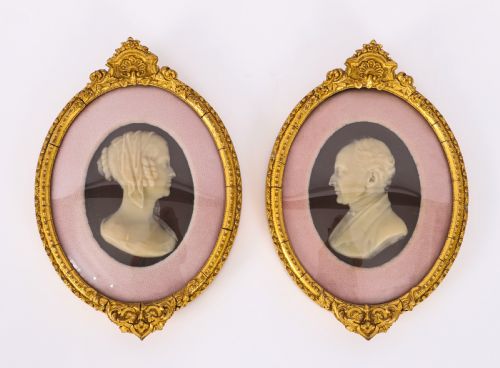
Shell and hardstone cameos utilise natural layered materials, carved by hand to reveal a pale figure against a darker ground. These smaller relief carvings sit within solid gold, pinchbeck, or gilt frames, secured by pins and glass covers.
Listings span the eighteenth, nineteenth, and early twentieth centuries, incorporating materials from plaster and wax to shell, hardstone, and giltwood.
Distinctions in Quality
Mounting materials and presentation elevate certain pieces, particularly those housed in original giltwood frames with intact velvet backing or solid gold mounts bearing maker signatures. Poorer examples show worn plaster, crude framing, or obscured detail in the relief profile.
Giovanni Liberotti·Pietro Bracci·R. Pernice
The Antique Cameo Frame Glossary
- Intaglio
- A gem or cast carved into the surface so that the design sinks below the plane. These were frequently gathered in sets during the Grand Tour.
- Grand Tour
- A cultural journey undertaken by wealthy young Europeans to view continental antiquities. Travellers collected framed plaster casts and carved plaques as souvenirs.
- Paste
- A heavy, lustrous glass used to imitate gemstones and cameos. Pressed white glass paste appeared in Georgian portrait miniatures.
- Pinchbeck
- An alloy of copper and zinc invented in the eighteenth century to simulate gold. It frequently secures Victorian shell cameos and brooches.
- Plaster relief
- A three-dimensional design raised from a flat background using plaster. These casts replicate classical statues and Roman emperors for wall display.
Antique Cameo Frame: Frequently Asked Questions
What is a Grand Tour cameo frame?
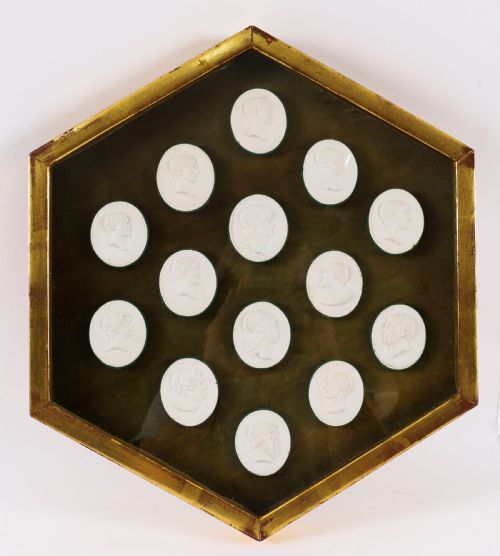
These pieces house collections of plaster, wax, or gypsum intaglios and cameos gathered by travellers in Italy during the eighteenth and nineteenth centuries.
They served as portable art collections, arranged systematically in velvet-lined wooden boxes or frames to display classical knowledge and refined taste upon return home.
How were wax portraits displayed?
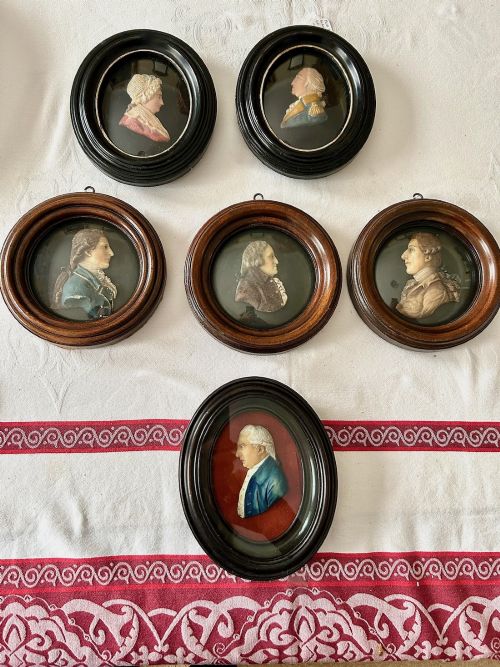
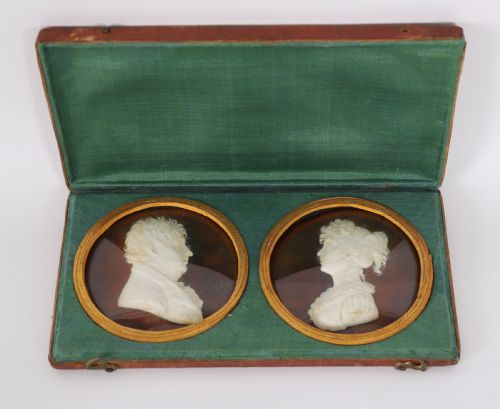
Artists modelled portrait reliefs in tinted or white wax, capturing notable figures, dignitaries, and private citizens. These fragile profiles were protected beneath glass within box frames.
They hung upon parlour walls or sat upon surfaces as intimate memorials and likenesses before the widespread adoption of photography.
What materials make up the frames?
Makers housed these small reliefs in carved wood, giltwood, and fabric-lined boxes, frequently utilising velvet to contrast against white plaster casts. Individual wearable cameos utilised gold, pinchbeck, and glass.
Larger wall plaques and displays integrated gilded mouldings to complement the classical subject matter within.
How do I date an antique cameo frame?
Dating relies upon the framing style, the mounting metals, and the specific medium of the relief, such as Georgian glass paste or Victorian gold. Nineteenth-century pieces often feature handwritten labels on the reverse identifying makers like Giovanni Liberotti.
Changes in housing styles, from simple wooden boxes to ornate giltwood frames, also indicate the manufacturing period.